
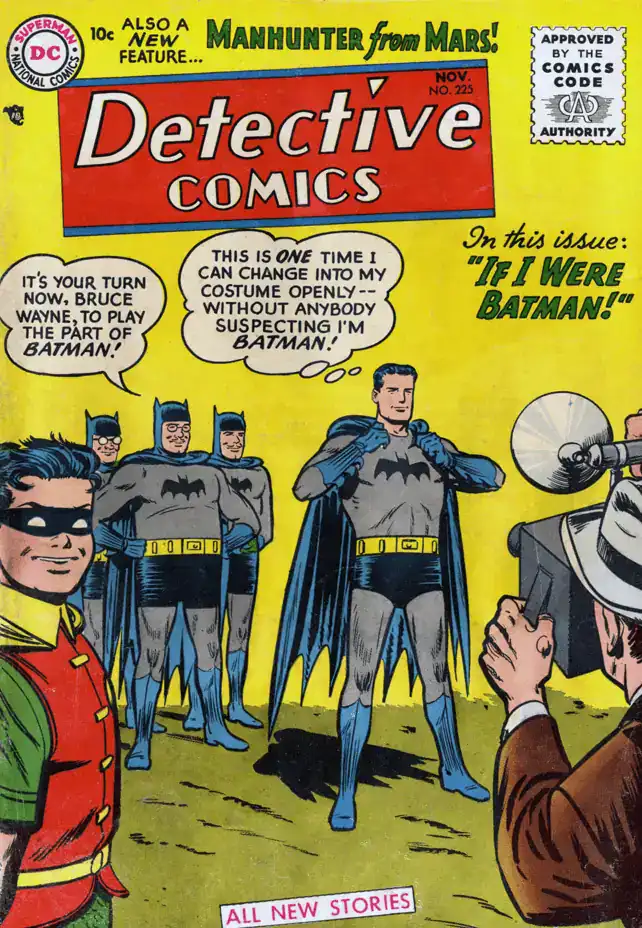
Detective Comics #225 (1955)
by Joseph Samachson & Joe Certa
cover by Win Mortimer
You wouldn’t tell from the cover, but this is a strong contender for being the start of the Silver Age.
That’s because the third story in the book introduces Martian Manhunter.
Although that’s not technically the name of the series.
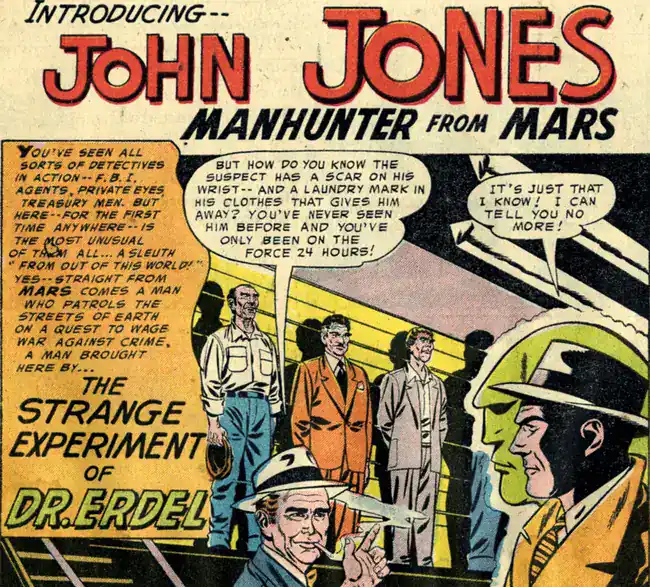
We begin with Professor Erdel, who has invented a “robot brain” that can explore other dimensions.
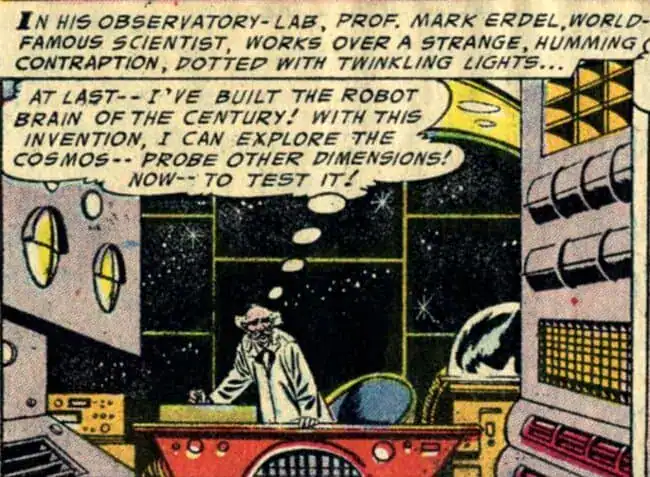
It does this through a light show.
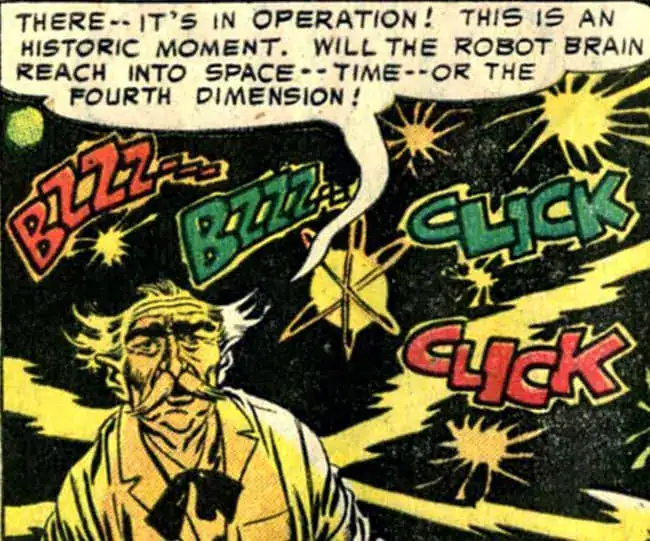
The Robot Brain “probes other dimensions” by bringing in someone from its own dimension.
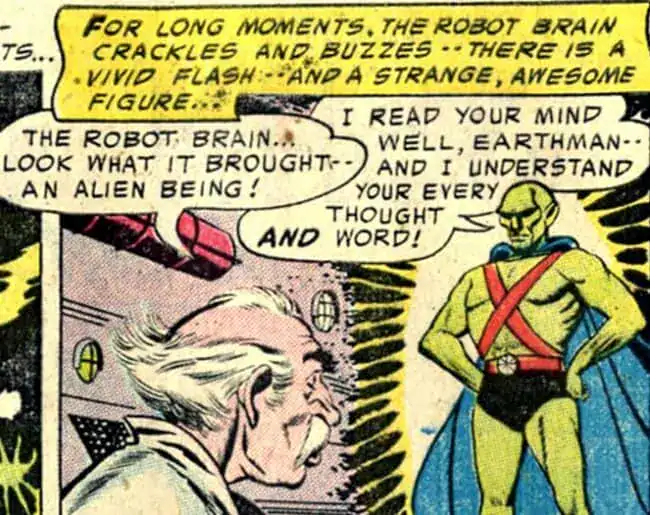
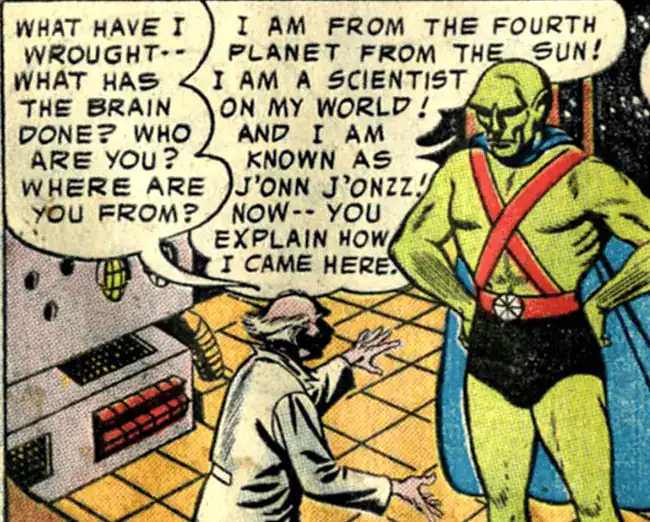
J’onn is surprisingly chill about having been brought to another planet without his consent.
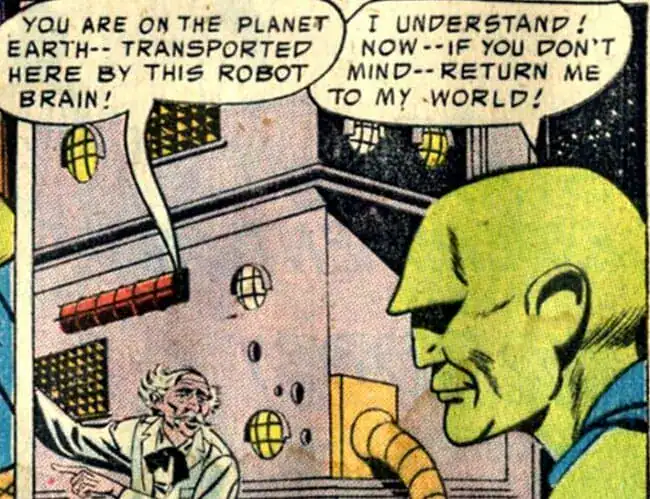
When the Professor admits it’s going to take years before he can reprogram the Robot Brain into sending him back home, J’onn decides to shapeshift into a human.
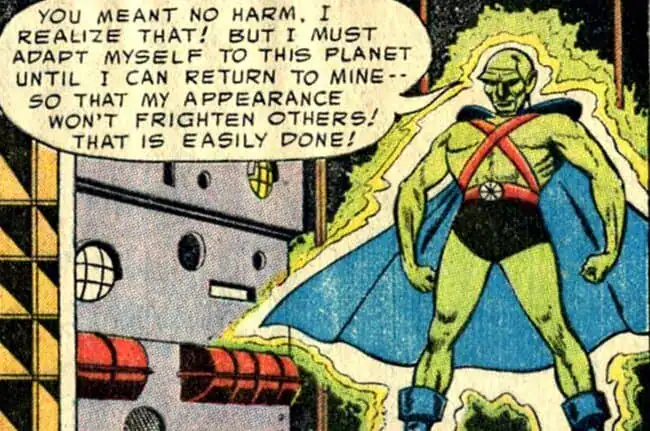
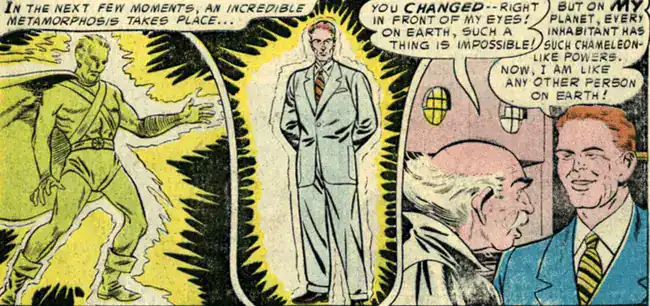
That’s not enough to save Professor Erdel from the dreaded Mentor Figure Disease.
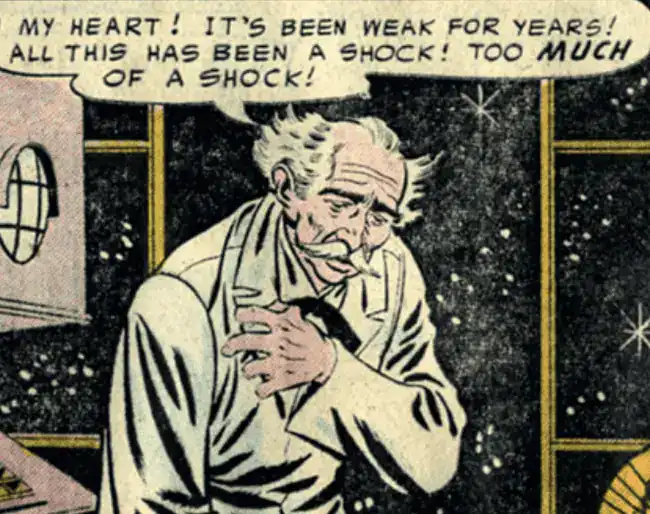
Despite having been on Earth for like five minutes, J’onn already knows how to cure a human.
Sounds legit.
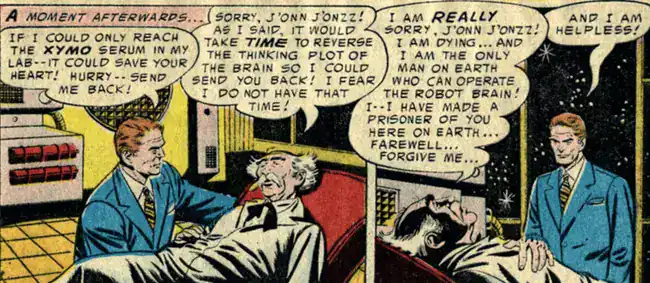
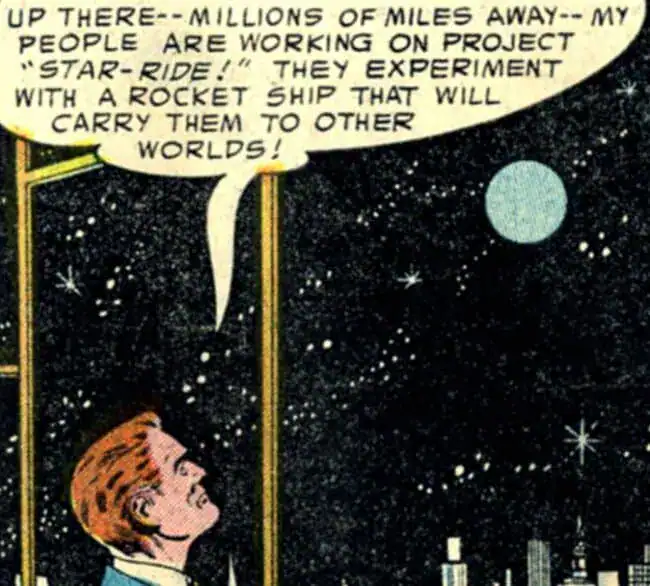
That’s the premise of the serial: J’onn will be stranded on Earth until humanity gets around to building rockets to Mars.
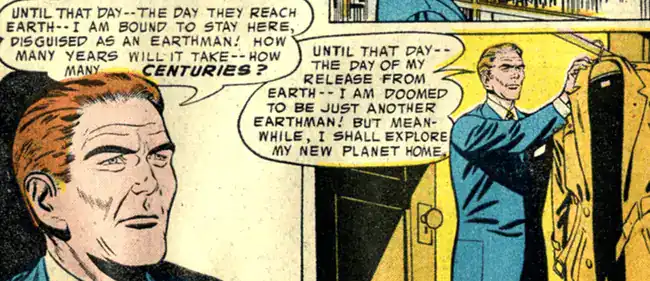
Taking on the name John Jones, he gets some money by getting fold from the sea.
He’s already demonstrated shapeshifting and telepathy, but this is matter manipulation.
Martian Manhunter powers: 3
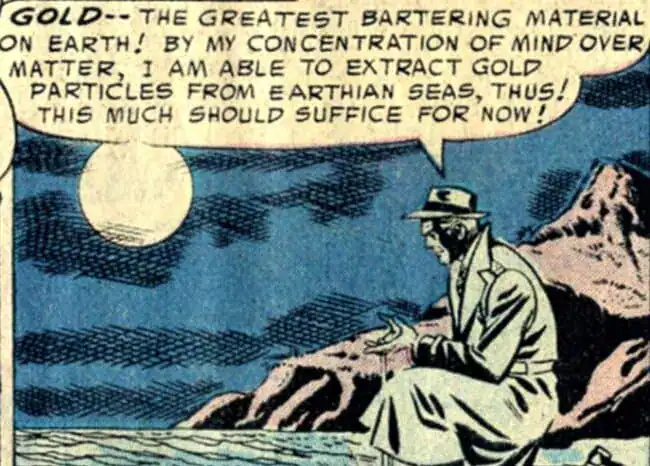
He goes around exploring Earth for a while.
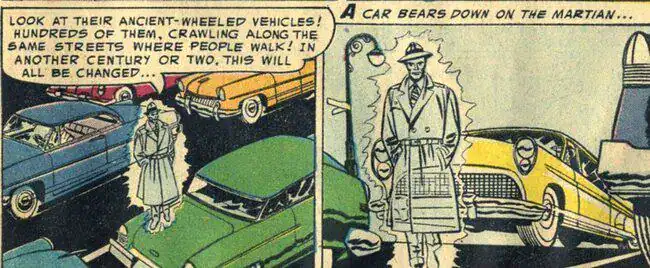
While they could be considered special applications of his shapeshifting, invisibility and intangibility are typically treated as separate powers for him.
Martian Manhunter powers: 5
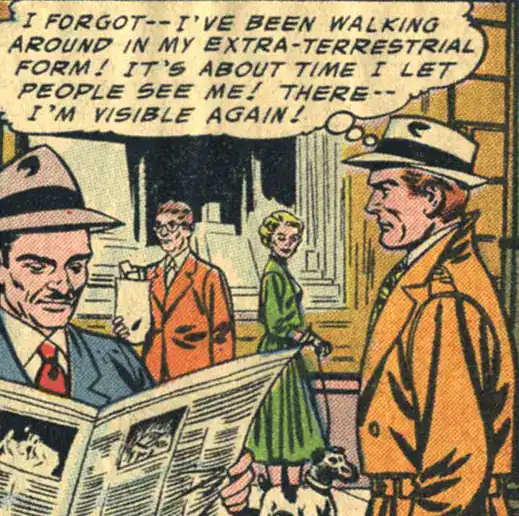
I guess he needs a hobby, so he decides to fight crime. Which is no longer a thing on Mars because it’s been scienced away.
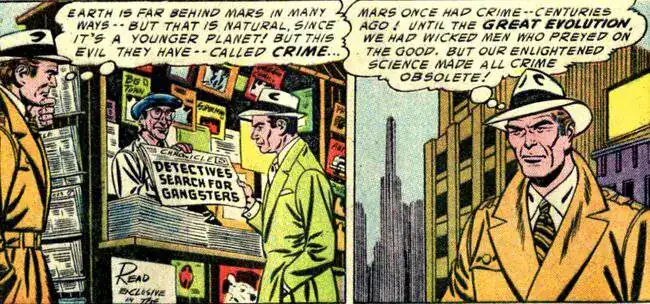
Look at this weird alien, thinking you can just walk into a police station and be given a job as a detective!
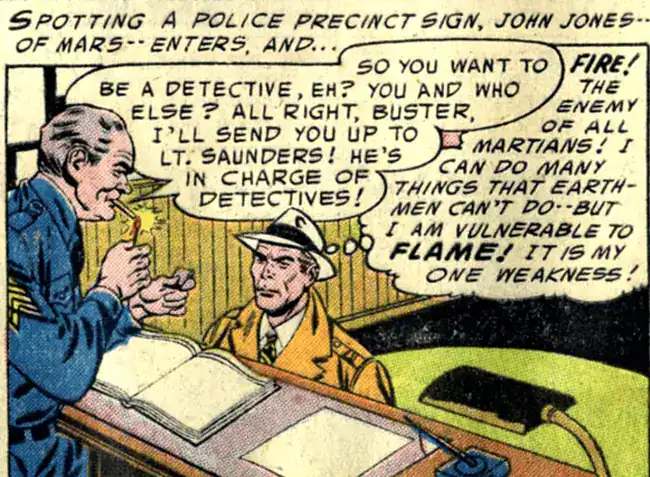
AND IT WORKS.
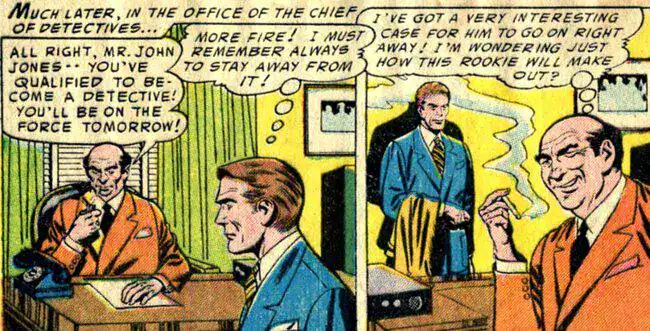
He totally used his telepathy to get the job, right?
That’s already the end.
Historical significance: 10/10
It will take some time, but Martian Manhunter
will eventually become a very important pillar of the DC Universe.
Silver Age-ness: 4/10
Those powers seem random to us because we’re more familiar with J’onn’s more streamlined powerset, but they’re all grouped under the “mind over matter” idea.
Does it stand the test of time? 6/10
It feels more like a summary than an actual story, but the basic structure is fine providing you don’t rush this much. Although they only had 6 pages to work with so they HAD to rush.
Definitely far more of a science fiction tale than a superhero one, at this point.
Is this the beginning of the Silver Age?
Martian Manhunter certainly has a better claim than Captain Comet of starting the Silver Age.
He’s certainly the first prominent Silver Age superhero to debut, nearly a year before Flash.
But I don’t agree with calling this the beginning of the Silver Age: unlike Flash, who sparked a plethora of new Silver Age heroes, Martian Manhunter stays confined to his own serial until the rest of the DC Universe is quite firmly in the Silver Age.
How close is this to the modern character? 7/10
The basic ideas are there: the look, the powers, the loner attitude combined with the desire to help others, the weakness to fire. But there’s A LOT that hasn’t been established yet… like the idea of him being the last Martian, the loss of his family, and overall the deep sadness that has come to be a core aspect of the character.
Joseph Samachson was mostly a science fiction writer; he’s definitely the writer of this story, but there’s some debate whether he worked on the rest of the Martian Manhunter serial.
The rest of J’onn’s adventures will be written by Jack Miller (who also created Rip Hunter), but it has been suggested that Samachson also worked on a few.
You might be surprised that J’onn stays on Detective Comics for a long time: up until 1964 and Detective Comics #326… and never makes a single cover appearance.
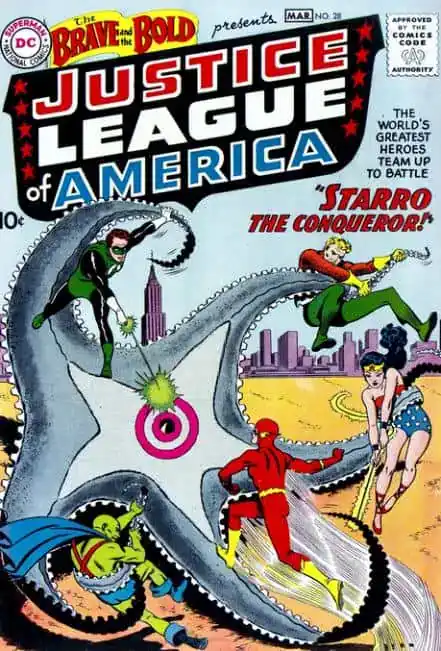
He only gets attention on the Justice League, of which he’s a founding member from 1960.
I plan to eventually review the sci-fi Batman stories of the 50s in a dedicated retrospective; at that point I will definitely talk about the original Martian Manhunter serial too, because it’s COMPLETELY BONKERS.
Also from this series: super-speed, invulnerability, super-breath, flight, super-strength, super-hearing, x-ray vision and magnetism.
And this is just IN HIS FIRST FOUR ISSUES.
Martian Manhunter powers: 13
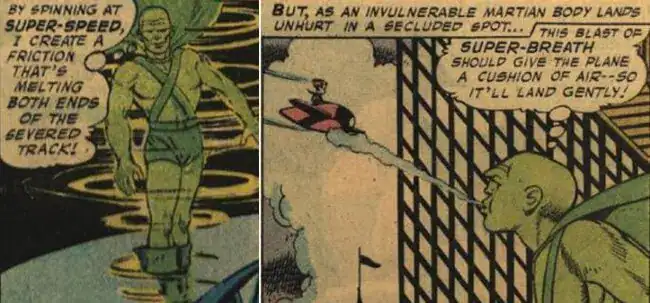
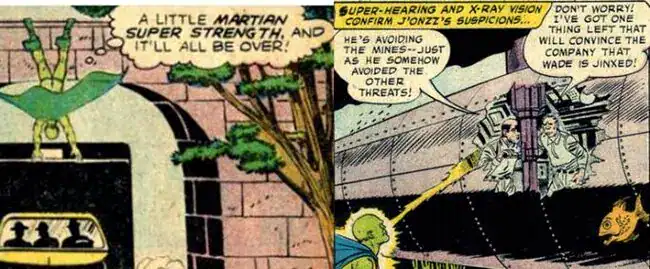
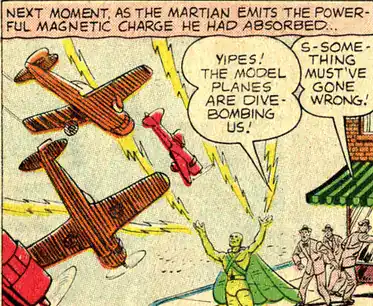
The world is completely oblivious to the existence of Martian Manhunter until 1959, when on Detective Comics #273 he has to face a criminal Martian.
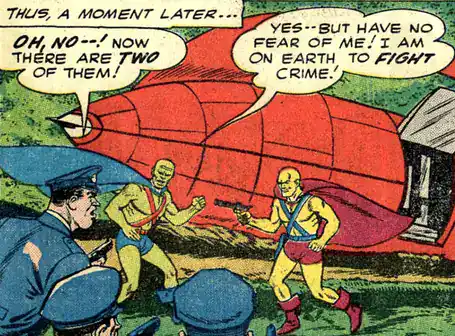
The authorities are surprisingly okay with this.
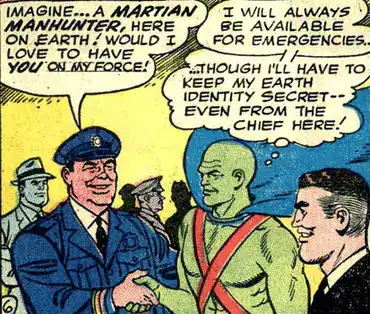
Also the same story has J’onn completely miss the chance to go back on Mars for basically no reason.
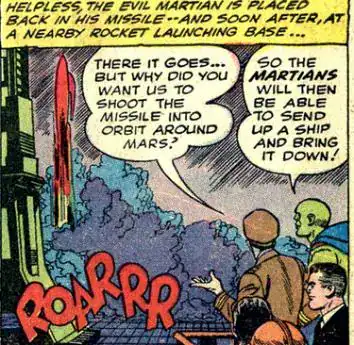
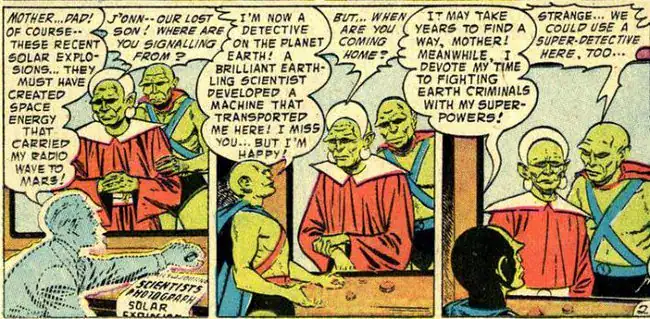
Especially since we’ve known since Detective Comics #236 that he still has family on Mars!
Issue 287 later adds a younger brother.
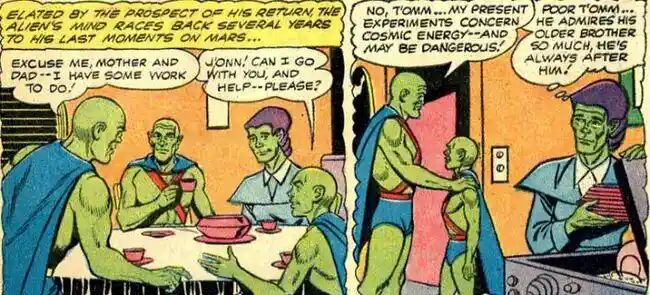
On Detective Comics #311, he acquires one of the most infamous Silver Age sidekicks with Zook.
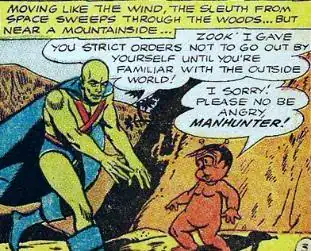
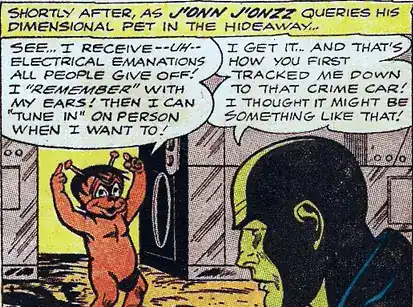
Not long after, as previously mentioned Detective Comics #326 ends the original run.
With the death of the John Jones secret identity, which Martian Manhunter never corrects.
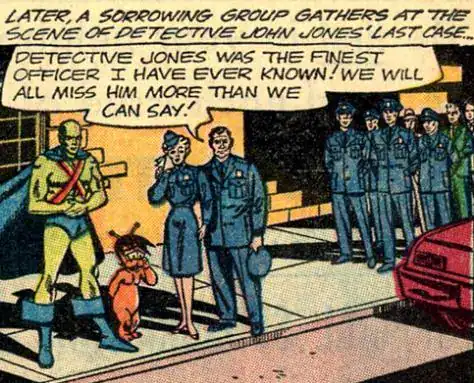
His spot on Detective Comics is taken by Elongated Man (which sounds strange, but he IS a detective) and Martian Manhunter moves to House Of Mystery.
Now he’s finally on the cover!
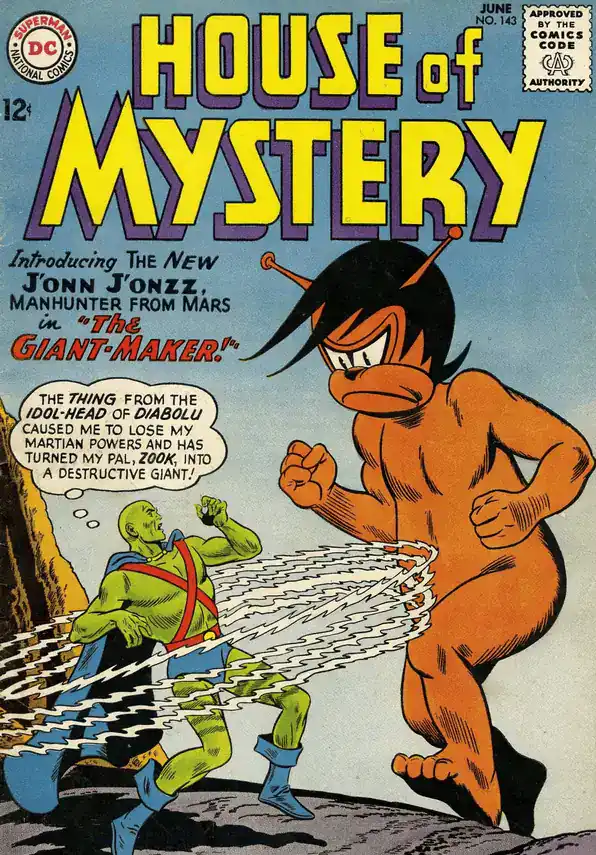
Which doesn’t last long, because starting from House of Mystery #156 that becomes the Dial H for H.E.R.O. book, relegating Martian Manhunter to the backup feature.
Issue 178 from 1968 marks the end of both Dial H and Martian Manhunter.
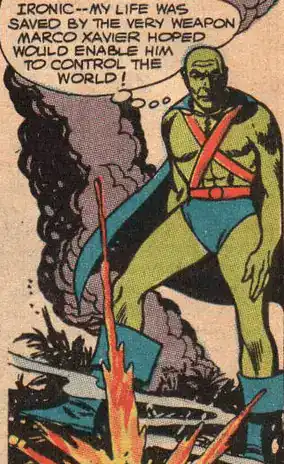
He still kept appearing on Justice League of America, and in 1969 the series finally allowed him to get back to Mars.
Only to reveal that most of his race had been wiped out.
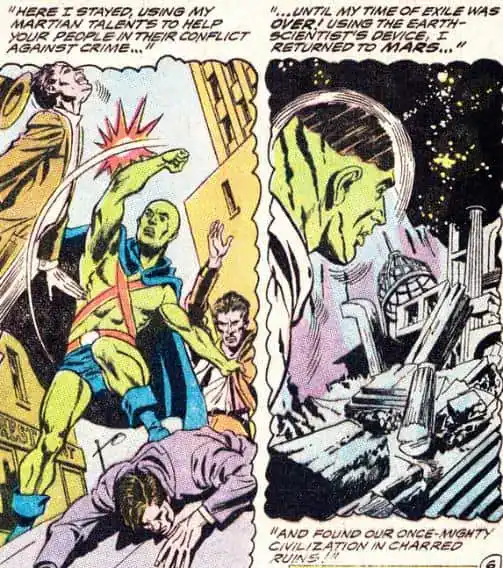
This was probably inspired by the real life exploration of Mars kicking in, making it difficult to keep the DC version around, but also to have J’onn leave the Justice League at the end of the story in order to find the few survivors.
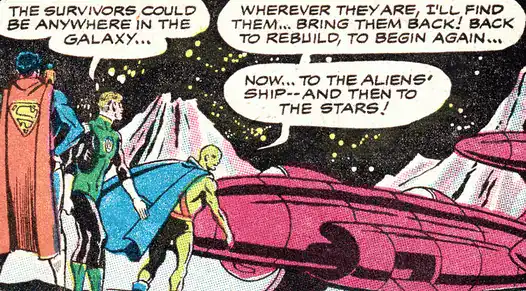
J’onn made very few appearances in the following years, especially since in the early 70s he joined the other Martian survivors on New Mars.
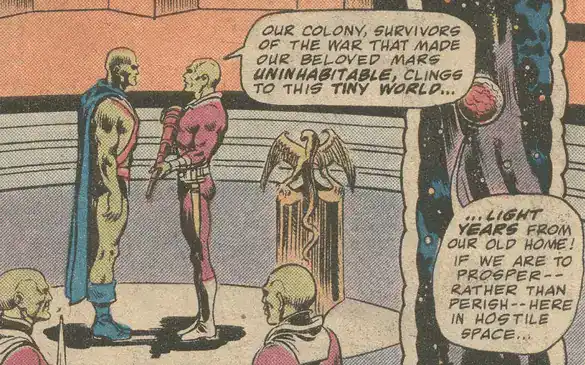
In fact, he doesn’t return to full JLA membership until 1984.
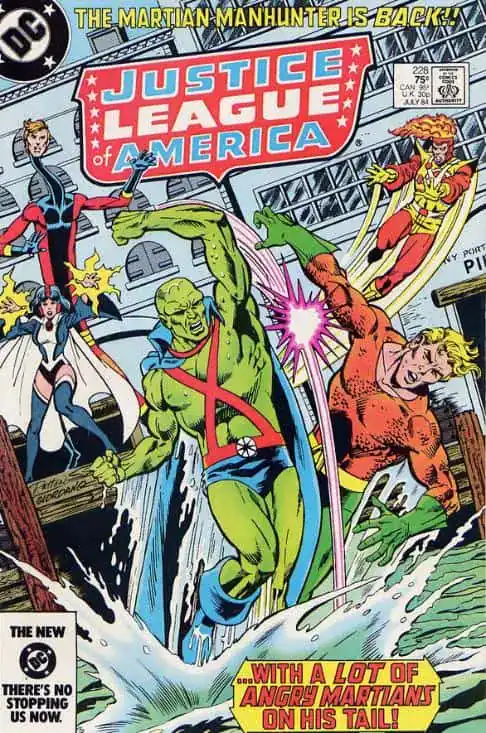
Up to this point, I would argue that despite his status as a JLA founder Martian Manhunter wasn’t really a big part of the DC Universe.
That changed in the 80s, first through the period where the JLA was based in Detroit…
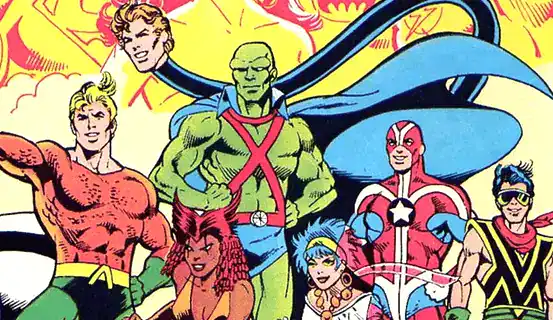
…and even more so after Crisis on Infinite Earths, where he was a VERY important character in Justice League International, by Giffen & DeMatteis.
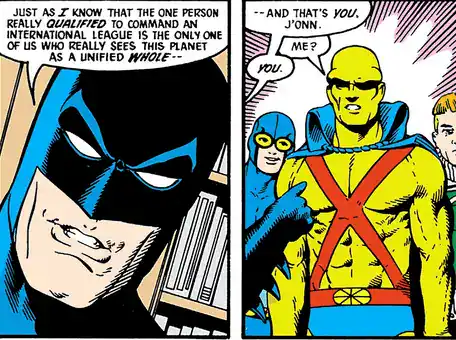
He was mostly the straight man in a series that was more comedic than usual.
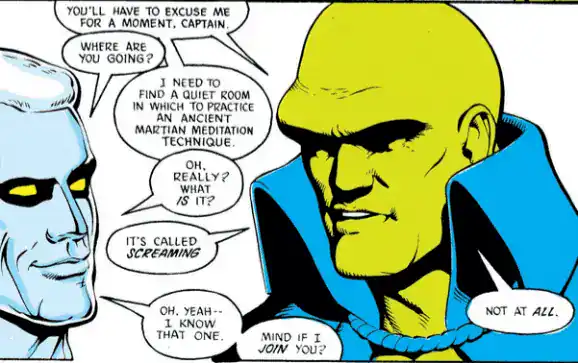
The series also introduced J’onn’s addiction to Oreos™ Chocos™, which still plagues him to this day.
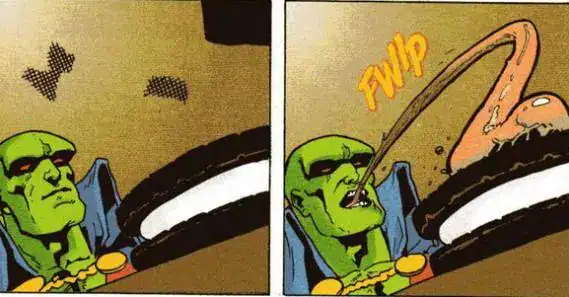
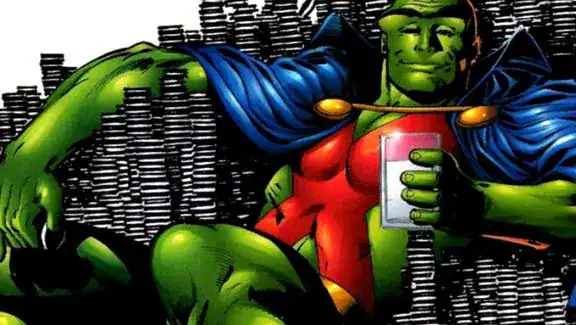
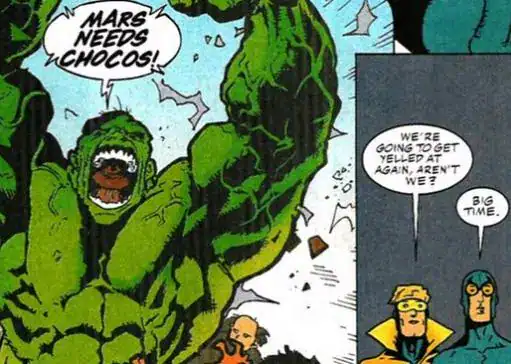
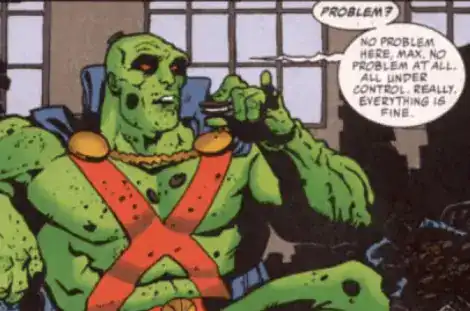
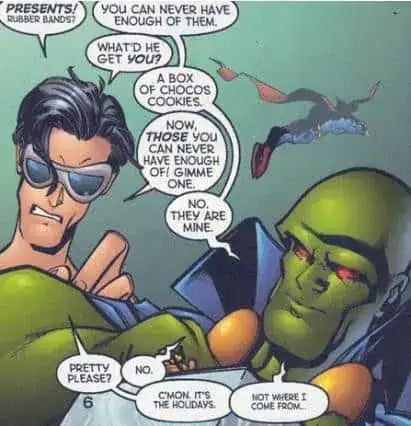
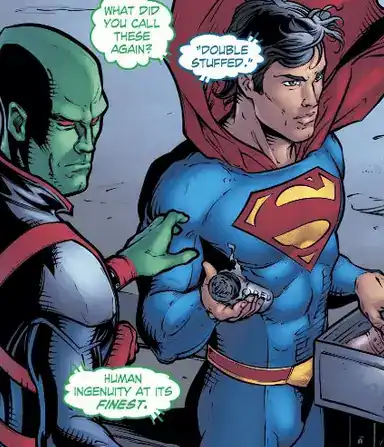
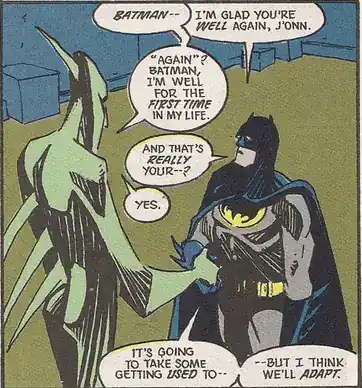
The 1988 miniseries by DeMatteis and Badger introduced J’onn real form: the Martians are no longer green-skinned humanoids, they’re definitely more alien.
I’m pretty sure this is also when Martian Manhunter is established to have had a wife and daughter of Mars, and he is the last survivor of his race.
This tends to stick through reboots (although there are the White Martians, who are a whole different thing); the idea that Professor Erdel didn’t just pick him from space but also displaced him from the past of Mars goes back and forth.
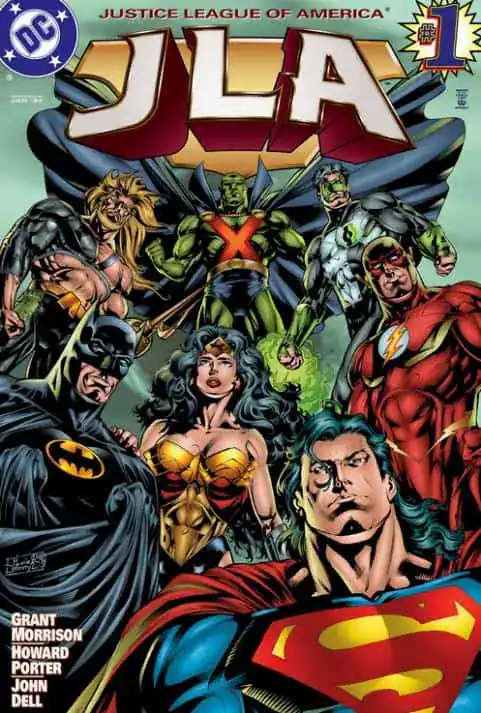
I would argue that the importance of Martian Manhunter today is mostly based on the influences of the 1997 relaunch of the JLA by Grant Morrison, and the 2001 Justice League cartoon.
Martian Manhunter played a MAJOR role in both.
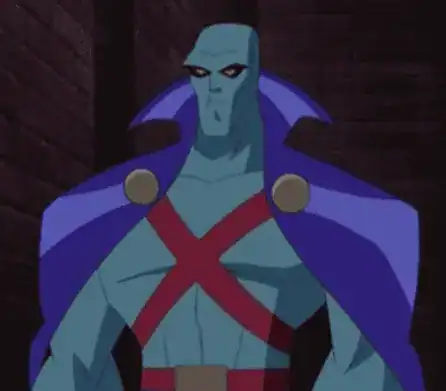
After that, Martian Manhunter is a very frequent member of the Justice League.
He’s had less luck with regular series: he had a 36 issue run from 1998 to 2001 , then followed by a 8 issue miniseries in 2006 and a 12 issue series in 2015. Plus a few specials here and there.
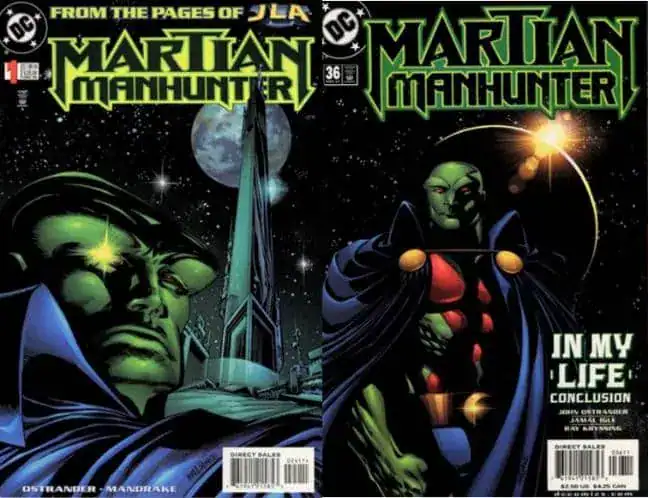
From this point on, Martian Manhunter’s history becomes way too rich for a single review.
I admit that before this review I didn’t know a whole lot about Martian Manhunter beyond his JLA stories.
I highly recommend checking out https://idol-head.blogspot.com if you want to know more, especially about his earlier adventures.
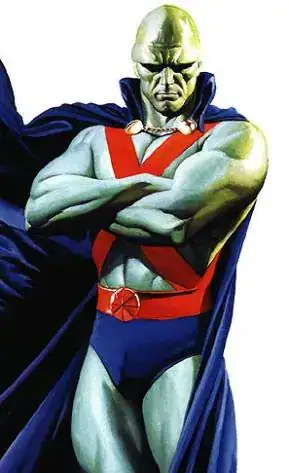
What else was in Detective Comics #225?
Why, Batman of course!
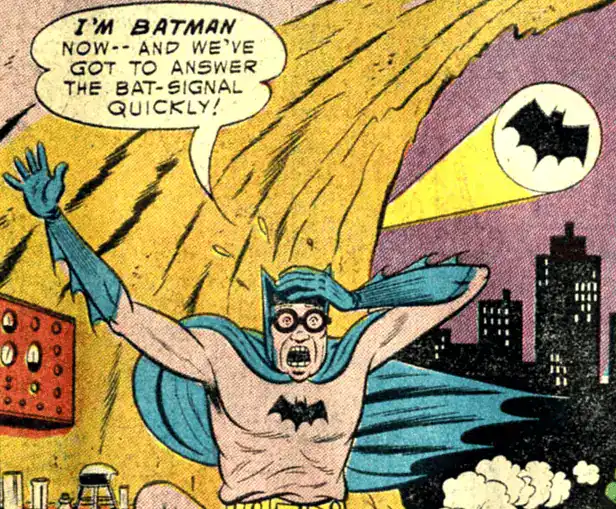
Specifically, the contestants of “Batman For A Day”.
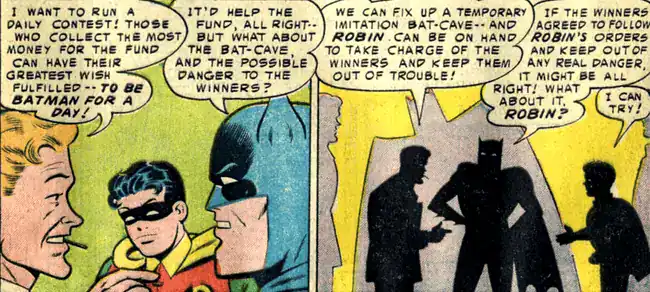
“Detective Comics” was a literal description at the time: the second story is literally just a detective story.
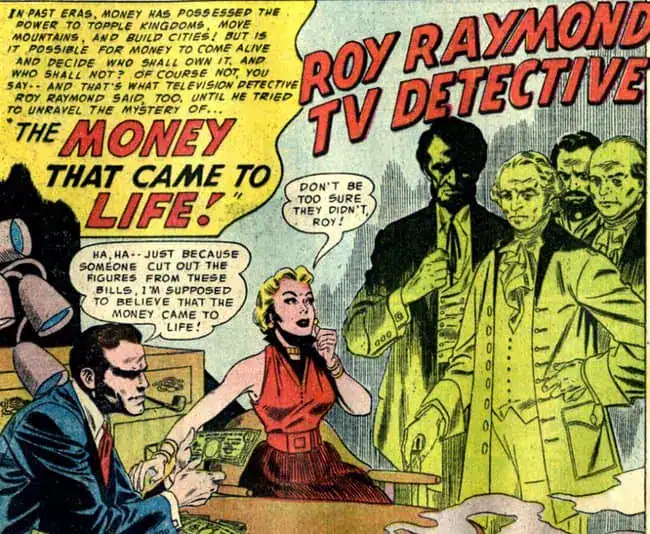
“Roy Raymond, TV Detective” is a more historically relevant feature than it may appear at first glance.
First because the lead character turns up later in Superman’s book and Jimmy Olsen stories in “Superman Family”, but mainly because after that he becomes something of a dark humor character in Rick Veitch’s “Swamp Thing” run.
To my considerable surprise, apparently he is unrelated to Ronnie “Firestorm” Raymond. But his grandson, Roy Raymond Jr., does turn up later.
Wasn’t there a retcon which suggested Professor Erdel had actually faked his death to motivate J’onn to go out into the world and get on with his life?
The simple way to remember the Manhunter’s powers is “Superman, plus shape-shifting and every mental power.” Good thing Martians are vulnerable to matches.
That works for his later stories, but the Silver Age sometimes has a unique definition of what it considers a mental power.
Like creating ice cream.
Zook had even nuttier mental powers.
At least once he created temperatures of, IIRC, “1000 degrees below zero”.
Quite a feat, considering that it would be well below molecular absolute zero, and therefore a physically impossible, indeed absurd temperature.
I guess he is just that powerful…
So that is why Jon is still single: Tinder is a killer!
Forgive me…