
If there is one thing you can’t possibly ignore in the history of the Legion of Super-Heroes, it’s the Zero Hour crossover event.
It’s the official ending of the original Legion… again… and the Reboot version it creates is often called the “Zero Hour Legion”.
But paradoxically, the Legion itself doesn’t show up a lot in the proper crossover.
Not only that, but the reasons behind Zero Hour happening don’t even have anything to do with the Legion.
While the origins of 1985 Crisis On Infinite Earths can be traced back all they up to the 1961 story that introduced the Multiverse, the historical “Flash Of Two Worlds”, you don’t have to go THAT far back to find the origins of the 1994 Zero Hour.
1986: Crisis On Infinite Earths
In fact, the problems created by Crisis started out during Crisis itself.
Specifically by Crisis #11: the previous issue ended with the destruction of the Multiverse, and the last two issues of the series are set in a “New Earth” that is a mixture of all the previous Earths.
That was one of the original goals, but the problem is that A LOT of heroes still remembered their old lives. To the point that there were two Superman still running around… well maybe I should say flying around: the original Golden Age, from Earth-Two, and the Silver Age one from Earth-One.
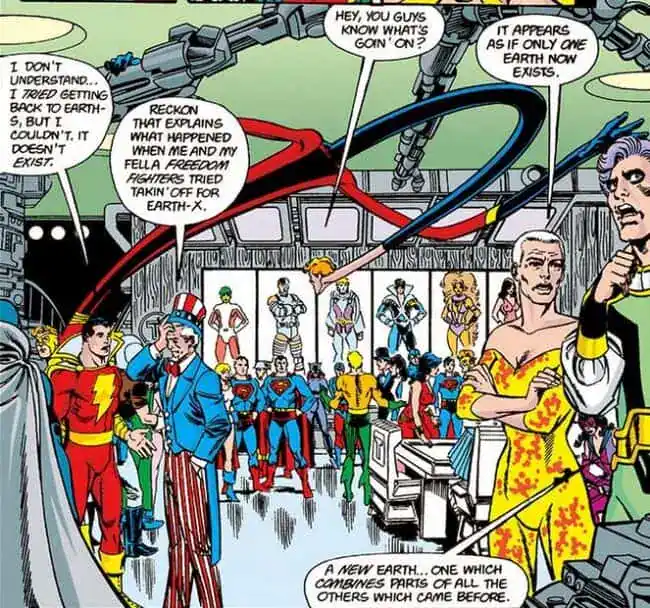
While this won’t be a problem for Golden Age Superman until 2005 when Infinite Crisis will make another attempt to “fix things”… the series ended with the Silver Age characters still remembering everything.
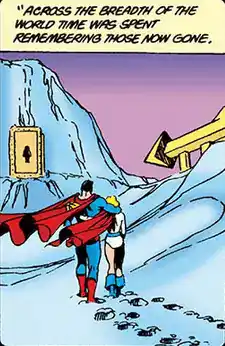
For the vast majority of characters, this won’t be a big problem: they simply ignore everything prior to Crisis. A popular theory, which I don’t think was ever made explicit in comics, was simply that the effects of Crisis took a while to “catch up” with the heroes.
That was fine for characters like Superman, Batman and Wonder Woman, who had very explicit new beginnings and clear definitions of how the characters were now different: there was no chance of mistaking them for their pre-Crisis counterparts.
But not everybody was re-introduced clearly. Some characters would show up in their pre-Crisis version only for a completely contradictory new version to show up.
And nobody exemplifies this better for the poster child of unnecessarily complicated character histories: Hawkman.
1989-1990: Hawkworld
This three-part miniseries completely reinvented Thanagar as a terrifying fascist state, and both Hawkman and Hawkwoman absolutely cannot be reconciled with their pre-Crisis versions in any way.
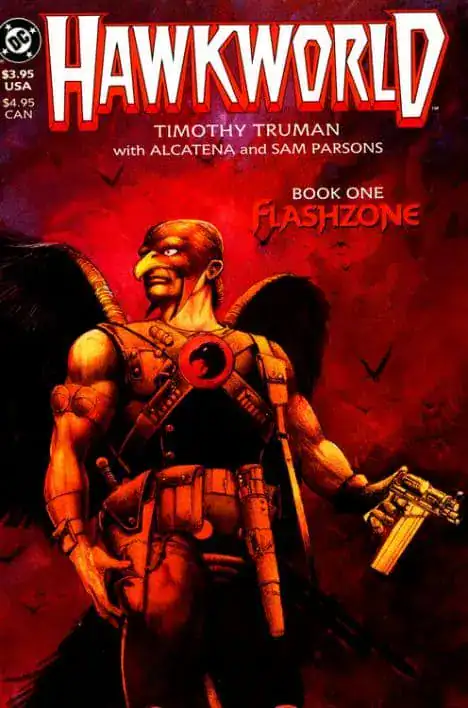
Those issues were set on Thanagar, but it was followed by a regular series with the same name where the hawks did come to Earth.
The series makes it VERY clear that Earth has absolutely no knowledge of the pre-Crisis version.
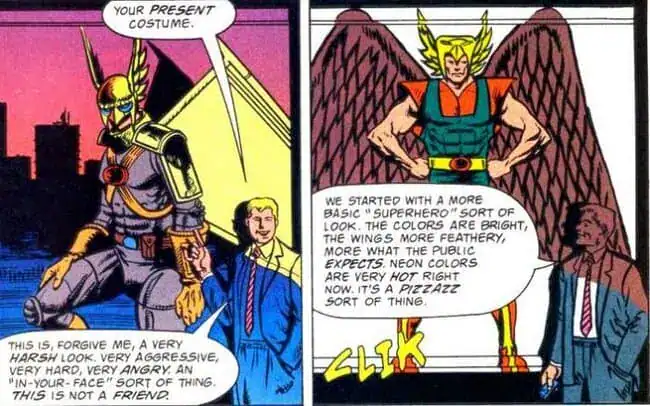
Which is a problem because as early as 1987 the post-Crisis Superman was still interacting with the pre-Crisis hawks.
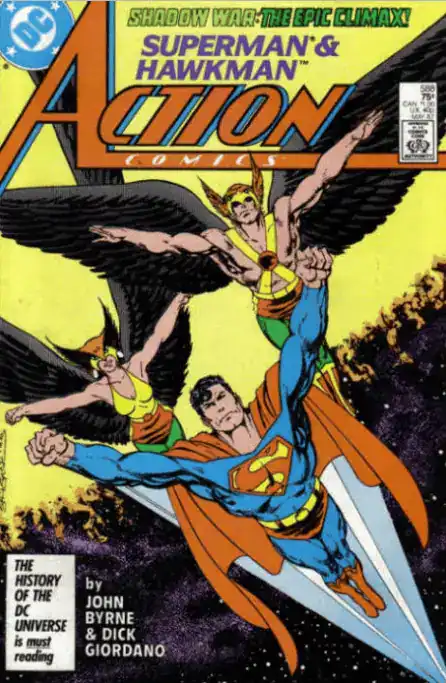
Considering the Hawkworld series was moderately popular and well-liked… it’s my favorite Hawkman version by the way… the sane decision would have been to simply ignore any appearance of the pre-Crisis Hawkman.
But DC Comics never fails to overcomplicate things.
1992: Hawkworld vol2 #22
The solution was to introduce ANOTHER Hawkwman: the one who had appeared with the pre-Crisis look was just an impostor sent to Earth for overly complicated reasons.
To make things worse, this particular Hawkman was pretending to be the son of the Golden Age Hawkman who had disappeared for a while.
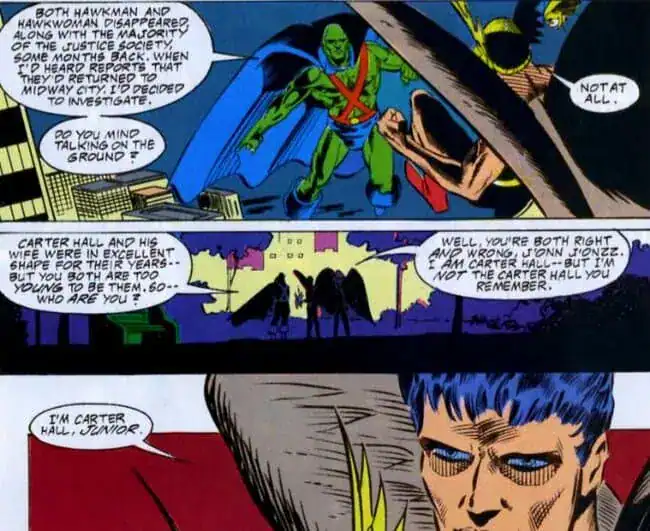
The whole thing is swept under the rug in the following issue.
So while the Hawkman stuff wasn’t handled in the best way, they DID put a stop to the inconsistency and strike a reasonable balance.
The WW2 Hawkman was a magic-themed reincarnation of a pharaoh and the present day was an alien cop: the two had only a passing similarity, and any inconsistency could be explained by the previous existence of an impostor.
Which is perhaps the biggest Hawkman tragedy: there wasn’t anything that needed fixing after this.
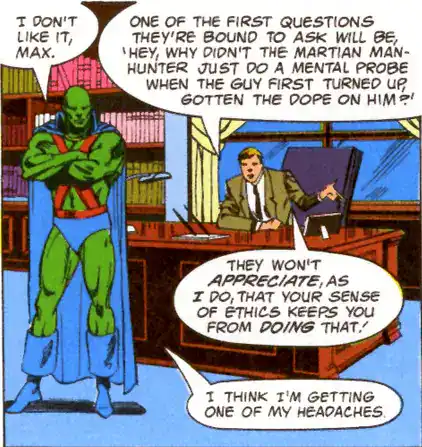
Buckle up, J’onn, because Zero Hour will make Hawkman a far bigger headache.
But Hawkman isn’t even the only hero intimately connected to Zero Hour.
1991: Team Titans
One of the effects of Crisis was that parallel Earths were no longer allowed, so DC went a bit overboard with alternate futures.
One of these is the future of the Team Titans, a group of teenage heroes rebelling against a supervillain who travel back to the present day to take the place of the Teen Titans for a bit.
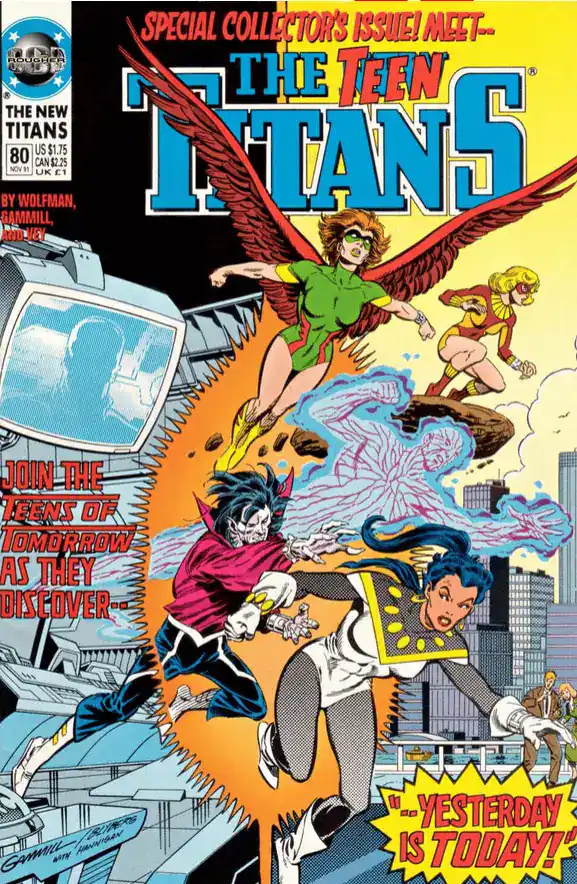
Well, technically they’re here because they’re trying to prevent the birth of said supervillain… who is the child of Troia, the former Wonder Girl.
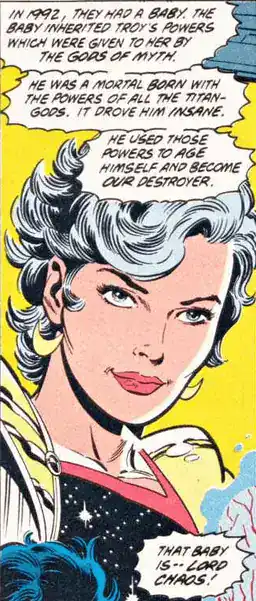
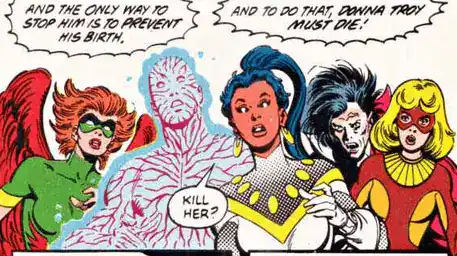
Their time travel shenanigans also involve Pariah, to REALLY drive home the Crisis parallels (and the fact that this is a Marv Wolfman book).
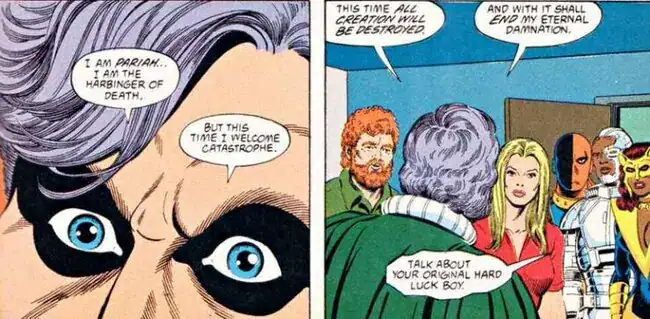
After ending their origin plot, the team moved to its own regular series that lasted 24 issues.
It’s a miracle this series even existed, considering the editorial politics behind it.
The unfortunate part of that was we had no idea that what they wanted was DC Comics’ X-Force. They, DC management at the time, saw Team Titans as this answer to Rob Liefeld’s X-Force, and what we wanted to do was something much more character-driven and self-aware, something more like Grant Morrison’s Doom Patrol. So from literally the first issue, it was a struggle editorially to the point that the book just fell apart on us completely, and a long-term story that we had planned got condensed to four issues. Then Zero Hour came along and undermined everything anyway.
MARV WOLFMAN
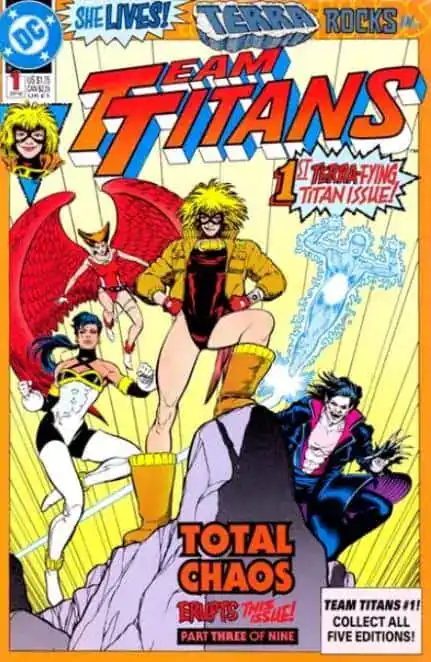
Having a time-displaced Titans team operate alongside the old Titans was perhaps a bit confusing, but honestly not that hard to follow.
Unlike those series: in my opinion by this point Wolfman was running on fumes, and I personally find his output in this period very hard to read.
But the Team Titans or even Hawkman are not the worst cases of DC butchering a premise, and they honestly won’t have much of an impact on Zero Hour.
Unlike the next character.
1991: Armageddon 2001
This is the 1991 company-wide crossover, and potentially the greatest example of how NOT to handle your crossover.
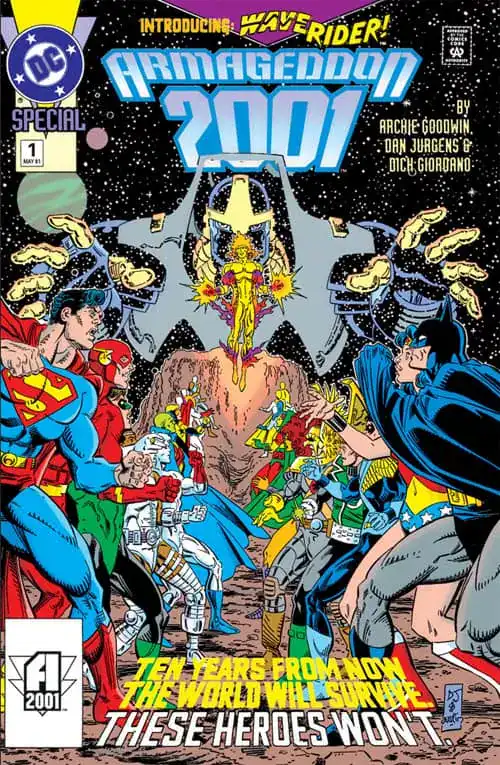
The premise is that, in the far-off future of 2001, the armored supervillain Monarch had killed all the superheroes and taken over the world.
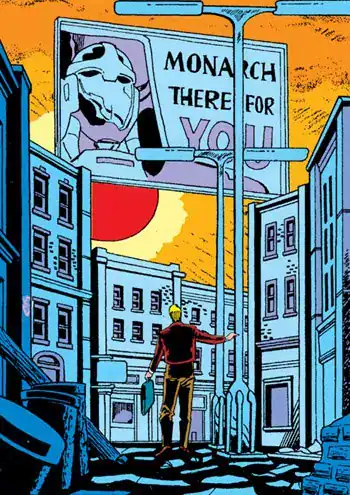
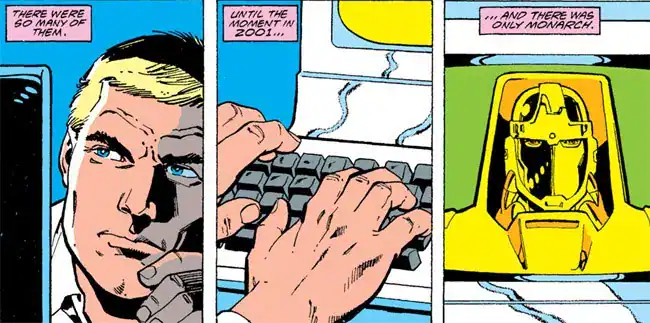
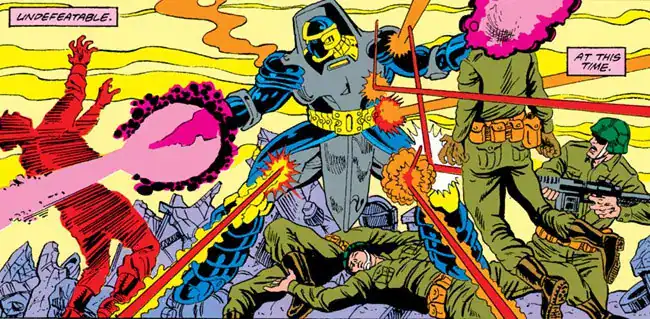
Then in 2030, scientist Matthew Ryder discovers that Monarch had been a superhero himself.
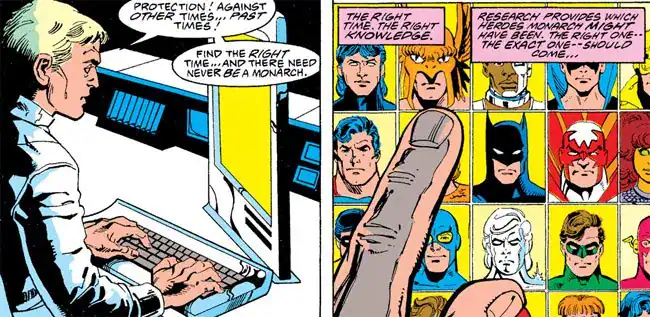
Monarch has been trying to create a time machine for his own reasons; Ryder manages to volunteer for a test run, tricking Monarch into believing he’s a loyal subject… while in reality he wants to warn the heroes.
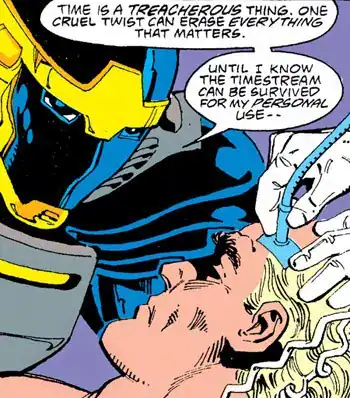
This ends up transforming him into an energy being named Waverider.
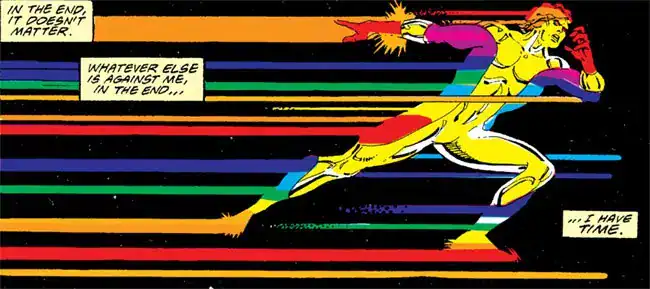
The first issue is pretty great and it introduces the core mystery of the event: which hero will become the tyrannical Monarch? The answer was supposed to come at the last issue.
Unfortunately, it didn’t stay a secret for long. Either because readers picked up the clues, or as revealed in a 2006 interview:
There was a 900 service that somebody setup that supposedly gave you inside secrets of the comic book industry. And somewhere along the line, that 900 service started saying that Monarch was going to be Captain Atom.
DAN JURGENS
The correct way DC should have handled this leak was to just ignore it.
Readers who had figured out the identity of Monarch would have felt proud about themselves, and those who had been spoiled could still enjoy this story.
Besides, while in 1991 fanzines were still popular and there was even a bit of online discourse, the percentage of readers who had been spoiled couldn’t have been THAT many.
DC’s response was simply to rewrite the finale, changing the identity of Monarch.
Which was already a bad idea, but it was made even worse by choosing the one hero that they had established could NOT have been Monarch.
That would be Hawk from Hawk & Dove, of all people.
In Hawk & Dove Annual #3, which was PART OF THIS CROSSOVER, Waverider had used his time powers to look into Hawk’s future to confirm he wouldn’t become Monarch.
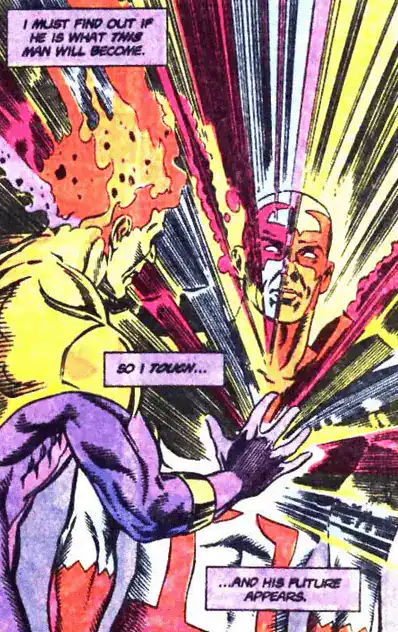

In addition to the fact that, let’s face it, it’s A LOT easier to believe a heavyweight like Captain Atom can be a threat to the whole planet if he snaps… than Hawk.
I admit I’m not super into the Hawk & Dove lore, but even if they have magic origin… he’s just a guy who is stronger and tougher than a regular person, isn’t he?
The last issue of Armageddon 2001 decided to ignore all of that, to the point of making Waverider’s actions throughout the entire thing either utterly useless…
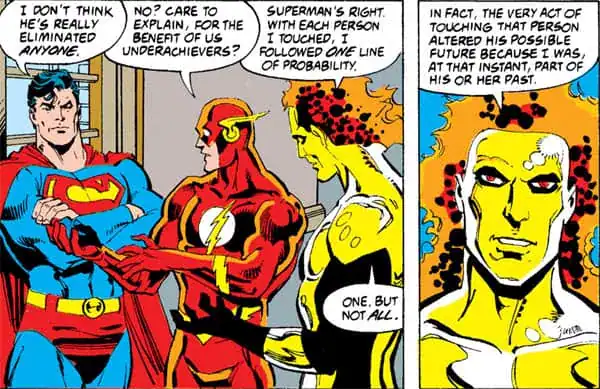
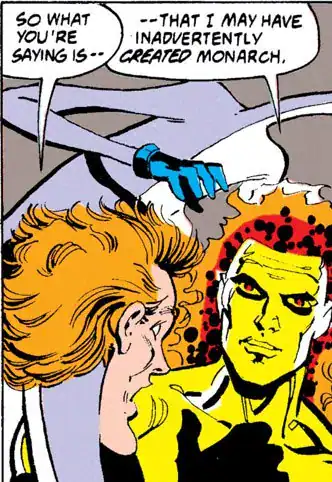
…or downright dangerous, because in the effort to prevent the creation of Monarch he ended up creating Monarch in the first place.
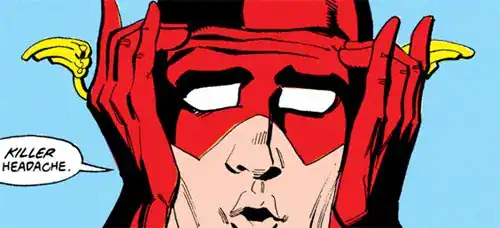
Monarch ends up brutally murdering Dove…
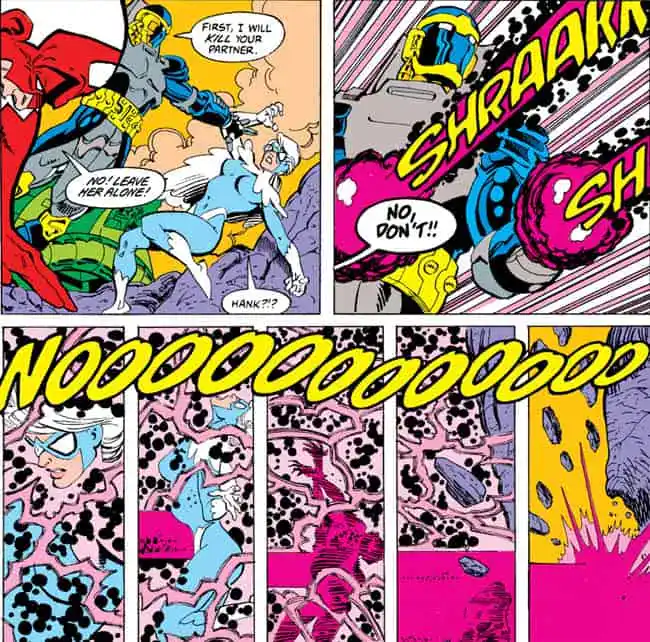
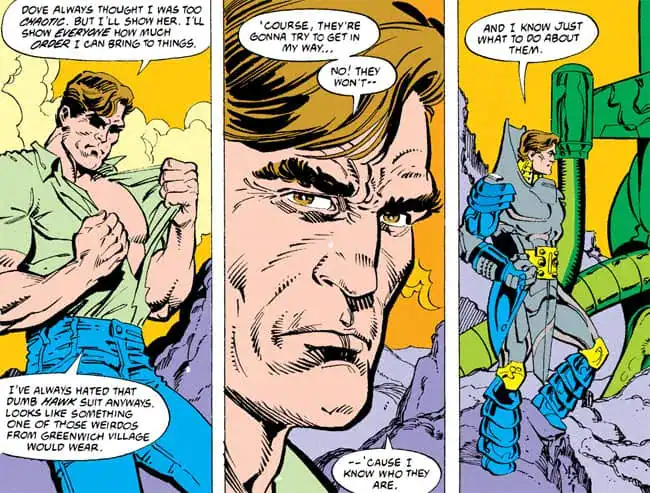
…which is what causes Hawk to snap and become Monarch.
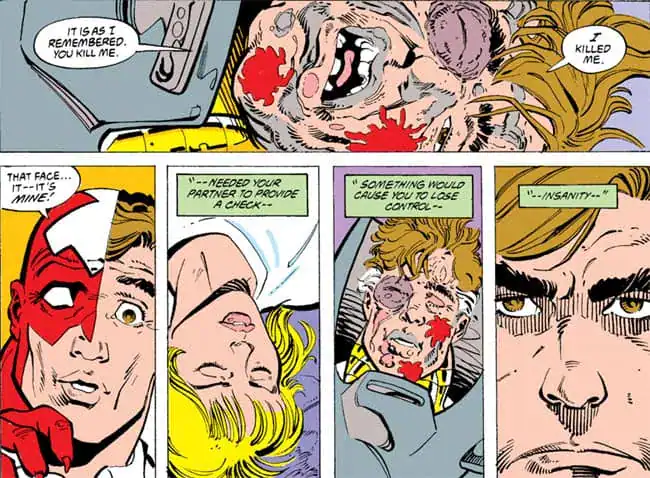
As for how in the world HAWK becomes so powerful… he takes the Monarch armor off the dead body of his older self.
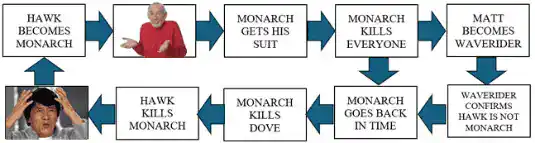
If you’re lost from this course of events, here’s a helpful chart.
In the final Big Dumb Battle, Monarch fights Captain Atom and the two end up being taken back to dinosaur time. Because that’s a thing that can happen when Captain Atom goes overboard.
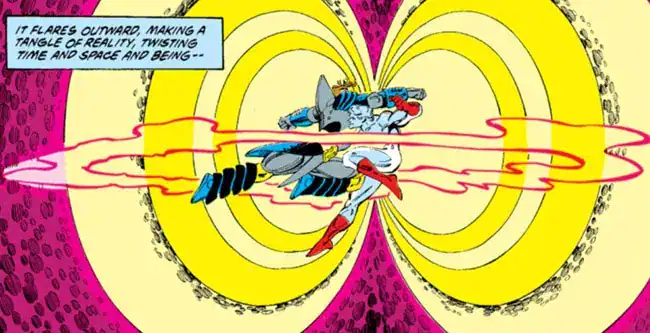
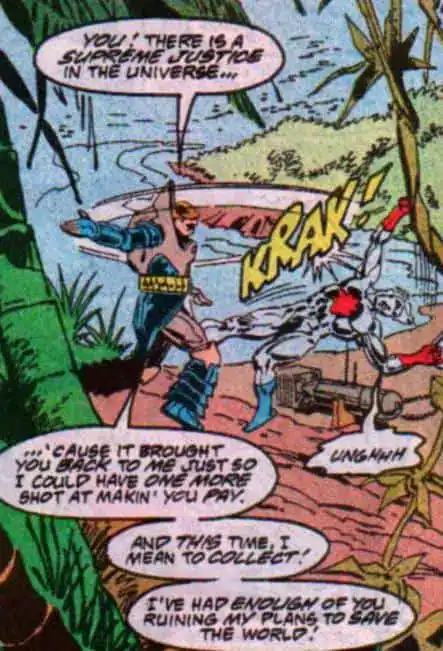
Unfortunately that wasn’t the end of Monarch, who fights Captain Atom across multiple time periods in 1992’s “Armageddon: Alien Agenda”.
You can see there’s not even remotely a trace of Hawk… he’s just a generic bad guy.
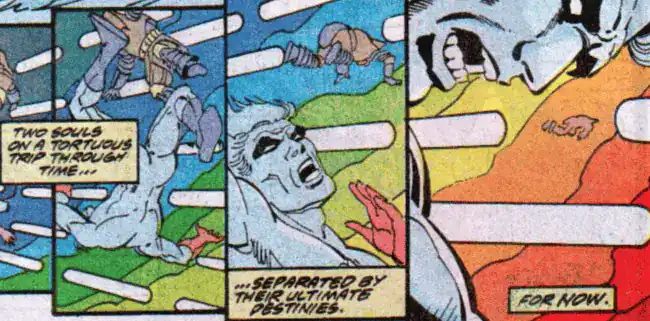
The miniseries ends with Captain Atom returning home and Monarch being lost in time, which is where we’ll pick him up in Zero Hour.
Needless to say, NOBODY was happy with the last minute change.
It made absolutely no sense in-universe, and it basically doomed this version of Hawk & Dove, causing the end of their series.
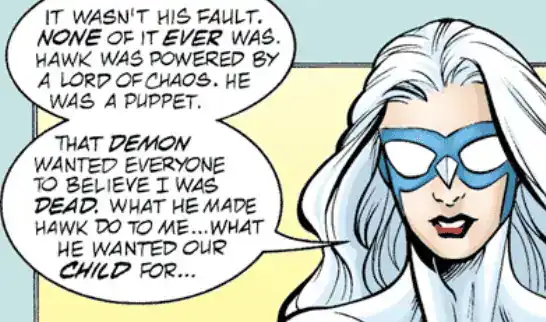
This was at least partially retconned in 2003 on the pages of JSA, which revealed that Hawk was under the influence of Mordru of all people.
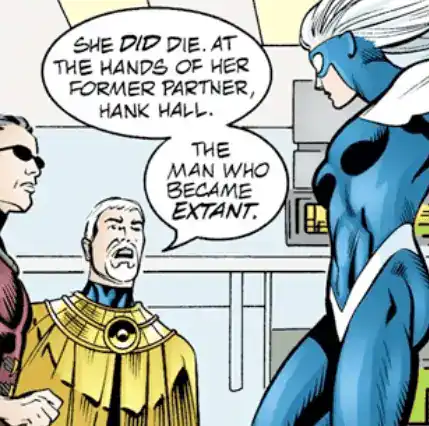
So by 1994’s Showcase ’94 #8-9, the main players for Zero Hour are now in position.
Waverider has joined the Linear Men, who like him patrol time and always fail to fix anything…
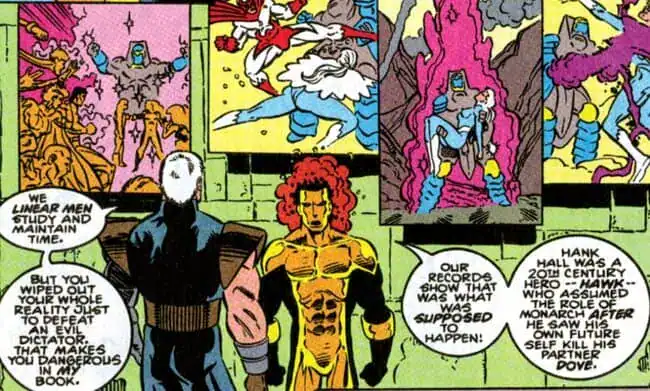
…and Monarch, who now for absolutely no reason is a technological supergenius, manages to copy their time travel technology.
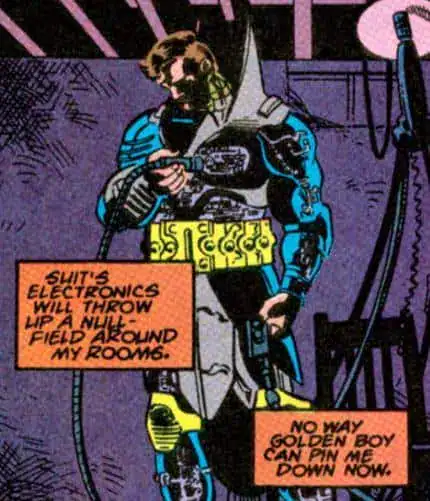
And absorbing tons of time energy, he transforms himself into Extant.

You guys just suck at your job.
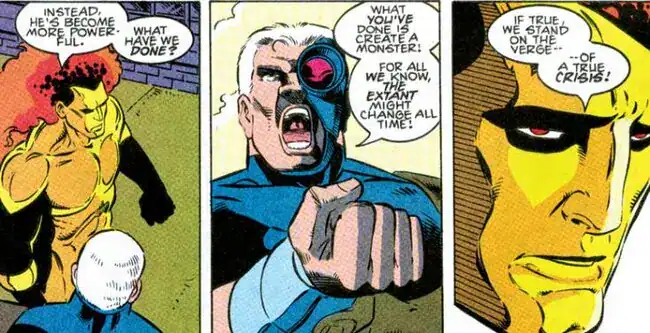
And ALL OF THAT MESS is basically completely meaningless because the ACTUAL big bad guy of Zero Hour isn’t even Monarch/Extant!!!
I suppose this is a spoiler for Zero Hour, but I’m pretty sure that 99% of people reading this site are aware of this.
In 1993, in the same storyline with the return of Superman from the dead, Green Lantern’s hometown of Coast City was obliterated by Mongul while Hal Jordan was in space (in a crossover with L.E.G.I.O.N. of all things).

When he tried to use his ring to bring back the city and the Guardians Of The Universe decided to ground him for abusing his powers…
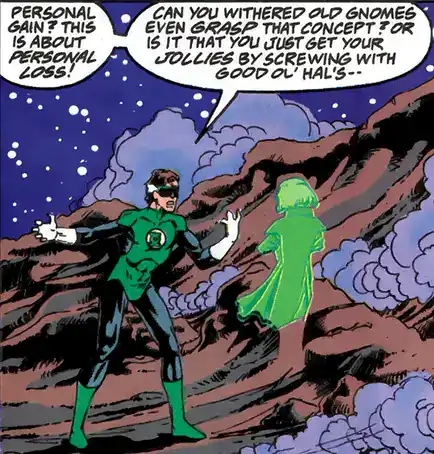
…he didn’t take it well.
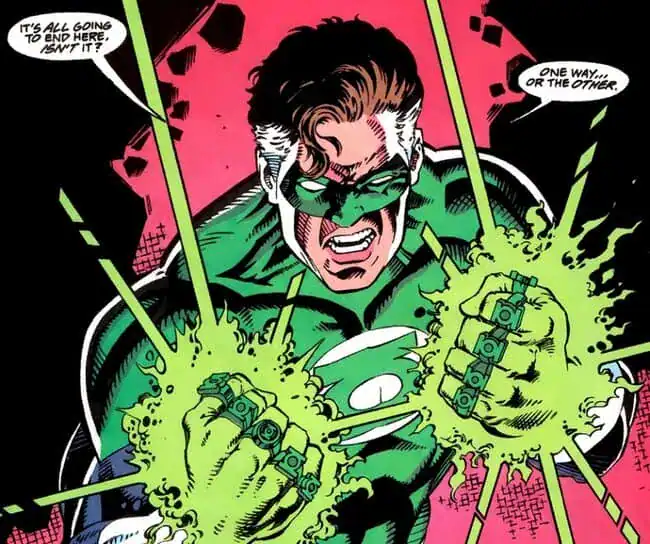
Hal Jordan ends up abandoning his Green Lantern identity, absorbing the power of the Central Power Battery™ and becoming Parallax.
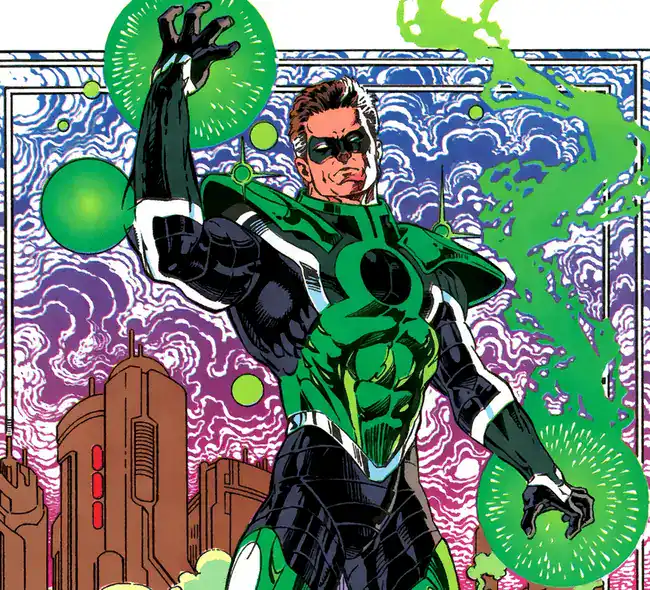
With most of the Green Lantern Corps and all but one of the Guardians dead, the last ring is given to a new Green Lantern.
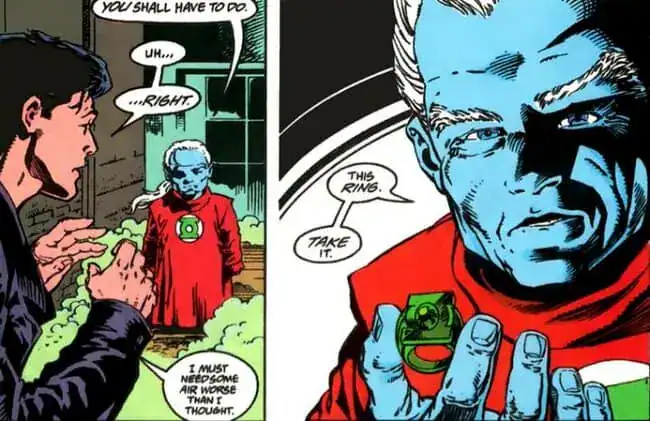
I will give my thoughts on Hal’s journey when I get to his origin story.
For the moment, just consider that the new Green Lantern had debuted just FOUR MONTHS before the start of Zero Hour.
Notice that up to this point I haven’t mentioned the Legion, even though it’s BY FAR the franchise that feels the effects of Zero Hour the most?
That’s because the Legion wasn’t expected to play a big part. I’m certain that they were always supposed to show up… it’s a time travel story so they kind of have to, and given the premise it was always inevitable to involve the Time Trapper.
Despite what you might think though, the Legion was not originally supposed to be rebooted by this event.
One of the gimmicks of Zero Hour is that, after it ends, all the series were supposed to have a “issue zero” to act as a jumping point for new readers.
Editor KC Carlson worked closely with Mark Waid… which makes sense, considering he’s a HUGE Legion fan and he was already a prominent writer… but they couldn’t find a way to make new readers understand ANYTHING about the current status of the Legion in a single issue.
They were sort of unhappy with it. It was so dense and dark, and it was unlike what the Legion had been, and it was certainly controversial among Legion fans at the time because it was so different from what had gone before.
After a while I realized it was like there were two copies of every Legion character running around the Legion universe in the same continuity, and it was just confusing to me, and I think it became confusing to the readers.
With the decision to publish Zero Hour, the thinking was “if ever we were going to reboot the Legion, this was the time to do it.”
KC CARLSON
In essence, unlike Crisis On Infinite Earths, Zero Hour didn’t have a clear mission statement: while there WERE continuity issues to fix, they were quite minor.
Its primary concern was giving a jumping point for new readers and the Legion ended up being the most affected franchise because… well let’s be honest, it was the one that needed it the most.
It might not have happened at all if Crisis didn’t make the mistake of not being clear enough about how much of a reboot is was going to be, and for the lack of a precise plan for HOW to deal with the new continuity.
With the exception of the Hawkman disaster, though, I would say that Zero Hour mostly avoided this… even the Reboot detractors have to admit that there WAS a plan.
Thankfully it’s not like DC will run into the exact same problem in other company-wide crises in 2005 and 2008 and 2011 and 2016 and 2020 and 2023.
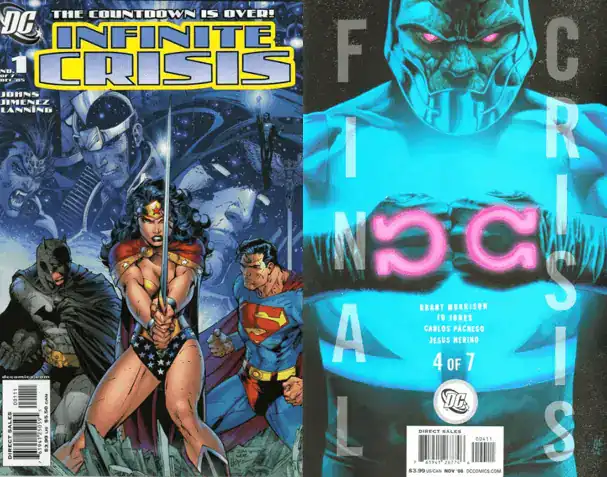
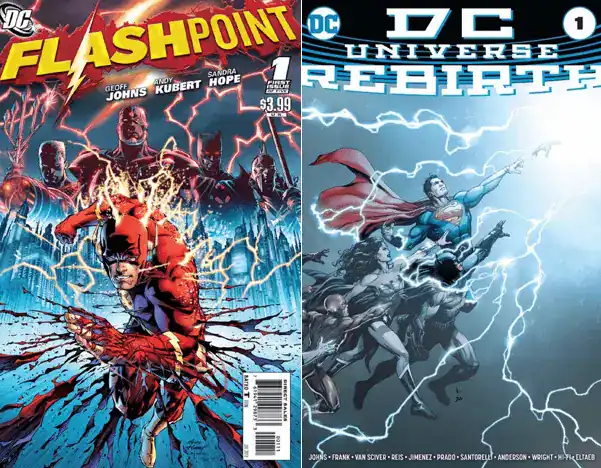
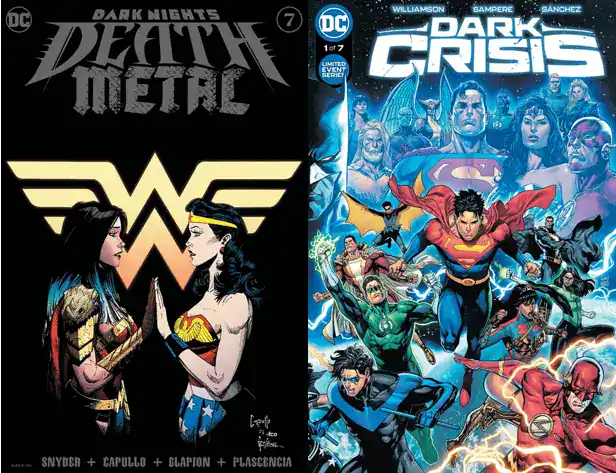
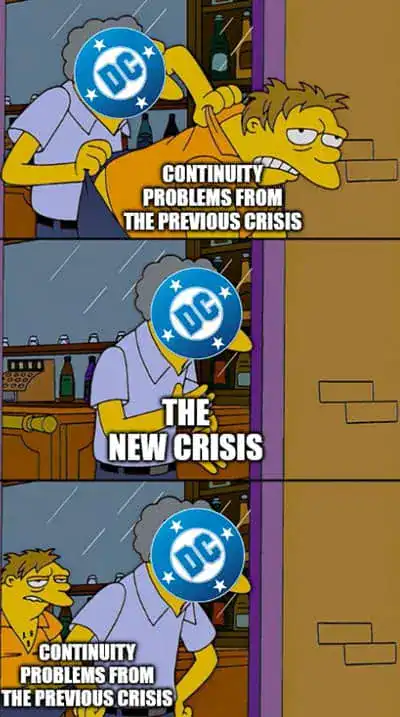
I’m not sure how official it was that Crisis’ effects took a while to fully manifest, but that was indeed what happened in practice.
It was most explicit in All-Star Squadron, where the high point of a certain issue was in fact that new character Mekanique somehow had the power to hold off the rewritting of continuity due to Crisis and decided that the time came to stop doing so.
But there were other indications as well. For about a half year Batman stories kept mentioning pre-Crisis continuity before discreetly settling into somewhat continuity-agnostic tales up to the point of Batman: Year One, which was a very explicit reboot of Batman.
Reboots, however, are always a bit of a two-edged sword. They clean up continuity, but also create permanent pressures both to stray from what had been published before and to revisit that.
The Kessels’s run on Hawk and Dove was delightful. I hated to see the book canceled, but at least it ended on a happy note. The final issue was also a War of the Gods tie-in issue. During the course of the book, we learned that a Lord of Order and a Lord of Chaos fell in love. To prove their compatibility to their respective orders, they each empowered a human champion, giving us the original team of Hank and Don Hall. At some point, they realized their plan to have their champions mate and produce a child wasn’t going to work since brothers are terrible at producing children together. They withdrew Don’s power, leading to his death in Crisis, and empowered Dawn Granger in his place.
Later writers would forget the “mate and produce a child” business, as the late Hank gets replaced by the sister Dawn didn’t know she had. Sisters aren’t any better at making babies together than brothers are.
I enjoyed Hawkworld too. When John Ostrander was hired to do a monthly Hawkworld book, he intended to have it set in the past, giving the Hawks a richer backstory. When editorial insisted he set it in the preeent, with the Hawks as newcomers to Earth, he warned them that the book would end up being one continuity patch after another. Did anyone listen? Of course not.
As for Captain Atom… in the final issue of his book, he clashed with Deathstorm, the evil shadow of Firestorm. Captain Atom appeared to win, but in the last panel, the shadow in his eye made it clear that his consciousness had been infiltrated. It was obvious that the darkness now within him would lead to him becoming Monarch. The set up was right there.
No crossover has ever been blown as badly as Armageddon 2001.
I appreciate this unraveling of the complicated back story of Zero Hour. I sat out all of these “major events” and read about them after the fact through message boards. Now it all makes sense. Sort of. A few random thoughts:
1. I agree that rewriting Monarch’s identity was unnecessary. The idea that a story has to have an ending that no one figures out in advance or leaks is preposterous. Savvy fans should be able to figure out the mystery, and the story’s merit should not depend on the revelation alone. What does it say about Hero X when he becomes Villain Y? What does it say about all of us human beings that we could make a similar transformation, abandoning our ideals to become that which we hate the most (I’m looking at you, Harvey Two-Face)?
2. Aligned with the above, I think it makes no sense for Hal Jordan to become a villain. Heroes are heroes because they stand for something: They believe in ideals greater than themselves. It was horrific that an entire city perished and understandable that Hal wanted to reverse the damage, but at some point he had to come face to face with his inner core, his sense of self, and decide what he truly believed in. Going “mad” is c0mic book shorthand turning a hero into a bad guy. Hal either had to be a bad guy in his core all along or a someone who strove to overcome his personal weaknesses.
3. The “darkening” of super-heroes was a trend that began with Watchmen (which shows that most writers or execs misunderstood the point of that series), and it didn’t translate so well into already existing heroes such as Superman, Green Lantern, and Hawkman. Heroes can be flawed, but that doesn’t make them “dark.” Even in Watchmen, Daniel Dreiberg fought dirty when he had to but was basically a decent guy.
4. All of the above has very little to do with the major events that led to Zero Hour or the rebooting of the Legion, but I think it speaks to how these stories are flawed at a fundamental level. They use big, splashy events and shocking transformations as “jumping points” for new readers as opposed to saying anything meaningful about what it means to be human or to be a hero.
I know that Modru has caused much trouble to everyone… but I think that “Mongul” was behind the destruction of Coast City. 😉
Force of habit 🙂
Italy was never a generous market for DC comics. Zero Hour happened like a sudden thing with barely a premise or a contextualization. It was short-lived and it didn’t bring in any interesting development. Hawk was a mr. nobody, boring. Hal Jordan as Parallax was, to me, like “Eh? Hal Jordan? Who? What? WHY?”
It was the second editorial event, and it was the one that left behind a big “meh”. Since that i didn’t even know anything about the Legion save for some scarce precrisis material, its importance for this title was lost to me.
I was a big fan of Hawk and Dove from its miniseries with Rob liefeld and karl kiesel. I love the mystery of it at that time and some of the mystery came over with the ongoing series. But in fairness like Hawkworld, it was not destined to last a long time.
I always got the feeling that both of those series were pretty much ending around the same time and Armageddon was just a cheap way to end the series at least for Hawk and Dove.
In your playback you asked if Hawk, Hank Hall, was smart enough to be able to put together any of that technology. I think we all know the answer is “no”, but that was never the point. They just wrote themselves out of one non-problem and into another one for Hawk and Dove.
I was disappointed, but I had given up on this series by that point anyway. But Hawk killing dove just seemed ridiculous at the time. I did kind of like the idea of the circular impossibility of the monarch character, it reminds me of a story that John burn did with the next men with a similar circularness to another villain. But looking at the whole story, thanks to you, doesn’t the creation of extant make the circular nature of the story impossible?? Where does the box that shows Extant being created and then switching back to Monarch fit into the flow??
It really does seem that a lot of people are making some bonehead decisions around this time. I loved Hawkworld, Hawk and Dove, and Green Lantern but dear God somebody really decided to mess those characters up. And that’s without even getting into the legion.
The Team Titans were also a creation from Armageddon: 2001. They were led by an older Nightwing, who eventually became a bad guy named Deathwing. He ended up impregnating one of the Team Titans—Mirage.
Did you get all of that?
Team Titans were introduced as being from a future ruled by Lord Chaos, son of Donna Troy. Their leader was an older Nightwing. When they were given their own book, no one knew what to do with them. Two years later, Armageddon 2001 retconned them into being from a false future created by Monarch, so they could be used as sleeper agents. Older Nightwing wasn’t actually Dick Grayson, and was rebranded as Deathwing. Monarch’s defeat erased their false future, and made most the the team poof out of existence. The more popular characters on the team (Mirage, Terra, and Deathwing) were revealed to be current day characters who’d been transported to the false Lord Chaos future by the Time Trapper, so he could use them as sleeper agents embedded in the midst of Monarch’s sleeper agents.
Because that isn’t at all complicated.
My favorite part of the Captain Atom debacle is Justice League Europe #31. Even before the internet, it was clear that they’d changed the story at the last minute because the JLE liaison has a nightmare about an evil Captain Atom attacking her- a scene that made zero sense if he wasn’t supposed to be Monarch.
https://www.cbr.com/justice-league-captain-atom-armageddon-2001/
This is somehow not the worst usage of Monarch by DC Comics.
Not being familiar with his post-Zero Hour, should I be afraid to ask how much worse?
Countdown.
Extreme Justice will reveal that Nathaniel Adams didn’t become Captain Atom. Nathaniel died in a military experiment and a quantum elemental with his memories was born. Yes, they tried to steal the Anatomy Lesson from Swamp Thing. The real Nathaniel Adams came back as Monarch II.
Extreme Justice is thankfully forgotten and all plots from it never happened. Legion trivia point: the series brought Zan and Jayna, the Wonder Twins, into mainstream continuity. When first introduced, they speak Interlac. Including Jayna misinterpreting Blue Beetle’s attempts to be friendly. “Is he attempting to mate with me?”
BLUE BEETLE: ….sorry, I was talking to Booster.