
Let’s finish the main miniseries. There is still one Legion issue that takes place between those, and the last Zero Hour issue technically take place after it (and it was published later), but I prefer to end this era by focusing on a Legion story.
And the Legion features very little in these three issues.
Zero Hour #2 (1994)
by Dan Jurgens
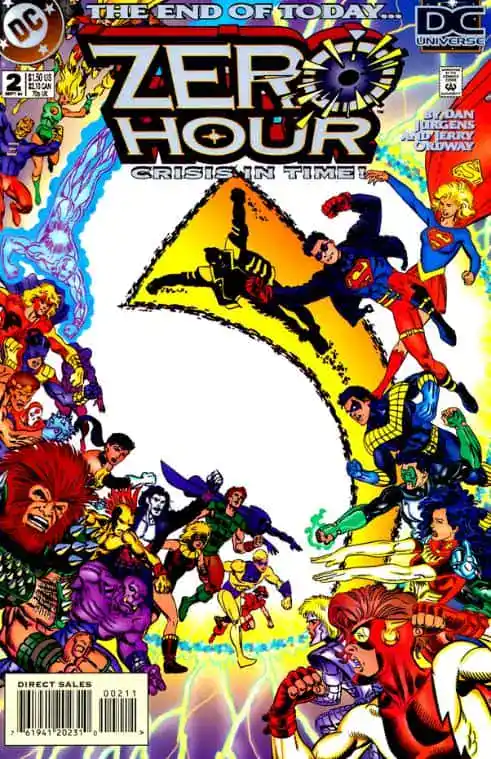
When I think of Zero Hour, this is the cover that immediately comes to mind because it was the one chosen for the Italian reprints.
I still can’t recognize most of the characters in it, mostly because a ton are from the Titans.
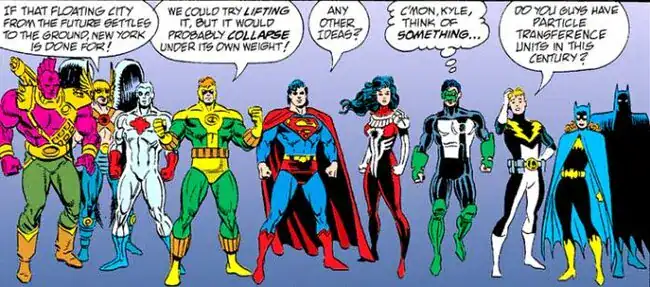
A very minor threat from a previous issue that I didn’t mention is that there’s a city from the 25th century about to collide with its 20th century version.
I don’t get what’s so bad about it, in the 20th century we don’t even have backgrounds.
As I have mentioned before, when first I read this issue I had no knowledge whatsoever about Emeral Dragon being Ultra Boy. His dialogue made me wonder how exactly he was connected to the Legion.
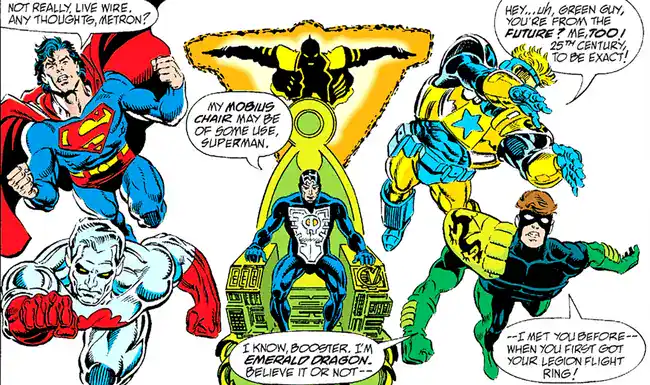
For the record, Ultra Boy’s first encounter with Booster Gold was Booster Gold #8; characterizing their encounter as “when you first got your Legion flight ring” is incredibly reductive.
Dan Jurgens wrote both that story and this one, so I doubt he forgot… this is definitely the result of the history of both characters being too complex for a single line of dialogue.
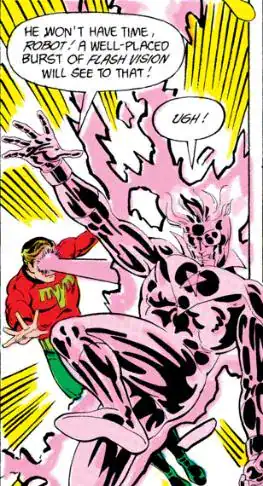
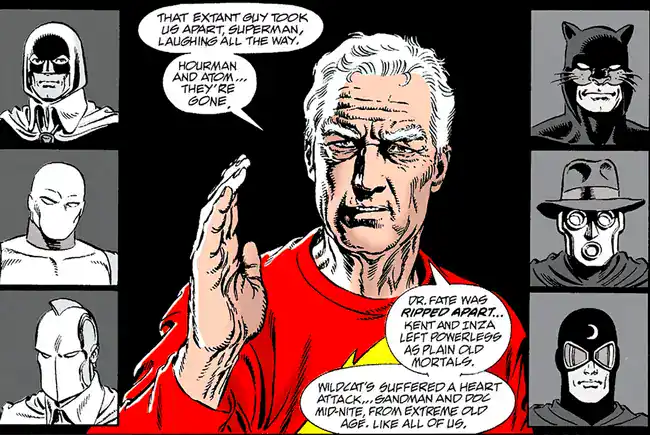
After the heroes send the city back to the future, they have to deal with Extant completely decimating the Justice Society.
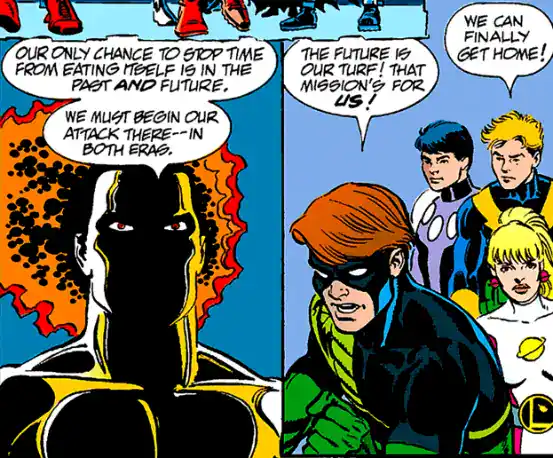
Since the threat is coming simultaneously from the past and the future… SOMEHOW… Waverider’s plan is to attack both.
The Legion volunteers to take central stage in the attack, which certainly makes you think they will play an important role in the rest of the story… and they absolutely will not.
Also, got to love Live Wire’s “we can finally get home” exclamation considering that the Legionnaires have been in the 20th century for MAYBE a day.
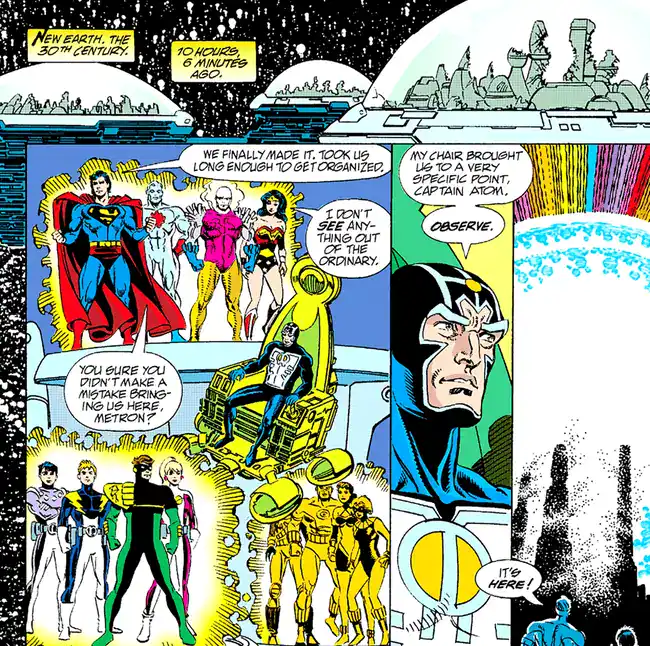
Metron takes the Legionnaires to the future, along with the Team Titans and others (including Metamorpho with his awful new design).
When I read this issue initially I didn’t notice this is New Earth and not Earth; in retrospect I should have found it weird, having no idea that Earth got destroyed.
Extant is now able to mind-control some additional Team Titans, some of which I understand come from even more alternate timelines.
I have no clue who these people are and the comic certainly isn’t interested in telling me.
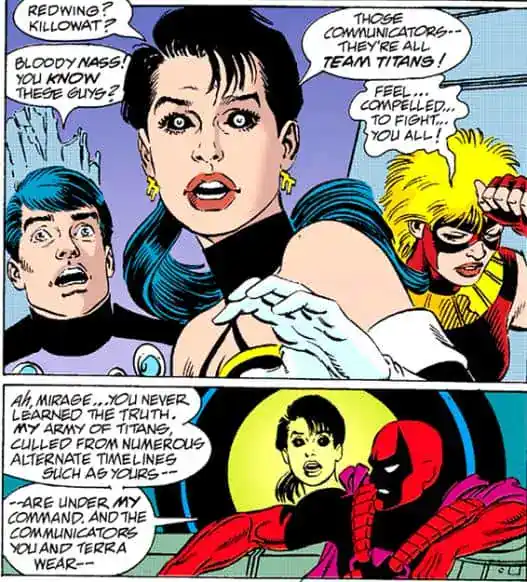
The Legionnaires don’t even participate in this fight. They’re just gone from the story.
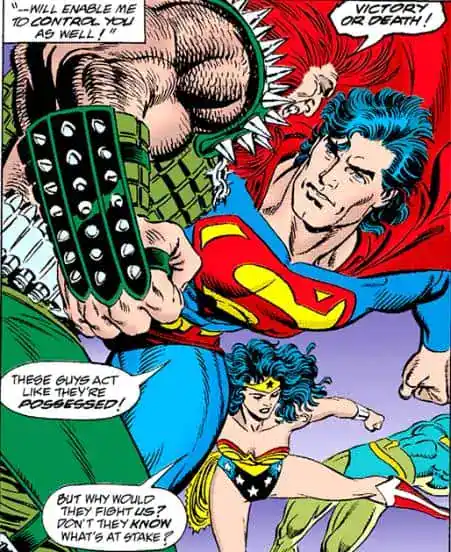
Another batch of Team Titans… I think… also attacks the 20th century.
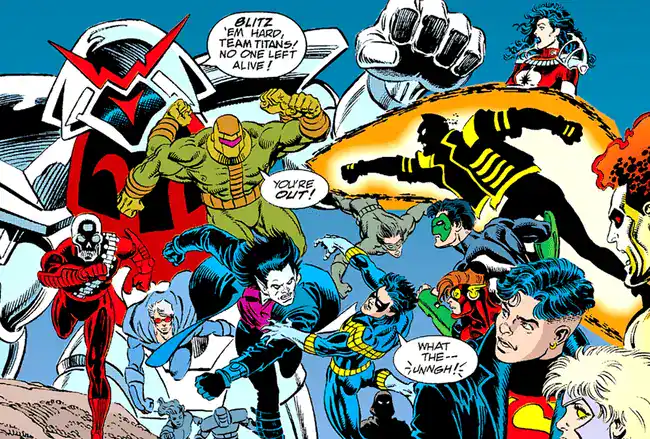
I hate agreeing with Extant, but he’s got a point: the Linear Men just plain suck.
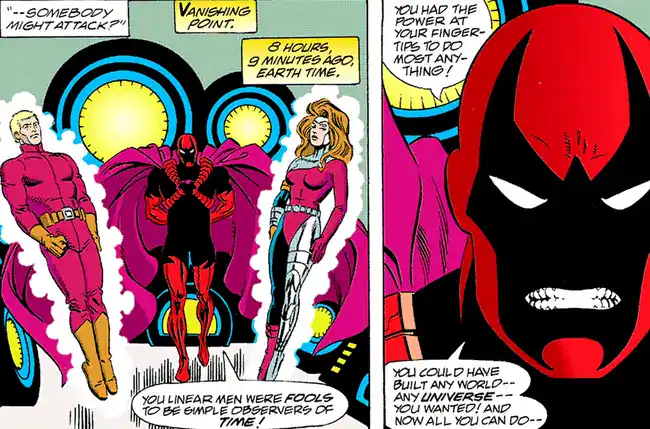
See the reason why last issue Extant had Waverider’s powers is that he steals them in THIS issue.
Look I love when time travel stories take advantage of the premise and tell events out of chronological order, but there has to be a point to it!
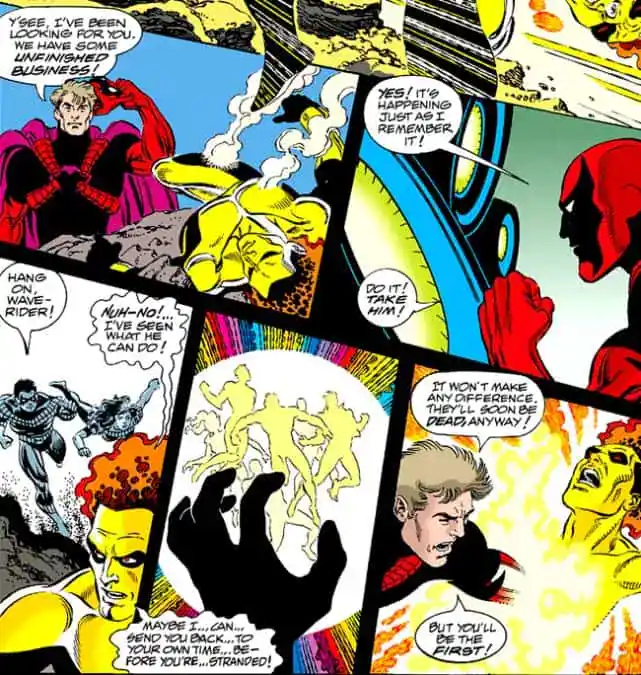
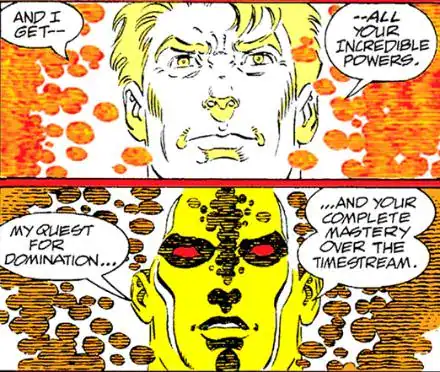
Meanwhile in the 30th century (???), the future is saved by throwing a chair and shooting it.
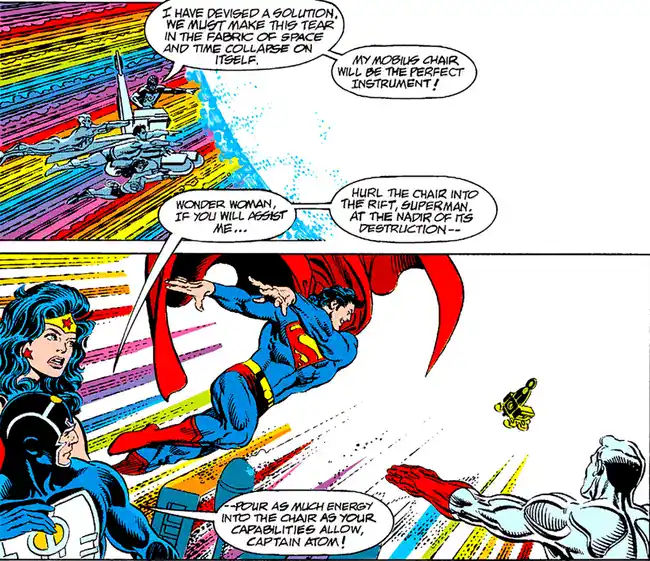
The Legion contributes NOTHING to this plan. The Time Trapper then show up to send the 20th century heroes back to their time.
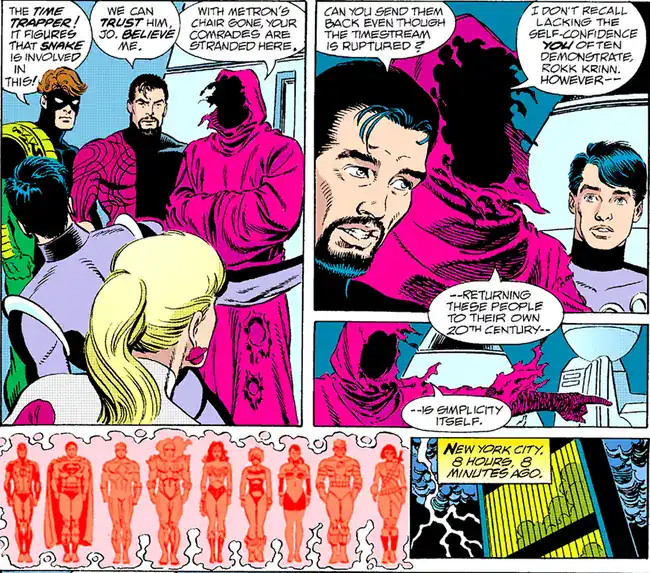
Preventing the 30th century from being destroyed SOMEHOW sends the mind-controlled Team Titans back home, even if they’re not from the same future.
I don’t think there’s any explanation for this.
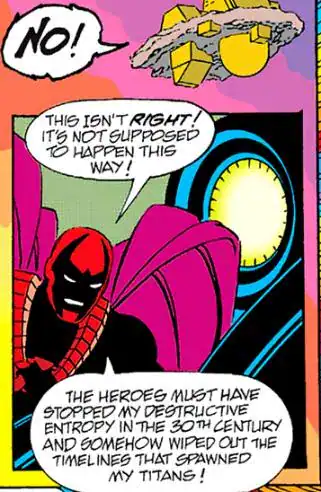
Extant’s past self merges with the future after it has absorbed Waverider’s powers.
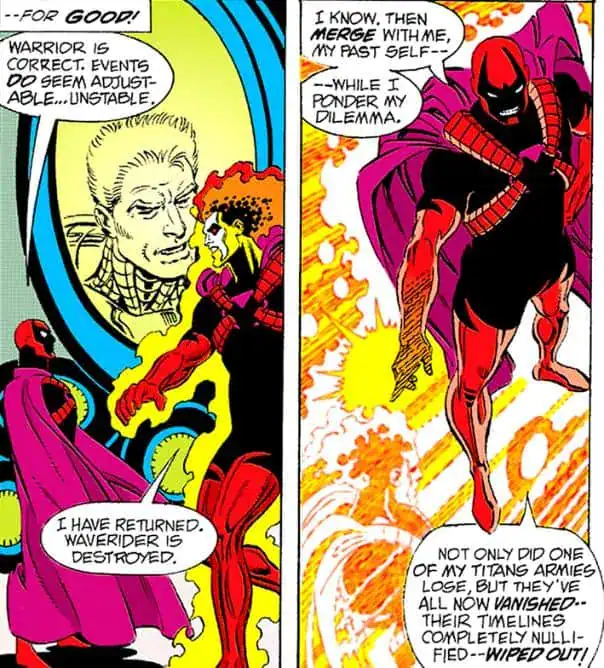
Wait if he’s the past version, why does he need to… how did he split up before stealing… how does that even… nevermind.
We close the issue with the REAL main villain showing up again in the 30th century to destroy New Earth with another portal of entropy, and we see that he has with him the ring discarded by the Golden Age Green Lantern.
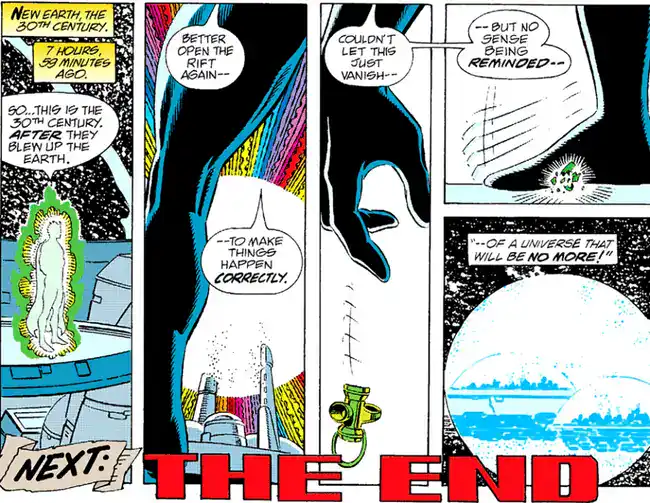
This seems to contradict the main book, where New Earth had been moved to the Earth from the Pocket Universe.
That planet will have a different ending on the last Legion story of the era.
Zero Hour #1 (1994)
by Dan Jurgens
Probably the best cover of the miniseries.
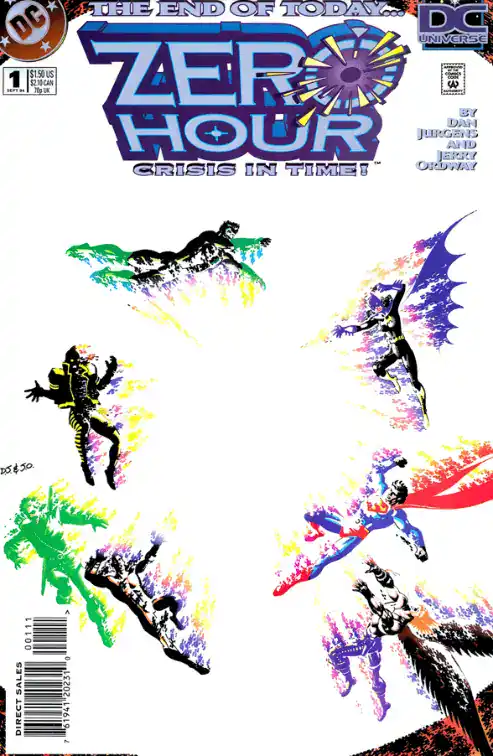
Extant’s role in this event in a nutshell.
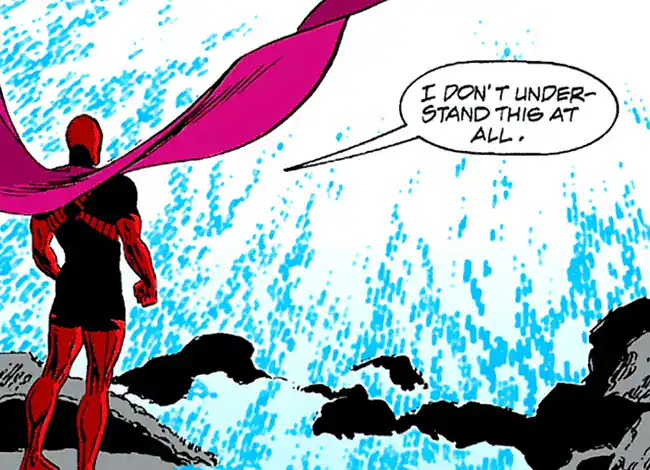
There are multiple crossover events when we don’t learn who is behind the big threat until the very end. But I can’t think of another one besides Zero Hour where the adversary behind more than half of the issues is completely superfluous.
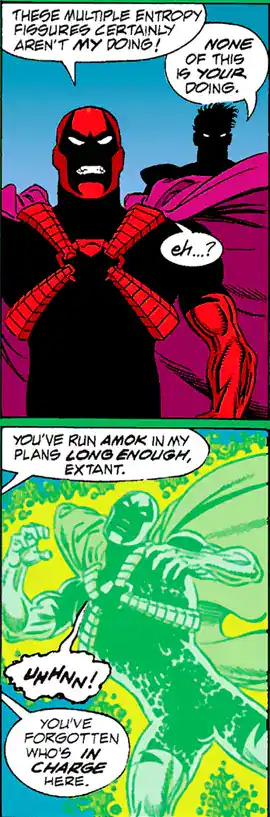
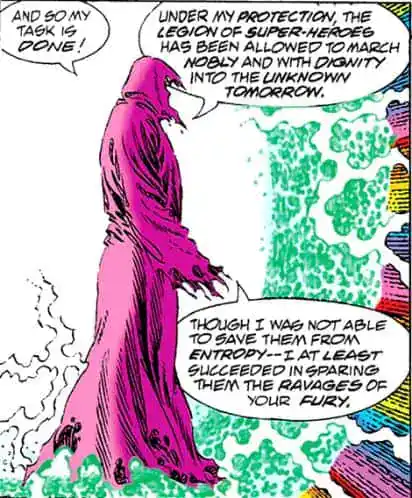
We have the only actual Legion connection of these issues, where the Time Trapper departs from the Legionnaires after saving them.
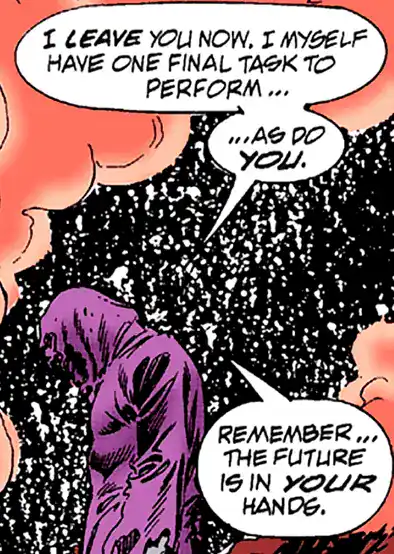
Appropriately, the final Legion members are the three founders and their SW6 copies.
The first time I read Zero Hour, it was together with the very first two issues of the Reboot.
I assumed that the young Legionnaires in Zero Hour were the same characters, considering they look EXACTLY the same; I wouldn’t learn that these actually the SW6 versions until years later.
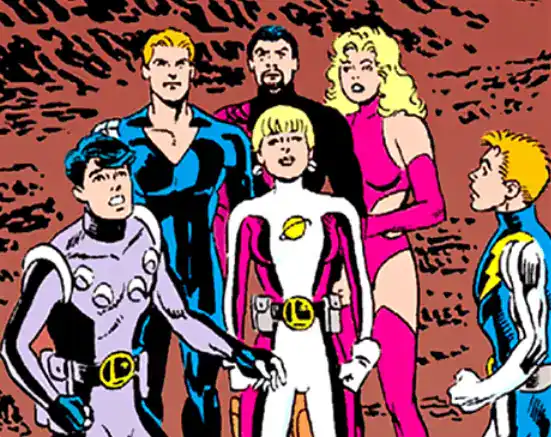
This section, technically speaking, takes place simultaneously with the ending of the last Legion issue. It doesn’t play out EXACTLY the same, as I will discuss next time, but spoiler alert: they completely failed to save the 30th century.
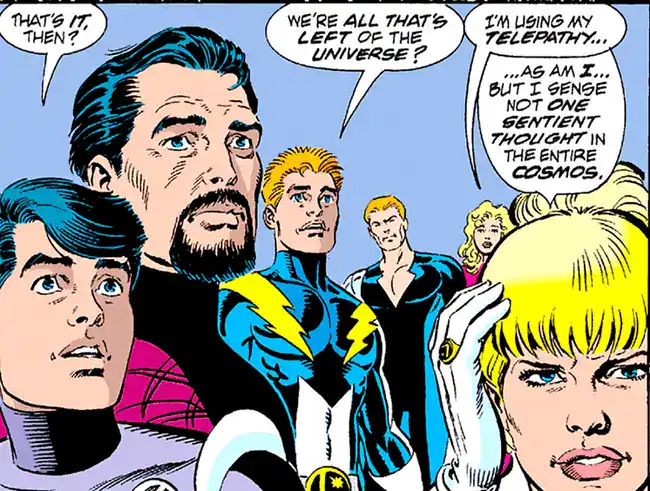
The Time Trapper is the only reason that issue takes place.
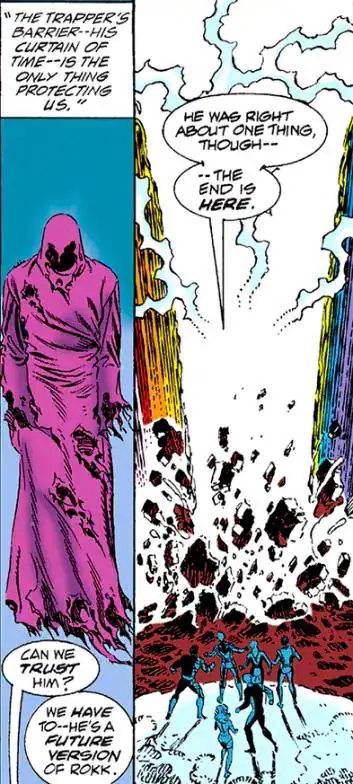
I’m not entirely sure about what sacrifice they’re talking about, but I’m more distracted by trying to figure out what SW6 Saturn Girl is doing with that pose.
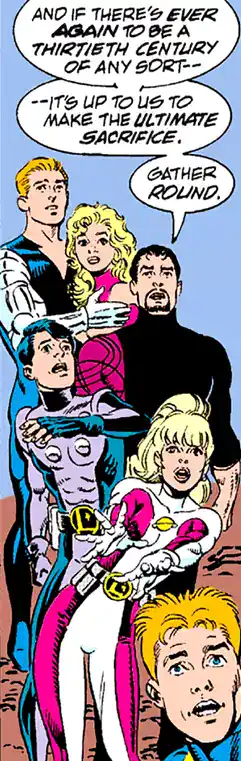
It’s hard to figure out what happens first, this issue or LSH v4 #61, and from my sources it looks like both books share the same publishing date.
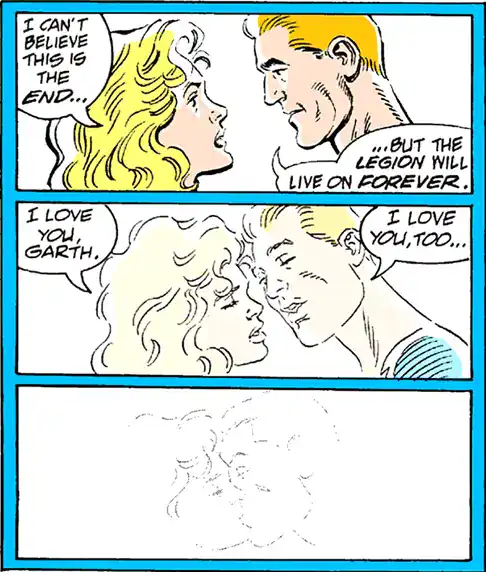
There’s an argument to be made that THIS takes place afterwards, which would make these three panels the very last appearance of the original incarnation of the Legion of Super-Heroes.
But I prefer to think the OTHER story is the real last appearance, not just because it allows the Legion to end the run on its own book… and because I don’t want the Legion to end with Saturn Girl declaring her eternal love for Proty.
Yeah if you forgot, and I envy you SO much if you did, THIS IS PROTY.
I interpret the Time Trapper’s dialogue as confirmation that HE was ultimately responsible for the Reboot, not the whole time shit shenanigans.
Which would explain why the Legion is the only DC franchise that gets a full reboot after Zero Hour.
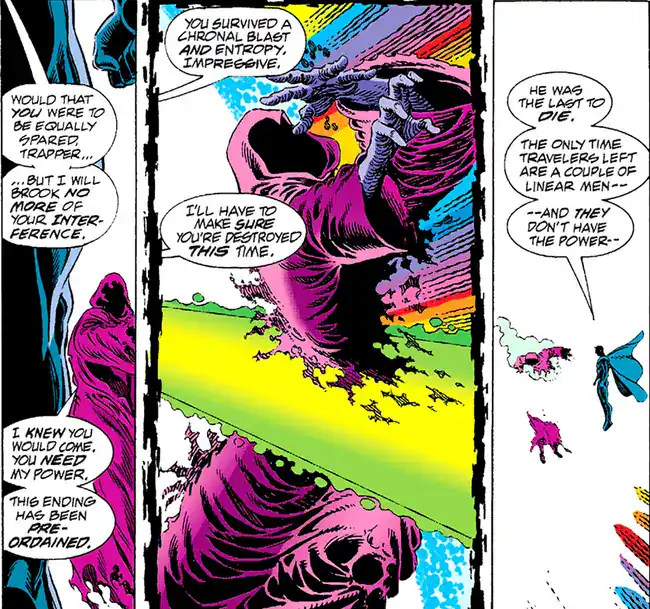
And with that, our mystery villain destroys the original Time Trapper for good.
Well… maybe. As with anything involving the Time Trapper, it’s complicated.
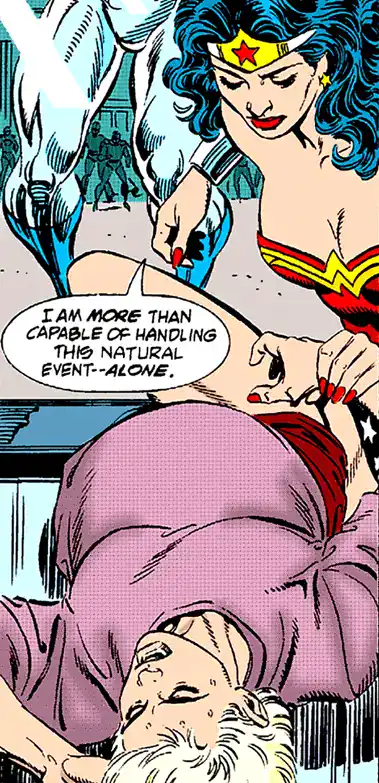
Back in the present, Power Girl is about to give birth.The last issue will make you believe this is an important event (it most certainly is not), but the comic also sidelines Wonder Woman to let her be the midwife.
She can’t be THAT familiar with childbirth, right? I mean she might come from an island with only women, but Amazons haven’t given birth for millennia!
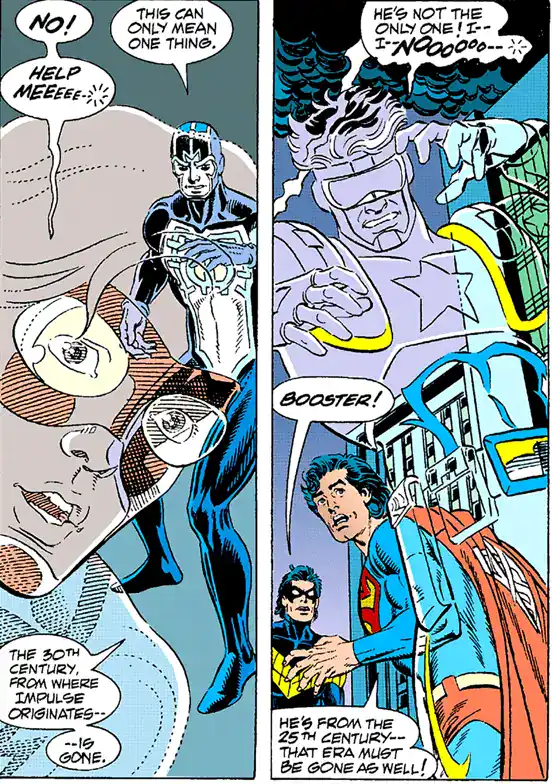
Because the crisis is moving backwards in time, Impulse and Booster Gold vanish in this order because they’re from the 30th and 25th century respectively.
So destroying THEIR past makes them vanish, but destroying EVERONE ELSE’s past doesn’t matter because it hasn’t caught up with them yet?
Sounds legit.
The original Flash gets deleted too, and just about in time for him to ask the Spectre to get on with it and finally intervene.
Wait, if Jay Garrick vanishes because the 40s have been destroyed, shouldn’t this also affect the Spectre since his human host is from the same period? Or somehow this doesn’t apply to ghosts?
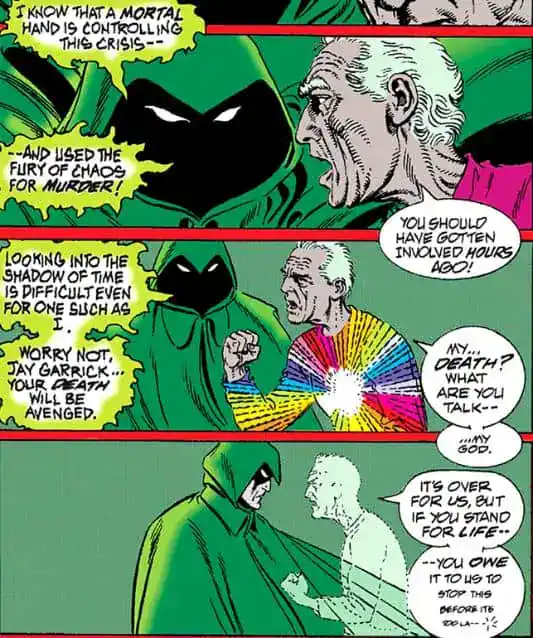
For SOME reason, Extant wasn’t killed like the Time Trapper.
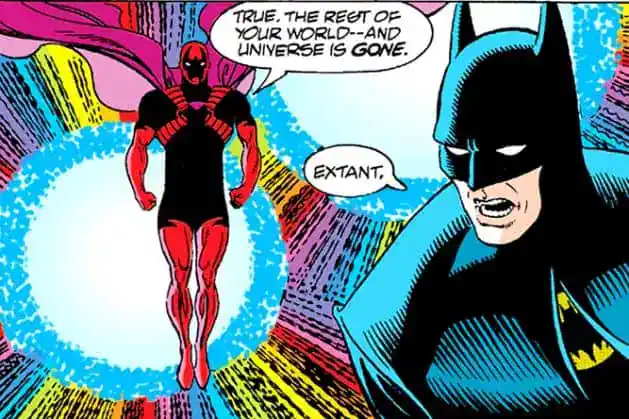
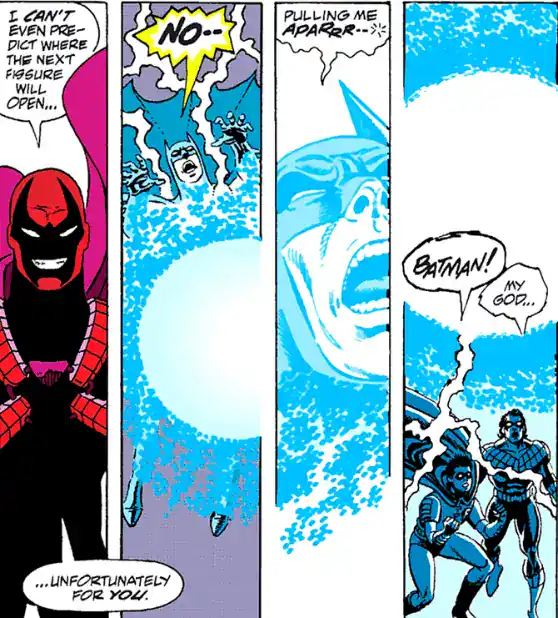
This ends Batman’s contribution to the story.
Hey remember when big crossovers didn’t have to revolve about Batman because he’s the most popular DC character, no matter how little sense it makes for him to be the focus of universe-spanning epics?
Good times.
Then Waverider comes back! If you’re wondering how he survived getting his energies absorbed by Extant, he didn’t: the blond guy in the Linear Men is an alternate version of the same person, and he’s just been given the same powers by Metron.
Because apparently it’s THAT easy to give someone Waverider’s time powers.
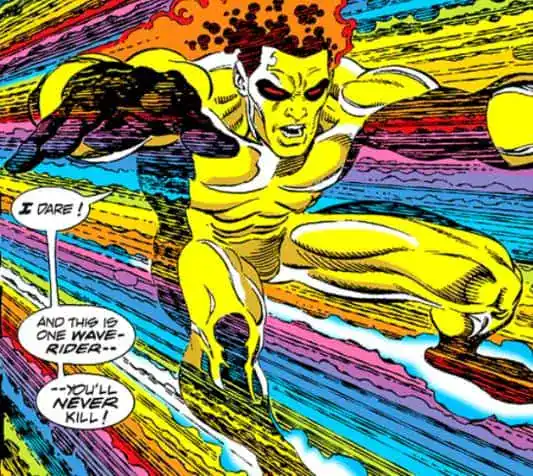
This distracts Extant enough to take him out…
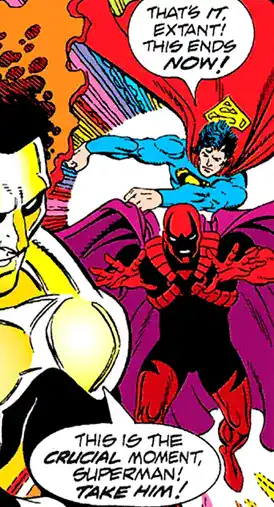
…which is for nothing, because the actual man behind the entire event finally shows up.
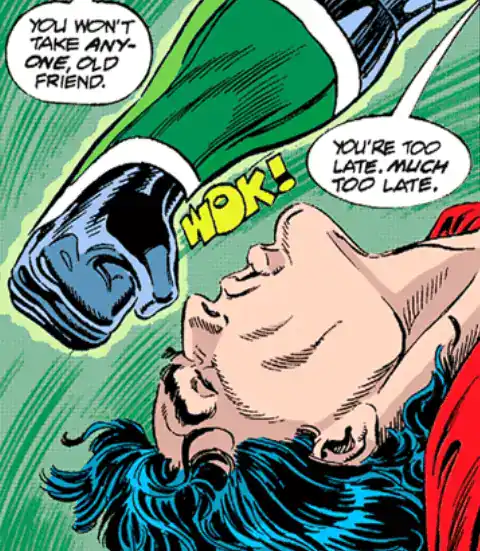
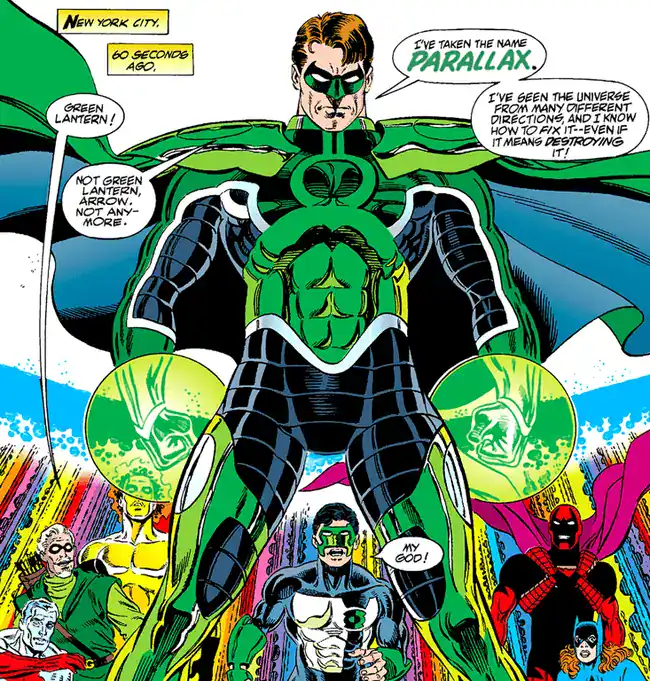
And so we end the issue with Hal Jordan destroying all of time.
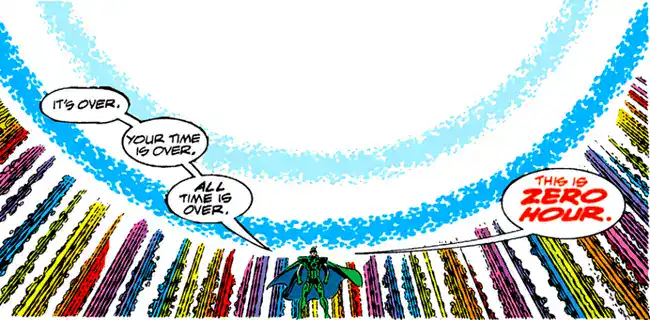
Zero Hour #0 (1994)
by Dan Jurgens
I’m not a big fan of monochromatic covers, but I like this one because it’s technically a scene from the comic.

Okay so far I’ve been quite critical about the plot, but I honestly really like the ideas here.
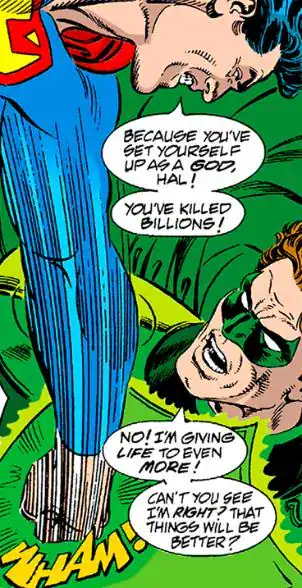
The reason why Hal destroyed the universe was to re-create it without various tragedies from history! Obviously there are moral implications in this, and to the comic’s credit they won’t go without mention, but this is exactly the kind of cosmic nonsense I want in my big events.
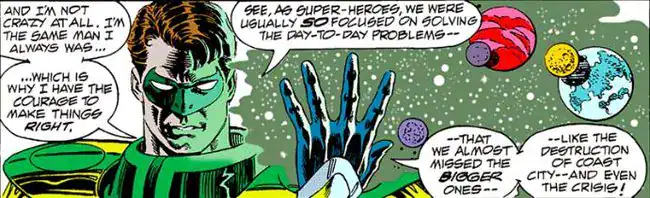
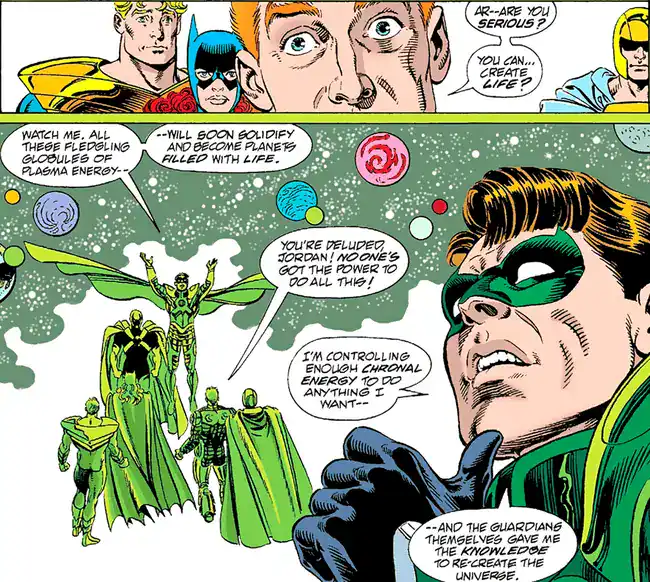
The connection to the original Crisis is flimsy, but it’s there: the whole reason Zero Hour exists is because DC Comics didn’t have the courage to end Crisis with a clear reboot Hal found the residual energies left behind from the Anti-Monitor.
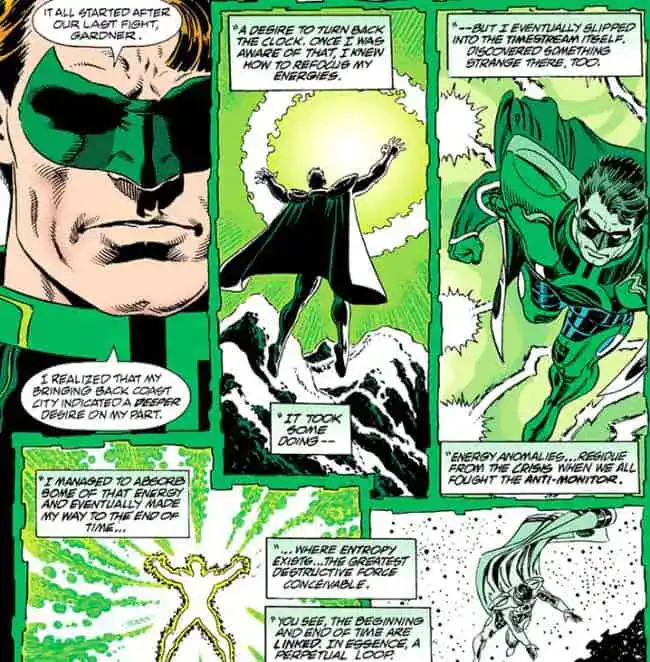
Aside from a couple of guys I’ll mention later, the surviving heroes don’t really matter.
There are also a few that Hal doesn’t know about yet.
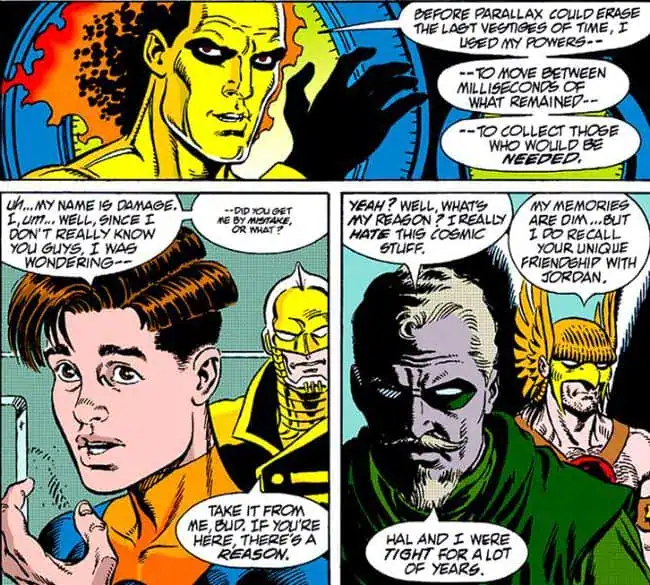
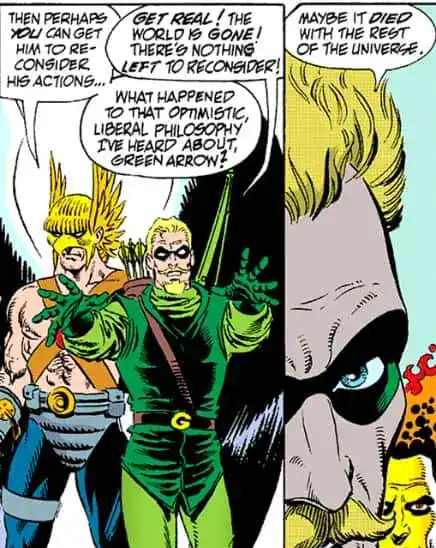
Green Arrow is UNDERSTANDABLY a bit down after the destruction of the entire universe.
This moment would hit better if we had any clue about what exactly this new Hawkman is supposed to be.
One of the reasons why I don’t have as many problems with the plot of the last issue as I had with the previous ones is that Hal, despite his villainous role, has understandable motivations.
Yes he killed everyone in the universe, but since he’s going to recreate everyone, did he really?
He’s also talking about re-creating the old multiverse AND keeping things stuck in the same status quo… ironically, I think that a lot of readers that hated Hal’s plan shared his vision for how the DC books ought to work.
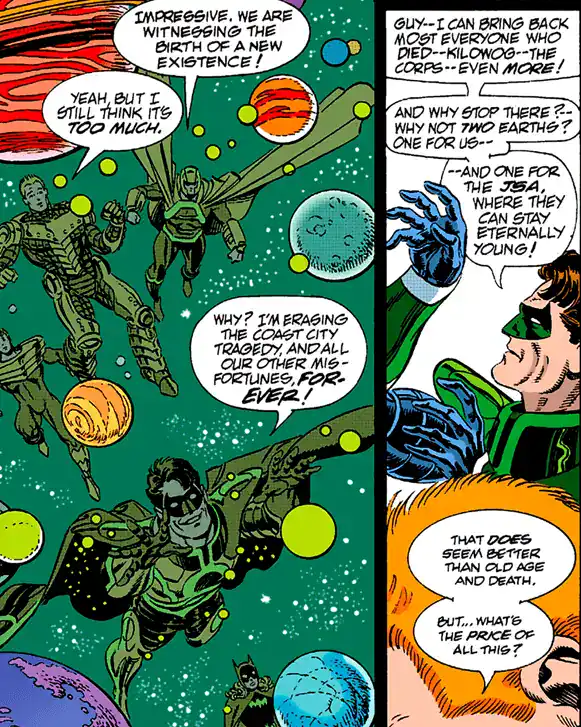
Among the heroes with Hal there’s Alpha Centurion, a guy from the Roman Empire brought into the future by aliens and who will be a frequent Superman ally.
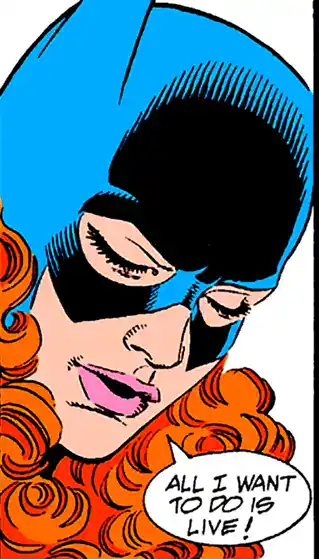
But also the alternate version of Batgirl we saw in the first issue, who brings up an excellent point.
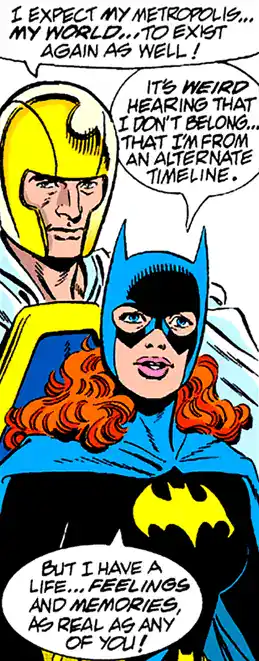
It’s easy to dismiss these alternate versions as “not counting” because they’re not the originals, but they ARE supposed to be real people with their own lives and history.
All too often, multiverse stories treat them as cannon fodder for shock value without giving them agency. I think that when stories do that mistake they cause the most damage to the literary usefulness of a multiverse, way worse than any of the standard complains.
Waverider brings the other heroes to fight Hal, and I think the comic doesn’t really get to explain the fascinating moral implications of this whole situation.
There’s no implication that Hal’s plan is not going to work: if he truly CAN alter history to remove tragedies, is it right to stop him? Yes he’s playing God and he’s being reckless, but treating him like a regular would-be conqueror is reductive.
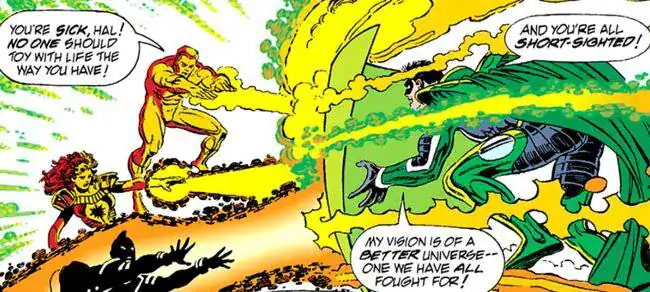
Also, if the heroes win that means that multiple alternate versions of Earth won’t exist anymore: if they heroes decide which Earth deserves to continue living, aren’t THEY also playing God?
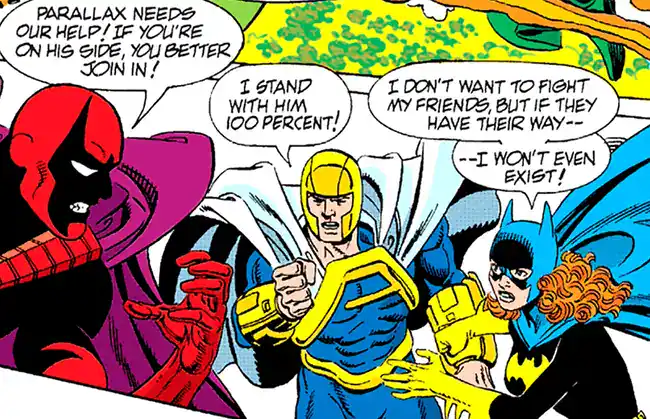
To be clear, I’m not siding with Hal or saying he’s right: he’s clearly gone off the deep end.
I’m saying that this comic introduced a fascinating moral dilemma worth analyzing and then completely refused to do so.
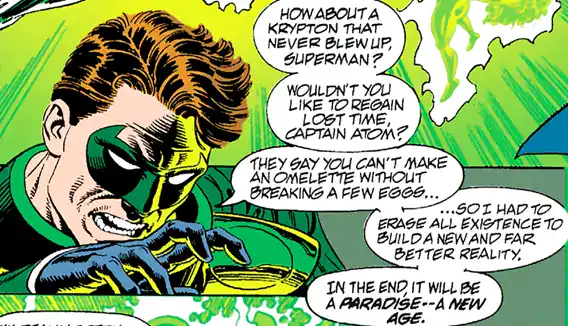
Even framing it as “absolute power corrupts absolutely” feels off to me, since it’s not like Hal is doing this for personal power. At least Batgirl does make this a bit more complex.
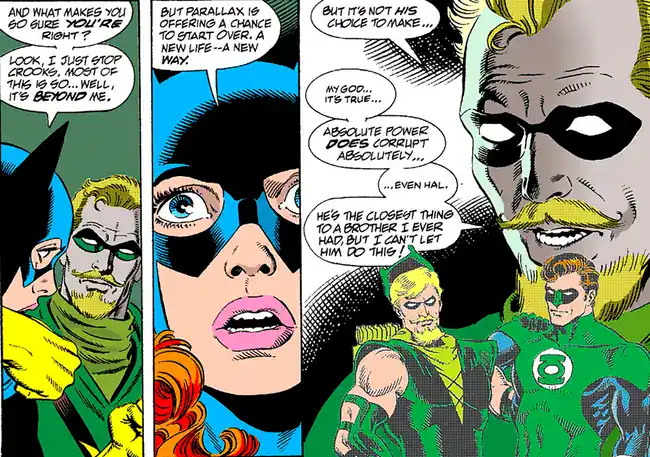
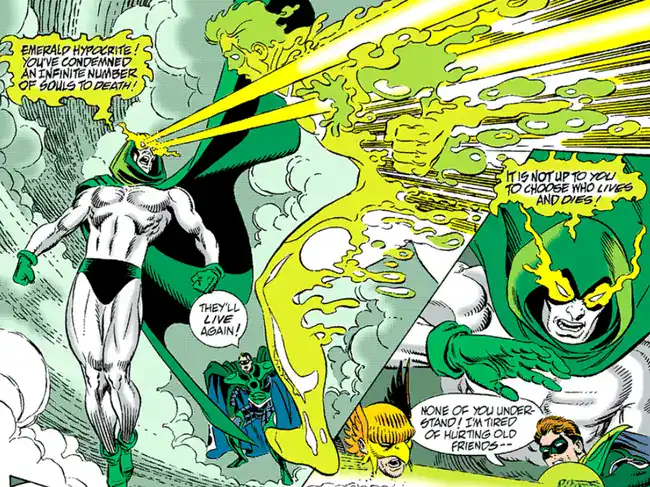
The Spectre finally decided to get involved. It only took him the destruction of the entire universe.
While the Spectre keeps Hal busy, the plan is to have the heroes absorb the leftover energy that was supposed to be used to re-create the universe.
I can buy Green Lantern absorbing part of it, since he’s supposed to wield “the most powerful weapon in the universe”, and to a much lesser extent Captain Atom since he’s a powerhouse.
Darkstar is a stretch: that’s the former Wonder Girl wearing a super-suit created by the Controllers, and while it’s great tech it should be anywhere NEAR enough.
At least the Ray (that’s the son of the Golden Age hero) does have a limitation.
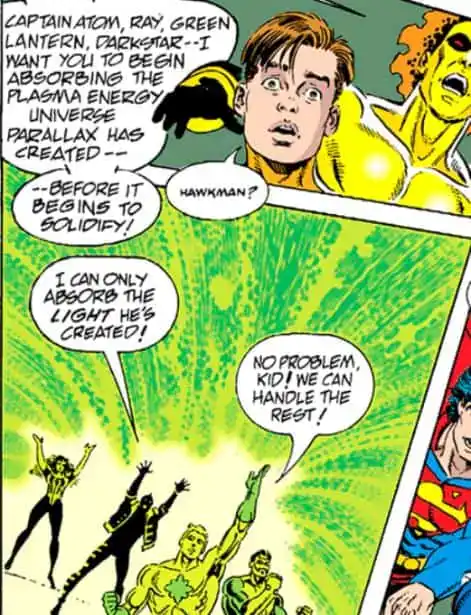
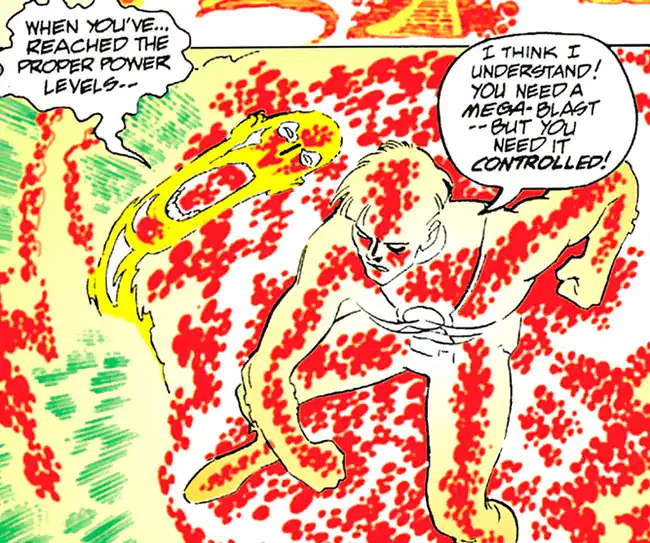
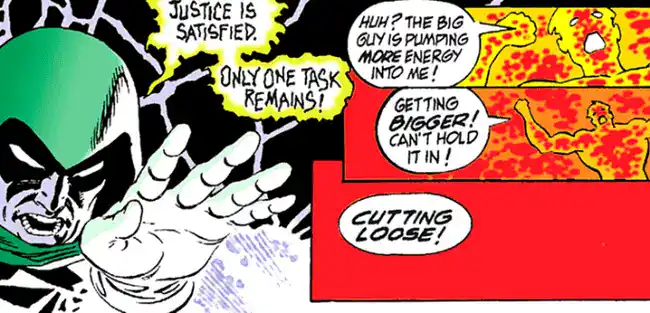
They focus all of that energy, plus Superman’s heat vision because why not, into Damage.
Damage’s history is quite convoluted, but all you need to know about him right now is that he’s had the DNA of several JSA and JLA members spliced into him, and that he can absorb and shoot energy.
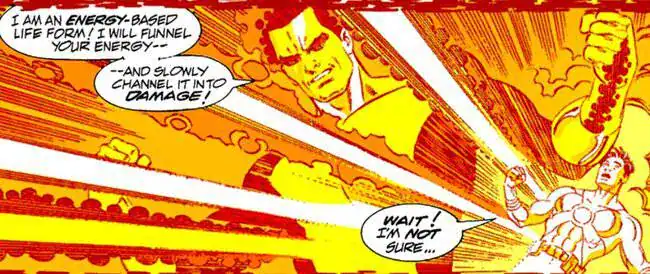
Hal realizes what the heroes are doing and decides to shoot Damage… only for Batgirl to save him.
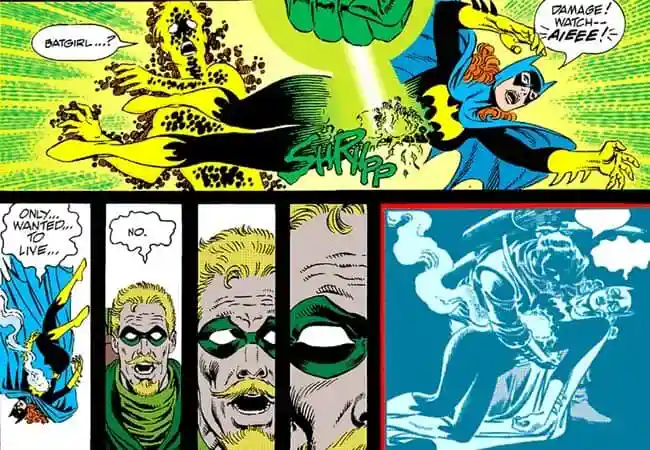
This is played as Hal crossing a line, something he definitely did… but at the same time, considering how often superheroes die and resurrect, at SOME point they should grow indifferent to it.
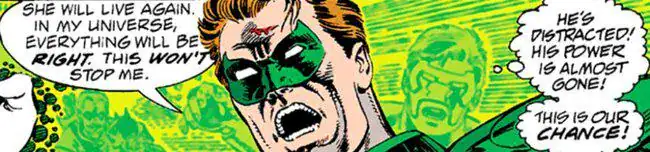
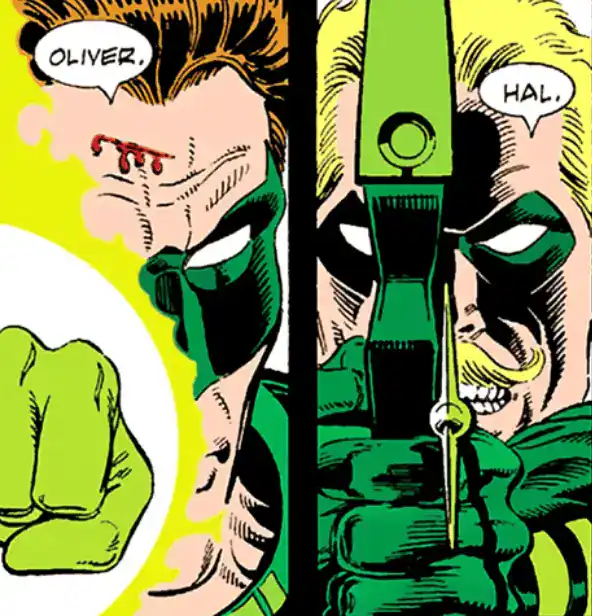
Green Arrow shoots Hal, who has been drained so much of energy that he can’t defend himself.
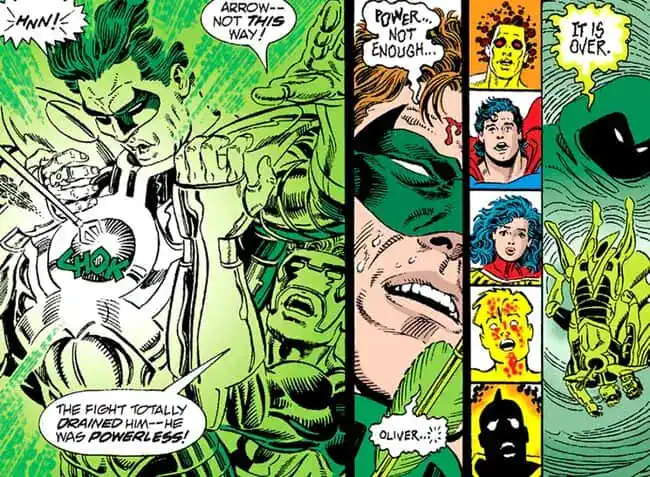
And then Damage EXPLODES INTO THE BIG BANG.
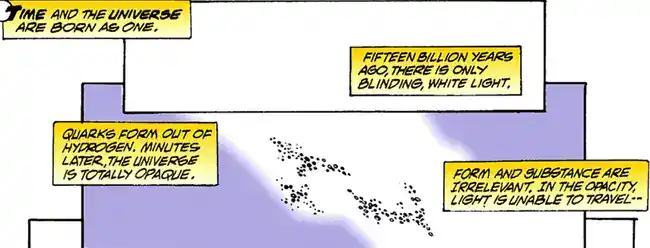
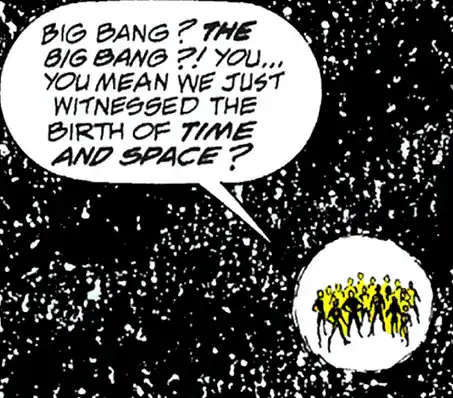
We also reference the post-Crisis version of the Krona experiment, which instead of creating the multiverse caused entropy to destroy a quarter of the potential universe.
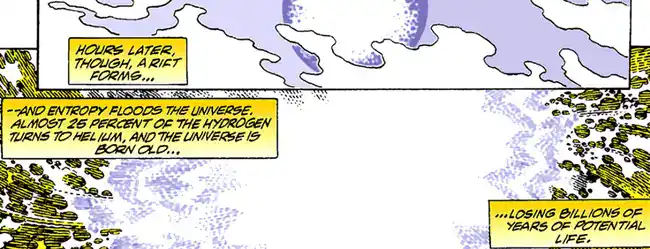
A new timeline is formed, erasing all alternate timelines. That won’t last.
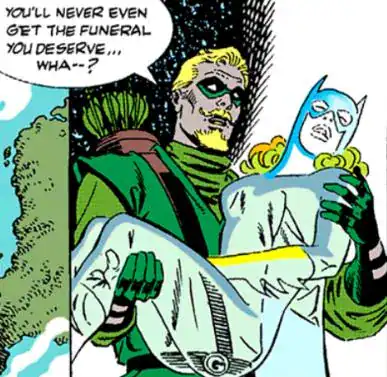
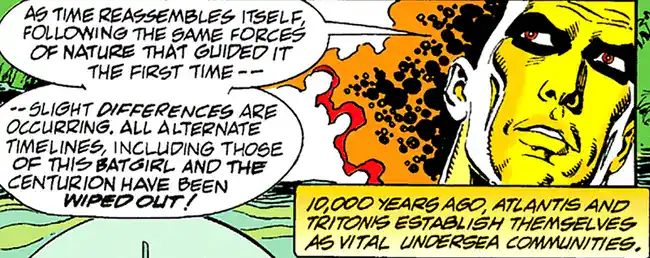
Extant somehow manages to still be around after this, because obviously HE’s the breakout star of this event.
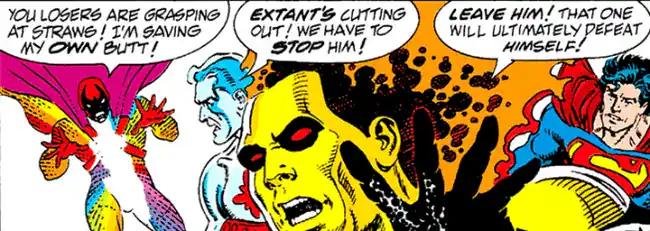
The heroes return to the new timeline, explaining (poorly) who will stay dead.
Wally West will return as the Flash in less than a month, by the way.
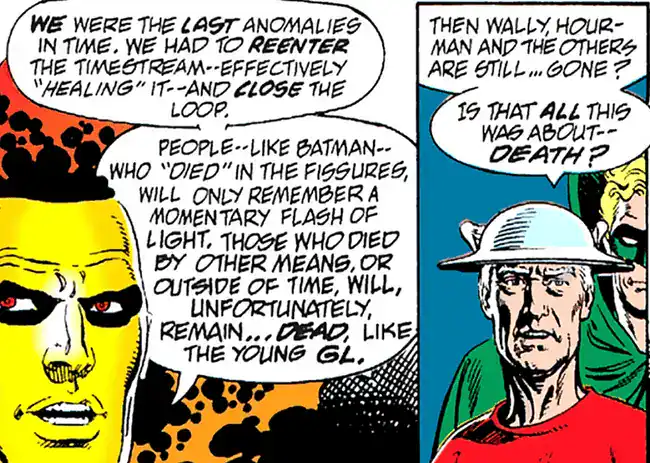
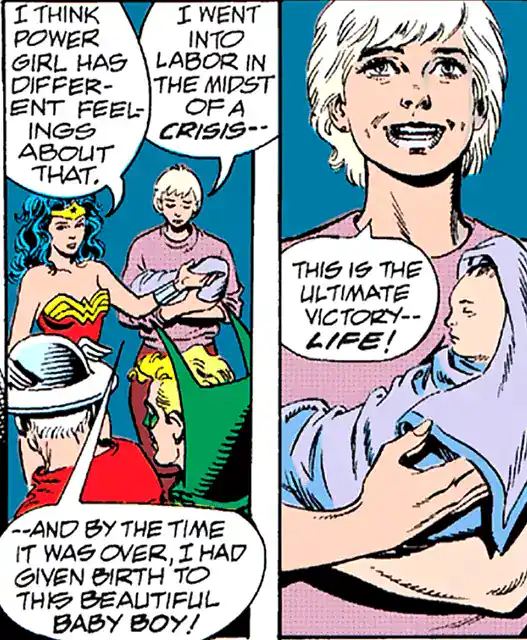
But that’s okay because Power Girl gave birth.
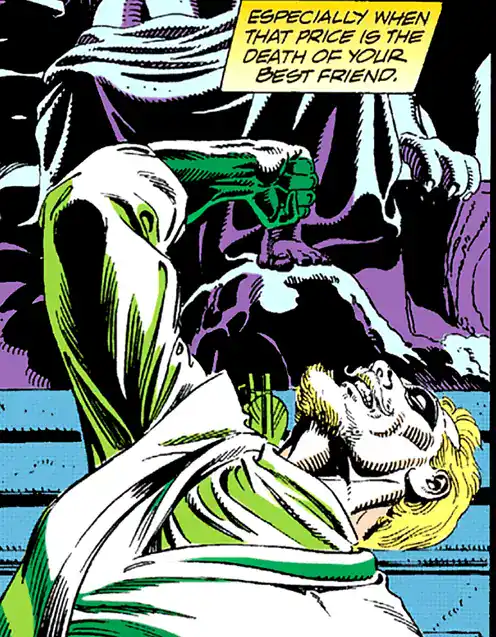
Green Arrow has a different opinion.
As mentioned the comic certainly makes you think that Power Girl’s son is going to be important, but after this he only appears on 10 issues of Justice League, taking the name Equinox.
dc.fandom.com has this do say about him:
Power Girl was impregnated using the magic genetic material of the evil Scarabus by the mages of Atlantis in an attempt to create an ultimate champion by combining the power of light and darkness. Not long after his birth, Equinox was magically aged to being an adult.
Equinox hasn’t appeared or been referenced, since 1996.
I’m completely unfamiliar with the character and, based on that description, I’m fine with it.
The only Legion connection of the issue is a cameo of the Time Trapper in a new form.
The implication at the time must have been that Glorith would be the new Time Trapper, and the Reboot will later introduce another likely new candidate.
I think we’re dismissing the possibility that the Time Trapper just let his hair grow; if Superman did it, why not him?
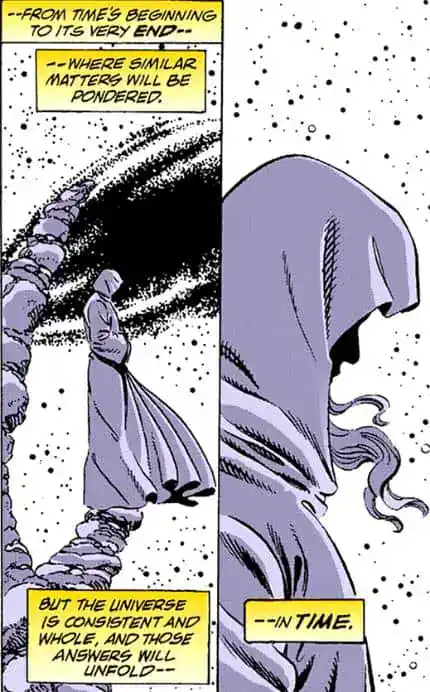
The book ends with the new chronology of the DC Universe (which is largely unchanged).
There’s only a vague mention of the Legion.
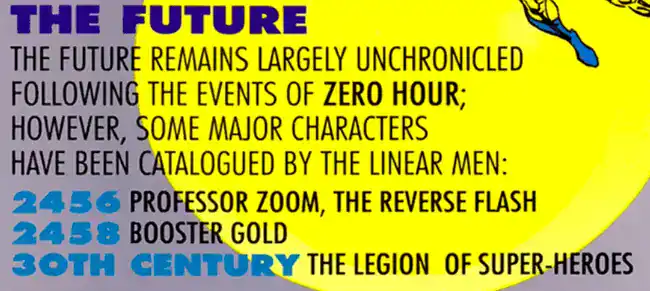
We will eventually move to that new version of the Legion, but before that we have the last 5YL story left and A LOT of post-era analysis.
Historical significance: -8 /-10
Multiple characters have both major and minor changes to their status quo; Zero Hour is little more than an excuse for most of them.
Silver Age-ness: -4 /-10
The possible return of the Multiverse is discussed.
Does it stand the test of time?
#2 and #1: -4 /-10
Pretty much the same complaints of the previous parts still apply.
#0: -7 / -10
The finale picks up a lot of points in my eyes, mostly by finally being ABOUT SOMETHING.
It’s not handled very well for several reasons, the main one being that 28 pages are not nearly enough to go into depth about such heavy topics.
But also there’s the problem that Dan Jurgens, while being a good writer, doesn’t seem interested in exploring the depth of the moral implications of time travel and time manipulation unleashed here.
I know he CAN do it, because he’s done it on Booster Gold later, but perhaps this is too early in his career.
Even restricting the series to 5 issues, the reveal that Hal was behind it should have come WAY earlier, at least the second issue. We could have had a more nuanced exploration of his motives, perhaps starting with more heroes agreeing with him or with Hal being far more cautious with his manipulations, only for him to go too far at the end.
If they wanted to stick with the surprise final adversary, we could have started with Extant having the exact motivations that Hal has… after all they’re both fallen heroes… and Hal hijack the plan when he realizes Extant only wants power. Of course this could only work by making Extant an interesting character, which is a tough task.
Better yet, just remove Extant and have an established time travelling villain be the first bad guy, it’s not like DC lacks those!
Overall, I don’t think Zero Hour is the worst “new Crisis”… they all get progressively worse in my eyes… but it’s a wasted opportunity, because deep down there WAS an idea worth exploring.
Oh well, at least it gave us the Reboot.
Some of the best villains honestly believe they’re acting heroically. This really would have been a better series with Hal front and center much earlier, especially since Extant sucked. It’s too bad Hal couldn’t have come up with a better name than Parallax. Parallax refers to the apparent differences in the location of an object when viewed from different perspectives, such as our binocular vision adding together input from eyes that are receiving from two different positions, and when we’re in motion, nearby objects appearing to move faster than far away objects. Astronomers can plot the location of distant stars by observing their motion relative to background stars as the Earth revolves around the Sun. None of that has anything to do with Hal, but in the 90’s, names were chosen by picking random words with an ‘X’ in them. See also: Extant.
Team Titans was a complicated mess. The book Team Titans depicted multiple teams of Team Titans, all with the same mission: kill Donna Troy so she can’t give birth to Lord Chaos. The book spun its wheels for two years, until Zero Hour wiped out their alternate future, but left Mirage, Deathwing, and Terra intact, since they were the most popular characters in all the teams of Team Titans. Terra previously thought she was a future girl redesigned by someone to appear to be Original Terra, but it turned out she was Original Terra resurrected. Time has forgotten the Team Titans, and it’s probably just as well.
The way I see it, Zero Hour was never meant to have much of a plot. It is essentially a theme park ride to signal a clean break from previous continuity. Its true reason for being is resolving (and ending) a few books and characters and setting up the scene for a few more, while distracting us with hopefully intriguing scenes of various characters going through random time-jumps and telling us that they are Very Worried Indeed.
That may have been the best approach; a few years ahead we will have “Genesis”, which tried the opposite approach of actually having consequences in the ongoing books, and that did not really work very well.
Have you noticed how similar the killing of Time Trapper in these issues is to what may or may not be the very same scene right at the start of this series? To me that is further hinting that we are not so much seeing a plot developing as a circular tale repeating itself.
Ultimately, Zero Hour was a reason to reboot the Legion, agree not to speak of the Team Titans again, and explain why Fate, Starman and some other books were suddenly being launched at once, rebooted, or simply having their past continuity rewritten in ways yet to be defined. And that was probably what was asked of that event.
The Team Titans, specifically, were explained from early on as a group that wanted to change the timeline to make their own future impossible. While we followed a main team in their self-titled book and in New Titans, there were several other cells with little or no contact with each other, and Zero Hour explained that they were a secret weapon created, manipulated and kept in reserve for the proper time (by Extant, I think? It does not really matter. IIRC the idea was to use them against Lord Chaos, Donna Troy’s dangerous son in the future they came from, and presumably a possible thorn on Extant’s side). After Zero Hour all the Team Titans ceased to be, except for their Terra, Mirage, and Deathwing. All three of them had their pasts changed in order to continue to exist after Zero Hour.
I don’t know which is the ultimate sacrifice the Legionnaires are speaking of either, unless we go to the meta route and interpret it as their resignation that their timeline has become too complicated to be worth keeping.
For some years it was established that this Parallax is not really Hal Jordan but rather the entity that powers the Yellow Power Rings, which thrives on fear and had either possessed or imitated Hal’s body.
However, that didn’t really take. It was far too late a change, and ignored far too often anyway.
Ignored? Hardly. It was a major plot point in both Blackest Night and the subsequent War of the Green Lanterns.
Technically, there’s one more issue of Zero Hour, as the Zero Hour 30th Anniversary Special came out in 2024. It does have a legionnaire involved in the plot, and the Fatal Five play a major role.
I suppose reviewing it can wait a few years, until after the Bendis boot.
It’s an alternate version of the Legion, so it will eventually be covered in the Apocrypha. It’s a low priority at the moment.
“I’m not entirely sure about what sacrifice they’re talking about, but I’m more distracted by trying to figure out what SW6 Saturn Girl is doing with that pose.”
This was about the time the Macarena was popular, right?
WONDER WOMAN: So based on what I was told you start kneading until you have the shape you want—
POWER GIRL: Get away from me.
Not the worst of the big crossovers. But the most useless, yes it was.
There were SO MANY themes you could explore, once you put Parallax under the spotlight since the very start, instead of wasting time with insipid Extant! Instead, 5 meatless issues. Bah! Humbug!
A convoluted mess that could have been avoided with a little more forethought on the crisis writers. True of most books in the last forty years……
Still having to put unnecessary profanity in the reviews I see…
dude review the book sipder man-the eight deaths of spider man for doom!
I eventually will, once I get to the 2020s.