
Space Adventures #33 (1960)
by Joe Gill & Steve Ditko
While DC Comics and Marvel introduce the majority of the Silver Age new heroes, they’re not the only players.
Charlton Comics will also have an impact, even pre-dating the arrival of Marvel while employing one of its soon-to-be superstars.
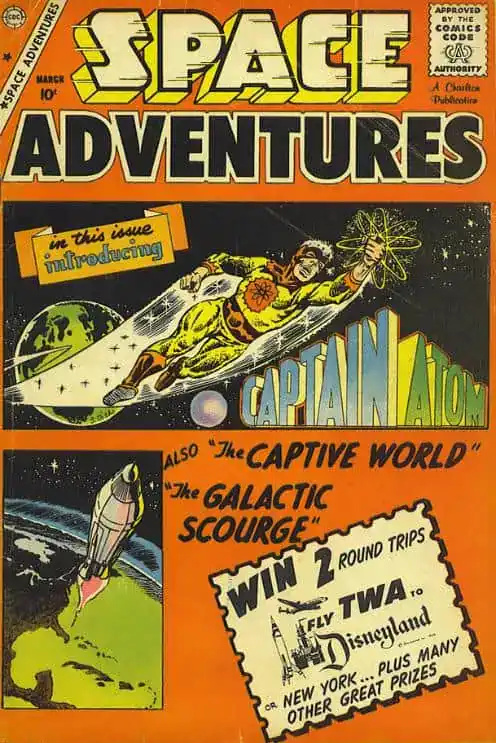
While Steve Ditko is inarguably the superstar of the duo, Joe Gill had a respectable career.
He’s often credited as a strong contender for the most prolific comics writer; mostly at Charlton Comics, but he did write for everyone… often uncredited, as it was common for the time.
He had been writing comics since at least 1948, while Ditko’s first credited book is from 1954.
As a bit of a throwback to the Golden Age, we get a bit of an infodump to introduce our protagonist, Captain Adam from the Air Force.
It’s a bit lost in the story, but apparently he’s a supergenius.
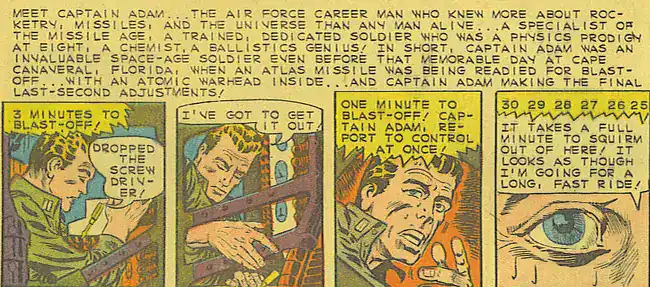
I don’t know, that feels like an informed attribute. If he really was that smart, why was he working on a working nuclear warhead AS IT’S ABOUT TO BE LAUNCHED???
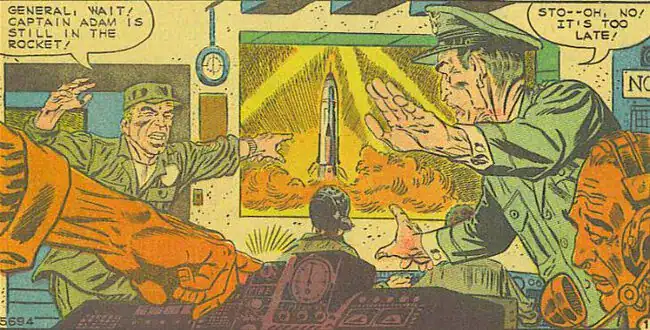
The Captain is shot into space, and this is a good opportunity to point out how much Ditko’s mastery of storytelling elevates the whole story.
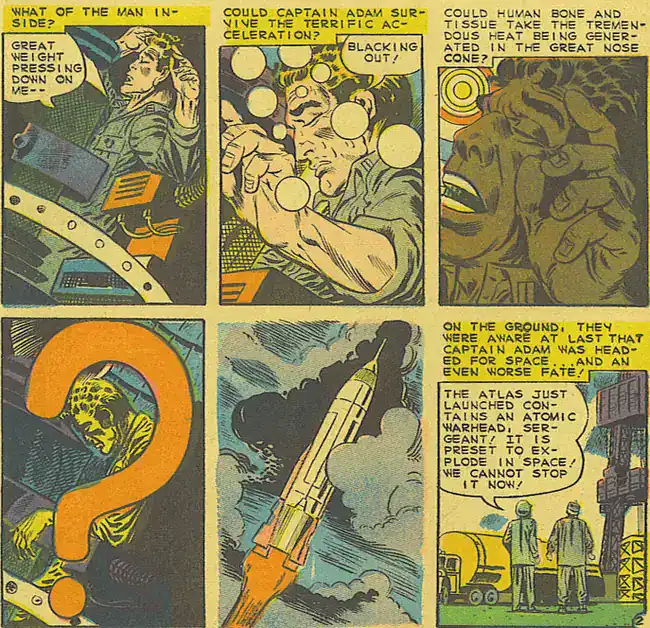
Most other origins wouldn’t bother hyping the tension like this.
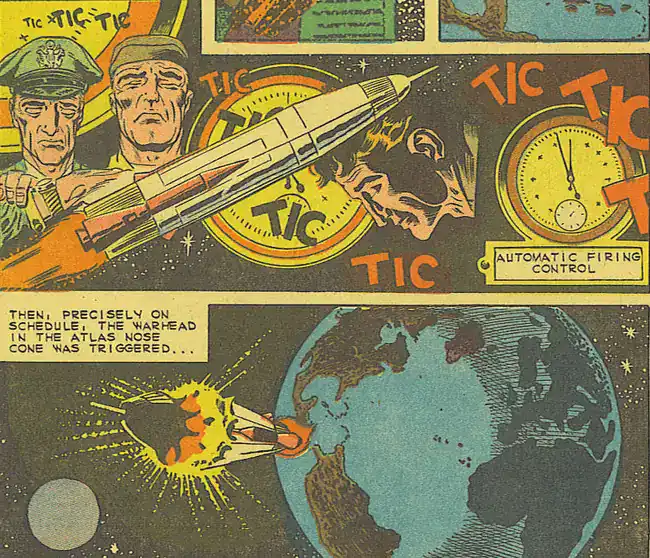
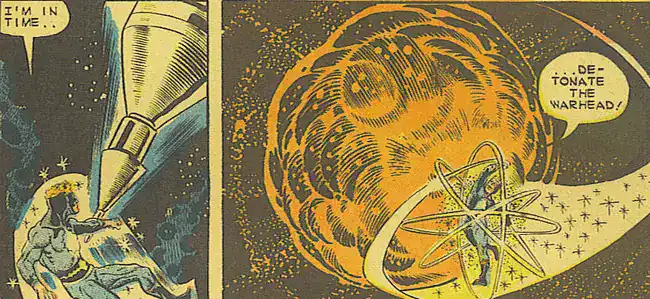
The warhead explodes in orbit, disintegrating Captain Adam.
High altitude nuclear testing (enough to be technically considered space) WAS a thing around the time this comic was published. It wouldn’t be outlawed by international treaties intil 1963.
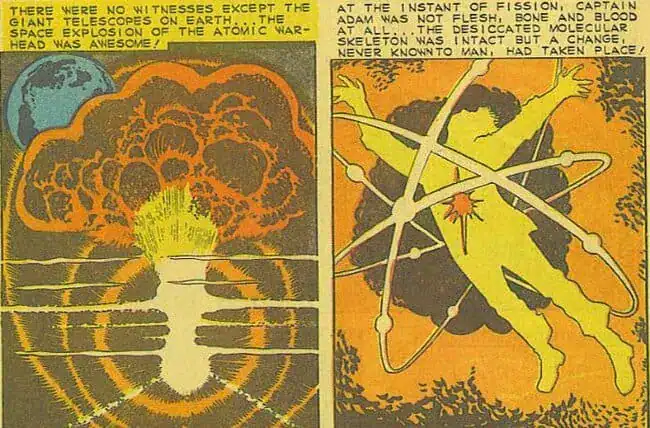
Ditko doesn’t focus on the visual spectacle of the explosion like most artists would have done at the time, opting instead for a far somber mood.
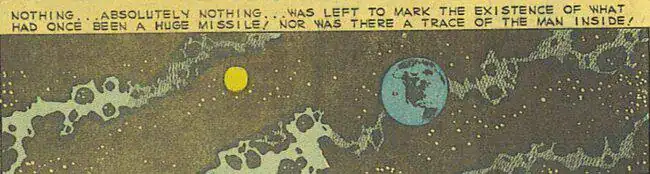
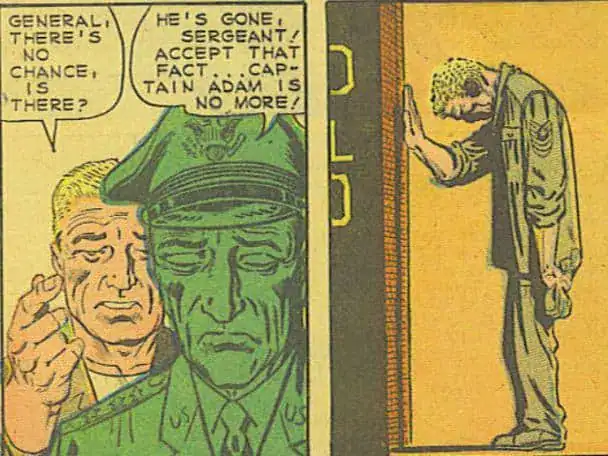
But since this story doesn’t end at page 4, turns out that Captain Adam survived.
And since the previous panel stated that “absolutely nothing” remained, we have to assume that he rebuilt both his body and some of his clothes from scratch.
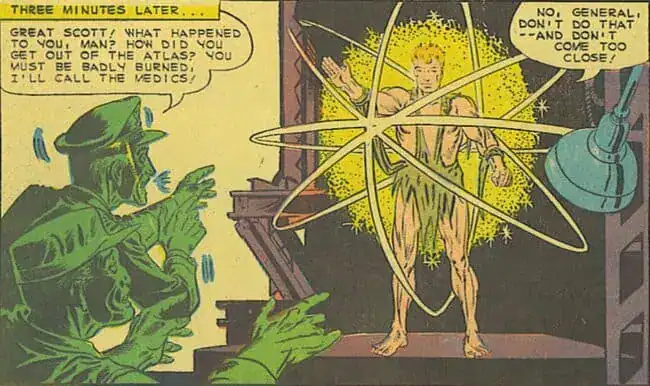
Sooo… the other airmen are dead, right?
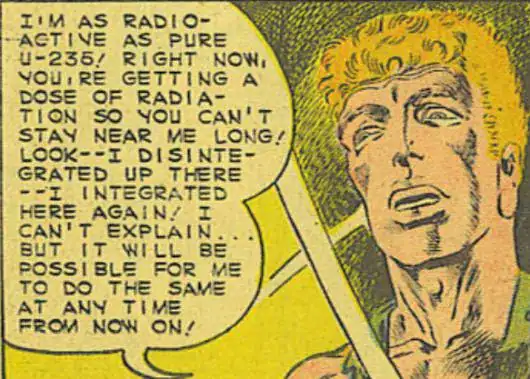
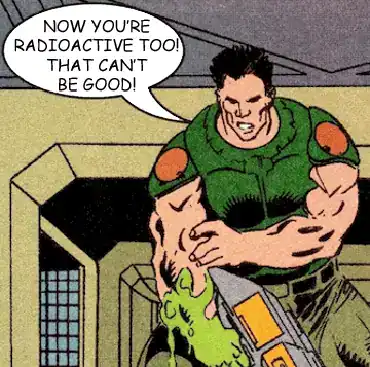
Fortunately for those around him, he can always cover himself with Diulustel™.
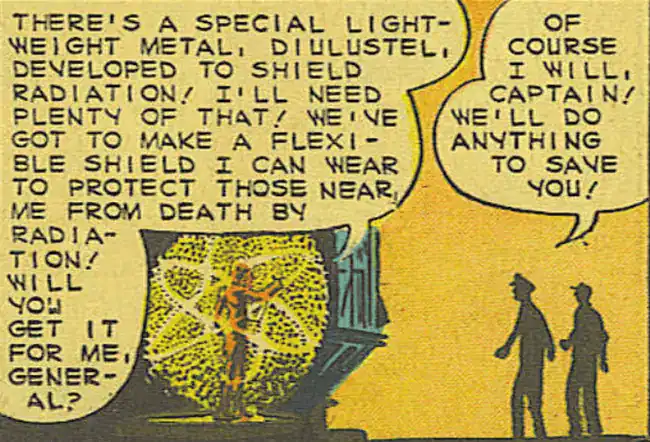
Thanks to his Diulustel™ costume, however, his radioactivity is under control: he only radiates light now.
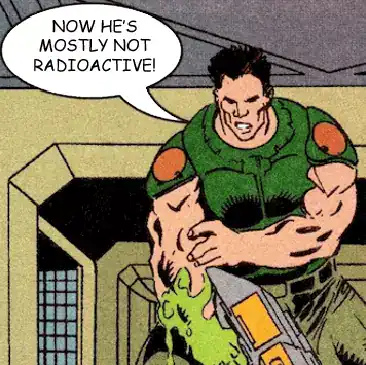
He will soon get a mask, but it won’t cover his whole face and he’s not wearing gloves… so he should still give everyone around him cancer, right?
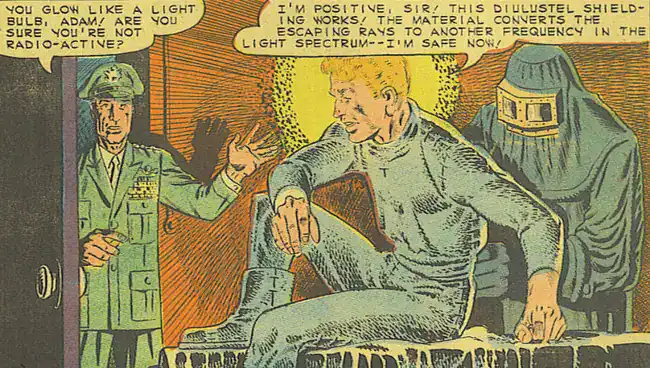
Captain Adam is officially declared dead, and his survival is kept as a national secret.
Readers more familiar with Captain Atom’s revival in the 80s might notice the name of the supporting character here: General Eining.
He’s the basis for General Eiling in the revival.
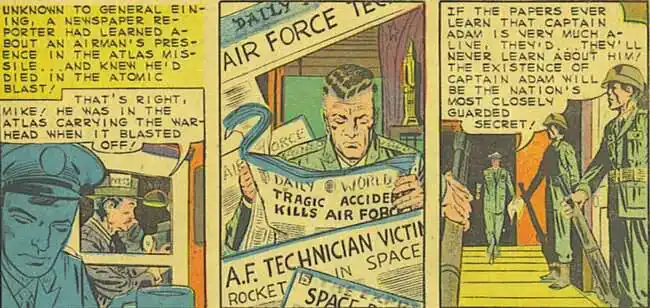
Interestingly for the time though, he’s not JUST a military secret: the Atomic Energy Commission is also informed.
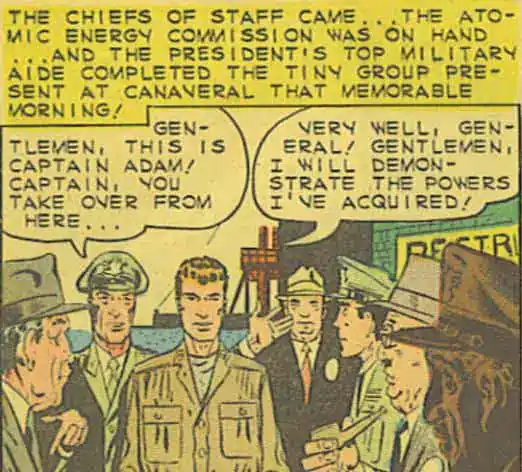
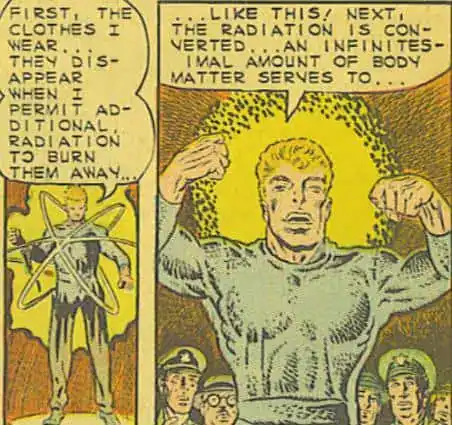
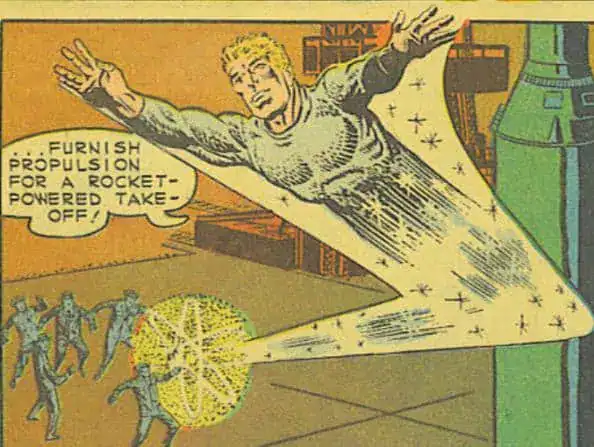
There’s a surprising attempt to give SOME scientific plausibility to his powers, like the fact that he converts a few atoms of his body into sheer propulsive energy in order to fly.
He should still kill everyone when he disintegrates his clothes with radiation, but that’s something!
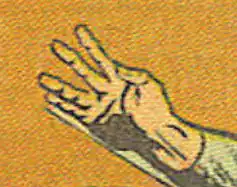
Less discussed is his power to shapeshift his hands.
His top speed is a staggering 20,000 miles per hour, which is about Mach 26.
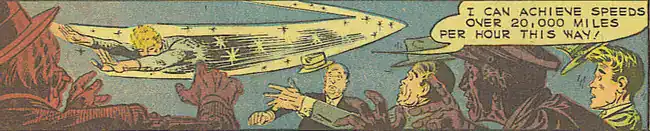
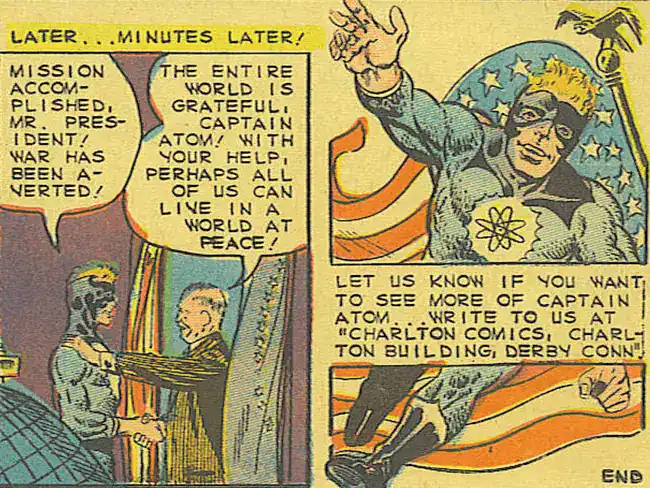
Captain Adam might be a supergenius, but he’s either overselling his speed or trying to impress the President (who is clearly Eisenhower).
Because at Mach 26, it would take him around 75 minutes to circle the planet.
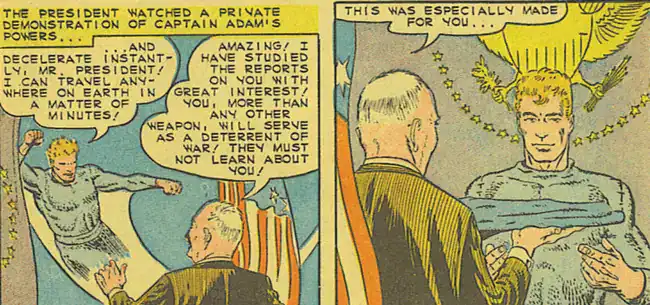
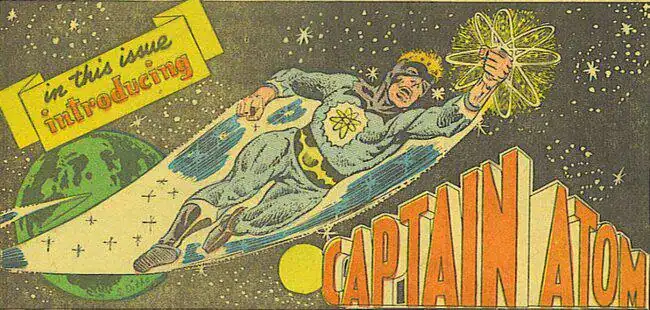
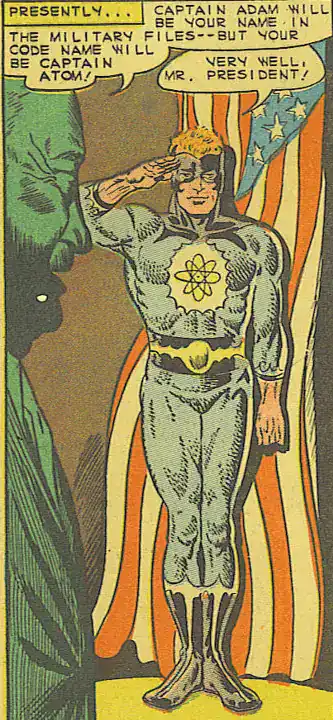
This is when Captain Adam officially becomes Captain Atom.
Notice that his costume is blue, which will be associated with the character (and a different character based on him) from the 80s forward… even though it’s gold on the cover and on the rest of the series.
Meanwhile, a foreign agent sabotages a nuclear missile.
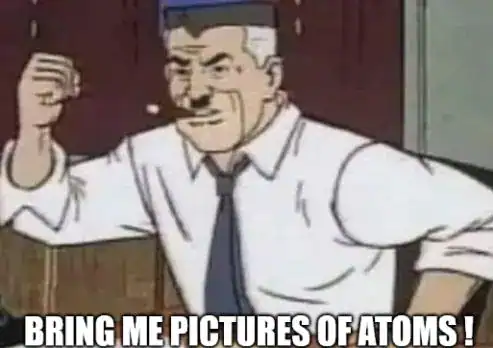
Is it just me or based on his design he kind of looks like J. Jonah Jameson?
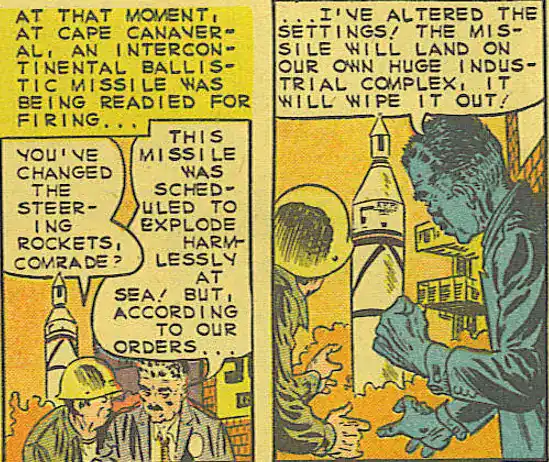
Foreign agents sabotaging the nuclear program is nothing new for the Silver Age, and in fact it will be part of the Hulk’s origin.
This is a very weird case however, because the Russian agent… yeah the country is not named, but let’s be real… is not doing this to cause trouble in the US.
He’s firing the missile AT THE SOVIET UNION because he wants nuclear war!!!
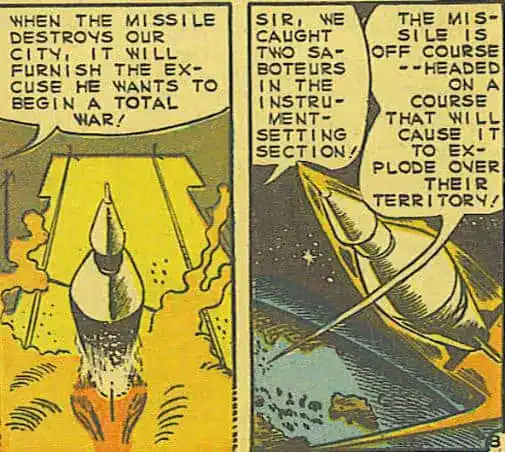
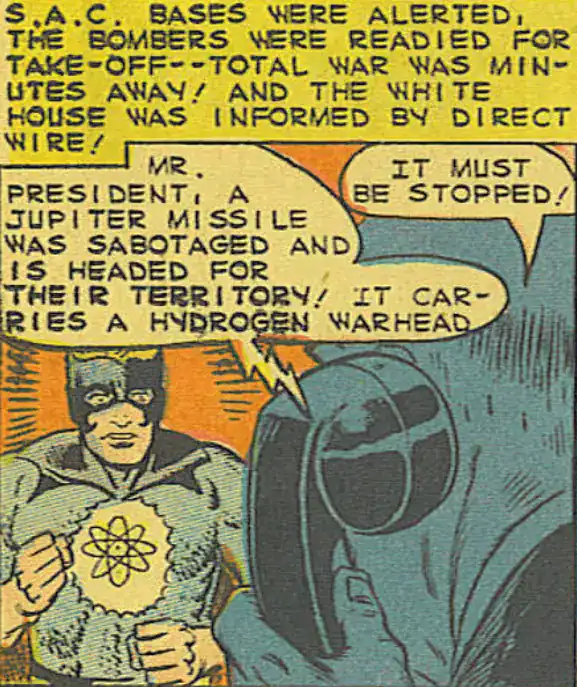
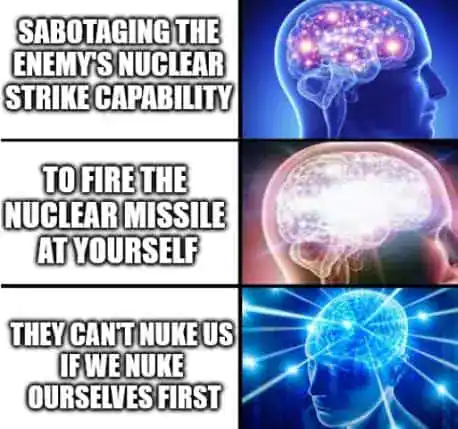
But since this is the last page, Captain Atom manages to detonate the warhead in space.
Yeah I’m sure the fact that you have the only defense on the planet against intercontinental ballistic nuclear missiles will bring about peace the next day.
Historical significance: 4 / 
While Captain Atom is still around, only the most basic traits remain. If anything, this issue has more impact on ANOTHER character.
Silver Age-ness: 3 /
It’s better than MOST Silver Age comics about it, but Captain Atom is still WAY too casual about throwing around radiation.
Does it stand the test of time? 4 /
The first pages do the heavy lifting, because Ditko… despite being still a bit rough here and there… is already an absolute master at storytelling.
Once the Captain gets powers, it’s a very straightforward origin story without much in terms of personality.
How close is this to the modern character? 3 /
Besides the name, the military connection and being blown up by an atomic explosion, nothing else really remains in the modern Captain Atom.
He would appear another 8 times on the Space Adventure anthology, until #42 in 1961.
As mentioned his costume is gold now, although some details change.
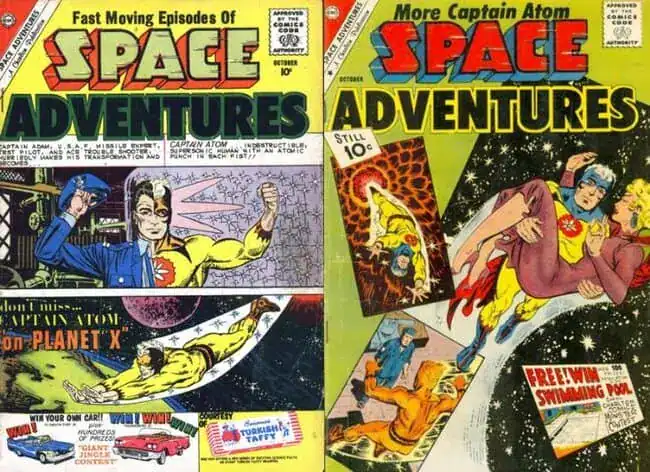
With Ditko becoming a superstar at Marvel, Charlton Comics just reprinted Captain Atom’s earlier appearances.
Another anthology series, Strange Suspense Stories, would be renamed Captain Atom from #78 in 1965. Ditko returned to work on the book, despite still working for Marvel for a while.
Issue 79 introduced the Captain’s new nemesis, Doctor Spectro.
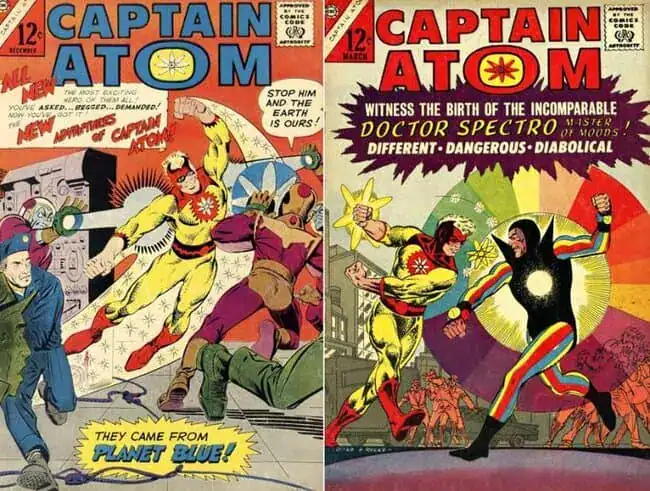
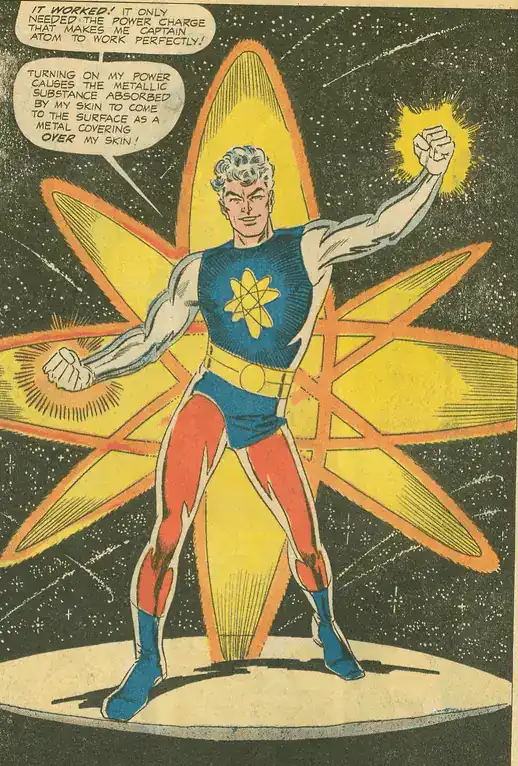
Issue 84 from 1967 radically changed Captain Atom’s look.
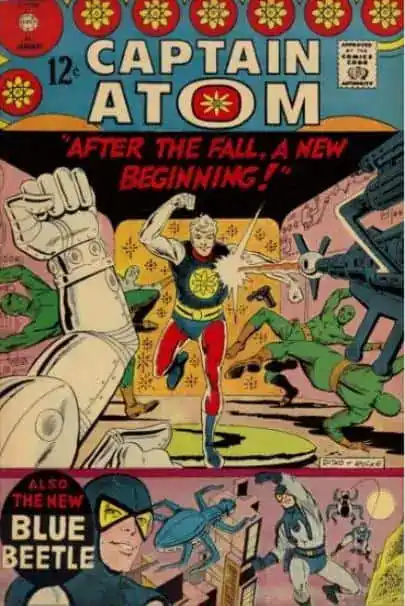
Ditko was fond enough of this design to give it an origin story and even a splash page.
I think it’s way worse than the original.
That attempted relaunch didn’t work, and Captain Atom ended with #89 in 1967.
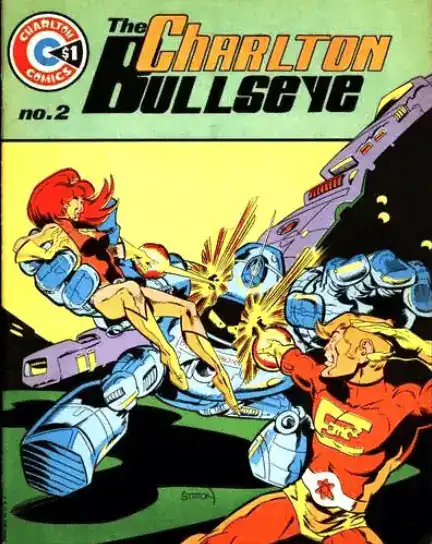
The story intended for #90 was eventually published in 1975 on “Charlton Bullseye #2”, with a script by Roger Stern based on the original plot.
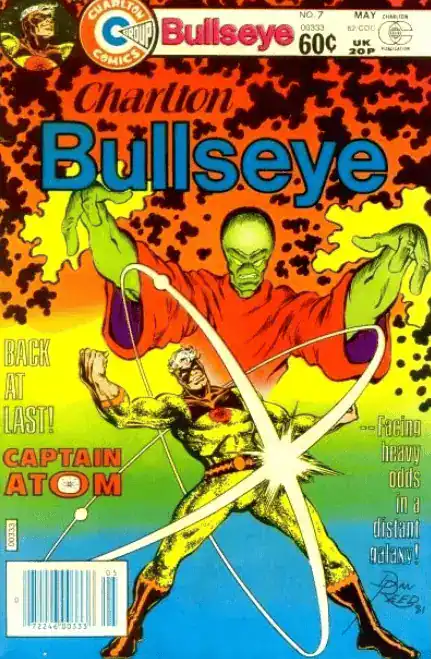
He wouldn’t make any new appearance until 1982 on “Charlton Bullseye #7”, where he went back to his original costume.
In 1983, the rights to the Charlton characters were acquired by DC Comics; Captain Atom makes his debut in DC continuity on Crisis On Infinite Earths in 1986, ignoring “Charlton Bullseye” to return to the second costume.
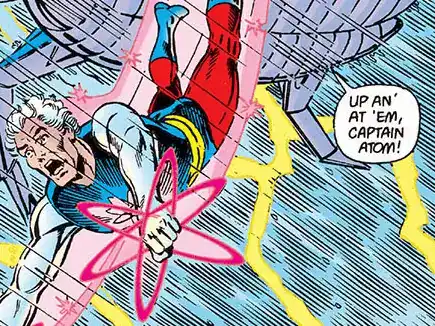
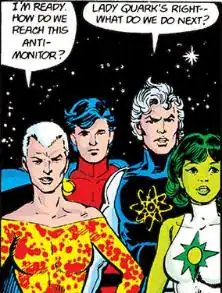
As a sign of things to come, he’s included in the team of powerhouses sent to attack the Anti-Monitor directly.
Because DC was going to integrate the Charlton characters in its main continuity, they rejected Alan Moore’s proposal to use the characters for his Watchmen project.
So in 1986 Alan Moore created Doctor Manhattan as the Captain Atom equivalent.
You can probably see the similarities: both were completely disintegrated as part of their origin story, although Dr. Manhattan’s reconstruction of his body is far more horrific.
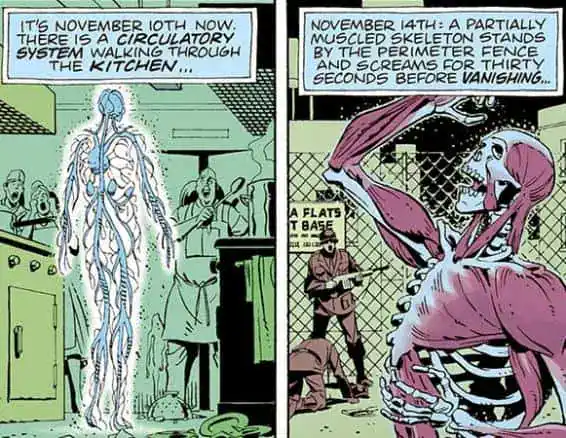
And pantsless.
But notice that his skin color kind of matches Captain Atom’s costume from the very first story.
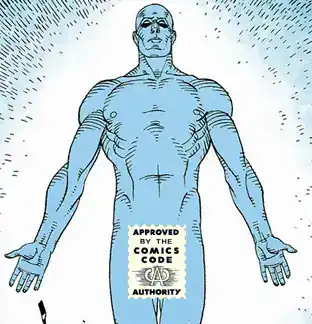
The other bit where I think Moore was explicitly calling back to the first Captain Atom story is the fact that the death of BOTH their civilian identities was not revealed to the public.
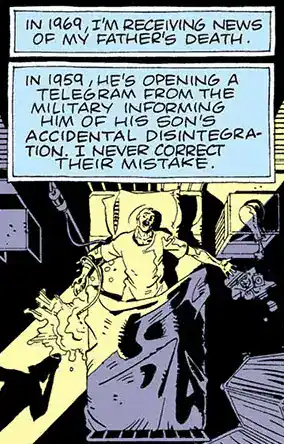
Post-Crisis, Captain Atom went with a new look that would stand the test of time, unable to regain a human look (typically at least).
They also kept him tied to the 60s, because the same accident that gave him powers made him jump forward in time… something that the character will do A LOT over the years.
His new series lasted 57 issues from 1987 to 1991, but he was a key figure on multiple books, most notably several Justice League incarnations.
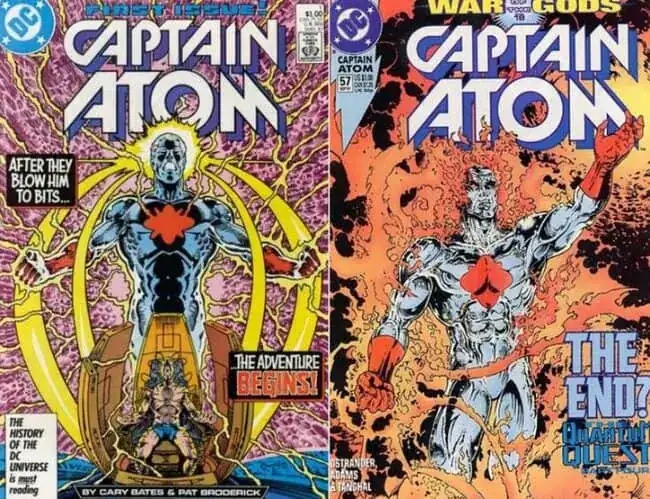
I can’t possibly cover ALL of Captain Atom’s post-Crisis history, both because it’s a lot of comics and because it would mean discussing the 2001 Armageddon mess once again.
But I should mention that in 2005, DC vetoed a reboot of the character; the proposal was turned into the superhero Breach, who shares most of Captain Atom’s origin but has an atrocious design.
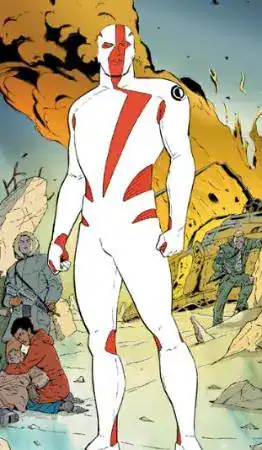
But the actual Captain Atom has gone through a lot: he’s dead a whole bunch of times, he’s traveled through time a lot, he went to the Wildstorm Universe BEFORE it was integrated into the DC Universe…
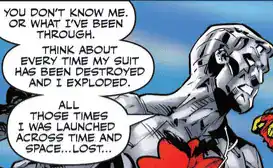
…and he’s been consistently counted as a powerhouse hero.
At the time of this writing, Superman needs a special to fight him.
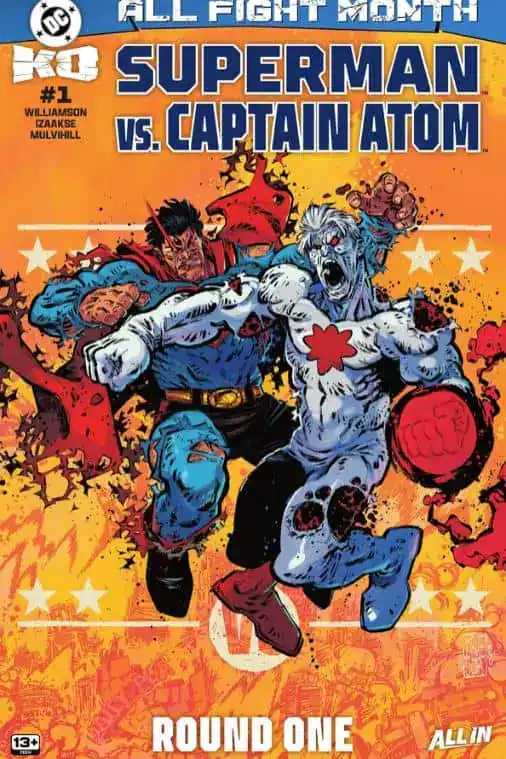
Despite a kind of unimpressive Silver Age run and an unfair comparison to both Superman and Dr. Manhattan, Captain Atom definitely managed to establish himself as his own character.
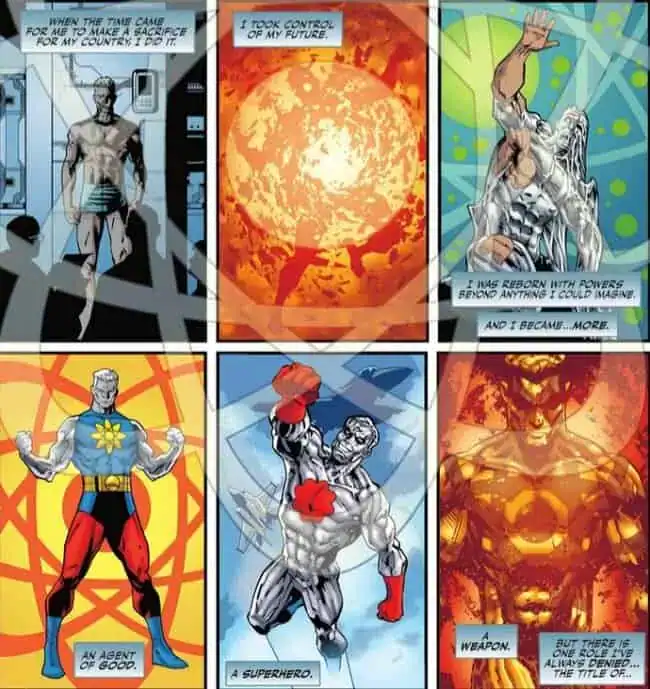

Captain Atom is always a puzzle for me.
Pretty much every time I think about him for more than a few minutes I feel like there is some sort of important component that I am fully unaware of. Or maybe that is just my reaction to how dogmatic the character premise is.
While Superman is often brought out as the natural example of a character that is much too powerful to be viable as a protagonist, Captain Atom is clearly a much more suitable specimen for that claim.
By my view the claim is justified for Atom in a way that it rarely if ever was for Kal. His powers are genuinely vast, plot-breaking and vaguely defined. Perhaps most significantly, their boundaries are even more vague, almost to the point of being arbitrary.
But what most unbalances me is his odd personality and how frustratingly little comes from it. What we have here is easily one of the half dozen most powerful being in the planet, yet the main trait of his stories is that nothing with lasting consequences is allowed to happen.
His most remarkable successes are often just keeping the status quo. His 1980s series was asphyxiantingly saturated of shady militarism, abusive treatments and power plays – and to the best of my knowledge pretty much nothing comes from that to this day. Eiling, one of the most dangerous and despicable villains that came from that decade, is eventually brought down – by other people in other books, in plots that don’t even have much of a link to Captain Atom or to its stories.
Heck, Captain Atom hardly even keeps a civilian life. I had to check to learn that the current version was once married and has a son, who is presumably still alive. That is an entirely different family from what he had in the 1980s.. and it makes barely any difference; together the two of them have a grand total of four appearances, all in a six-issue 2017 series. You would be hard pressed to tell from any other stories whether Captain Atom even remembers their existences or those of his previous wives, son and daughter. Instead he went back to being humiliated by the latest iteration of General Eiling.
It is a very disturbing superposition; a truly overpowered character who is also essentially powerless to even have a functional life or a clear past. I have in recent years developed a craving for stories that reach some sort of resolution, and Captain Atom is a very clear showcase of why.
Don’t forget about Major Force, a villain inextricably tied to Captain Atom, who… is mostly known for the trope-naming event of “fridging”, when he killed Kyle Rayner’s girlfriend Alex to advance Kyle’s story. Major Force went on to similarly kill Guy Gardner’s mother’s housekeeper (and her cat).
Major Force should be a major player. An unrepentant rapist/murderer with powers approaching Dr. Manhattan’s shouldn’t be a forgotten villain. And yet, writers would rather write Captain Atom breaking bad than use Major Force, who’s already bad.
It was later revealed that Breach was supposed to be the Captain Atom of Earth 8, but since there was no multiverse at the time, he became Breach instead.
Armageddon 2001 continues to haunt Captain Atom. During that special Superman vs Captain Atom, the second round allowed them to choose their forms, and Nathaniel chose to fight as Monarch. He could have chosen one of his multiversal variants where he’s a reality warper, but he went with Monarch. Even Hank Hall ditched being Monarch at the first opportunity (although Extant was no improvement).
I enjoyed those 57 issues of Captain Atom, but at this point, I doubt he’ll ever be a regular character anywhere again.
As a minor footnote, the Titans briefly had a teen girl version of the Captain who called herself Bombshell. Basically a mean girl with metal skin and energy blasting powers. She’s best forgotten.
In the post-Crisis DC universe, the Charlton versions of Captain Atom were a fake backstory of secret prior heroism invented by the US military when they introduced the all-silver Cap to the world.
Yes, but if you read the recent Superman vs Captain Atom one-shot you will notice that there is some indication that the Charlton versions may now have been restored in some capacity.