
Rawhide Kid #17 (1960)
by Stan Lee & Jack Kirby
The first Lee & Kirby hero of the Silver Age is not the one you’d expect.
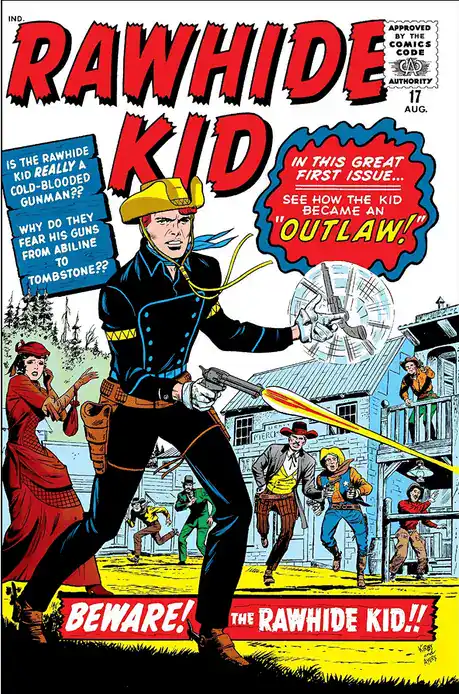
You might ask yourself: how does Rawhide Kid debut in issue 17 of the Rawhide Kid series?
That’s because the first 16 issue star a completely different guy with the same name.
It’s not even unusual for Marvel’s western heroes, as the same exact thing will happen with Two-Gun Kid.
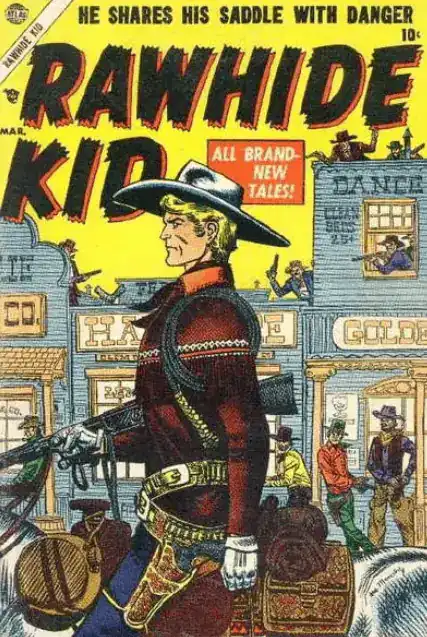
We begin with the new Rawhide Kid alredy being a notorious gunslinger…
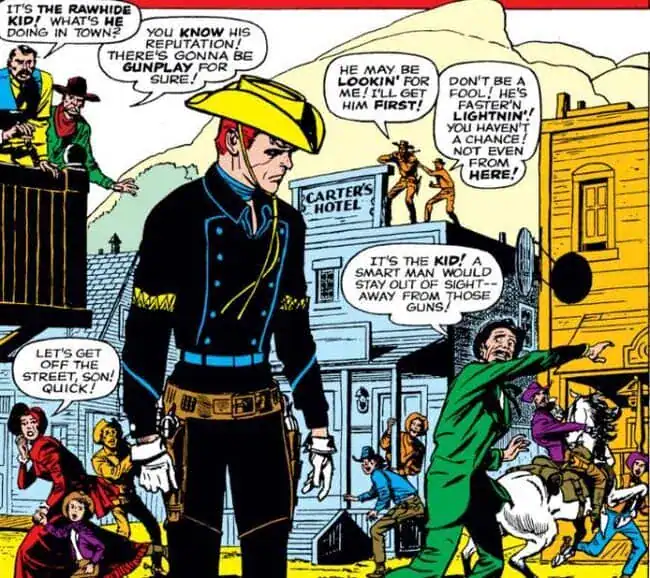
…despite being named Johnny Bart.
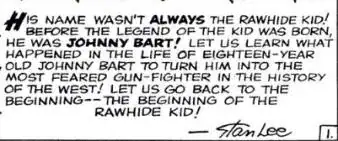
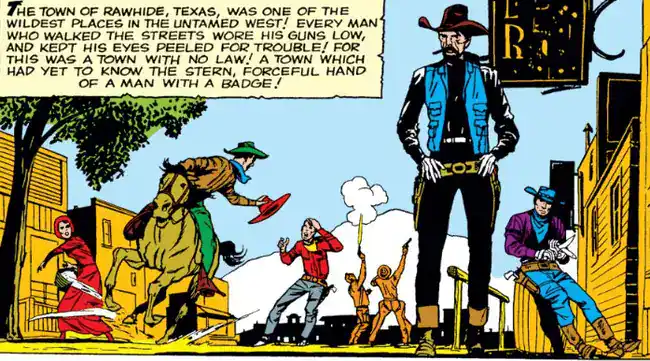
I’ve always wondered where the name came from. Turns out “Rawhide” is just the name of where he grew up. This is a fictional place, by the way.
Rawhide, not Texas.
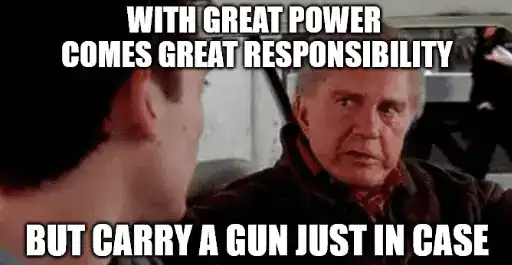
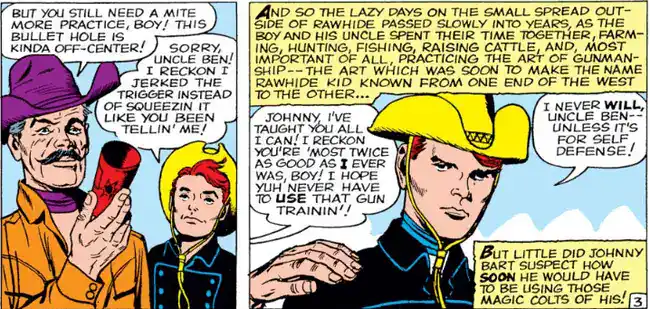
We have the first Stan Lee character called Uncle Ben.
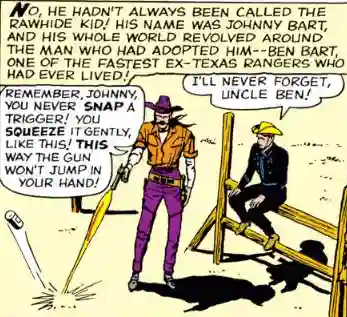
Johnny Bart is a prodigy at using a gun, because of course he is.
The Comics Code is in effect by now, so I wonder if the speech about only using guns in self-defense was mandated by it.
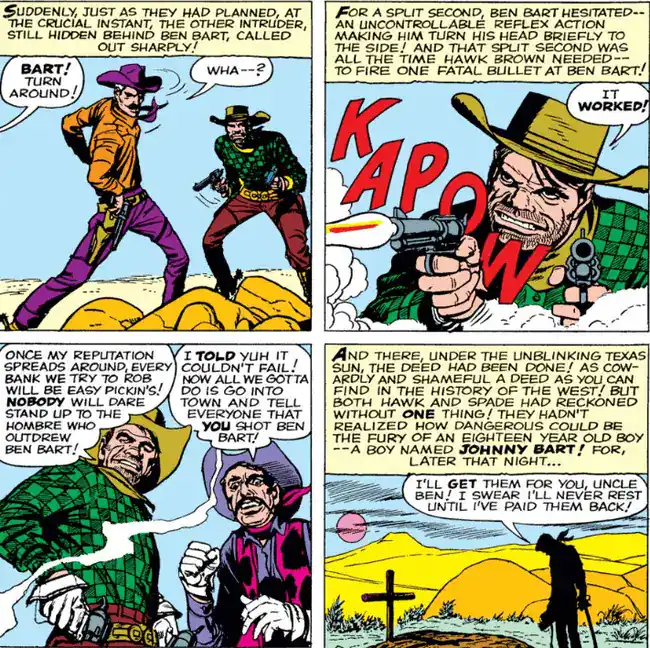
Until Uncle Ben is killed, prompting his teenage nephew to become a hero.
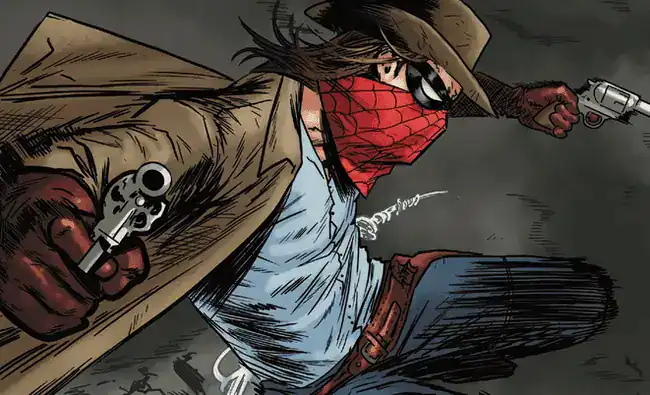
I wish I could tell you that Johnny Bart becomes the vigilante Web-Slinger, but that name won’t be taken until 2014 in a different timeline.
Johnny is out for revenge…
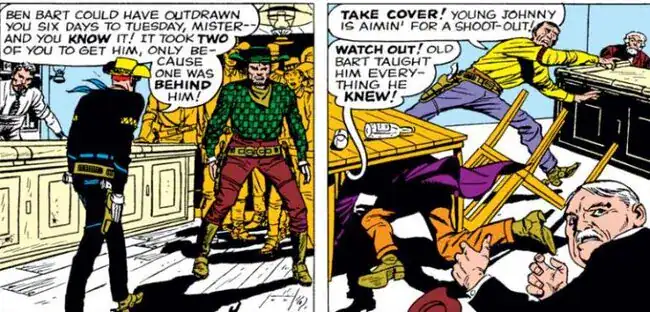
…and he gets it, thanks to his ability to constantly shoot people without ever killing anyone.
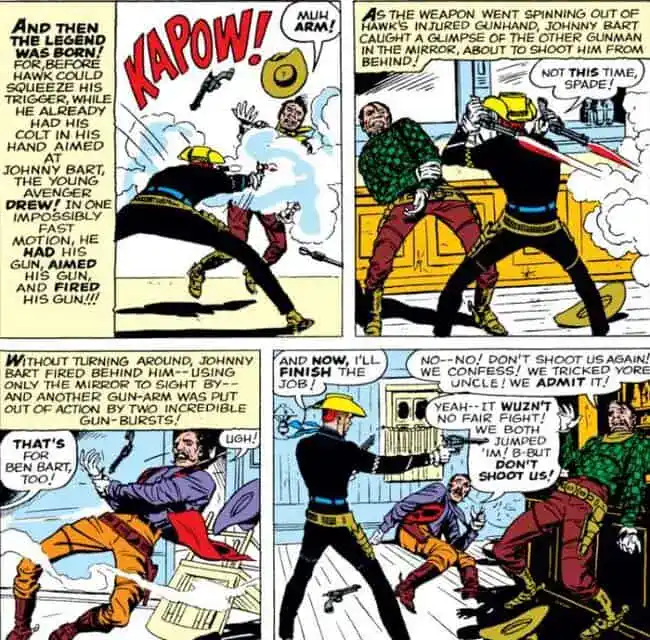
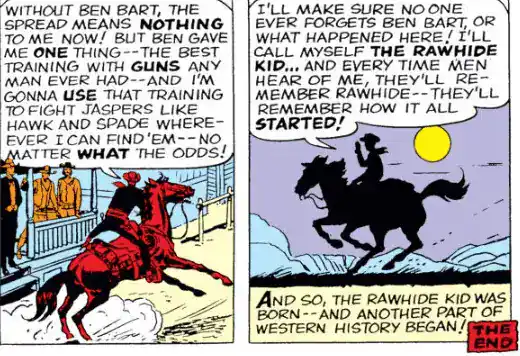
But he decides to spare the criminals, leaving them to the justice system and deciding to roam the country as the Rawhide Kid.
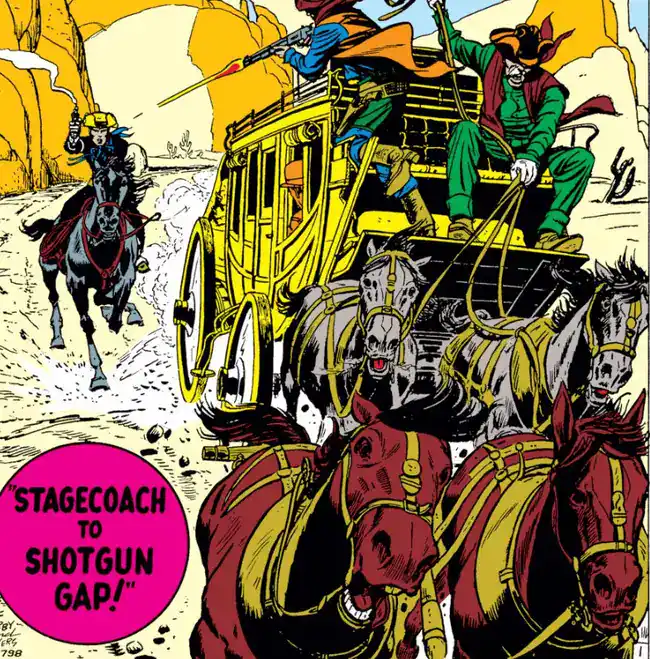
There’s a second Rawhide Kid story, which opens with an AMAZING Kirby page.
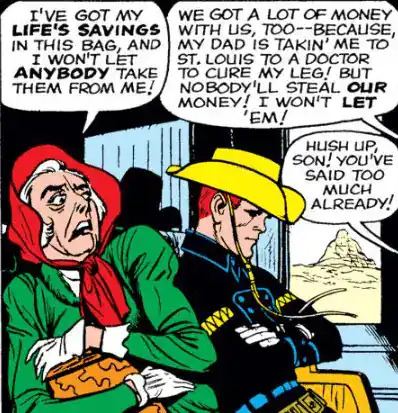
Notice that people are distrusting of Rawhide Kid. You can kind of glimpse future Stan Lee tropes, which is not surprising since there was already a bit of that distrust in his Golden Age stories.
I understand it would be pretty boring if Rawhide Kid just one-shot all the criminals he faces, but it’s hilarious that he uses his guns for anything EXCEPT killing.
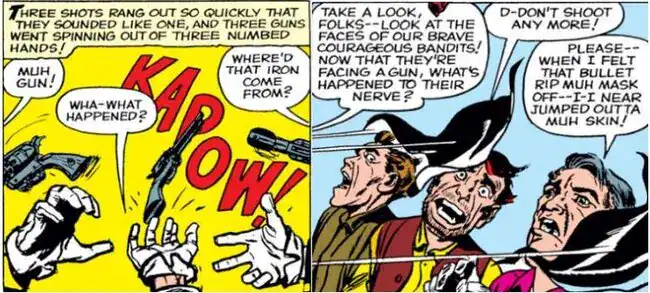
The third story is penciled by Don Heck, and it has a more rough style.
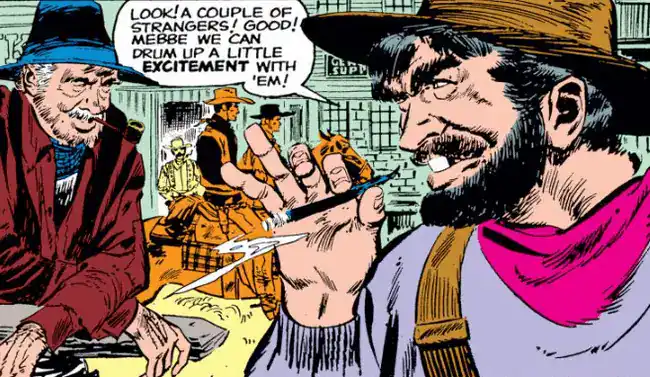
The fourth and final story is once again with Kirby artwork.
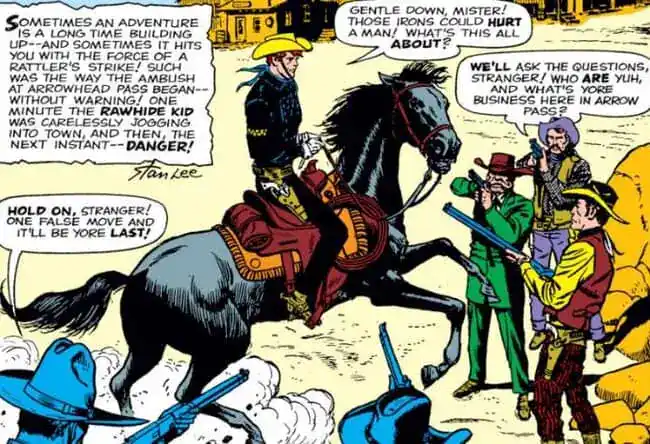
Historical significance: 2/10
Rawhide Kid is not exactly notable anymore.
Silver Age-ness: 0/10
Not really.
Does it stand the test of time? 6/10
I don’t particularly enjoy westerns, but it was a pretty serviceable story. Not really a whole lot to talk about, Rawhide Kid feels interchangeable with 99% of gunslingers.
How close is this to the modern character? What modern character?
The second Rawhide Kid was DEFINITELY more successful than the original.
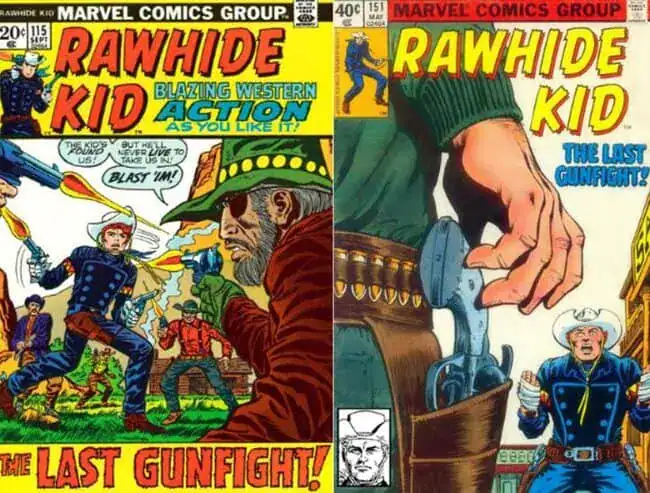
The series would continue until 1973 with issue #115, although the book would feature reprints until it finally ends in 1979 with issue #151 (which reprints #115).
Unlike Kid Colt, who had a similarly lengthy run but was mostly a regular western, Rawhide Kid gets into more fantastical adventures (though not as much as Two-Gun Kid later).
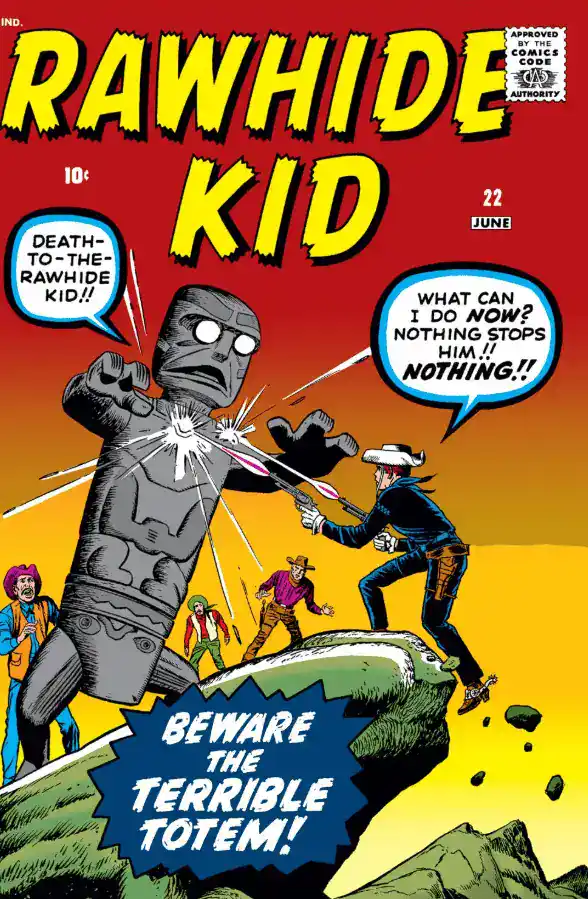
For example he fight the Living Totem, an alien who just happens to kind of look like a totem pole.
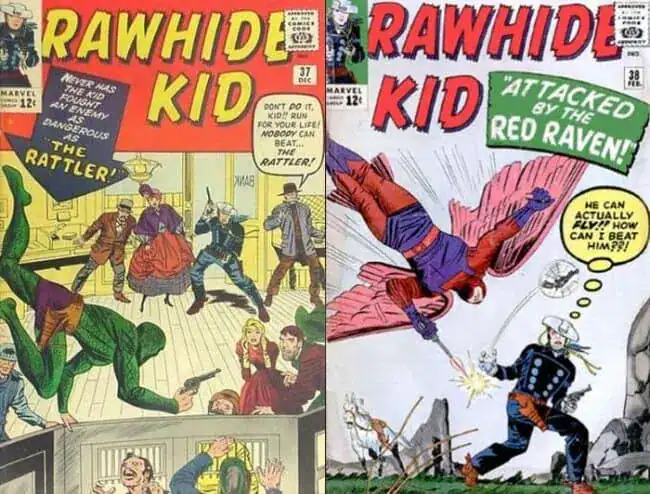
He even faces some supervillains, like the acrobatic Rattler and the confusing Red Raven (not to be confused with the superhero).
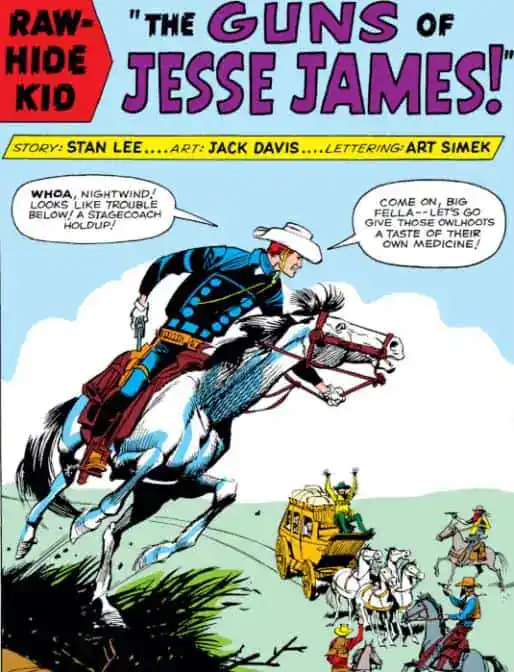
Notably, issues 33 to 35 were penciled by legendary cartoonist Jack Davis in 1963.
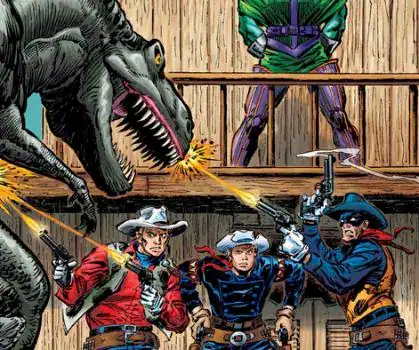
In 1975, while his series was still publishing reprints, Rawhide Kid got to meet some time-traveling Avengers with other Western heroes.
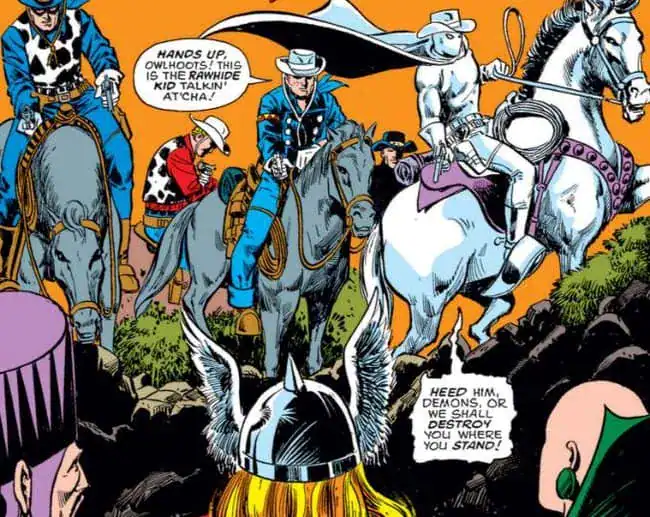
It has one of my favorite out-of-context panels of the era.
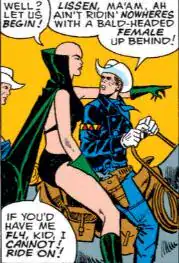
I will talk more about the interactions with the Avengers once I cover Two-Gun Kid.
Out of the various Western heroes who interact with the future, Rawhide Kid fades from the spotlight: unlike Two-Gun Kid he doesn’t go to the future, and unlike Ghost Rider he lacks the connection to a future hero.
He’s mostly seen in group shots with the other Western heroes whenever there’s a time travel plot, but there is an exception in 2014 on Uncanny X-Men v3 Annual #1.
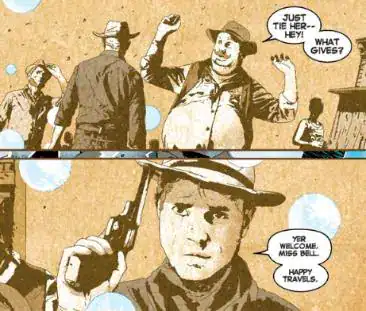
He runs into the time-traveling mutant Tempus, and he’s not shocked in the slightest.
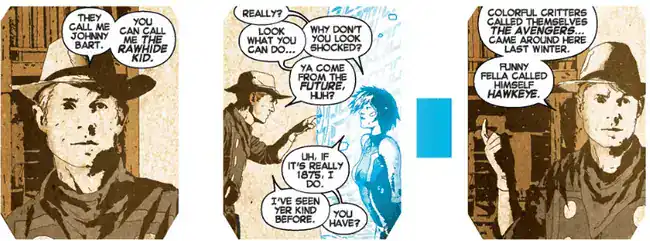
Since she has the power to travel through time when she’s in danger…
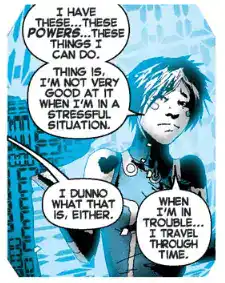
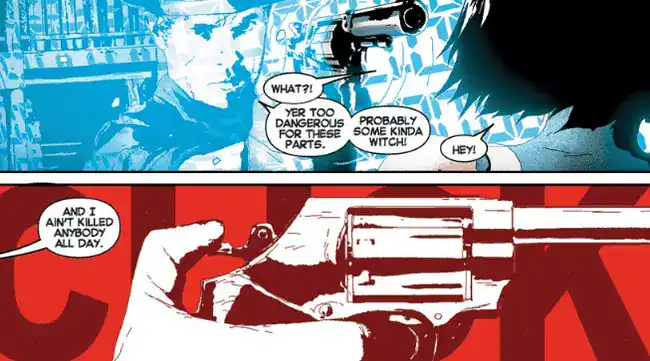
…he pretends to shoot her, triggering her powers and sending her back.
It’s a short but cool scene.
In between various Avengers time travel stories, he had a 4 issue miniseries in 1985.
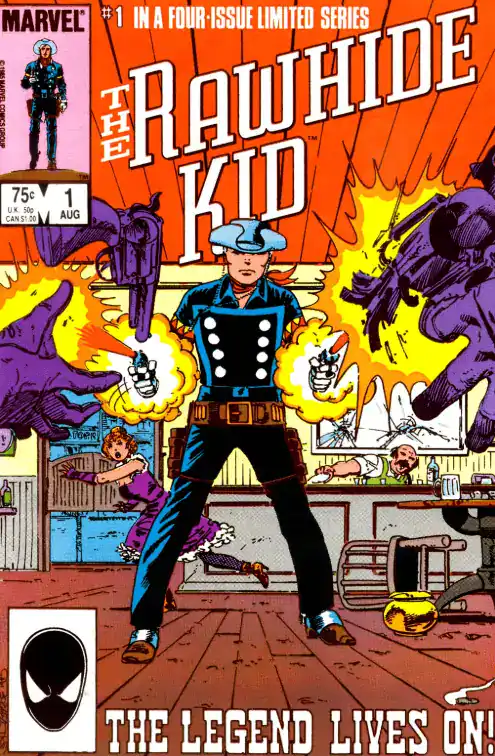
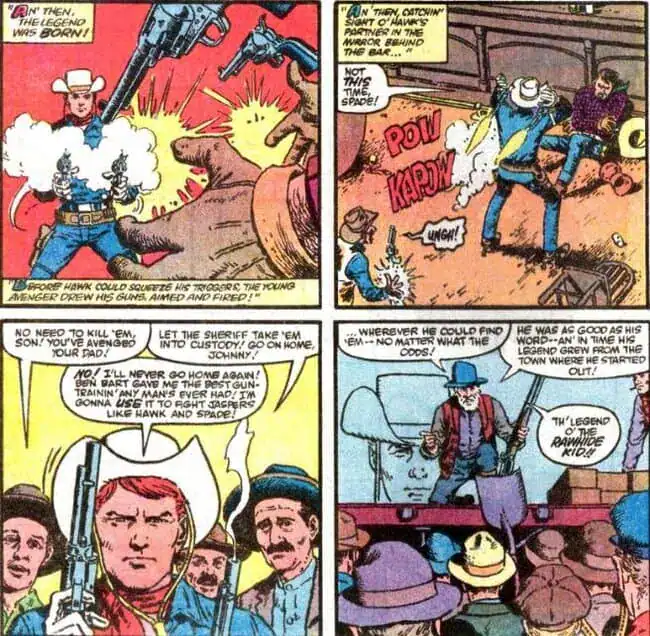
Which re-tells the origin story…
…but focuses on an older Rawhide Kid at the end of his career.
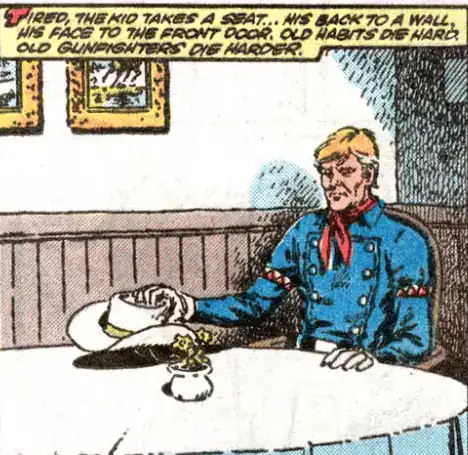
It goes without saying that it ends with Rawhide Kid riding into the sunset.
This is the closest thing to a finale for him: the story of his death has not been told yet.
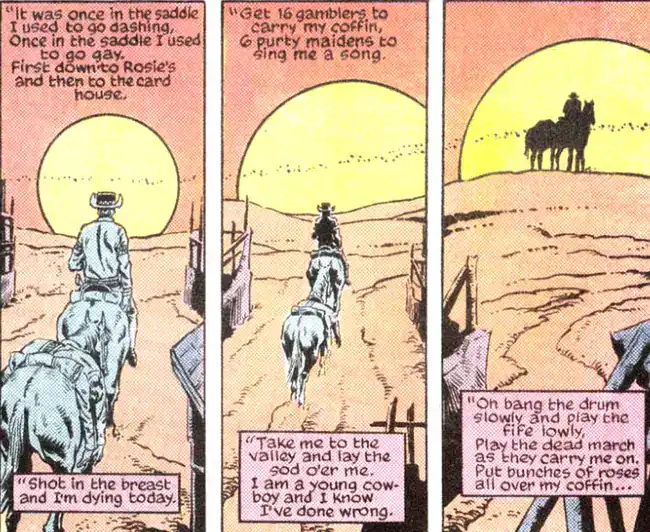
It was all but guaranteed that Rawhide Kid would be relegated to occasional cameos.
I think the problem is that, just like Kid Colt before him, Two-Gun Kid didn’t have any specific gimmick… he doesn’t have a secret identity or time travel experience like Two-Gun Kid, or the mystique of Ghost Rider.
Enter Rawhide Kid volume 3 from 2003.
Which, without actually saying it outright, made every possible innuendo to say that he’s gay.
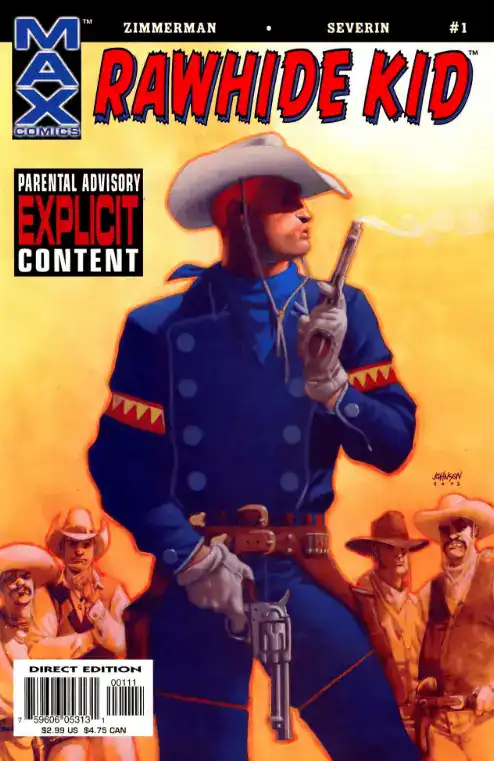
You would think that was done to exploit the popularity of Brokeback Mountain, but that movie is from 2005.
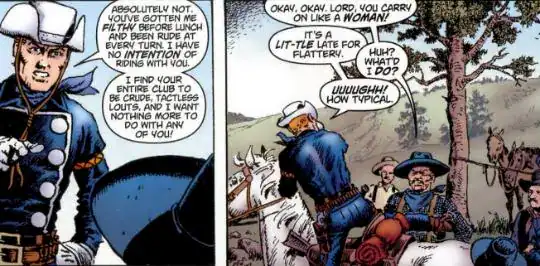
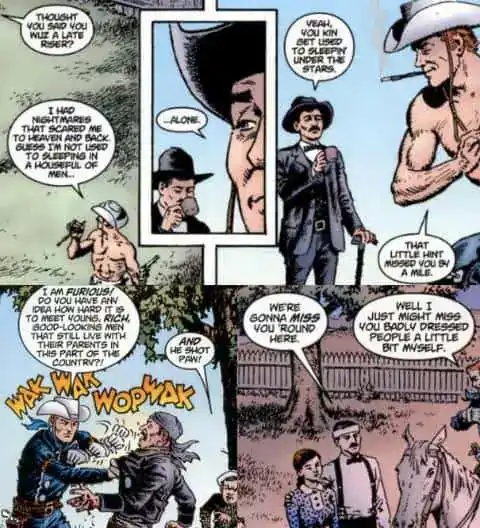
This miniseries is not a very good one, and the retcon is quite forced… but it did something for Rawhide Kid: it gave him something that made him unique.
So Marvel double down on the concept, making it explicit in 2010 with a Volume 4 miniseries.
It’s also written by Ron Zimmerman, the same writer of the previous volume.
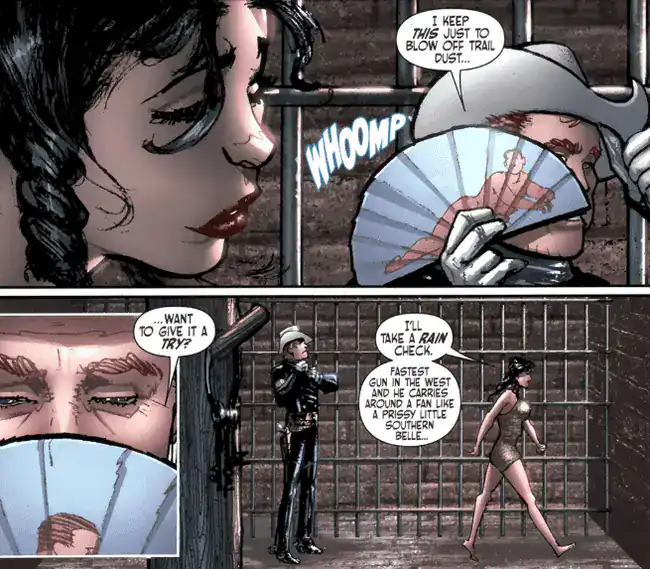
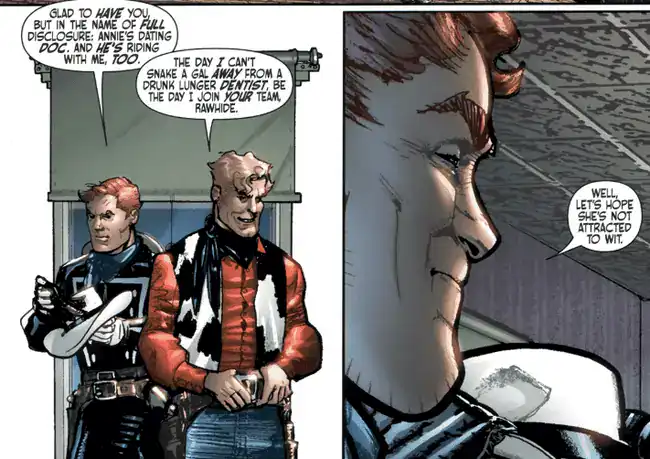
I don’t have a problem with Rawhide Kid being gay; I just wish these two volumes were written better… RK is as “stereotypically flamboyant gay” as you can get with the setting.
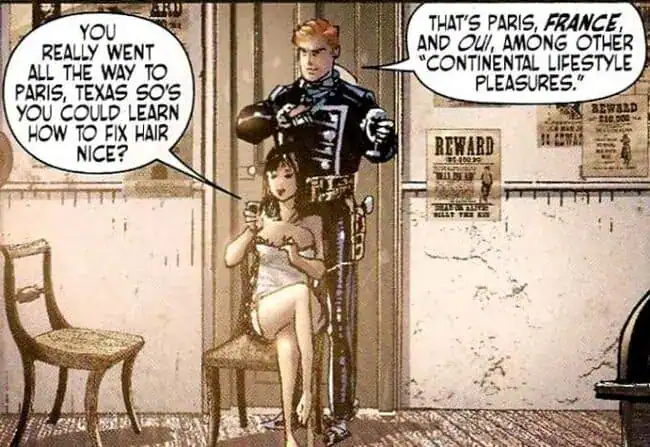
But this retcon assured him at least SOME level of relevancy, most recently granting him a cameo in “Marvel’s Voices: Pride” in 2021.
Maybe someday this take on the character will be explored by a better writer than Ron Zimmerman.
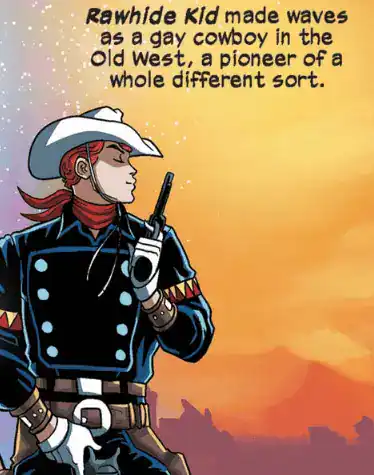
I don’t think he’s EVER going to leave the shadow of Two-Gun Kid, but at least now he’s more interesting than Kid Colt.
It’s worth noting that a mostly sui generis version of the Kid — still John Bart, but with long dark hair and a demeanor that was equal parts Leone, Eastwood, and Tarantino, with a touch of Keanu — starred in Blaze of Glory (2000) and Apache Skies (2002). Both are excellent if you like modern westerns, and the art in particular is lovely. Zimmerman’s take appeared just 4 months later (!) and gave whiplash to readers (like me) who expected a follow-up to the earlier books.
It may no longer be canon, but Blaze of Glory showcases the last stand of most of the prominent Marvel Western heroes; the Outlaw Kid, Kid Colt, and the Two-Gun Kid bravely perish while defending a town of freed slaves from the KKK. (Yes, it’s a blatant homage to The Seven Samurai and The Magnificent Seven.)
Rawhide is untreated animal skins. The implication is that with treatment, Johnny Bart could become the Leather Kid.
Blaze of Glory is no longer canon? Saddened to hear that, it was a great “last days” story.