
Last post-series analysis before I tackle the Reboot, by attempting to ask a question that the fandom has been asking itself since 1994: was it really necessary to reboot the franchise?
First, some insight on what actually happened right before the reboot, to give historical context thanks to a few comments Mark Waid made over the years.
None of us, not one of us, didn’t love the Legion enough to desperately want to keep LSH continuity in place, but there was absolutely no fixing it at that point. Fans forget how ruined it was at that stage in DC history. Not only had Superboy and Supergirl been retconned away, making trash of not only dozens of stories but of the very origins and backstories of several of the main Legionnaires, but the more powerful editors at the time at DC also told/demanded of us (the Legion team) that Rond Vidar could no longer have been a GL, that Thanagar was to be retconned away, etc. etc. etc. etc. Oh, and Mon-El couldn’t even be called Mon-El anymore even if we came up with a rationale that made the name not connect to Krypton. Jesus, we had to fight like St. George vs the goddamned dragon just to have the name “Brainiac 5.”
MARK WAID
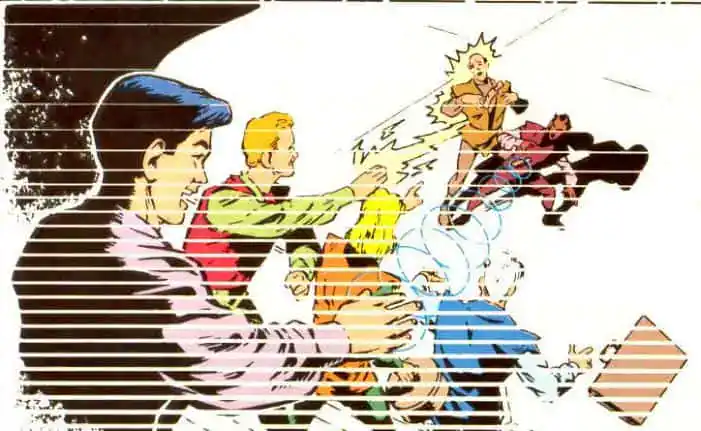
Mark Waid is sometimes seen as a bit of a villain by the Reboot detractors. I don’t think there’s a single person responsible for the need for a Legion reboot, but if you HAVE to pick a villain, you might want to take it up with the editors of the Superman books.
And I can certainly believe that they had FAR more power than the Legion editors, not just because Superman is THE face of DC but because sales of his books had greatly improved while the Legion was bleeding out.
Literally, everything we tried to come up with as a post-Zero Hour fix to keep as much continuity as we could? All of it was built on shifting sand against a raging tide of anti-Legion sentiment driven by the all-powerful Superman office, and that’s a terrible foundation upon which to build. I cannot tell you how many dozens if not hundreds of hours KC and Tom and I spent in Tom McCraw’s basement planning and plotting and trying to come up with a way to repair Legion continuity and get back what we all loved, and nothing worked that didn’t cause even more problems in the greater context of the post-Byrne DCU. Ultimately, with the clock ticking on us and no other viable options, we pulled the reboot lever to try to regain as much of the flavor of the original LSH that we loved as we could.
MARK WAID
Waid’s love for the Legion shines through his comments over the years, and I think he justifiably resents being made into the villain.
Everyone’s mileage varies as to how well or not well that worked for them, but (a) we did the only thing we could figure out to do, and (b) I can promise you that if it had been *anyone* else at DC charged with solving this problem, their solution would have been more drastic, more grim-and-gritty, and more awful. I promise you. If you want to blame anyone for destroying the Legion we loved, I give you Mr. John Byrne.
MARK WAID
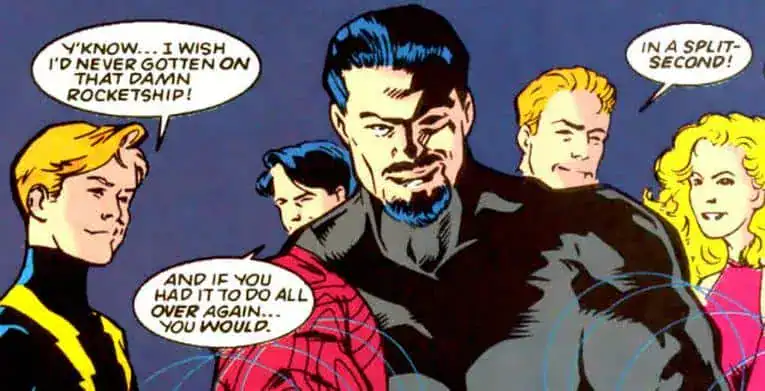
Although Byrne himself denies he was out to kill the Legion.
One of the central points of my “back to the basics” approach to the Superman reboot was that he began his career as an adult — so no Superboy. This, I knew, would have a rather profound effect on the Legion, whose history was tied directly to Superboy, and at several editorial meetings I brought up this point often, suggesting different ways in which it could be dealt with.
[CUT FOR BREVITY]
I was told, basically “don’t worry, we have it all figured out!”
Then about six months into the project I got a panicked call from the Superman editor: “This reboot messes up the Legion!!”
“Yes? I thought we all understood this?”
“No! My god! We have to do something!!” And thus was born the Pocket Universe and the story that “explained” the Legion’s Superboy connection.
JOHN BYRNE
I say this as a MASSIVE fan of the John Byrne of the 80s, but he seems to have a tendency to give a version of facts that all other comics creators disagree with.
However in this case I absolutely believe him because if the HAD anything against the Legion he would definitely not hesitate to brag that he screwed them over.
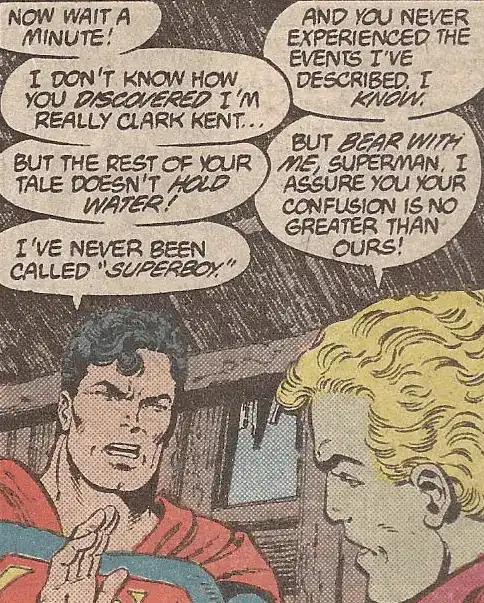
Alright, here’s the real meat of the post.
I’m going to pick a point of divergence and analyze whether the Legion could have continued from that point forward without doing a full reboot.
It’s important to consider that the new run MUST be accessible to new readers to some extent, because the book sales were not satisfying.
We’re going backwards, from the most recent possible point to the earliest.
OPTION 1: before “End Of An Era”
This scenario assumes that the storyline never happens: LSH #59 and Legionnaires #18 are last stories published before the start of a new run.
I’m not including “End Of An Era” because, while its plot is disconnected from Zero Hour until the very end, it does include rebooting characters and it’s exactly what this scenario is trying to avoid.
Theoretically, you can still keep the saga with Glorith and Mordru being responsible for all time shenanigans, and at the end every “rebooted” character comes back.
The Valor series either ends with Valor #17 (like IT SHOULD HAVE) when the title character dies and he’s never replaced by his SW6 counterpart, or it still stumbles its way through Valor #21 when the SW6 version recreates the time loop.
It doesn’t really change this scenario, which still doesn’t have a second version of Mon-El running around other time periods.
The two main series simply continue. From a technical standpoint there’s nothing preventing this, but if you’re attempting to create a new starting point for new readers, you should consider all of the following:
- There are two sets of Legionnaires, some with overlapping codenames
- The young Legionnaires are basically brand-new characters but are supposed to bring with them knowledge of 20-to-30-year-old stories of questionable canonicity
- The old Legionnaires have changed codenames
- The old Legionnaires, for the most part, are unrecognizable from their younger selves
- The old Legionnaires bring with them knowledge of stories that are 20-to-30-year-old and of questionable canonicity
- Earth has been destroyed, killing billions, with the heroes failing to prevent it
- The Moon has been destroyed, killing billions, with the heroes failing to prevent it
- Galactic society has collapsed for 5-ish years, with the heroes failing to prevent it
- Despite the above, the young Legion book is set up as a bright and optimistic series
- Because of the above, the old Legion book is set up as a bleak and cynical series
I think that with this point of divergence you would have to pick ONE series to continue.
The Legion franchise could be big enough to sustain two series with wildly different visions, but this is way too much baggage you can expect new readers to follow.
The young Legion is the most obvious choice. It’s a fresher start, it’s closer to the setting the Legion had when it had more readers (so you might bring back some who dropped the book), and in general books that star spunky teenagers tend to sell better than books that star sour and depressed adults.
This would still require the readers to follow clones of older heroes that either retired, or fell in disgrace, or both.
If you choose to continue the main book instead, it’s far worse. These are the heroes that completely failed to save Earth AND the Moon AND galactic society.
You can’t even attempt to fix this by replacing the cast with new young heroes, because then you either just take the characters from Legionnaires (duplicating the problem) or you have to throw the Legionnaires away first, which invalidates the attempt to make things less depressing.
None of the above will solve the fact that you are following heroes in a setting where Earth has been destroyed, which is hard to do if said heroes were present for the destruction and failed to save it.
Exploring New Earth would be interesting, but there’s a fundamental problem with following protagonists in a post-apocalyptic scenario if they’re the ones who failed to stop the apocalypse!
The best solution in this case would be to jump ahead in time and do a “Legion: The Next Generation” once the galaxy has healed a bit… but you still have to contend with EVERYTHING that happened before.
Likelihood of succeeding: 2/10
Likelihood of happening: 5/10
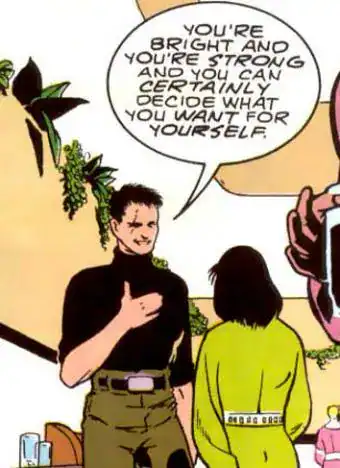
OPTION 2: right after Giffen leaves
We can alleviate SOME of the problems if the point of divergence is right after the destruction of Earth. In this scenario LSH #38 still happens, but LSH #39 is given to a different writing team.
This has potentially several positive aspects:
- No Legionnaires series to contend with
- No Bierbaums writing
- The last Valor issue published is Valor #3. There is no time travel plot with him
Valor is the one to benefit the most from this option; his series, assuming it’s not just cancelled, just ends with him being exiled into the Phantom Zone.
Most likely the series WOULD be cancelled and the plot would be resolved somewhere else, most likely either on L.E.G.I.O.N. or in a Superman book.
The SW6 Legionnaires still exist though.
This is what you bring with you:
- There are two sets of Legionnaires, some with overlapping codenames
- The young Legionnaires are basically brand-new characters but are supposed to bring with them knowledge of 20-to-30-year-old stories of questionable canonicity
- The old Legionnaires just use their civilian names
- Some of the old Legionnaires are unrecognizable from their younger selves
- The old Legionnaires bring with them knowledge of stories that are 20-to-30-year-old and of questionable canonicity
- Earth has been destroyed, killing billions, with the heroes failing to prevent it
- The Moon has been destroyed, killing billions, with the heroes failing to prevent it
- Galactic society has collapsed for 5-ish years, with the heroes failing to prevent it
- Despite the above, the young Legion book is set up as a bright and optimistic series
- Because of the above, the old Legion book is set up as a bleak and cynical series
We lost just ONE of the problematic points, and points 3 is moot since you could just return to use the civilian names.
The last point could be helped by integrating some SW6 Legionnaires into the main book, giving it a more optimistic outlook, but all of the other problems still stand.
You absolutely CANNOT IGNORE the Earth blowing up. While this is not necessarily a problem in the short run, it’s going to be a weight on the series.
It’s fine for a 1994 series to be defined by an event happening in 1992… but imagine the series continued. How sustainable would it be to have the series COMPLETELY defined something that happened in 1992 when it’s, say, 1998? Ot 2004?
Don’t get me wrong, a bittersweet ending where the heroes failed to stop a catastrophe but are still slightly optimistic for the future CAN work: it’s the ending of Watchmen!
But there’s a fundamental problem if you want to do that ending in a series THAT CONTINUES.
So unless you’re one of the comic book readers who complain about the fact that stories never end and think that series with a definitive ending are inherently superior… and these tend to be people who I absolutely cannot stand… the destruction of Earth is nearly incompatible with a superhero series.
Likelihood of succeeding: 4/10
Likelihood of happening: 6/10
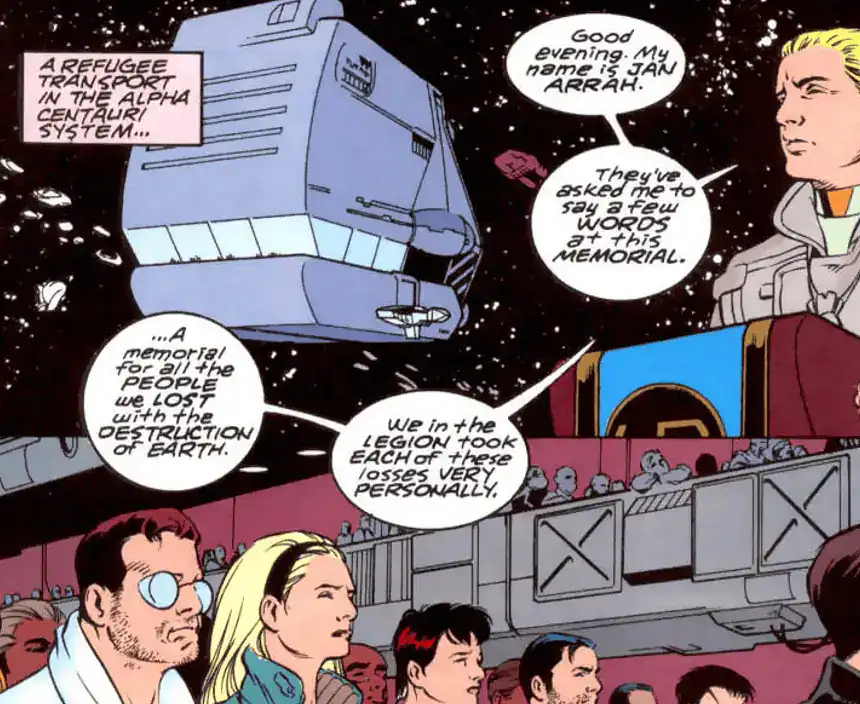
Overall, when blowing up Earth Keith Giffen forgot an essential lesson that would be explained by Doctor Doom in a surprisingly deep comedic spoof years later.
I can’t help feeling that Keith would have appreciated the irony.
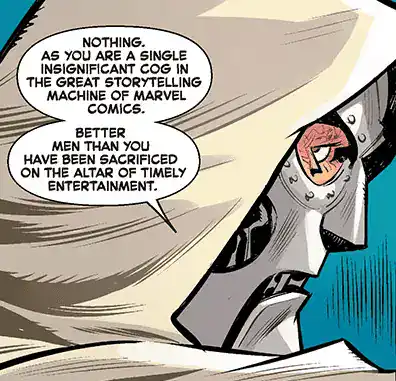
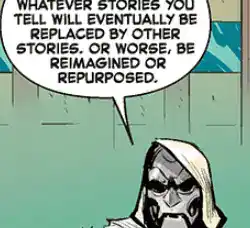
There’s an obvious solution for this.
OPTION 3: before Earth blows up
I’m guessing this is the favorite scenario for 5YL fans.
This assumes that Giffen’s plot for LSH #38 is rejected and a different story is told.
Presumably Giffen would still leave, but even if he stays afterwards I cannot imagine 1992 Keith Giffen managing to stay in the same place for too long.
Admittedly this solution takes away only one of the problems, but it was a BIG one.
- There are two sets of Legionnaires, some with overlapping codenames
- The young Legionnaires are basically brand-new characters but are supposed to bring with them knowledge of 20-to-30-year-old stories of questionable canonicity
- The old Legionnaires just use their civilian names
- Some of the old Legionnaires are unrecognizable from their younger selves
- The old Legionnaires bring with them knowledge of stories that are 20-to-30-year-old and of questionable canonicity
- Earth has been destroyed, killing billions, with the heroes failing to prevent it
- The Moon has been destroyed, killing billions, with the heroes failing to prevent it
- Galactic society has collapsed for 5-ish years, with the heroes failing to prevent it
- Despite the above, the young Legion book is set up as a bright and optimistic series
- Because of the above, the old Legion book is set up as a bleak and cynical series
This is probably the most recent point of divergence that MIGHT have worked, and easily the most realistic outcome. There was at least SOME attempt to course correct after Giffen’s departure; it’s not inconceivable that DC might have wanted to fire the Bierbaums after Giffen left, since HE was the star.
I think this event had the highest chance of actually happening and a decent chance of succeeding as a relaunch… but it’s still harmed not being easily accessible by newcomers.
Likelihood of succeeding: 6/10
Likelihood of happening: 8/10
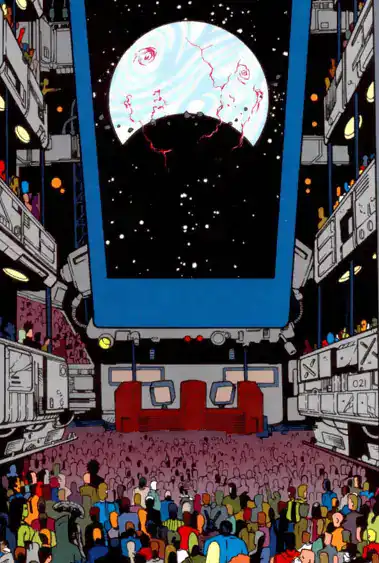
OPTION 4: before the SW6 Batch shows up
We’re in complete fantasy territory from this point onwards, since for DC to take a completely different direction this soon would have required insight into future developments they simply could not have. But it’s fun to speculate anyway.
In this scenario the Moon still explodes in LSH #19, but LSH #24 does not introduce the SW6 Legionnaires. Unfortunately this doesn’t prevent the awful Quiet Darkness from being disappointing, but it does solve a big problem by removing a huge source of confusion for new readers.
- There are two sets of Legionnaires, some with overlapping codenames
- The young Legionnaires are basically brand-new characters but are supposed to bring with them knowledge of 20-to-30-year-old stories of questionable canonicity
- The old Legionnaires just use their civilian names
- Some of the old Legionnaires are unrecognizable
- The old Legionnaires bring with them knowledge of stories that are 20-to-30-year-old and of questionable canonicity
- Earth has been destroyed, killing billions, with the heroes failing to prevent it
- The Moon has been destroyed, killing billions, with the heroes failing to prevent it
- Galactic society has collapsed for 5-ish years, with the heroes failing to prevent it
- Despite the above, the young Legion book is set up as a bright and optimistic series
- Because of the above, the old Legion book is set up as a bleak and cynical series
This has a slightly higher chance of succeeding. The failure to prevent the destruction of the Moon could potentially wake up the Legionnaires and get them back into shape, in addition to being a turning point for the fight against the Dominators.
It also absolutely would not have happened. I can’t imagine Giffen at this point agreeing with such a course correction, or the editors to force something like this: even if they didn’t like the SW6 idea, they were considered as a way to have your cake and eat it too… and if DC had the sense to avoid having multiple characters with conflicting histories, it wouldn’t be DC Comics.
Likelihood of succeeding: 7/10
Likelihood of happening: 4/10
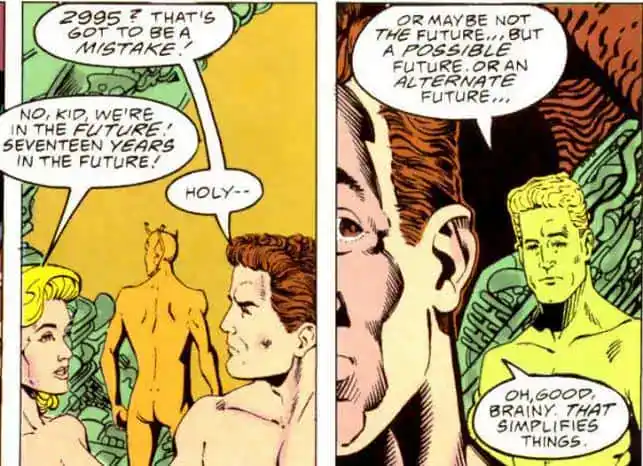
OPTION 5: before the Moon blows up
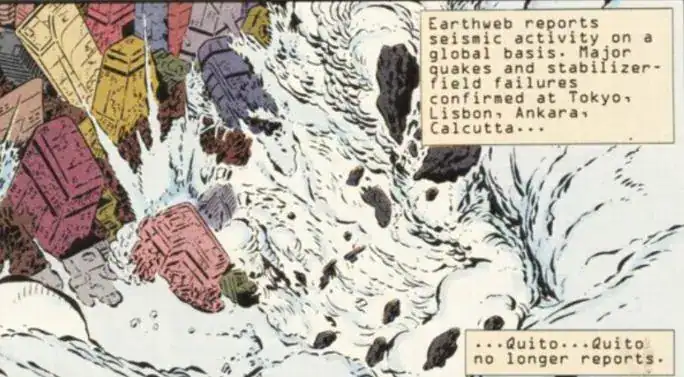
This scenario assumes that the Moon is never blown up: LSH #19 and onwards tell a completely different story.
Ironically, I think this had a higher chance of happening: the Moon was blown up in a Superman book, so you also need the go head by the Superman editors.
Plus it was such a huge risk that the editors might have been confident to fight Giffen on this one, and he might even have been persuaded to go into a different direction.
This does not necessarily mean the SW6 Batch is not introduced later anyway, but for the sake of argument let’s say they’re not.
- There are two sets of Legionnaires, some with overlapping codenames
- The young Legionnaires are basically brand-new characters but are supposed to bring with them knowledge of 20-to-30-year-old stories of questionable canonicity
- The old Legionnaires just use their civilian names
- Some of the old Legionnaires are unrecognizable
- The old Legionnaires bring with them knowledge of stories that are 20-to-30-year-old and of questionable canonicity
- Earth has been destroyed, killing billions, with the heroes failing to prevent it
- The Moon has been destroyed, killing billions, with the heroes failing to prevent it
- Galactic society has collapsed for 5-ish years, with the heroes failing to prevent it
- Despite the above, the young Legion book is set up as a bright and optimistic series
- Because of the above, the old Legion book is set up as a bleak and cynical series
If the SW6 Batch is never introduced, this has the best change of working.
Likelihood of succeeding: 8/10 (without SW6) or 7/10 (with SW6)
Likelihood of happening: 6/10 (without SW6) or 4/10 (with SW6)
OPTION 6: do the Retroboot early
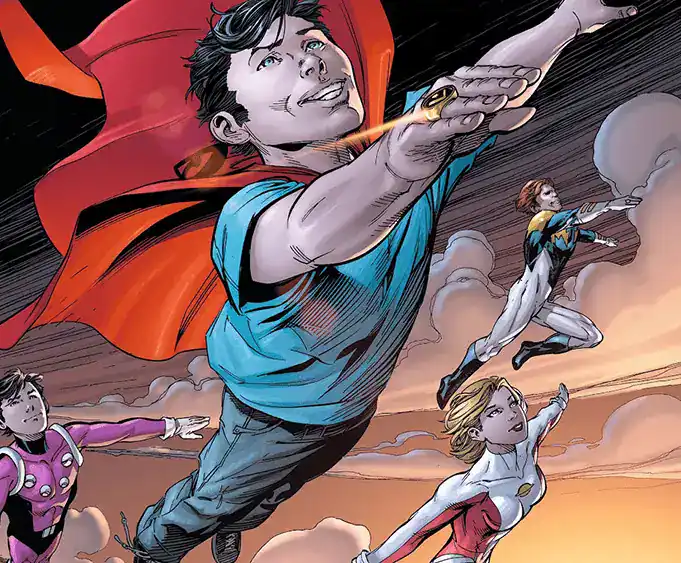
This is completely ahistorical, but let’s say that in 1994 DC Comics decides to do what they will eventually do in 2007: completely skip the 5YL era and pick up where Volume 3 ended in 1989, with a slight time skip.
You would definitely not have Levitz or Giffen working on it, but this solves basically every problem and could have been the basis for… anything, really.
- There are two sets of Legionnaires, some with overlapping codenames
- The young Legionnaires are basically brand-new characters but are supposed to bring with them knowledge of 20-to-30-year-old stories of questionable canonicity
- The old Legionnaires just use their civilian names
- Some of the old Legionnaires are unrecognizable from their younger selves
- The Legionnaires ignore the previous 5 years of stories and bring with them all the Volume 3 Pocket Universe retcons
- Earth has been destroyed, killing billions, with the heroes failing to prevent it
- The Moon has been destroyed, killing billions, with the heroes failing to prevent it
- Galactic society has collapsed for 5-ish years, with the heroes failing to prevent it
- Despite the above, the young Legion book is set up as a bright and optimistic series
- Because of the above, the old Legion book is set up as a bleak and cynical series
I see no reason why this could not have been successful: Volume 3 of the Legion was selling well enough to take the huge risks of Volume 4, possibly even without the Giffen superstar.
Like the 2007 Retroboot this would pander to readers of the previous volume, but it’s bringing back stuff from 5 years earlier instead of 18 years earlier.
With a minor time jump you could have adjusted things nicely for a new audience, especially if you stopped mentioning the Pocket Universe. And in 1994, DC readers were still very familiar with the concept of only considering Silver Age stuff in broad strokes (see basically every character who isn’t part of the DC Trinity, and that’s how they have been dealing with the Silver Age since 1986).
But I emphasize again that this ABSOLUTELY COULD NOT HAPPEN IN 1994.
To allow for this scenario, you would need to change the ENTIRE policy of superhero comics in 1994: the key was going forward to appeal to a new audience with “this isn’t your dad’s series” concepts, NOT the “we’re going back to the status quo YOU remember” that DC would be obsessed with in the late 2000s.
It’s a nice fantasy, but you’re asking the Legion writers and editors to rewrite reality at this point.
Likelihood of succeeding: 9/10
Likelihood of happening: 0/10
OPTION 7: reality is for chumps
Since we’re already in the realm of impossibility, let’s go into sheer insanity.
There are still a few Legion purists who maintain that what actually “ruined the Legion” was Crisis on Infinite Earths or, more specifically, John Byrne removing Superboy from history.
I think this is blown WAY out of proportion.
While the Pocket Universe stuff is more complicated than it needs to be, it still allowed Levitz to ignore 99% of Crisis and to narrate an extremely solid run.
This scenario could take one of two forms:
a) Crisis never happens
b) “Man of Steel” never happens: the post-Crisis Superman was still Superboy and a Legionnaire
Assuming Crisis does not happen would mean rewriting the history of comics for the past 40 years, so good luck figuring out what happens there.
And I cannot stress enough how this scenario WOULD NEVER HAVE HAPPENED.
Superboy still being a thing, on the other hand, could very easily have happened.
Remember that the Legion was selling VERY well when Crisis happened, so I can imagine the editor putting their foot down and forcing Byrne to somehow keep Superboy canon.
To keep even the slightest amount of realism in this scenario, it would likely have included retcons that will pop up in the actual Retroboot: Superboy didn’t have his entire career, but Clark was a Legionnaire for a bit in the future. I mean the past. I mean both.
This would still have necessitated some retcons for the Legion… perhaps with most of Superboy’s feats being attributed to Mon-El.
This would also have tied up the Legion more closely to Superman that they ended up being, making the risky moves of the 5YL era less likely but also exposing the Legion to potential new Superman retcons down the line.
Likelihood of succeeding: ???/10 (no Crisis) or 6/10 (no Man of Steel)
Likelihood of happening: –∞/10 (no Crisis) or 8/10 (no Man of Steel)
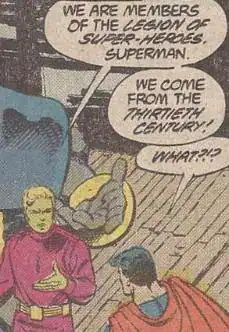
The rest of the DC Universe was forced to reboot in 1986: the Pocket Universe first and 5YL later allowed the Legion to reboot in 1994 instead.
For MOST DC series it wasn’t such a painful transition, with only a few specific franchises truly rebooted from scratch to remove 100% of stories from their characters.
If anything, I would argue that the Legion managed to do its reboot BETTER than the rest of DC Comics because they really DID go through with it.
While other series (from Superman to Hawkman) were wishy-washy about what they were willing to keep, the Legion starts from nothing and builds everything up from there.
And with any luck this will be the last time that I discuss the 5YL era, because we are FINALLY going to discuss and analyze the second incarnation of the Legion of Super-Heroes.
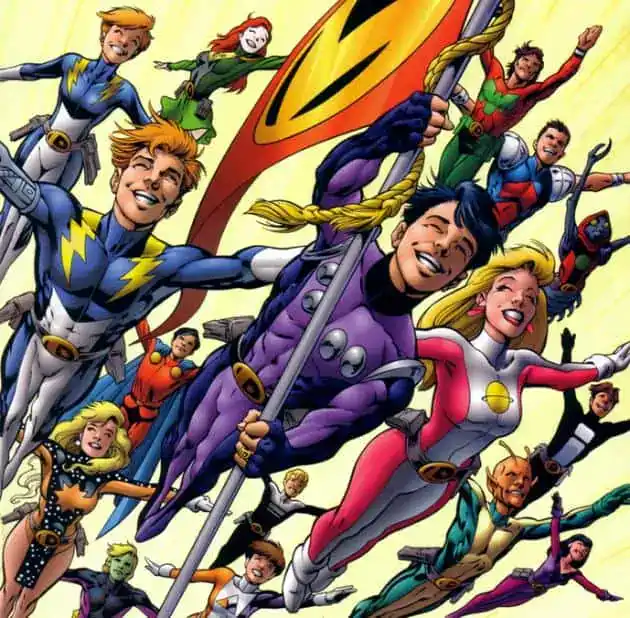
I hate that John Byrne is scapegoated in this. The Legion was just fine with the Pocket Universe explanation. It’s Mike Carlin (I believe he was the Superman editor at the time) who’s to blame. He’s the one who, in early v4, suddenly got an insect up his posterior that all Superman references had to be excised from the Legion. Allow the status quo at the time of the end of the Levitz series to continue, you end up with a way more coherent story reforming the Legion in the book’s first year. Three whole issues – a quarter of that year’s intended plots – had to be written to take out the Time Trapper, do the Mordruverse story, and give Laurel Gand an origin. Plus, the Annual of that year changing the Conspiracy story from revenge against the now-absent Time Trapper to Glorith destroying all of Daxam and being the prime mover behind the Legion’s creation.
You could say 5YL was a series of points of no return. In past eras, a story that broke things was just a single issue which could be happily ignored going forward. Nobody liked the story where Superboy learned that the United Planets was allowing some to have life-extending technology while denying that tech to others. The story broke the world we knew, and was therefore never referenced again. But 5YL kept adding plot points that could never be ignored. The intro of SW6. Blowing up the Moon. Blowing up the Earth. Even Black Dawn seemed to be a story that broke things.
As much as I hated losing decades of continuity, the reboot won me over. What if the Legion had been plotted out methodically from the beginning, instead of just happening? Plus, restoring the optimism to the Legion was something desperately needed. The reboot would eventually hit its own grim-and-gritty era, but without sinking as far as 5YL, although while they didn’t blow up the Earth, they did end with blowing up the entire universe.
I suppose there is no easy, obvious, interesting way of ensuring continued publication of a fictional team with over 30 years of history when so much around it changes and impacts them.
Regardless of who exactly may have failed to predict or deal with the continuity difficulties that came from Crisis and the Byrne take on Superman (and I think I have read somewhere that Byrne and the marketing people were not on the same page on how central and definitive his Superman was supposed to be), the Legion at the trail end of Vol 3 was already way too big to be forgotten or ignored. Its past would be remembered, even if as something that was no longer applicable for some arcane reason. Any attempts at rebooting the Legion will be compared and contrasted with – at least – the continuity of volumes one to three and have to justify deviations from its characterization, tone and themes at least implicitly.
Legion continuity is in one sense _inescapable_; you may meddle with it, you may challenge it, you may attempt to subvert it directly, but there are neither means nor good reasons to attempt to pretend that the body of work from the late 1950s to mid 1989 (at least) won’t be considered the baseline to be taken into account. There isn’t much of a point of having a Mordru if you haven’t read the Shooter stories that introduce the character, a Saturn Girl if she isn’t expected to be the resourceful character that we have known for over 30 years, a Wildfire or a Brainiac 5 if they do not resemble the classic versions or at least offer a reason not to.
For those reasons, I do not think that reboots favor the Legion of Super-Heroes. Each new reboot introduces new continuity which will never be allowed to be better lasting or more authoritative than the one from 1958 to 1989, and the diminishing returns establish themselves very quickly (as I think we have all learned well). Some form of branching alternate continuity from a specific point in the past may work (I believe that to be what the Retroboot does), but perhaps the best way of dealing with the ever growing continuity baggage is to simply establish some form of explicit veil (in the tabletop rpg sense) – we know that some relevant things have happened, but we won’t be saying exactly how they did because we do not have access to reliable, detailed memories or records.
Vol 4 might have worked better if instead of clumsily creating a Glorithverse whose whole point seems to be that it is known by the characters but inescrutable to readers it restored and extended the Time Trapper’s time barrier to the past as well as the future, making all knowledge from a certain range of the past unreliable and potentially unstable, perhaps even making its attributes vary in reaction to certain line-wide events.
In my opinion, tempting as it may be to instead establish supposedly lasting “true explanations”, they are doomed to be challenged, destroyed or circunvented at some point, simply because there will come a day when that will feel like a tasty, drammatic, ready-made story seed. More often than not they will be forgotten as well.
Best to just accept and embrace that limited shelf-life aspect of continuities and run with it.
The problem, as I see it, is not that the moon blew up, the Earth blew up, etc. The problem is that TMK had so little interest in developing the Legionnaires as heroes. As many of your reviews have noted, the heroes spend most of their time doing nothing, not responding to crisis, and not being proactive in preventing them. In short, they don’t act like heroes.
Instead of telling interweaving stories, each with a beginning, middle, and end (as Levitz did), TMK went from one Big Idea to the next. They confused complexity with shock and awe, and the Legionnaires got lost in the mix. Ultimately, it didn’t matter. If Waid’s account is accurate, the Superman editors would have demanded major changes to the Legion no matter what it’s current state might have been.
I think of the destruction of the Earth and moon, etc., as story-telling opportunities—but using these opportunities is something DC would never be prepared to do, not if they continue to envision the Legion as spunky teenagers who never grow up. For all it’s faults,5YL was headed in the right direction. We Legion fans love these particular characters—the versions of them that developed from their beginnings in 1958—and were willing to see what they would do next, especially in a world that had changed so drastically (not unlike the real world). Unfortunately, they did very little.
How to bring in new reader? This seems to be the crux of the question. One way to do this is to combine the older, established Legionnaires with newer, younger characters. This, incidentally, is exactly what creators did in the ‘70s and ‘80s by introducing Wildfire, Dawnstar, Blok, Invisible Kid II, The White Witch, and so forth. These new characters were the bridge for new readers into the complexity of the Legion. They were getting to know the Legion just as readers were. During V.3, Levitz retired several long-time Legionnaires such as the three founders and Star Boy to make room for new members. This transition mirrored the real-life changes that families and organizations go through: Old member are gradually replaced by younger ones. The Legion, as an organization, could continue, anchored by its traditions and history. The old stories would still exist but would be brought up only as necessary to a current storyline.
The problem in pursuing that direction, I think, was that Levitz and Giffen were so tied to the Legion franchise at that point that DC seemed unwilling to continue the Legion with entirely new creators. Imagine if someone new had come in before the Magic Wars and built on what they had started. We might have seen a gradual shift from the Legionnaires we knew to an entirely new team that would still be the Legion—but the change would happen slowly. The long-time Legionnaires were still in their late 20s at the end of V.3. Most would still be active for years or even decades.
My thinking on this has been influenced a great deal by Coronation Street, a UK soap opera that has aired since 1960. I’ve been immersed in episodes from the ‘60s to ‘80s, and have enjoyed watching the cast change over time. Beloved old characters gradually leave, while new characters become fan favorites—all while the basic setting—the cobbled street and row of terraced houses—remains unchanged. The Legion—as an idealistic team of heroes—could do the same. Would it have worked? Who knows? It couldn’t be worse than what we got.