
Fantastic Four #1 (1961)
by Stan Lee & Jack Kirby
It is kind of funny to advertise on the cover that the first members are “together for the first time in one magazine” when this is the first time we ever see them anywhere.
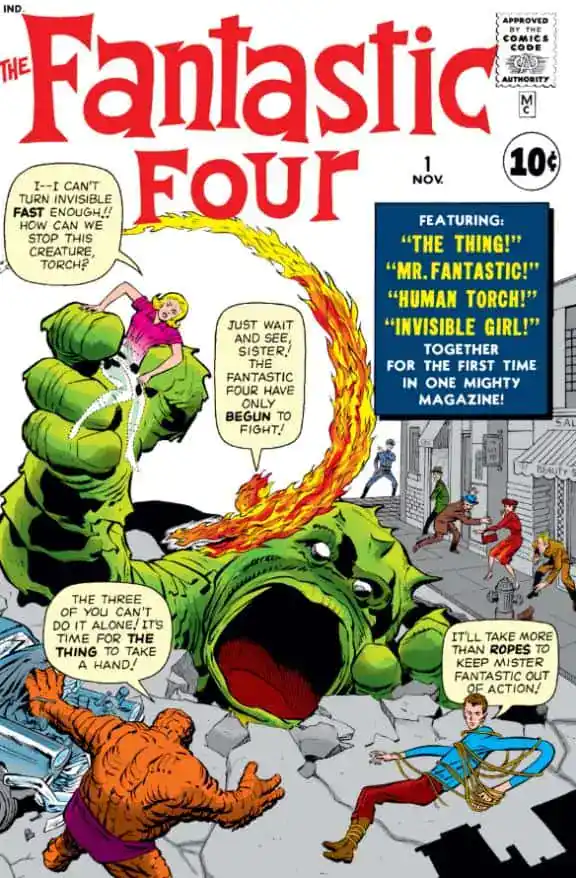
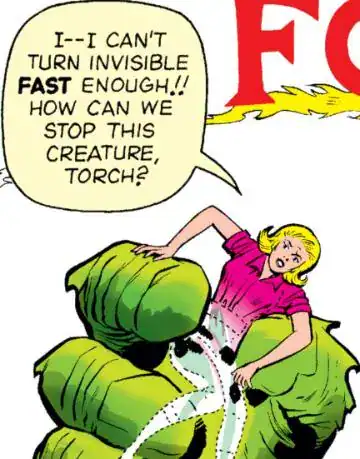
Speaking of seeing: how would turning invisible faster help you, considering the monster has already grabbed you?
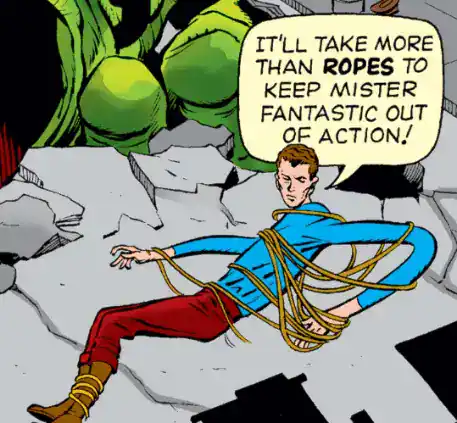
Also, was the monster the one to throw that rope? If so, that’s some dexterity!
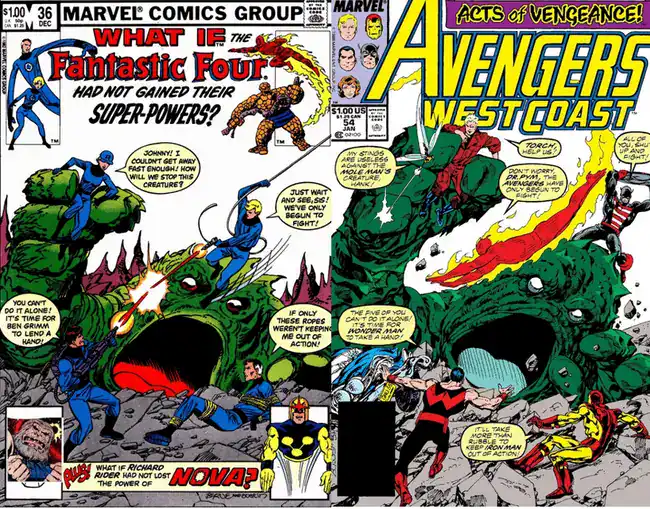
This is, of course, one of the most parodied and homaged superhero covers.
Whether it’s by Marvel itself…
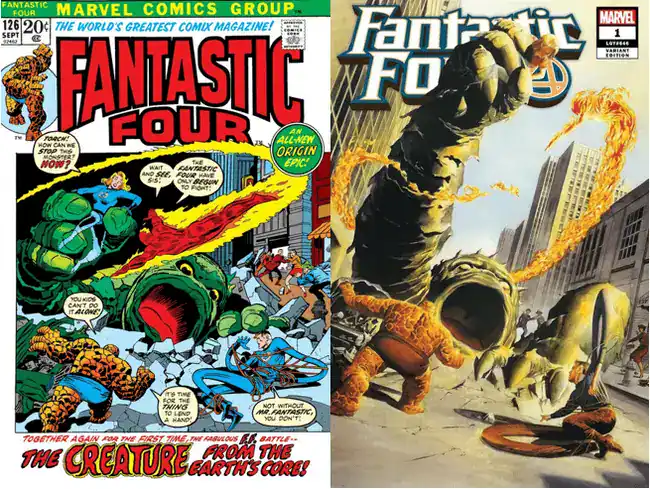
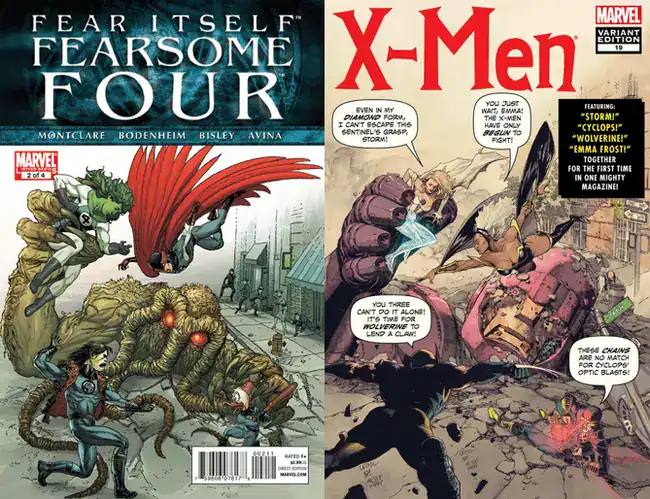
…or by just about anyone.
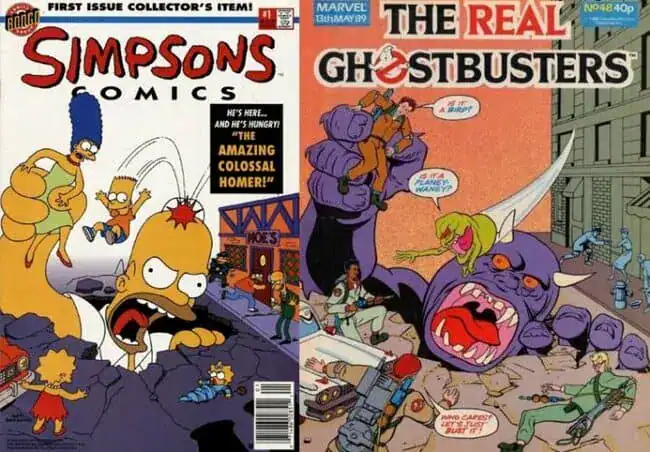
But let’s move past the cover or this review won’t ever end.
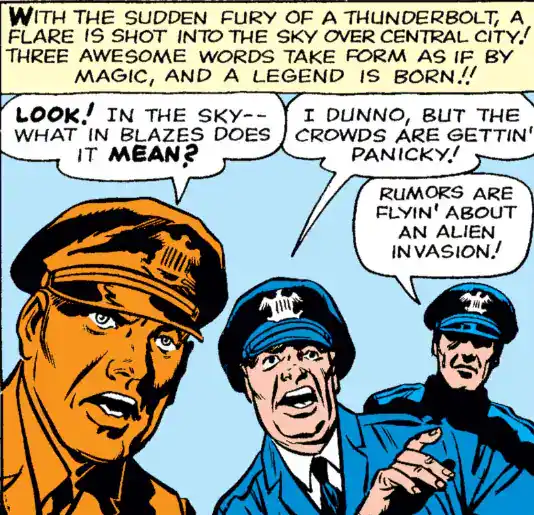
The story proper begins with the public witnessing a title appearing in the sky.
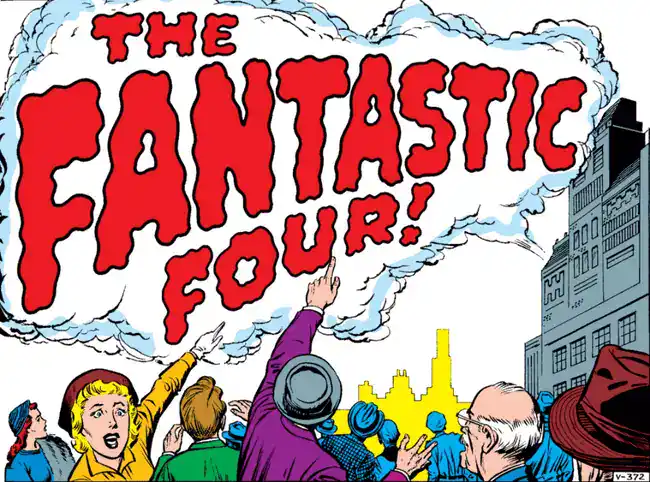
You might be surprised that the story is set in the fictional Central City, not in New York City!!!
Also, what aliens would come to Earth just to write “The Fantastic Four!” in the sky?
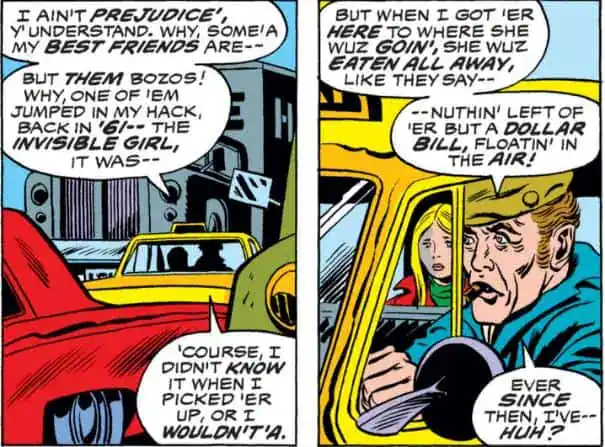
The first to answer the call is the Invisible Girl.
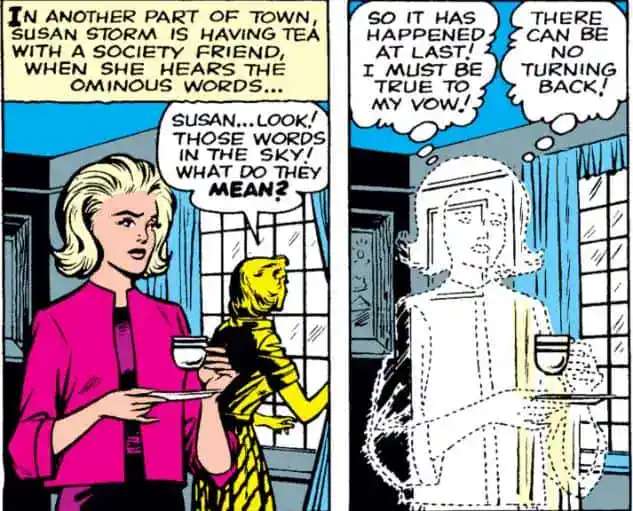
It will be years before she learns to use her force field to get around… she doesn’t even HAVE the force field yet… so she takes a cab.
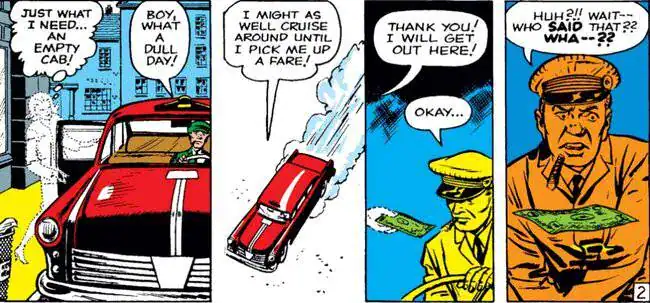
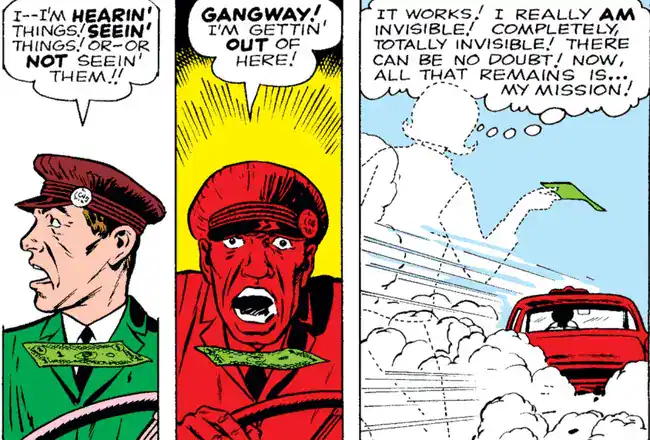
The cab driver won’t be seen until 1975, in issue #160.
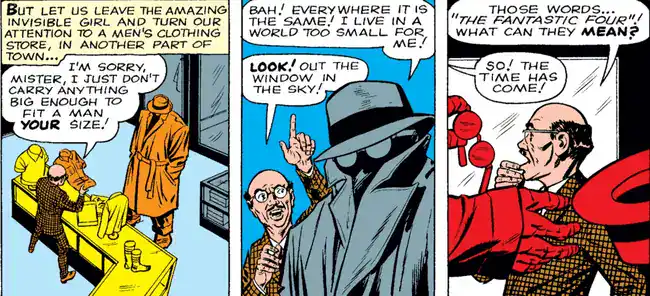
Next is a man using the best disguise known to fiction: a coat and a hat.
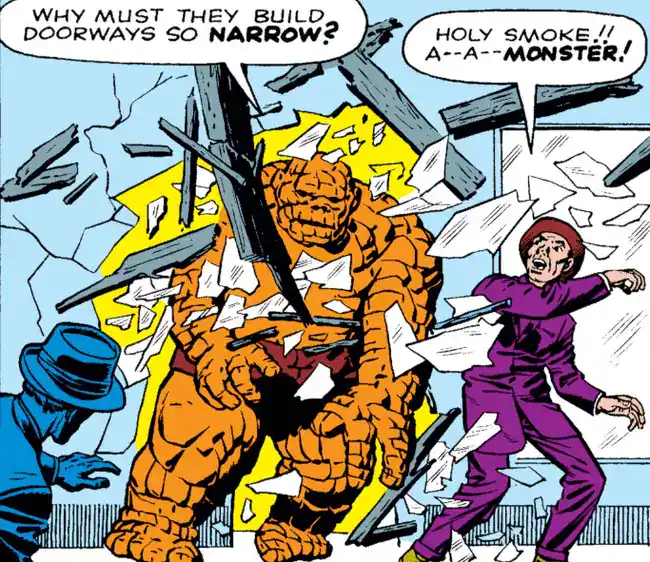
Good thing that the Fantastic Four will get fantastically rich, because they cause tons of property damage in their FIRST issue!!!
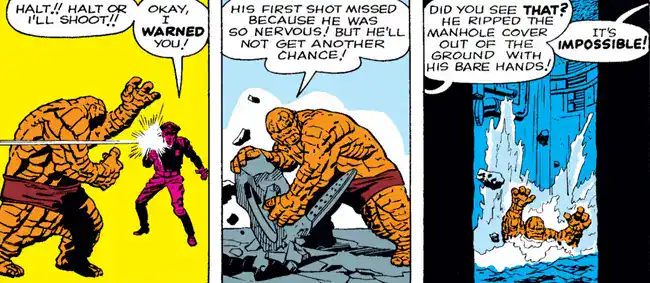
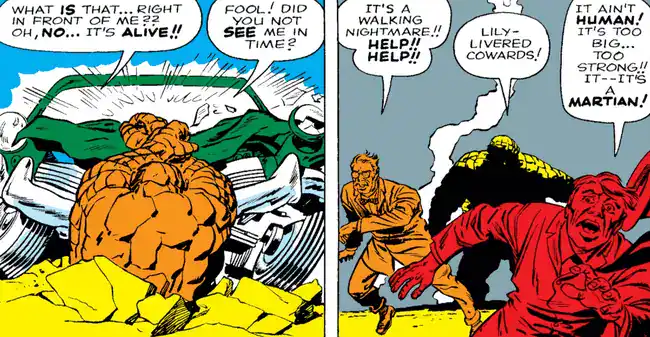
Next it’s a teenager who loves cars so much he immediately melts one.
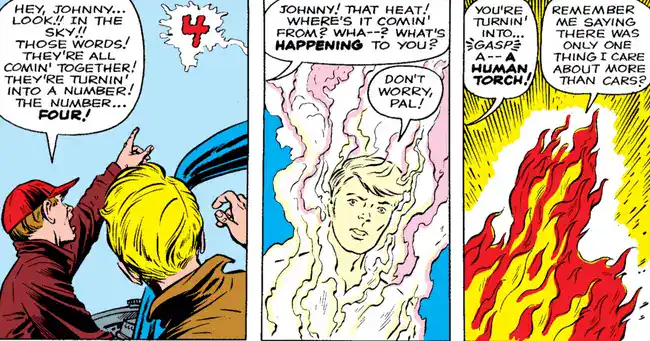
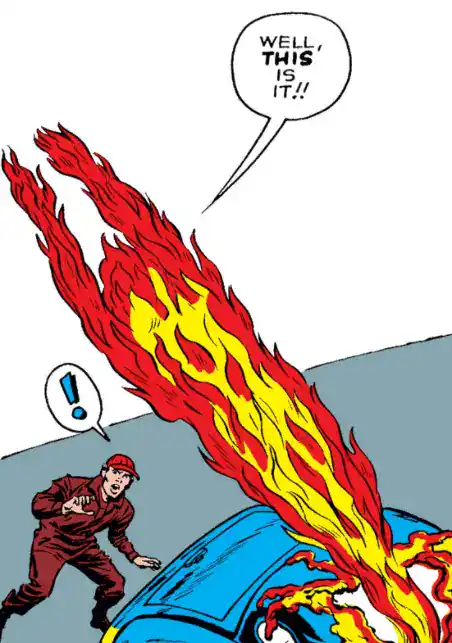
Man they really took air traffic seriously during the Cold War, didn’t they?
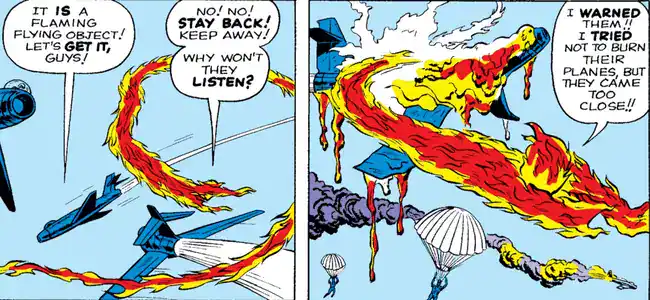
Also very scarily trigger happy, because they just unleashed a NUCLEAR WARHEAD against an unidentified flying object above a city!!!
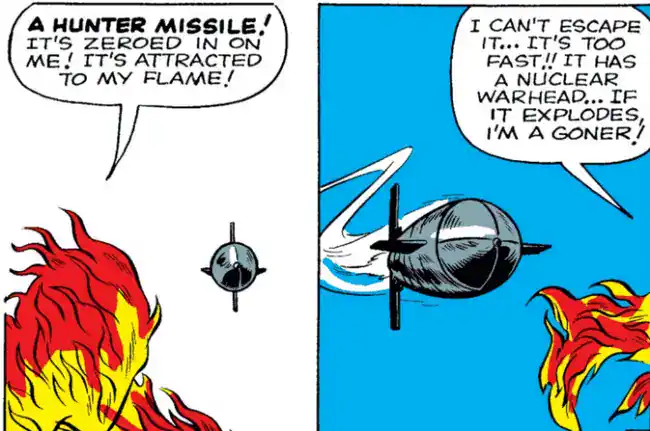
Thankfully the day is saved by some stretchy arms. This might STILL be the most impressive stretching feat from Mister Fantastic: how far did he have to stretch for this???
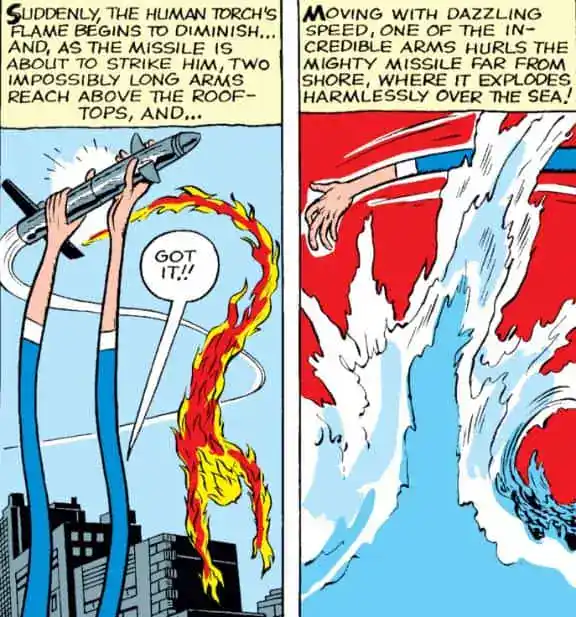
And now that the team has made enough damages, they can tell us their origin story.
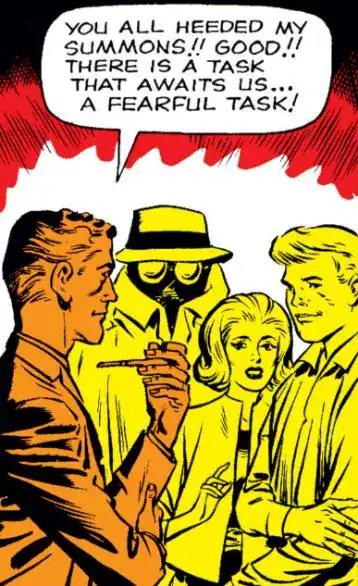
At the time of publishing, whether humans could safely travel beyond Earth orbit was still debated among scientists.
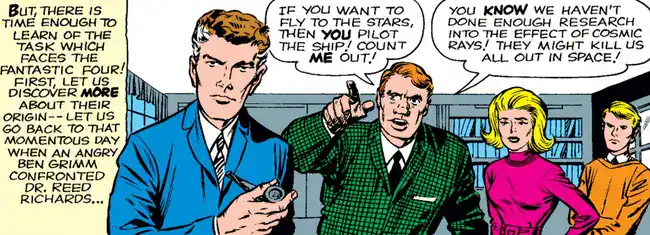
A little tangent here.
The target of Reed’s mission is just vaguely “the stars” in the first issue; the second issue makes it a mission to Mars.
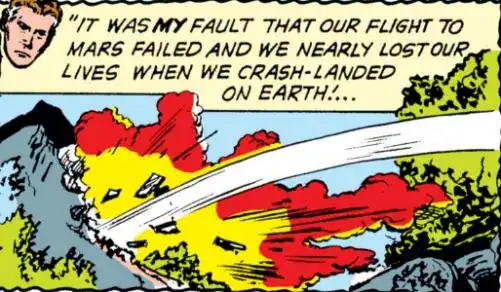
Comics would stay vague for years; Fantastic Four #236 is probably the one that retconned it into being an attempt at faster-than-light travel. That will be the consistent across multiple retellings and references.
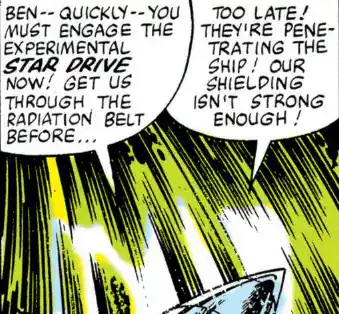
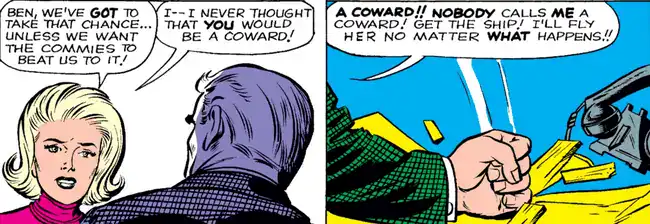
As a sign of the times, one of the motivations for rushing the mission is to beat the Soviet Union in the space race.
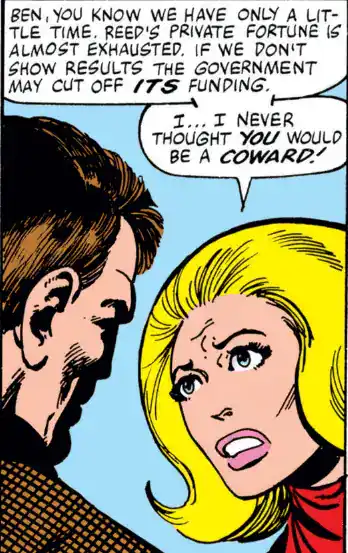
That has been changed to the project running out of government funding, needed even if the mission was mostly funded by Reed himself. For example, from #236 again:
One of the things that ALL Fantastic Four retellings and adaptations have to deal with is the ridiculousness of two completely untrained people (one of which is a teenager!) to be of any use during an experimental space flight.
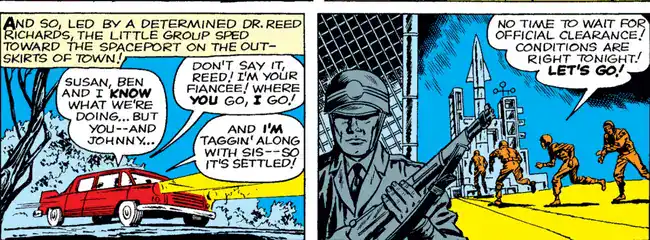
Another tangent… this is never going to end, isn’t it?
Most adaptations fix the origin by just making Susan and Johnny part of the mission from the start.
At the time of this writing, the official explanation is that they were both part of the backup team.
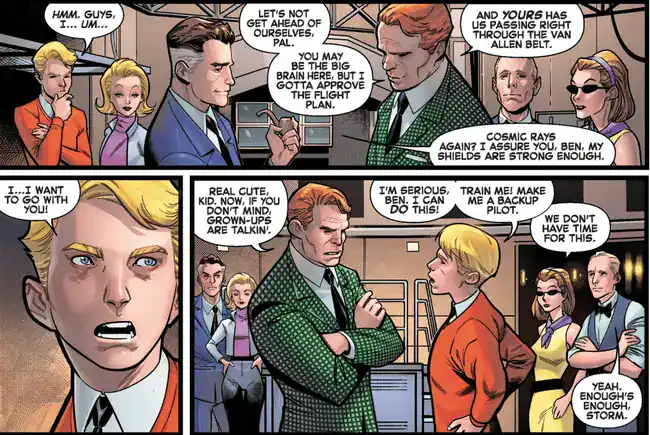
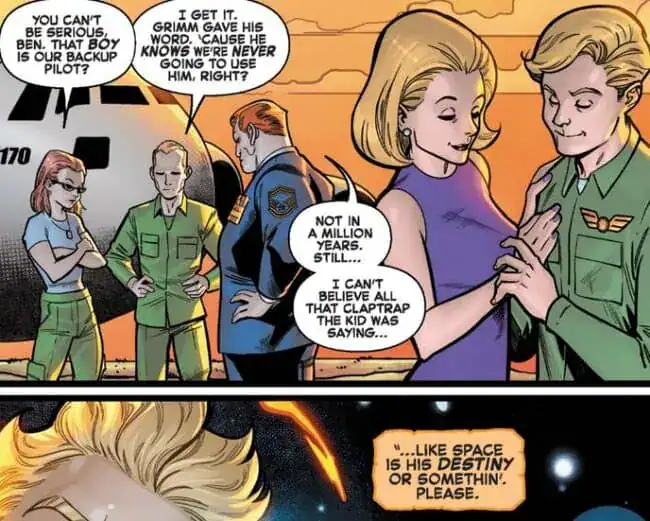
That’s from the Slott run, Fantastic Four vol6 #14 in 2019, which also gave the ship its official name: Marvel-1.
The same issue introduces us to the two people who were supposed to be on the ship.
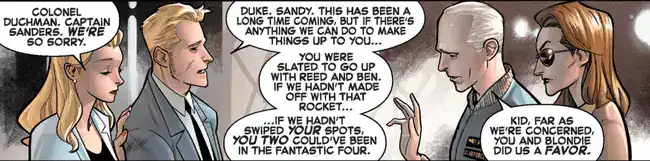
Back to the story: one of the things this origin does REALLY well is put you on the edge of your seat, even if you already know what’s coming.
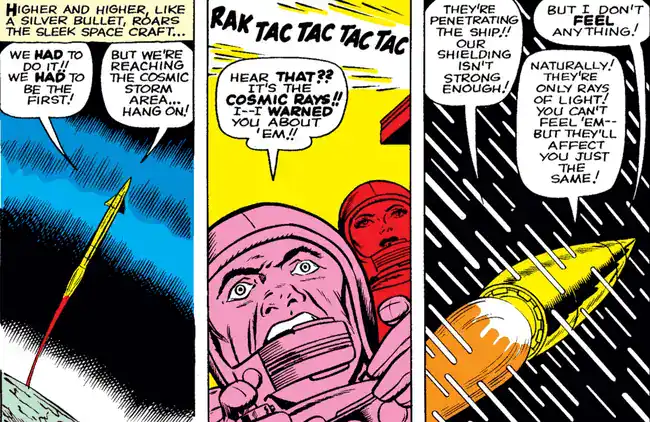
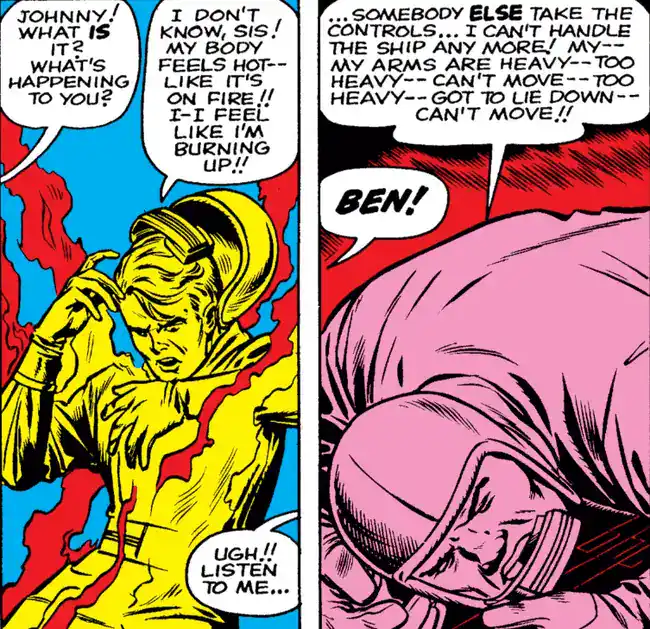
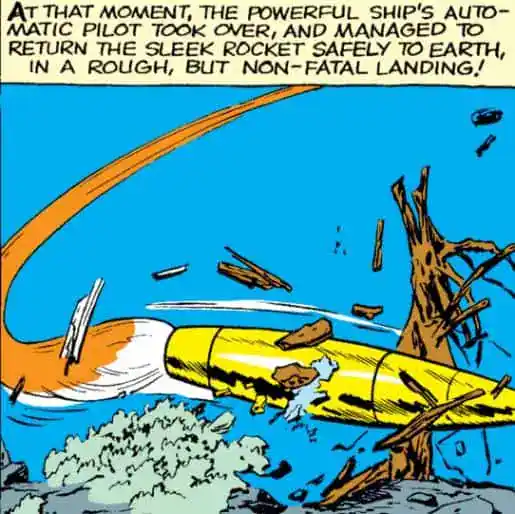
One after one, each member gets superpowers. Susan is terrified…
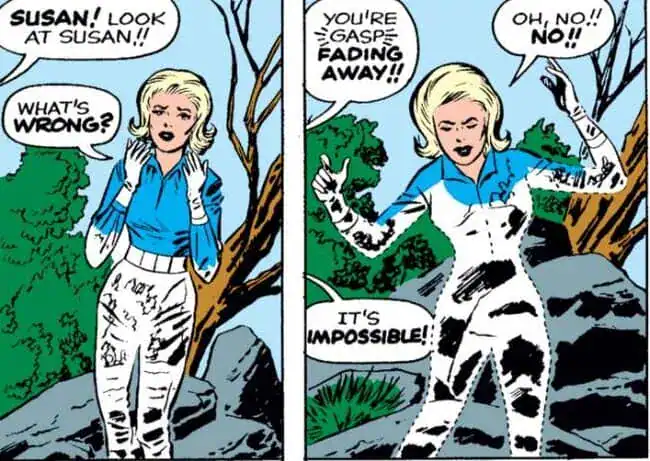
…and she’s the one to give The Thing his name.
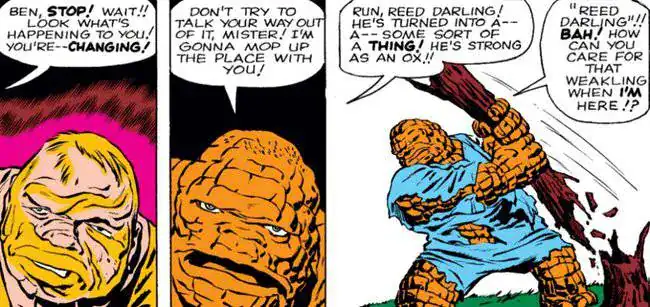
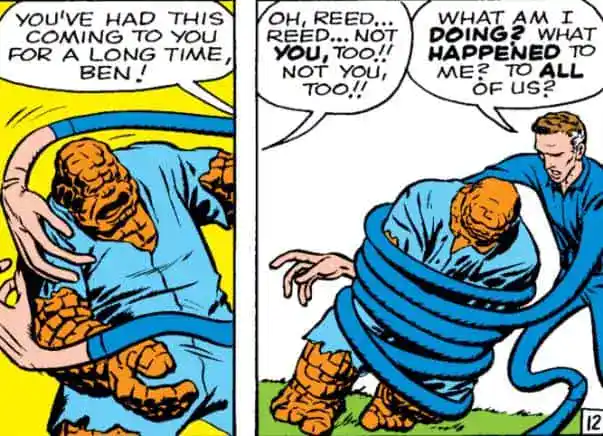
Interesting to see that Johnny considers Reed to have turned into a monster as well.
He inherits the original Human Torch’s power of flight, and the same questionable scientific explanation for it.
Comics haven’t really tried to give proper reasons for it, mostly relegating those to Handbooks; we all know the Human Torch just flies because it looks awesome.
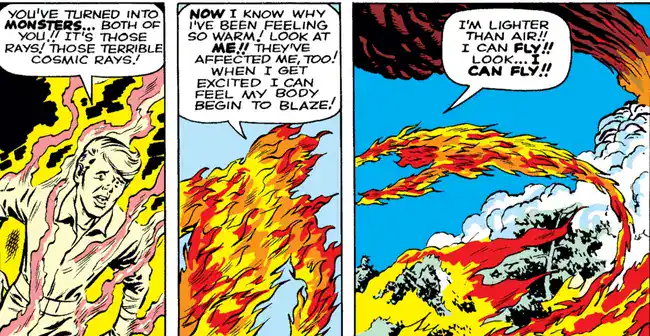
Considering the team will often insist they’re not superheroes, they seem to take for granted that’s what they’re going to be.
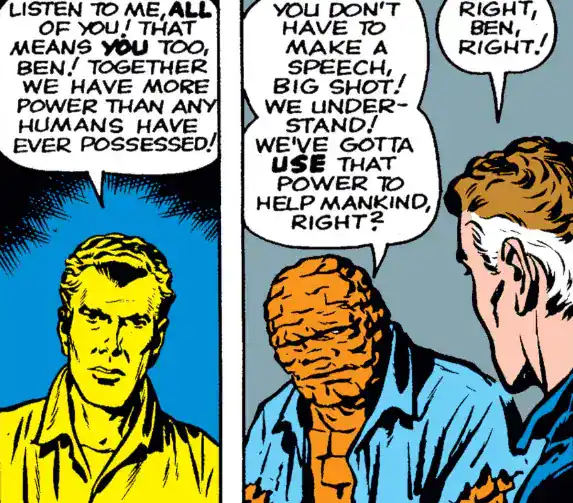
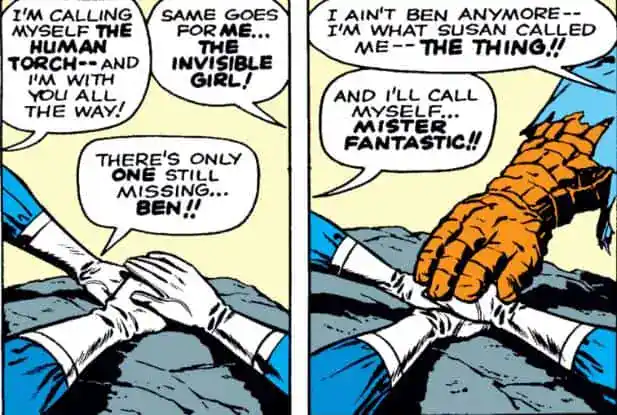
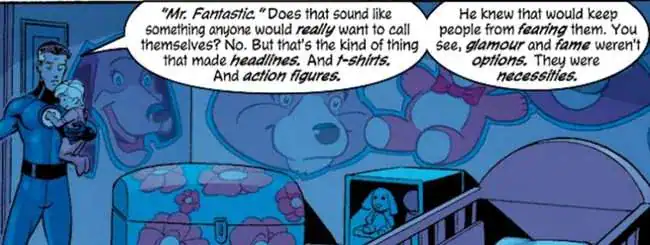
The choice of codenames has been the source of countless jokes. Two of them are quite descriptive of their powers, The Thing sounds more than a little offensive, and it’s hard not to make fun of a guy calling himself “Mister Fantastic”.
By far the best explanation is from the Waid run: he just took a marketable name in order to make his friends celebrities.
We’re already at page 14 and we haven’t even tackled the main plot.
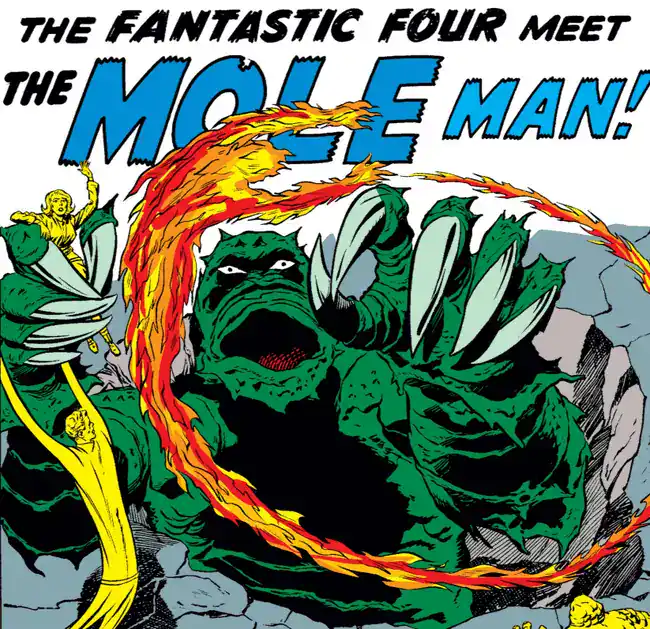
Hey Marvel didn’t even wait for an entire issue before doing a homage to the first cover!
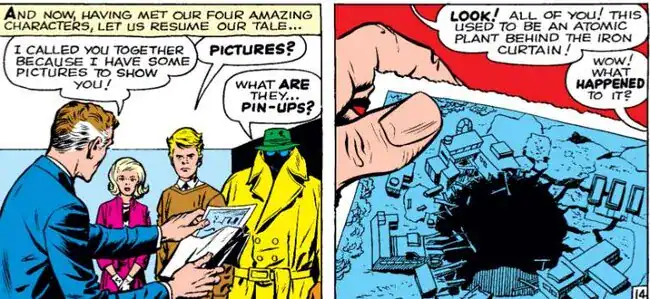
We begin with Reed showing the others pictures of atomic plants that disappeared.
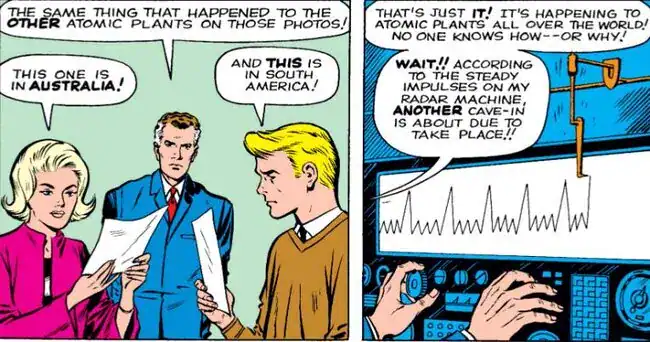
This part of the story is REALLY influenced by the great number of Giant Monster Stories that Marvel had been publishing.
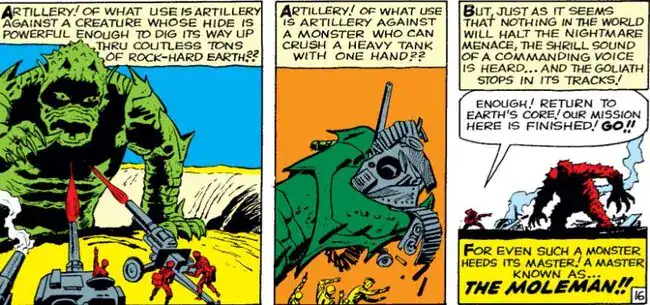
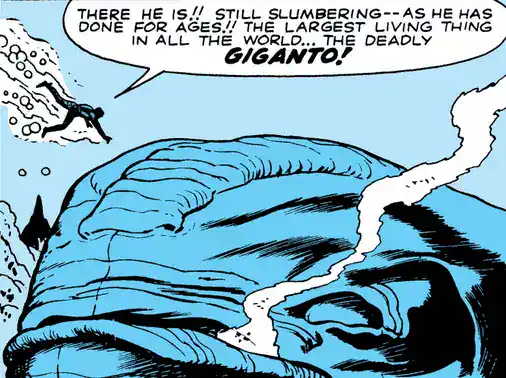
The monster goes nameless in the first issue; he won’t be named Giganto until a West Coast Avengers story in 1990.
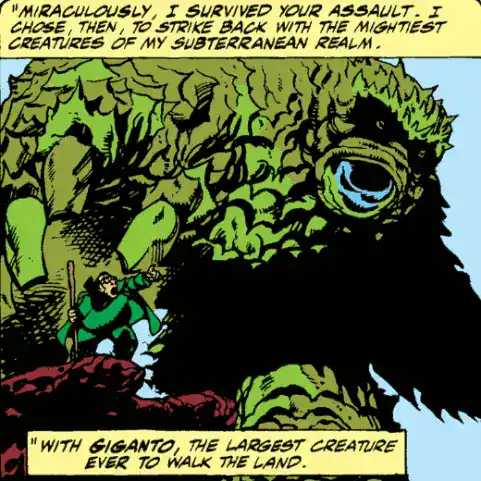
Which is weird, because there’s already ANOTHER giant monster called Giganto that appeas in Fantastic Four #4, so I wonder if when writing that Avengers story John Byrne misremembered that it was the name of the monster from issue 1.
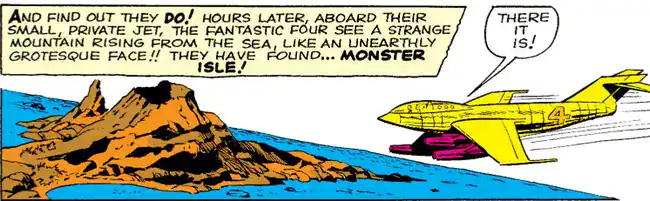
The team flies to Monster Isle on their private jet. They haven’t started to properly brand their tech, but the 4 at least is there!
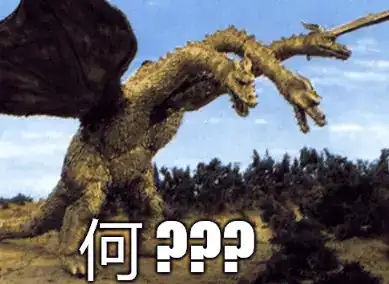
And if that sounds straight out of Godzilla… well Gidorah is there.
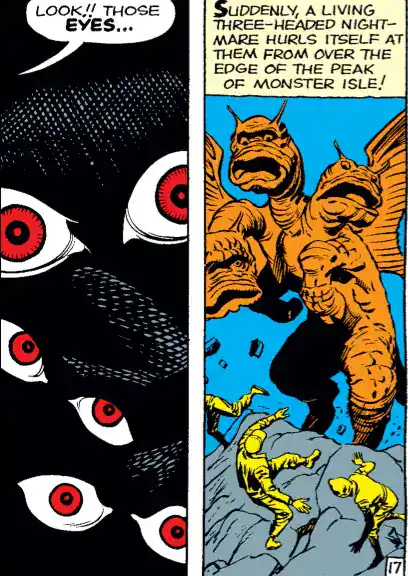
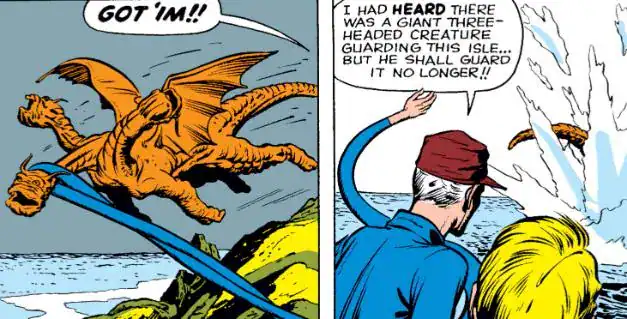
A cave-in separates Reed and Johnny from the others. At this point the Human Torch could sustain his flame for very little time… but he hasn’t flamed on during this mission yet, so why does he need the parachute?
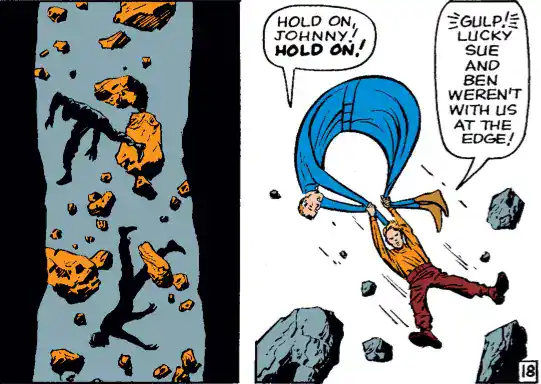
They are soon kidnapped and placed in suits that protect them from diamonds (???)…
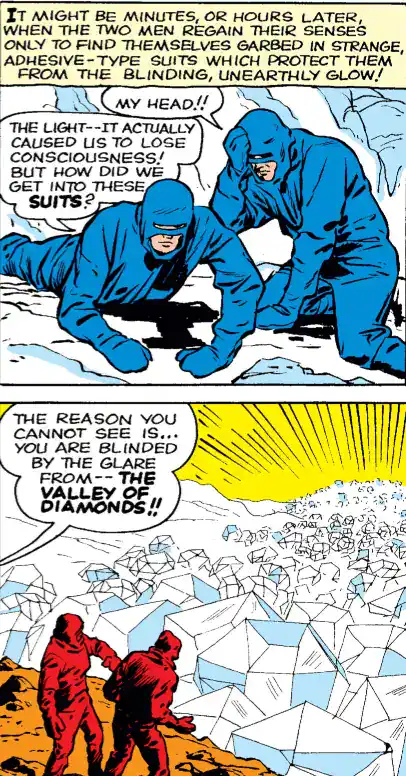
…by Mole Man.
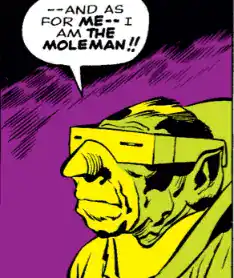
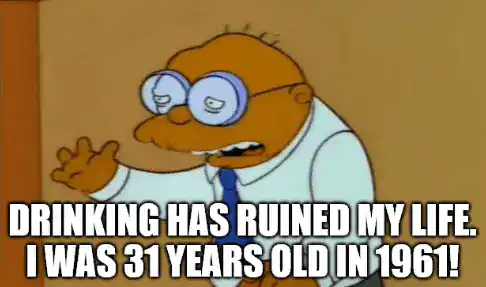
His origin is about him being casted out of society for being ugly.
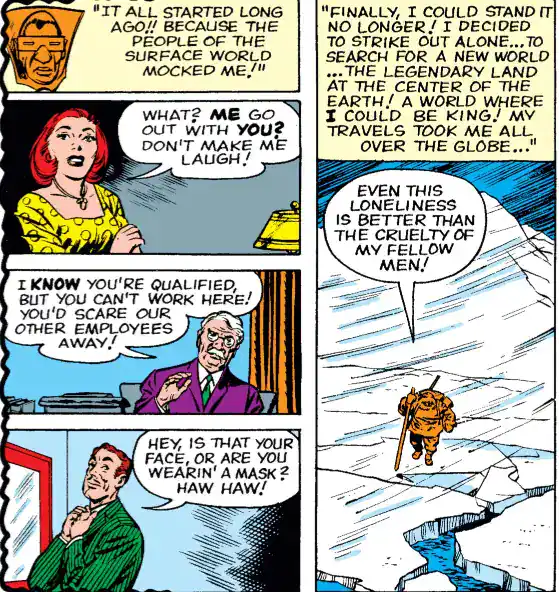
Getting lost in the caves caused him to lose most of his eyesight…
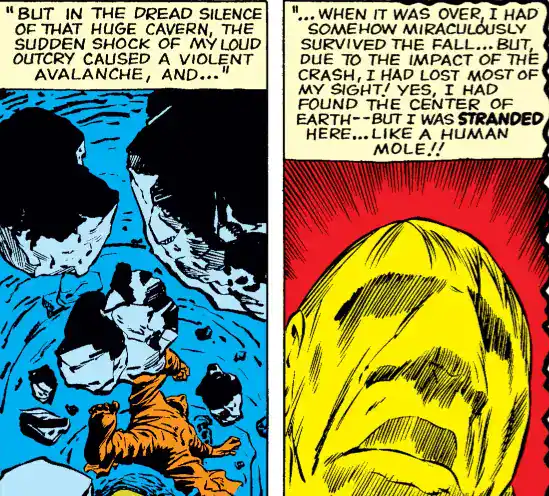
…plus gave him a radar sense AND made him great at stick fighting.
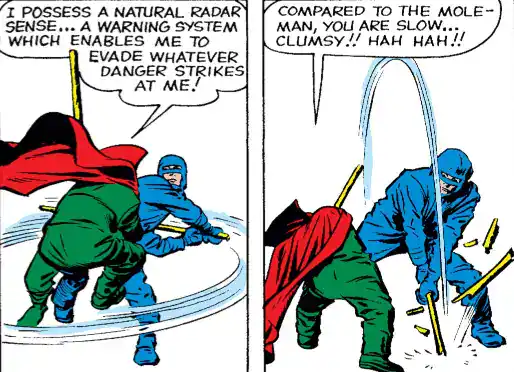
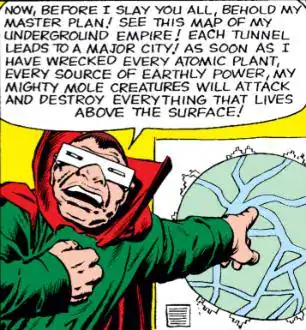
This somehow made him want to take over the world.
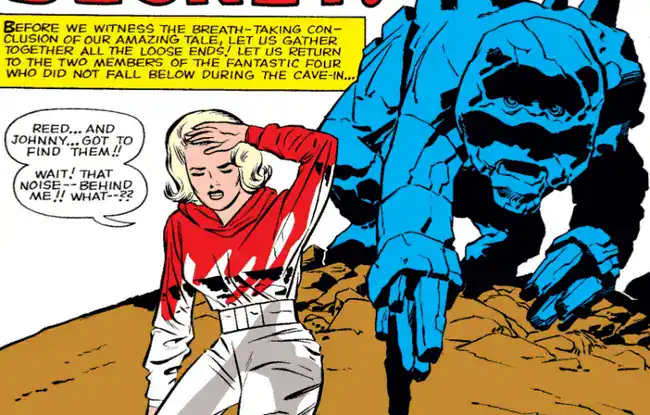
Meanwhile Susan proves her worth to the team by… uhm… I’ll get back to you in about 30 years.
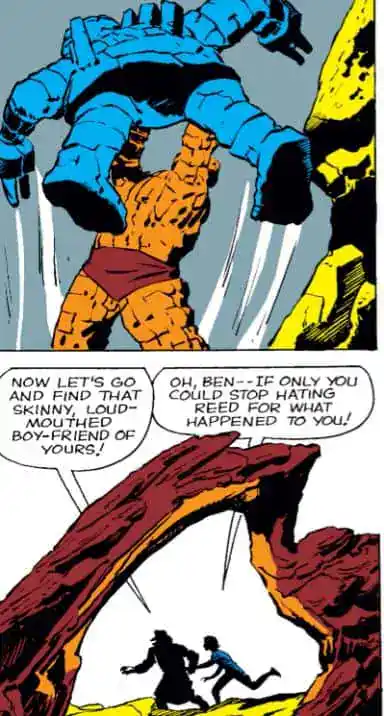
Despite his boasts, the Fantastic Four need less than two pages to defeat him.
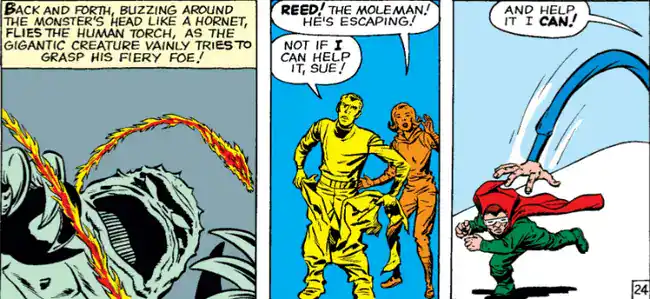
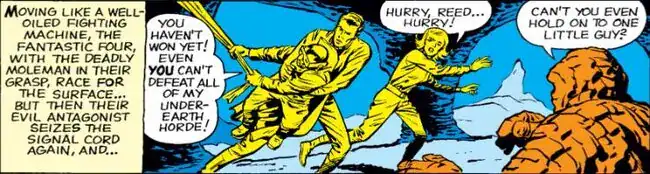
The team escapes, with Mole Man deciding to blow up the entire island.
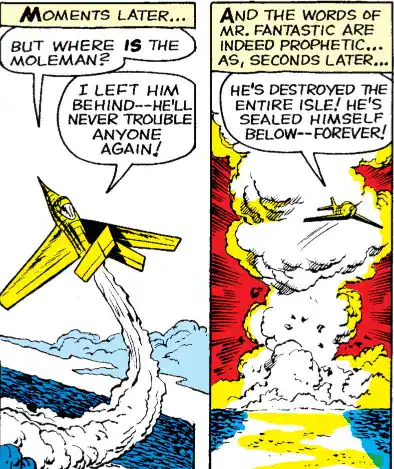
The Mole Man will be back in issue 22.
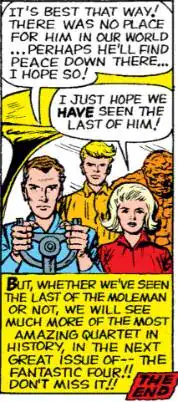
Historical significance: 11/10
It’s my policy to never go above a 10/10 for the historical significance, but this is the third exception I have made.
Action Comics #1 created the entire superhero genre, Amazing Fantasy #15 redefined how superhero stories could be told… and the same is true for this issue as well.
There was nothing else like this on the shelves, and I will analyze that by taking a look at what comics were published the same month.
Silver Age-ness: 8/10
As a reminder, I grade Marvel comics on this category in a different scale from DC comics.
No I don’t have precise rules, that’s kind of the point.
That being said, this “flying by the seat of your pants” writing style is peak Silver Age for them.
Does it stand the test of time? 7/10
The origin story is by far the most solid, especially if you update topical references.
As mentioned, the space flight itself holds up perfectly. In fact, most retellings that change details tend to keep the same exact dialogue and pacing of the original; it’s THAT good.
The Mole Man part is definitely weaker: it takes up less space and feels relatively rushed, even if it does keep you entertained. Still, that’s what prevents me from giving this a higher score.
The main difference from every other contemporary book are the characters. If Reed is pretty interchangeable with any scientist and Susan with any girl, Johnny and Ben are the key.
Johnny is one of the very few superhero teenagers who REALLY feels like a realistic teenager!
While I like Superboy and the very early Legion appearances, Johnny is on a whole other level.
But of course the breakout character is the Thing. It’s hard to really grasp how different he is from ANY preceding superhero; even his teammates question whether he’s a hero or not in the first few issues!
On top of that, the interaction between characters is what makes the book stand out. The family dynamic has yet to come, but all the signs of the upcoming greatness are there.
How close is this to the modern characters?
This warrants an in-depth look at each member of the team.
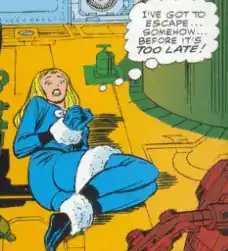
Invisible Girl: 0/4
She definitely gets the worst beginning. She’s BARELY a character here; she doesn’t contribute to any fight, and her most frequent contribution to the story is to either complain or be in peril.
Her characterization will also be by far the weakest of the original members throughout the Lee & Kirby run. The 70s will be even worse, and I would argue that she won’t really become the character we know until the John Byrne run in the 80s.
Until then…
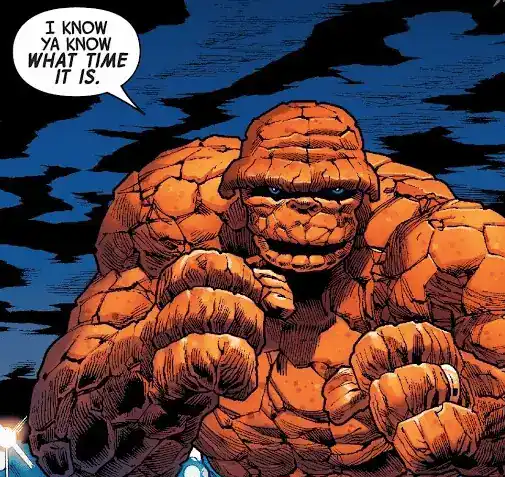
The Thing: 2/4
Despite his importance to the start, he’s still as rough as his appearance. Kirby will take a while to figure out his iconic look, his dialogue will take a bit to adjust, and his “heart of gold” attitude won’t really come out until Alicia is introduced and their relationship is developed.
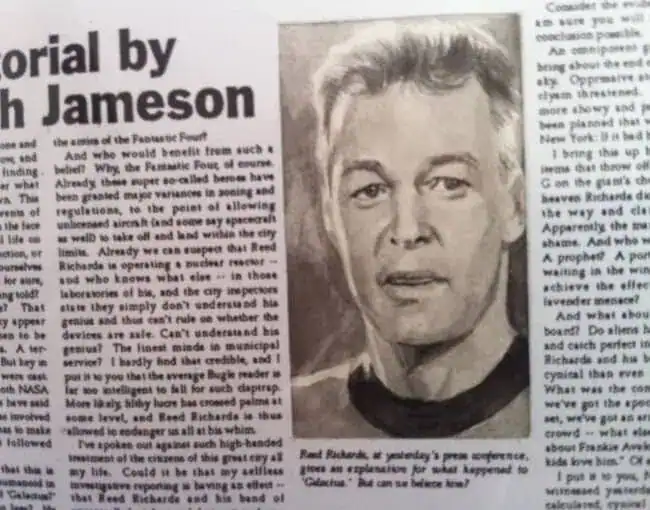
Mister Fantastic: 3/4
A lot of writers make the mistake of considering him a simple character. Even during the Lee & Kirby run he will show a surprising level of complexity, but at least he feels almost like Reed Richards here.
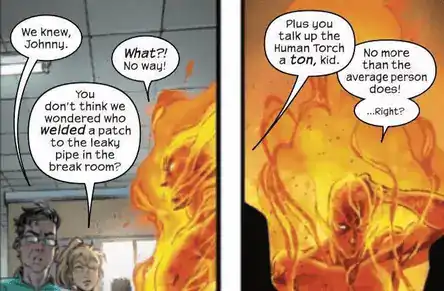
Human Torch: 3/4
A lot of writers make the mistake of considering him dumb, and he’s cursed to have his characterization regressed at the beginning of nearly every new run. Surprisingly he doesn’t come up as stupid or even particularly impulsive here!
The Fantastic Four: 1/4
As a whole, the team hasn’t really solidified yet. Exploration is in their DNA from the start, but the Mole Man story doesn’t take advantage of it. The family dynamic is also absent, mostly because the relationship between Reed and Susan is barely a factor.
Thankfully it won’t take much before the team kicks off in a major way.
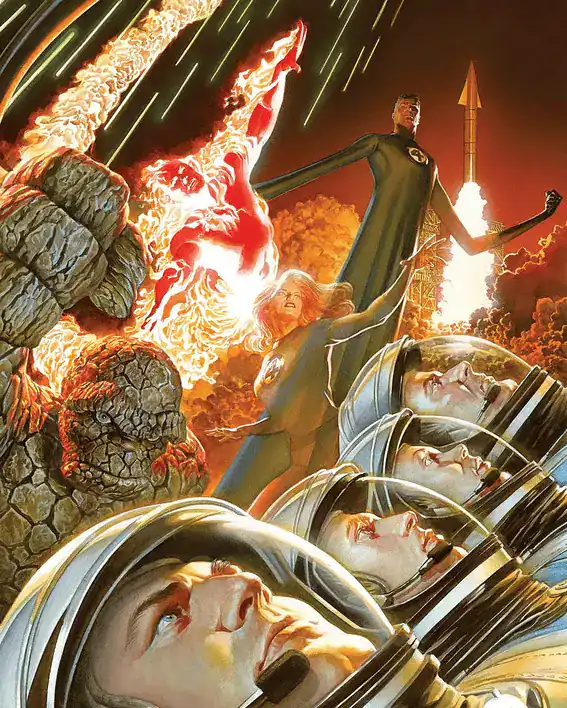
Who created the Fantastic Four?
I inevitably have to talk about the decades-long debate about “who really created the Fantastic Four”. I don’t plan to do this with ALL the Lee & Kirby creations, but this is a special case.
If the legend told by Stan Lee is true, the Fantastic Four… and Marvel in general… owe their existence to the success of the Justice League and Marvel’s publisher, Martin Goodman.
Martin mentioned that he had noticed one of the titles published by National Comics seemed to be selling better than most. It was a book called The Justice League of America and it was composed of a team of superheroes. … “If the Justice League is selling, why don’t we put out a comic book that features a team of superheroes?”
STAN LEE
Stan had been in the business since the Golden Age, but had grown dissatisfied with the state of superhero comics and had considered quitting altogether. Reportedly, his wife pushed him to give one last attempt at writing the story like he wanted; the worst that could happen was losing a job he was already considering quitting.
For just this once, I would do the type of story I myself would enjoy reading … And the characters would be the kind of characters I could personally relate to: They’d be flesh and blood, they’d have their faults and foibles, they’d be fallible and feisty, and — most important of all — inside their colorful, costumed booties they’d still have feet of clay.
STAN LEE
Some of the earliest comments about the creation of the series were made in 1968, at the height of its popularity. Asked about if Lee or Kirby had created the Fantastic Four:
Both. ’twas mainly my idea, but Jack created characters visually.
STAN LEE
In 1974 he gave a more detailed answer that basically describes what we call the Marvel Method.
After kicking it around with Martin and Jack for a while I decided to call our quaint quartet the Fantastic Four. I wrote a detailed first synopsis for Jack to follow and the rest is history.
STAN LEE
In 1970, Kirby started telling a different story.
It was my idea. It was my idea to do it the way it was; my idea to develop it the way it was. I’m not saying Stan had nothing to do with it. Of course he did. We talked things out.
JACK KIRBY
One of the points Kirby stressed was the similarity between the FF and the Challengers of the Unknown, mostly based on the uniforms. However, the Fantastic Four would not get uniforms until their THIRD story, so that’s a bit suspicious.
If you notice the uniforms, they’re the same … I always give them a skintight uniform with a belt … the Challengers and the FF have a minimum of decoration. And of course, the Thing’s skin is a kind of decoration, breaking up the monotony of the blue uniform.
JACK KIRBY
In 1991, the thirtieth anniversary, Fantastic Four #358 reprinted the synopsis that Stan Lee claimed he wrote in 1961 “after dreaming up the concept of our frivolous little foursome”.
Some claim that this “proves” Stan created everything, while his detractors say he made all up after Kirby did everything.
The truth is that the synopsis doesn’t really “prove” anything one way or the other: it was most likely written after the two had discussed the plot.
I find it of historical interest mostly to see what was changed before the comic was actually finished.
For example, Reed was supposed to be young and handsome.
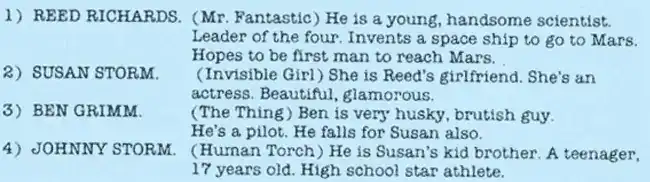
The synopsis includes this comment; as we saw this WAS changed to a flight to the stars in the first story, then it became Mars in the second issue, and was later changed back to the stars.
(NOTE: At the rate the Communists are progressing in space, maybe we better make this a flight to the STARS, instead of just to Mars, because by the time this mag goes on sale, the Russians may have already MADE a flight to Mars!)
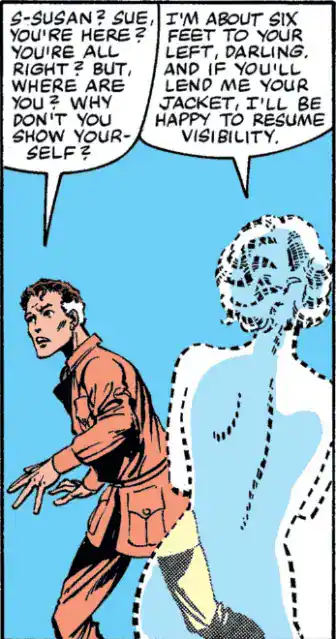
One of the details dropped was making Invisible Girl needing to strip whenever she has to turn invisible.
Later, she will buy a mask with a face like the one she had and she will have to wear that mask in order to be seen. Her clothes of course can be seen, so it is only her flesh that is invisible. When she takes her clothes off, she’s completely invisible. (I hope this won’t seem too sexy in art work. Better talk to me about it, Jack – maybe we’ll change this gimmick somewhat).
That certainly would have made for a different book.
This comment is weird; does “Comics Association” refer to the Comics Code Authority? If so, they relaxed the rules because the Torch will throw fireballs from the beginning.
Comics Association told me he may never burn anyone with flame, he may only burn ropes, doors etc. – never people. And, he cannot toss fireballs as the old Human Torch could.
By far the biggest change is the original concept behind the Thing. You can kind of see shades of the original concept in the first issues; I’m guessing they grew too attached to Ben to make him an antihero.
Let’s make the Thing the heavy – in other words, he’s not really a good guy.
[CUT FOR BREVITY]
Let’s treat him so that reader is always afraid he will sabotage the Fantastic Four’s efforts at whatever they are doing – he isn’t interested in helping mankind the way the others three are – he is more interested in winning Susan away from Mr. Fantastic.
As I have discussed countless times, the argument of “Stan Lee never wrote anything” of his biggest detractors is not believable in the slightest, and in fact I find that extreme view to be in bad faith.
Jack Kirby obviously contributed A LOT to the book, not just the artwork, especially towards the end of his run on the book. Something that Stan never contested, to my knowledge.
It is very likely that the scientific exploration angle was mostly from Kirby and the character dynamic was mostly from Stan. You can see tons of echoes of this if you read stories wrote himself and Stan Lee stories with other pencilers.
If you’re viewing the subject in good faith and without preconceptions, there is only one possible conclusion: both Stan and Jack could only have created the Fantastic Four working together, coming up with something greater than either of them could have done on his own.
I don’t think that the Kirby superfans screaming that EVERYTHING was written by him have serious credibility. Just like giving Ditko all the credit for Spider-Man means dismissing the entire writing during the Romita run, giving Kirby all the credit for the Fantastic Four means dismissing both Stan Lee’s Golden Age stories where he’s visibly starting the attempt to write more realistic characters and his later works (unless there’s a conspiracy where EVERY single artist has been scammed for decades)
And to be honest, that’s entirely inconsistent with both what Kirby wrote or co-wrote in the Golden Age AND with his DC books… unless you want to claim that the character dynamics of the Fourth World are at the same level of the Fantastic Four, at which point we’re not living in the same universe.
I swear Kirby superfans are just one step removed from claiming that Kirby created the very concept of fiction. Guys, he’s called the King Of Comics because of his boundless talents and contributions to comics, not because he’s literally owed credit for every comic ever published.
And to close the point: if you think I’m too much of a Stan Lee fan and too much of a Jack Kirby detractor to be intellectually honest about this… it’s basically the same opinion of Kirby historian Mark Evanier, who can HARDLY said to be too much on the Stan side.
Fantastic Four was created by Stan and Jack. No further division of credit seemed appropriate.
MARK EVANIER
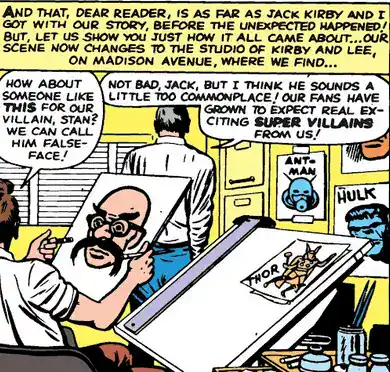
Summarizing the history of the Fantastic Four would mean doing it for the entire Marvel Universe, but there are a couple of minor quirks worth mentioning.
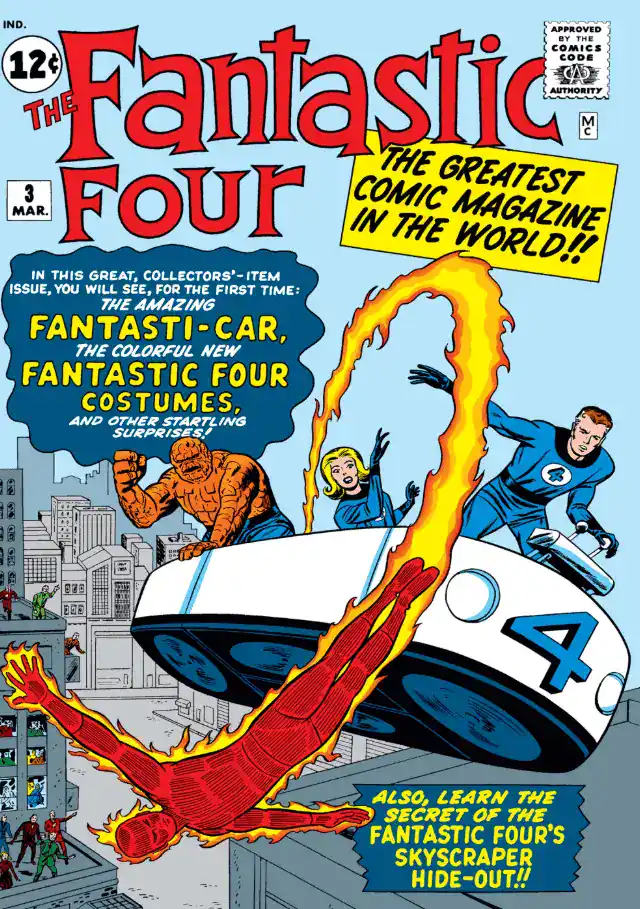
The team begins wearing costumes in issue 3, which is the same one that includes the words “The Greatest Comic Magazine In The World”; it’s also the first issue with a letters page.
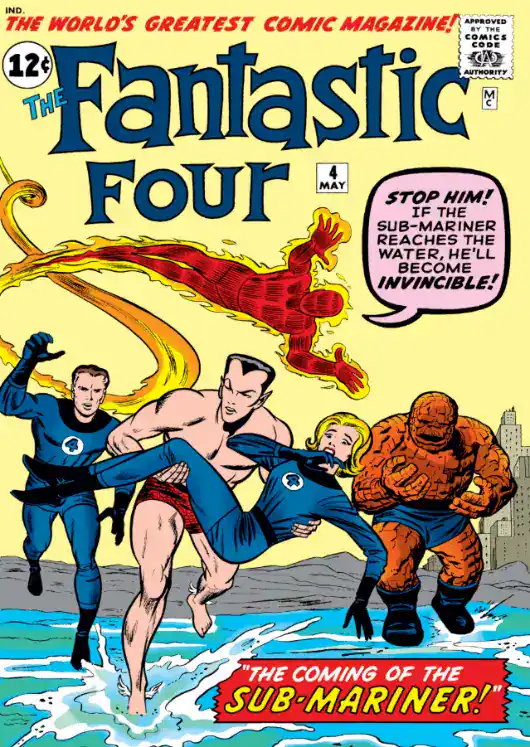
The same boast is added above the title from issue 4, and it will stay there for the entire first volume.
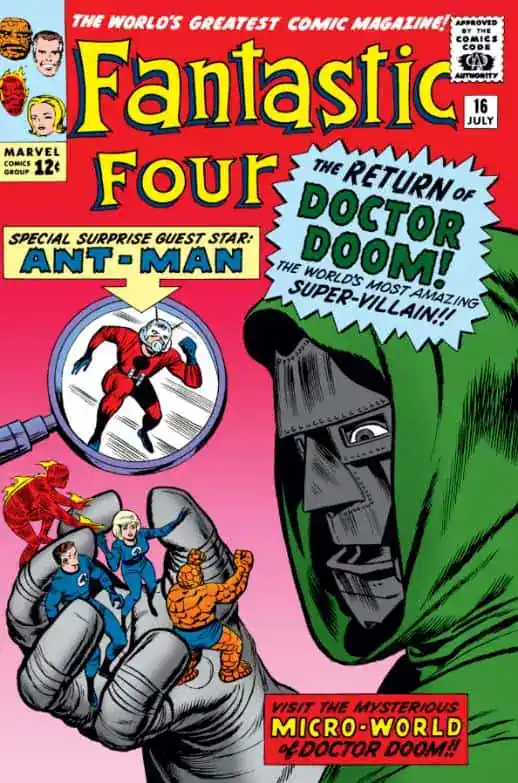
The cover title was “THE Fantastic Four” for the first 15 issues; Fantastic Four #16 dropped the “THE”, which is how it has remained.
Back to the letters page, as mentioned it’s first published in issue 3, with the very first legger belonging to Alan.
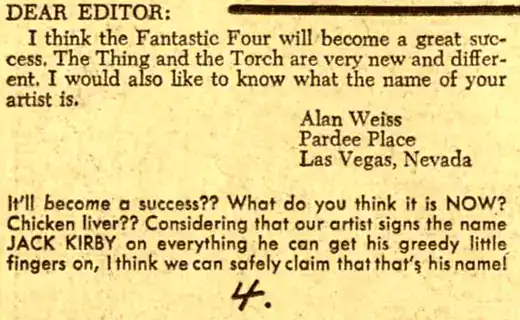
The same issue has a letter from “S. Brodsky”… which is a mixture of an inside joke and an advertisement, considering Sol Brodsky was the inker!
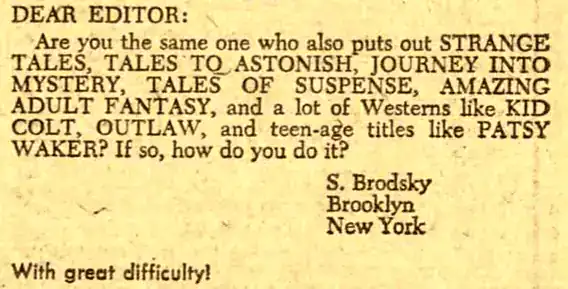
Already from the very first letters page, you can see there’s a far more cordial relationship between the editor and the fans than at DC, at the very least for the DC titles under Weisinger who often had an adversarial tone in his answers.
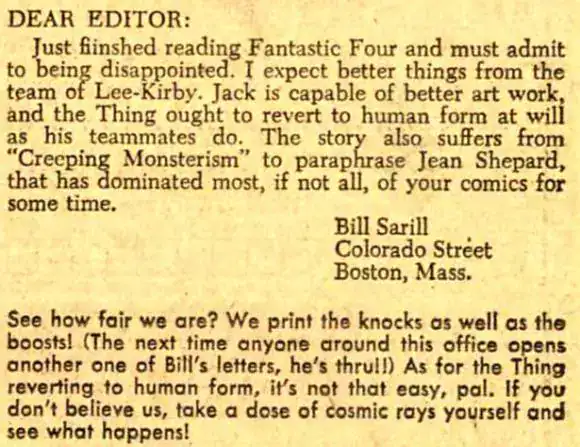
Stan was definitely aware of the inevitable comparison. From the same letters page:
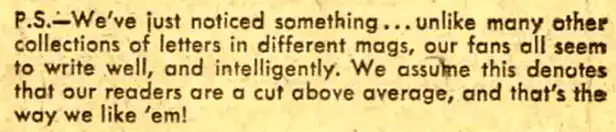
The letters page during the Lee&Kirby run included letters from many future comic book creators… Roy Thomas, Dave Cockrum, Gerry Conway, Denny O’Neil, Tony Isabella, Alan Kupperberg and J.M.DeMatteis all have letters in the first 100 issues.
You probably didn’t expect George R.R.Martin to be in Fantastic Four #20.
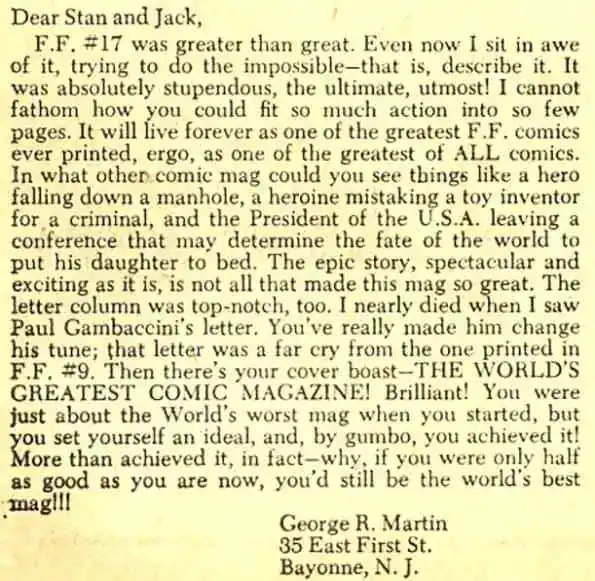
In fact, Martin was such a Fantastic Four fan that he inspired the most well-known for of the No-Prize. While the title of the “award” had been jokingly referenced before, Martin was the first “recipient” of the award given to the fan who would give an explanation for a writing mistake, instead of simply complaining about it!
From Fantastic Four #32:
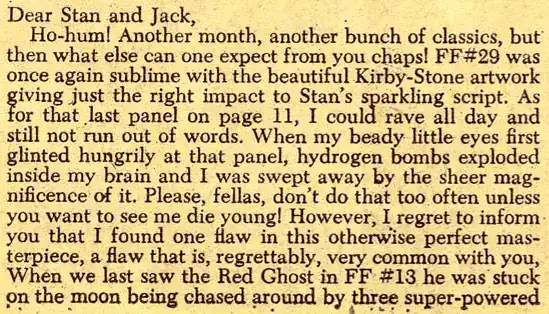
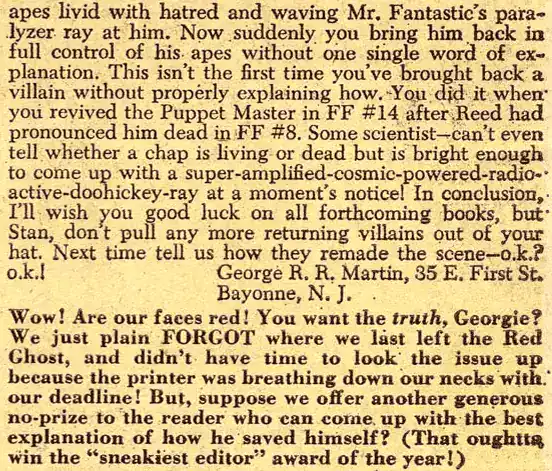
The letters page provided valuable feedback on how readers were reacting to the stories, and sometimes it shaped the course of the series.
While there was no true “election” like in the Legion books, Fantastic Four #19 published the results of the leadership vote.

If you’re confused about the numbering of the series, that’s perfectly normal.
It was pretty easy to follow until 2012, after which… besides a couple of “legacy numbers” that restored the original counting… Marvel started the annoying trend of launching a new volume whenever the writer changes. Sometimes even when it DOESN’T change!!!
1961-1996: Volume 1, 416 issues
1996-1997: Volume 2, 13 issues
1998-2012: Volume 3, 173 issues
2013-2014: Volume 4, 16 issues
2014-2015: Volume 5, 18 issues
2018-2022: Volume 6, 48 issues
2023-2025: Volume 7, 33 issues
2026-???: Volume 8, ongoing at the time of this writing
Sales figures from the 60s are hard to come by, but according to the research done by https://www.comichron.com the first selling data available is in 1966.
At that point Fantastic Four is the 19th highest selling book with 329,000 copies, behind Spider-Man at 340,000 copies and Batman at 898,000 (riding the popularity of his TV show).
Fantastic Four would remain Marvel’s second best selling title, still behind Spider-Man, until at least 1969.
Other sources give the series the same spot in 1970, although after Kirby’s departure the title drops to 285,000 copies. Which IS significant, but sales were down across the board: in 1970 Spider-Man sold 322,000 copies, Superman was the best selling DC title at 446,000 copies (outsold by Archie at 482,000).
Incredible Hulk would surpass Fantastic Four as the second best-selling Marvel book in 1978 (once again thanks to a TV show, and excluding the Star Wars adaptation in 1977 which outsold everything). Both Amazing Spider-Man and X-Men consistently outsold Fantastic Four between 1980 and 1988, after which Fantastic Four stopped being consistently the top third best selling Marvel book.
As of 2005, an article from Wired claimed that more than 150 million Fantastic Four comics had been published… but there’s no source for how this was calculated, so take it with a grain of salt.
In 2024, a copy of Fantastic Four #1 was sold for 2 million dollars.
At the time of this review, that’s the sixth most expensive comic book sold at an auction (following in this order Superman #1, Action Comics #1, Amazing Fantasy #15, Captain America Comics #1 and Marvel Comics #1).
And that was… ALMOST all I have to say about Fantastic Four #1.
Fantastic Four was my first comic book love, and my first collection. I got hooked on them due to the cartoon series (not the one with HERBIE, but the original one, which included the Human Torch, then my favorite character), then started buying the comics, just before the Byrne era. I must have read FF # 1 in reprints dozens of times. Yet, until I read this review, it never occurred to me to wonder:
If the Thing had to bust through the wall of the clothing store to get out because doors were too narrow for him, how did he get IN without doing so (plus the width of his coat, which he had shed inside before leaving)?
Also, I thought the moon had been the FF’s original rocket destination, wasn’t FF # 13, when they make it to the moon and discover the Watcher, supposed to be the successful completion of their original mission?
If it makes you feel better: while I probably haven’t read the reprints as many times as you, I also never thought about this until now.
Guess that disguise REALLY works!!!
They do get to the Moon in issue 13, but it’s only because Reed has just discovered a new kind of fuel that will allow them to “win the space race”.
However, oddly enough that story does not have a direct reference to the original FF flight. They might have established a link between the two flights in later stories, and I also vaguely remember some later references to the original mission being for the Moon, but that’s not from either issue 1 or 13.
I think originally ‘Fantastic’ meant closer to weird/strange or imaginary, rather than ‘Great’. Which makes calling himself Mr Fantastic a bit less egotistical, and a bit more along the lines of “I’m a freak too.” But I do like the Waid retcon a lot.
There was also an homage to this famous cover in the Marvel 2 in one you recently reviewed for the Doom retrospective. Additionally, I really liked that they recreated it in the recent FF movie.