
Doctor Solar, Man of the Atom #1 (1962)
by Paul S. Newman & Bob Fujitani
cover by Richard Powers
Out of the many comic book publishers of the Silver Age, there’s one that is both very important for the industry and almost completely absent from this retrospective, since they did not publish superheroes.
With one quite notable, and quite unique, exception.
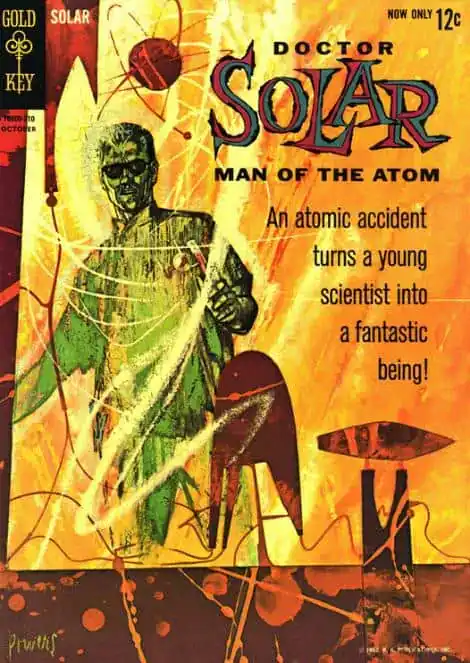
You can identify Dr. Solar issues quite easily from the competition, even at a glance.
This ranges from the catchy (the painted covers), the unusual (there is no inked separation between panels, they just fade into the white void) and the annoying (those squared speech balloons).
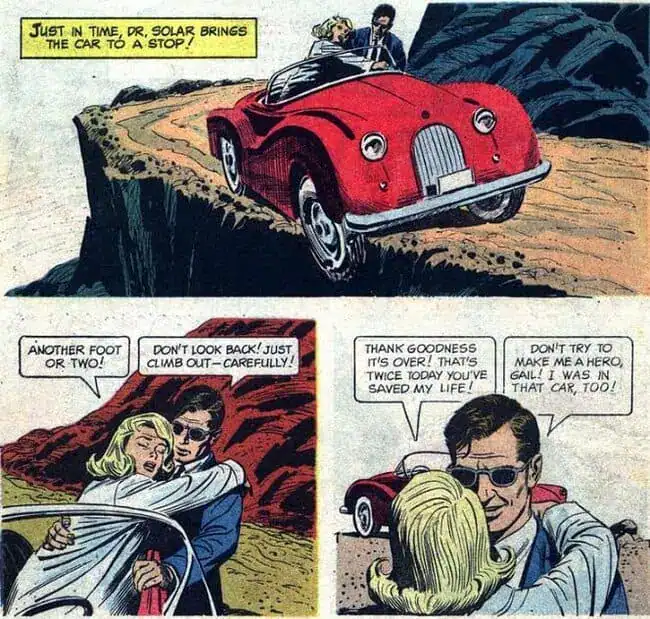
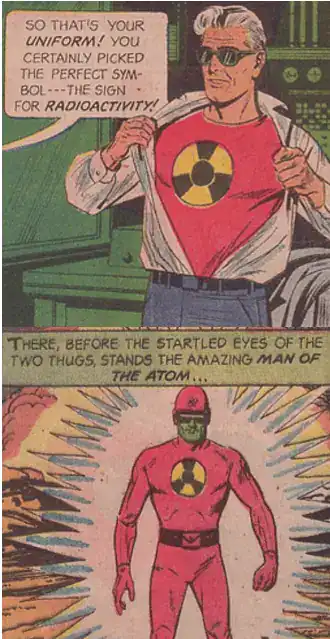
We see this when our titular character, Dr. Phillip Solar, saves Dr. Gail Sanders from being killed by an atomic-powerd sled.
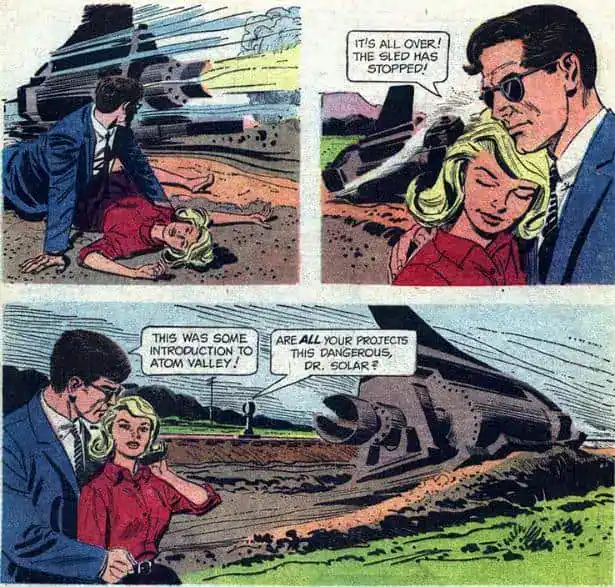
No surprise that Gail will become the love interest, but for a 1962 comic having a woman being a competent scientist without just focusing on her love life is quite a surprise.
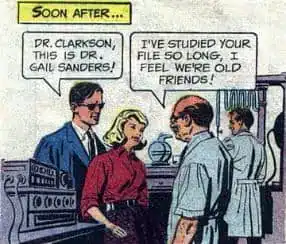
This was published a few months after the first Hulk story. Given the industry standards of the time it can’t have been a direct inspiration, but it is fascinating that in 1962 we have TWO scientists working with nuclear power that will be transformed into green-skinned creatures by rogue scientist sabotaging their work.
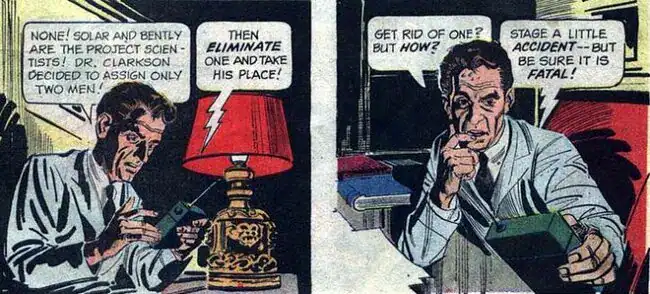
This is a FAR more decompresses story: the first attempt on Dr. Solar’s life comes at page 10, and it’s not even the incident that will give him powers.
The real incident actually begins at page 13, with the atomic pile that Dr. Solar worked on being sabotaged.
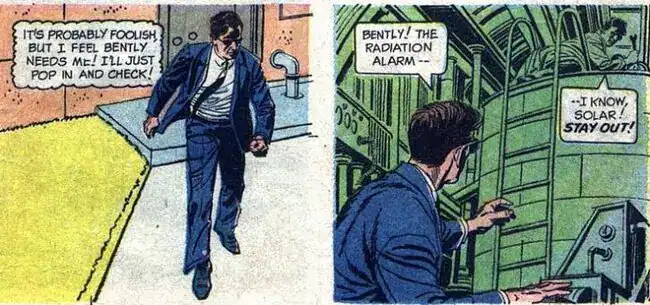
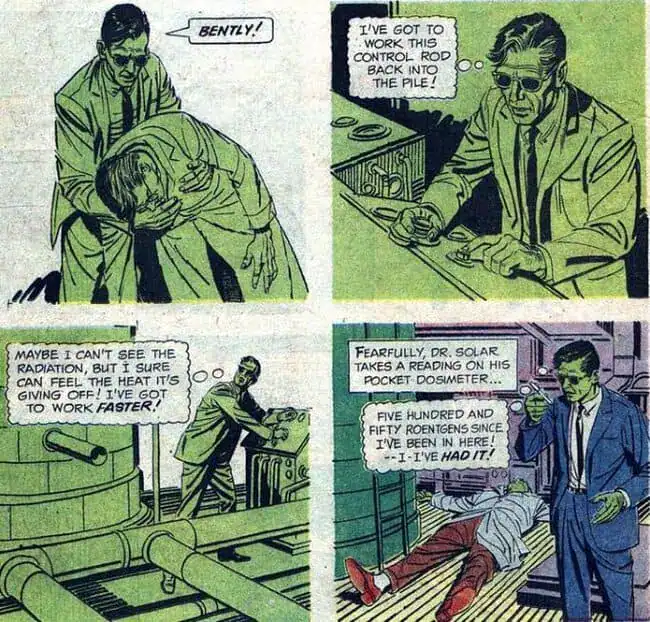
Dr. Solar stays behind to avoid a meltdown, even receiving a dose of 350 roetgens.
That’s a real scientific unit, and he just received a MASSIVE dose… but not enough to kill him on the spot, or even to be 100% lethal.
From what little research I was able to do, if he stayed in there for 5 minutes only, Dr. Solar ended up in the “20% to 50% fatal without treatment” range.
The incident, however, transformed Dr. Solar into a living nuclear battery.
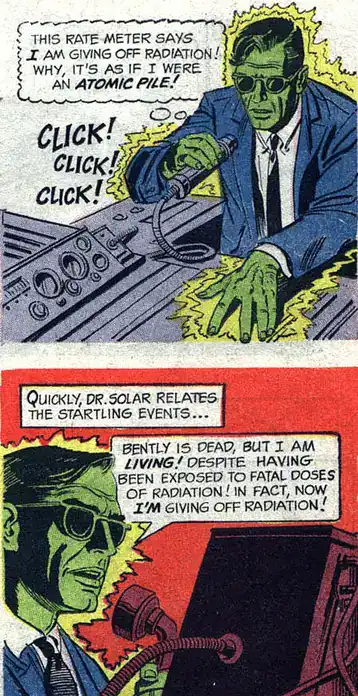
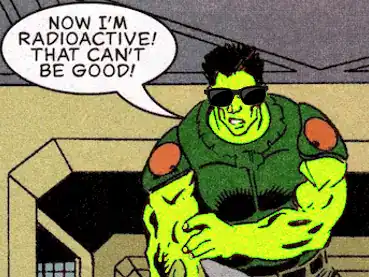
Was Negative Man of the Doom Patrol partially inspired by Dr. Solar?
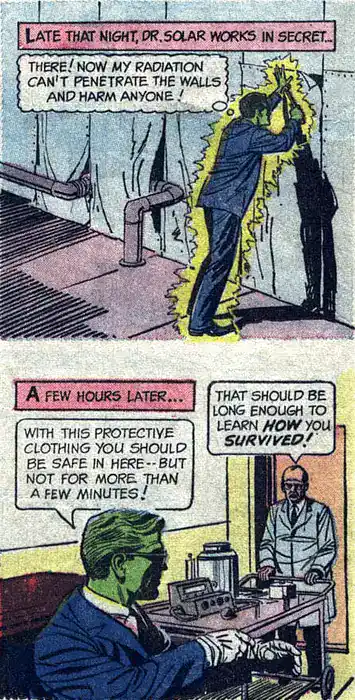
So everyone around this guy is going to get super-cancer, right?
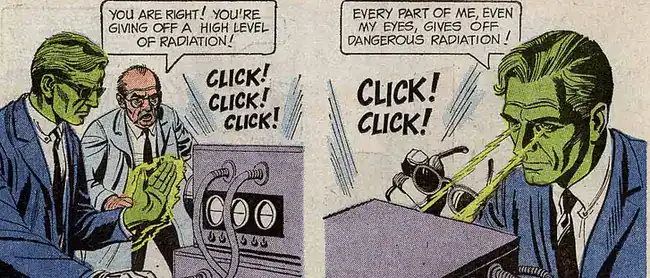
Because of this, Dr. Solar decides he’s going to live in complete isolation, continuing the work of the scientist who died in the nuclear pile.
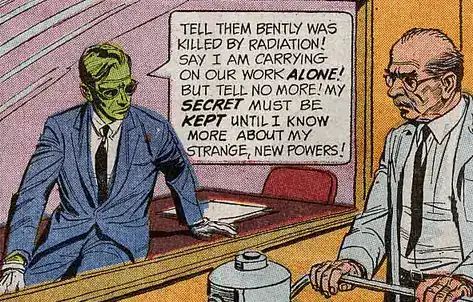
As far as foreing spies in Silver Age stories go, this one has to be the most incompetent.
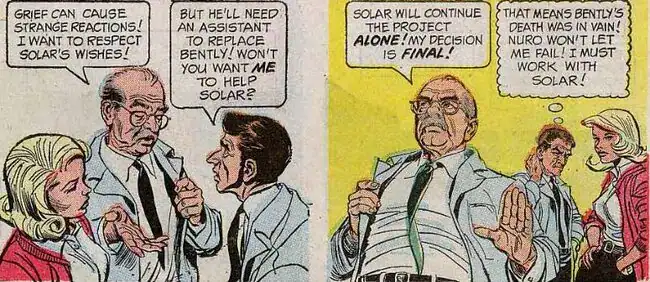
Even causing a SECOND accident doesn’t stop the project!!!
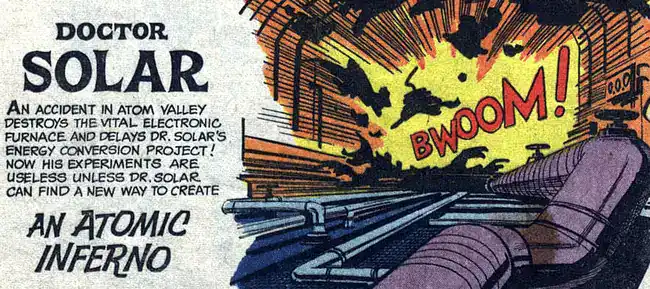
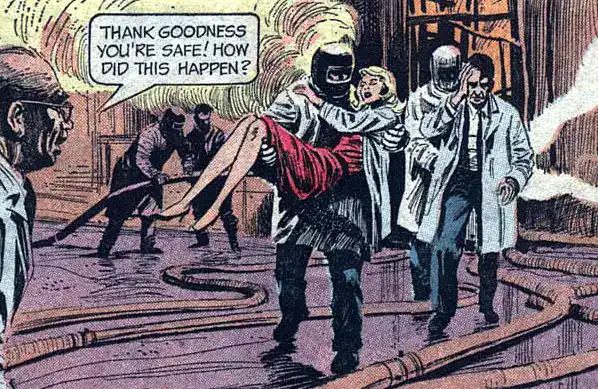
Gail has an incredibly understated reaction to seeing that Dr. Solar is green now.
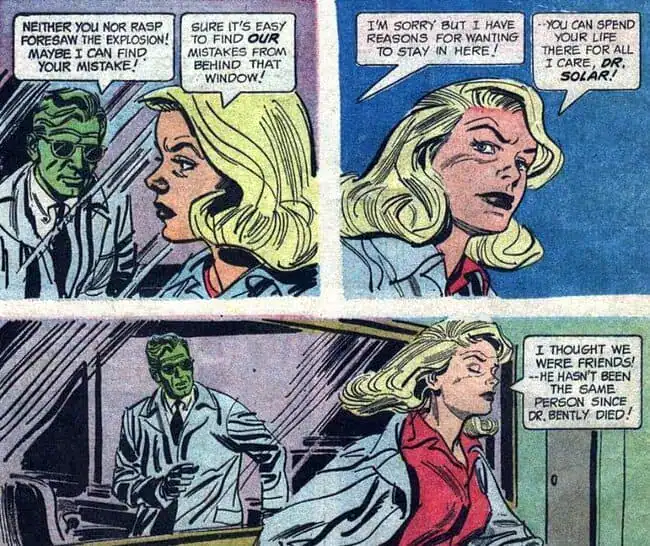
After this, Dr. Solar discovers that he has other powers besides giving people cancer.
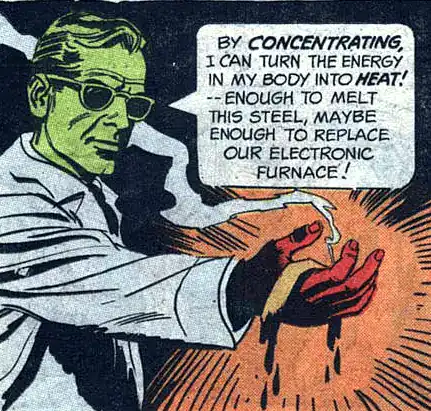
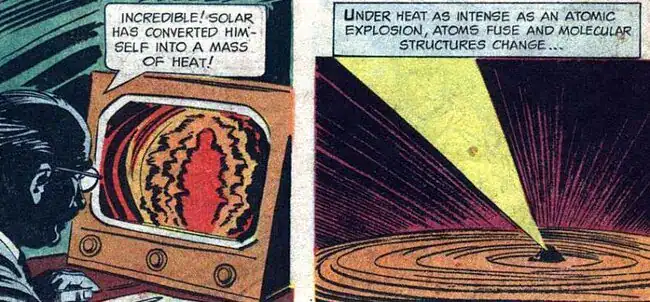
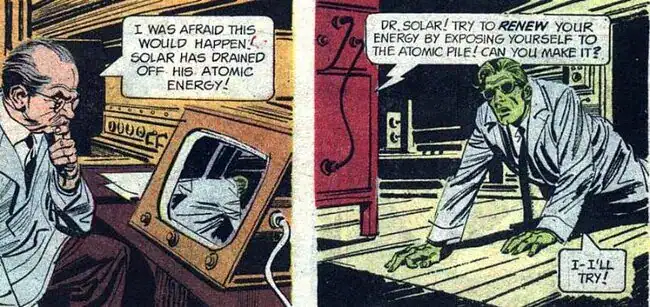
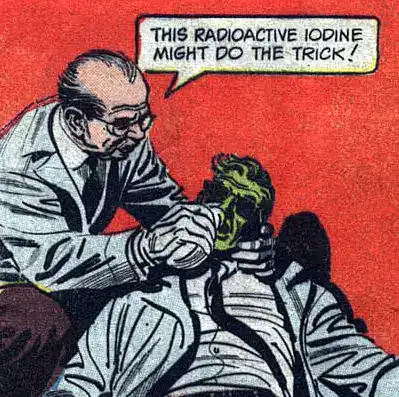
He’s not invincible though: he has a limited amount of energy, and he has to recharge himself with any source of radiation.
It is ironic that a guy called Solar is quite literally nuclear powered, but we can’t exactly blame him when it’s his real name.
The spy finally decides to kill Gail when she discovers his secret, but she’s saved by Solar.
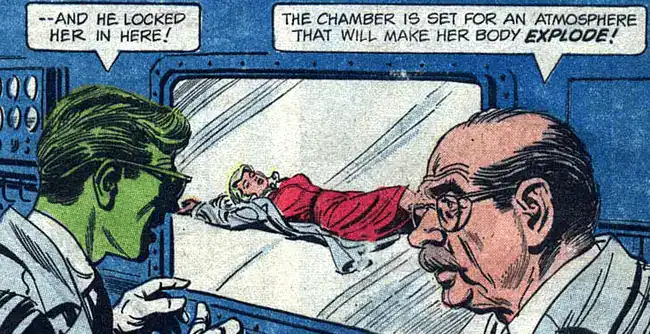
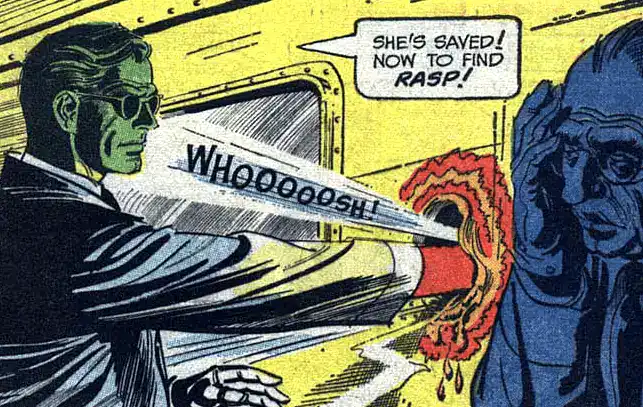
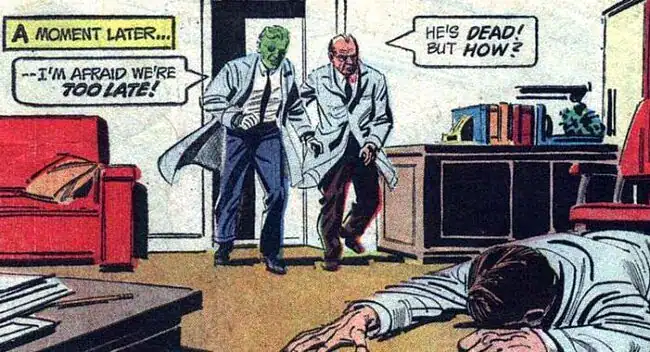
The first issue doesn’t get a proper conclusion, though, because the spy is murdered by his handler… but we don’t learn exactly how.
Historical significance: 4/
Despite never becoming a big name, Dr. Solar has a surprising impact on comics.
Silver Age-ness: 2/
Honestly, besides people being way too comfortable about a walking source of radiation, this is shockingly grounded for a Silver Age story.
Does it stand the test of time? 9/
Helped by having 30 pages to work with, the pacing is incredibly modern; I would even go as far as calling it decompressed at times.
That’s really the only negative thing I have to say about it, as there are stretches where the story gets kind of boring and Solar himself is not exactly a compelling protagonist.
But it gets by thanks to great artwork and a competent story.
How close is this to the modern character? Which one?
Oh boy, is Solar’s evolution WEIRD. I’m only scratching the surface.
He’s quite notable for spending the first 4 issues without a costume (even the Fantastic Four only managed two), getting a new one in Doctor Solar #5.
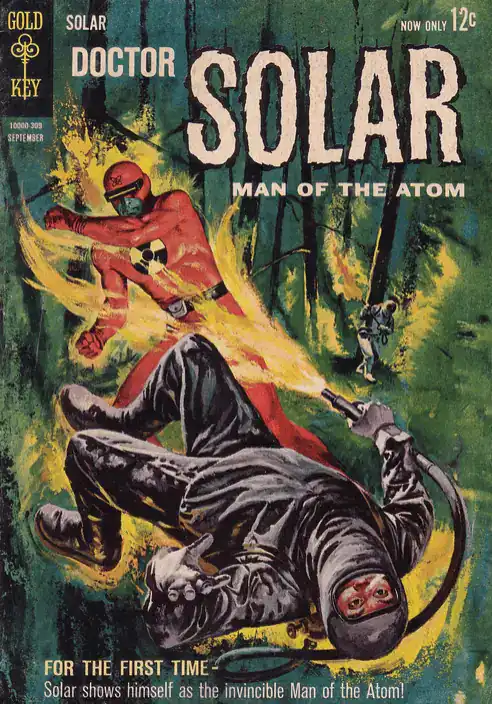
And a codename, because he takes the identity of Man Of The Atom.
Aside from issues 1 and 2, other painted covers were typically by George Wilson.
And they are AWESOME.
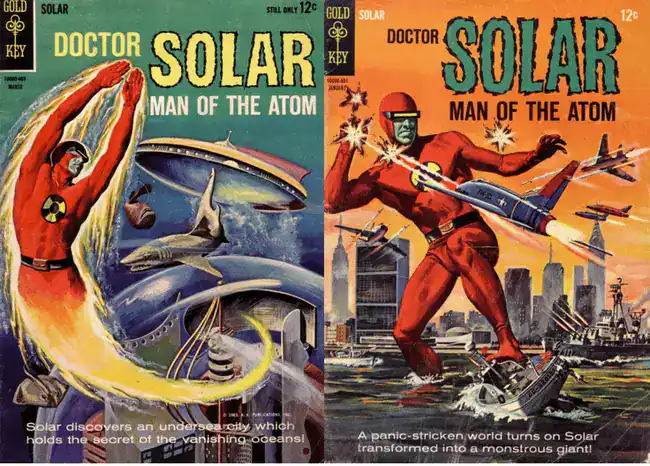
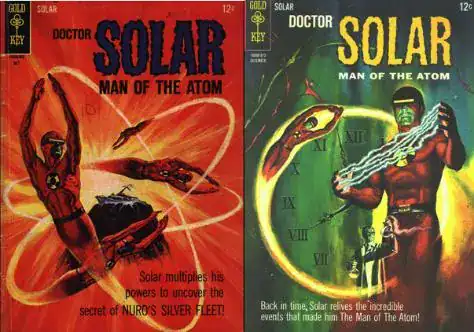
Because of Gold Key’s pristine reputation (it was an imprint of Western Publishing Company, which through its partnership with Dell Comics published a ton of children comic books), it managed to publish WITHOUT the Comics Code approval.
Among the creators working on the series were Otto Binder (#7), Win Mortimer (#20-23) and Ernie Colon (#24-26).
It was also selling QUITE well; while I’ve seen unsourced claims that it outsold Superman two to one (that’s waaaaaaay off), Doctor Solar WAS outselling every single Marvel comic as far as 1964 but according to data from Comichron.
In 1969, after a price increase to 15 cents and a general decline in sales across comic books in general, the series was cancelled after #27.
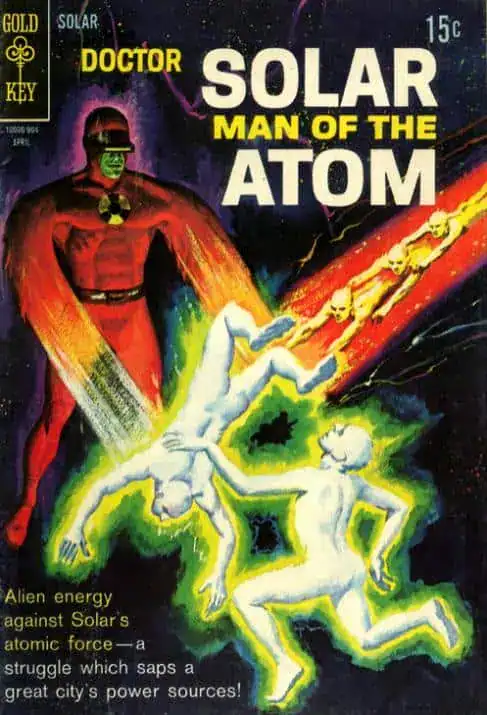
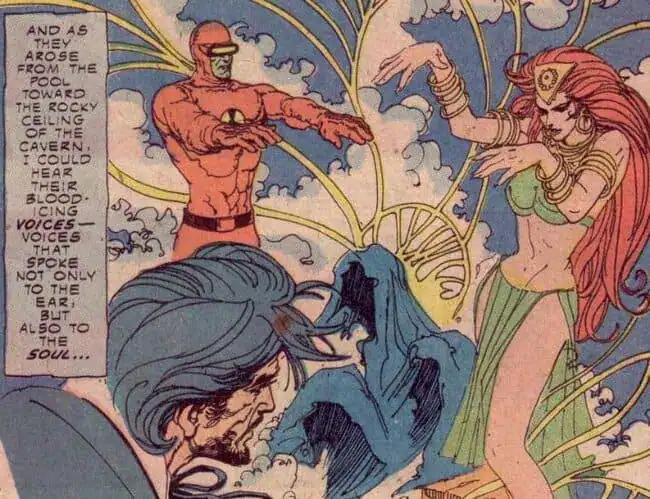
The last appearance of the original version would be in 1975 on the pages of another Gold Key series: “The Occult Files of Dr. Spektor #14”.
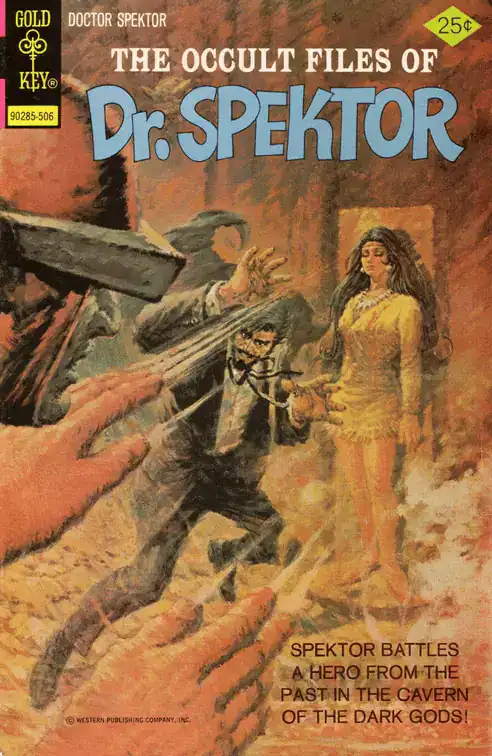
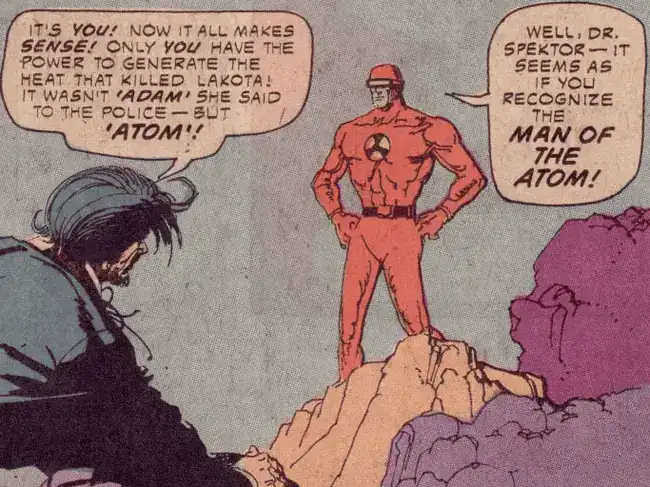
I know absolutely nothing about this series, but I have the distinct impression that it’s not meant to be read without taking drugs.
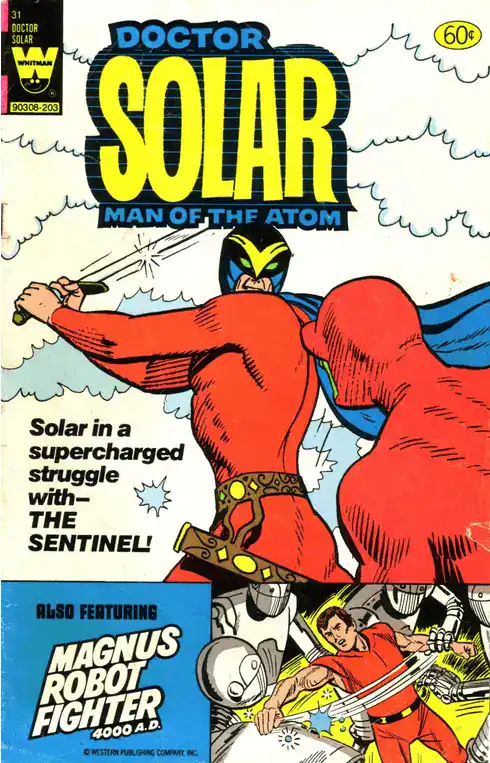
Technically speaking the original series was revived in 1981 (when Gold Key rebranded as Whitman Comics), but it only lasted 4 issues.
Dr. Solar would have remained a historical footnote in superhero comics if it wasn’t for Jim Shooter, who under his new company Valiant Comics started a new series.
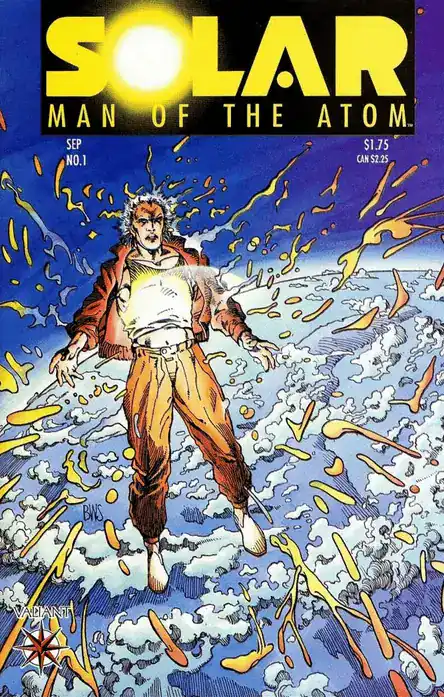
Going through the entire series would take forever: this is a VERY complex storyline!
It involves time travel, duplicate characters, multiple personalities, the universe being destroyed and recreated, and to be perfectly honest I’m not quite sure I was able to follow what was going on.
It’s also quite meta, because after getting his powers the protagonist (renamed Phil Seleski) creates Dr. Solar as a separate person… based on the comics he read as a child.
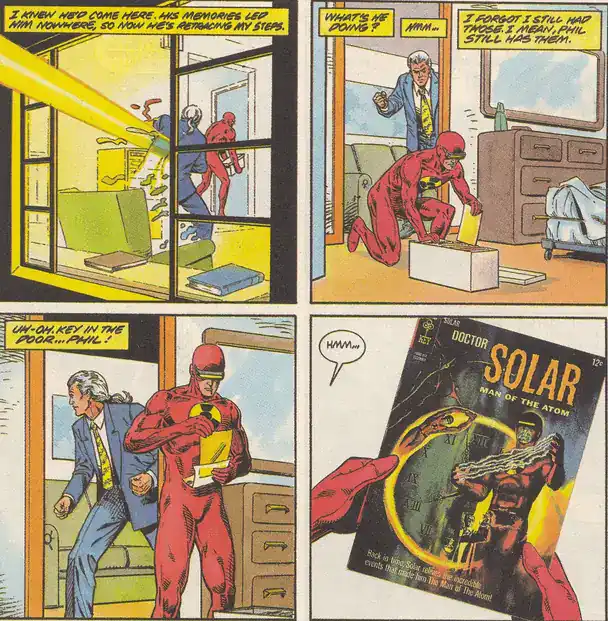
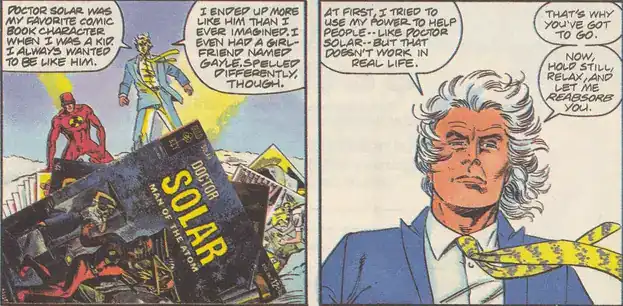
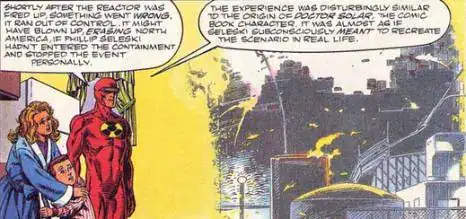
After some growing pains, the series was a hit. And thanks to Shooter’s connections, a ton of creators ended up working on the series: Barry Windsor-Smith, Bob Layton, Don Perlin and Stan Drake just to name a few.
Shooter himself would only write until 1992, at which point he was ousted from the company.
Acclaim would acquire ownership of Valiant in 1996 and the series continued, with creators including Steve Ditko, Christopher Priest, Rik Levins, Dan Jurgens, Dick Giordano, Aaron Lopresti, Mike Manley and Keith Giffen.
The series was ultimately cancelled in 1996 with #60.
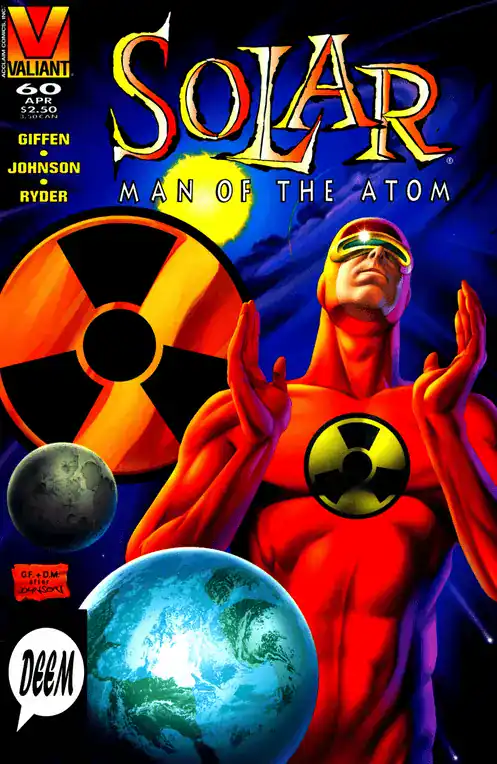
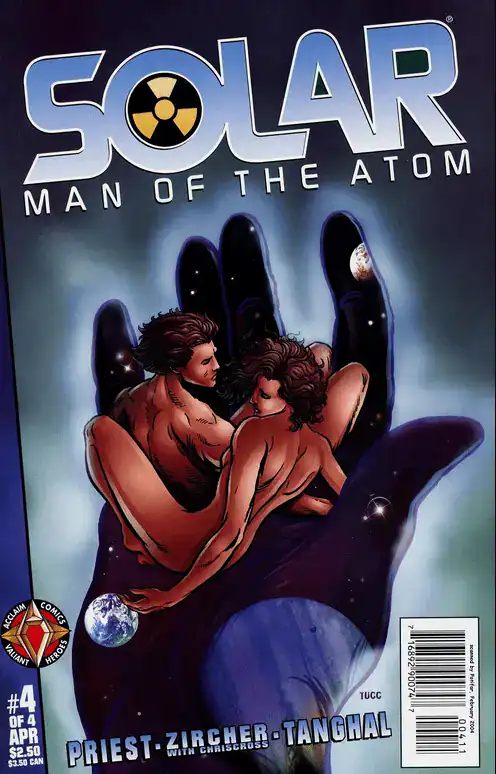
Acclaim attempted a couple of projects, the last being in 1998 with the miniseries “Solar, Man of the Atom: Hell on Earth”.
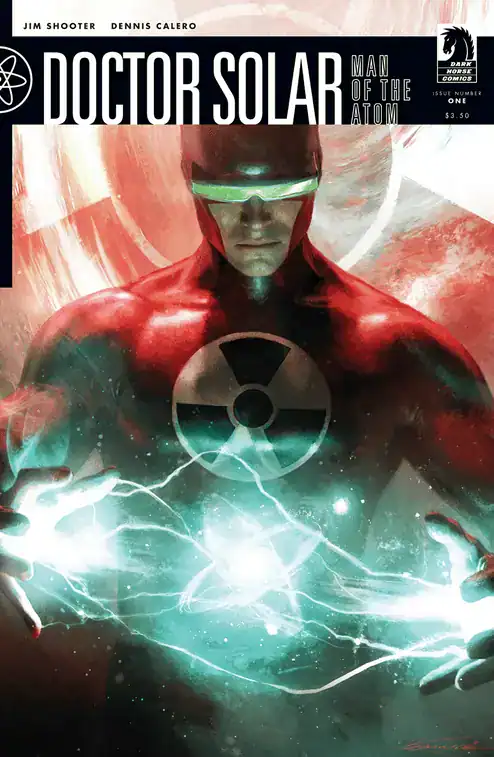
Dark Horse acquired the rights to the Valiant characters, including Doctor Solar who was relaunched in 2008 with a new series written by Jim Shooter.
It only lasted eight issues.
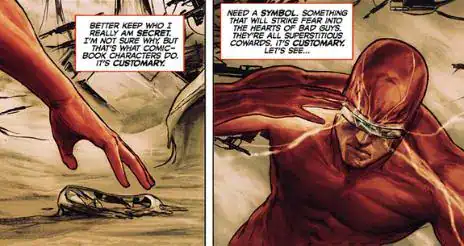
He’s still as meta as he was during the Valiant era.
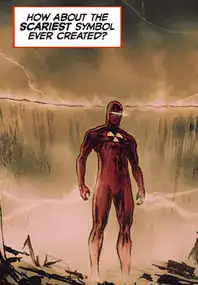
And finally, Dynamite Entertainment brought the rights to the character; a new Doctor Solar series ran for twelve issues between 2014 and 2015.
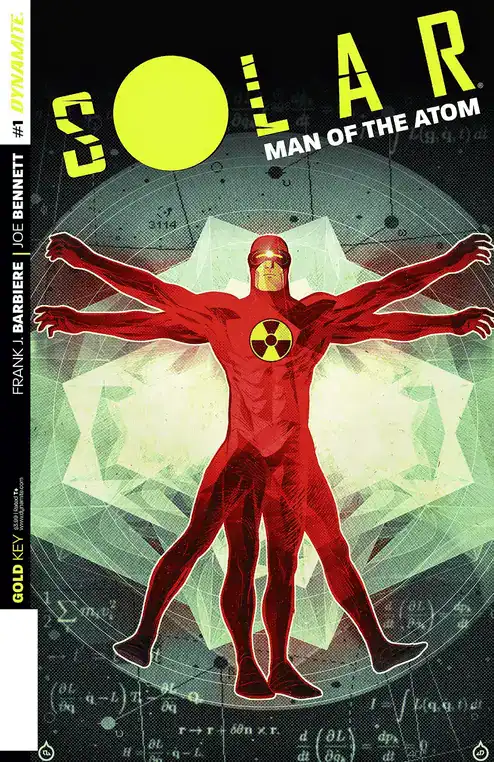
In this series, his daughter also gets powers and he’s stuck as an energy ghost for nearly the whole series. So he’s basically Captain Atom and Firestorm rolled into one.
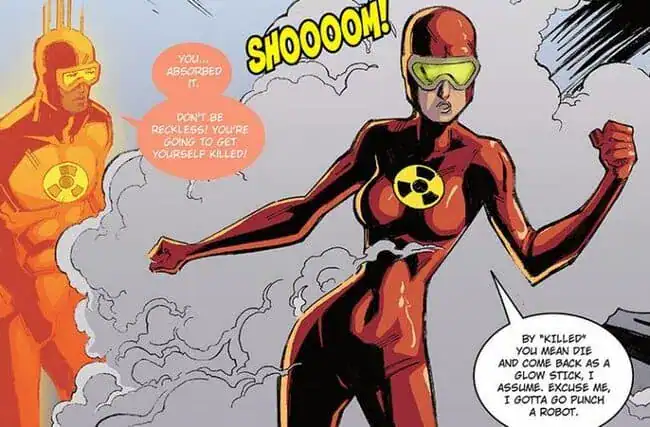
In fact, his daughter Erica is the actual protagonist of the series. She’s a fun character.
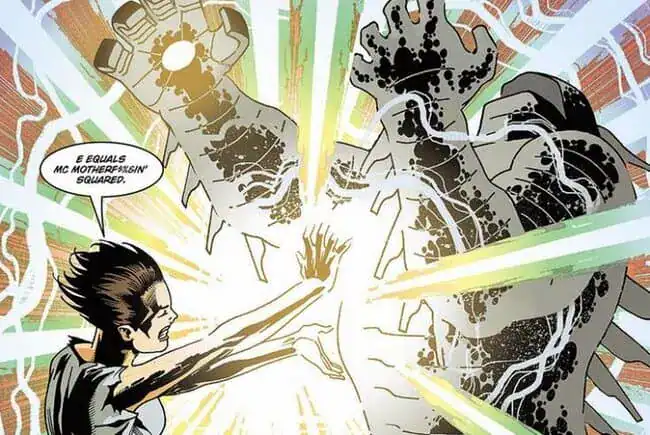
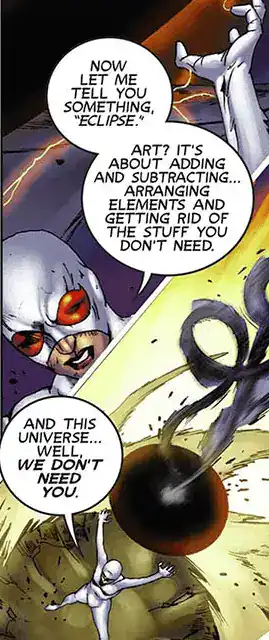
We need more father-daughter superhero series.

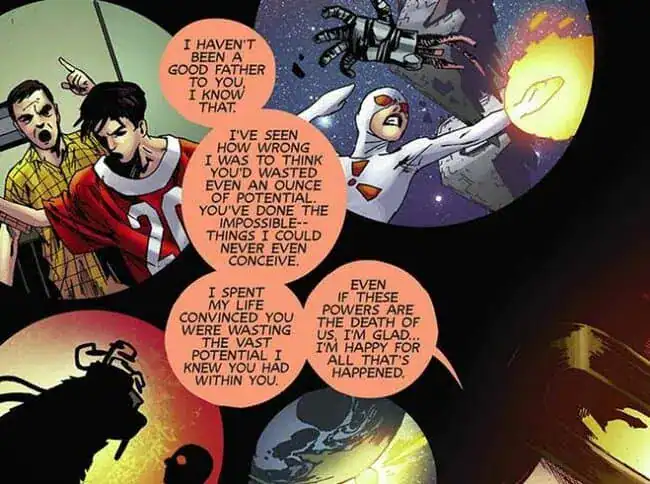
For a guy that I’m pretty sure very few people know, Doctor Solar has had quite a varied career.
His Valiant incarnation is probably the most well-known among comic book readers, but I’m very curious: please tell me in the comments which incarnation you were aware of before this review.
Definitely the original Gold Key run of the 1960s.
I hope you’ll also cover Magnus, Robot Fighter.
I was vaguely aware of the Gold Key version, but maybe it is mainly due to the Valiant run by Jim Shooter.
Valiant was an interesting company before being acquired by Acclaim. Those early Shooter stories leading up to and arising from the “Unity” event were rather daring and exciting. Unity was superb.
Unfortunately, the run and the whole Valiant / Acclaim line took some difficult turns later on. The clear editorial vision from early on was lost very quickly and very blatantly.
There was a serious over-reliance on crossovers and events, far too many new and short-living ongoings which were clearly meant to have lasting impact but fell short – and I don’t think the company did a good enough job of actually communicating their new main plots to readers.
A pet peeve of mine is that Chaos Effect had Magnus Robot Fighter spending some time in the 20th century in order to explore his origins and that was really very undersold and underdeveloped. Right at the end, the “Birthquake” event was just lazy, and blatantly so.
But perhaps most noteworthy of all was the brief Dan Jurgens run on Solar, at a time when sales were really suffering. I am generally a fan of Jurgens, particularly where it comes to Booster Gold, and there is never a time when his pencils are not gorgeous. But despite a lot of hype about how “Super” his run would be, it amounts to little more than a backdoor pilot for a team that he hoped to promote.
Still, I cherish the experience of reading the early issues of Solar. Shooter was very imaginative there, as well as in the Dark Horse run. Solar is a very challenging character to write – I have recently mentioned him more than once as the true benchmark for characters who are too powerful to sustain good stories, an accusation often pointed towards Superman, Captain Atom and Doctor Manhattan – but I think that Shooter succeeded and did so twice, in significantly different ways.
He _does_ have a tendency to require being a main player, though. It is very difficult to write a shared universe that includes Solar (post-Valiant at least) and yet does not rotate around his plots. The Valiant version is infamous for having sprouted versions of himself more than once, to diminishing returns. Maybe he works best as the only superhero of his own universe.
I discovered Solar through the early Valiant run, though I may have been dimly aware of the character before that.
In reading this review, I can see how much of his origin was borrowed for Dr. Manhattan.
An old Gold Key issue wandered into my comic drawer somehow when I was very young. So I knew the character when the Valiant version appeared. I didn’t read those issues because I lived in the middle of nowhere and was stuck with newsstand only comics until 1993 or so. But I remember the excitement of all the Valiant offerings, and read a few borrowed Harbingers. What a time. Then the air came out of the balloon.
I think I knew him from the Valiant series but I’ve never read it.
BTW. What is the source of the “Now I’m radioactive, that can’t be good” panel? It’s the only recurring bit you use that I can’t identify.
It’s from one of the greatest achievements of humanity, the epically stupid Doom comic.
https://comicsarcheology.com/index.php/2022/04/01/doom-1/