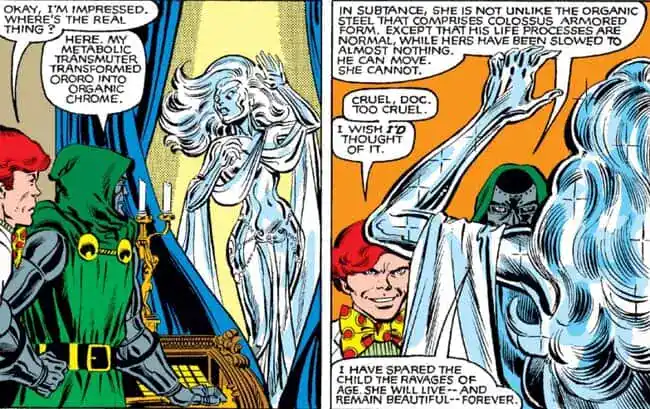
Continuing my first exposure to the excellent Stern & Romita Jr run.
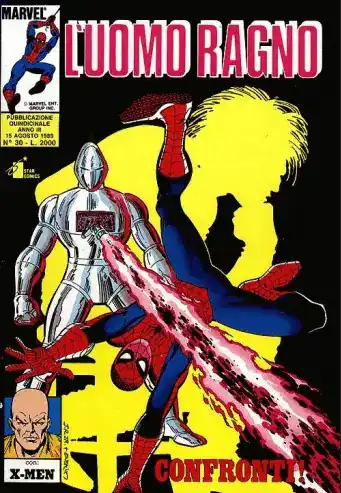
Uomo Ragno #30 (1989)
Published by: Star Comics
Nothing of note on the Italian cover…
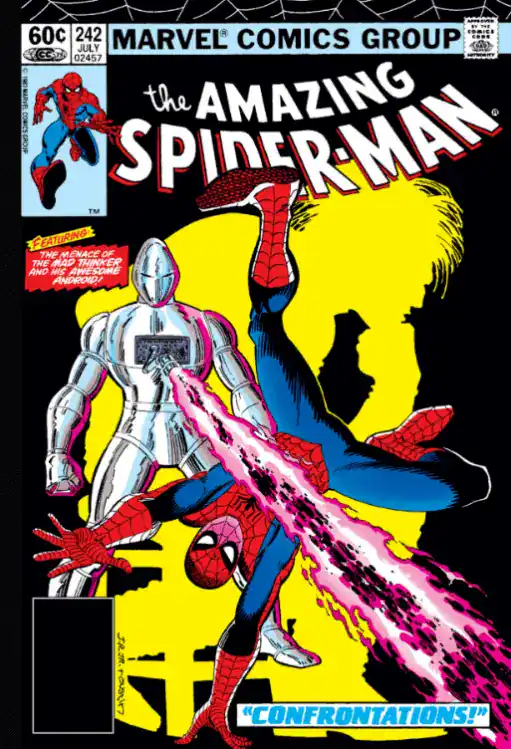
Amazing Spider-Man #242 (1983)
by Roger Stern & John Romita Jr
…except maybe that the original spells out that the Mad Thinker is villain.
Speaking of Romita Jr, when I think of Peter Parker I still tend to picture him the way John Jr draws him.
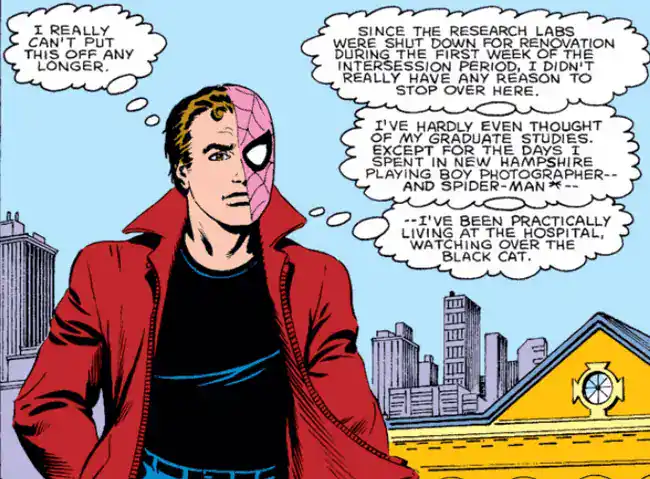
Peter is eager to learn how he did in the exam he took in Spectacular Spider-Man #76, when he was too distraught about Black Cat’s injuries to care.
I hadn’t read that story yet.
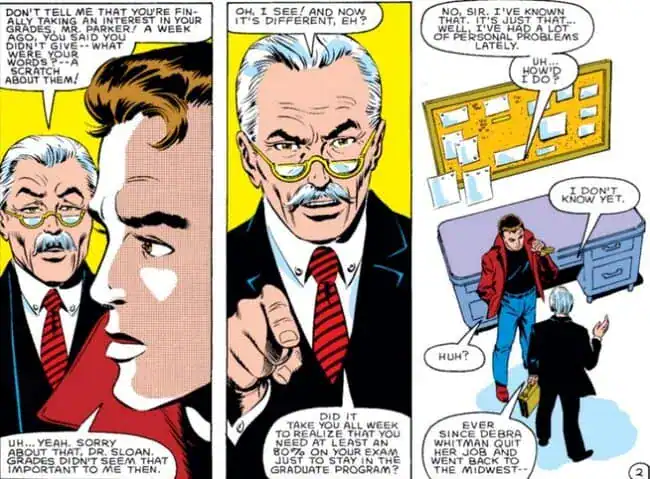
He also gets involved with soap opera problems with his photographer rival Lance Bannon.
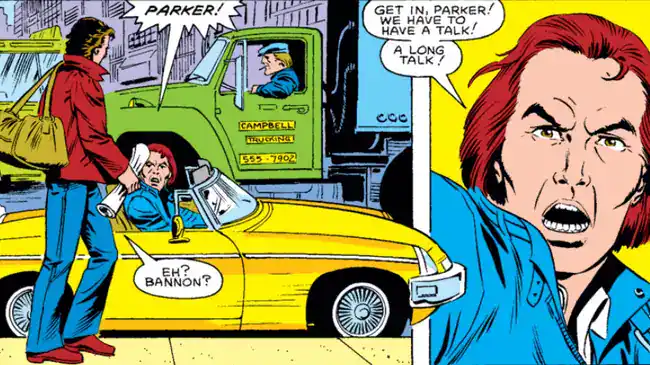
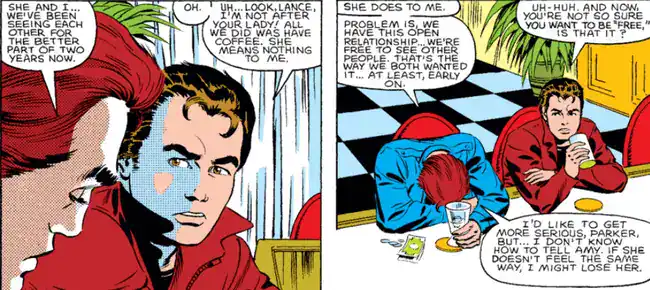
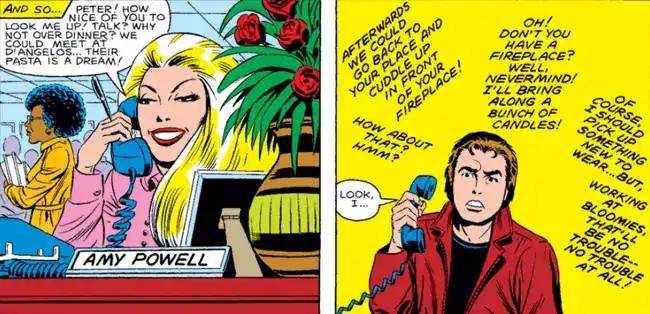
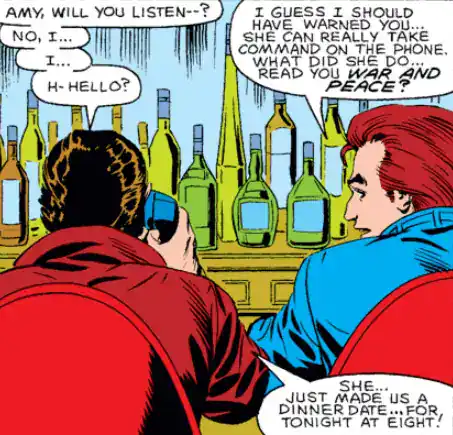
Specifically, Lance is certain that his love interest Amy actually wants to get with Peter, even if he doesn’t care about her at all.
Peter just does the most normal thing he’s ever done and offers to just tell Amy that he’s not interested in getting into yet another love triangle.
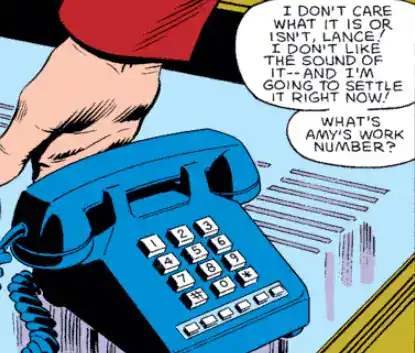
Too bad he’s Peter Parker, so OF COURSE he botches this.
As mentioned, the villain of the story is going to be the Mad Thinker.
He typically doesn’t appreciate the “Mad” part.
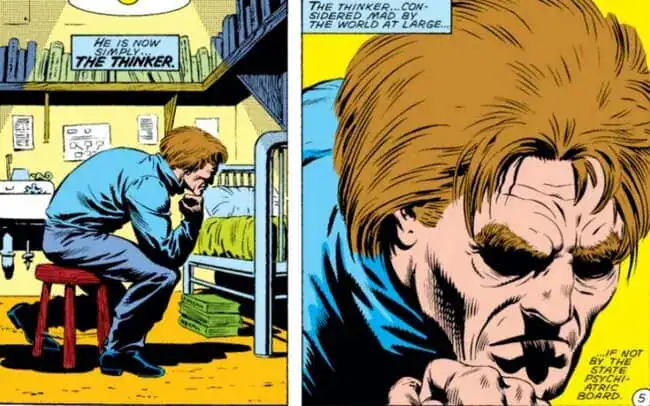
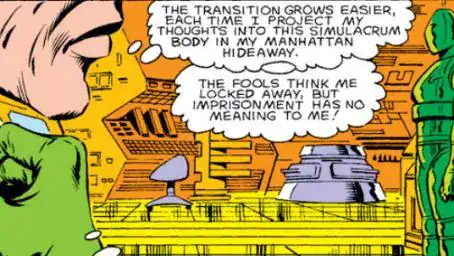
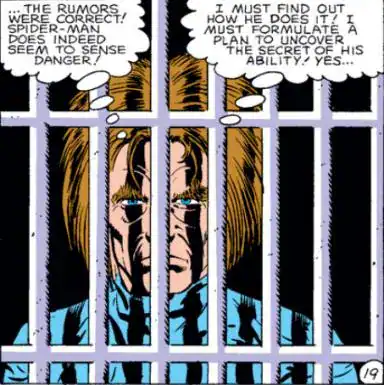
If I’m not mistaken, THIS is the story that establishes the Thinker’s coolest gimmick: he can STILL commit crimes when he’s in prison, thanks to an implant that allows him to transfer his consciousness.
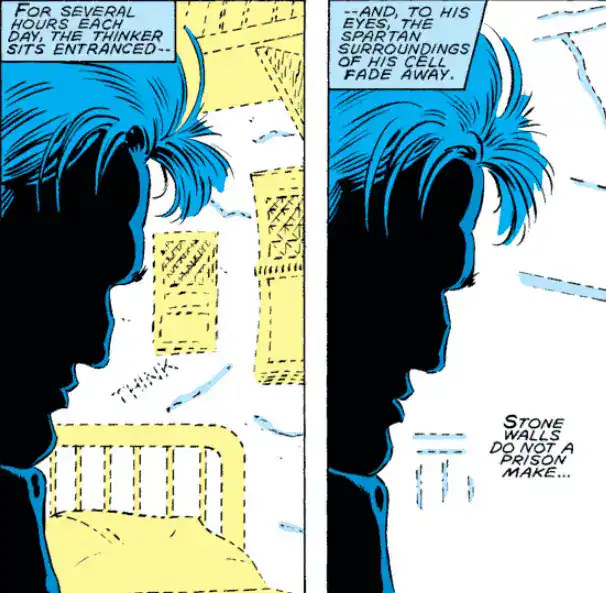
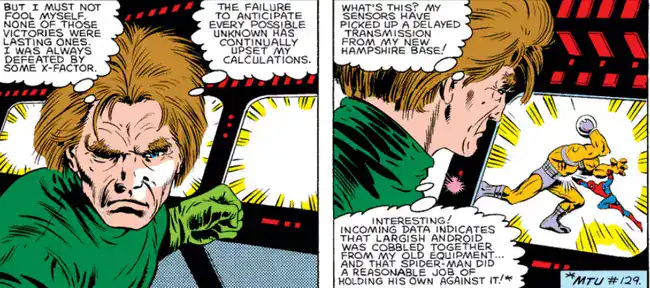
The other Thinker gimmick is that he’s so smart that he can predict the future… until an unpredictable even, which he calls an “X-Factor” before mutants claimed the term, which inevitably makes him lose. That’s what gets him interested in Spider-Man.
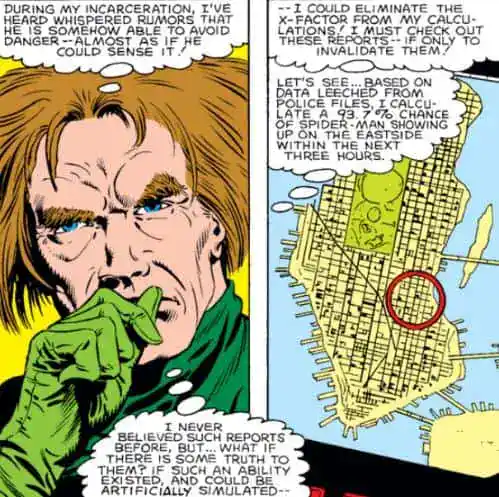
Specifically, he’s interested in the rumor that Spider-Man can sense danger.
This is something Marvel has never been consistent about: sometimes the existence of the Spider-Sense is a secret, and sometimes everyone knows about it.
What IS consistent is that Spidey is just TERRIBLE at keeping it a secret, since he can’t help himself mentioning it, so at this point I’m okay if it’s public knowledge.
Which means, of course, a Big Dumb Robot Fight.
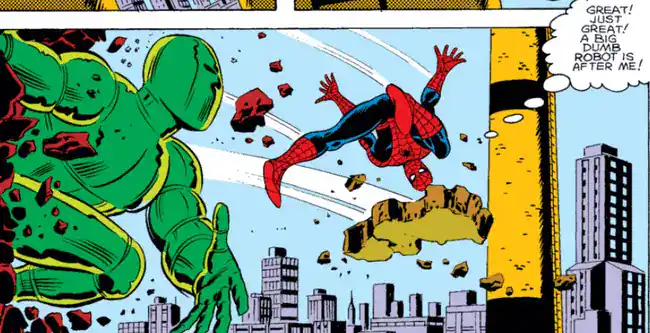
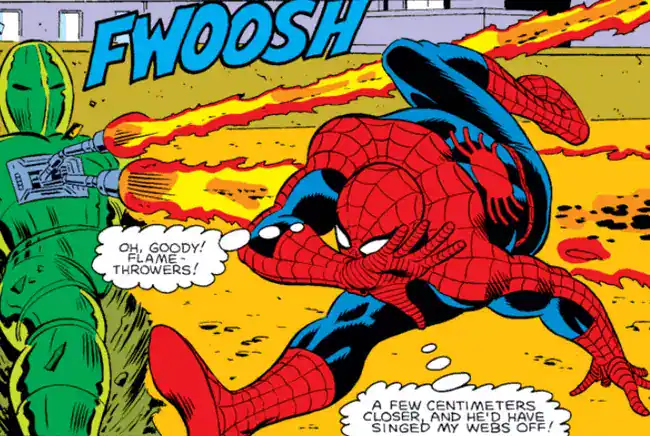
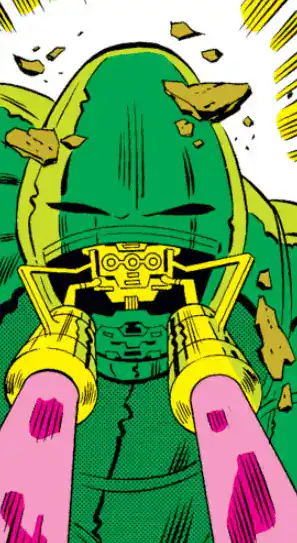
This is particularly impressive, considering this specific robot fought the Fantastic Four.
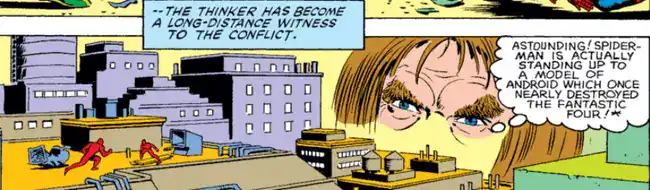
Spider-Man defeats it by luring it into a (shockingly high-tech) generator room to confuse its radar.
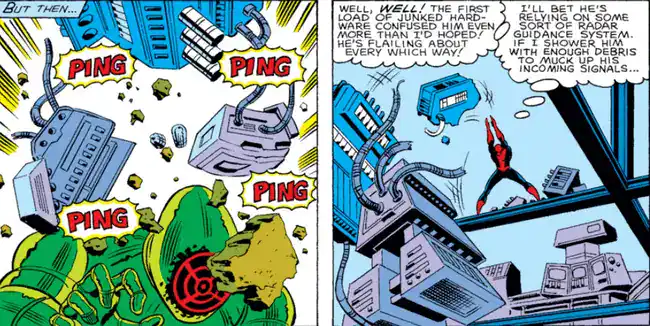
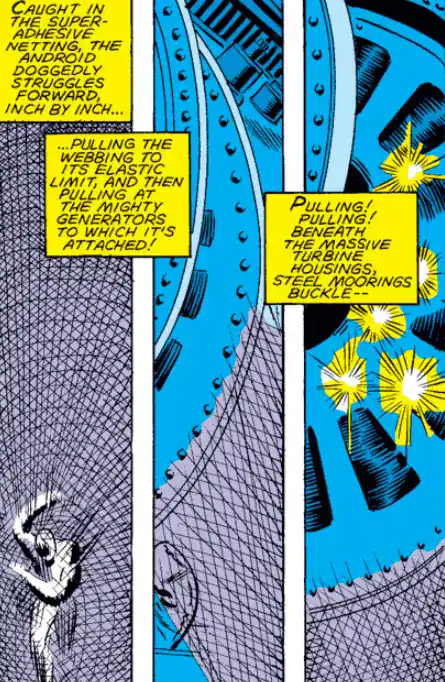
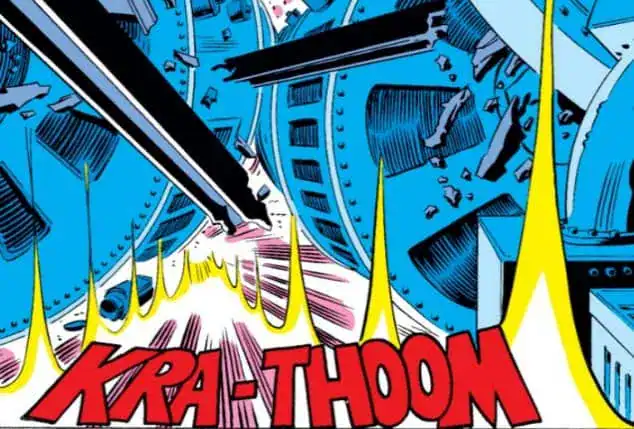
This somehow confirms to the Mad Thinker that the Spider-Sense is a thing.
At the time I thought that this meant he would become a recurring Spider-Man villain, but he just doesn’t.
And we close with Amy visiting Peter’s apartment for an unannounced picnic, instead of meeting at the restaurant where he had planned to make her talk with Lance Bannon.
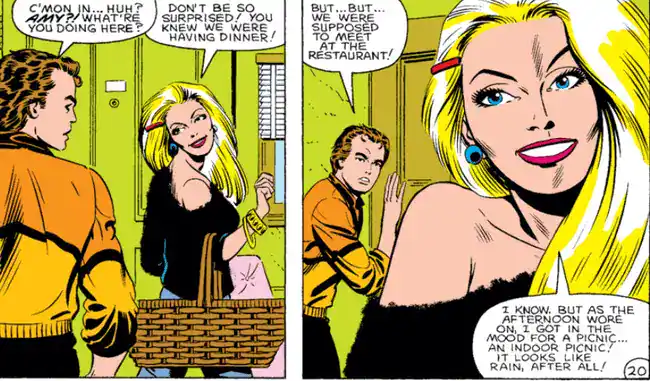
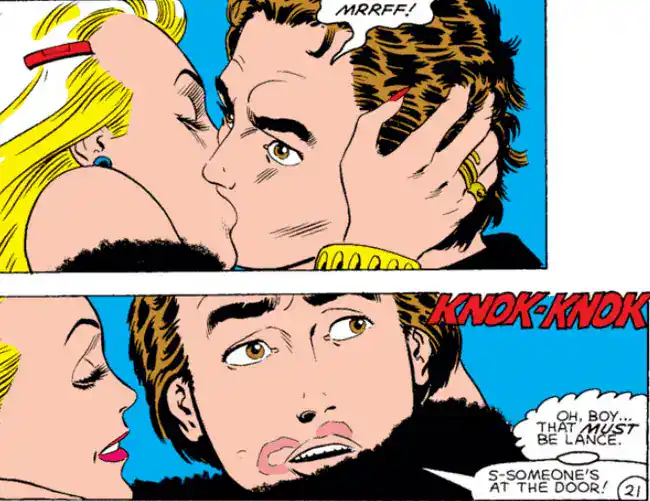
Despite his best efforts, Peter did end up in a love triangle… just not the one he expected.
Amazing Spider-Man #243 (1983)
by Roger Stern & John Romita Jr
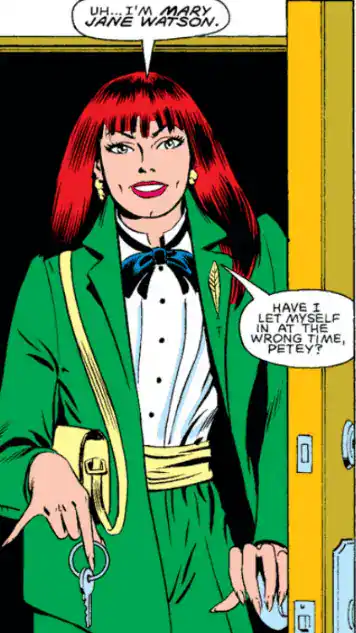
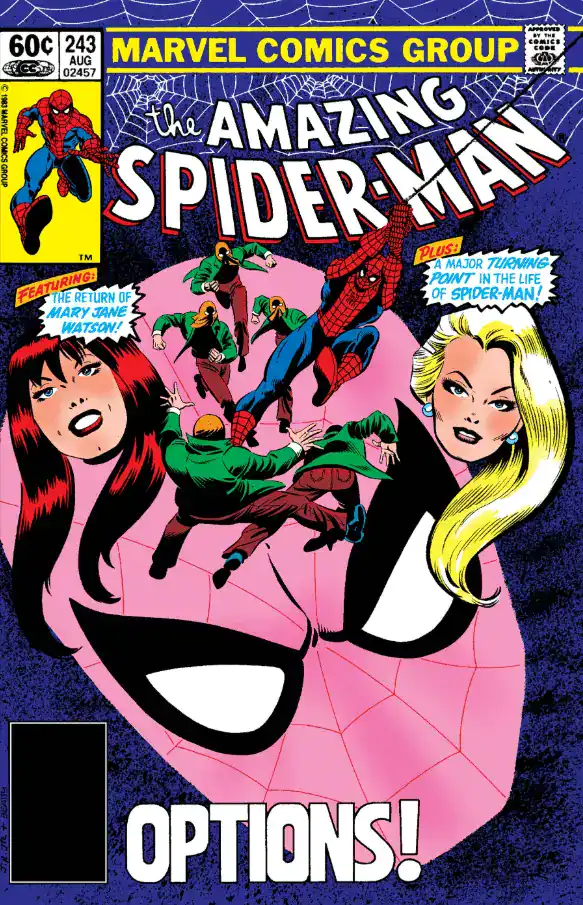
This is indeed “a major turning point in the life of Spider-Man”, because it’s when Mary Jane returns in the supporting cast. She will stay there, with the occasional fakeout death, until Marvel goes completely insane in 2007.
Of course MJ is not surprised to see Peter making out with another woman: he’s been a chick magnet ever since they met, and they’re not in a relationship at this point.
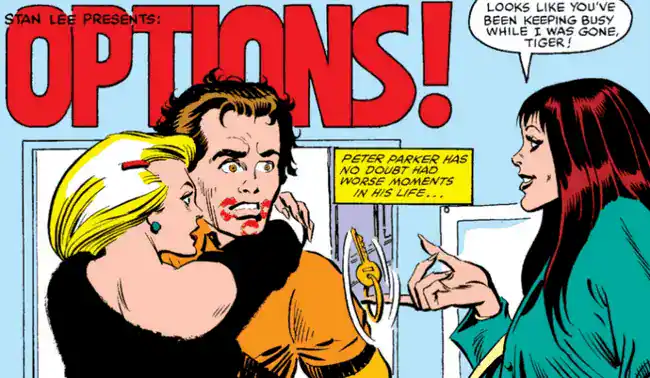
In fact, you can see she’s thoroughly enjoying his embarrassment.
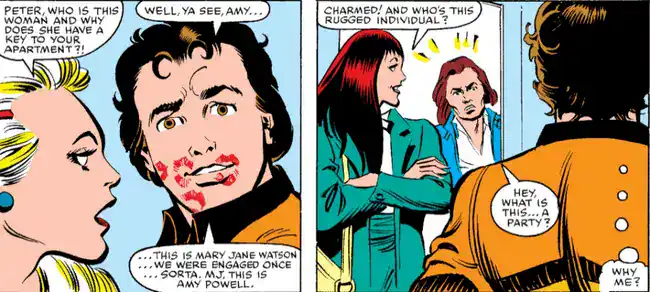
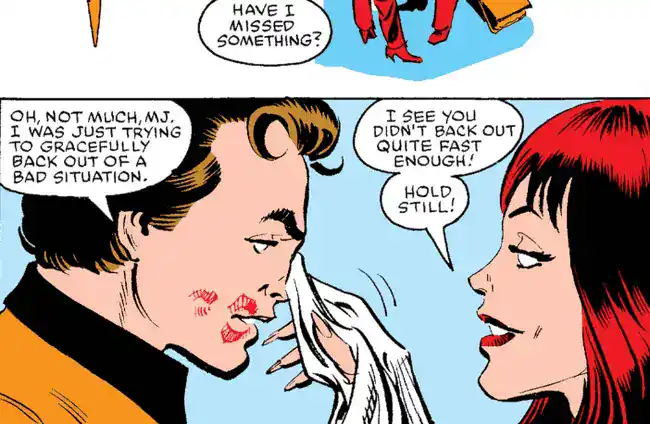
I read this when I was seven, so you might expect that I flipped through this to get to more robot fights. But I distinctly remember finding Peter’s life to be as interesting to follow as Spider-Man’s adventures.
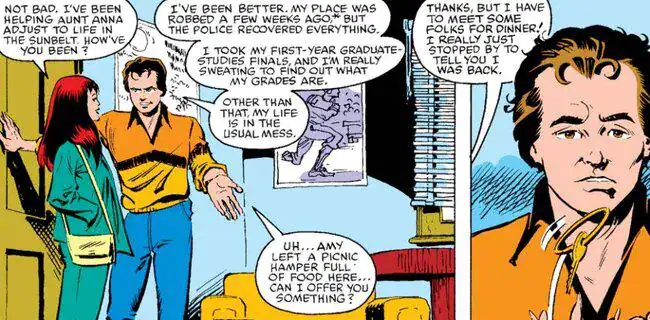
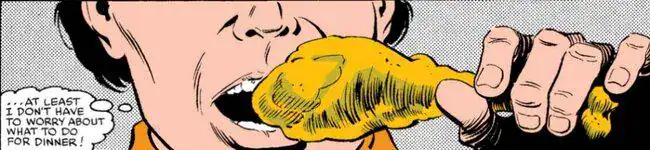
In the previous issue Spidey managed to get his hands on a piece of the robot before it exploded, so he brings it to Curt Connors in order to identify it.
Yes, he brought a robot to a biologist, why wouldn’t he?
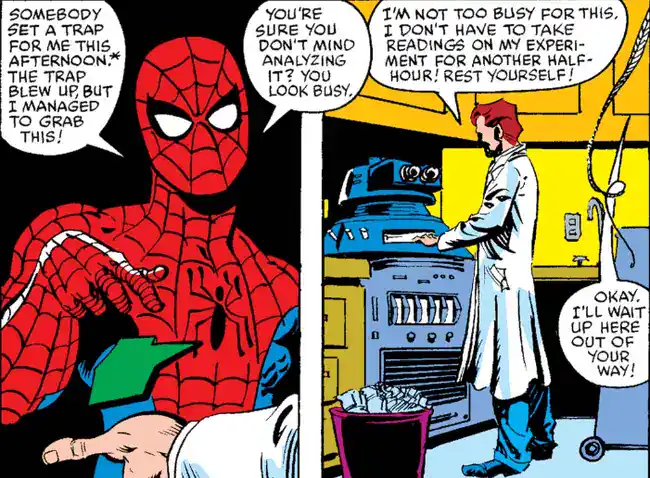
Peter’s professor happens to drop by, so Spidey gets a peek at his results.
Take a moment to appreciate the fact that he didn’t study for this exam, he took it without having slept while in the middle of a major personal crisis, and he STILL got an A.
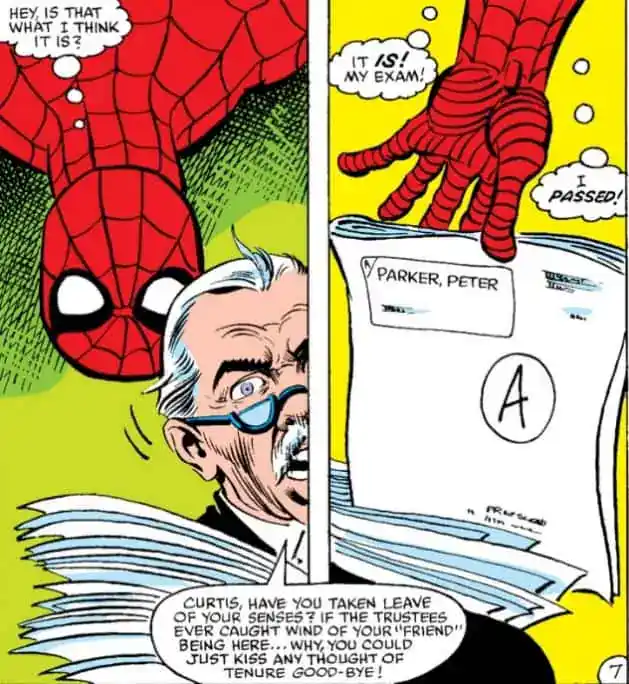
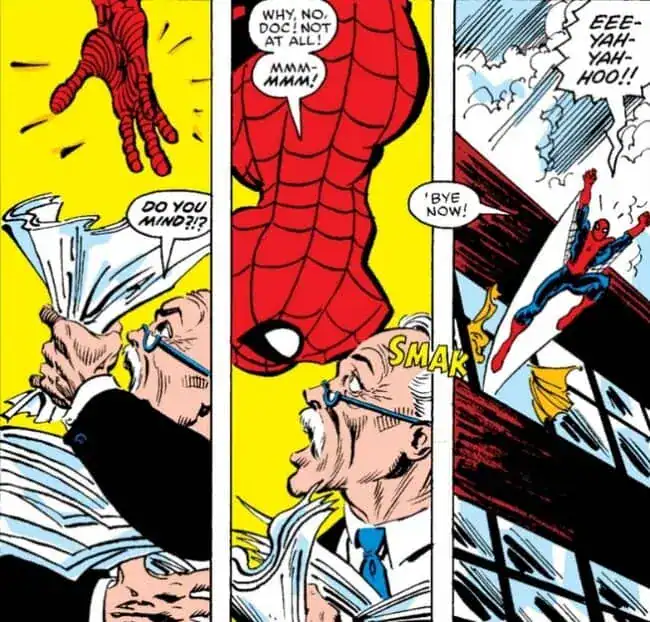
Spider-Man is ecstatic about having finally finished his first year. Given comic book time, it took forever!
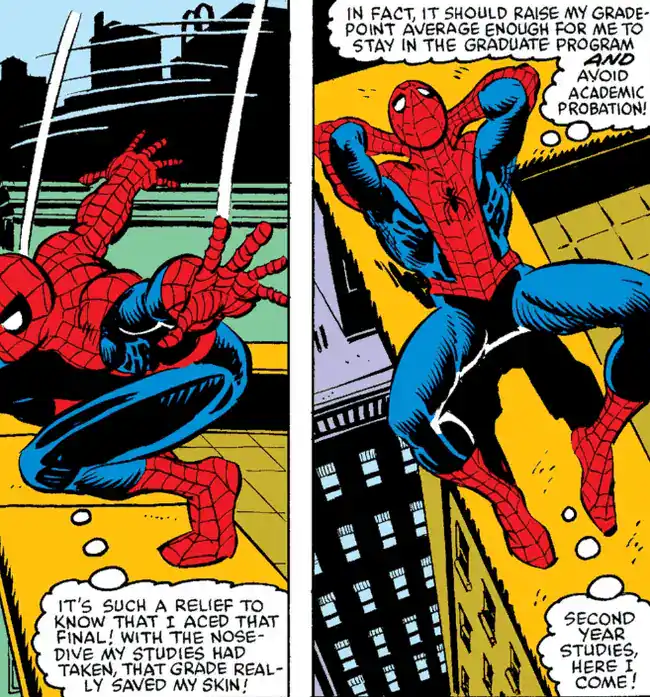
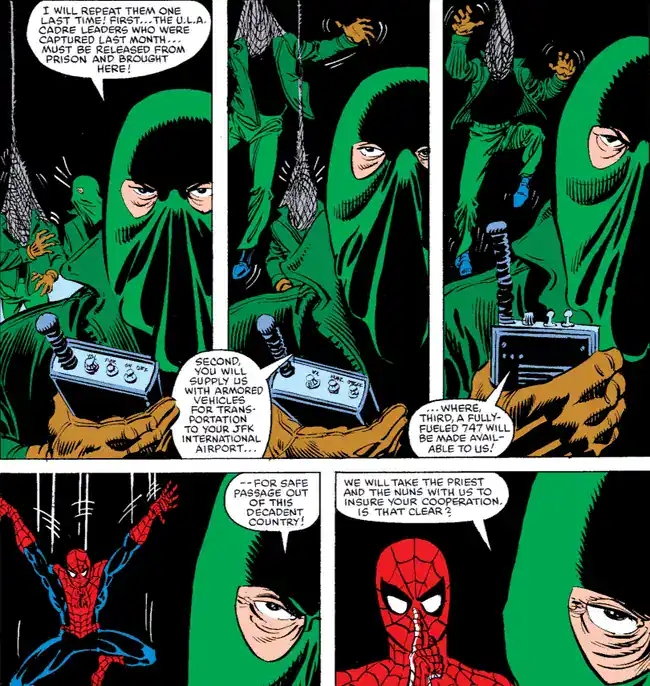
This issue is almost entirely about Peter’s life, the action scene is entirely thanks to some terrorists taking a church hostage.
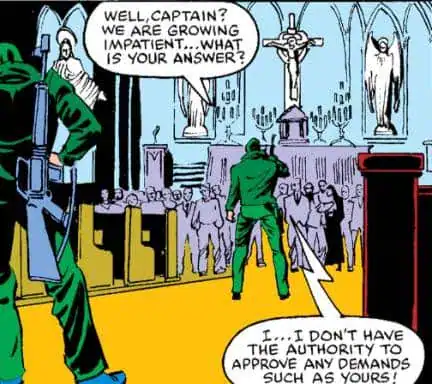
Not a big action scene, but it’s pretty great.
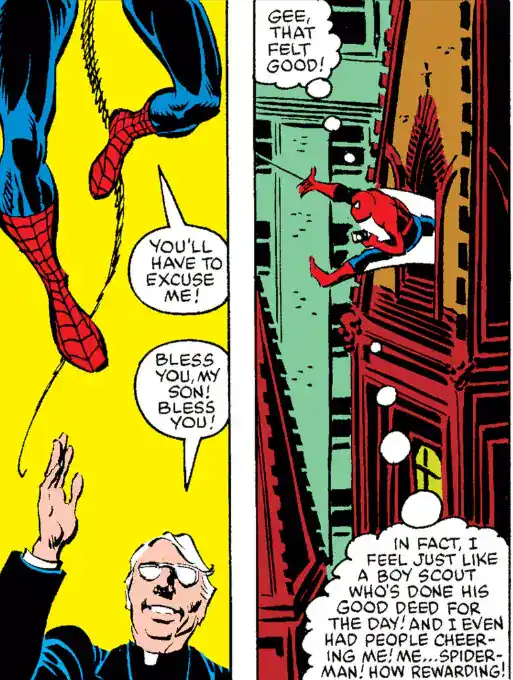
As a sign of things to come, Peter has started to take some pride in his work as a photographer.
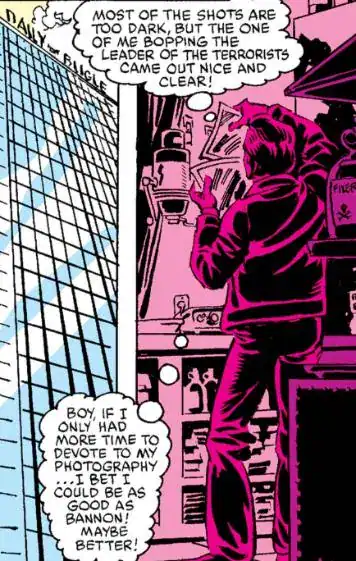
After that ego boost, Spider-Man drops by Black Cat to be crushed by the prospect of medical debt.
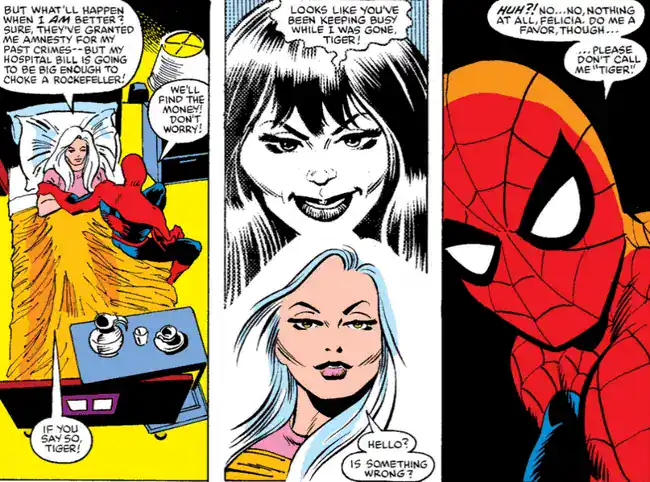
Here is one of the best examples ever for why Spider-Man is such a great character: when written well, his greatest challenges don’t come from butchering a deal with the Devil (yes I’m STILL livid about that) but from extremely relatable human problems.
Again, I WAS SEVEN when I read this and I instantly found this immensely compelling and interesting. People who complain Spider-Man can’t work unless he’s a high school nerd down on his luck are creatively bankrupt.
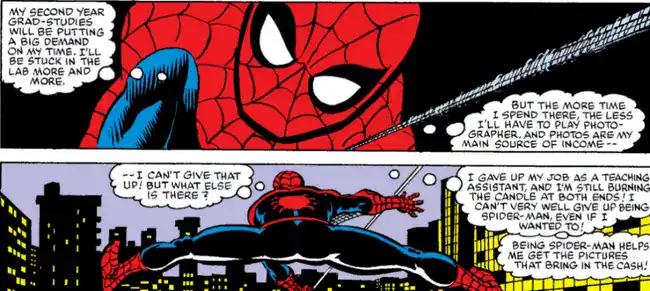
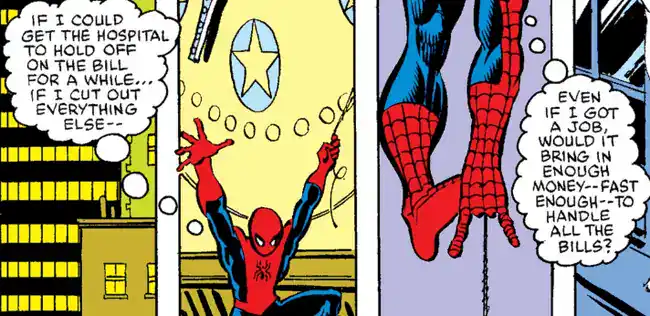
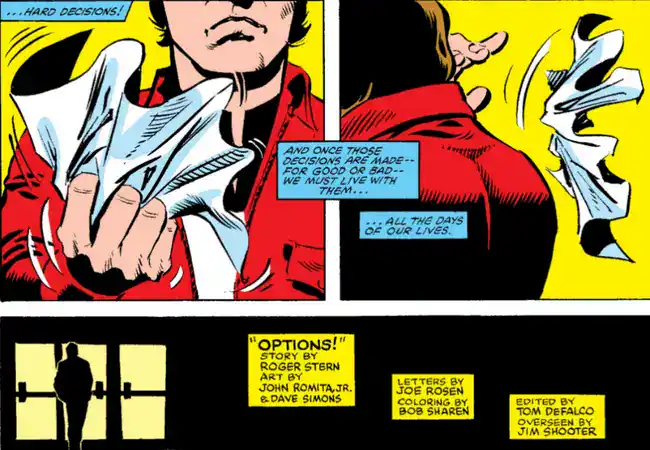
Balancing his need to be Spider-Man with his responsibilities as Peter Parker, as well as factoring in his suddenly giant forehead, Peter quits school.
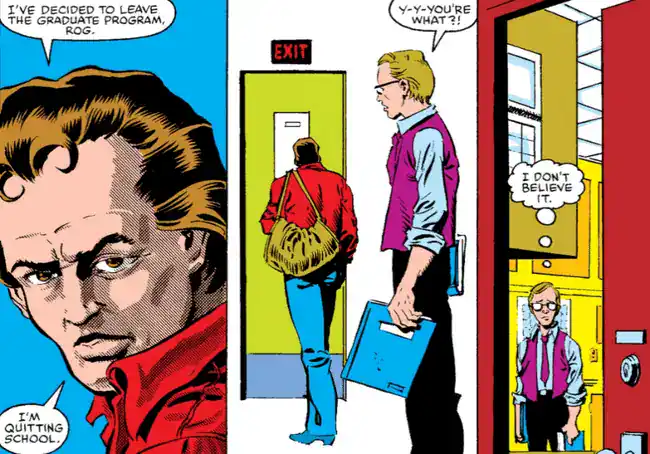
Despite having just been approved to continue the graduate program, something he’s worked for extremely hard.
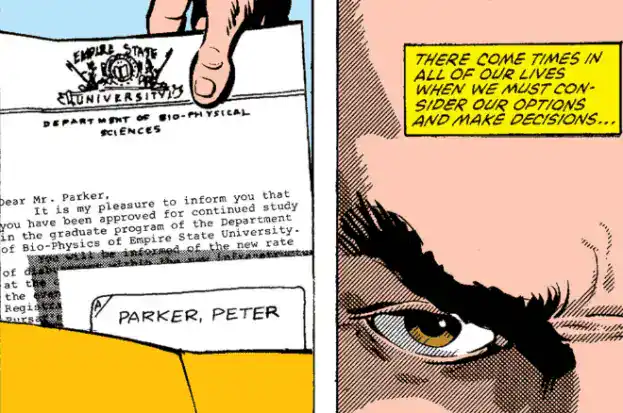
It doesn’t feature a supervillain, it doesn’t include anyone risking his life, but this is one of the most powerful Spider-Man finales I’ve ever read.
Historical significance
#242: 3/10
The introduction to the Mad Thinker’s new gimmick (I think, otherwise it’s a 0/10).
#243: 10/10
Mary Jane returns to the cast and Peter quits university. He will briefly return there in the late 90s.
Personal significance
#242: 4/10
I did like it, the robot especially looked as cool as possible, but it didn’t leave a huge impression.
#243: 10/10
This made quite an impact in how I see Peter’s academic journey, as commented below.
Silver Age-ness: 0/10
Not really, it’s just typical superhero stuff and Spider-Man personal drama.
Does it stand the test of time? 10/10
This might be the nostalgia talking, but this is everything I want in my Spider-Man stories.
I’m particularly impressed with the decision to make Peter drop out of school, even if becoming a scientist is his childhood dream. And I think that making him return to that field, including becoming a full-time scientist a couple of times, is a mistake.
I realize that Peter’s love of science is a fundamental part of his character, but that is exactly why I don’t think that making him accomplish his dream is the better choice.
I loved the fact that Peter DIDN’T realize his dream but he still found pride in being a journalist.
After all, how many people actually manage to get their dream job?
The whole “you can get your dream job if you work hard enough” is a nice aspirational message, but it can easily turn into the toxic “if you don’t, you didn’t work hard enough”.
With Spider-Man in particular, Peter becoming an accomplished photographer works spectacularly better with “it’s okay if you don’t get the job what you’ve always wanted, even if you worked hard at it, you can still find happiness with the job you ended up doing.”
And we definitely need more stories with that message.
Uncanny X-Men #146 (1981)
by Chris Claremont & John Byrne
Only half of the story was published in this book, starting with this page.
That’s the only reason I vividly remember these panels, obviously.