
Last entry on the Fantastic Four in this countdown, as the rest will be all about Spider-Man.
Fantastici Quattro #10 (1989)
Published by: Star Comics
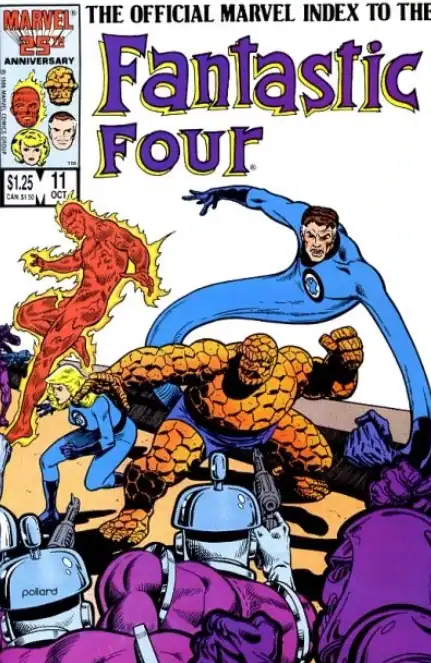
Once again the cover has nothing to do with the stories published inside.
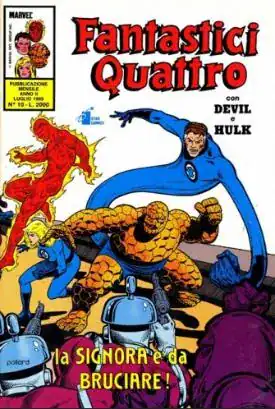
It’s taken from “Official Marvel Index to Fantastic Four #11” by Keith Pollard.
Fantastic Four #238 (1982)
“The Lady Is for Burning!”
by John Byrne
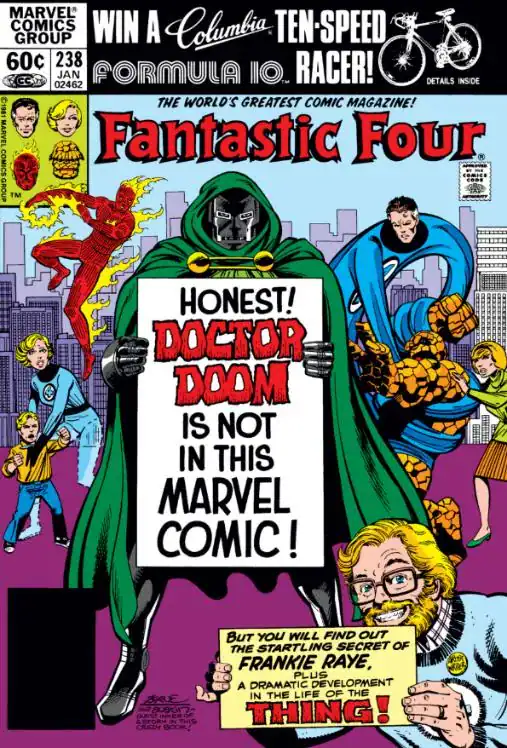
That’s probably because the actual cover is a joke that would have worked better on Byrne’s run on She-Hulk than here.
To be fair it’s truth in advertisement: Doctor Doom is indeed NOT in this comic.
Johnny’s reaction from the last issue was definitely overblown, considering all his girlfriend revealed is that she’s wearing a costume.
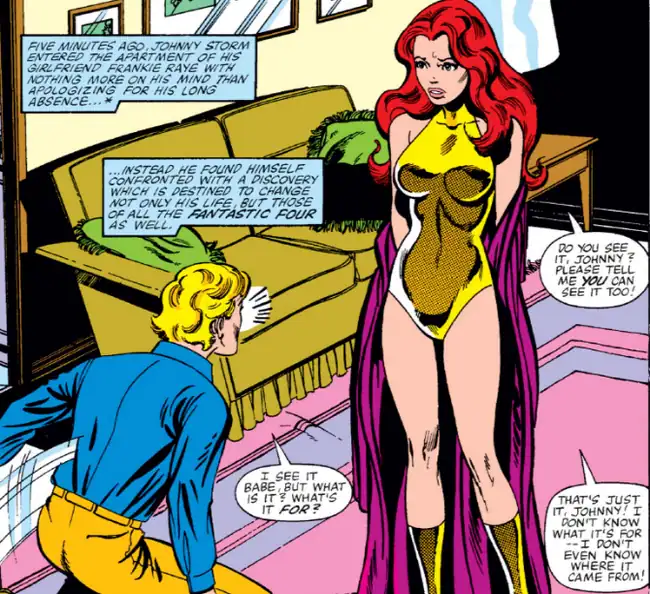
The costume only appears when she undresses; which I guess means Johnny has never seen her naked.
To be fair, in comic book time they haven’t been together for long.
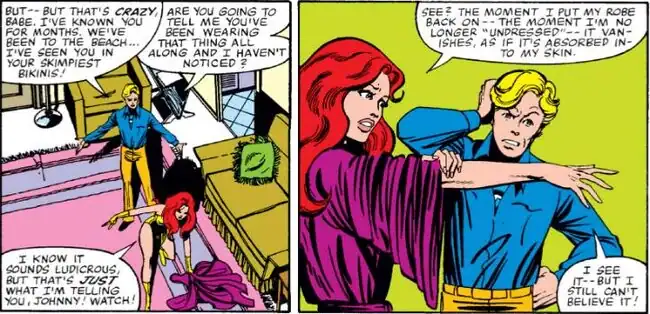
This is an interesting idea for how a costume works, but it’s barely used and it doesn’t even get a full explanation.
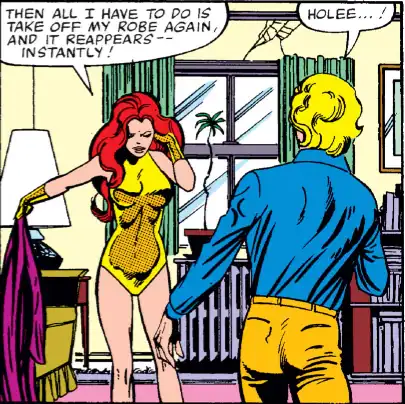
This has prompted Frankie to attempt uncovering her memories, since she can’t remember anything from her first 14 years of her life.
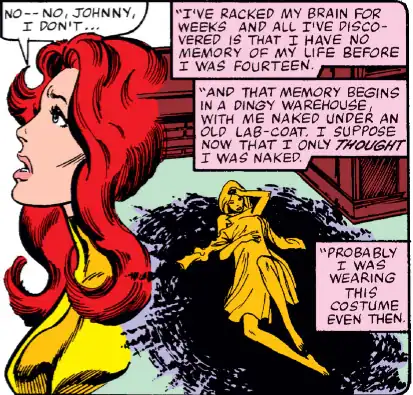
She just kept getting 1,000 dollars per week for the next 6 years, making her 20 by the time she met Johnny.
Coincidentally 1,000 per week was also what the Avengers were being paid at the time.

A final push allows her to recover ALL her memories… as well as unleashing her powers.
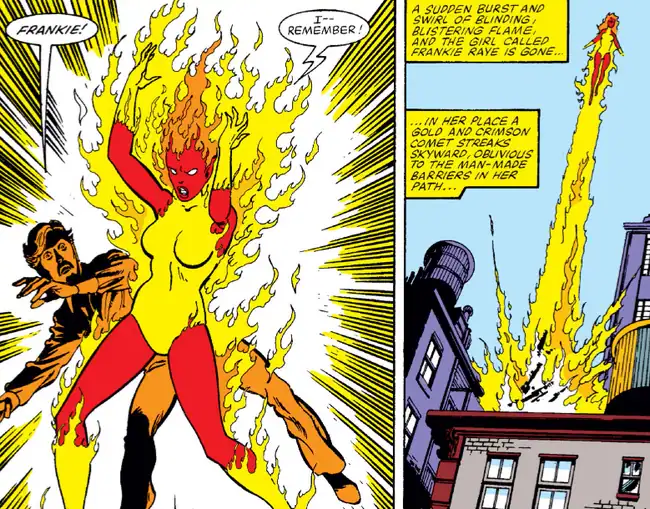
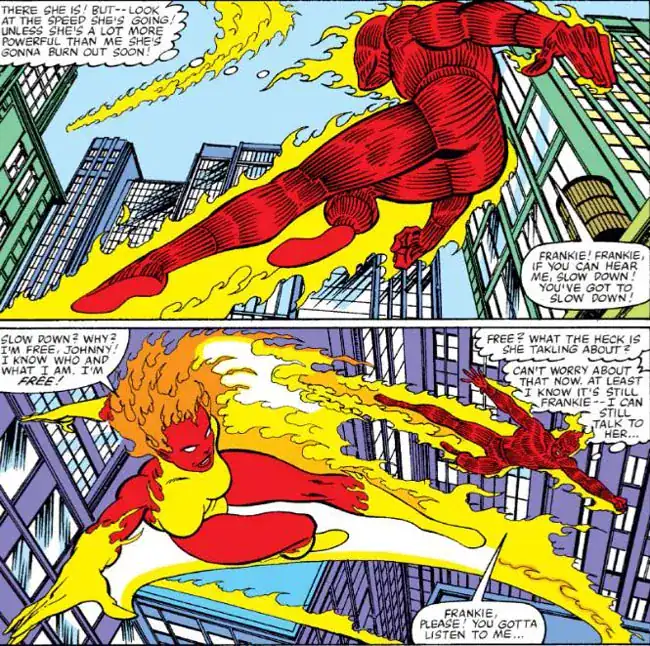
She finds her new powers exhilarating, and this is a good moment to point how just how great Byrne is at selling the dynamic motions of his flying characters.
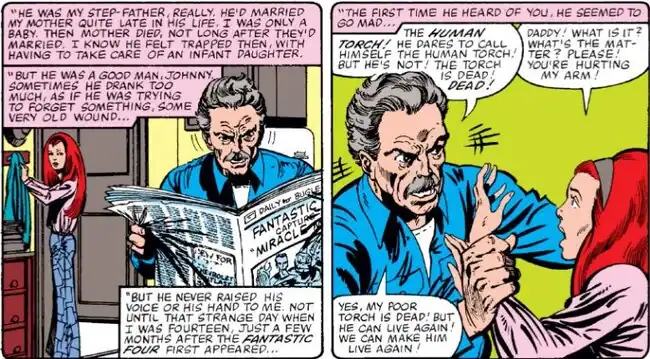
Frankie recalls how her stepfather was mad when he first heard about the Fantastic Four.
Johnny was 16 at the time, which makes Frankie two years younger.
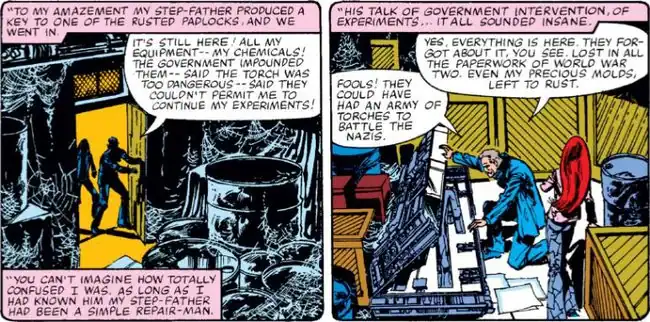
Her stepfather brought her to an old warehouse full of his equipment from the 40s, and if you’re up to your Golden Age history you’ve probably figured out who he is supposed to be.
Frankie ends up mishandling one of the chemicals…
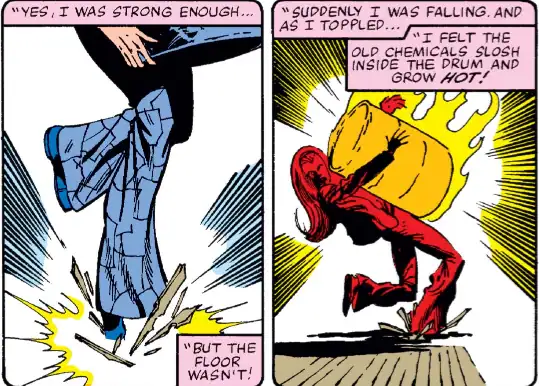
…but she discovers that she’s immune to fire.
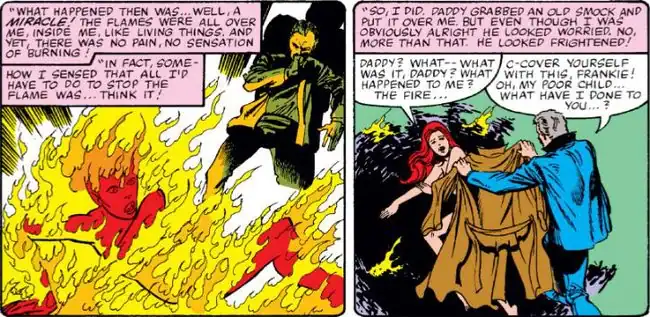
He then hypnotizes her into forgetting her own name and becoming afraid of fire.
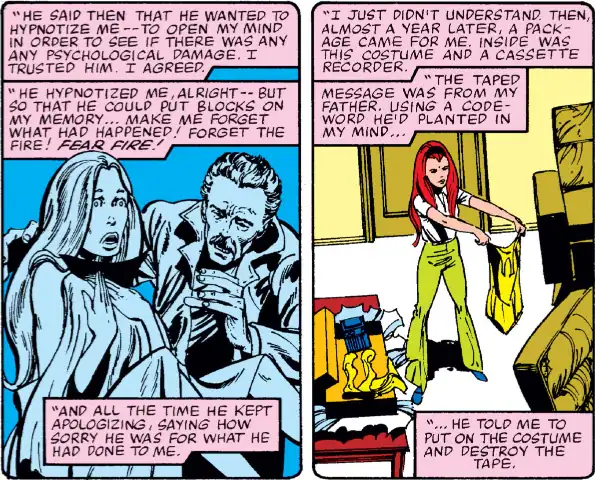
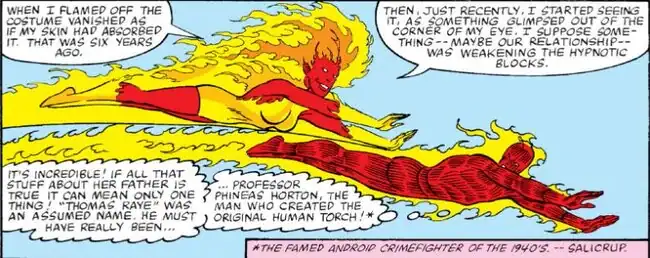
Johnny deduces that her stepfather was actually Phineas Horton, the creator of the original Human Torch. More on how this can and cannot work later.
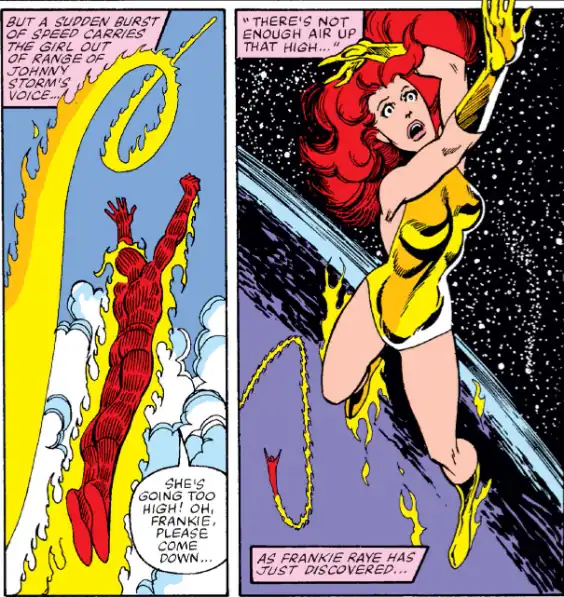
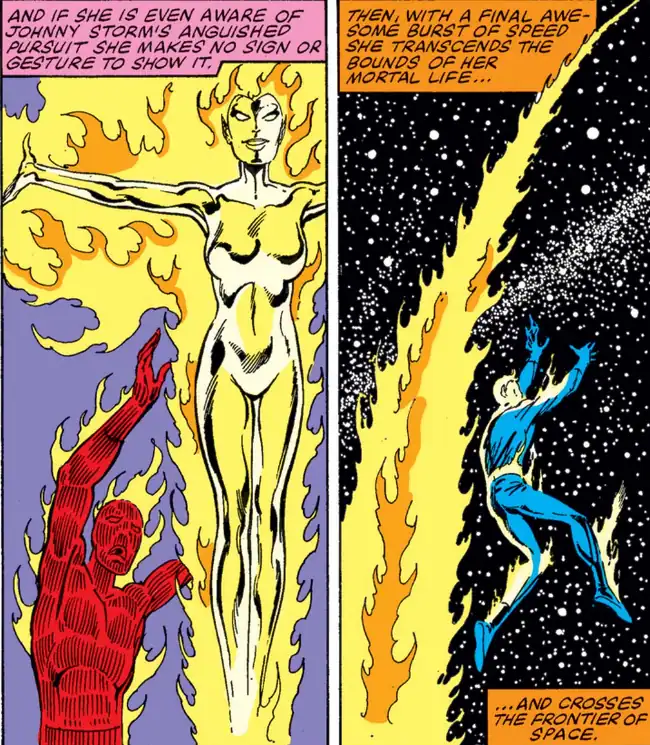
Frankie pushes her powers to the limit, trying and failing to reach space.

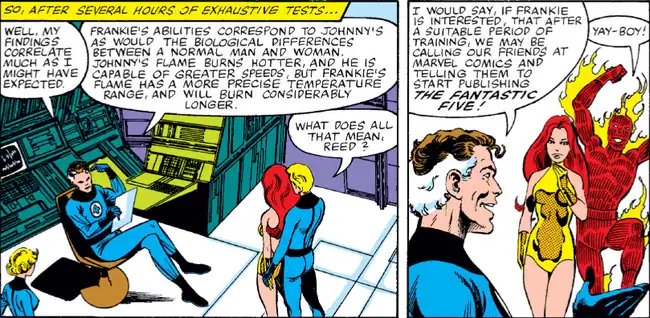
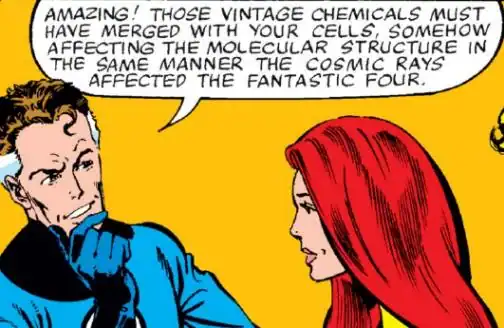
Reed runs some tests on Frankie, confirming that she does have Torch-like powers and not too subtly offering her a potential membership.
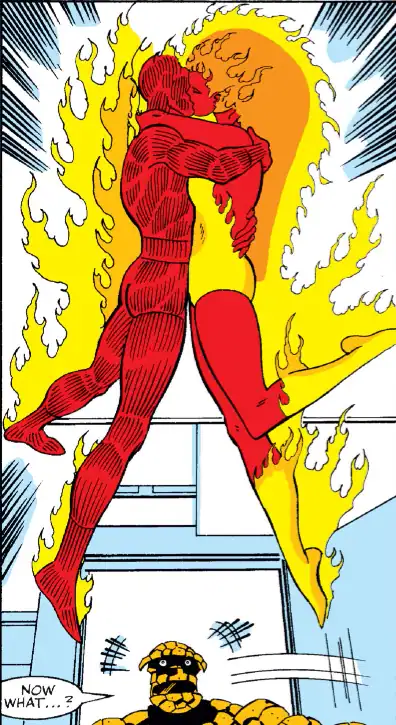
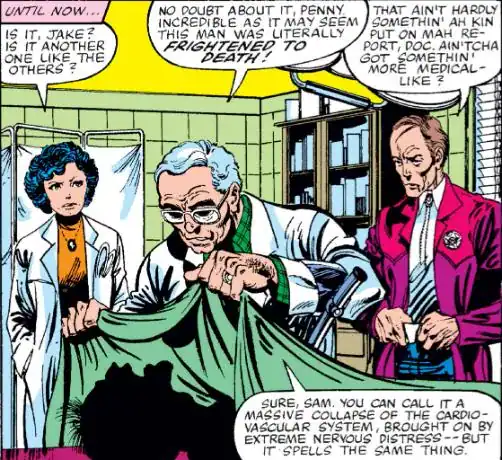
Finally we have the Thing’s uncle Jake setting up the plot of the next issue…
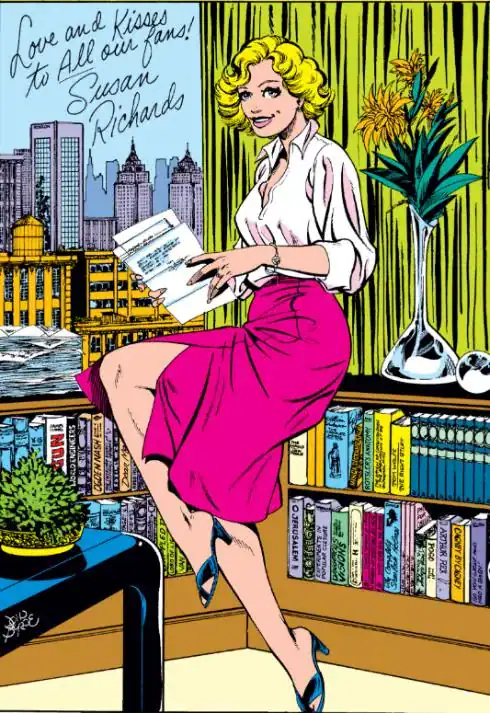
…and an Invisible Girl pin-up.
The same book has a second FF story, but let’s discuss this one first.
Historical significance: 7/10
Frankie has exactly THREE Fantastic Four stories before she’s involved in a storyline involving Galactus, which ends with her becoming her new herald.
She will take the codename Nova (the original wasn’t using it at the time); oddly enough she didn’t have an actual superhero name while she was in the Fantastic Four, which might have been a hint that she wasn’t there to stay.
That issue has a direct parallel to this one: after being transformed into a herald, Frankie CAN burn in space while Johnny can’t follow her.
Personal significance: 8/10
This one really stayed with me, and it’s one of the reasons why Frankie is my favorite Galactus herald. I really wish she was a more popular character: then we could’ve gotten a “What If?” of her becoming a teenage superhero at the beginning of Marvel, if only she wasn’t hypnotized!
Silver Age-ness: 7/10
This is all the explanation we get for why Frankie gets fire powers.
Does it stand the test of time? 9/10
My only real complain is that Frankie is surprisingly fine with her father completely abandoning her when she was 14 years old and brainwashing her. Even if he did give her money, she still had to grow up alone.
Other than that, this is an intriguing origin with some of the best Byrne artwork you could ask for.
Before we move on: does this origin work?
This is a 1982 story; Frankie is explicitly 20 years old, so she would have been born in 1962.
We don’t know how old Professor Horton was when he created the original Human Torch, but Frankie would have been born 17 years after the end of World War II.
He’s not her biological father and we don’t know anything about her mother, so she might have remarried with a middle-aged man… but this only works for a bit in the 80s, after which Horton starts to get unbelievable old to have a 14 year old stepdaughter.
In 1990, a Power Pack story will have her meet a homeless guy with some kind of connection to her original powers (her Galactus powers are briefly stolen) who holds a secret about her.
Nothing comes from this, as the series is quickly cancelled, but it’s been speculated that he was supposed to be revealed to be an elderly Toro and secretly her biological father.
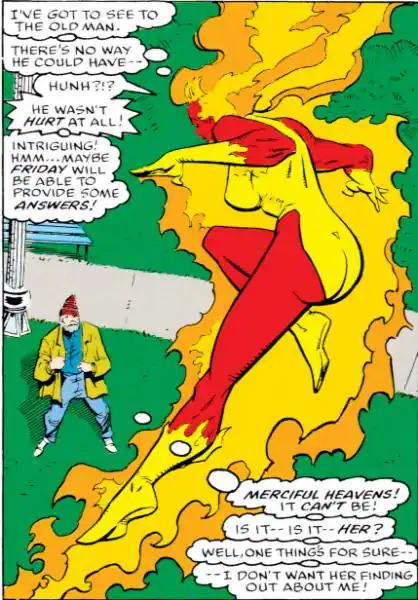
Nothing comes from this, as the series is quickly cancelled, but he was CLEARLY intended to be an elderly Toro and it’s speculated that he was supposed to be revealed to secretly be Frankie’s biological father.
While these late Power Pack stories are pretty bad (unlike most of their original series), I would have loved this retcon. It would explain perfectly how Frankie was immediately immune to fire, and I could imagine Professor Horton to marry Toro’s widow in order to take care of his daughter.
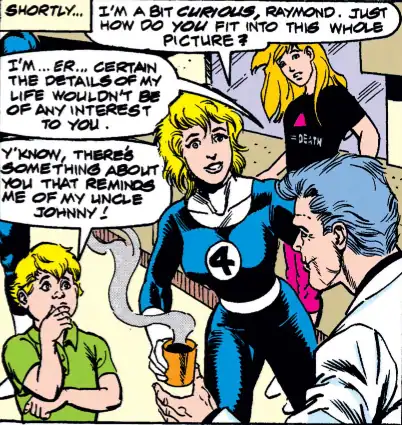
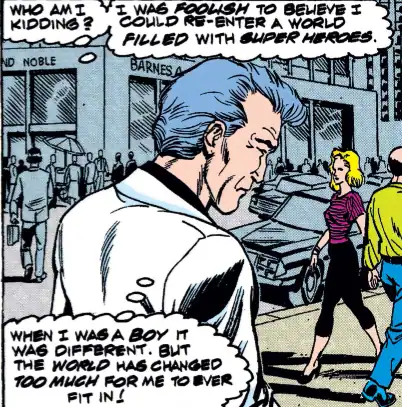
Having Toro as her father would make perfect sense in 1982, since he was considered dead at the time and he wouldn’t be resurrected until 2009. Heck it would still make sense TODAY, since Toro was resurrected by wishing him back to life with a Cosmic Cube!
I think the actual reason why Marvel has never brought up the subject again is that Horton is linked to the complete mess that is the litany of retcons regarding Vision’s origin.
Horton was believed to have died in 1975, on Avengers #135, killed by Ultron after the revelation that Vision had been built by re-purposing the body of the original Human Torch.
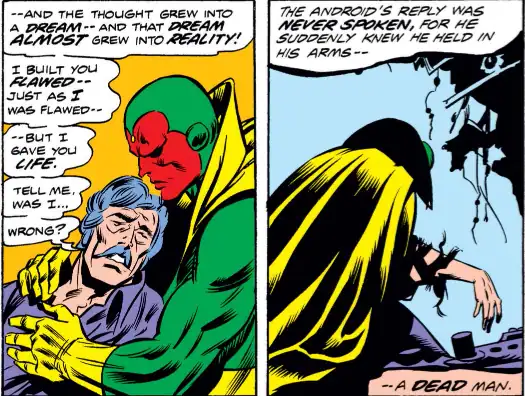
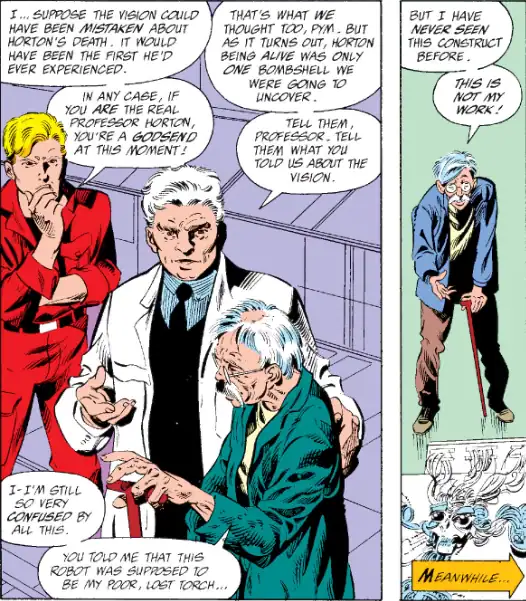
Byrne hated the idea to connect Vision to the original Human Torch… and honestly I’m with him, that was a nonsensical retcon… so in 1989, on West Coast Avengers he had a VERY old Professor Horton show up to reveal that it had all been false information.
Bizarrely enough, Byrne doesn’t take the opportunity to reference himself and doesn’t mention Frankie.
And then in 1999, Kurt Busiek and Roger Stern retconned Vision’s origin AGAIN on Avengers Forever #8. Long story short: Vision wasn’t built with the body of the original Human Torch, but with a temporal doppelganger of the Torch created by Immortus.
Because comics.
Presumably this restored Horton’s death from 1975, and the one we saw in West Coast Avengers was an impostor.
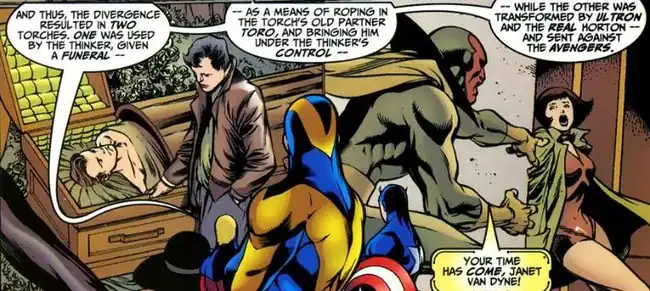
Regardless of whether he’s dead or not, linking Frankie’s origin to Horton is problematic.
Thanks to the sliding timescale, having her stepfather being a guy who presumably wasn’t particularly young in 1940 would eventually be too ridiculous to work.
Fantastic Four #238 (1982)
“The More Things Change…”
by John Byrne
Unusually for the Byrne run, there are two independent stories in this issue.
This one starts with Reed building a new H.E.R.B.I.E. to be Franklin’s nanny.
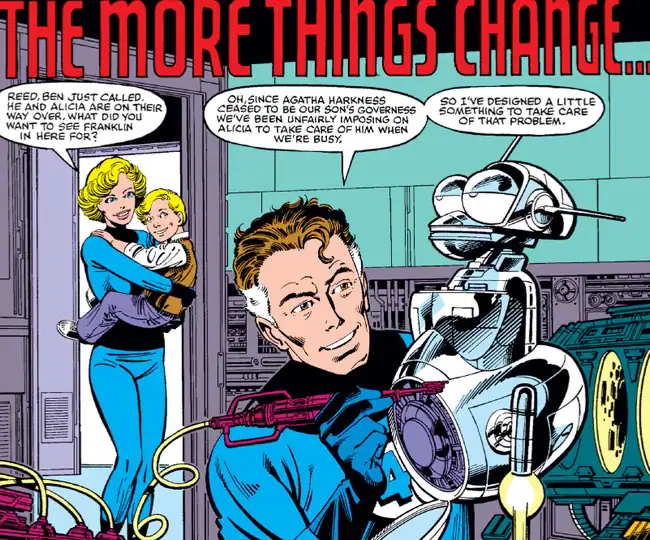
The Thing is less enthusiastic.

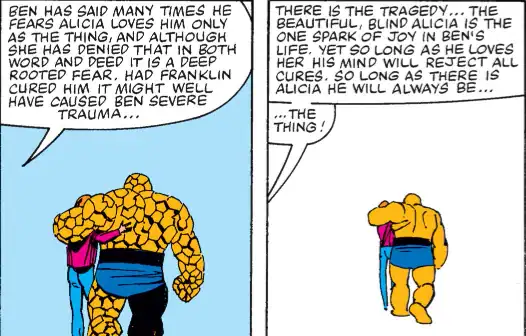
The story is about Reed’s latest attempt to cure the Thing.
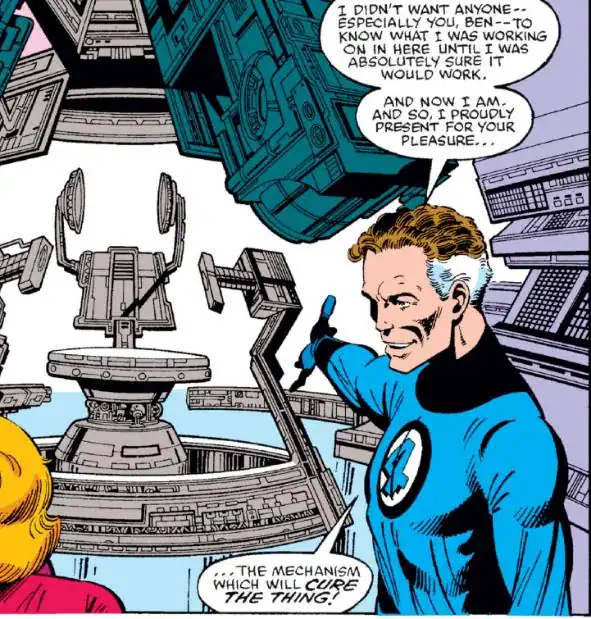
In fact I believe this is the last time we will ever get a story with Reed explicitly trying to cure Ben until he gives it a try with his daughter Valeria.
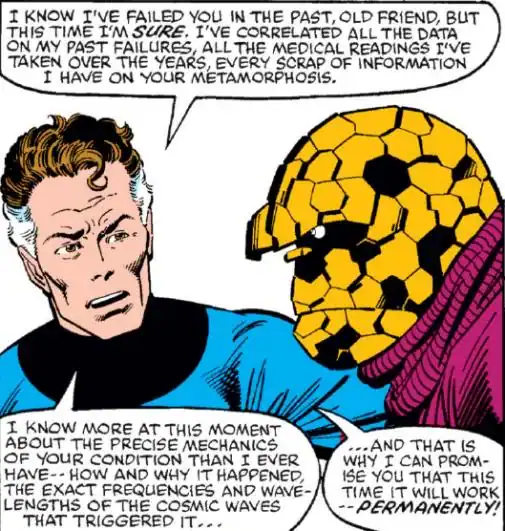
The Thing fearing that Alicia loves him only because she’s blind has been the basis of their dynamic since her first appearance, but now he’s transitioned into believing that she only loves the Thing and not the man beneath the rocks.
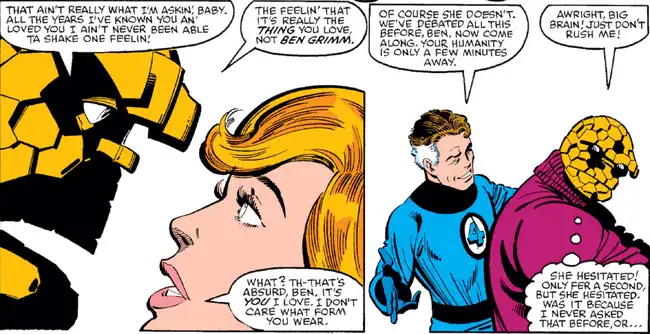
The procedure actually works…

…for two panels.

The story ends with the Thing having reverted to the lumpy look he had in the earliest Fantastic Four stories.

Historical significance: 4/10
The Thing would keep his lumpy look until Fantastic Four #245, which restored the classic Thing look while canonizing a long-standing fan theory: that the reason he can’t turn back human is entirely psychological.
Personal significance: 4/10
I had no idea that this was supposed to look like the Thing’s original appearance, or how many times Reed had already tried to cure him.
Silver Age-ness: 0/10
Not really.
Does it stand the test of time? 8/10
The fact that it’s only 8 pages long means it doesn’t have much time to waste beyond its main objective to transform the Thing.
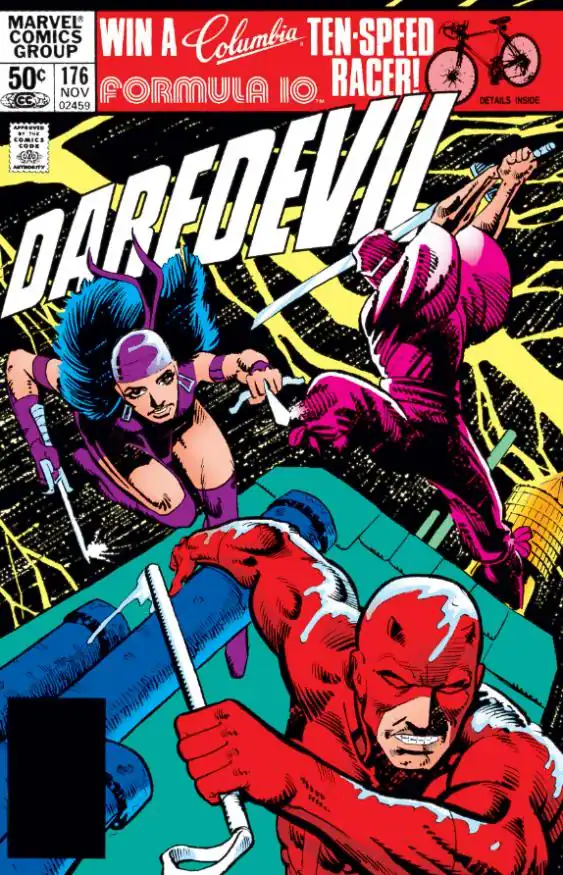
Daredevil #176 (1981)
by Frank Miller
Those ads on the covers are really distracting. How much money was Marvel making by advertising those contests?
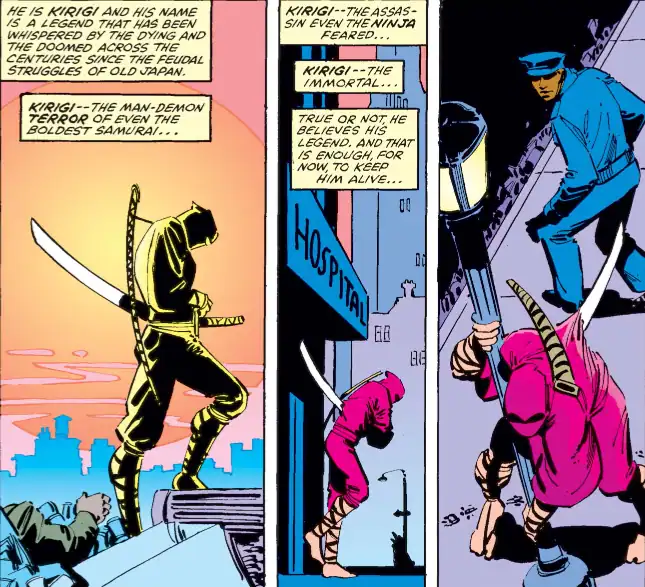
Turns out that Kirigi, the immortal Hand ninja from the previous issue, isn’t dead after all.
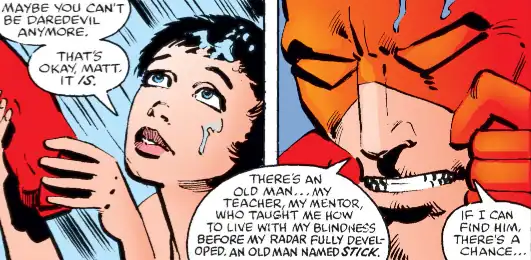
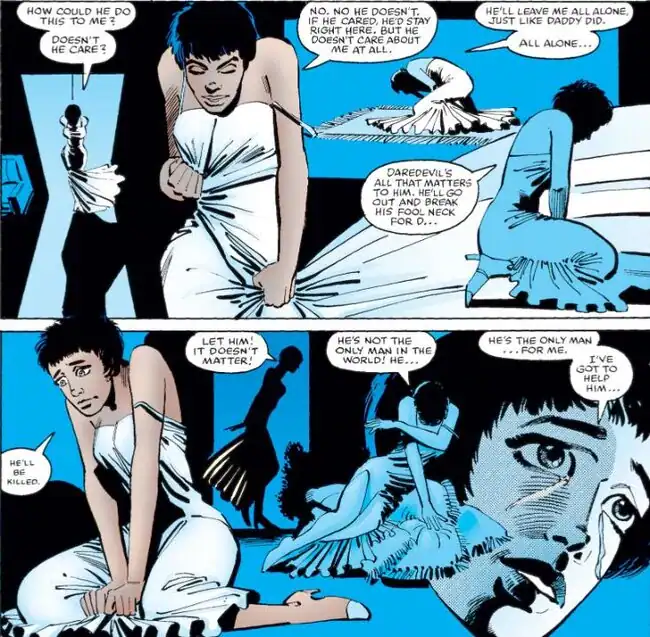
Daredevil continues to be without his radar sense and being awful to his girlfriend Heather.
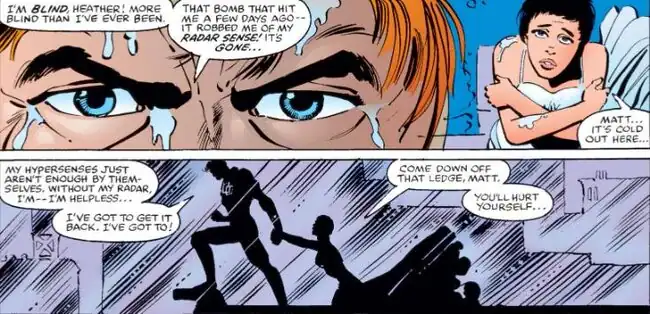
So he decides to go meet his never-before-seen mentor Stick.
By which I mean the readers have never seen him… well, Daredevil has never seen him either.
Knowing she will eventually kill herself, reading those stories is pretty rough.
Daredevil has definitely been counting on his radar sense too much, given how these low-level criminals get the drop on him.
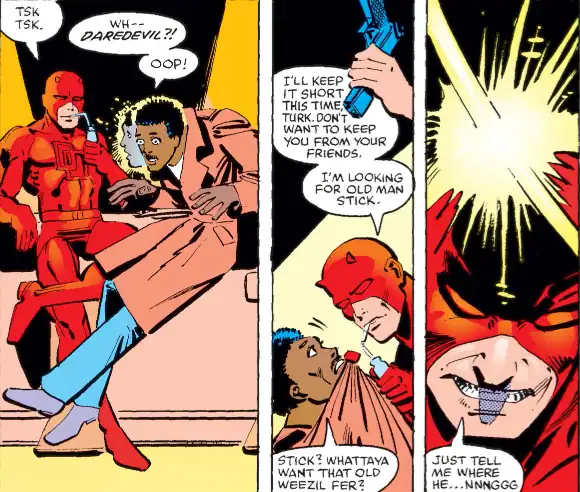
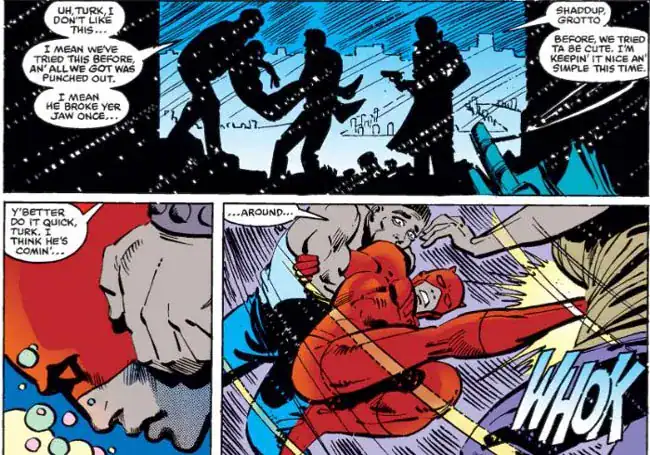
At least he has a killer guardian angel.
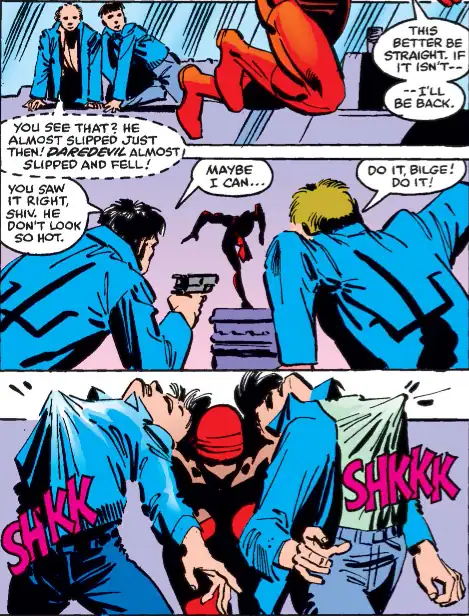
Even Elektra is looking for Daredevil’s mentor…

…as is Turk (wearing a power armor he stole)…

…as is Daredevil…

…as is Daredevil’s girlfriend!
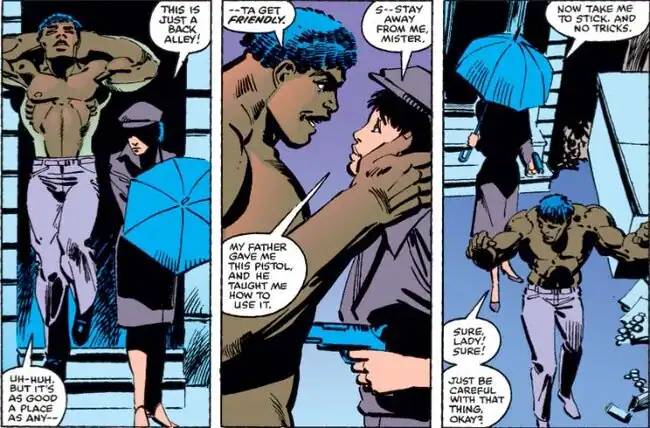

Said mentor, Stick, makes his classic introduction…

…by being a classic jerk.
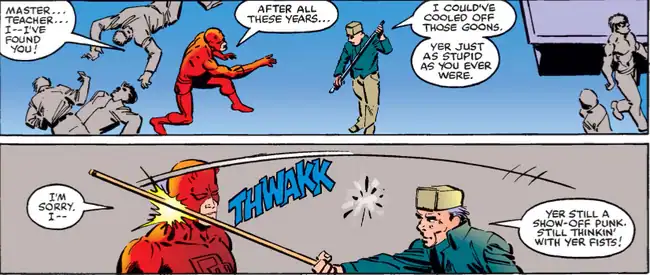
Everyone shows up at the same place. Daredevil takes out Turk with a single punch despite the armor…
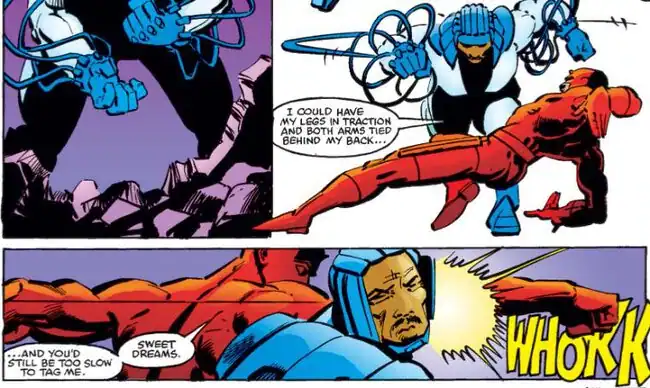
…and Elektra fights Kirigi.

With the secret ancient technique of the Sudden Ninja Truck Attack.

Historical significance: 10/10
Stick becomes a recurring character for Daredevil, and will feature heavily in his retconned origins.
Personal significance: 6/10
The whole extended sequence of EVERYONE turning up to terrorize the same poor informant stayed with me.
Silver Age-ness: 1/10
That being said, that sequence is a bit silly.
Does it stand the test of time? 10/10
With the benefit of hindsight Miller could have been done a lot more with Heather as a character, but it’s not a flaw of THIS issue.
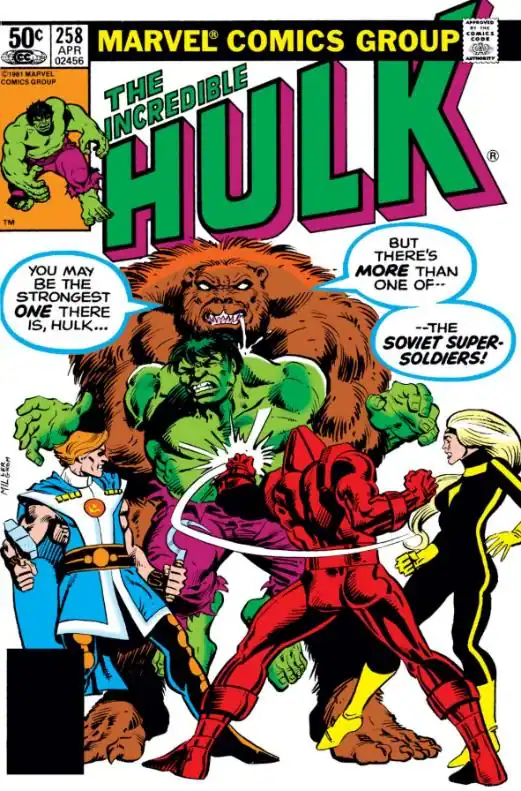
Incredible Hulk #258 (1981)
by Bill Mantlo & Sal Buscema
In Soviet Russia, Hulk gets smashed!
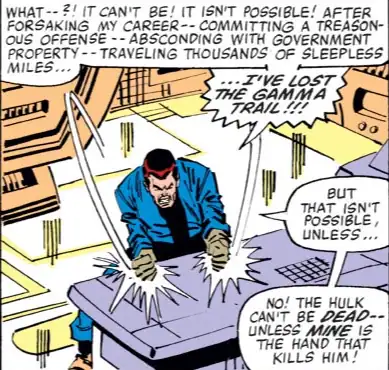
As seen last time, Colonel Talbot has gone full rebel in his hunt for the Hulk.

Meanwhile the Hulk has leaped all the way from Egypt to Afghanistan.
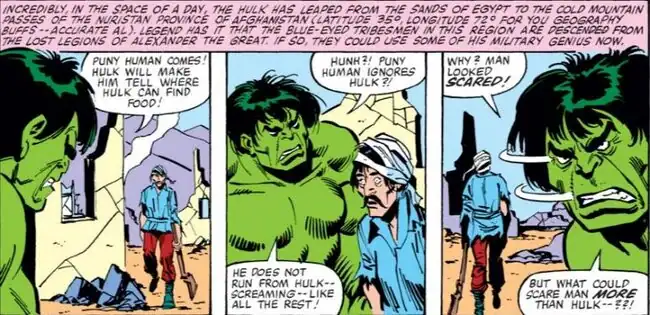
Those coordinates are actually in Pakistan.

And since this was published during the Soviet Union occupation of Afghanistan…

The Hulk follows the planes towards the Forbidden Zone in Russia.
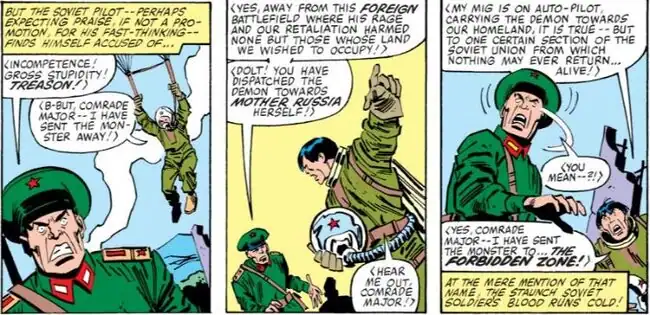
We will soon see the Forbidden Zone is full of radiation, so this causes Talbot to lose track of the Hulk. He takes this well.
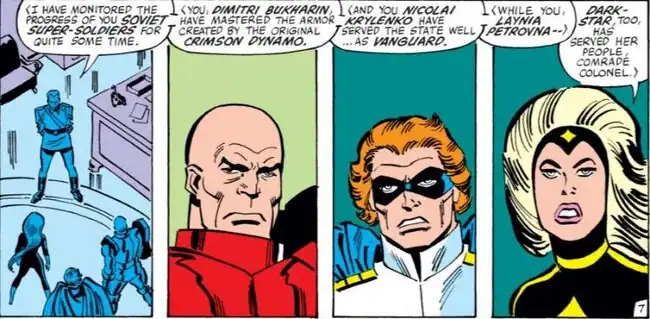
Meanwhile Russia gathers its own superhero team: the Soviet Super-Soldiers, who debut in this issue. Given how present Russian villains were in the 60s, it’s amazing it took them THIS LONG to get a superhero team!
We get Darkstar, her brother Vanguard and the latest Crimson Dynamo. We’ve already met the mutant Darkstar in her appearance on Champions; the other two debuted as Iron Man adversaries.
They’re joined by Ursa Major, a new character who has the power to transform into a superstrong talking bear.
Yeah subtlety wasn’t Mantlo’s strength as a writer.

The heroes will be sent to the Forbidden Zone (independently from the Hulk, who just has bad luck). It’s an extremely radioactive place thanks to The Presence, a supervillain previously encountered by the Defenders.
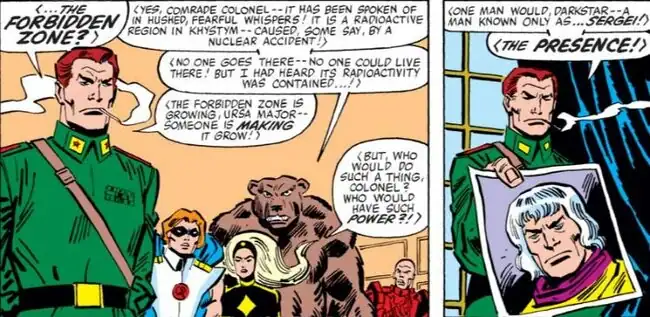
This was published five years before the Chernobyl disaster, so the Forbidden Zone is explicitly based on the Kysthym disaster from 1957.
If that means the Forbidden Zone is in the same place, that means the plane the Hulk attacked brough him 1525 miles (2455 km) from the coordinates we were initially given.
Writers, this is why you don’t put coordinates in your comic: you never know when a pedantic windbag will analyze them 45 years later.

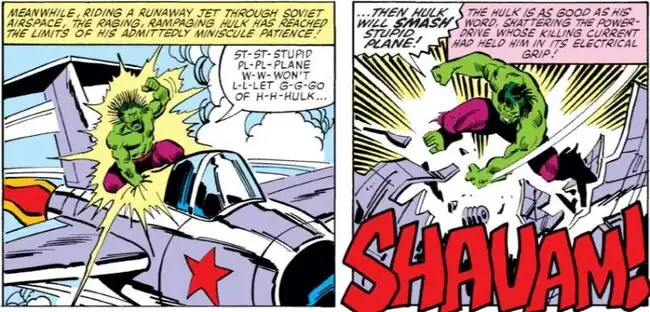
Darkstar teleports her team to the Forbidden Zone…
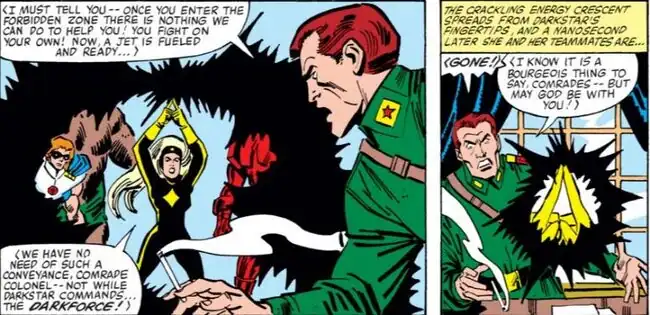
…just as the Hulk shows up.
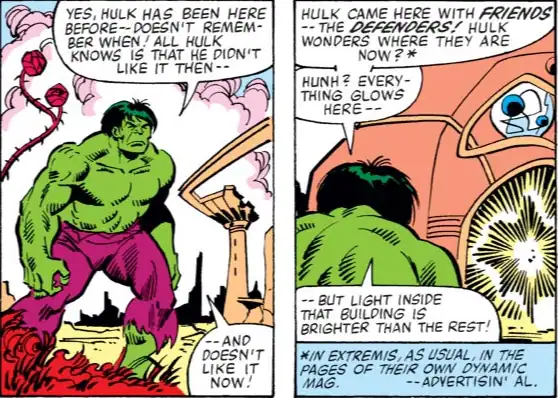
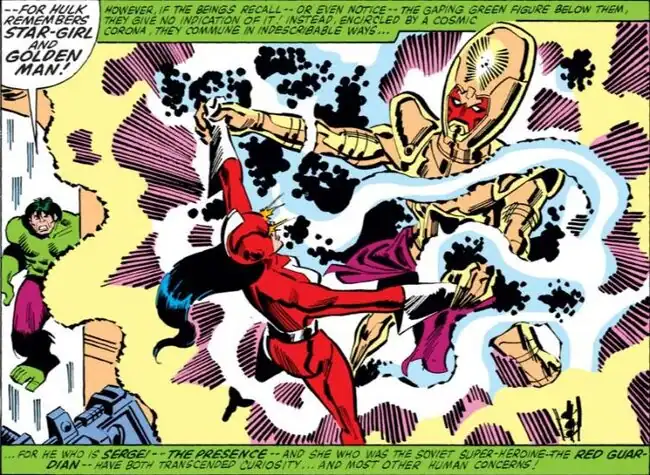
He finds The Presence and his lover Red Guardian (another former Defender who I think might be mind-controlled at this point).
The Hulk is so embarrassed to have caught them in a radioactive intimate moment that he blushes into a pink face.
This turns into, what else, a big dumb fight.
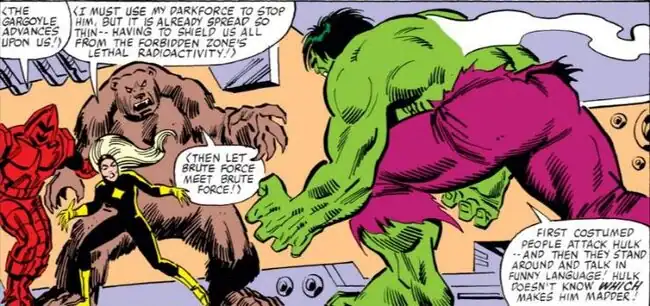

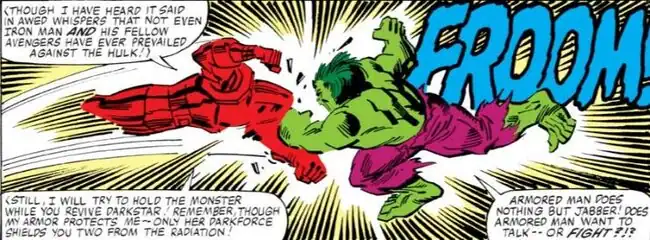

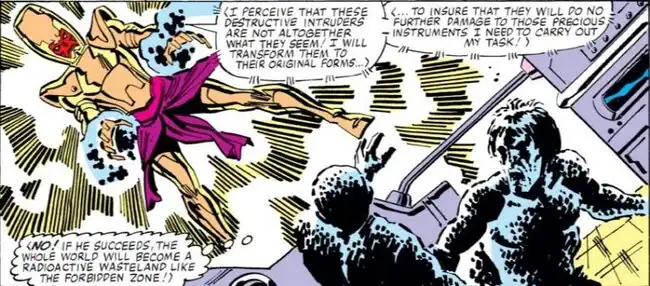
The fight gets the attention of The Presence, who uses his control over radiation to turn both the Hulk and the bear back to human form.
Which is fine for the Hulk, since The Presence is all about radiation, but Ursa Major will be revealed to be a mutant so in hindsight this makes little sense.
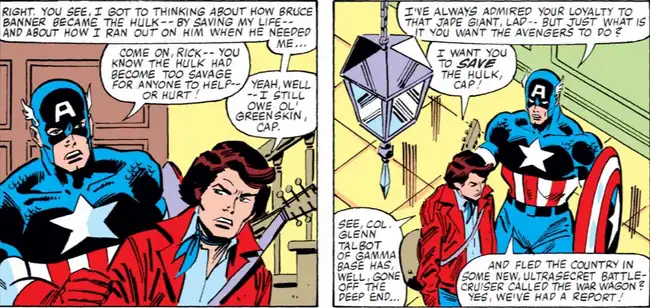
Meanwhile Rick Jones asks Captain America if the Avengers can help the Hulk, and Cap’s response is basically “Sucks to be you Rick”.
Historical significance: 4/10
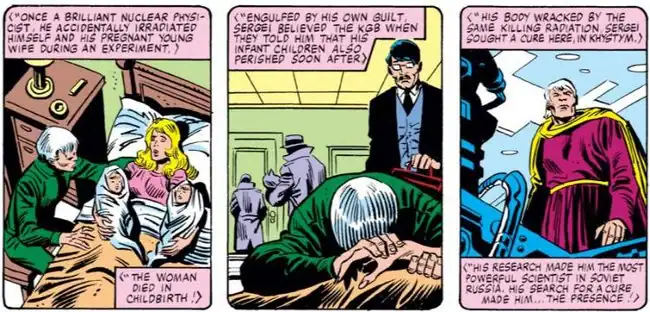
The following issue will reveal that The Presence is the father of both Darkstar and Vanguard.
Personal significance: 8/10
The mystery around the Presence really fascinated me. I was more than a little disappointed to learn that he wasn’t as important to the Marvel Universe as this story lead to me to believe, and the Forbidden Zone wasn’t a place that heroes often visit.
I was also intrigued by Darkstar’s powers and Ursa Major sounded like a cool idea.
Silver Age-ness: 2/10
Aside from the massive coincidence of the Hulk ending up in the Forbidden Zone at exactly the same time as everyone else, not much.
Does it stand the test of time? 7/10
One of the highlights of the storyline, which as you might have guessed was about the Hulk meeting heroes from all over the world. The fact that this time he got to meet characters that had been established before (plus Ursa Major) helped to have much fewer stereotypes about them, when compared to the other countries.
It’s still very much a Cold War story, but at least not ALL the Russians are depicted as Earth Klingons. It has definitely aged better than the Egypt story.
It has the longstanding problem of the Hulk being little more than a supporting character in his own book, and the Sal Buscema artwork isn’t anything notable.