Showcase #4 (1956)
by Robert Kanigher & Carmine Infantino
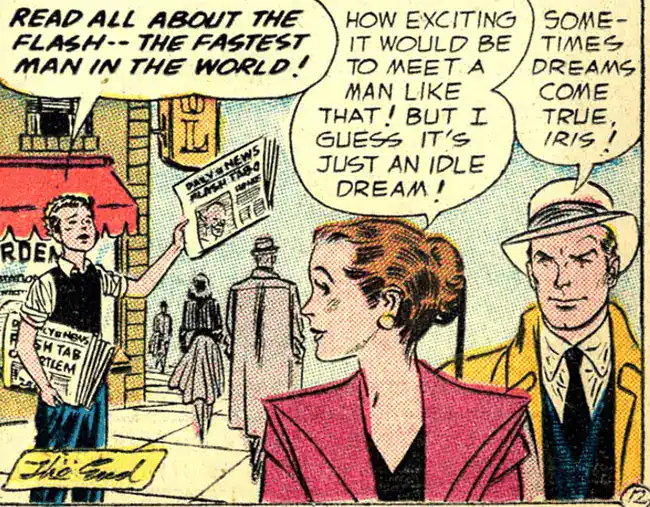
It’s been five years since the last appearance of the original Flash. Who knows if a second attempt will be successful.
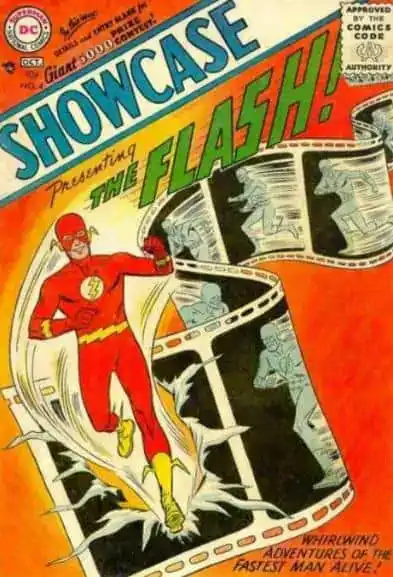
He’s so fast that he leaves the comic in the teaser page!
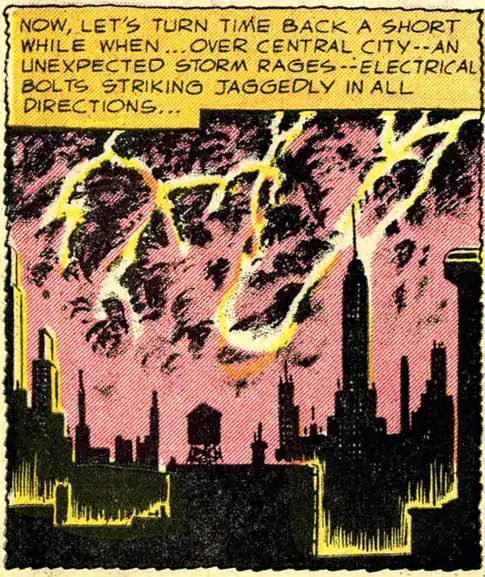
We begin with an AMAZING panel showing a big thunderstorm over Central City.
Funny to see that the Flash began his career under a red sky and will end it (for a while) under the same… wait, is THAT the reason why Crisis on Infinite Earths has red skies!?
Our protagonist is introduced reading Golden Age comics, therefore beginning a long tradition of superhero comics being fictional inside superhero comics.
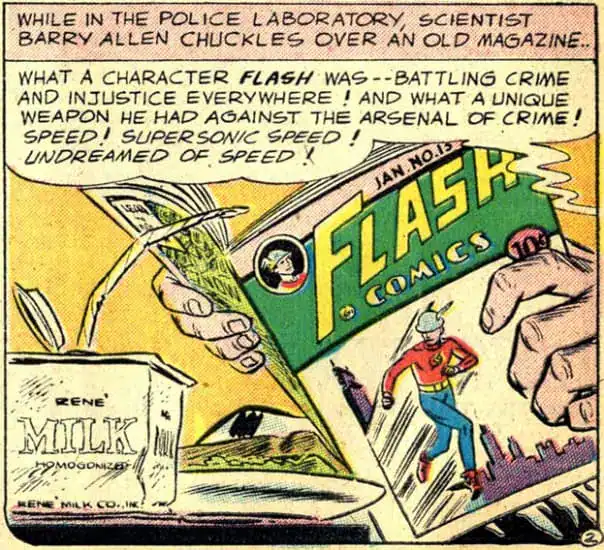
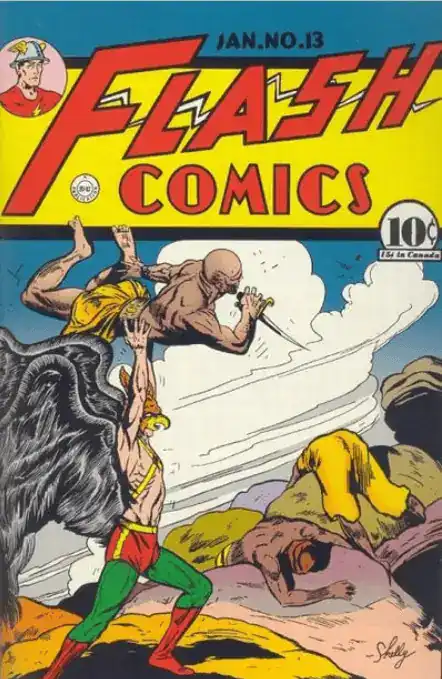
Barry appears to be reading Flash Comics #13. But that’s not the actual cover, since the real comic starred Hawkman.
In fact, the cover shown in the story doesn’t appear to be referring to any real cover.
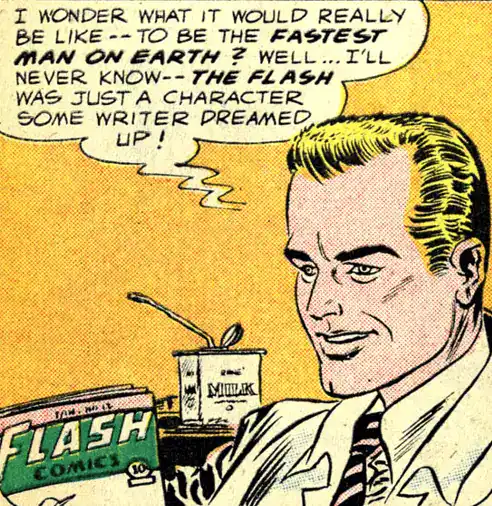
The future “Flash of two worlds” story will retcon the original Flash to still be real, and his real adventures being dreamed by a comic book writer.
But as far as THIS story is concerned, Jay Garrick was entirely fictional.
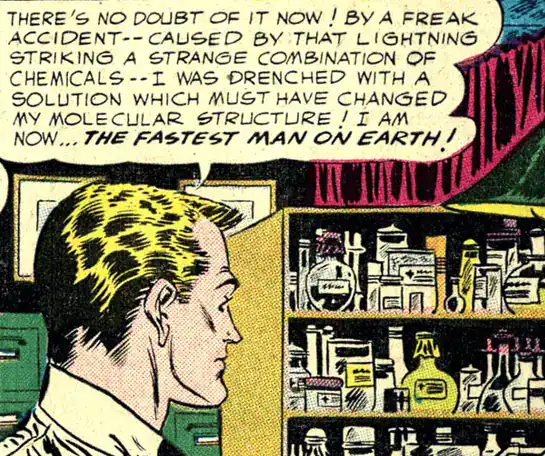
Barry just happens to be in front of a bunch of chemicals as he’s stuck by lightning, and the rest is history.
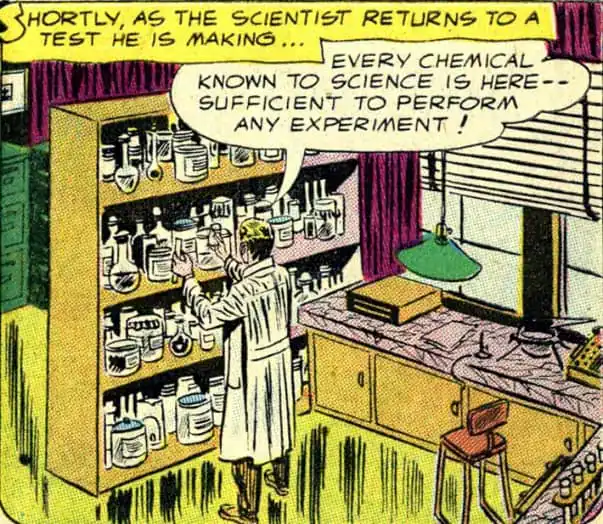
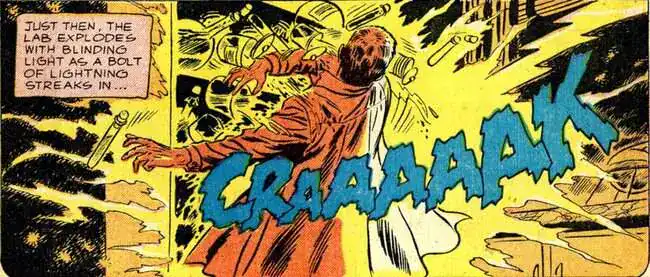
If Barry hadn’t been there, would this have created the world’s fastest cabinet?
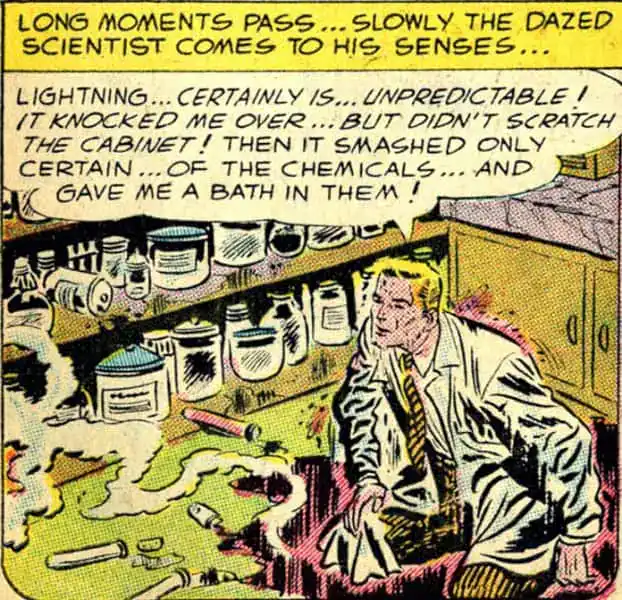
Presumably after cleaning up, Barry tries to get a cab…
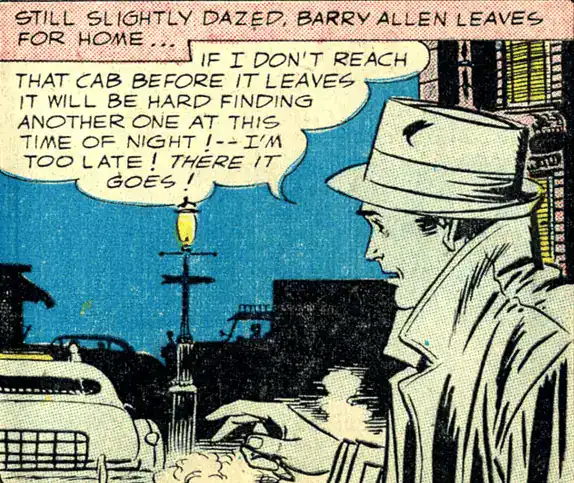
…resulting in a great storytelling bit from Infantino.
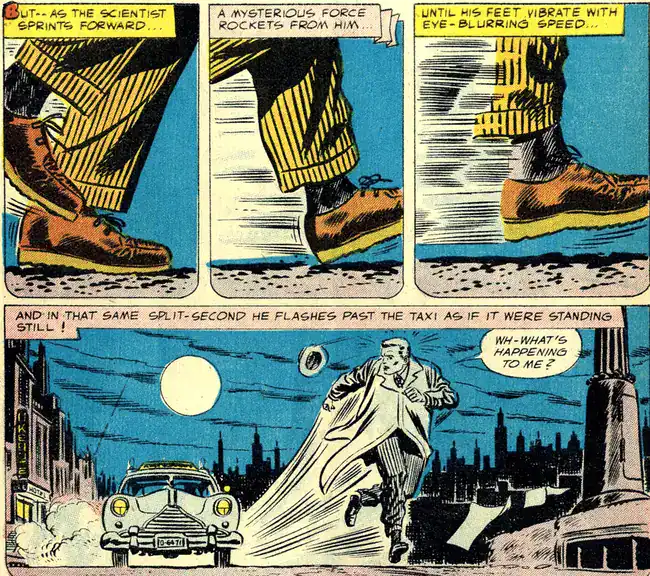
Still shaken, Barry decides to head for a diner. According to the previous narration, this is supposed to be the dead of night… who eats THAT MUCH at night!?
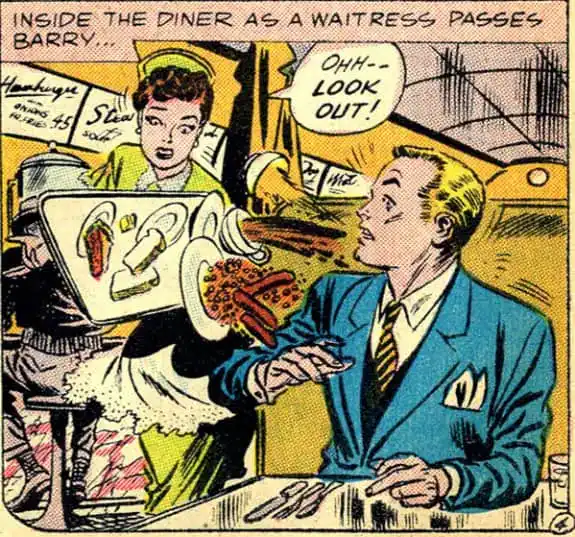
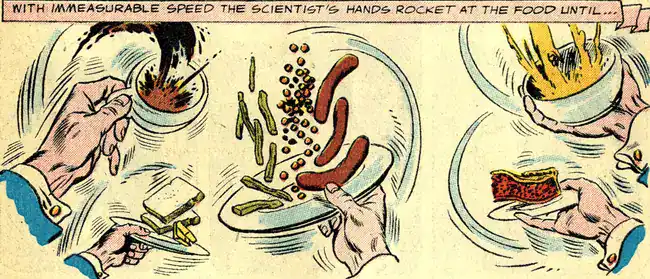
Silver Age characters are CONSTANTLY dismissing the most fantastical things by convincing themselve they’re seeing things. Just how common were hallucinations in the 50s and 60s???
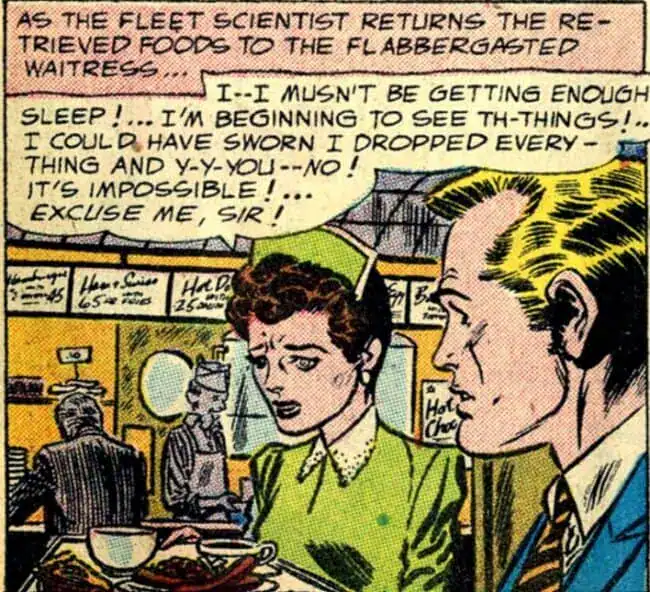
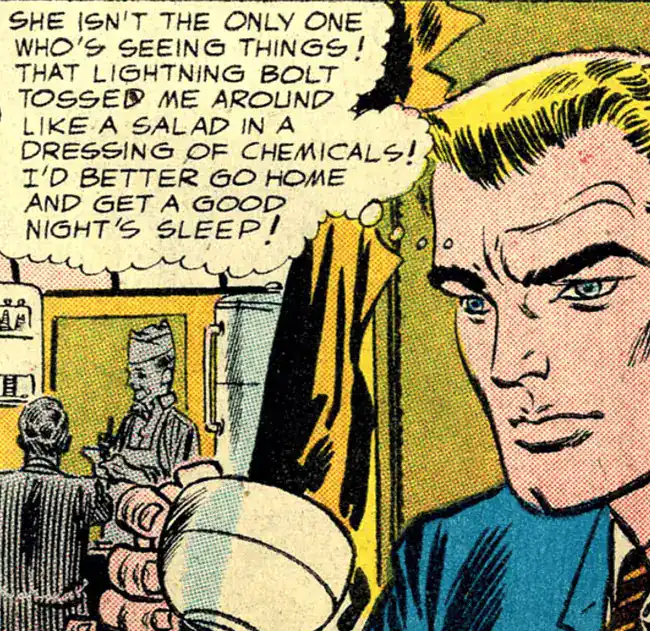
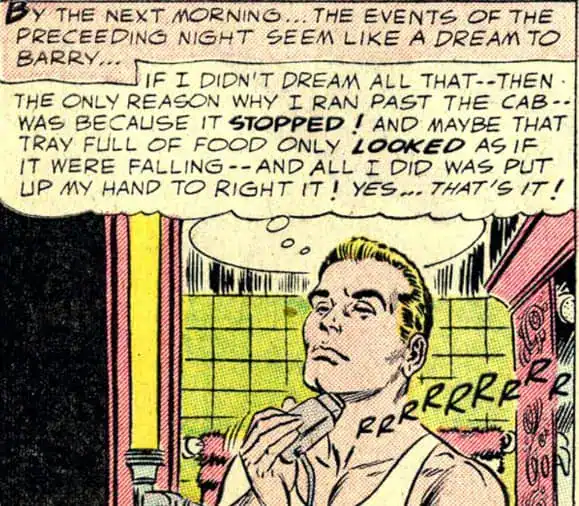
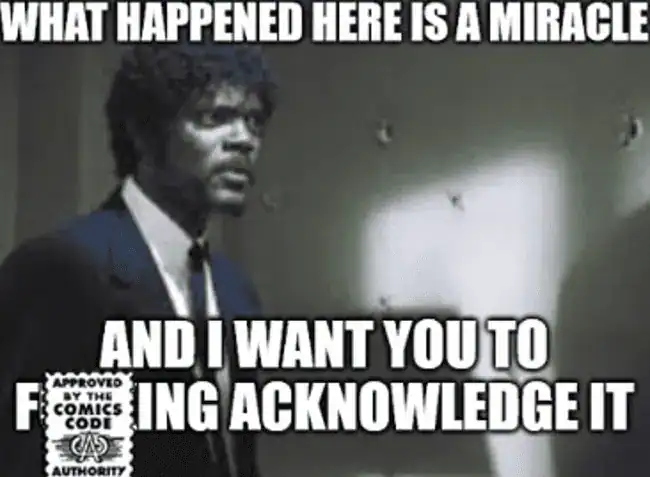
Well I suppose it’s a tradition; after all THIS meme started out in the review of the original Flash.
Barry’s next use of super-speed is to save his girlfriend from an assassination attempt!!!
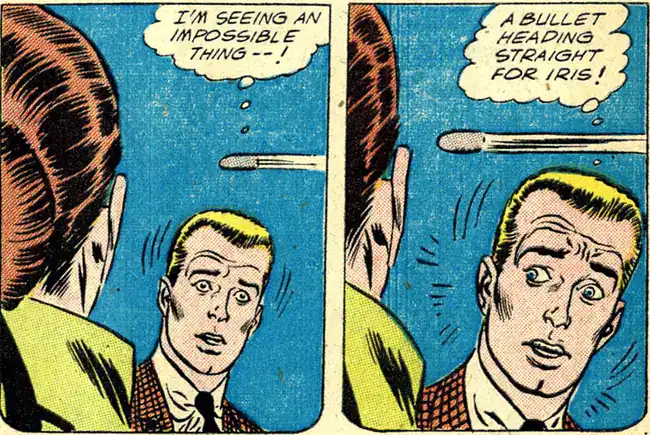
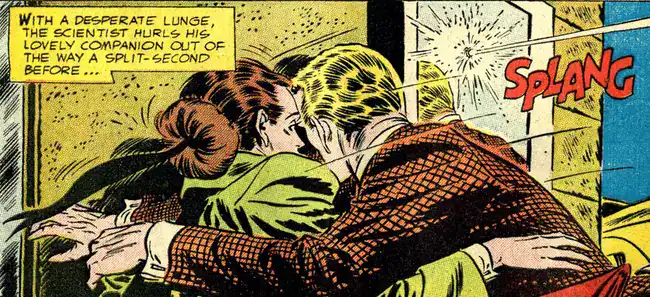
An assassination attempt by the Turtle Man, no less.
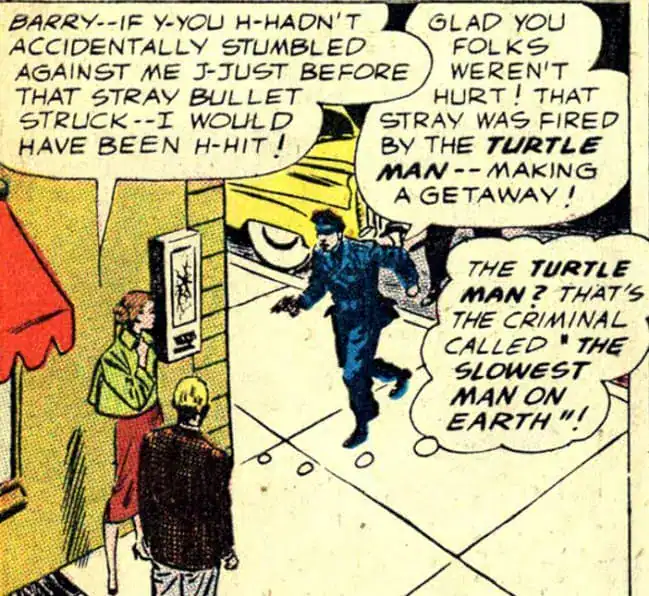

For the fastest man alive, Barry can be quite slow.
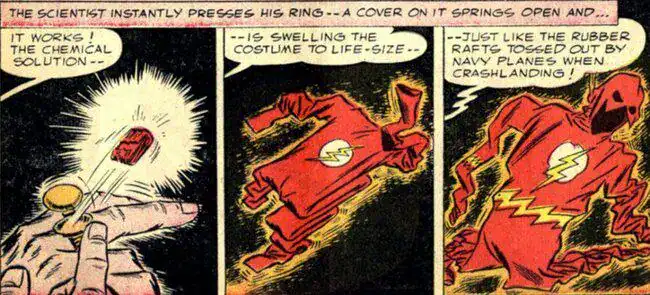
But he also has a super-compressed costume ready. What was he going to use this for, before getting powers!?
Flash fact: gravity has no effect on fast things.
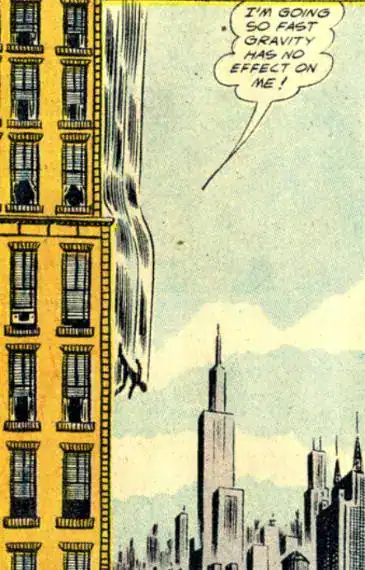

This is why Central City has the highest concentration of hearing loss in the United States.
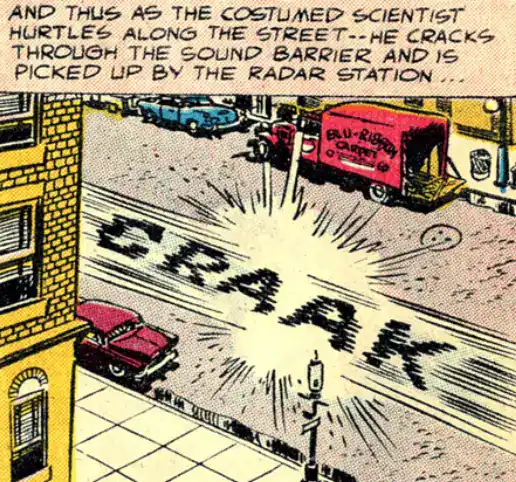
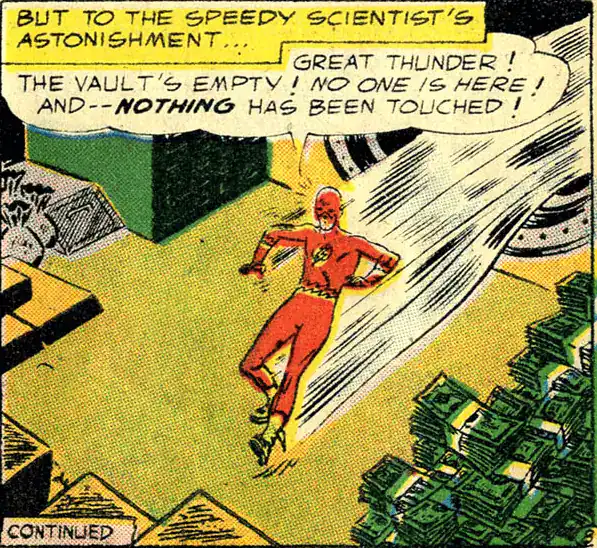
The Flash shows up to stop a bank robbery… that is not happening.
I’m sorry but you can’t make “the slowest man on Earth” sound threatening.
You just can’t.
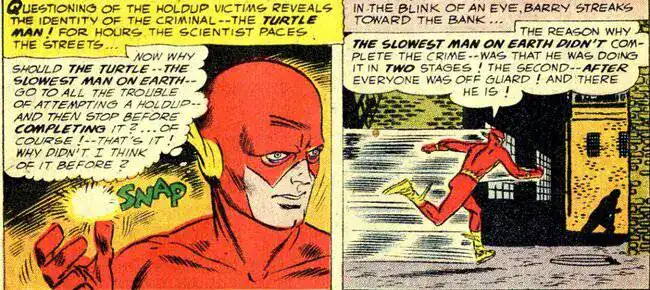
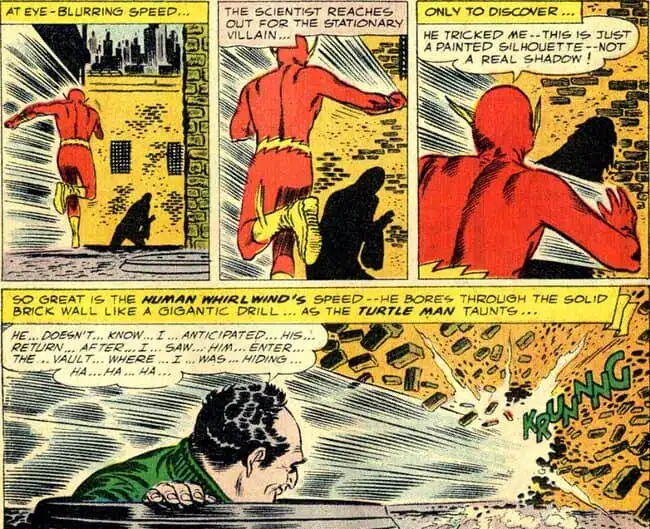
Considering the Flash falls for a silhouette painted on a wall, are we sure HE isn’t the slowest man on Earth?

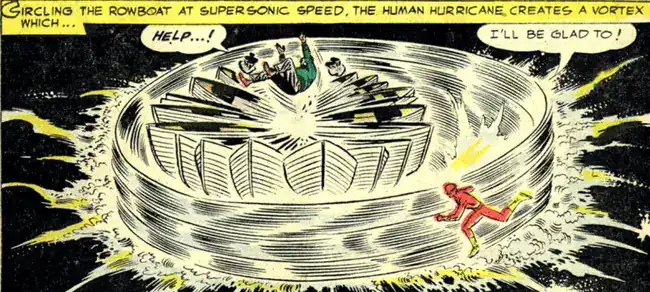
I’m guessing Flash hasn’t realized yet that he’s fast enough to run on water, considering he uses a boat here.
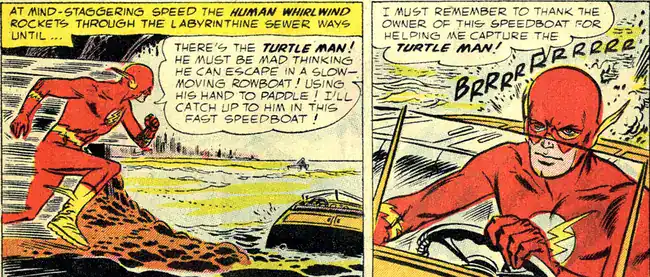
Yep. Slowest man in the world, called it.
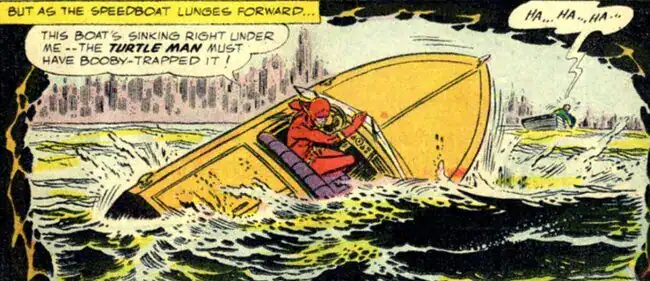
Even after he realizes he can run on water, he STILL has trouble catching Turtle Man!
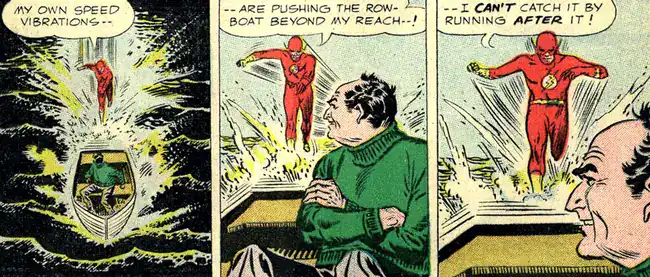
I feel like this should sink the boat.
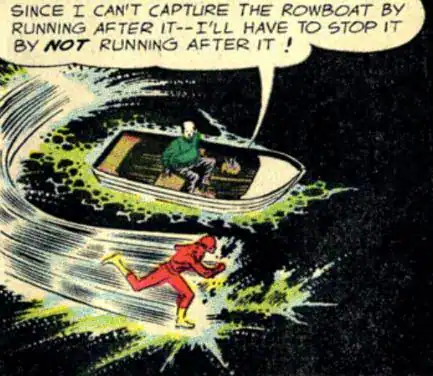
Considering the emphasis on the first Flash, not to mention the fact that he uses the lightning motif, you would have expected Barry to have chosen the name for himself.
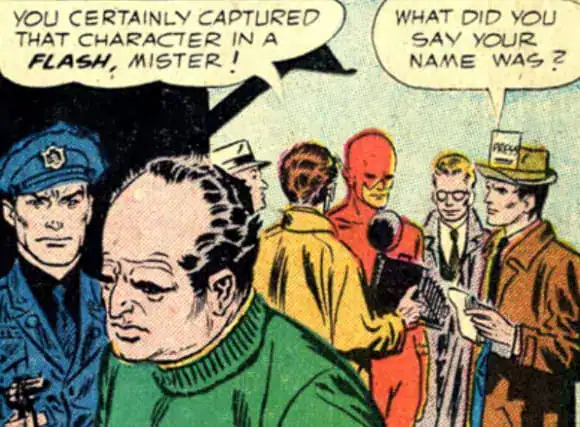
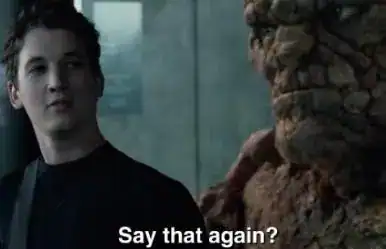
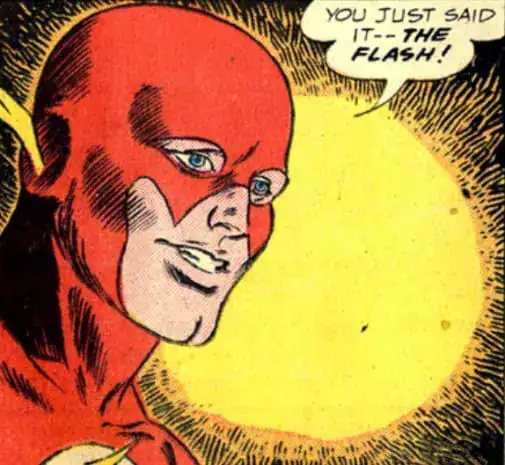
In my headcanon, Barry never said he was outsmarted by a painted shadow.
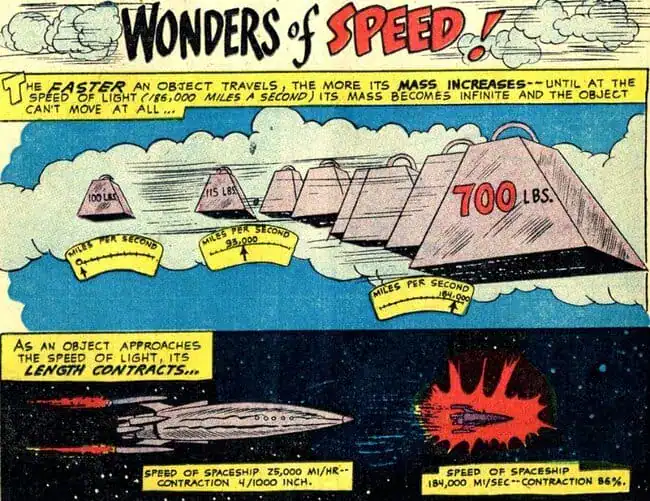
There are also a couple of pages of “science facts”. Like laws of physics that the Flash will break constantly.
Unusually for Showcase, there’s a SECOND story of the character who just debuted.
This one is written by John Broome, who will be FAR more associated to the Flash than Kanigher.
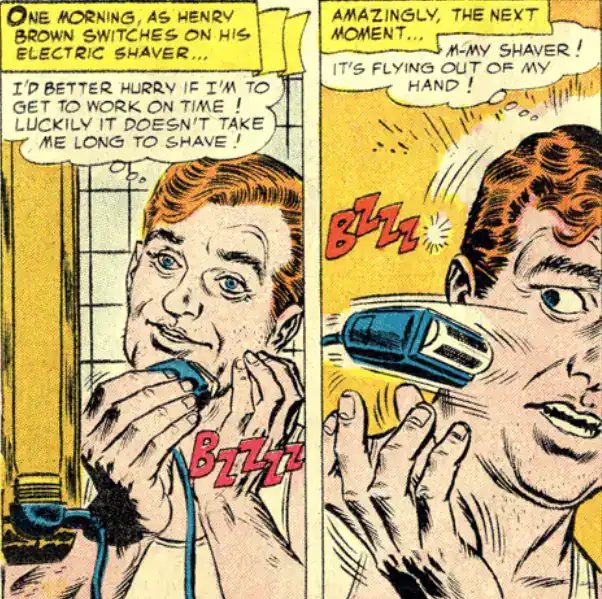
It’s also the second story in a row to involve an electric shaver.
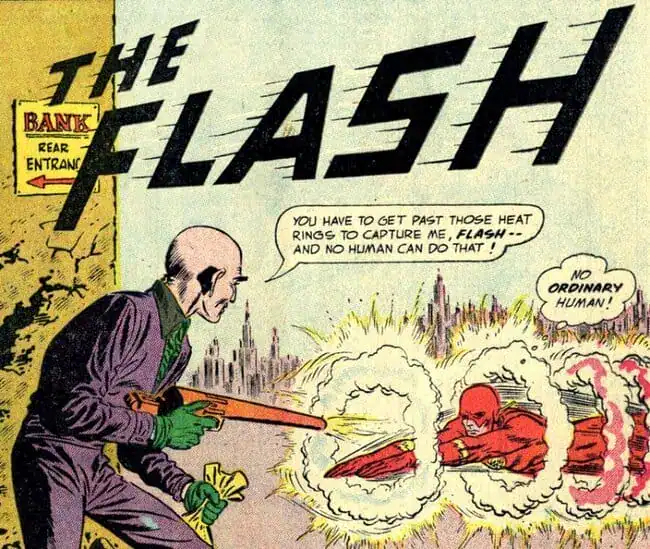
The villain of the story is a bit more intimidating than Turtle Man.
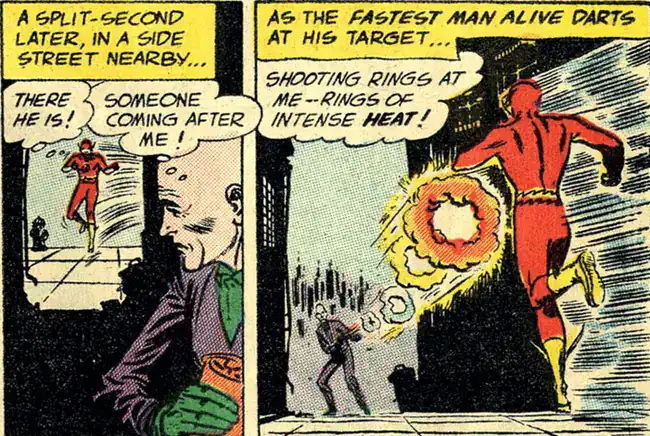
Said villain is Mazdan, a criminal from an undisclosed future who was supposed to be exiled to the 50th century but ended up in the 20th century.
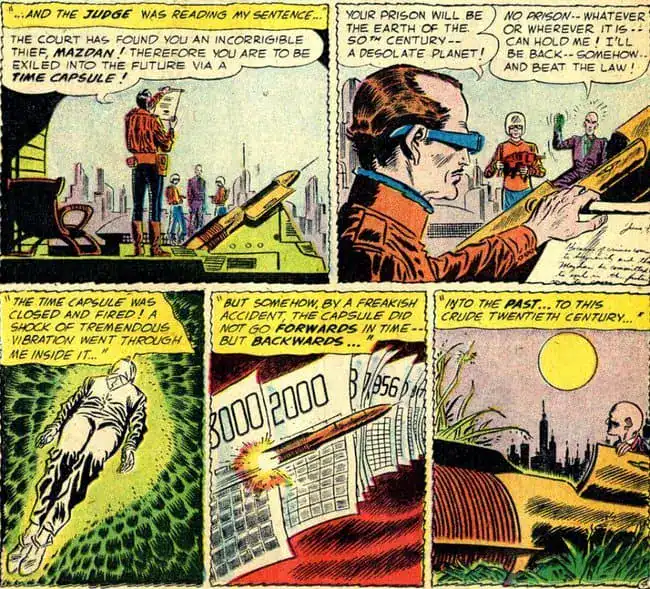
So he’s kind of a mix of Kadabra and Lex Luthor.
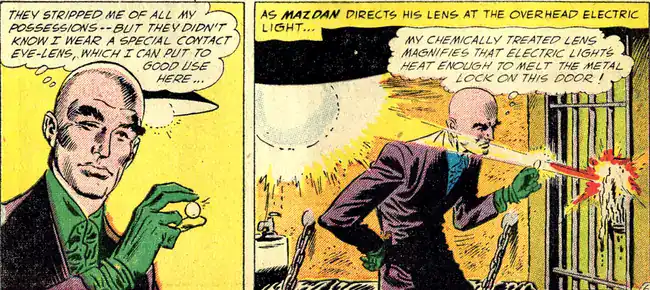
I don’t think this story understands the concept of a time capsule.
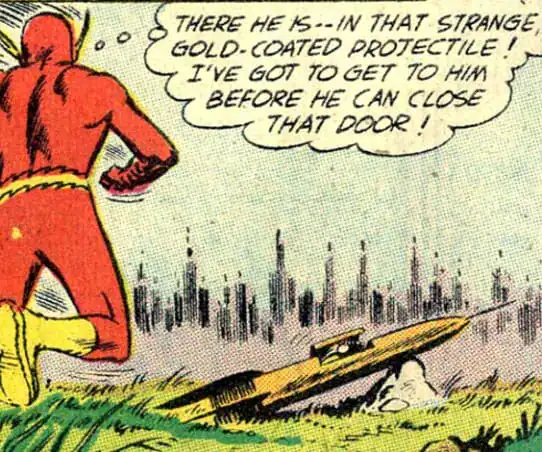
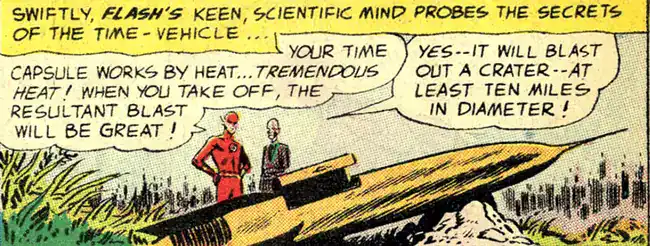
In his first issue, the Flash is ALREADY fast enough to travel through time.
Also, we have a precursor to the Iron Curtain Of Time, eight years before it’s formally introduced in Adventure Comics #318.
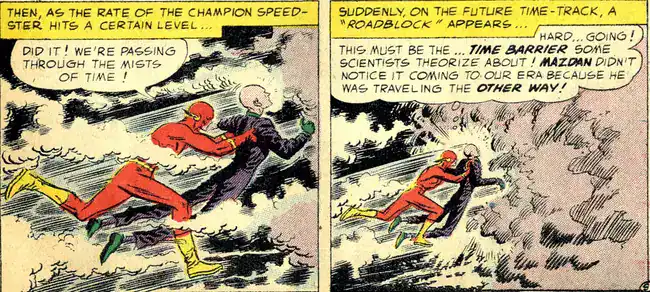
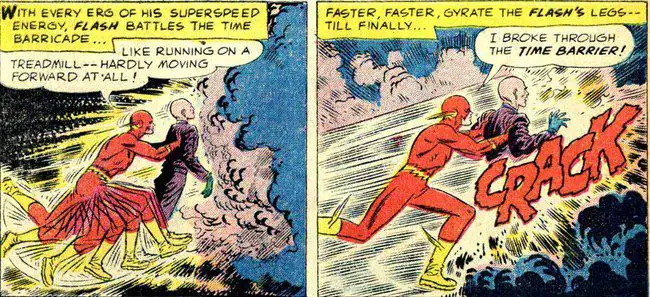
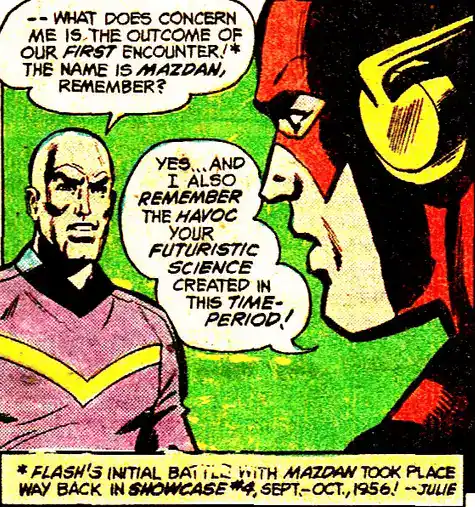
Despite being such an early villain, Mazdan won’t be seen again until The Flash #254 in 1977.
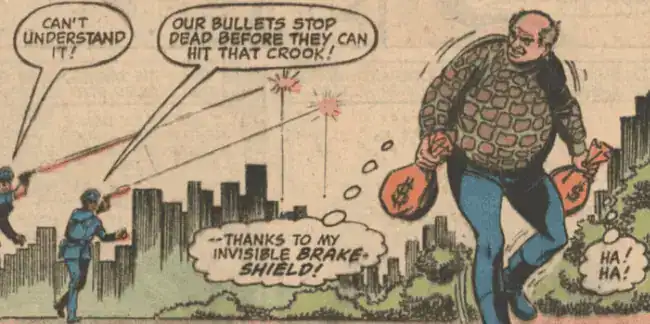
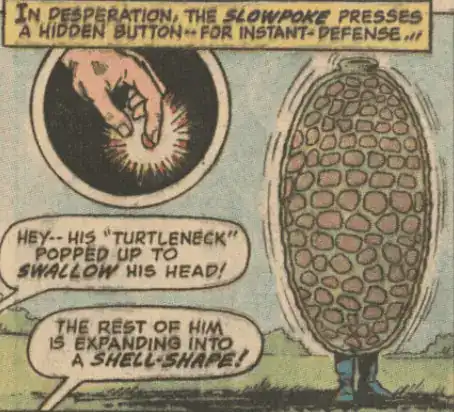
Turtle Man, now calling himself just The Turtle, already came back on 1973 on Flash #220.
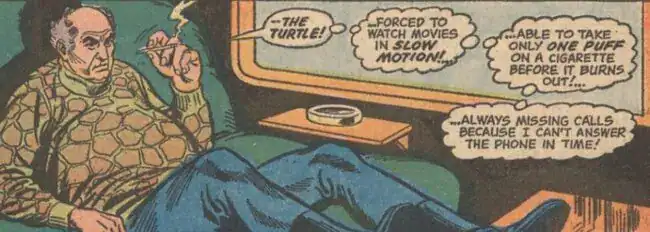
He has all sorts of gadgets now. Still not threatening.
Historical significance: 10/10
Obviously foundational to the DC Universe in general and the speedsters in particular.
Silver Age-ness: 10/10
The idea that a slow guy with a speech impediment is any kind of threat to someone who can casually break the sound barrier.
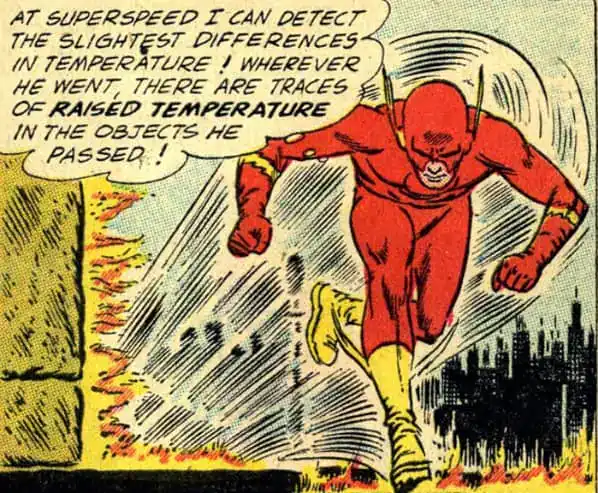
Ridiculous Flash feat of the day
Does it stand the test of time? 7/10
The first half of the story, up to the point when Flash puts on the costume, holds up remarkably well. For an early origin story, it’s unusual to go this slow (ironically) and give the discovery of powers room to grow… typically, the hero has all the powers and knows how to use them after a couple of panels!
The origin itself is a classic and has been re-done multiple times with slight variations, but the general ideas hold up perfectly. If the story ended there, it would’ve been an easy 9/10.
What DOESN’T hold up is the fight with Turtle Man. Even without the knowledge of just how absurdly overpowered Flash gets, I cannot suspend my disbelief for that guy to be a threat!
Is this the beginning of the Silver Age?
The only arguments to set it earlier are few heroes who preceded Flash.
While the Silver Age doesn’t hit ALL books at the same time, it’s abundantly clear that Flash set a precedent.
Over the next few years DC will re-introduce new versions of almost all of its Golden Age heroes, giving a sci-fi angle to those who didn’t already have it.
It should be noted that while Kanigher and Infantino are definitely in the credits, they didn’t fully consider themselves the creators of the Flash, at least according to a couple of 1990 interviews.
One day, Mr. Schwartz asked me to write a new origin for The Flash. Gardner Fox had originated The Flash. He was, and in my mind would always be, the creator of The Flash. I merely reinvented The Flash. I wrote a completely finished script in every single detail, which he gave to Carmine Infantino to draw. I am credited with creating the modern Flash. Flash Two. Never. I’m not like the scavengers of today who make up new origins for my Rex the Wonder Dog, my Ragman, my Black Canary, my Enemy Ace, etc.
ROBERT KANIGHER
Despite Kanighter’s reputation, Infantino seemed to have had a good working relationship with him.
Super-heroes had died off and we were stabbing at anything that might sell: romance, western, sci-fi… On one day I was delivering my work, Julie told me we were going to try The Flash. He said it was decided at an editorial meeting. He gave me a script by Kanigher. (I know Kanigher had a lot of input. It was in his style.)
I was told to design a costume. I chose a stark bland one with lightning bolt accents. (Those belts would help in creating the speed effects for the character.) I always kept him slim, like a runner; wiry, too. Others bulked him up. Different strokes for different…
The cover idea for the first issue was Kanigher’s-this I do remember.
As the strip progressed, Julie kept after me to come up with something different. The multi-figure action sequences helped create the illusion of speed, and I later added the device of gesturing hands for decoration.
Why Kanigher didn’t continue on the strip, I don’t know. I don’t recall when Gardner came aboard.
Lastly, Kanigher had a way with his scripts to make me stretch and grow. Thank you, Bobby.
CARMINE INFANTINO
Little known fact: Kanigher didn’t exactly come up with costume-in-a-ring idea.
The Flash’s ring was sheer plagiarism. When I was a pre-teen or almost a teenager, I used to sit on the steps of a tenement house at Washington Ave. and about 179th Street, with a rabbi’s son, who was an aspiring pulp writer. He told me about a character running in a pulp. Called the Crimson Clown, I believe. When he wanted to switch from his civvies, he pressed a spring on a ring on his finger. The clown costume erupted out and expanded to life-size. So, many years later, I stole that gimmick. You can’t sue me. The statute of limitations has run out.
ROBERT KANIGHER
I had never heard of the Crimson Clown, but he WAS a pulp hero.
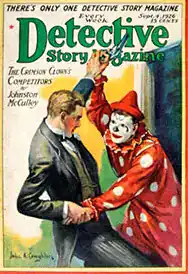
Kanigher is not particularly associated with the Flash. According to a 1998 interview, he apparently didn’t get along with editor Julius Schwartz (although Kanigher was notoriously difficult to work with, so who knows).
I have been asked why I wrote so few “Flash” stories. Irv Novick and I live near each other. We met half way between our houses. He gave me his artwork. I brought it to Schwartz. To save time for Schwartz having to wait for Novick to bring it in. Whenever I asked Schwartz how things were-instead of thanking me for the favor-he crudely answered: “Don’t bother me. I’m too busy.”
One day I was plotting with Dorothy Woolfolk. Schwartz burst in. “Where’s Novick’s artwork?” “Novick is your problem,” I said quietly. He rushed out. By the next day I learned I had touched a nerve some-where. Because he had called Cary Bates and given The Flash to him.
ROBERT KANIGHER
How close is this to the modern character? 9/10
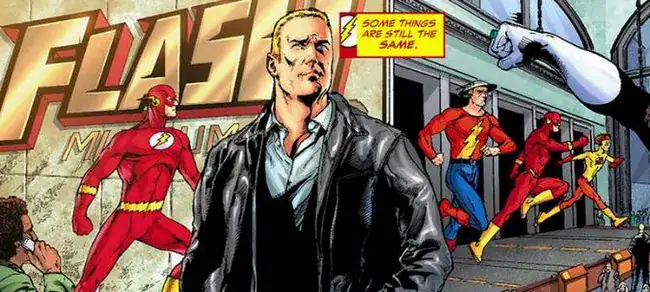
The new Flash took a bit before gaining his own book: after three more appearances on Showcase #8, #13 and #14, he received his own book in 1959.
Well, rather he received his predecessor’s book: “Flash Comics #104” starred Jay Garrick, with Barry taking over from “The Flash #105”.
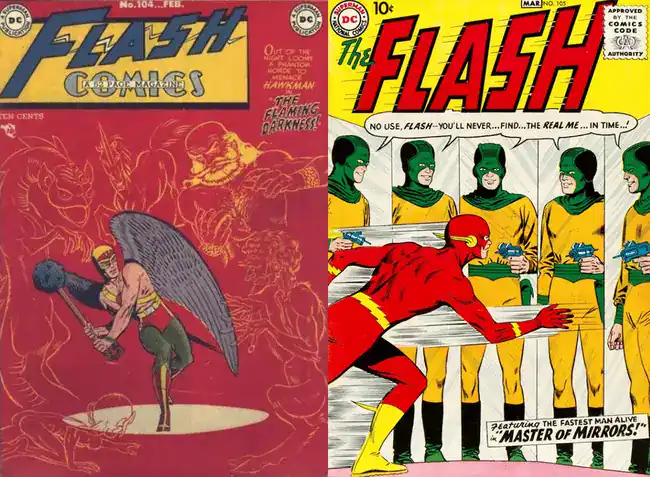
The series would continue until 1985, ending with #350.
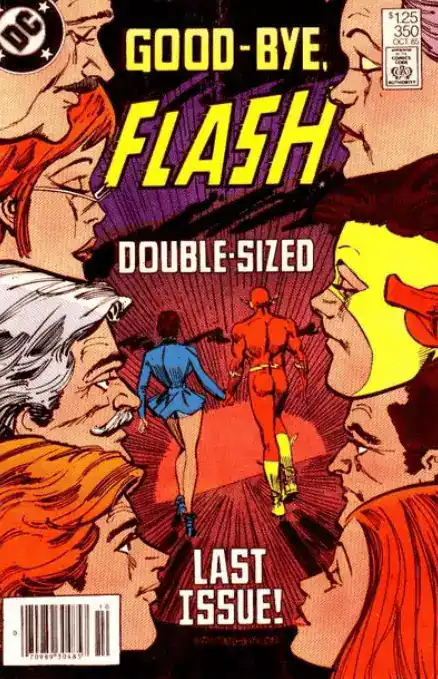
Barry would make the ultima sacrifice the same year, on Crisis on Infinite Earths #8.
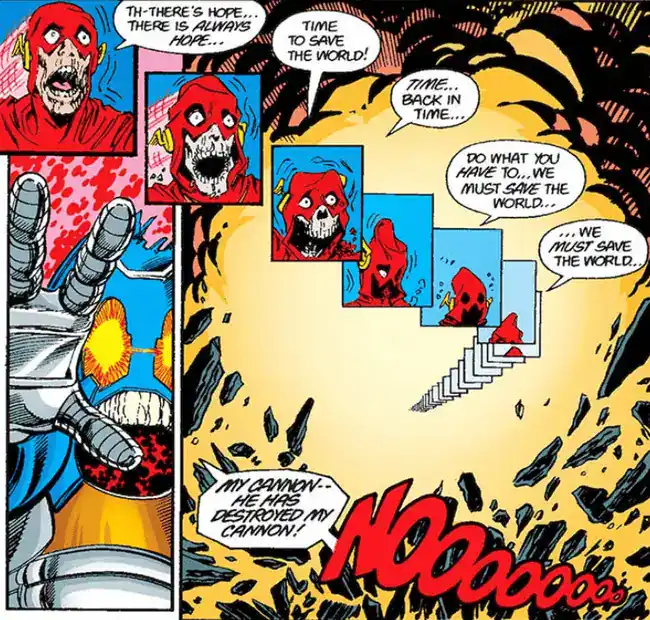
That set the standard for both the heroic death of a superhero… perhaps even more so than Supergirl’s… and for the passing of the torch to the new generation, with the former Kid Flash taking the mantle.
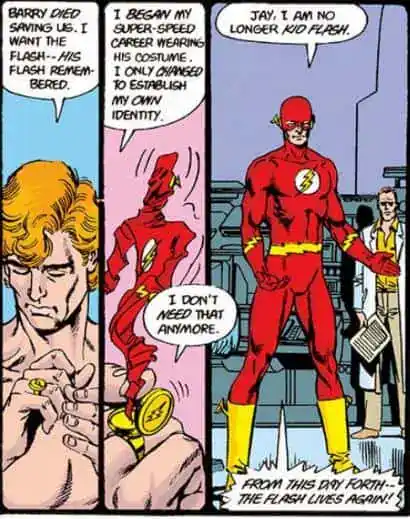
Barry’s death was SO untouchable that he even managed to make a surprise visit to the Marvel Universe in 1990, on Quasar #17.
In a story that features a marathon to determine the fastest man on Earth… a mysterious figure pops out from another universe, remembering just that his name sounds something like “Buried Alien”.
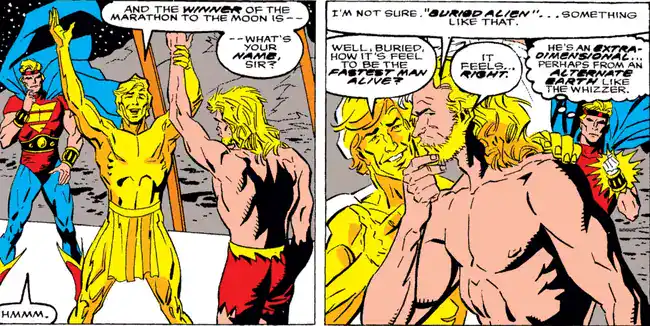
Makkari from the Eternals got second place, by the way.
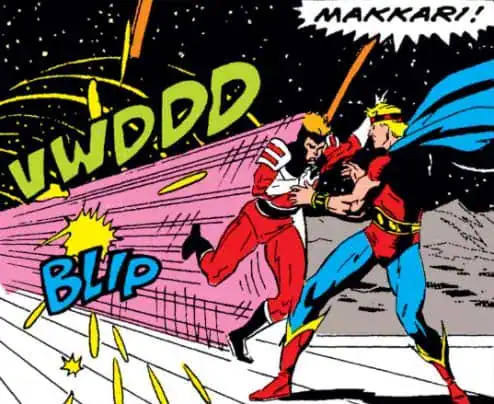
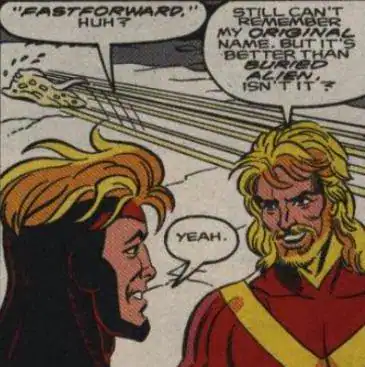
He shows up again in Quasar #58, taking the codename Fastforward before returning to his original universe in 1994.
After countless fakeouts and some cameos in 2007 with Barry leaving the Speed Force for a bit, he returns for good in 2008 during Final Crisis.
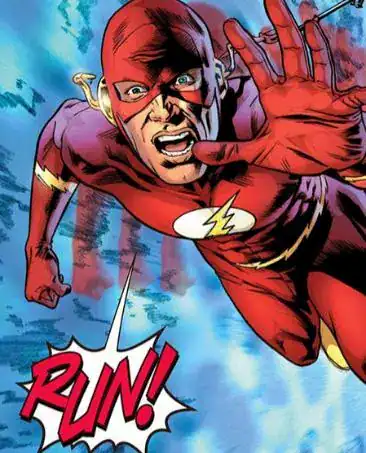
By 2009, Barry returned to being the Flash. Therefore completely thrashing Wally’s growth into the role and completely killing my interest in the Flash series.
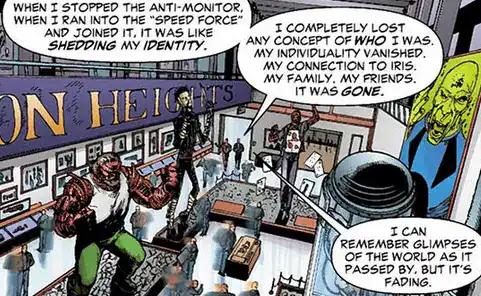
I’m sorry but I just cannot get into Barry Allen. It’s not just the imprinting of Wally West having been my first Flash (although I can admit that plays a part).
Wally had personal growth… he explored how life with a public identity was, got married and had kids, had varied relationships with tons of heroes… he was a very complex character.
Barry, on the other hand… no matter how many personal tragedies you introduce into his backstory, is not a very compelling character to me.
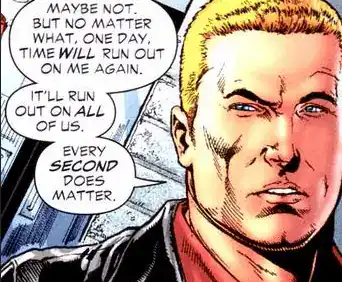
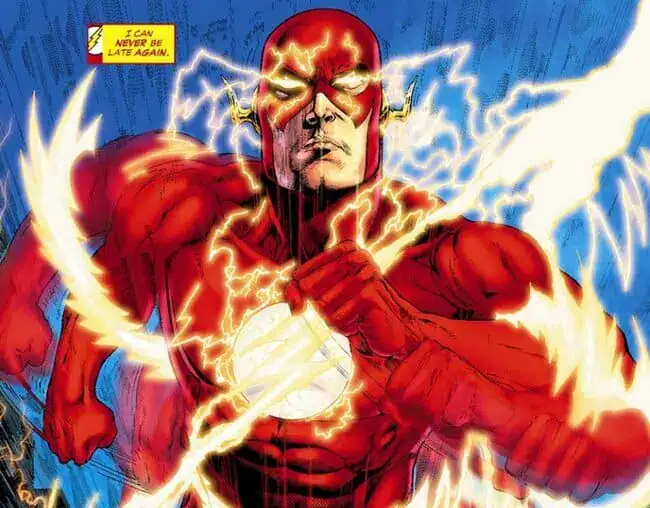
Ironically for a character who is supposed to always move forward, bringing back Barry Allen might just be the biggest step backwards that DC Comics has ever taken.