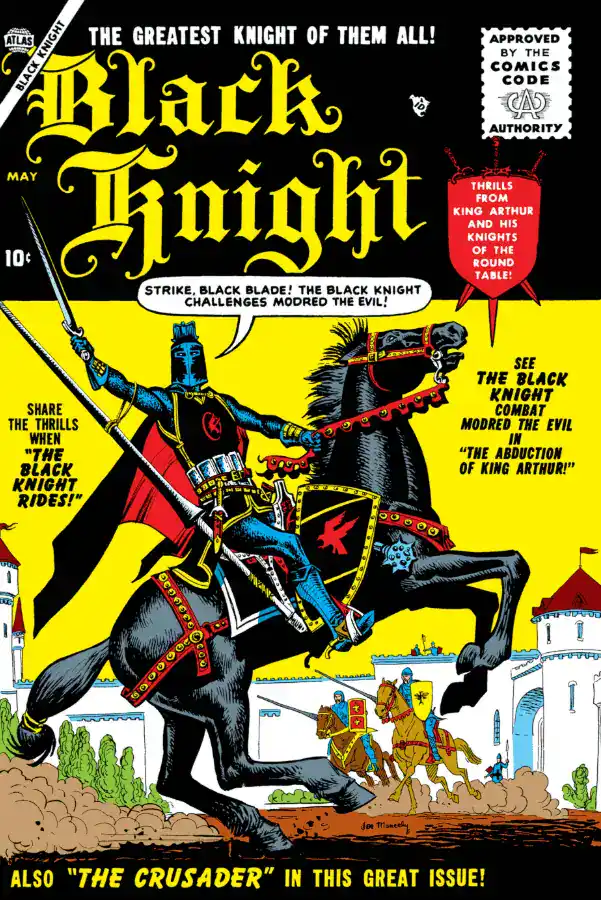
Black Knight #1 (1955)
by Stan Lee & Joe Maneely
In the years between the Golden Age and the Silver Age, superheroes were out of fashion and were replaced by other genres. Western and sci-fi where the big ones, followed by romance comics, but we also have a medieval fantasy.
And the latter gave us Marvel’s first legacy character.
Never a good sign when you open a reprint and THIS has been added to the first page.
To be fair, sometimes this is overblown.
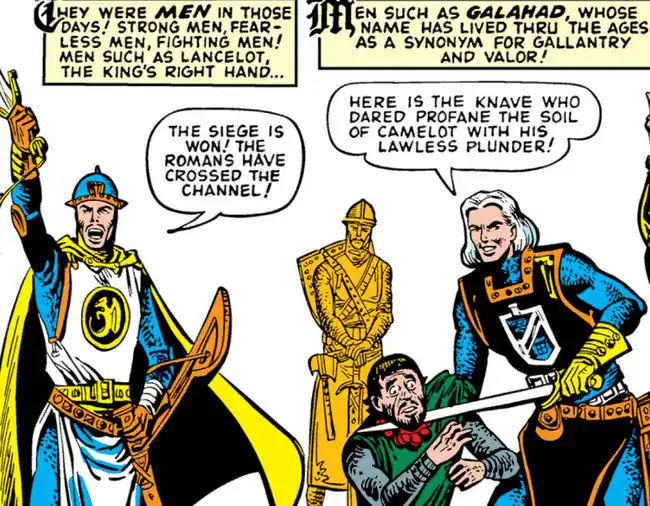
I’m not particularly well-versed in Arthurian legend, but I feel like having the very first image of Galahad showing him ready to cut a guy’s throat is a choice.
Since he’s supposed to be the purest Knight of the Round Table, most adaptations seem to show him as the goodiest of the goody goodies.
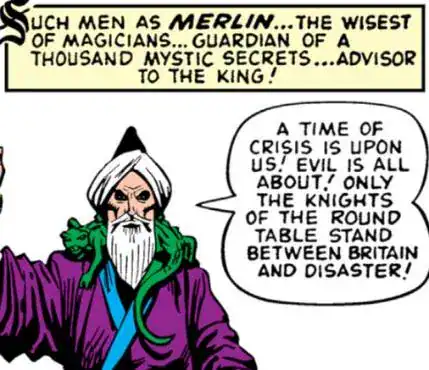
Other significant Arhurian figures that will become important in the Marvel years include Merlin…
…and more importantly Morgan Le Fay, who will eventually become a very prominent supervillain.
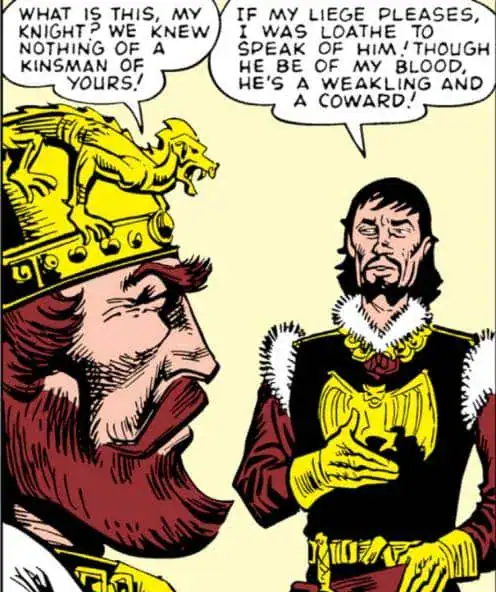
There’s a lot to unpack in how her relationship with the rest of the cast is presented.
Here she’s presented as the wife of Mordred, another character from Arthurian legend whose name is spelled Modred in this series but who seems to be intented to be the same guy (and in fact he will be called Mordred in the Marvel years to distinguish him from ANOTHER character).
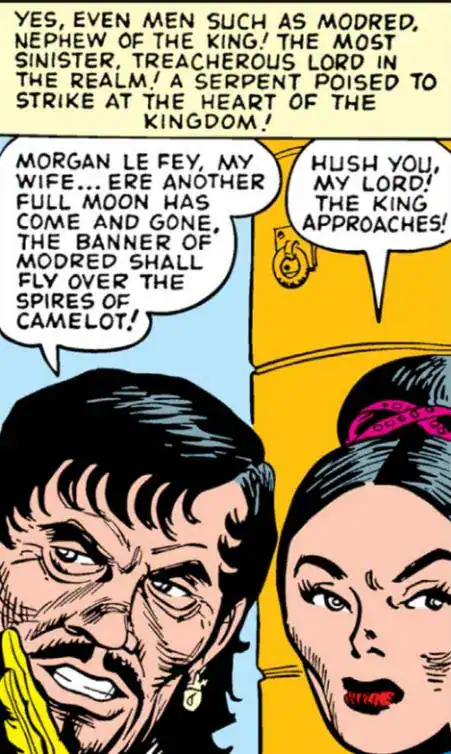
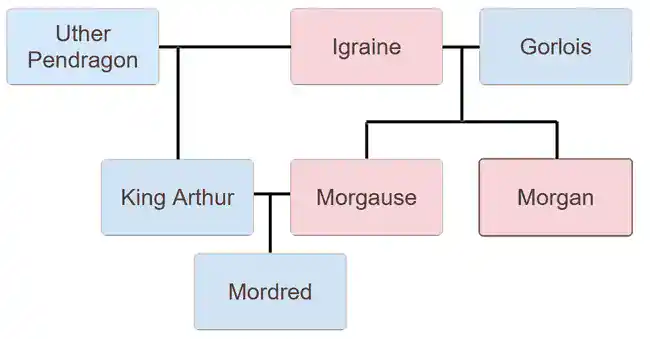
But notice that these two are husband and wife here, something that is most definitely not the case in either the Marvel years or in Arthurian legend.
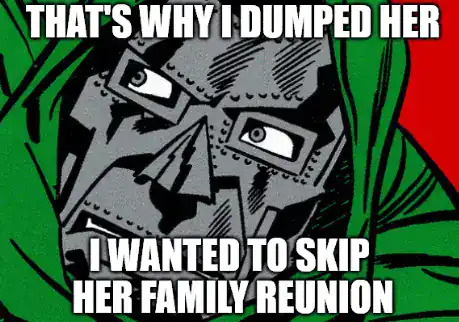
Because Mordred is actually her NEPHEW… he’s the illegitimate son of King Arthur and his half-sister Morgause.
To be honest I always misremember Mordred being Morgan’s son, not her nephew, because I’m more familiar with adaptations that fuse Morgan and Morgause into the same character.
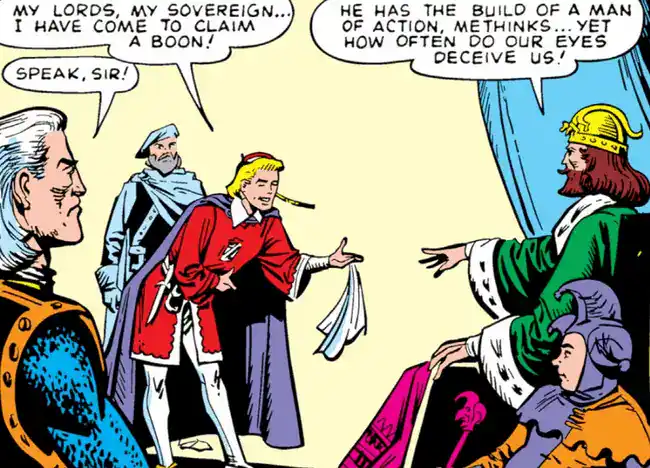
Mordred is the one to introduce to King Arthur one of his relatives…
…a guy who acts like an ineffectual foppish rich boy, even though the king can see he has “the build of a man of action”.
I don’t see it.
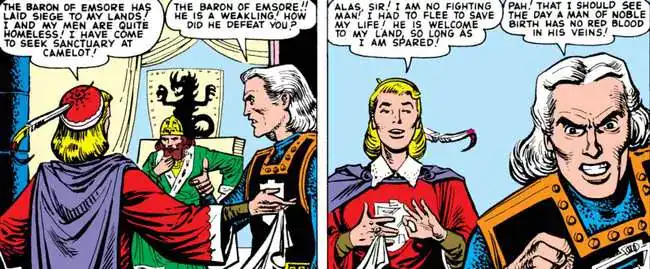
King Arthur still gives him sanctuary, despite apperently considering him like the scum of the earth.
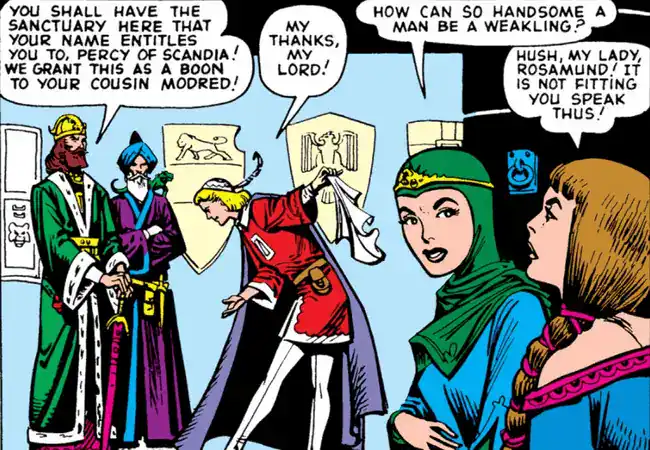
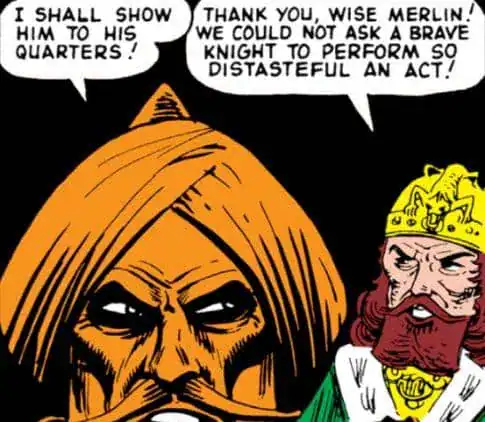
But this is all an act: Sir Percy of Scandia is actually working closely with Merlin.
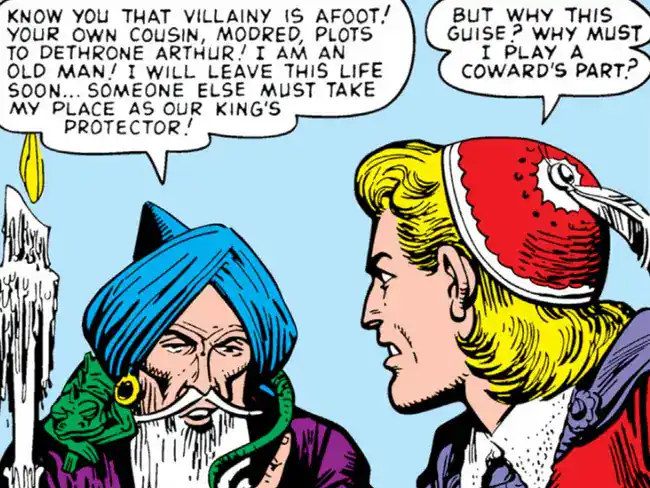
The fact that Sir Percy has to act like a coward to protect his life is going to be ridiculously useless later.
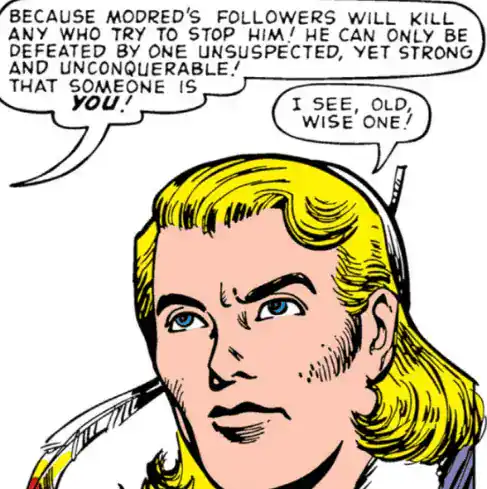
Sir Percy then puts on the AWESOME Black Knight armor to fight Mordred’s goons.
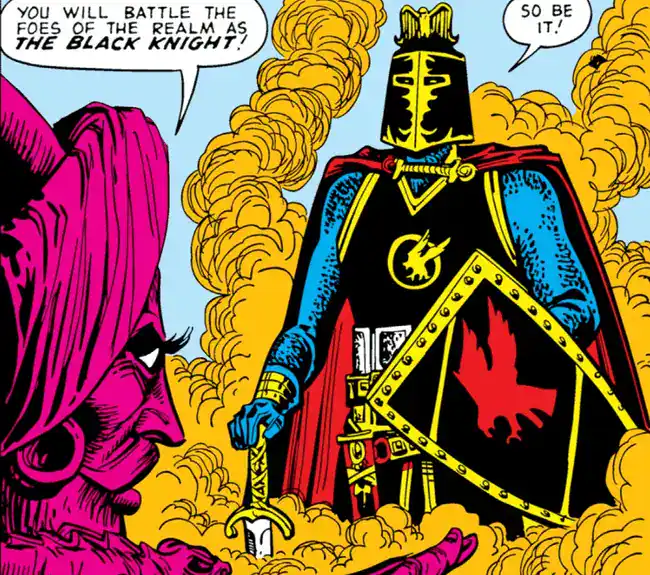
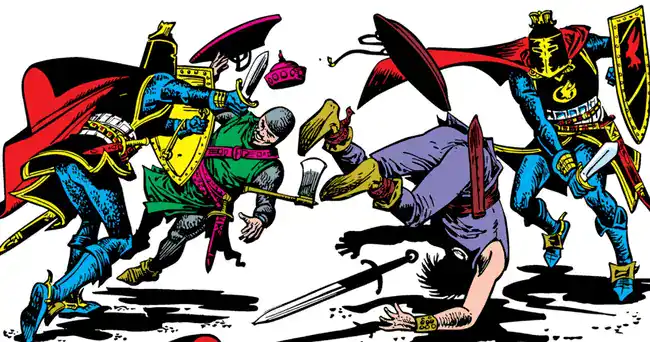
He still continues his act, though.
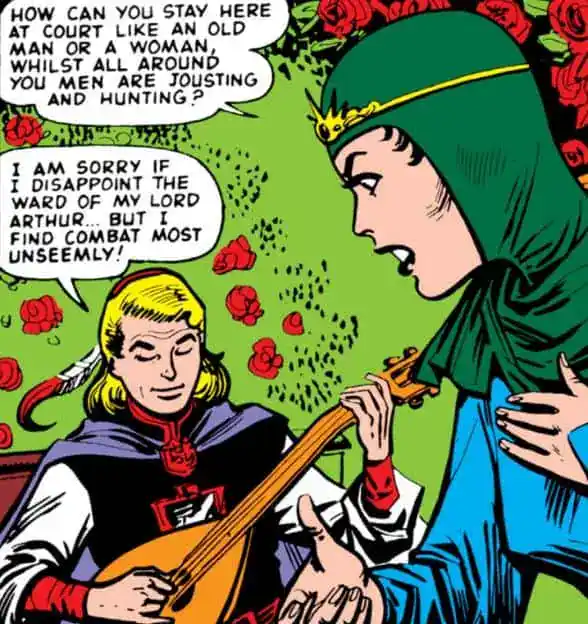
Maneely’s artwork is definitely the highlight of this book. While I really like the modern Black Knight, I fear he will never look this cool.
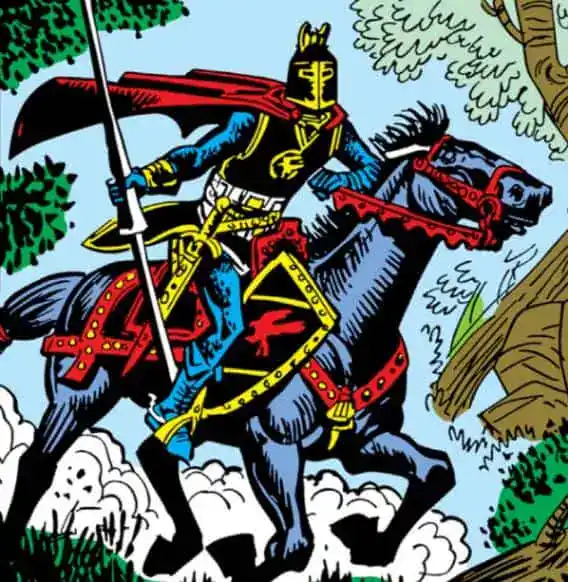
The Black Knight then assists King Arthur when Mordred’s men try to murder him during a hunt.
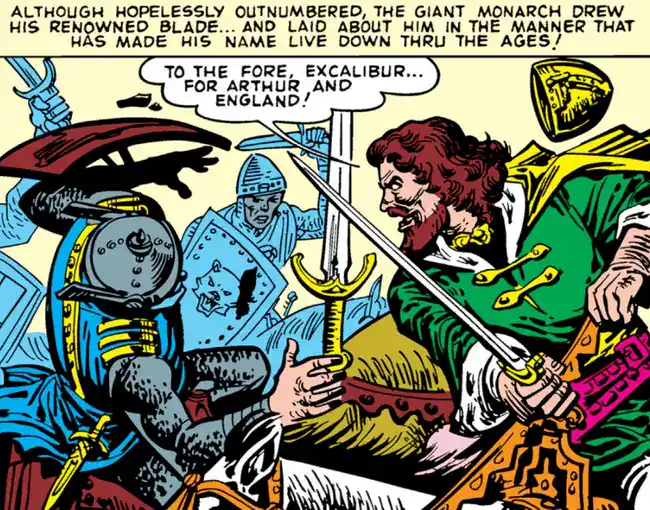
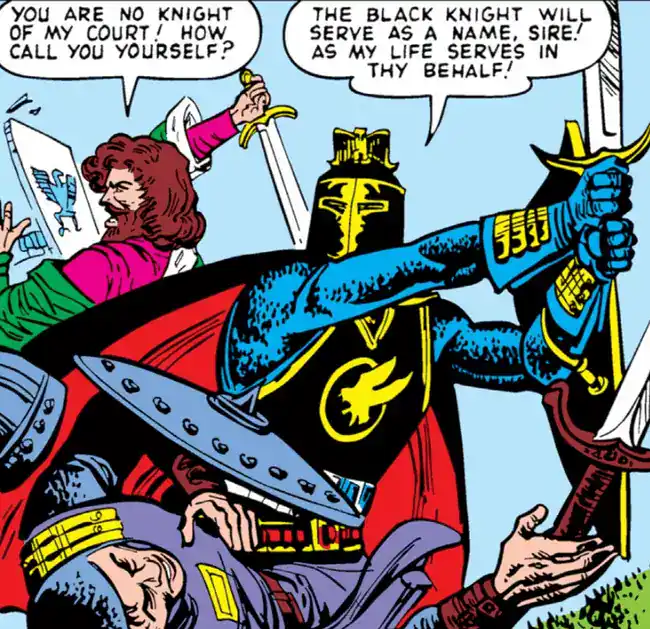
Even if you hadn’t taken that oath, why would you ever want to take off that amazing helmet?
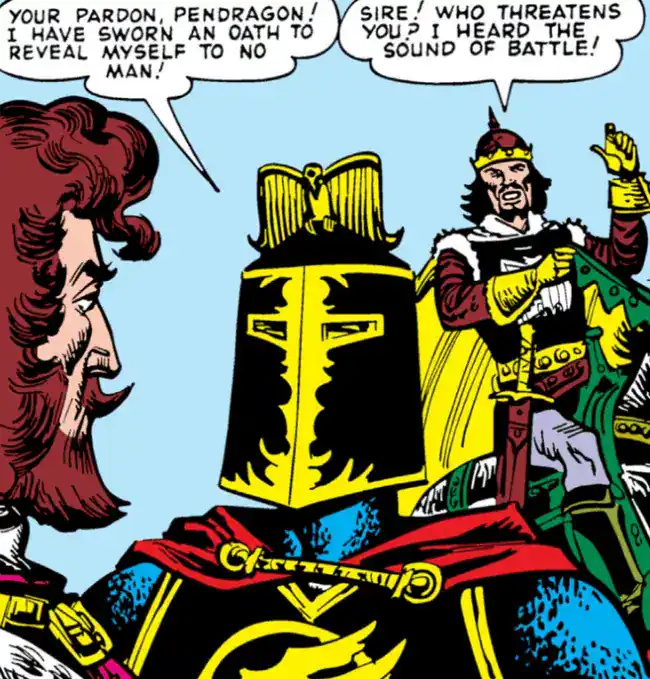
This was apparently impressive enough to win a seat at the Round Table.
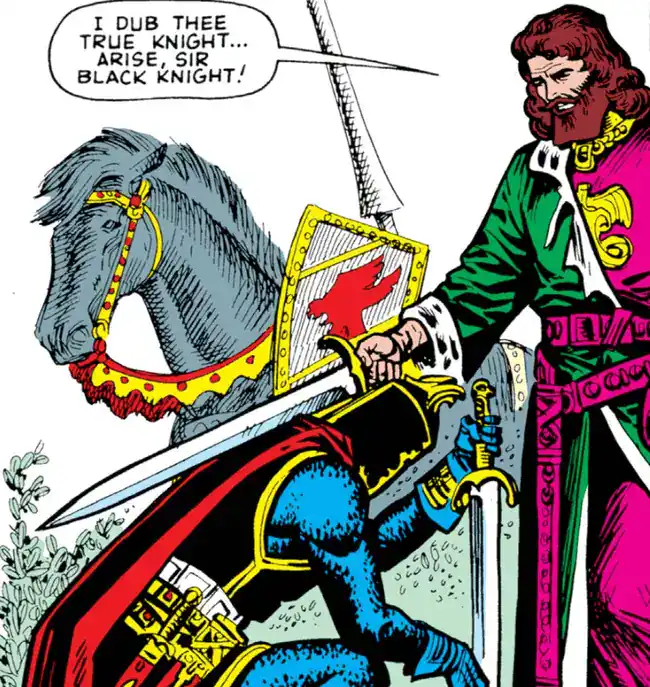
So I’m guessing joining the team is not THAT hard.
Historical significance: 5/10
The Black Knight legacy, Morgan Le Fay, Mordred and Merlin will end up influencing Marvel to various degrees… but basically everything is a later addition. This story doesn’t even MENTION the Ebony Blade.
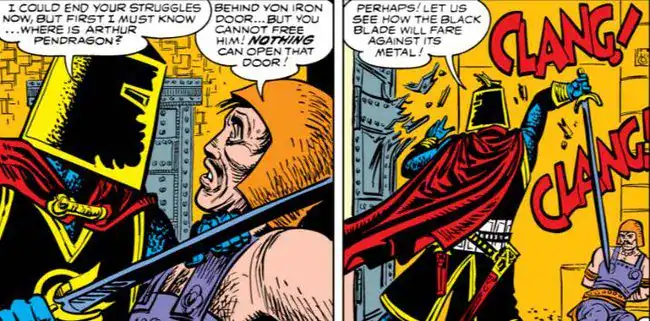
The second story in issue calls it the Black Blade instead.
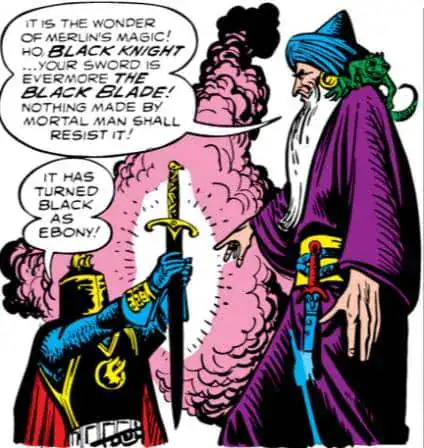
Despite the claim that “nothing made by mortal man shall resist it”, the ONLY time it’s shown to do anything a regular sword couldn’t do is in that second story. There’s only one other issue in the rest of the series where this is true.
Silver Age-ness: 2/10
While there are literary influences, Sir Percy acting like a coward feels like it’s been inspired by Clark Kent.
Does it stand the test of time? 7/10
I don’t care all that much for Arthurian legend or stories about knights, but this one immediately got me hooked. Its main fault is that the plot is incredibly thin, but holy crap is the artwork GORGEUS in this!!!
How close is this to the modern character? What modern character?
I’m guessing readers weren’t as hooked as me, because the series only lasted 5 issues.
Too bad because this is an unappreciated gem of the 50s; just look at the covers alone!!!
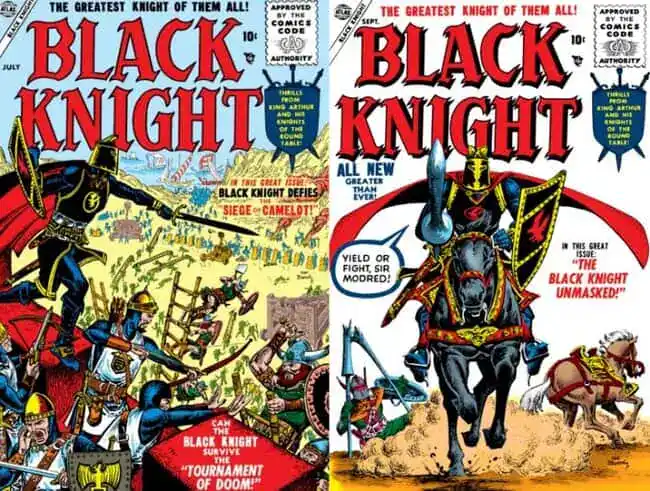
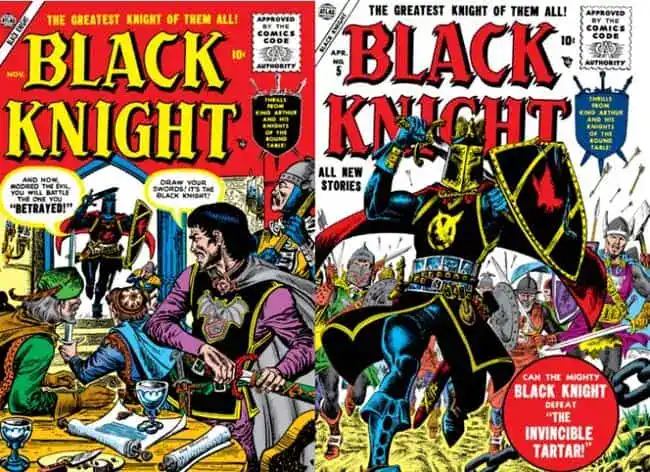
There’s A LOT of Maneely awesomeness in all of those.
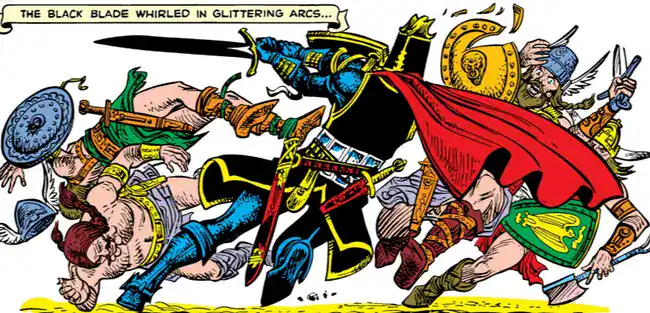
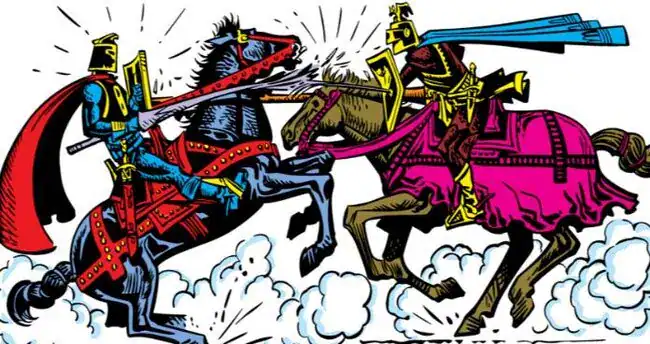
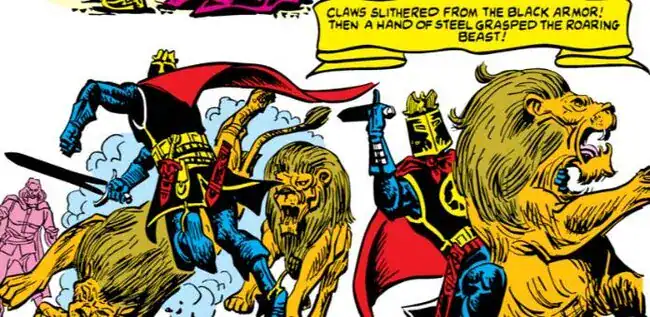
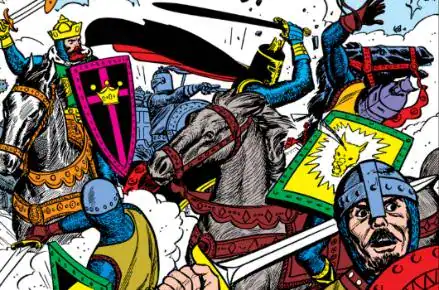
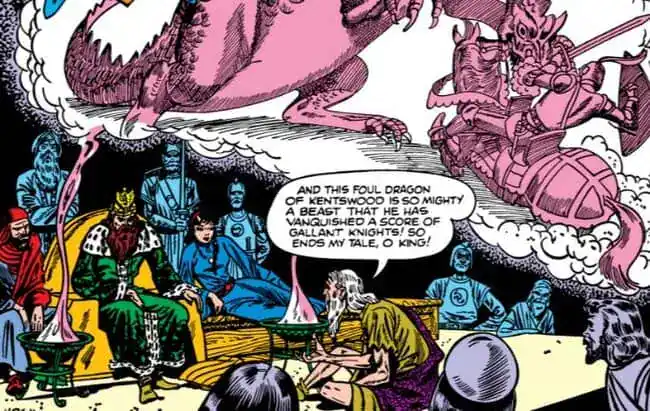
Merlin poses as the Black Knight at some point!
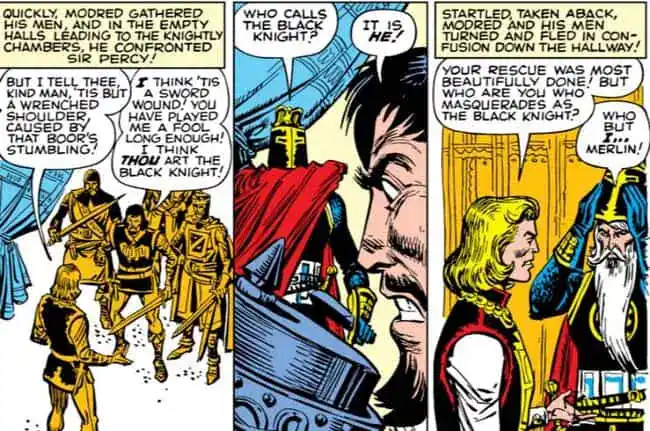
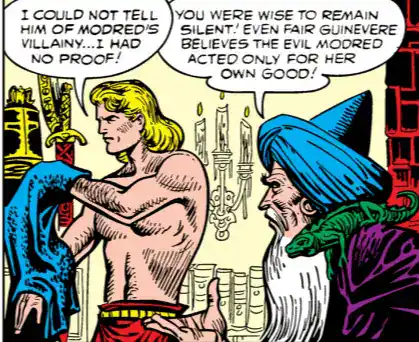
Mordred is the villain of every single story, but the Black Knight and Merlin never seem to figure out a way to actually prove it. And yes this DOES get old.
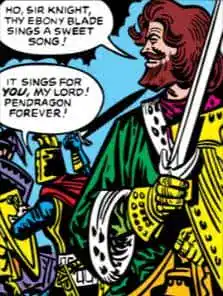
While the sword is called the Black Sword in the first issue, sometimes it’s later called by its eventual canonical name: the Ebony Blade.
Future stories will give additional magic powers to the sword, and even make the Black Knight invulnerable while in his armor.
This is definitely not the case in the original series…
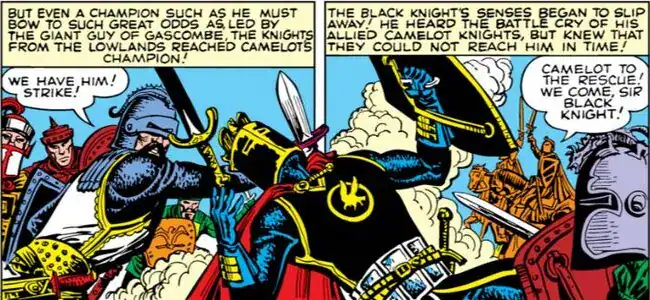
…except issue 4, where the armor is suddenly invulnerable.
I mentioned that making Sir Percy act like a coward would eventually be hilariously useless: what’s the point of acting like that if he’s invulnerable in the armor!?
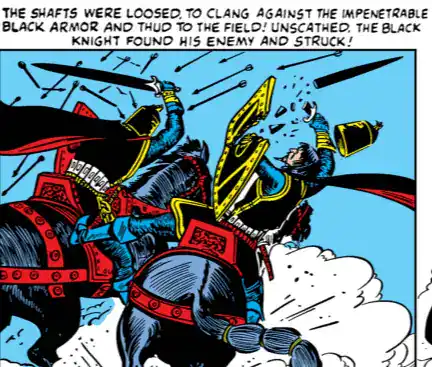
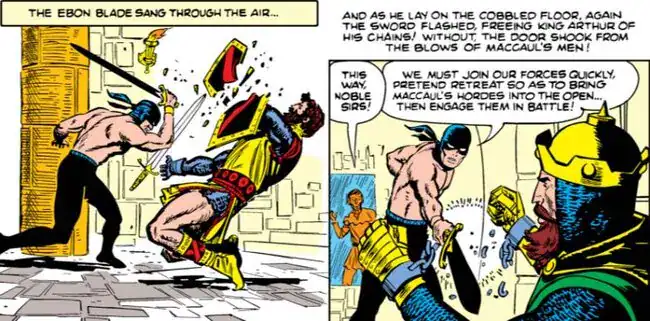
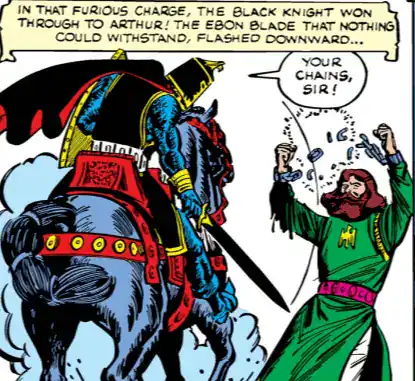
The same issue has the remaining instances of the sword being able to cut anything.
In issue 5 he cuts an arrow mid-flight (!!!!).
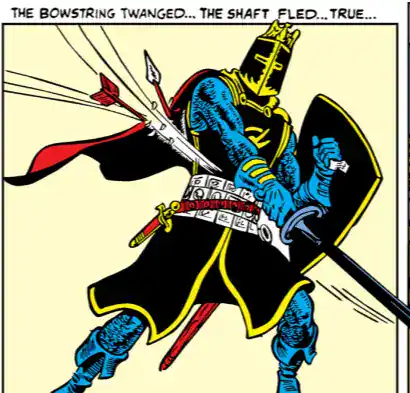
By the way, even if the Black Knight DID remove his helmet, he has a mask beneath it.
Well that’s just overkill.

Joe Maneely was a very important artist in the proto-Marvel years.
Tragically, Joe Maneely died in 1958 in an accident, after falling between the cars of a commuter train.
It’s not just a tragedy on a human level, but an artistic level too: he would have likely been considered among the great Marvel artists.
Joe Maneely to me would have been the next Jack Kirby. He also could draw anything, make anything look exciting, and I actually think he was even faster than Jack.
STAN LEE
I wonder how much Stan Lee intended to link the original Black Knight to the supervillain he created in Tales to Astonish #52. They will eventually be revealed to be related, but nothing makes you think that in the villain’s origin.
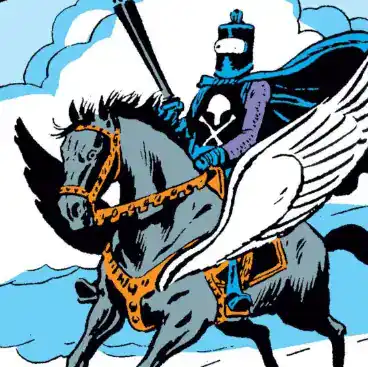
For a heroic Black Knight we have to wait 1967 and Roy Thomas, with Avengers #67.
This one is introduced as a relative to the villainous Black Knight first.
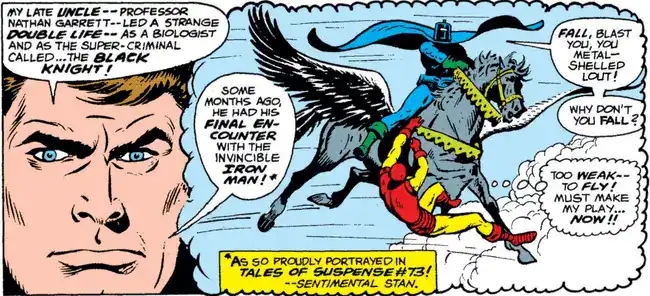
The link to the original Black Knight is made in the following issue.
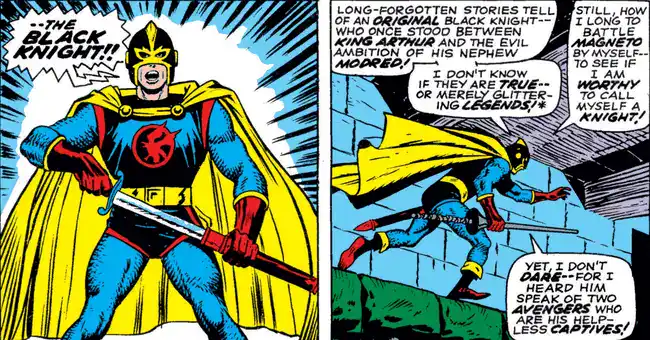
I will talk about the history of the MUCH more famous second Black Knight when he gets his turn in the hero origins.
For the fate of the original Black Knight, we have to wait until the end of 1968 for Marvel Super-Heroes #17.
Also by Roy Thomas, because of course.
In that issue, we learn that Mordred eventually managed to kill the original Black Knight.
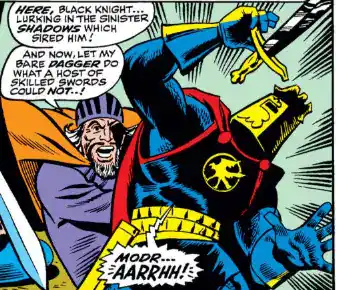
But his spirit is summoned whenever a new Black Knight is needed, and if one of his descendants is worthy of taking the Ebony Blade from a stone hand in a wall, they become the new Black Knight.
That’s why the villain didn’t have the sword, he wasn’t worthy.
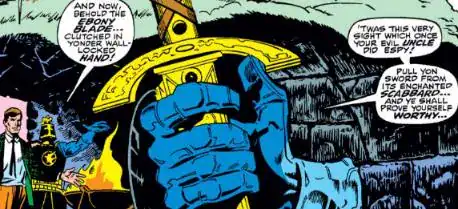
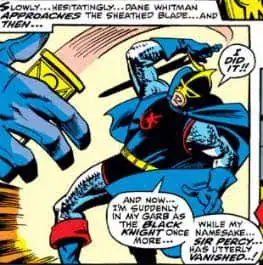
After being summoned a bunch of times, the spirit of Sir Percy even possesses his heroic descendant to star in a 4-issue miniseries in 1990.
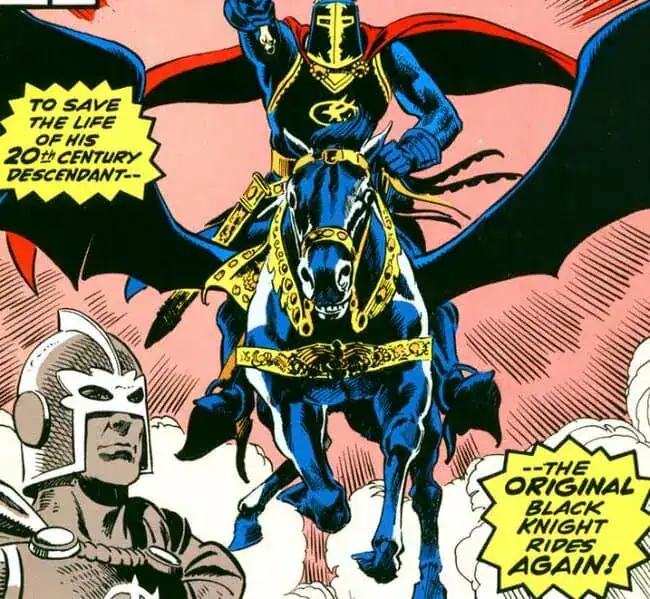
At the end of that miniseries, his spirit merges with the Ebony Blade to cleanse it from its curse (that’s a long story).
And I guess that’s where his spirit MIGHT still be.
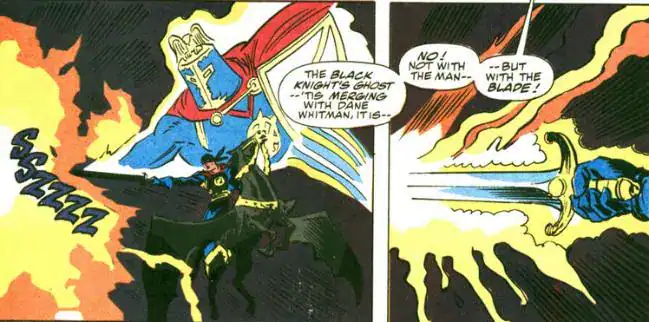
Following the various retcons of the Ebony Blade was never easy. It’s become more complicated in 2021 where the sword was retconned to have been somehow related to cosmic evil god Knull.
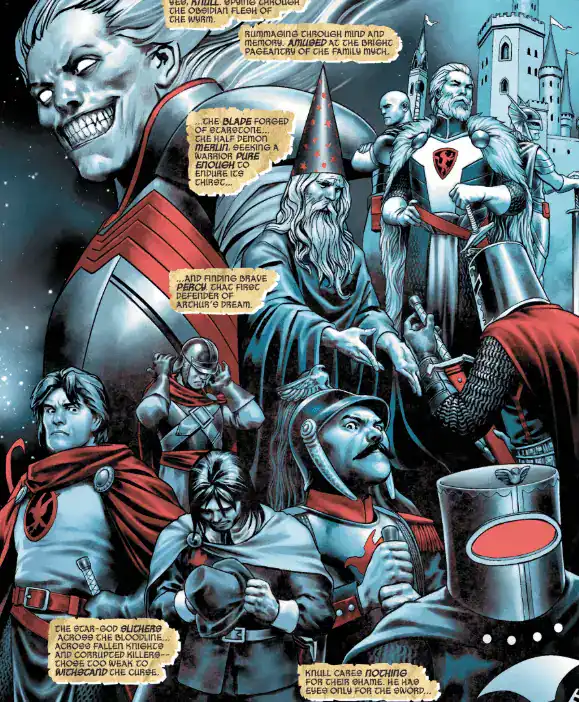
The most well-known Black Knight is far from the only one.
The legacy of Sir Pery extends to the second Black Knight, his nephew Sir Raston…
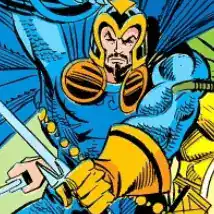
…to the medieval Eobar Garrington…
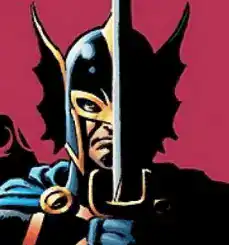
…to miscellaneous unnamed Black Knights throughout history, some of which succumbed to the curse of the Ebony Blade…

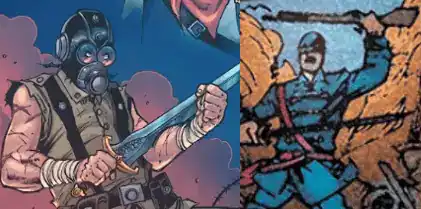

…to the daughter of the Dane Whitman Black Knight, Jackie Chopra…
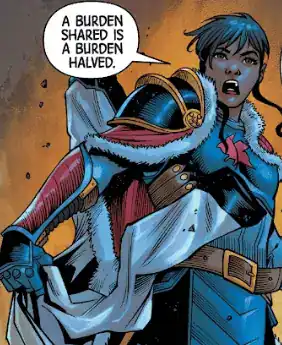
…and according to 1984’s “Solo Avengers #4”, at least all the way up to the Last Knight in the 26th century.

Not a bad legacy!
Well, some of it IS bad, but that’s impressive.
Almost as impressive as having gone through this entire review without a Monty Python meme (how did THAT happen!?!?).
What else was in Black Knight #1 ?
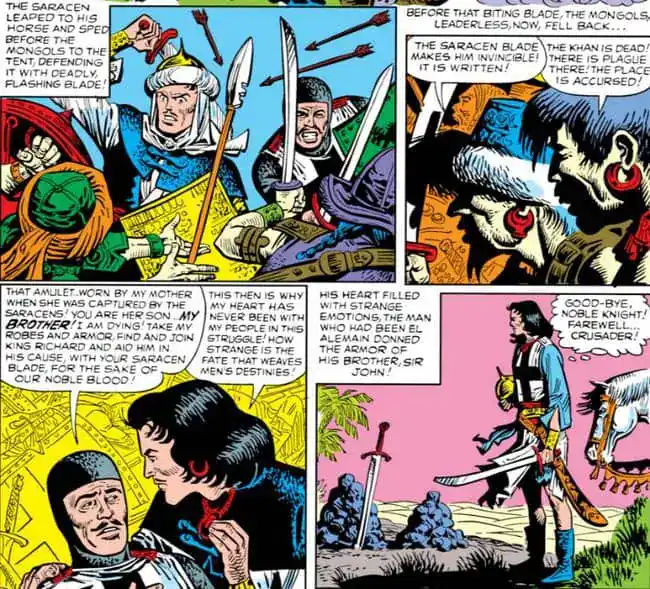
The story responsible for that “watch our for racist stereotypes” alert: the Crusader.
On one hand this is surprisingly forward-thinking for a 1955 story, given that the protagonist is a half-Mongolian half-French warrior…
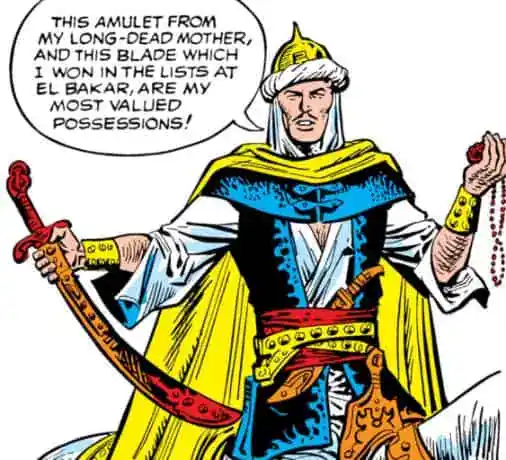
…but, uhm… yeah. The graphic design hasn’t aged very well.
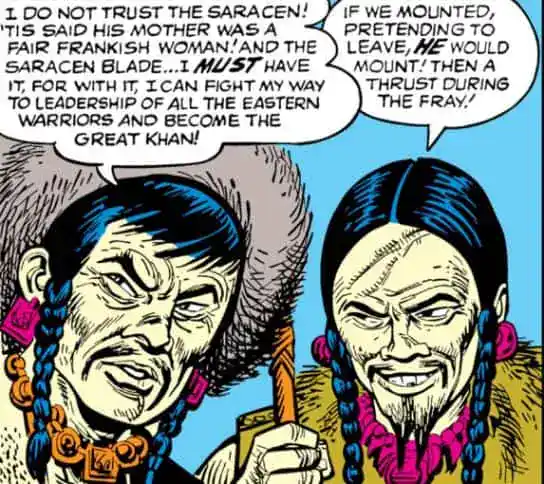
The Crusader is not even a crusader.
But I’m guessing “The Crusader’s Half Brother” wasn’t as catchy.