Phantom Stranger #1 (1952)
by John Broome and Carmine Infantino
At the time of this wrinting it’s been 73 years since this story was published, and the question on the cover has not been answered yet.
Who is the Phantom Stranger?
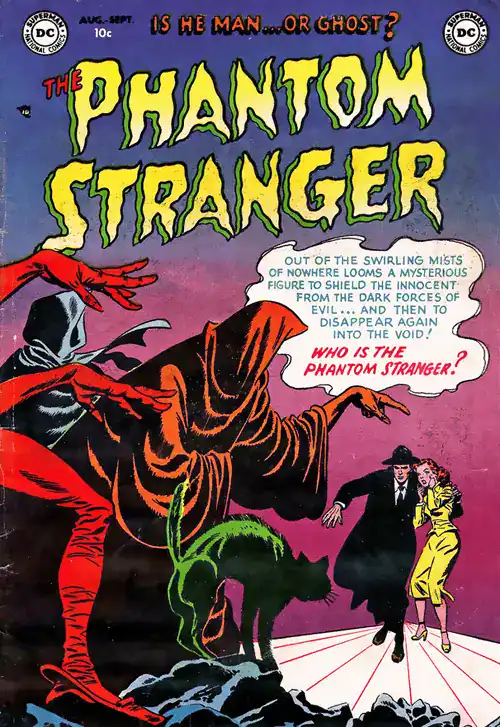
My knowledge of the horror and spooky anthologies of the 50s is very limited, but one thing is for sure: you can find awesome artwork there!
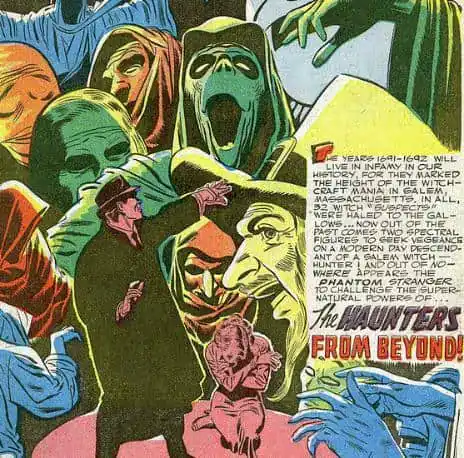
We begin with a woman who is still traumatized with her encounter with the supernatural.
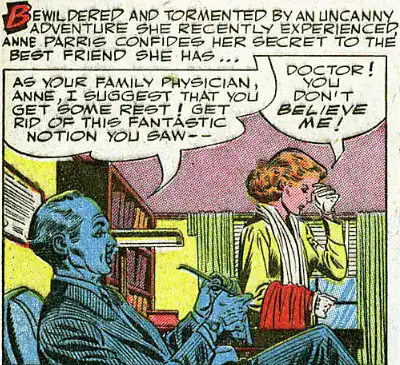
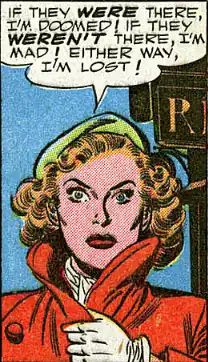
You can DEFINITELY tell this is a pre-Comics Code story when it includes attempted suicide AT PAGE TWO.
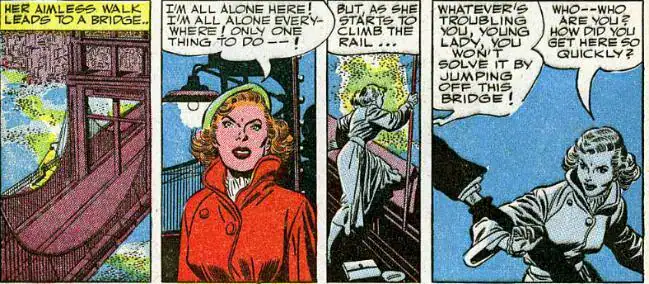
She’s prevented from killing herself by a stranger.
A phantom stranger, if you will.
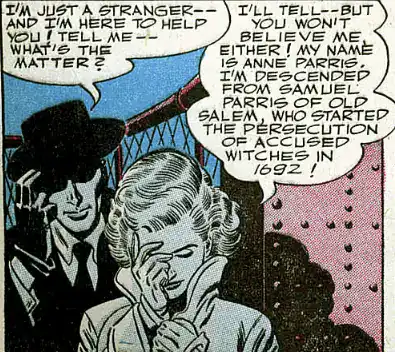
She tells him that she’s haunted by ghosts, who want revenge against one of her ancestors.
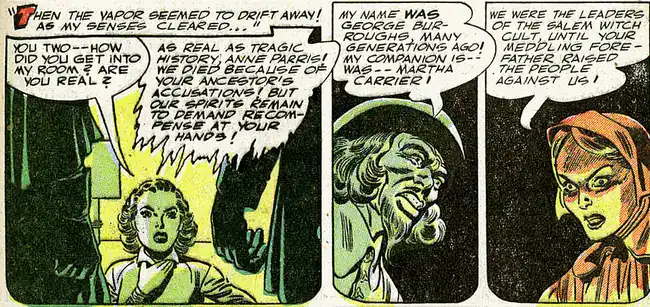
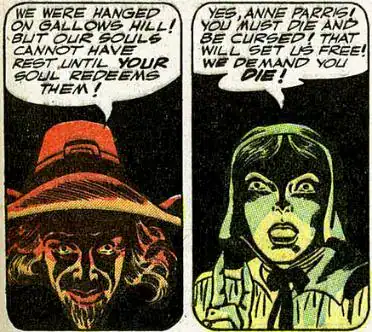
I don’t particularly care for spooky stories, but holy crap is the artwork oozing with style!!!
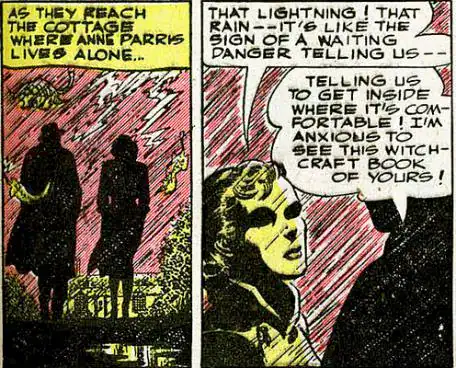
The Phantom Stranger has a unique way to fight ghosts.
BY PUNCHING THEM.
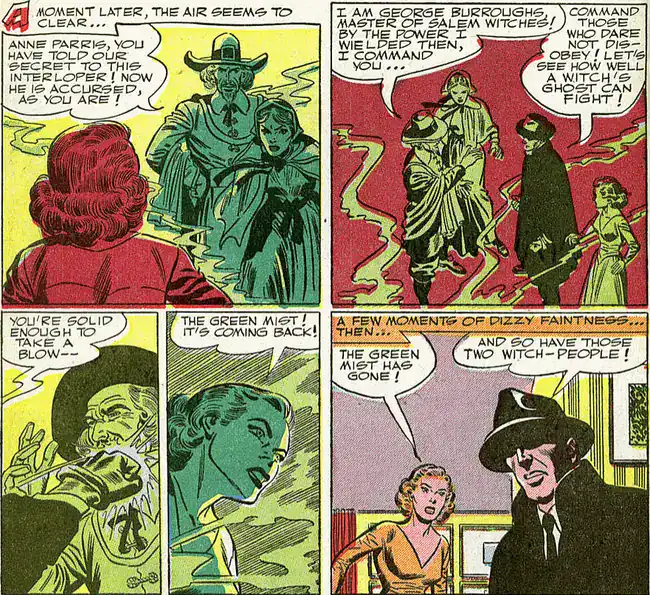
That’s because there’s no such thing as ghosts.
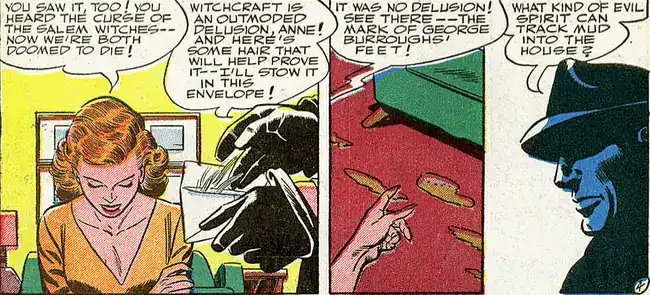
Kind of shocking to actually see his face, as his eyes are seemingly ALWAYS covered by the shadow of his hat.
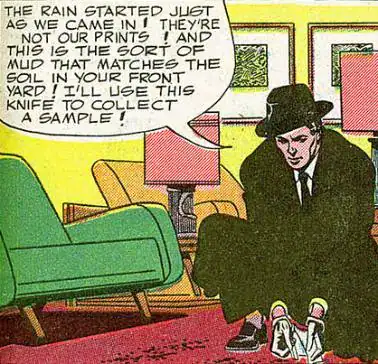
I see no problems with this plan.
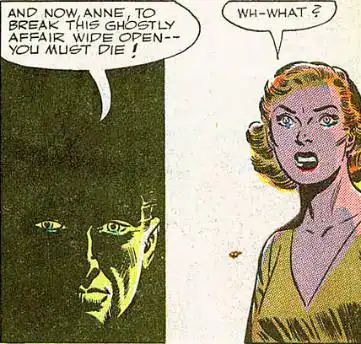
Well okay, he doesn’t mean it LITERALLY, she just has to fake it.
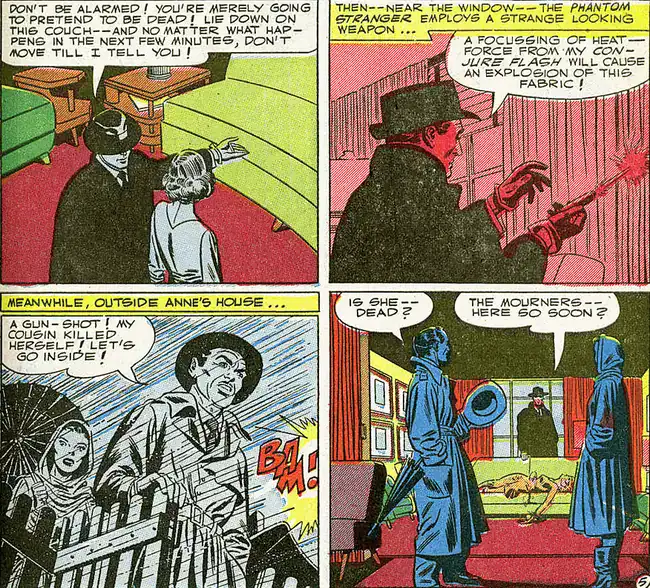
I’ll bet this is an insurance or inheritance scam. That’s the source of 90% of fake supernatural events.
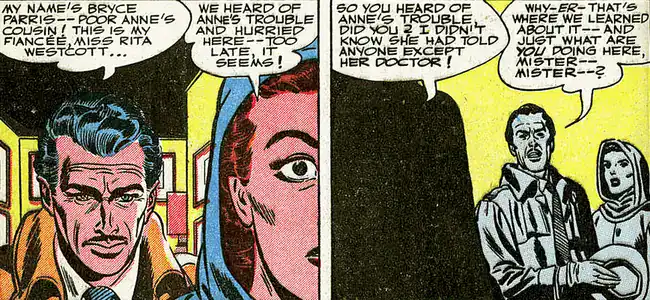
Up to this point, the Phantom Stranger might as well be a detective series.
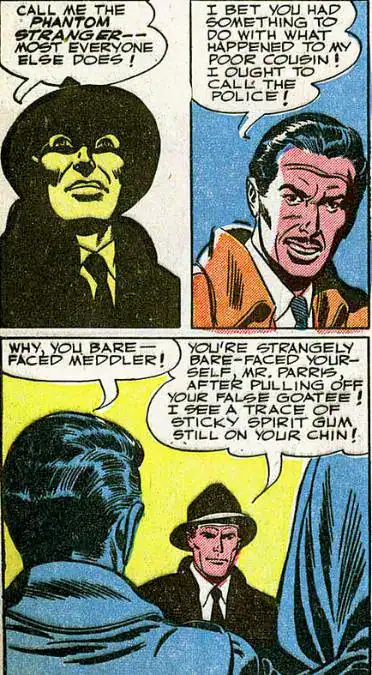
He also gets surprisingly physical.
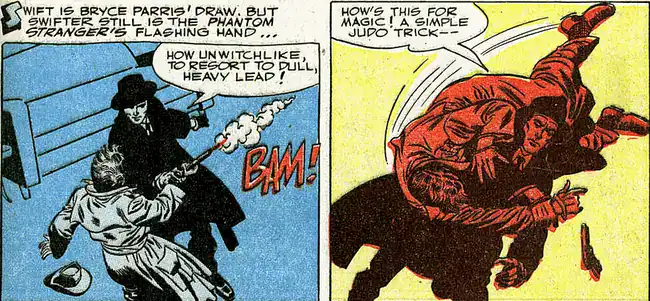
Those are some resourceful conmen!
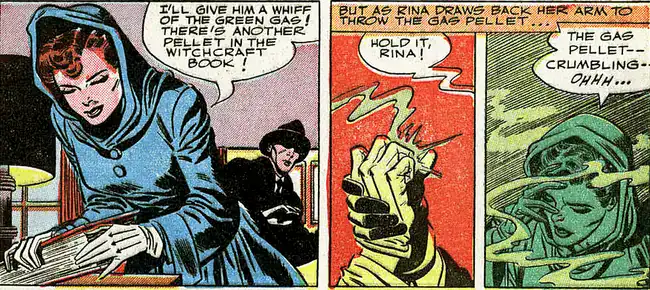
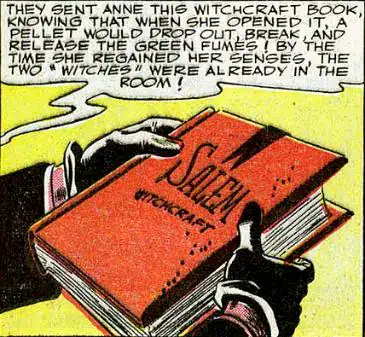
Yep. Inheritance scheme, as always.
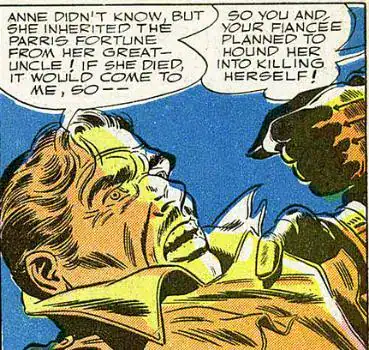
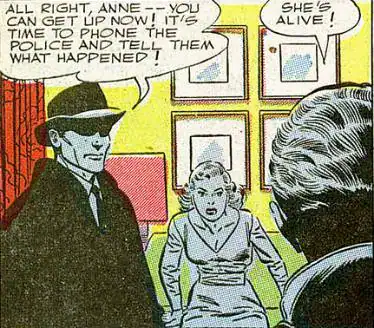
And so we end with the Phantom Stranger reassuring us, once again, that there’s no such thing as ghosts.
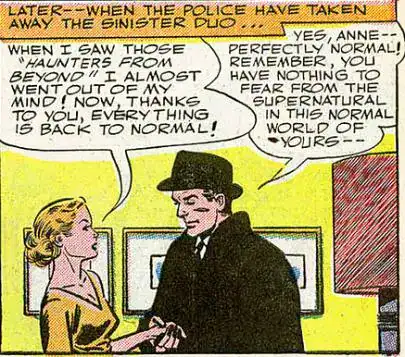
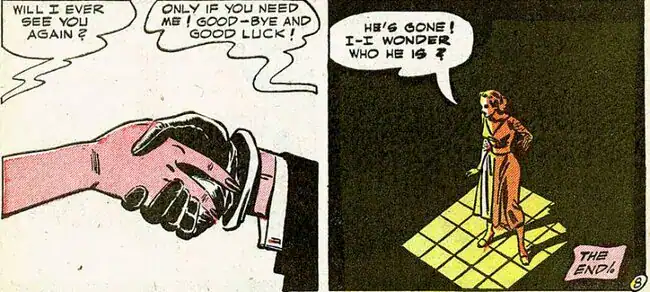
Maybe.
Historical significance:  / 10
While the Phantom Stranger is not exactly a big name, he gets around. Good luck figuring out if this story has significance for him, since we never learn much about him.
Silver Age-ness: 0/10
Up until the very last panel, this is a rather straightforward detective story.
Does it stand the test of time? 10/10
This was great! Good suspense, great artwork, a good plot… honestly even without the final twist this would be a perfect little story.
It’s just 8 pages long but it’s incredibly efficient and with impeccable storytelling.
For completion’s sake, there are OTHER Phantom Stranger stories in the issue, all written by John Broome.
The second story is also penciled by Infantino.
It’s about the Phantom Stranger exposing some guys who are pretending to be ghosts.
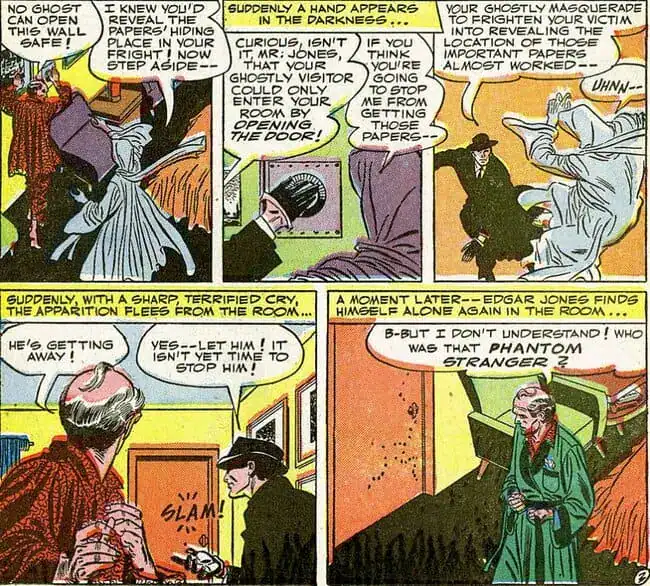
And it concludes with the suggestion that the Phantom Stranger himself might be a ghost.
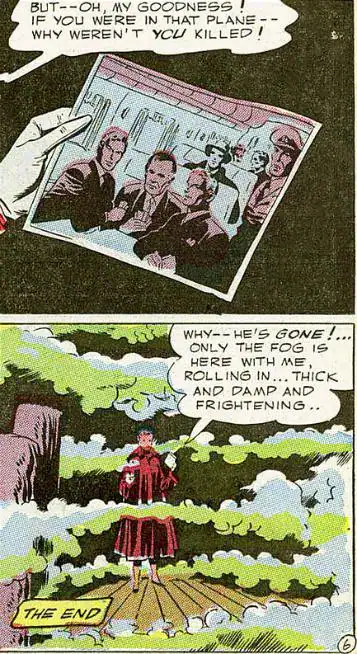
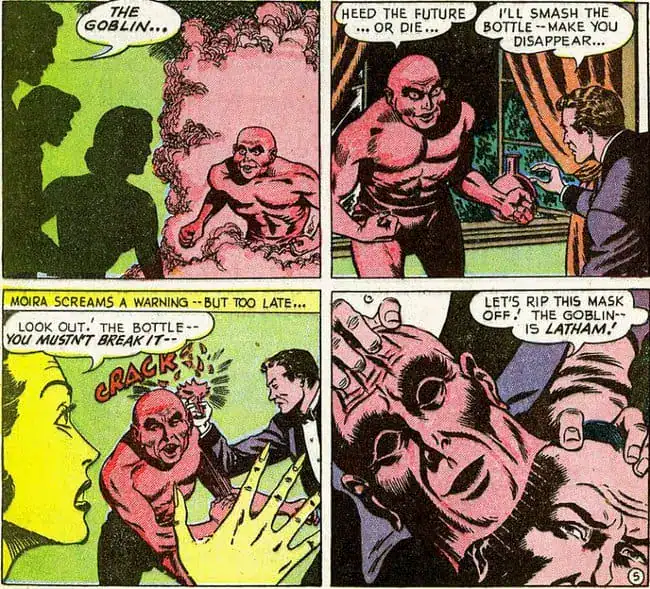
The third story is penciled by Murphy Anderson. It’s about exposing someone pretending to be a genie, but surprisingly it does NOT feature the Phantom Stranger at all.
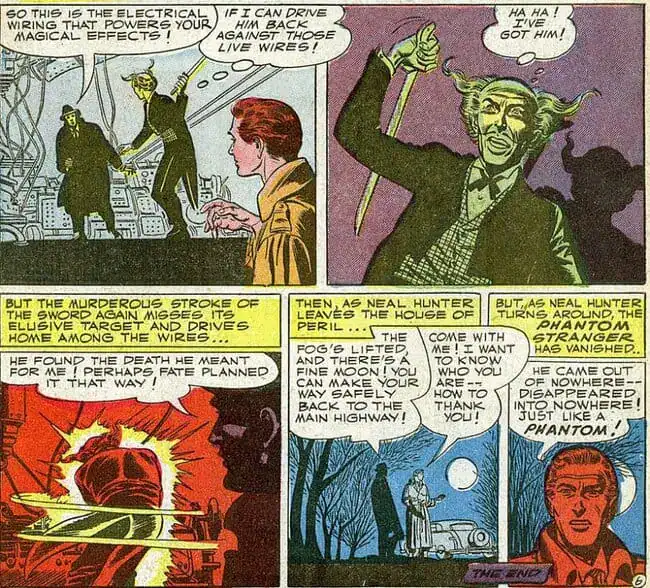
The fourth and final story, once again penciled by Infantino, sees the Phantom Stranger confront an evil magician.
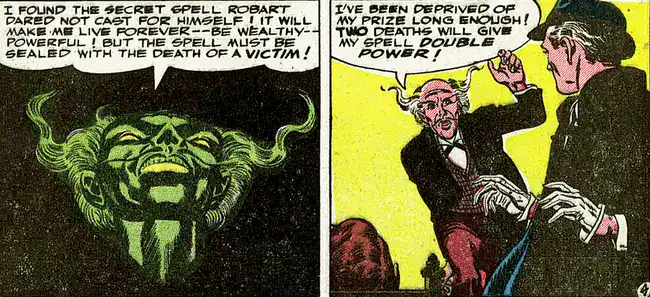
The Phantom Stranger relies on his fists so much that he might as well be a Golden Age character!
Also, this story features something I never thought we’d ever be able to see… the Phantom Stranger WITHOUT HIS HAT.
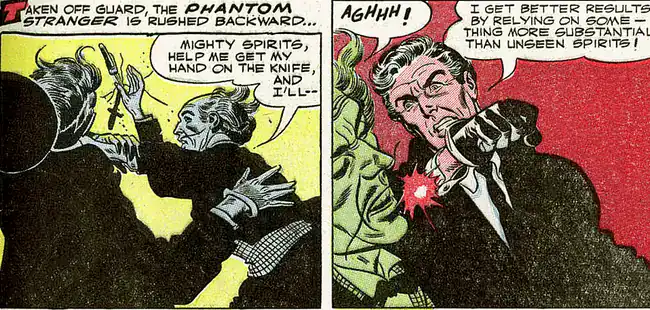
The magician is exposed as a fraud, and we end with the suggestion that the Phantom Stranger himself might be a ghost.
Again.
How close is this to the modern character?  / 10
The modern gimmick about the Phantom Stranger is that nobody knows what the heck he is.
The original series only lasted 6 issues, following the formula you’ve already seen: the Phantom Stranger disproves the existence of a supernatural event, only to vanish like a ghost at the end.
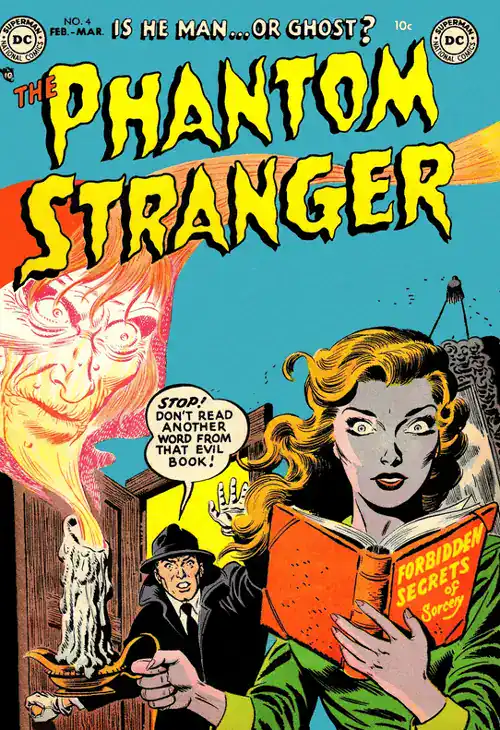
Like a lot of the more experimental spooky protagonists of the 50s, he seemed lost to obscurity until he was brought back in 1969, on Showcase #80, by Mike Friedrich.
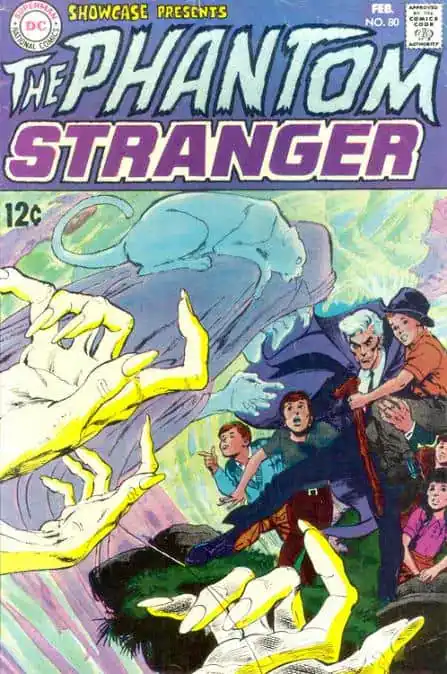
It looks like a return to the classic formula at first…
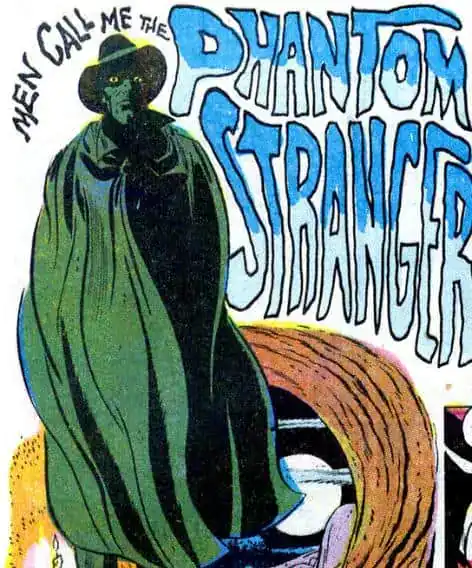
…but there’s a twist.
While the original series had the Phantom Stranger expose fake supernatural creatures with his actual supernatural powers, now he’s followed by Doctor Thirteen.
A guy who is so certain that there’s no such thing as the supernatural that he makes it his mission to expose the Phantom Stranger as a fraud.
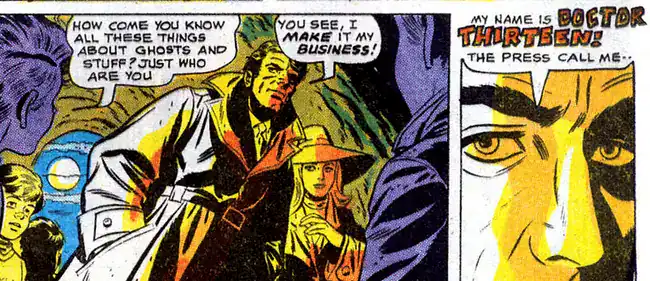
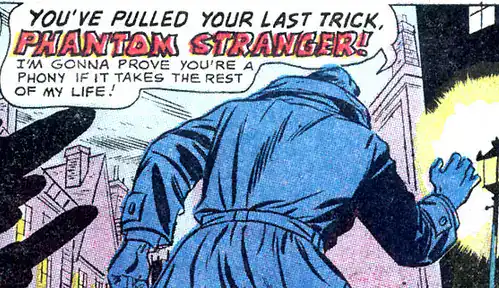
This was successful enough to launch a second Phantom Stranger series, which was definitely more successful than the first given that it lasted 41 issues, from 1969 to 1976.
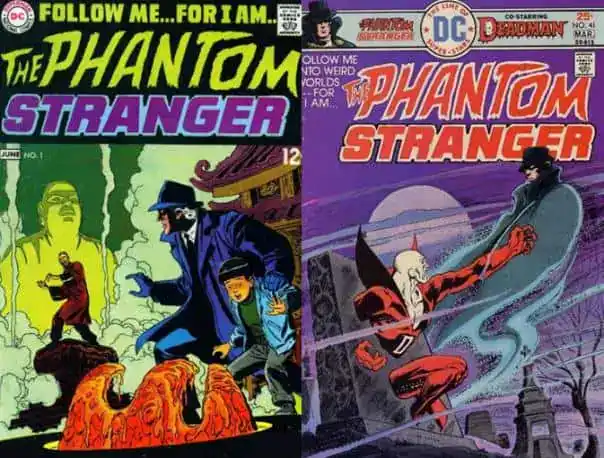
The first three issues of the series reprinted older stories, but starting from issue 4 the Phantom Stranger gets his definitive look when new stories are published.
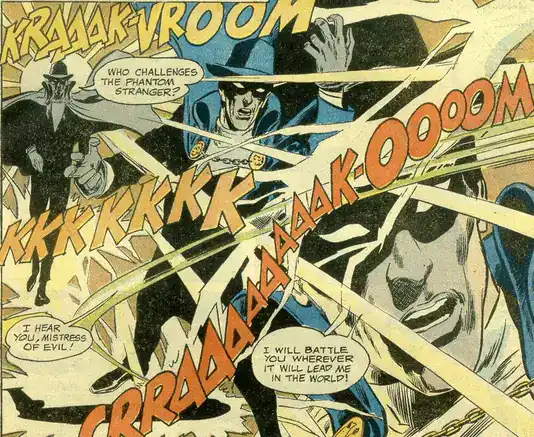
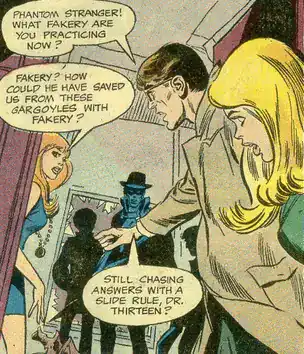
Doctor Thirteen hangs around to call him a fraud, despite the fact that by this point the Phantom Stranger CLEARLY showcases a plethora of magic powers.
Fans of the Justice League Unlimited cartoon might recognize the Phantom Stranger’s first big villain, the witch Tala.
Reportedly, Paul Dini was a HUGE Phantom Stranger fan but for some reason wasn’t allowed to have him show up in any of the DCAU shows.
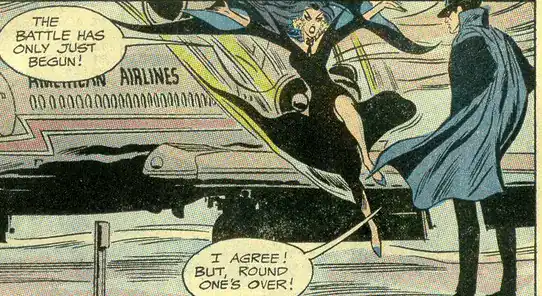
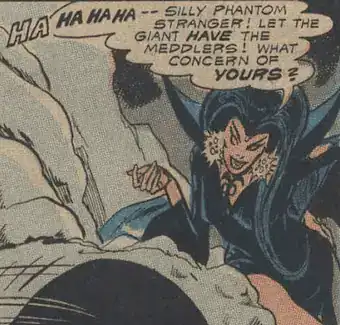
One thing that the series REALLY wants you to remember is that we’re not supposed to learn who or what the Phantom Stranger actually is.
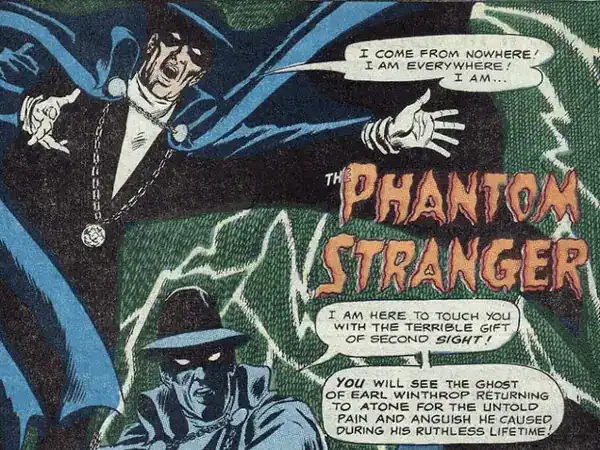
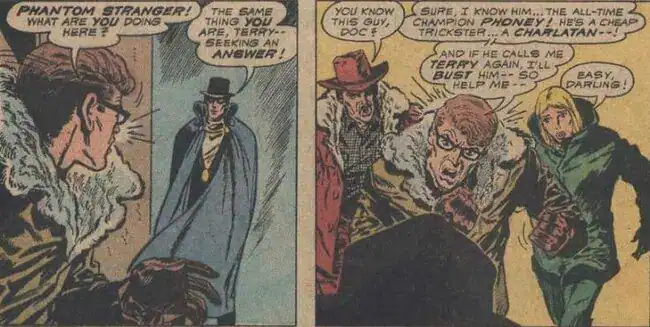
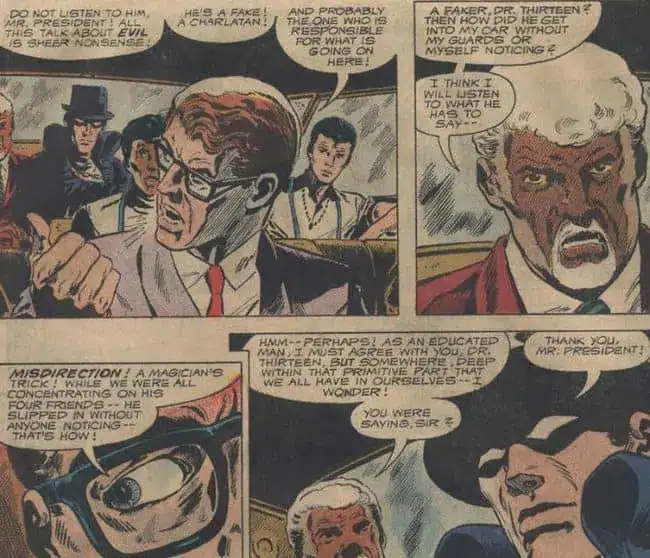
This is a great series, but I have to say that Doctor Thirteen can get on your nerves for how relentless he is in not accepting any supernatural explanation, to the point of absurdity.
Modern depictions of him have made this work, but in the original it’s just the same scene over and over again.
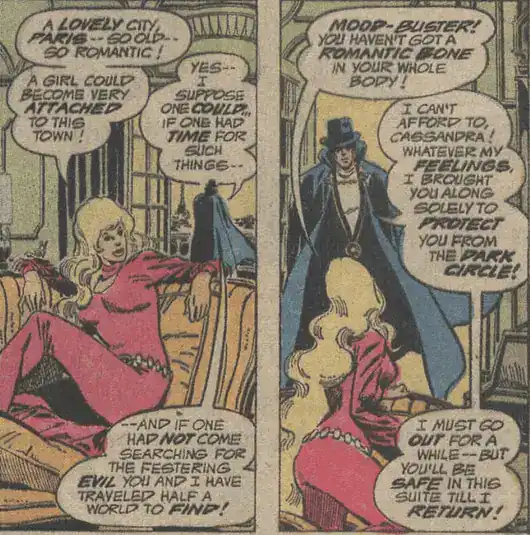
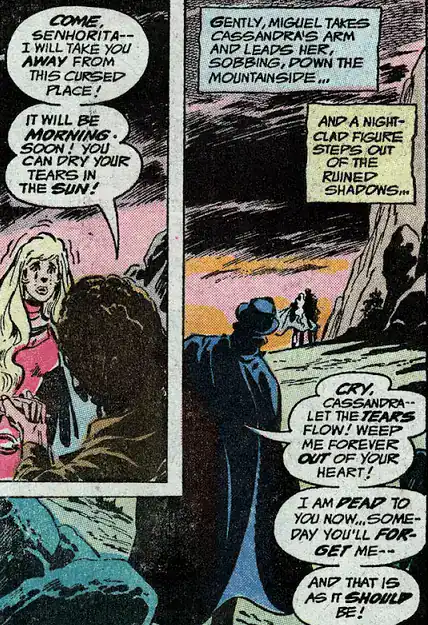
The Phantom Stranger even gets a love interest, the blind psychic Cassandra Craft, but he eventually decides to let her believe he’s dead.
During this run, which was critically acclaimed but didn’t sell all that well, the Phantom Stranger found the time to meet Batman in 1970 and the Justice League in 1972.
Courtesy of Bob Haney and Len Wein respectively.
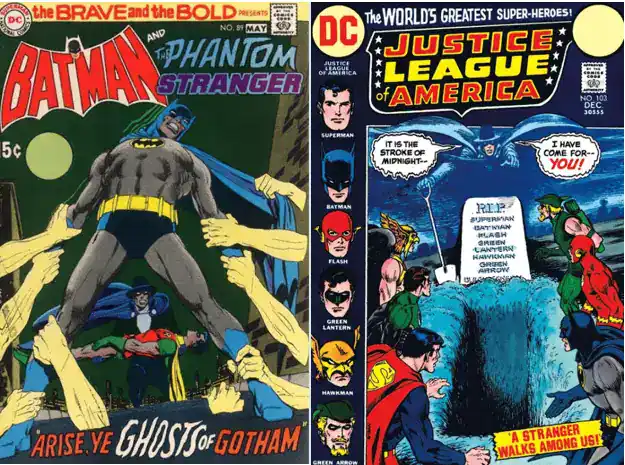
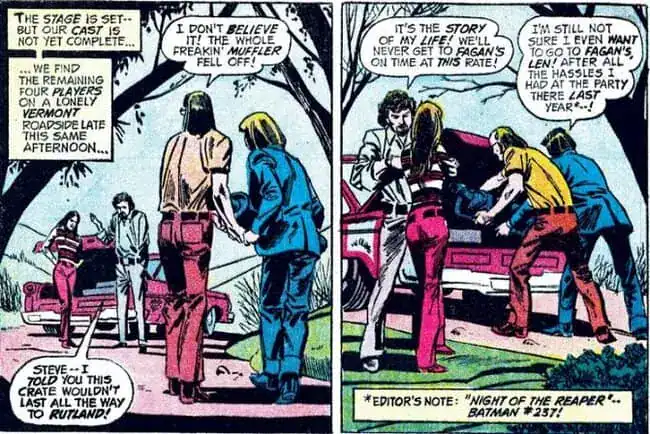
The JLA issue where he first shows up, issue 103, is part of the unofficial crossover between DC and Marvel that I mentioned when I talked about Amazing Adventures #16.
Small comic universe, isn’t it?
At the end of the story, the Justice League takes a vote whether to add him as a member of the team… but the Phantom Stranger disappears before he can accept.
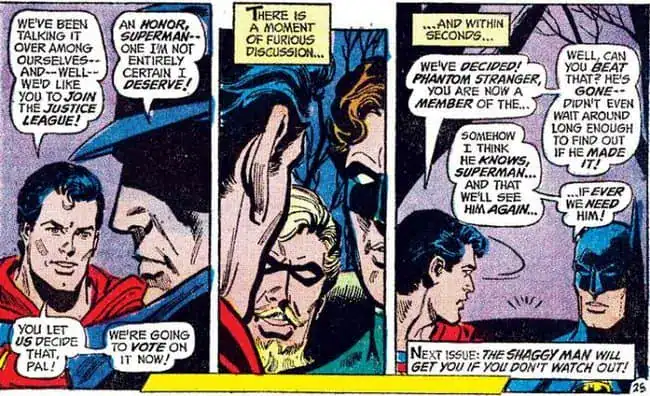
He helps the Justice League a few more times, but no mention is made about him being an actual member for the longest time. Which is not entirely surprising, since the Justice League had very relaxed rules about membership in the 70s, but it got to the point that the Phantom Stranger is routinely omitted from list of previous members. Including in-universe mentions.
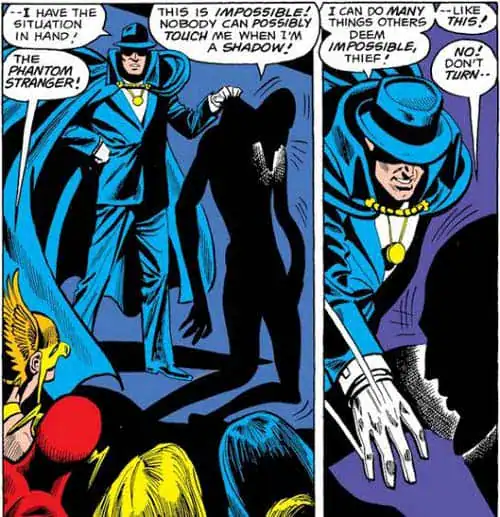
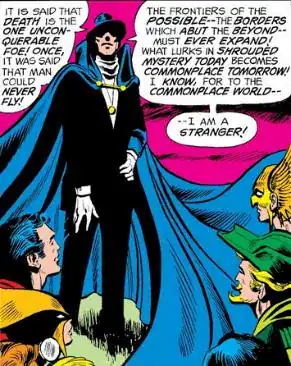
There are a few times where his membership is confirmed, such as 1976’s Wonder Woman #222.
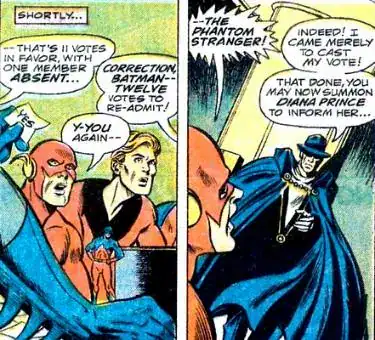
In a 2012 interview, however, Len Wein clarified that his intention was never to make the Phantom Stranger a member of the Justice League when he wrote their first team-up.
[Phantom Stranger] only sort of joined. He was offered membership but vanished, as per usual, without actually accepting the offer. Over the years, other writers have just assumed [he] was a member, but in my world, he never really said yes.
LEN WEIN
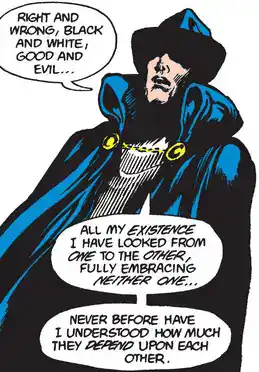
The Phantom Stranger shows up in SO MANY places that I can’t possibly cover them all, but I have to mention his role in the Alan Moore Swamp Thing (where he also meets John Constantine)…
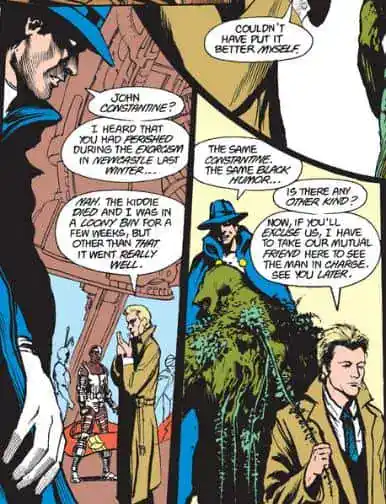
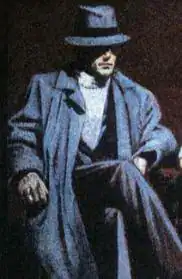
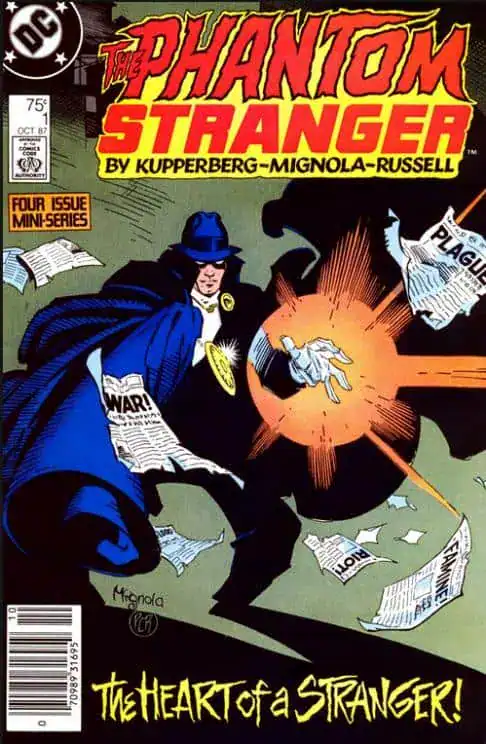
…as well as his appearances on Books Of Magic by Neil Gaiman and on his own 1987 miniseries by Mike Mignola.
Even if he’s not a major player, it’s weird for such a long-running character to stay without an origin.
But since being mysterious is his whole deal, 1987’s Secret Origins vol2 #10 gave him FOUR different possible origins, without disclaiming which is the real one.
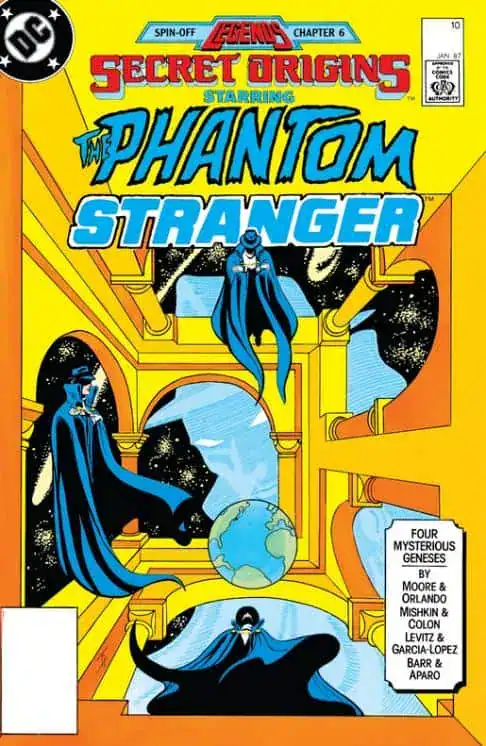
According to the Mike W. Barr story, he’s the Wandering Jew.
According to Paul Levitz, he’s a man from Biblical times condemned by an angel wo wander the Earth.
According to Dan Mishkin, he’s a scientist from the end of the universe condemned to an eternal time loop.According to Alan Moore, he’s a fallen angel condemned to walk the Earth.
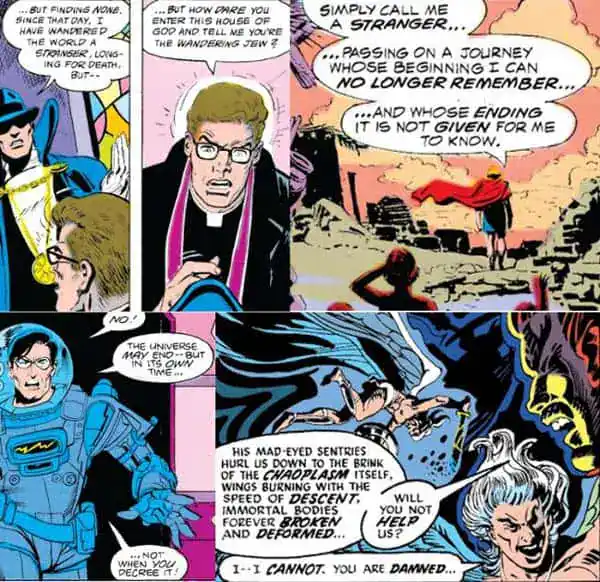
These are all GREAT stories, but it was jarring to see three origins out of four with overt Bible connections, and I never liked all the times DC Comics made the Bible essentially canon.
And I’m an atheist (yes we do exist in Italy), so I’ve always found it weird that DC didn’t receive enough complains to stop integrating the Bible into their cosmology.
For the longest time, however, DC had an official policy to never confirm any origin… although a couple of hints here and there were given about several characters believing the Alan Moore story was the correct origin.
More recently, Phantom Stranger received a new series in 2012, this one lasting 22 issues.
Issue zero gave him a new origin, even MORE overtly religious this time, because now he used to be Judas (!!!), the chain on his neck is made with the coins he was paid for betraying Jesus (!!!) and his cape is Jesus’s cloak (!!!).
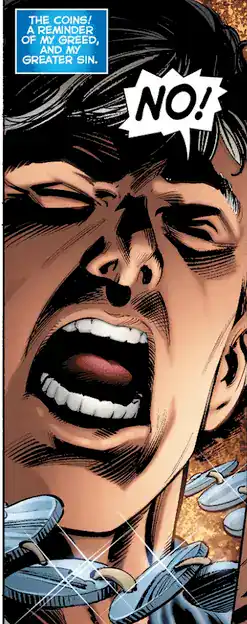
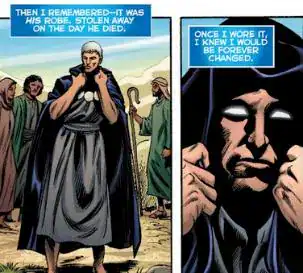
I think they should stop even trying giving him an origin or an explanation for his powers… if we knew what he is he wouldn’t be a stranger anymore!
While his 70s series is very good, I also think he works better as a supporting character when protagonists have supernatural problems rather than a series protagonist on his own.
In terms of adaptations, besides showing up in several cartoons, he has a live action role in the CW Swamp Thing show.
I haven’t watched it, but from his looks it seems he let himself go.