Strange Adventures #9 (1951)
by John Broome and Carmine Infantino
Unlike the Golden Age, which has a very clear beginning with the debut of Superman, there are multiple candidates for the start of the Silver Age.
One of the less discussed candidates is Captain Comet.
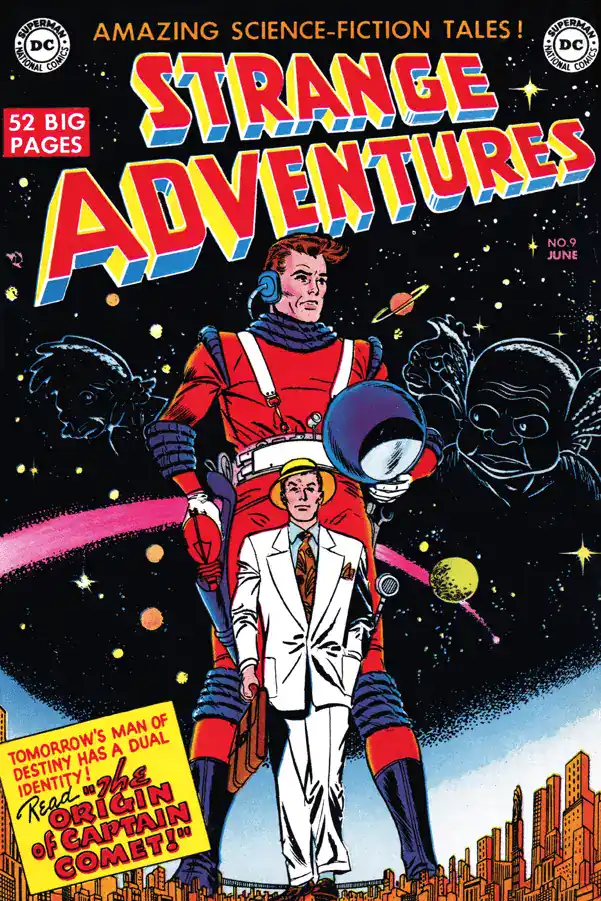
I will discuss later my opinion on this one being a candidate for the beginning of the Silver Age; let’s take a look at the story first.
Which, appropriately enough, starts with a comet.
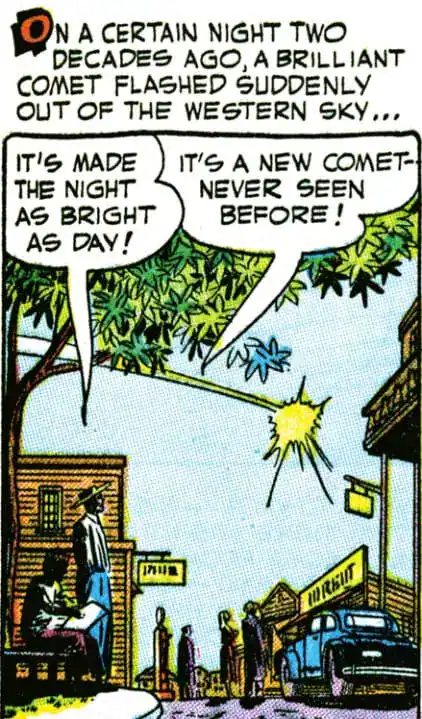
Given that this is a 1951 story and this comet was seen twenty years earlier.
There weren’t a lot of particularly bright comets observed in the early 30s, the closest being Peltier’s comet in 1936.
That would just be 15 years before 1951; a better candidate would be the significantly less bright Schwassmann–Wachmann 2 in 1930.
Now, does this have ANY significance whatsoever to the story?
Not in the slightest, but I can blather about astronomy ALMOST as much as I can with comics.
Our protagonist is born under the comet’s light, which is apparently significant to his father.
Whereas his mother doesn’t want her son to grow up to be a great man.
Mother of the year material there.
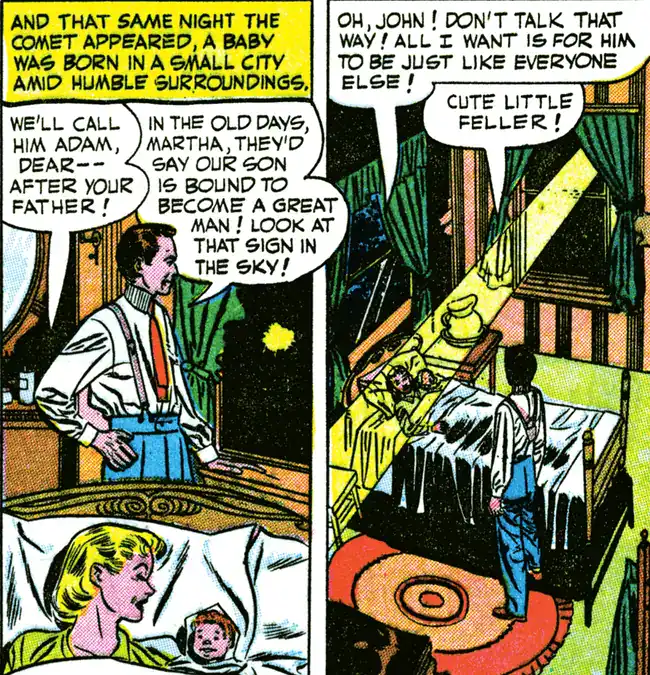
Also, this is what passes for a normal baby in 1951.

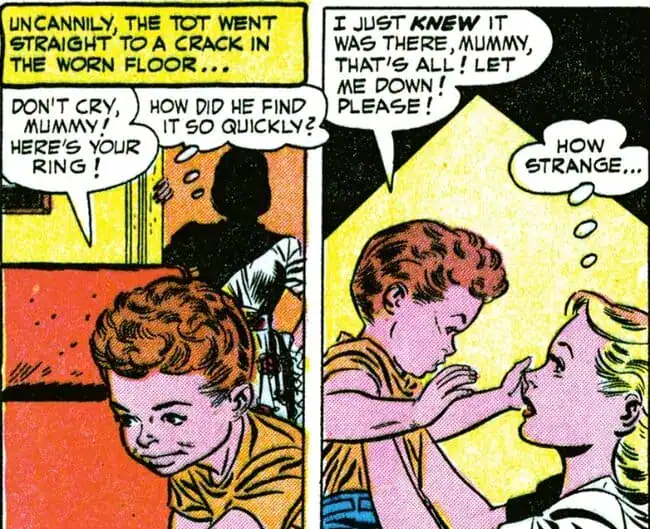
At just four years old, the kid shows his amazing powers. He can find lost rings, read a book in minutes and annoy the entire class by reading the whole thing out loud.
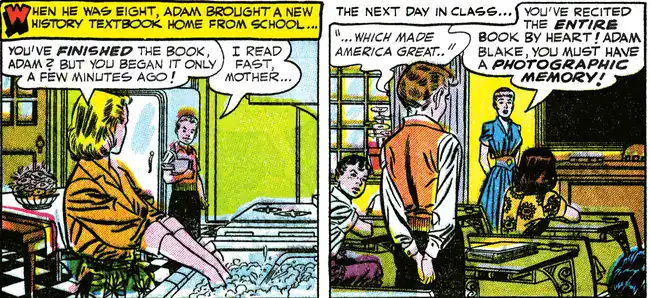
He eventually grows kind of bored of immediately being the best at everything he does.
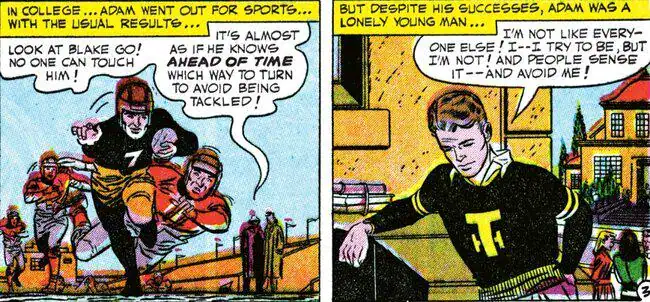
This is an interesting take on the “gifted at anything” trope, but our protagonist doesn’t angst too much about it.
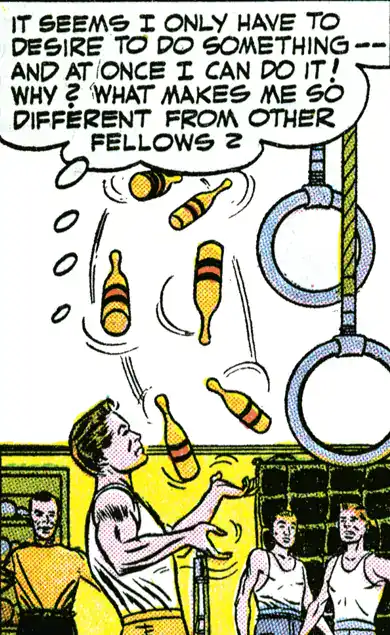
He’s not just smart, he also develops telekinetic powers.
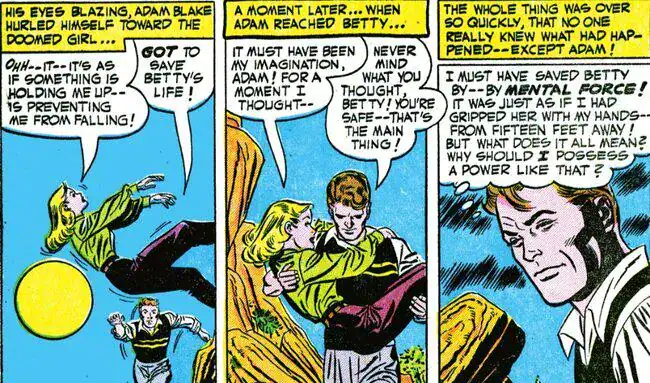
He asks for an opinion to Professor Moustache here, who has theory about these powers.
If men can be born with the body and mind of a caveman, why not the opposite?
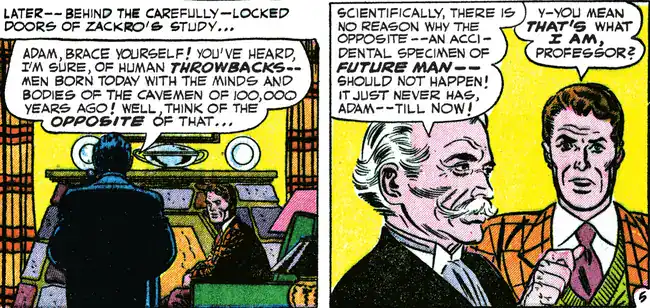

Turns out that the kid is a mutant!
It’s funny to think that, reportedly, Stan Lee wasn’t allowed to call the X-Men series “The Mutants” because Martin Goodman thought the word would be too obscure for readers… but it’s already being used 12 years before their creation!
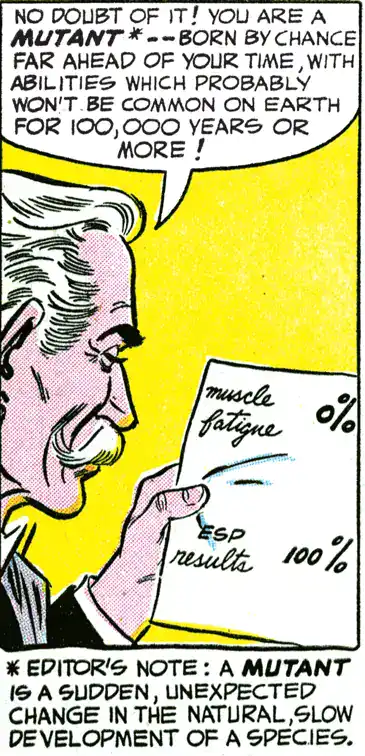

The professor also proves that the kid has telekinesis. Why does he need to do this and why is the kid surprised, since he ALREADY used telekinesis!?
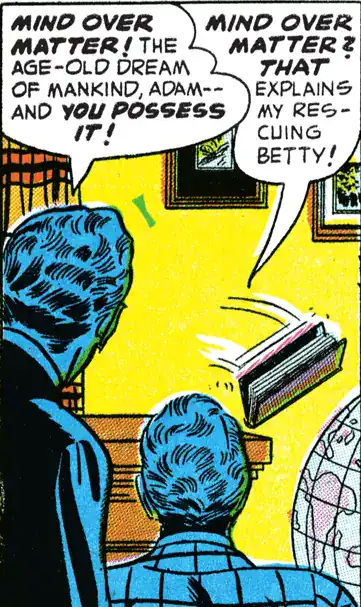
I don’t know guys, this professor might not be particularly smart.
Not only he pulled that explanation (and the year 100,000) COMPLETELY out of his moustache, but he also believes THERE’S GOLD IN SUNLIGHT.
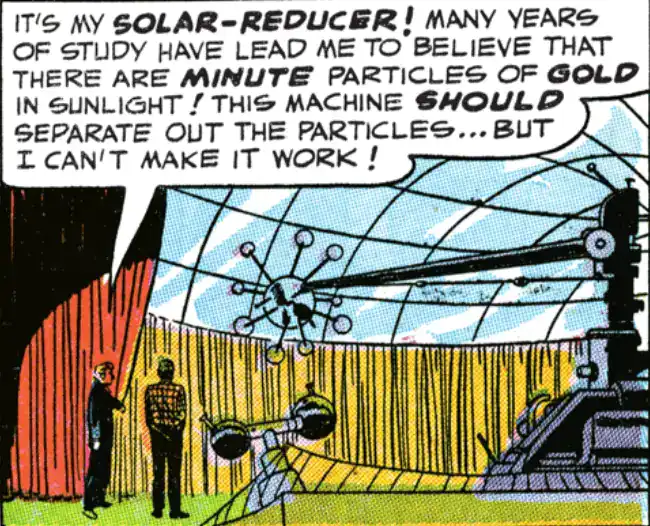
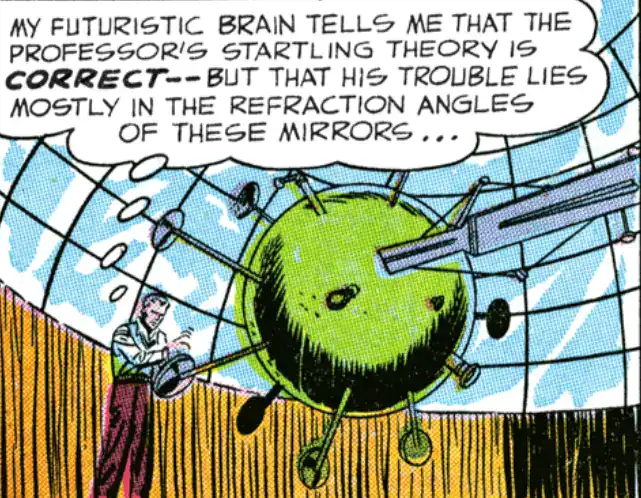
Not IN THE SUN ITSELF, mind you. Which may sound absurd, but yes there IS gold in the Sun!!!
It doesn’t CREATE gold, of course, because that’s something that happens in supernovas… but MIGHT be a bit of gold left by previous supernovas.
It’s a tiny, tiny percentage… estimations are about 1 part per billion. But since the Sun is ginormously huge(citation needed), that means there are 200,000 metric tons of gold in the Sun.
See, I wasn’t kidding about blathering!
Now if the professor was talking about gold in the Sun, that would have been one thing.
But he’s talking about the gold being in the sunlight specifically!

(just for clarity: this is fake)
As we all know criminals are always lurking around astromical observatories, so they discover the gold-making machine.

When our protagonist doesn’t want to surrender the gold, he has to showcase his powers.

In a shocking twist, however, the machine is NOT an endless source of economically viable gold!
That’s a surprising outcome. Even though it’s a bit shortighted: gold is a finite resource on Earth and we will eventually run out, so in the long time this would be useful.
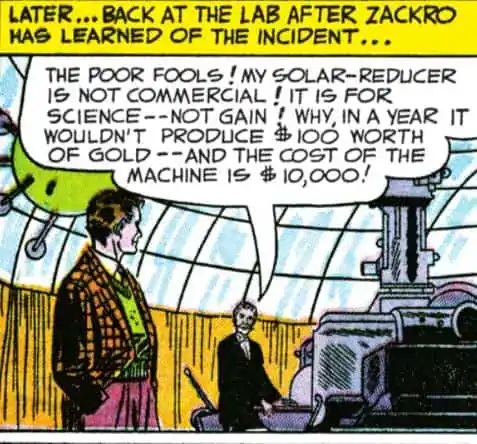
Our protagonist seems destined to keep his powers secret forever…
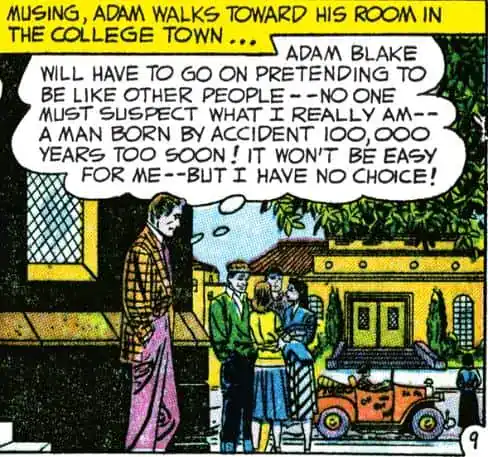
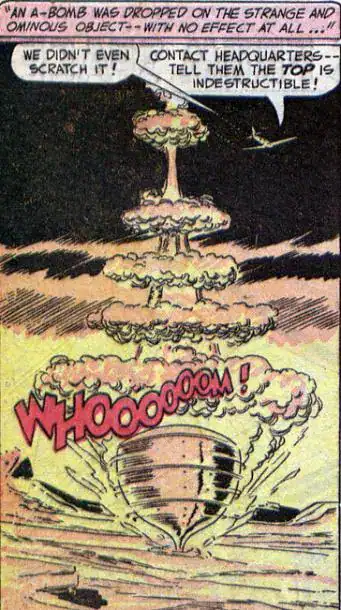
…until SUDDEN GIANT TOP!!!
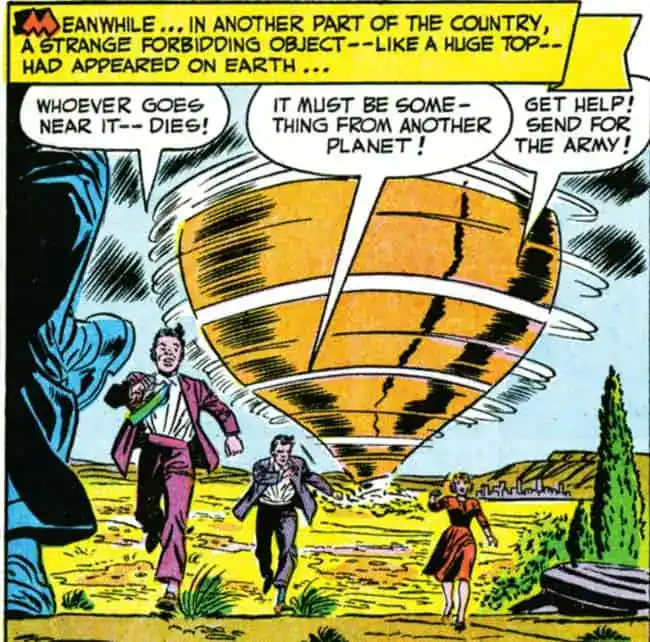
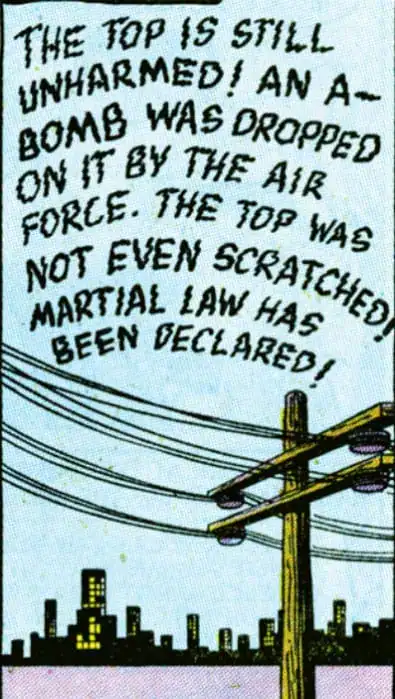
Welcome to the retrospective, 1950s. When else would there be OFF-PANEL ATOM BOMBS?
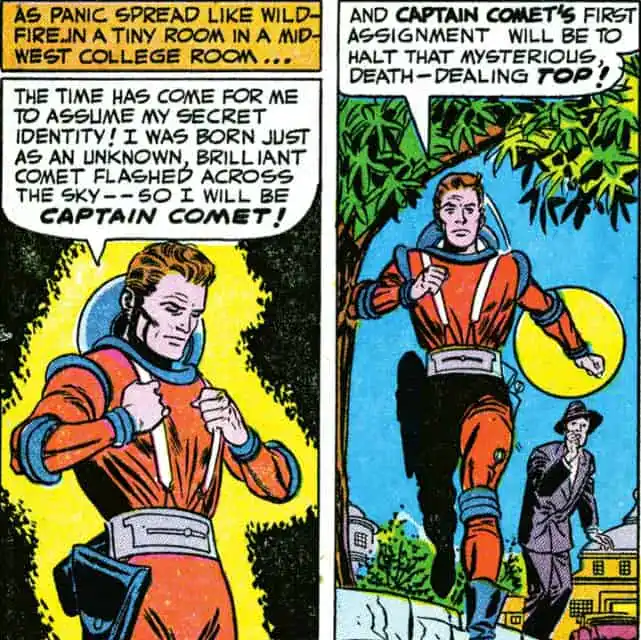
And so we end with our protagonist deciding to help by creating the secret identity of Captain Comet.
How is THAT going to fool anyone!? He’s not even wearing glasses!!!
Captain Comet deals with the top in the next issue, but for completion’s sake… we DO get to see the nuke there.
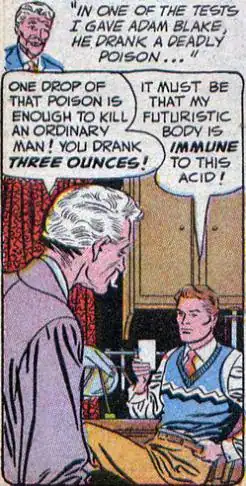
Also we learn that the professor tried to poison Captain Comet for scientific purposes.
Sounds legit according to his lawyers.
Captain Comet creates Earth’s first spaceship, the Cometeer.

The top is a spaceship built by people escaping a doom planet, wishing to take over Earth… but when their leader discovers he’s the only one to survive suspended animation, he KILLS HIMSELF.
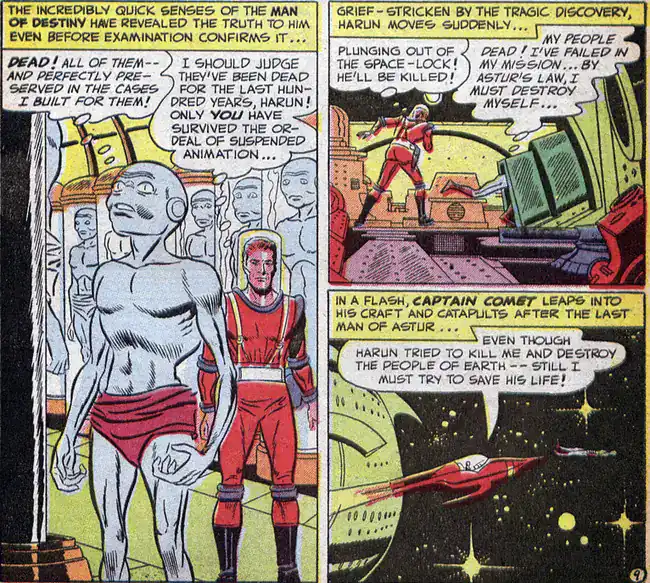
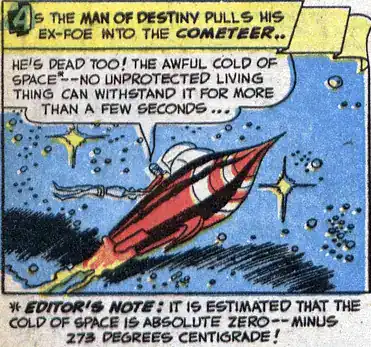
Can you tell this is a pre-Comics Code story?
Historical significance: 2/10
Captain Comet is not exactly a household name, but he shows up here and there.
Silver Age-ness: 10/10
There’s gold in sunlight, plus it’s common knowledge that people can be born with the mind and body of a caveman.
Does it stand the test of time? 6/10
Get rid of at least some of the scientific nonsense and there’s a core worth exploring there, especially in how it feels being immediately the best at everything. And of course there’s the persecution of being a mutant, which is only hinted here.
The story would have benefitted to being a complete one, instead of limiting the first part to the origin and the action to the second… but he second part is the most distinctly 1950s one.
Is this the beginning of the Silver Age?
It’s the debut of a new character who is firmly in the “atomic age”, so it’s not entirely without its impact. But I think it’s still in the interregnum between the Golden and Silver ages.
Not only it doesn’t have NEARLY the same impact on comics of his followers, but 1951 would be way too early for the Silver Age anyway.
Not only it’s still before the Comics Code, but the Justice Society ended publications just a few months earlier (their last story is All-Star Comics #57 of March 1951, while Captain Comet is June 1951).
Even on the Marvel side, the three big names (Human Torch, Namor and Captain America) had stopped publications in 1949, they had a revival in 1949 and Namor kept being published until 1955.
How close is this to the modern character? ¯\_(ツ)_/¯
Captain Comet was (not very subtly) inspired by Captain Future, a pulp hero created by Mort Weisinger and who starred in many novels written by Ed Hamilton.
Yes, these are exactly the same Weisinger and Hamilton you’re thinking about.
Captain Comet would continue his serial on Strange Adventures until #46, and then a final appearance on #49 in 1954.
All of his stories were written by John Broome, and they are EXACTLY what you imagine when you think “1950s sci-fi comics”.
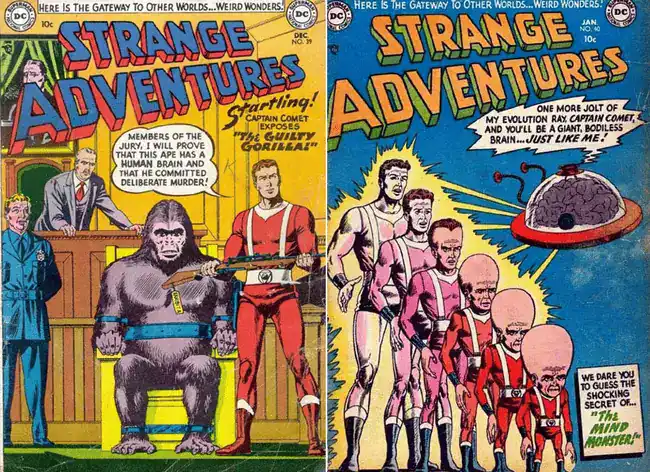
He would then COMPLETELY disappear from the Silver Age proper, only to return in 1976 in an unusual place: “Secret Society of Super-Villains #2” by Gerry Conway.
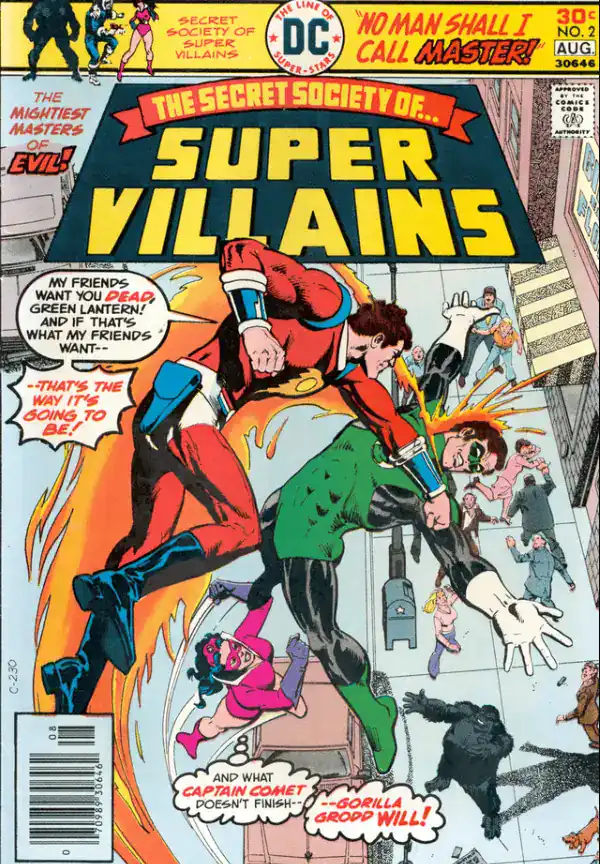
Captain Comet continued to appear on “Secret Society of Super Villains” until the series was cancelled in 1976, as part of the “DC Implosion”.
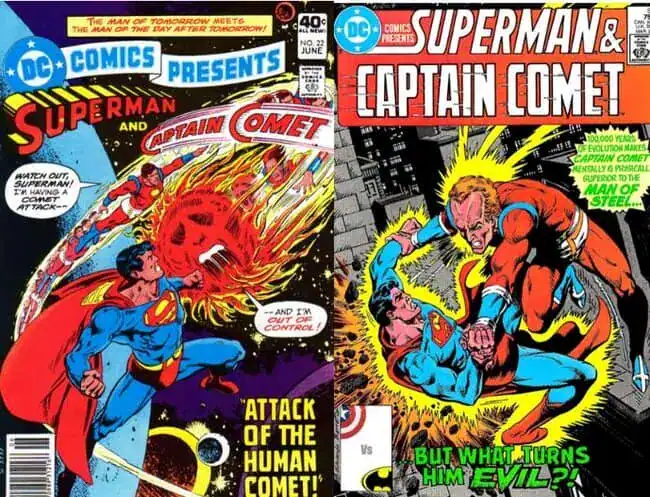
He teams up with Superman in 1980 and 1986 on the pages of DC Comics Presents.
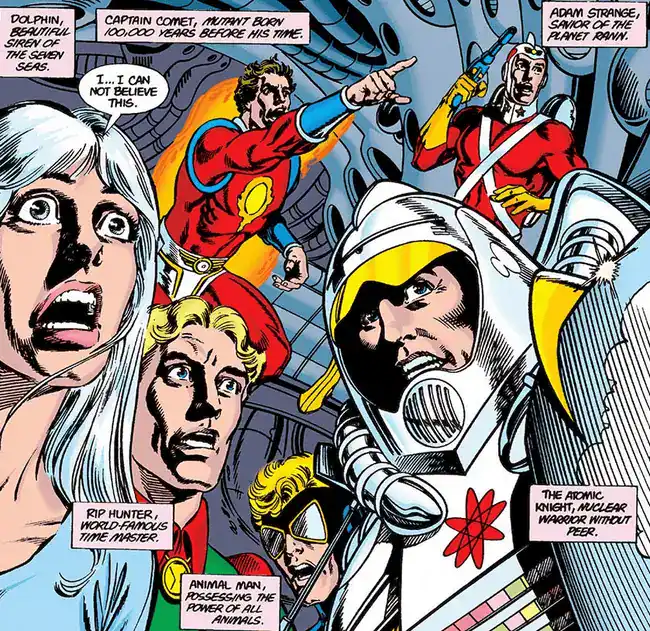
He’s in Crisis On Infinite Earths, as part of the ragtag team of heroes that recruits Brainiac.
The 90s were a bit of a Captain Comet renaissance thanks to L.E.G.I.O.N., since Captain Comet joined both that team and the spinoff R.E.B.E.L.S.
Which means he was mostly being published regularly between 1990 and 1995, his most prolific period.
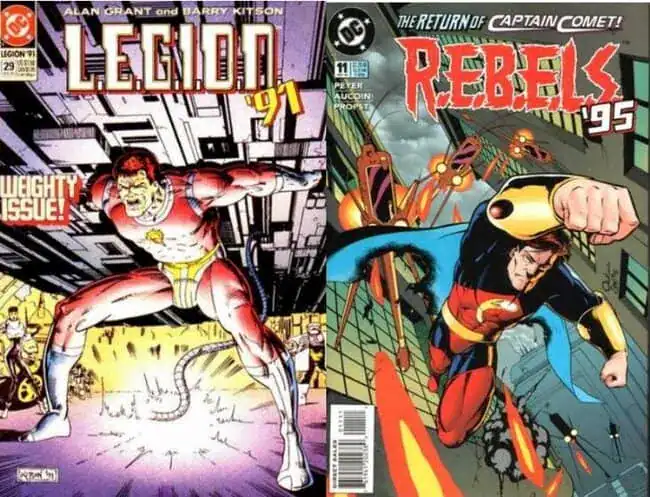
He had a couple of cameos here and there, but he mostly faded back into obscurity until he had a surge in popularity in 2006 thanks to a new “Mystery In Space” regular series by Jim Starlin and his role in the “Rann-Thanagar War”.
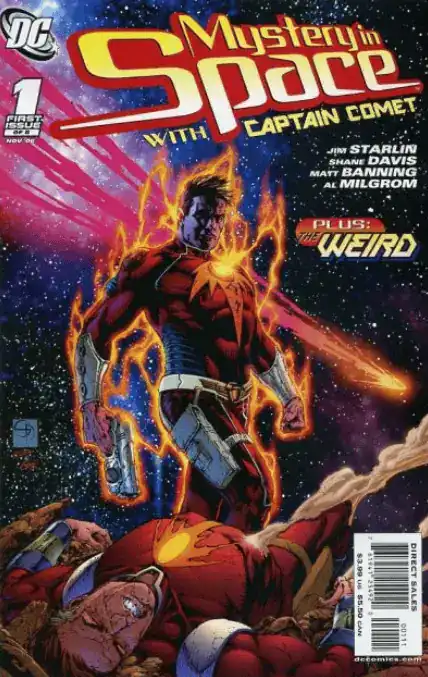
Mystery In Space only lasted 8 issues, but a new version was introduced in 2011 by Grant Morrison on Action Comics; I can’t comment on this version since I haven’t read it.
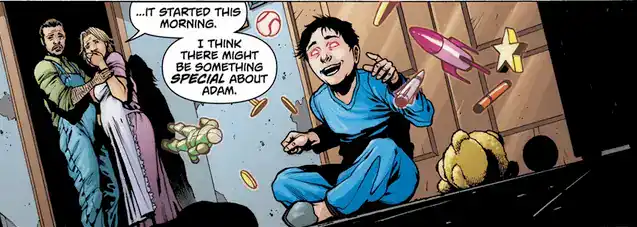
I think this version is the one still around, but don’t quote me on that. Following modern DC is hard!
I have two mention two alternate versions of Captain Comet. The first of which I don’t know anything about!
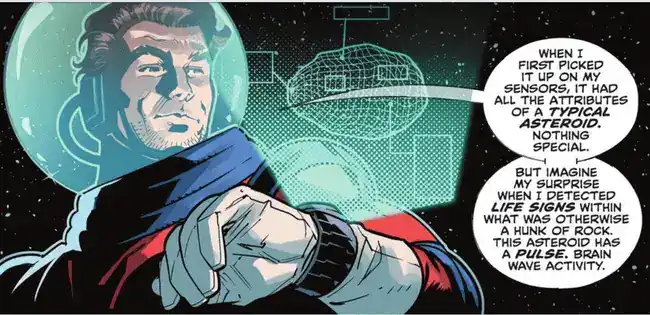
Because apparently this guy is Captain Comet…

…in the CW show “Naomi” which I’m pretty sure nobody has actually seen.
Seriously, I might not have followed a single CW show but I know a fair amount about them through pop culture osmosis and NOBODY ever references Naomi.

But I do know about the James Robinson miniseries “The Golden Age” from 1993, which you have seen me reference A LOT when it comes to, obviously, Golden Age heroes.
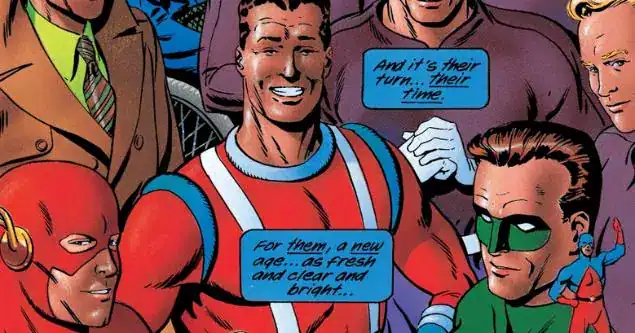
Captain Comet is in the finale, as the first of the new heroes that show up… in what is easily the most blatant reference to him being a prototype for the Silver Age.