
Marvelman #25 (1954)
by Mick Anglo
Don’t let the numbering fool you, this is the first appearance of Marvelman.
Why he debuts in the 25th issue of his own series is a complex story.
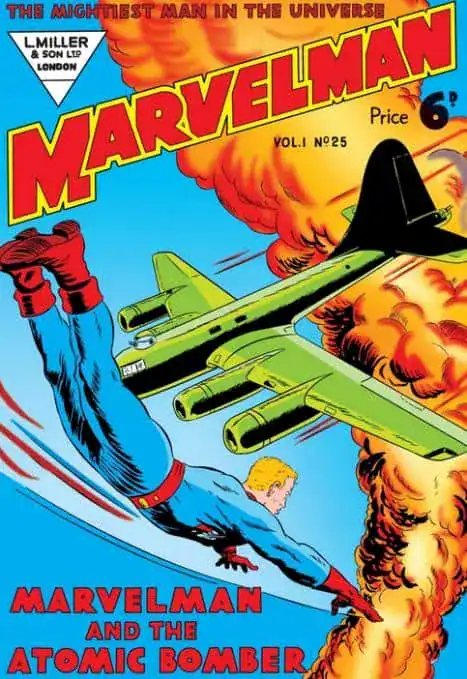
But let’s have a look at the story first. Which begins with a bit of an infodump.
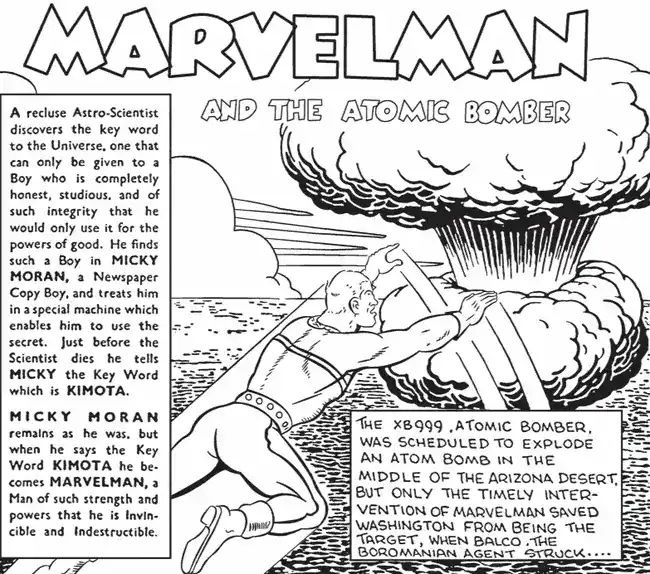
There’s a lot to unpack here already.
From the fact that “the key word to the universe” is just “atomik” backwards, to the implication that the scientist did’t believe he was good enough for this power on his own, to the mystery of what an Astro-Scientist is.
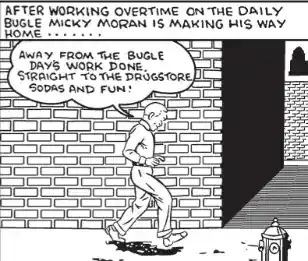
I’m reading this through the digital version on marvel.com, since Marvel currently has Marvelman’s rights (more on that later), so I initially wondered if they changed the name of the newspaper to the Daily Bugle… not nope, it was already called that in the original.
Micky has to transform into Marvelman to save a guy from being beaten in the street…
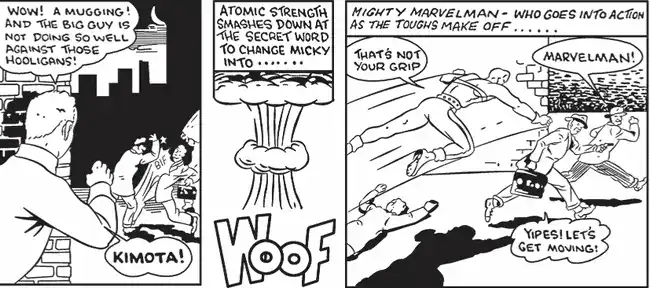
…and luck must be one of his superpowers, because this just happens to be the designer of an atomic bomber.
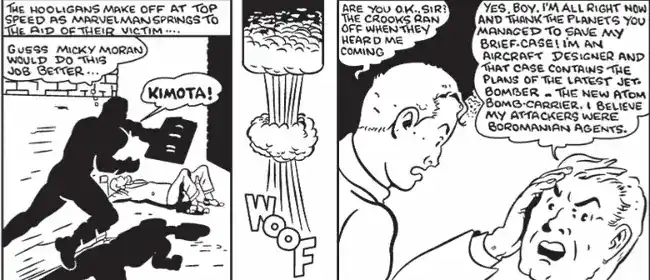
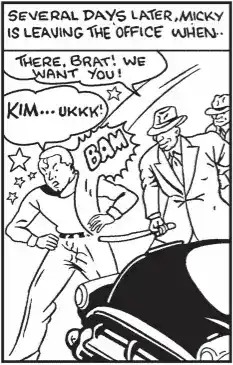
You know, maybe giving superpowers to a kid is not such a smart move. Because he ALREADY blew his secret identity.
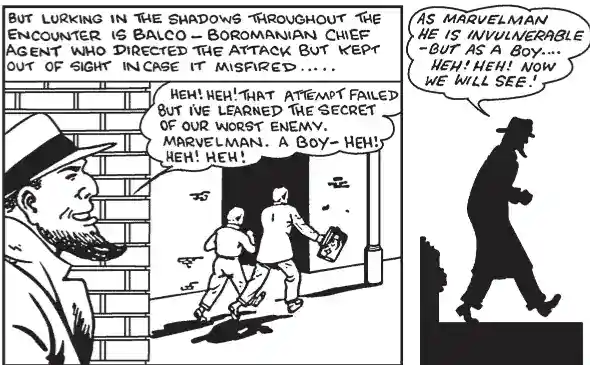
So the bad guys have ALREADY kidnapped him AND figured out that he needs to say his magic science word to transform.
I’m not sure why they don’t just kill him.
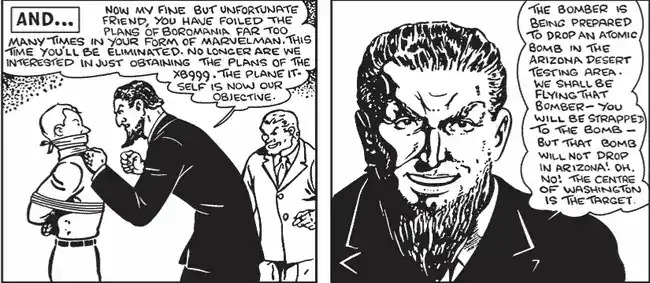
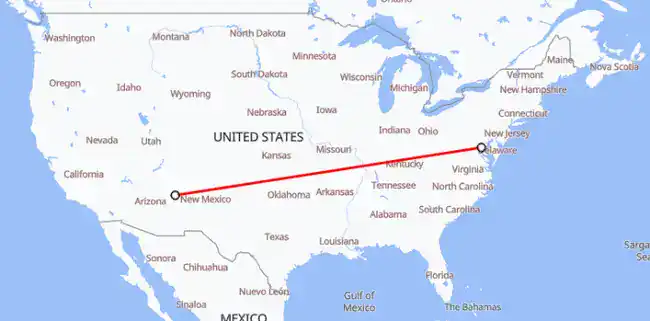
The plan revolves around nobody noticing that a plane that is supposed to be in Arizona ends up in Washington DC, rougly 1,800 miles away.
Sounds legit.
Despite implying they would kill Micky soon, it’s not until “some days later” that they execute the plan and steal the plane.
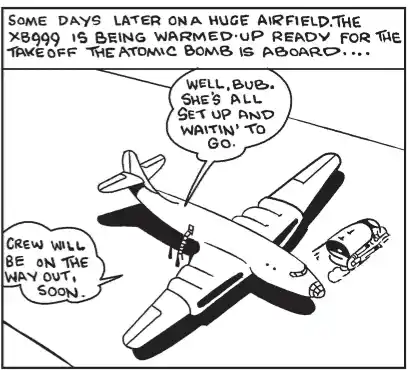
The bad guys are from the fictional country of Boromania, so it’s quite impressive that they managed to have FULLY ARMED TANKS run around a military plane.
They also brought Micky with them because… I’ve got nothing.
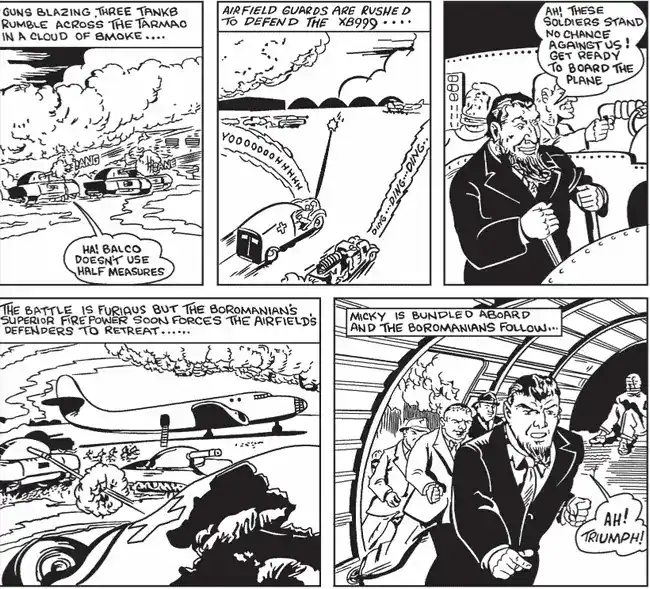
Ah yes, of course, to tie him to the bomb. Everybody knows that nuclear weapons are more destructive when in proximity to children.
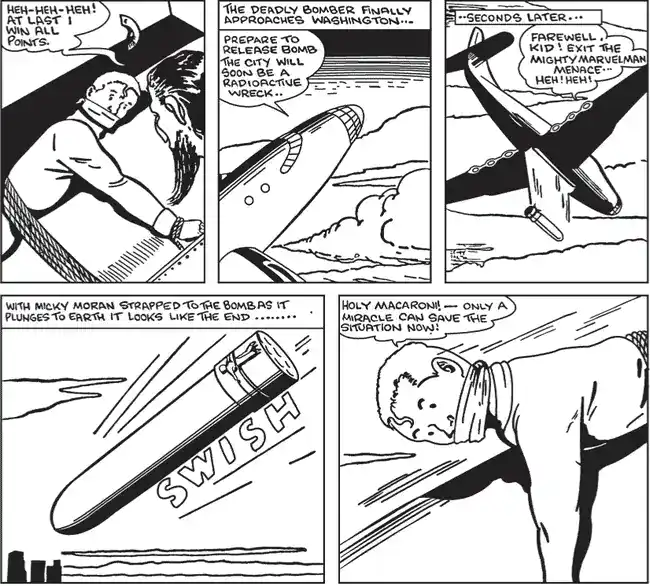
The only reason Micky survives is that SOMEHOW the bomb’s parachute manages to free him from his gag. I told you that luck must be one of his powers!
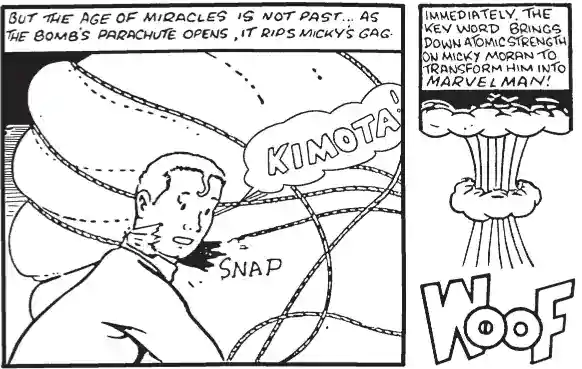
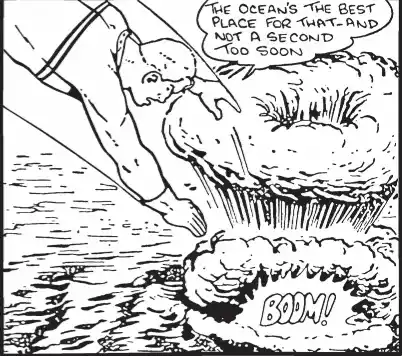
And that’s already the end! The story is in such a rush that we don’t even get proper dialogue.
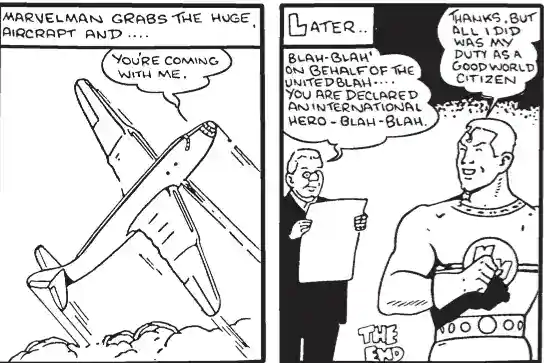
There’s a second Marvelman story in the book, once again being firmly in the atomic age.
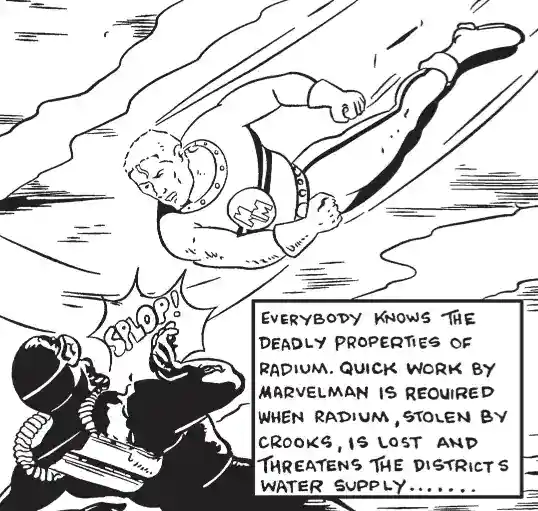
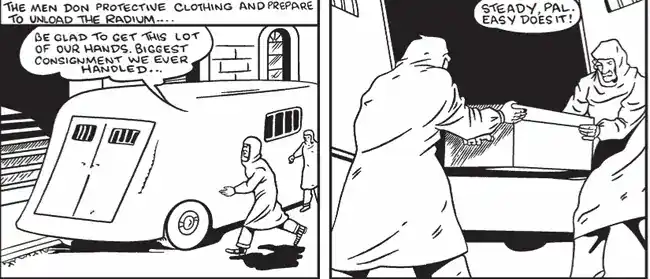
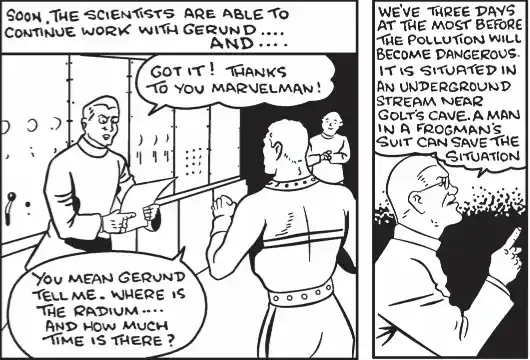
Although I am quite impressed to see 1954 comic book characters treat radioactive materials as dangerous.
Historical significance: 2/10
This would’ve been an easy 0/10 for decades. The character himself would end up being influential in 1985 (more on that soon), but it still doesn’t increase the score that much because you can literally start reading him in 1985 and lose absolutely nothing.
Silver Age-ness: 15/10
That is one of the weirdest origins I’ve seen, WHICH IS SAYING SOMETHING.
But also the bad guys bringing the kid along for absolutely no reason, which almost more Golden than Silver Age.
Does it stand the test of time? 0/10
I have the distinct impression that this already felt incredibly old-fashioned and dull even back in 1954. This is one of the most bare-bones superhero stories I’ve ever read.
How close is this to the modern character? 1/10
Okay why would Marvelman debut in the 25th issue of his own magazine?
That’s easy: it wasn’t his magazine. The previous issue was Captain Marvel #24, which was the UK reprint series of Fawcett’s Captain Marvel by publisher L. Miller & Son Ltd.
Issue #24 had even “The Marvelman” on the cover.
I’ve seen mentions that the issue contains an editorial stating that Captain Marvel retired from heroics to leave Marvelman in his place, but I haven’t been able to find a scan.
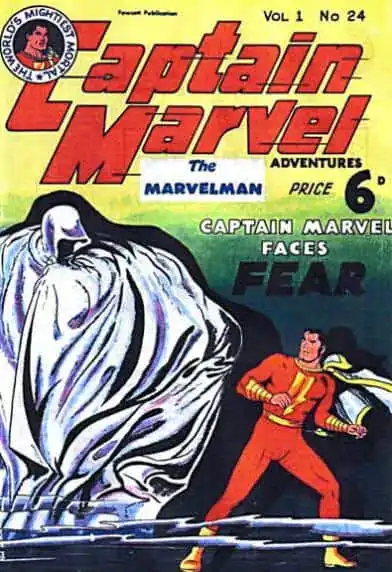
The UK reprints were selling pretty well, and even if it was a weekly title they wouldn’t run out of material too soon… remember, there were A LOT of Captain Marvel stories in the Golden Age.
Except, as we previously discussed, DC Comics basically sued Fawcett into oblivion, with Fawcett stopping publications altogether in 1954.
Which you might have noticed is the same year Marvelman debuts.
So the UK publisher simply asked Mick Anglo to basically clone Captain Marvel.
One day Leonard Miller phoned and said he wanted to see me urgently. His supply of the American material for the Captain Marvel series had suddenly been cut off. Had I any ideas? … So I quickly told him I had plenty of ideas, and for my trouble I received a regular supply of work for the next six years.
MICK ANGLO
The exact details of what Anglo did are a bit lost to time. Comics in the UK didn’t have credits at the time, and to keep the schedule (remember that Marvelman was a weekly title) Anglo implemented what will later be called the “Marvel method”.
Meaning he would come up with the plot, send it to a rotating staff of artists, and then add the dialogue. Complicating things is the fact that Anglo was ALSO an artist, so he most likely did pencils and/or layouts here and there.
Marvelman’s arch-nemesis, Doctor Gargunza, would be introduced in his second issue.
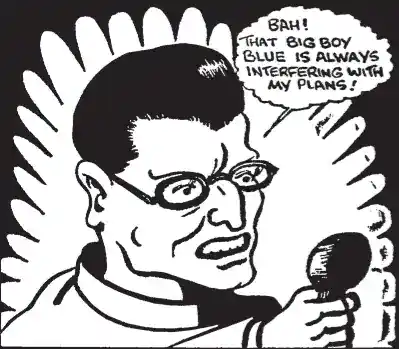
Marvelman wouldn’t be the only ripoff adaptation from the Marvel Family.
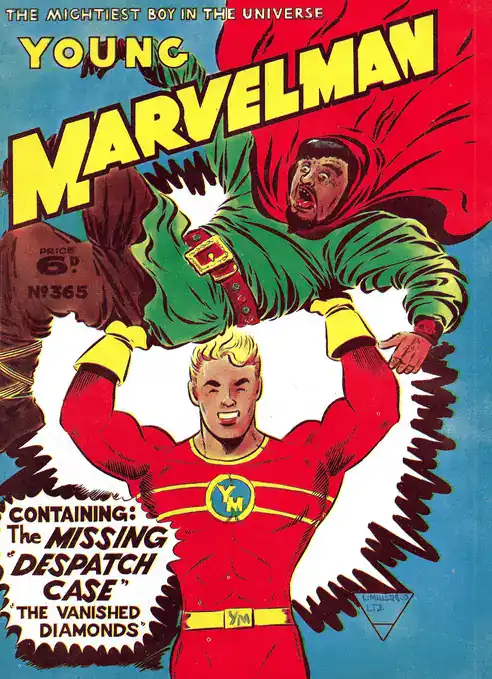
Young Marvelman filled Captain Marvel Junior’s spot, with his first appearance being Young Marvelman #25 also in 1954.
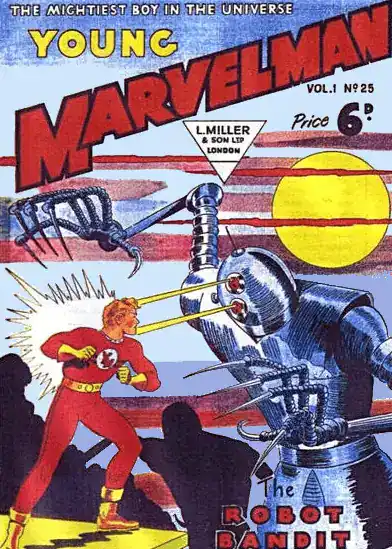
Possibly because Captain Marvel Junior had been one of Fawcett’s best sellers, they decided to clone him TWICE because in 1955 Marvelman #102 introduced Kid Marvelman.
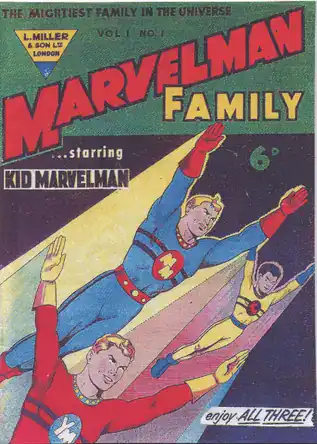
The trio starred in a separate title, Marvelman Family.
The series lasted “only” 30 issues, from 1956 to 1959: unlike its predecessor, it was a monthly title.
Marvelman proved to be even more successful in the UK than the Captain Marvel reprints, with the series reaching a respectable #370 (remember it’s a weekly) in 1963.
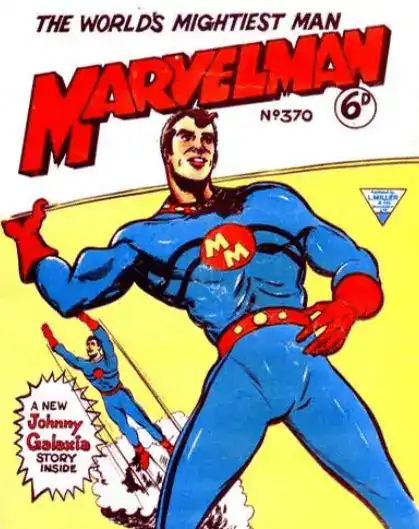
And he wasn’t just popular in the UK. His stories would also be published in Australia, New Zealand and Brazil.
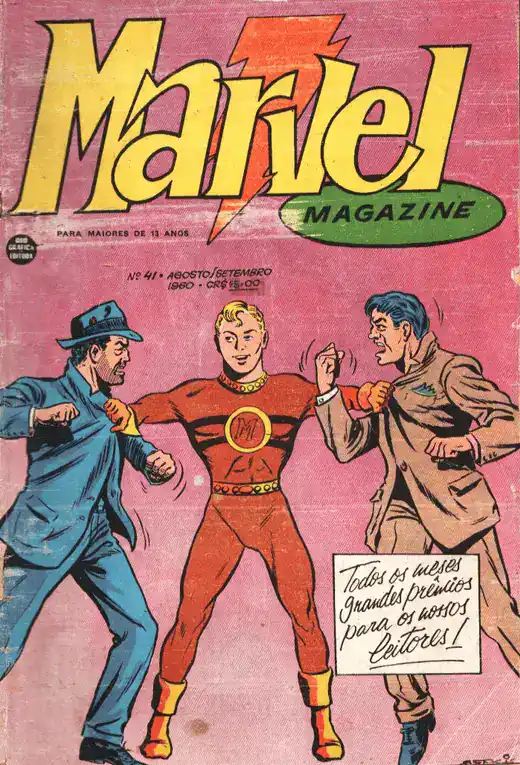
He was renamed “Jack Marvel” in Brazil, where he was also apparently recolored? I couldn’t find many references to this reprint. I know I have some Brazilian readers, so if you can shed some light into this I’d appreciate it.
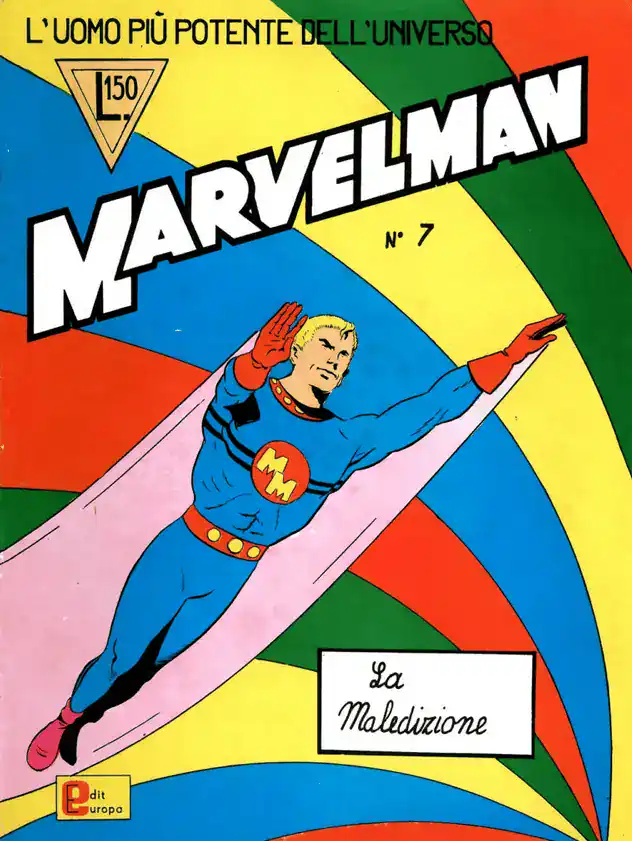
Despite being Italian I literally learned just now that Marvelman was published in Italy too!!!
Mostly because it was just for 8 issues between 1965 and 1966 by publisher Edit Europa (which I’ve also never heard).
The stuff I learn with this site never ceases to amaze me.
The success of Captain Marvel’s reprints first and of Marvelman’s adventures later was due, in no small part, to the ban of importing foreign comics into the UK.
In fact, the only reason Miller & Son was able to publish Captain Marvel was the existence of a loophole allowing reprints.
That ban was lifted at the end of 1959, and by 1960 sales of Marvelman’s titles dropped so much that it switched to being a monthly title. Adding to Mick Anglo leaving the company, the two final titles… Marvelman and Young Marvelman… ended publications in 1963.
In fact Miller & Son stopped publishing comics altogether that year, although weirdly enough they were still around until 1974 in some capacity or other.
And that would be the end of the story if, after Marvelman’s rights bounced back and forth for years, Quality Communications… believing the character had slipped into public domain… decided to revive the character in their anthology Warrior in 1982.
It was always going to be Marvelman. I knew the character’s history: I’d had a few Annuals as a kid and those cheap and nasty little comics. Wasn’t particularly thrilled with them, outside of occasional stunning art, but I’d always had a soft spot for Mick Anglo … So, given the difference between a brand-new character who would sell no more copies, or a somewhat forgotten character who might sell about a dozen more, I opted to follow the similar relaunch I’d done with Captain Britain—tease at first, then, as a bonus, surprise those who actually cared. If it failed, it was only six pages out of 52—the beauty of the anthology approach.
DEZ SKINN (editor of the Warrior magazine)
Warrior is QUITE a prestigious magazine: just consider that’s where V for Vendetta was first published.
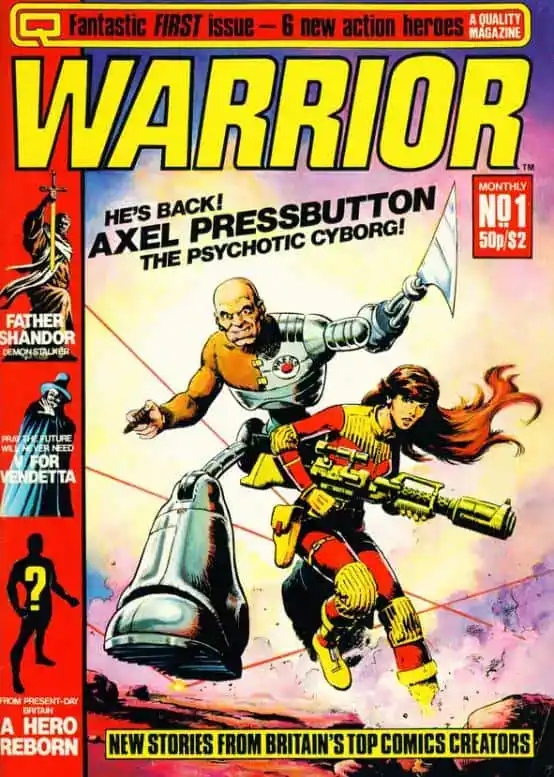
After other writers expressed a lack of interest in writing Marvelman, Dez Skinn gave a chance to Alan Moore. Who, like him, had read a little Marvelman in his youth.
Realizing that since I hadn’t seen an actual Marvelman since the early sixties the title had probably been discontinued, I wondered idly what Marvelman was doing these days. I was struck by the image of the eternally youthful and exuberant hero as a middle-aged man, trudging the streets and trying fruitlessly to remember his magic word.
ALAN MOORE
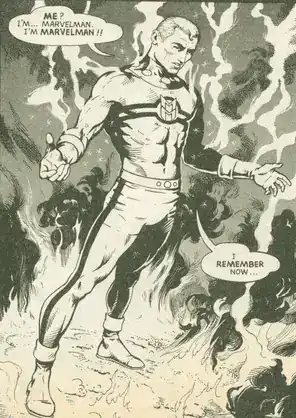
The revival included some incredible artwork by Garry Leach, but the serial had trouble keeping the schedule. Most likely as a combination of Leach’s detailed drawings and Moore’s notoriously heavy scripts.
He was replaced by Alan Davis, under suggestion by Alan Moore who had worked with him on Marvel UK’s Captain Britain.
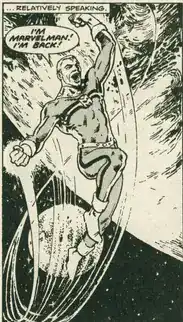
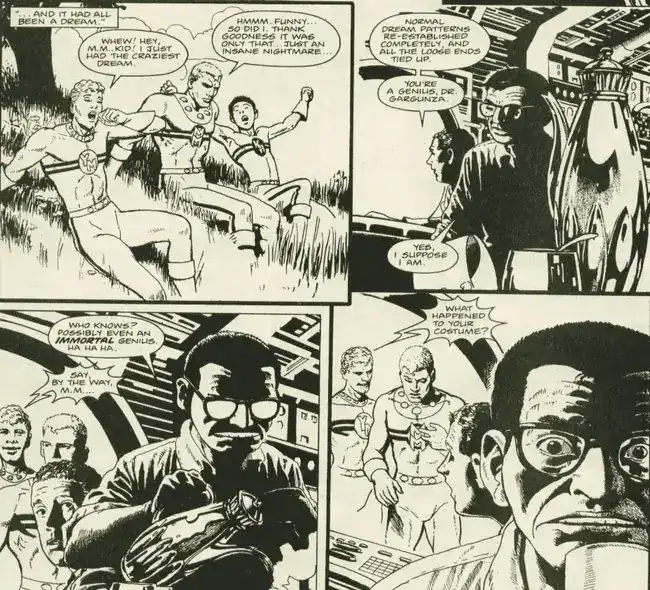
By the end of the Warrior run, the original Marvelman stories were retconned as dreams programmed by Gargunza to keep the all-powerful heroes under control.
Warrior didn’t last long: despite the critical acclaim, it didn’t sell very well (in fact, apparently it cost Quality Communications more money than it produced).
But the worst came after the publication of a Marvelman Special in 1984.
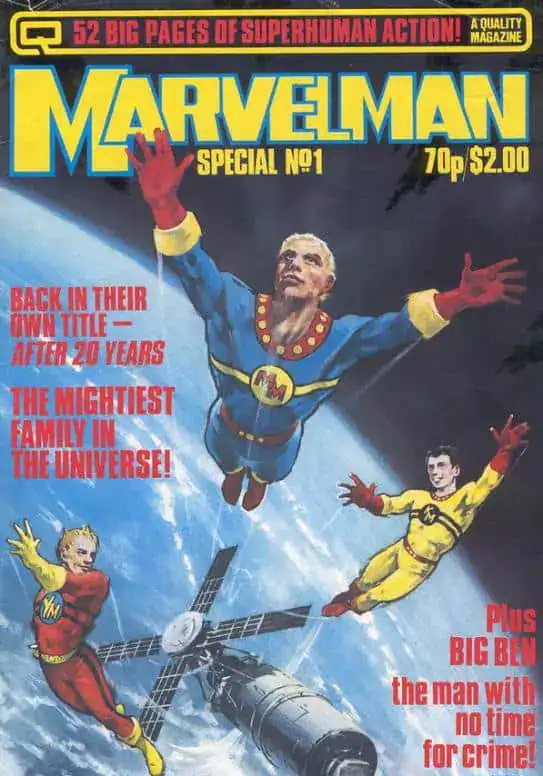
What exactly happened then is disputed.
Warrior would drop Marvelman after issue 21, and Skinn blamed on Marvel Comics, who took legal action for the rights of using “Marvel” in the title.
But also Alan Moore and Alan Davis were in a dispute over the ownership of the series, which was to put it bluntly a complete mess.
At the time, Marvelman was considered to be in the public domain (more on that later) for his classic stories, but the rights of the new stories were split between Quality Communications, Moore, Leach and Davis.
When all parties couldn’t come to an agreement, reportedly a young Grant Morrison wanted to take over the series, but was vetoed by Moore himself.
After negotiations with both Marvel and DC Comics, the rights were sold to Eclipse Comics and the character was renamed Miracleman.
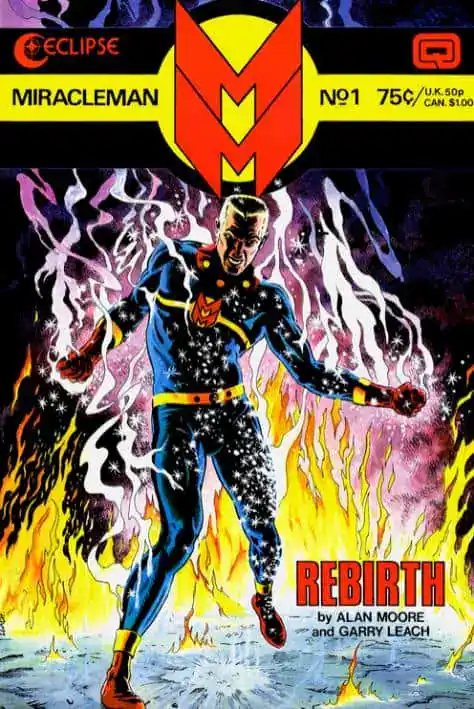
The Alan Moore run on Miracleman, which reprints some Warrior stories and lasts until issue 16, is an absolute masterpiece.
If by some reason you haven’t managed to read it, just consider that I personally rank it AT LEAST at the same level of Watchmen.
Just be warned that this goes A LOT more violent than even Watchmen.
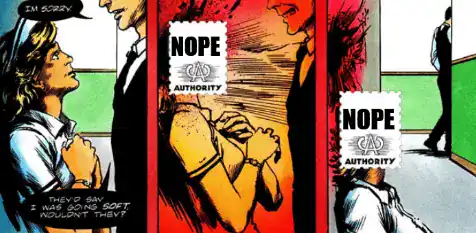
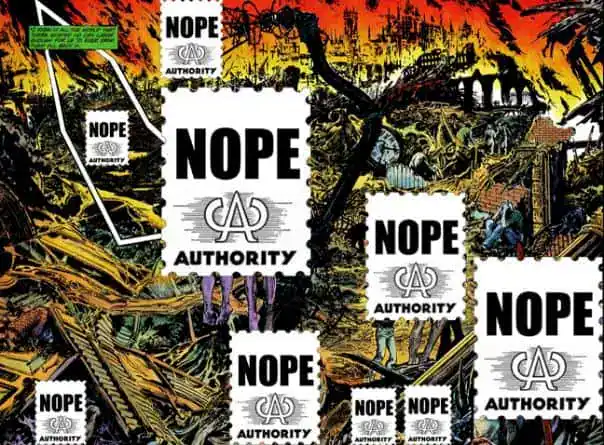
Miracleman #15 in particular has what is easily the most gut-wrenching double splash page ever printed in superhero comics.
You absolutely should read Miracleman but be warned: do not go into issue 15 with a full stomach or if you’re not ready to have nightmares for a while.
Alan Moore concluded the run with Miracleman #16, but he personally selected Neil Gaiman to continue the series. In his own way.
Moore said “now, I should warn you that by the end of Miracleman #16 I will have solved all crimes, ended all wars and created an absolutely perfect world where no further stories can occur. Do you want to back out now? Please feel free.” I said, “No, I’d love to.”
NEIL GAIMAN
Neil Gaiman would continue the series until #24 and I have to say that I consider it to the same level of Alan Moore’s run, with some peaks even surpassing him.
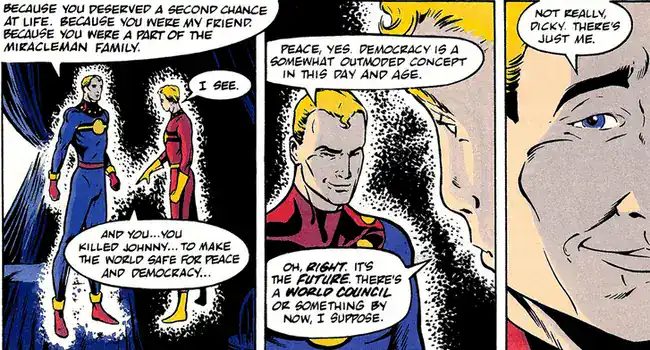
Unfortunately, publishing shenanigans once again proved to be Marvelman’s greatest nemesis.
Because in 1995 Eclipse declared bankruptcy. The publishing rights made the ownership of the series uncertain, making reprints unfeasible.
Then in 2009, evidence surfaced that Anglo actually DID hold ownership of Marvelman all the way back since 1954!
Joe Quesada struck a deal with Anglo himself (still alive: he would die in 2011 at the age of 95) to license the original material AND continue publications for Marvelman.
The rights for the name Miracleman are even MORE confusing, though, because there was a dispute whether the trademark was over THAT name was by Marvel or by Todd McFarlane.
Honestly I’m not so sure how McFarlane factors into this, and this mess is a headache to follow.
In any case, Marvel eventually stuck a deal with Alan Moore as well: his work would be reprinted by Marvel provided that his name would not be used in connection with the series. Moore would donate his initial royalties for the reprints to Anglo, who would also be credited by Marvel as the original Marvelman writer.
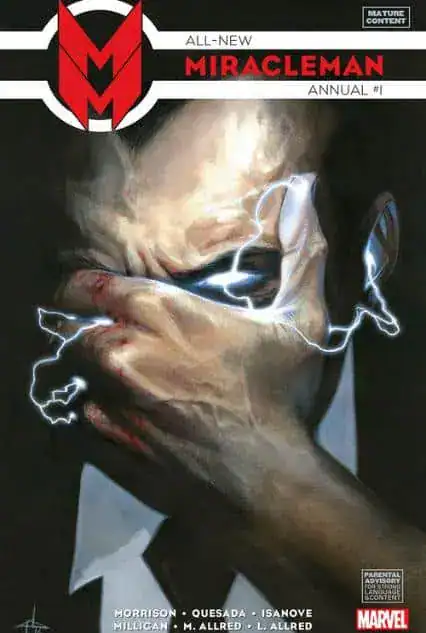
Marvel went through with the reprints, and in 2014 published “All-New Miracleman Annual” with a “lost story” from the 1980s that had been pitched to Warrior by… Grant Morrison, who finally DID manage to write the character after all.
All of Moore’s work was eventually reprinted and it sold EXTREMELY well, but as of 2025 the Neil Gaiman reprints and the possibility of using the character again has been put in indefinite pause considering the writer’s controversies.
Poor Marvelman/Miracleman just can’t catch a break.
Ownership doesn’t get more complicated than this; you didn’t even mention the part where Moore apparently came to believe he didn’t have the rights to the character in the first place.
“The rights for the name Miracleman are even MORE confusing, though, because there was a dispute whether the trademark was over THAT name was by Marvel or by Todd McFarlane. Honestly I’m not so sure how McFarlane factors into this, and this mess is a headache to follow.”
The McFarlane involvement in this mess… is complicated but important at the same time.
Initially, he acquired all the remaining stock from the bankruptcy of Eclipse Comics, including all trademarks, logos, and the rights to the characters. He thought he had the rights to the Marvelman character and, in 2000, planned to integrate him into his Spawn Universe on the series of Hellspawn, of all places. There was a planned publication of an issue featuring Mike Moran on the cover and, most importantly, making a statue of MM in all his glory.
All this was scrapped in the “last minute” because of the legal battle of a certain character named Angela, who was “co-created” by you-know-who. The involvement of that “writer” was essential because it was the reason Marvel was in the middle of the legal battle in the first place and when they won, in compensation, that “writer” allowed Marvel to purchase Angela and be integrated in the Marvel Universe.
If this is not a rich character backstory, it is at least a complex one.
How curious that a character that was created to be a stand-in for another _very_ traditional character ended up becoming something so unique.
I always focus on how Marvelman made without the cape from the get go. It is the one thing that feels ahead of his time in the original run.
There isn’t a whole lot of information about Brazilian publication of Marvelman back in the 1950s and 1960s.
However, I can offer this couple of links.
http://www.guiadosquadrinhos.com/personagem/miracleman-(jack-marvel)-(michael-micky-moran)/183
http://www.guiadosquadrinhos.com/personagem/gibis-com/miracleman-(jack-marvel)-(michael-micky-moran)/183
In Brazil, Marvelman was published by RGE from 1957 to 1966, in “Marvel Magazine” and “Capitão Marvel Magazine”, with a couple of editions of “Almanaque do Capitão Marvel” now and then. RGE is a very traditional publisher, established in 1952 and still operating to this day, with the name “Editora Globo” adopted since 1986.
As you can see, they had a very liberal mix in those magazines. Apparently Marvelman (and presumably Junior and Kid too) were treated as essentially yet other members of the Marvel Family, alongside Captain Marvel Junior and Mary Marvel. Some of the later issues even include Quality characters such as Plastic Man in the mix.
Just a thought – I understand the desire to not mention the names of certain comics creators who have since been associated with bad behaviors, but since there are multiples of them, maybe it would be fine to just use their initials instead of them all being identical blocks of blackout?
That’s a good point, and I may do that if I have to mention more than one in the same review, but using just the initials might be confusing.
Although I might use the black highlight the first time and then the initials; we’ll see.