
The first Eternals series ended in 1978, without resolving any of its plots or connecting it to the Marvel Universe. So how did THAT happen?
It didn’t take long: less than a year, in fact.
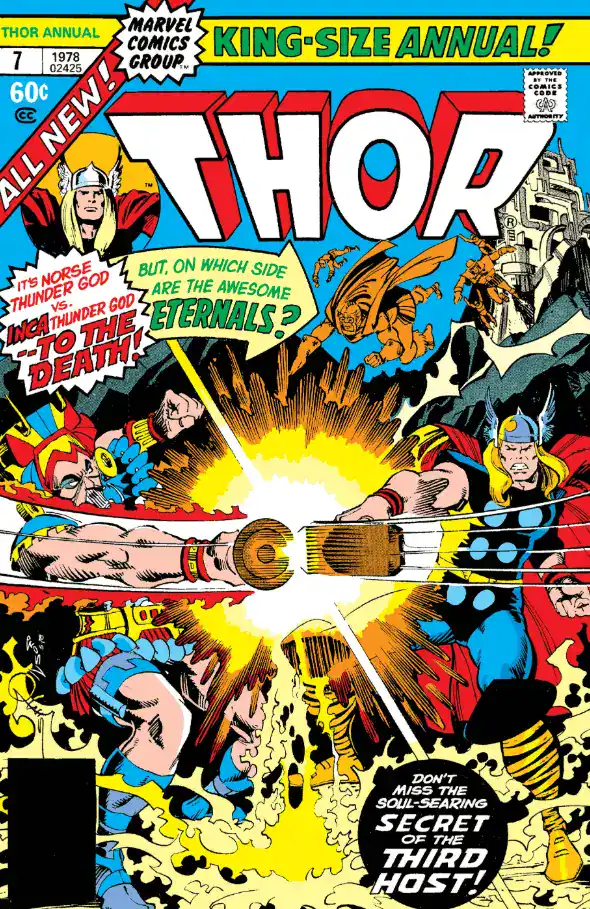
Thor Annual #7 (1979)
by Roy Thomas & Walt Simonson
Of all the series where the Eternals would end up, Thor makes the most sense given their mythological connection… and the least sense considering there are already the actual Olympian gods in the series.
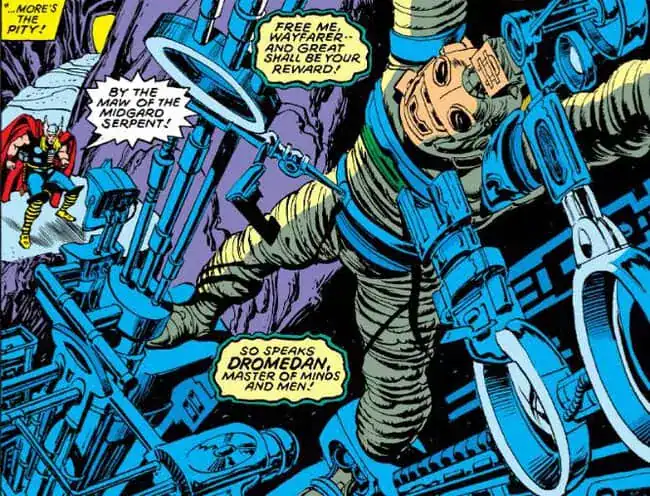
The first character from the Eternal series to be brought back is Dromedan, in a scene that takes place in the past.
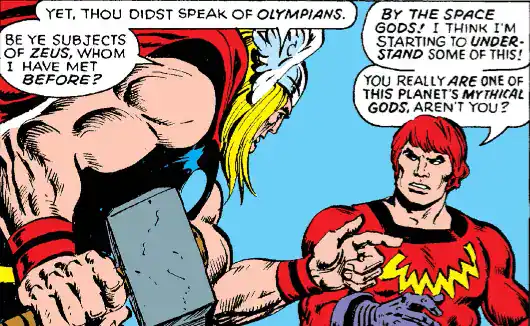
After meeting the Polar Eternals, Thor is given a crash course on the Eternals.
It is kind of funny that the Eternals have been around Midgard* for a million years, and yet Thor only found out around 1,000 AD.
*Earth
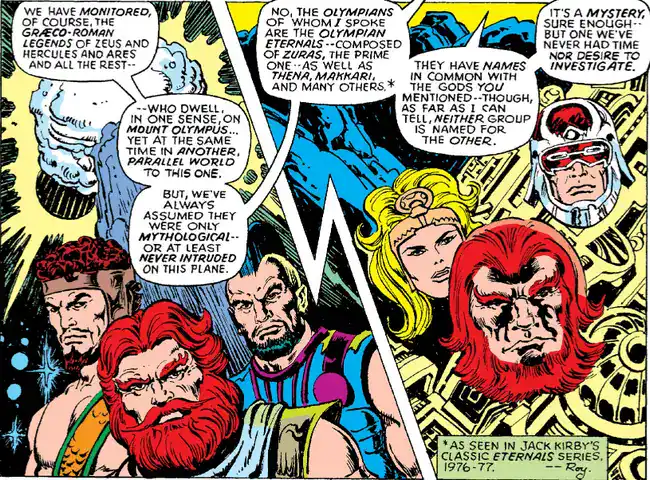
I’ve seen plenty of people ridicule the idea that both the Eternals and the actual gods exist in the Marvel Universe. That has never bothered me, considering I found out very early in my reading history (more on that below).
I actually see that as a positive, since it makes the universe more vibrant. That’s like complaining that both magic and science fiction technology are real in the same universe: you get twice the fun craziness, why are you complaining!?
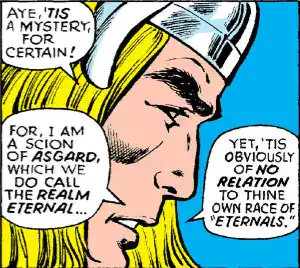
Thor #283 (1979)
by Roy Thomas & John Buscema
The following year, Thor meets Celestials in the present day.

John Buscema does a great job at giving the Celestials a distinct Kirby feeling and selling their gigantic scale.
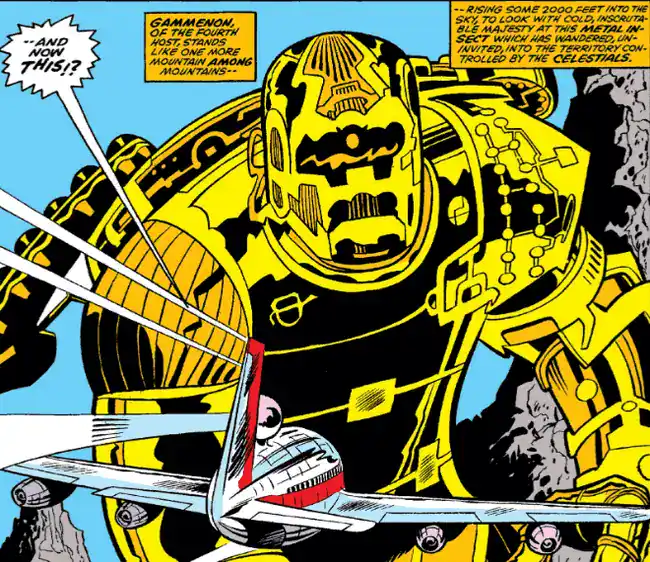
Thor #284 (1979)
by Roy Thomas & John Buscema
Ajak is the first good Eternal from the original series to meet Thor (as Don Blake first).
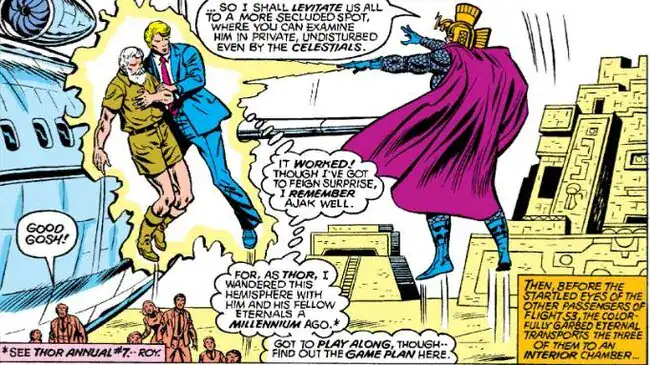
Perhaps the biggest plot left unfinished by the original series was the fact that the Celestials were supposed to judge Earth within 50 years from their arrival.
That would be 2026, so fingers crossed.
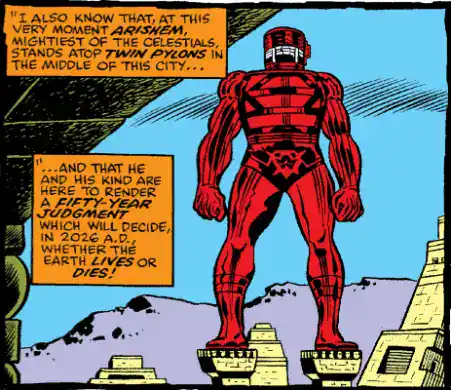
The Eternals (and Margo) have been doing absolutely nothing since their last appearance.
Yeah that’s on brand for them.
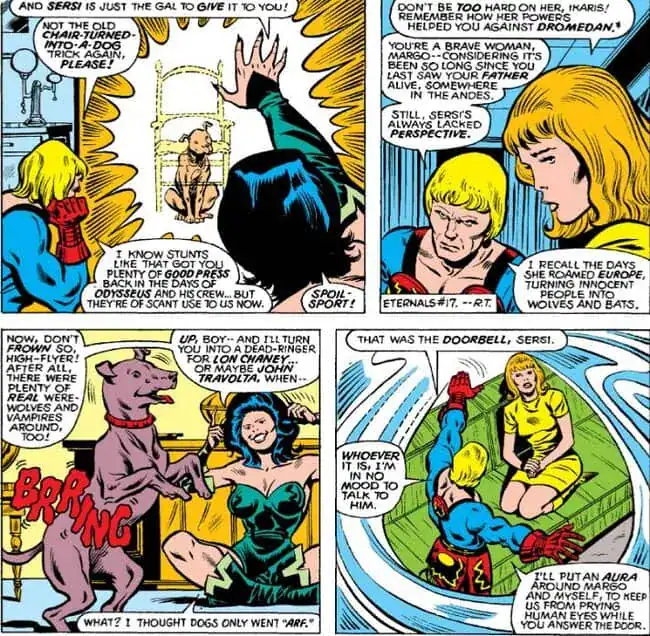
Thor #285 (1979)
by Roy Thomas & John Buscema
Sersi is the first main Eternal to meet Thor, while acknowledging that she didn’t even get to meet Karkas during the original series.
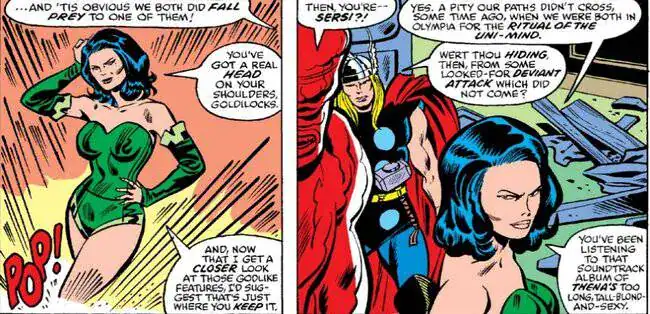
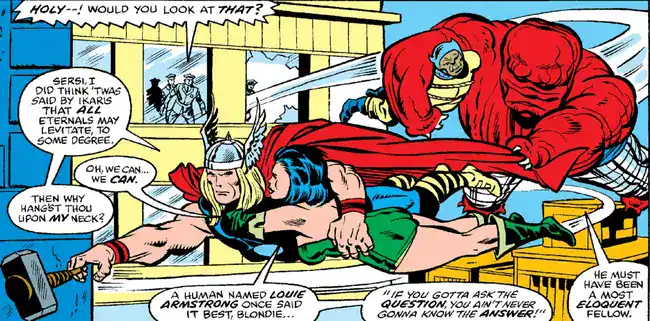
Thor #286 (1979)
by Roy Thomas & Keith Pollard
Multiple times in this period, Sersi makes it a point to mention that her powers are only illusions.
My guess is that Roy Thomas was uncomfortable in how much her transmutation powers could break the story.
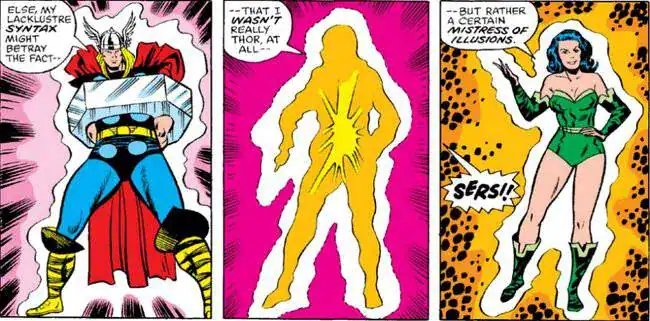
Thor #287 (1979)
by Roy Thomas & Keith Pollard
After helping the Eternals deal with a new Deviant plot, Thor is brought to Olympia.
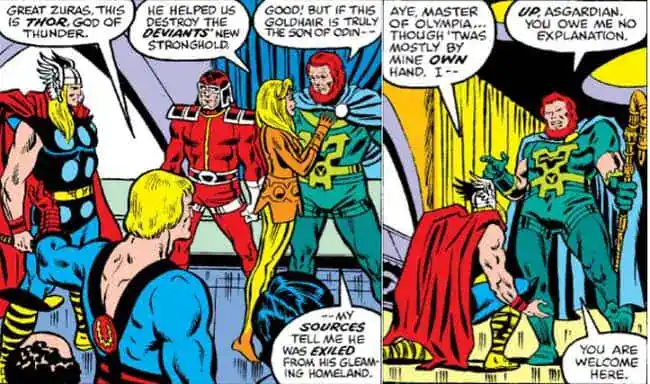
While he’s there, he deals with another unresolved plot: the Forgotten One is returned to Olympia by the Celestial with a message: “Stop getting in the way”.
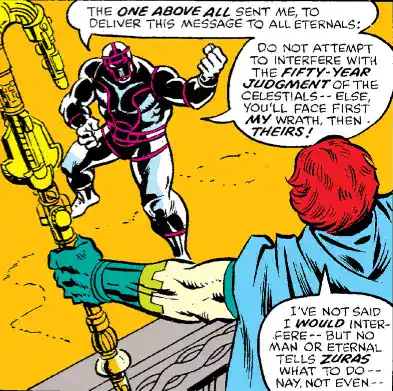
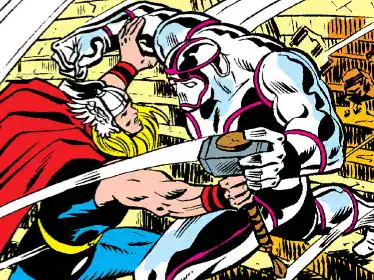
That’s mostly so we can have a Thor vs Generic Strong Guy battle, though.
Thor #288 (1979)
by Roy Thomas & Keith Pollard
During the fight, Thor and the Forgotten One are teleported to the Celestial ship, where we first see their leader: the One-Above-All.
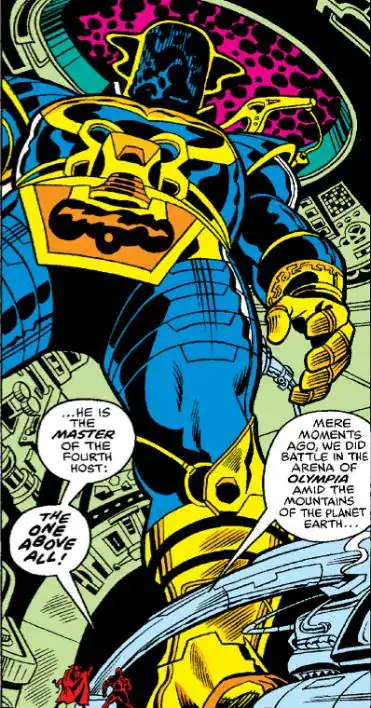
We will later have a good look at its “face”, but the original idea seems to be that it was perpetually hidden by a black hole!!!
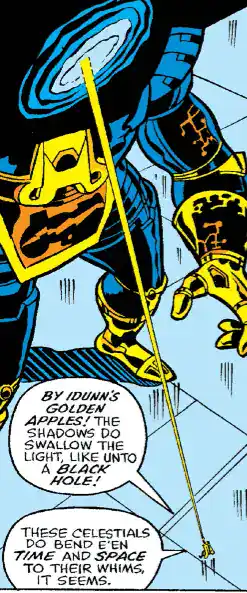
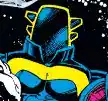
This characteristic is lost in later appearances. The One-Above-All is the most likely Celestial to show up in cosmic battles, like during Infinity Gauntlet, and his head is shown to lack any distinct features.
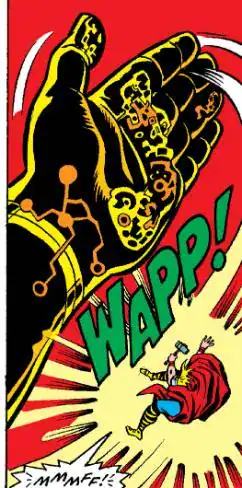
Thor is ridiculously outmatched throughout all his encounters with the Celestials.
Thor #291 (1980)
by Roy Thomas & Keith Pollard
Thor was in the middle of like twelve different mythological subplots during all that, so it takes him a couple of issues before discovering that around 1,000 AD both his father Odin, Zeus and other deities bowed to the Celestials in their previous visit.
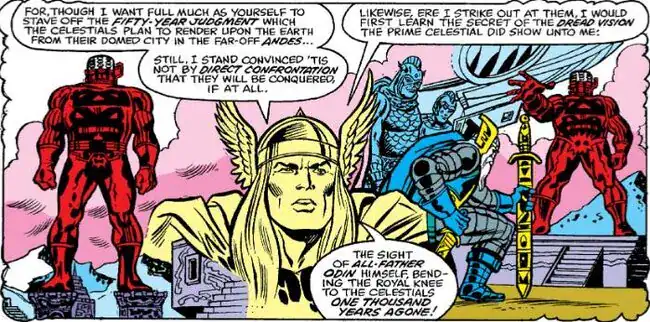
That’s right before both Odin and Zeus declare war on the Eternals.
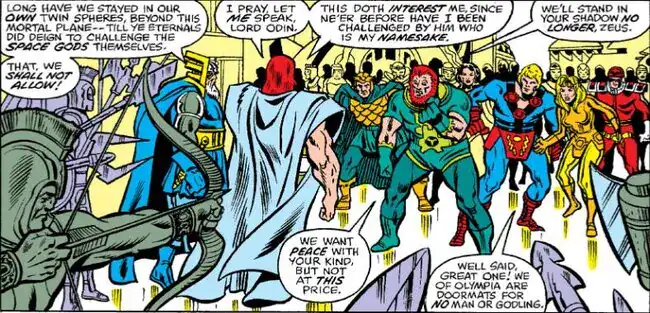
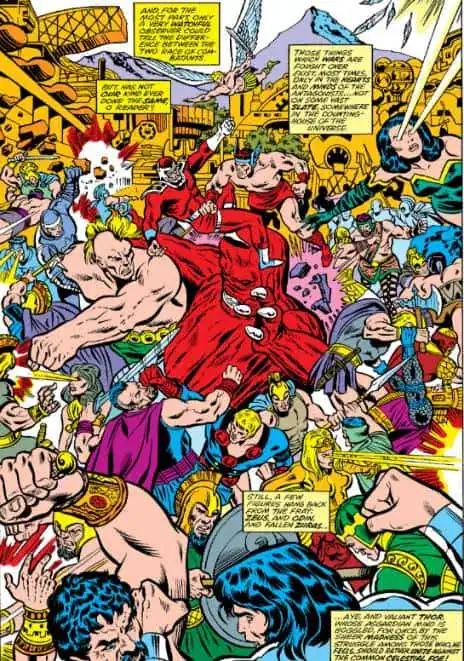
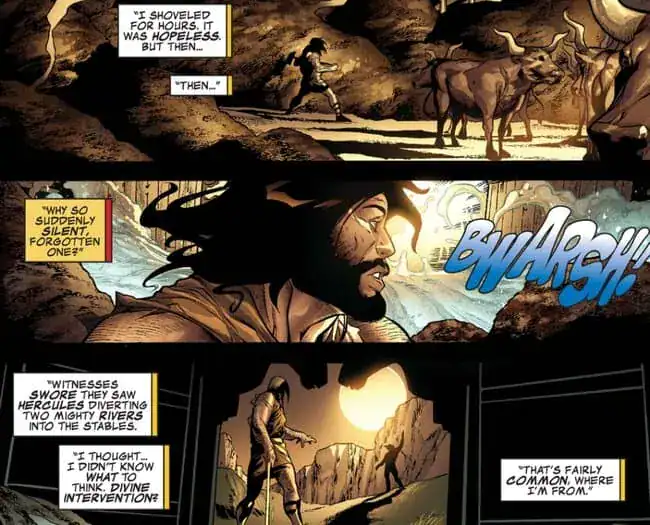
The Forgotten One fights Hercules, acknowledging that the Eternal was the one to carry out one of his labors.
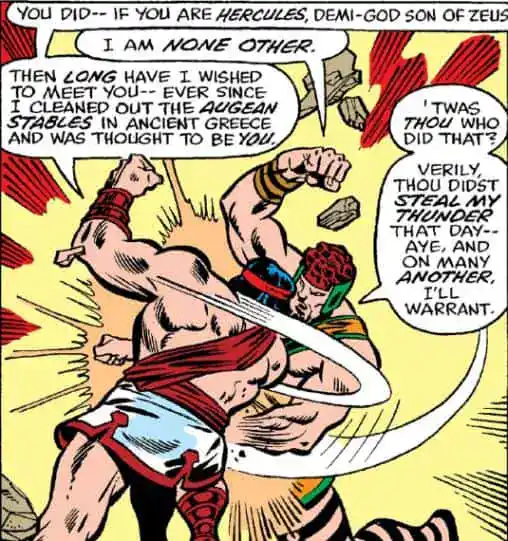
That’s actually acknowledged by Incredible Hercules #116 from 2008.
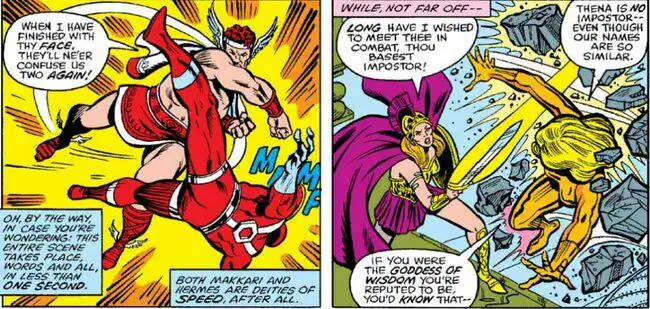
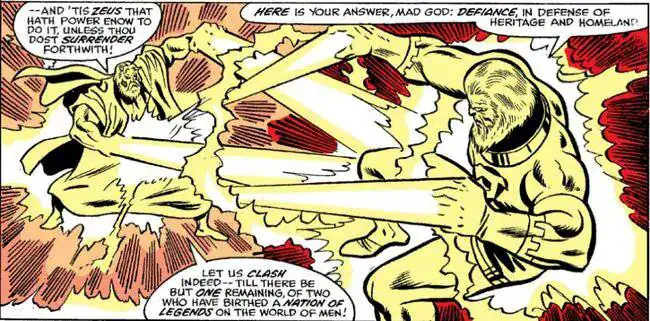
Other fights include Makkari vs Hermes, Thena vs Athena and Zuras vs Zeus.
Sadly we don’t get Sersi vs Circe or Ikaris vs Icarus.
Thor #292 (1980)
by Roy Thomas & Keith Pollard
Zeus and Zuras decide to establish a truce, while Odin is still very much willing to attack the Celestials no matter what.
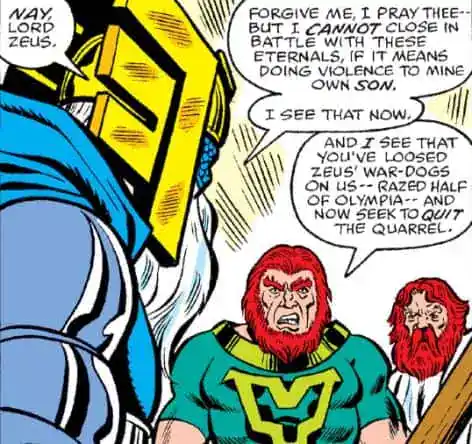
Hilariously, the actual reason why Zeus agreed to attack the Eternals is that he thought other gods were making fun of him for having imitators, and he agreed to the truce after noticing that Odin wasn’t actually making fun of him.
This is so incredibly petty that it 100% fits the mythological Zeus.
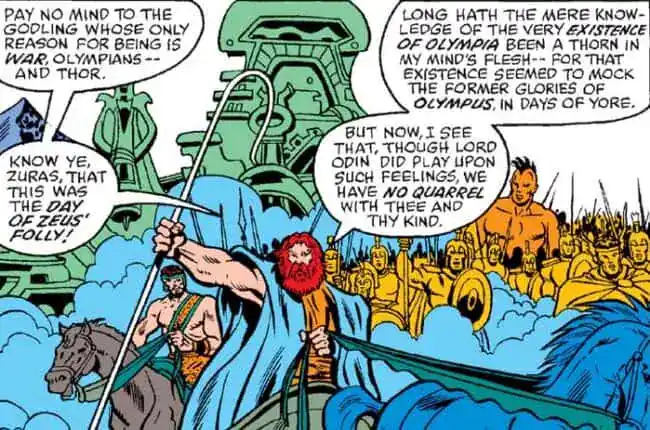
On his part, Zuras decides that the Eternals are not going to do anything.
You can’t say that they’re inconsistent in their commitment to stall for time.
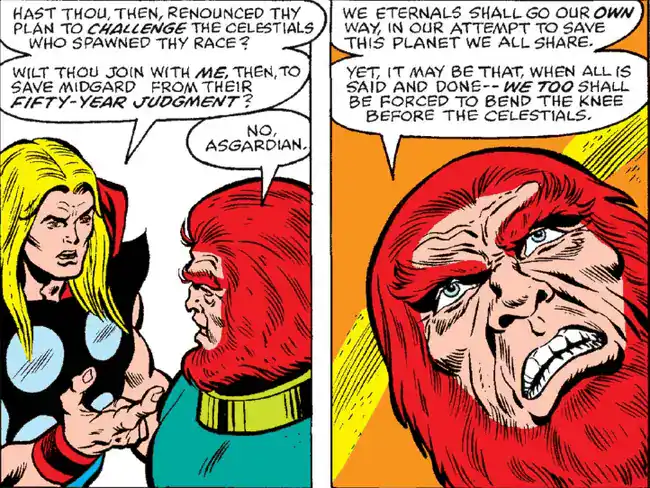
Thor #300 (1980)
written by Mark Gruenwald & Ralph Macchio
pencils by Keith Pollard
After the longest and most pointless series of flashbacks ever… seriously, Thor #293 to #299 are one colossal infodump… we finally learn what happened in 1,000 AD.
The gods of Earth tried to stop the Celestials, and they were kicked SO HARD that they swore to stop interfering with humanity.
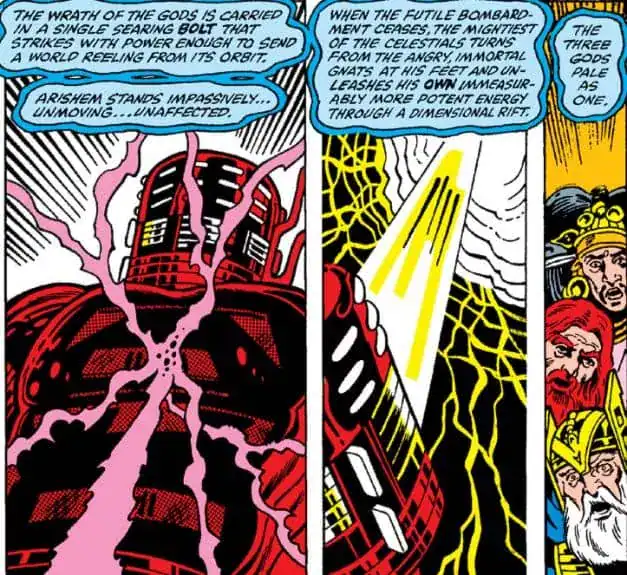
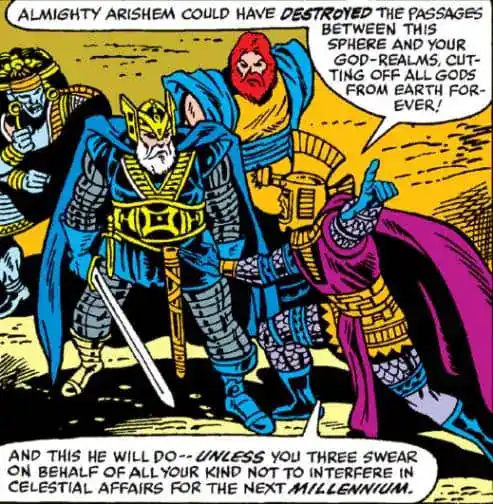
The story also reveals that the Destroyer, the god-killing armor Thor encountered in the Silver Age, is actually a superweapon Odin created to one day destroy the Celestials.
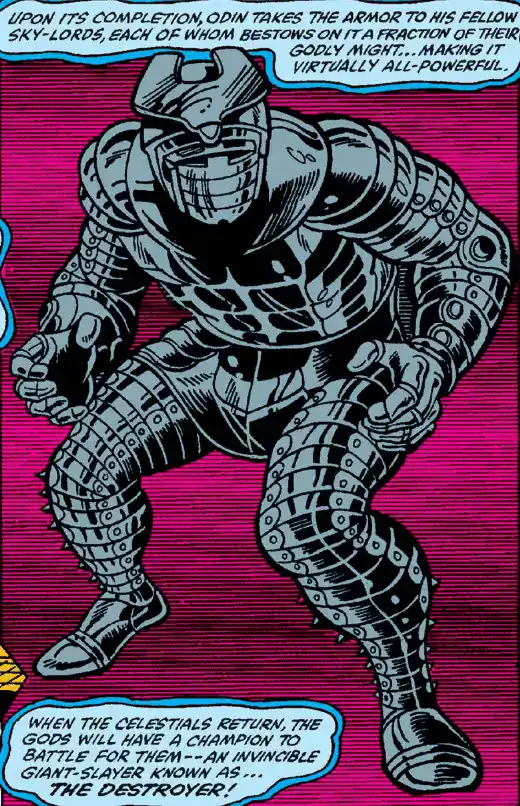
Another Silver Age superweapon, the gigantic Oversword of Asgard, is also revealed to have been created by Odin to fight the Celestials.
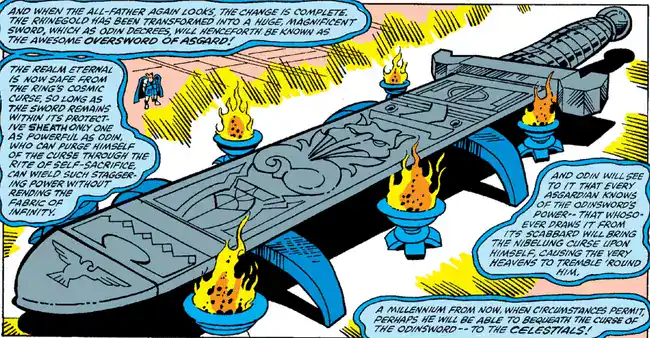
Also the sword was forged by using the Ring of the Nibelung… yes, that one.
This storyline is absolutely insane.
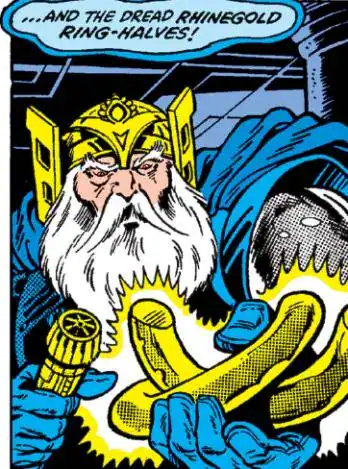
I mean… the entire thing, by which I mean half a dozen issues of infodumps, is narrated by Odin’s severed and sentient magical eyeball.
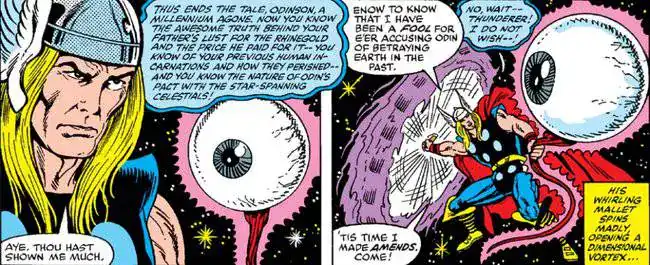
To recap, Odin’s plan is to attack the entire Celestial horde with the Destroyer armor.
Which is powered by all the souls of all the gods of Asgard except Thor.
Wielding the Oversword forged with the Ring of the Nibelung.
Assisted by the Uni-Mind of all fused Eternals.
This comic is AWESOME.
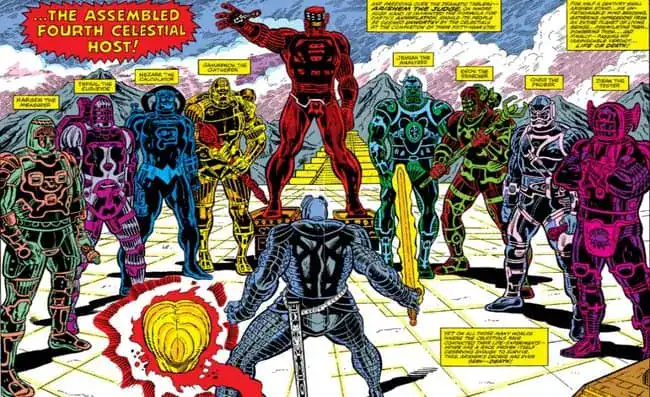
All that buildup ends up meaning absolutely nothing, which I actually liked: Odin spent a thousand years of planning and forged two universe-destroying superweapons for this fight… all for nothing, because the Celestials are THAT superior.
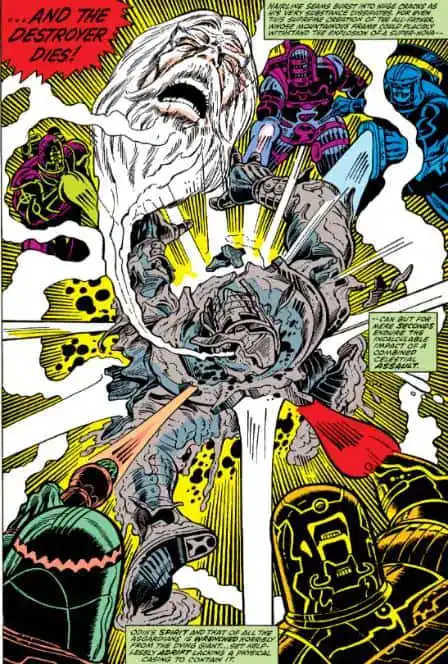
Speaking of useless: Thor actually manages to impale Arishem with the Oversword… which does absolutely no damage.
Arishem also gets rid of the Curse of the Nibelung, which the series has spent ALMOST A YEAR overhyping… in a single panel.

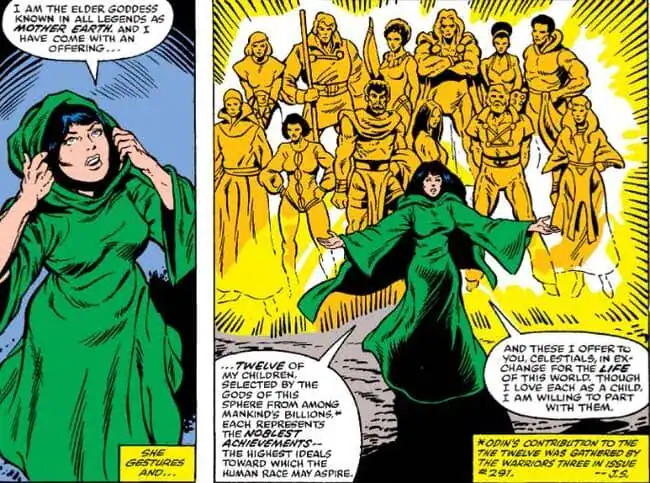
It’s heavily implied that Arishem would have decided to destroy the Earth (even in advance of his original 50 year deadline) if it wasn’t for Mother Earth showing up to offer some vague proof that the Earth is still worth it.
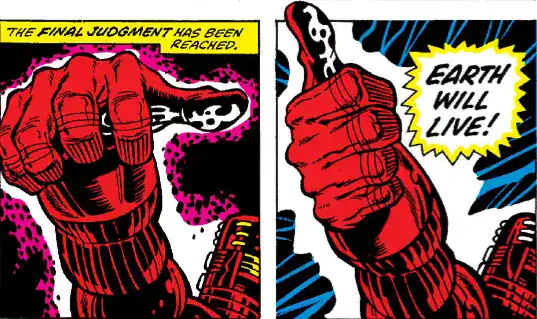
In my headcanon, Arishem just gives her a thumbs up because this storyline has REALLY overstayed its welcome and he’s just tired.
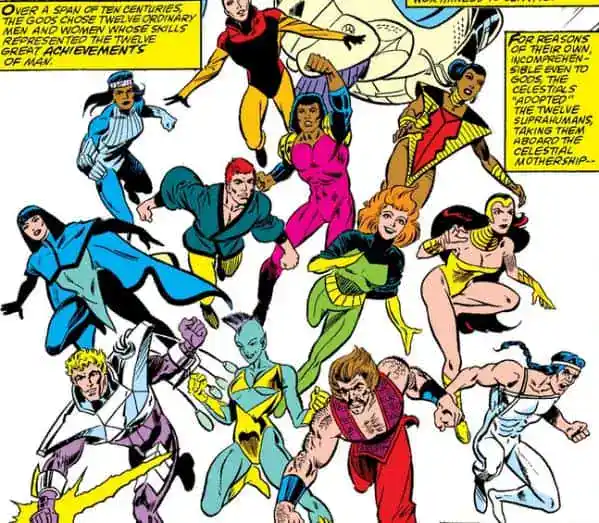
The “proof” was the creation of the Young Gods, a bunch of humans that were granted divine powers by various pantheons.
The only reason you MIGHT have heard of them is that they show up in a Spider-Man Annual that attempts to close a subplot from the Original Clone Saga.
They’re completely wasted characters, but in a way… it IS keeping in line with Kirby’s spirit to base the resolution of the original conflict on a bunch of new characters that won’t go anywhere.
Iron Man Annual #6 (1983)
by Peter Gillis & Luke McDonnell
This is an unexpected appearance. Not only it’s on Iron Man, it’s the period where Jim Rhodes was the one in the armor.
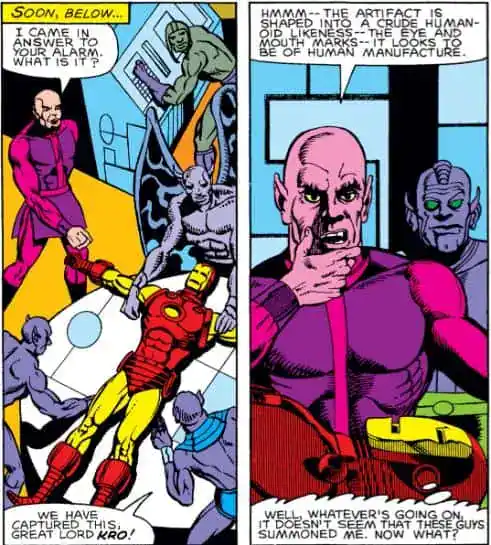
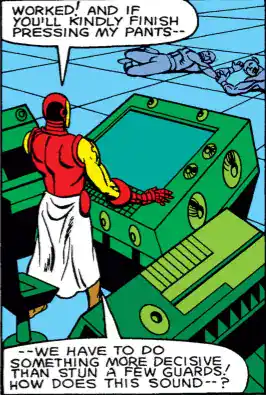
This is not a very good comic. But it does give us this panel, presented without context.
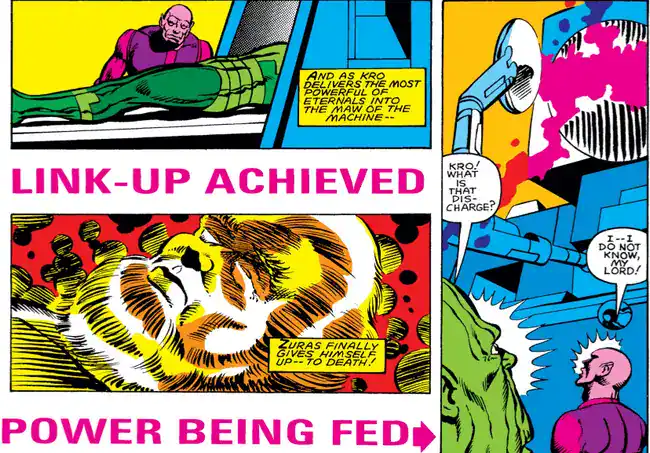
Most importantly for the Eternals, the mind of Zuras evolves past the physical plane or something like that, with Thena becoming effectively the new leader.
(I did not add the pink text. The comic is like that.)

Avengers #246 (1984)
by Roger Stern & Al Milgrom
This was my first ever exposure to the Eternals: I had started reading Avengers regularly just a few issues earlier.
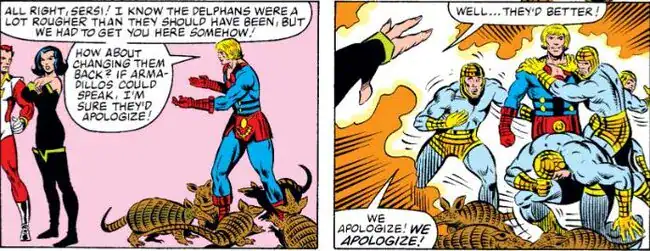
This is where the latest recruit Starfox crashes Sersi’s latest party, together with Wasp and She-Hulk.
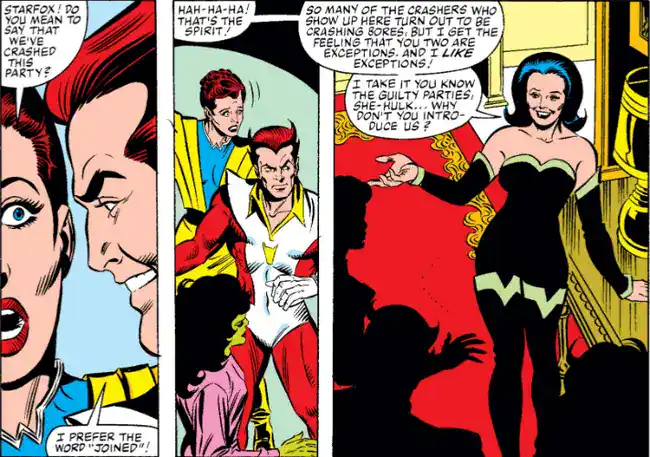
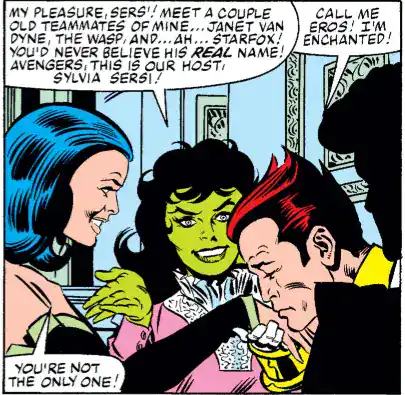
Because of this story, it’s still quite hard for me to accept that Domo is little more than a footnote and not a major part of the Eternals.
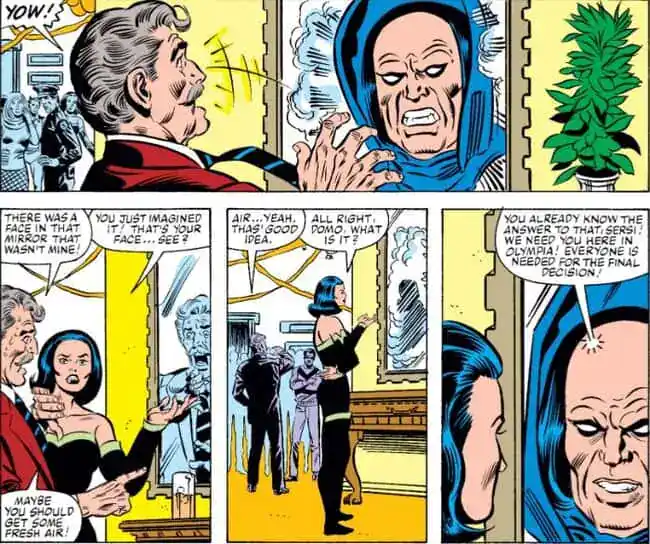
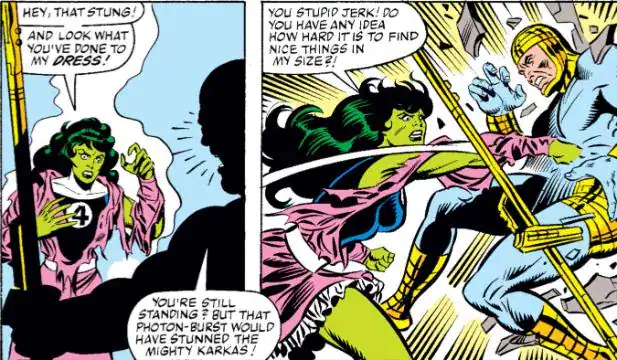
Because of Sersi, the Avengers are mixed up with an attack from the Delphan Brothers.
Avengers #247 (1984)
by Roger Stern & Al Milgrom
After everyone is called back to Olympia…
…we are given a history lessons that combines the one we already know for the Eternals of Earth, and the one given in the first Thanos appearance about the Eternals of Titan.
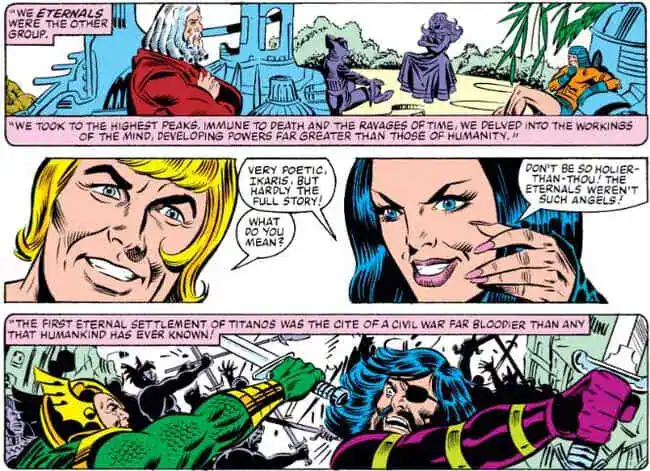
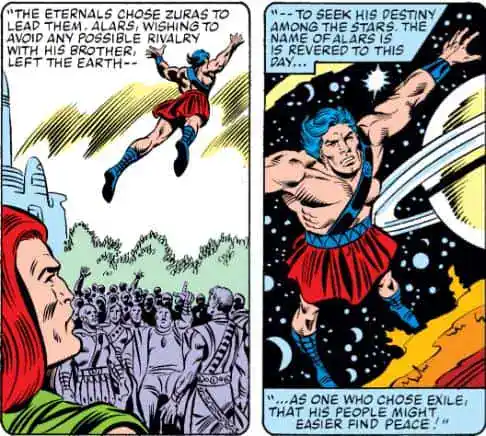
Because I learned this so early in my reading history, this has always felt natural to me.
But when you think about it, this is an excellent worldbuilding fix because it manages to weave together the history of two completely separate stories that were not originally conceived to be in the same universe, WITHOUT cheapening either one OR making the universe smaller.
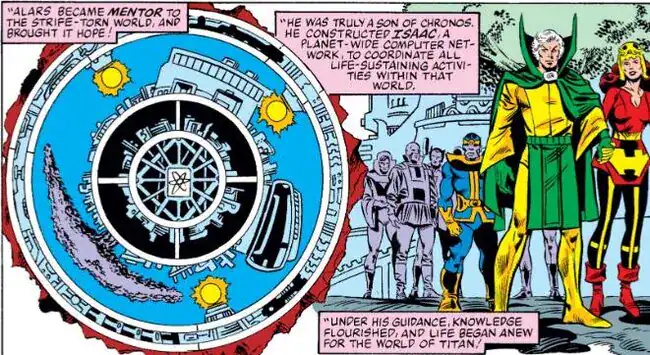
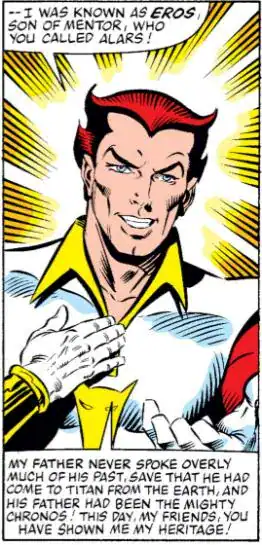
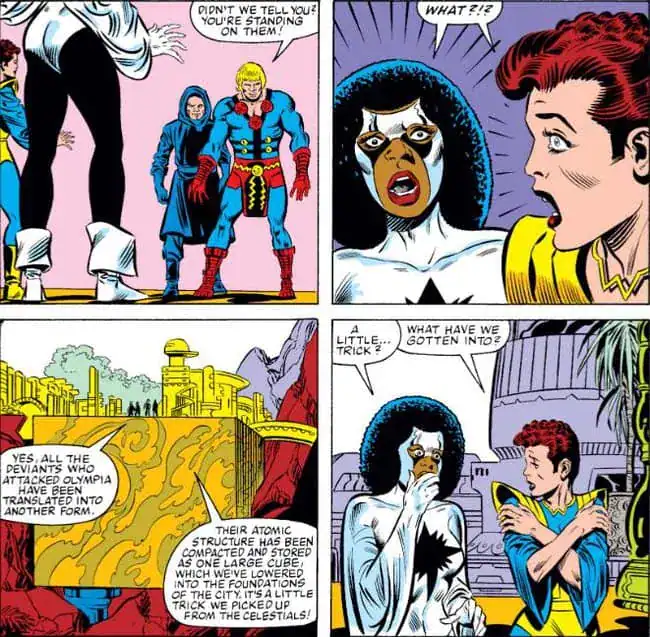
Another bit from this issue that I have always loved is how it still makes the Eternals feel sufficiently alien and morally ambiguous.
Because those Deviants that attacked Olympia during the Iron Man Annual?
THIS is what happened to them.
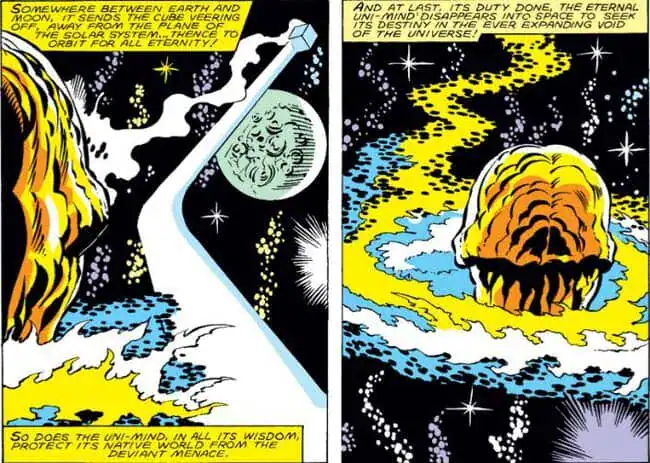
At the end of the following issue, the Uni-Mind brings the remains of those Deviants into space.
So technically Earth must be missing a ton of Eternals after this story, but because of the various retcons involving them it’s impossible to figure out if they’re still supposed to be around.
Eternals volume 2 (1985 to 1986)
#1 to 8 by Peter Gillis & Sal Buscema
#9 to 12 by Walt Simonson & various (Sal Buscema, Keith Pollard, Paul Ryan)
The Eternals then received a new 12 issue series. I considered reviewing it, but most of it is quite tedious and, well, not that great.
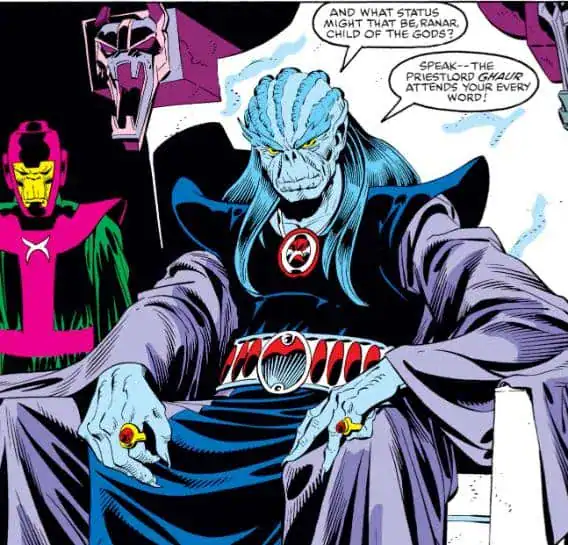
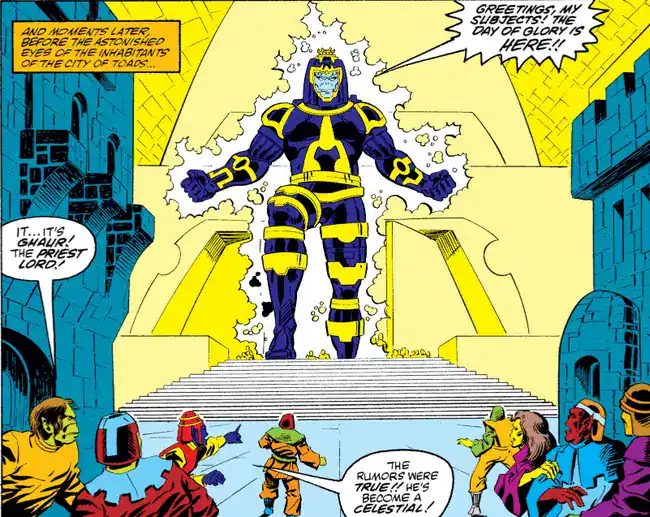
Following the death of Brother Tode and with Kro becoming a more ambiguous figure, the new Deviant leader and major bad guy becomes Ghaur.
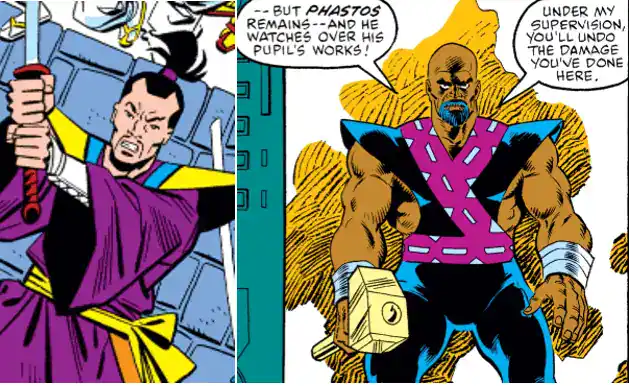
The series also makes Kingo Sunen a main character (after having only 2 panels in the original series) and introduces a new Eternal with Phastos.
Neither of them does anything interesting for the whole 12 issues.
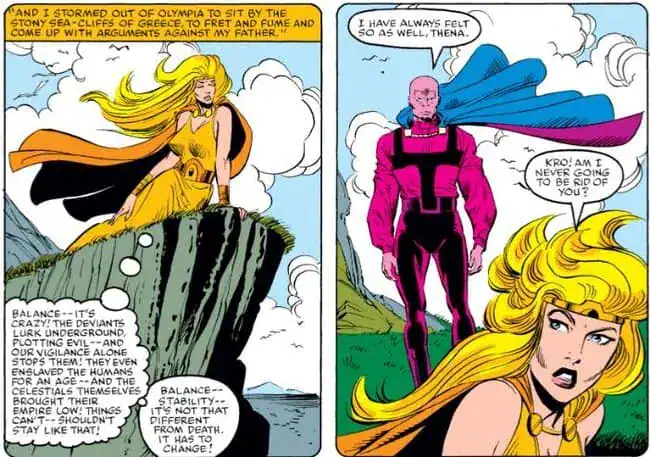
A major part of the book is the relationship between Kro and Thena. She abdicates her position of leadership (in favor of Ikaris) and spends nearly the entire time teleporting across the planet with Kro to avoid both Eternals and Deviants.
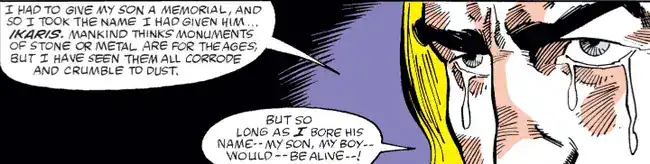
Ikaris is given a tragic backstory about giving wings to his son.
Sounds familiar.
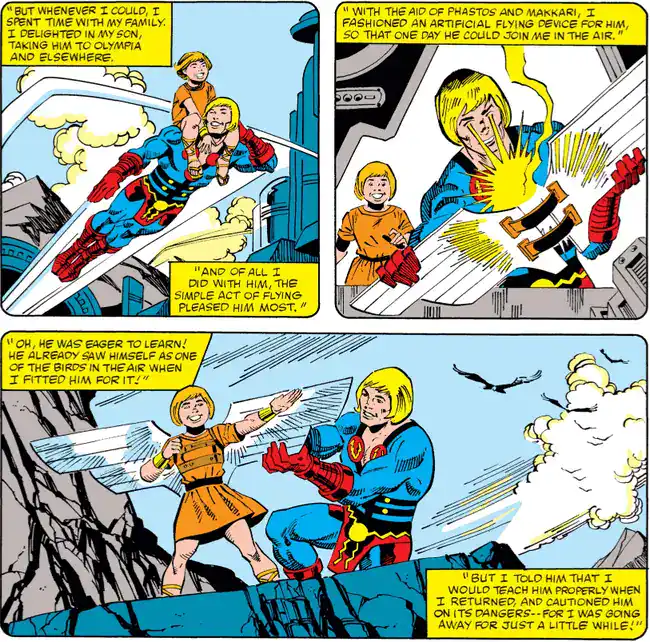
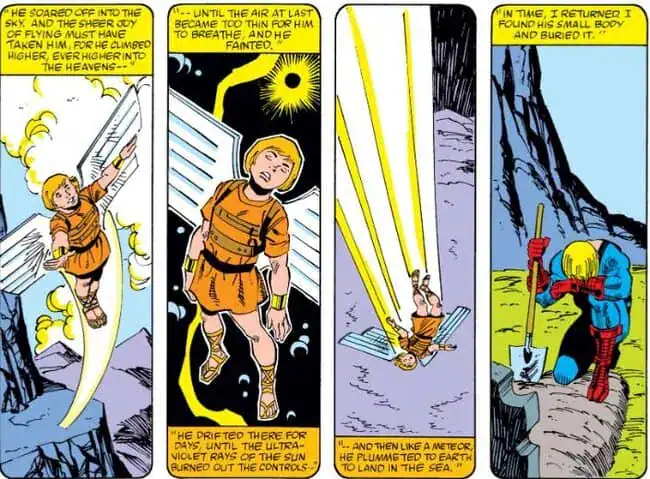
This is an amazing backstory that truly humanizes Ikaris and gives him a proper context.
He proceeds to be lethally boring for the rest of the series.
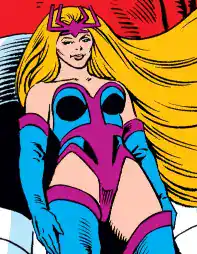
We also finally meet Thena’s mother, Cybele.
She also, say it with me, does nothing interesting the entire series.
In the big finale, it turns out that the Celestial said to have been killed by the others in Eternals #18 has actually been sleeping the whole time (hence he’s typically called the Dreaming Celestial).
Ghaur steals its power, leading to a Big Dumb Fight involving the Avengers.

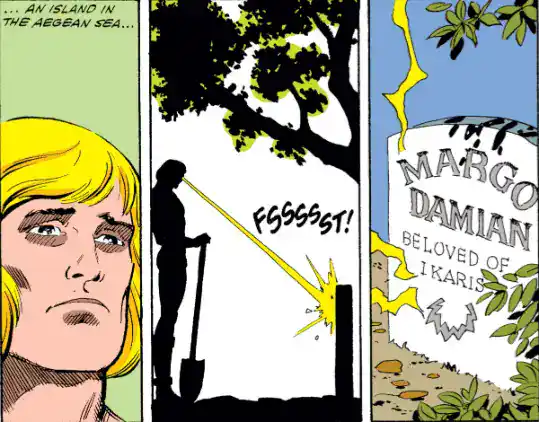
Also Margo gets killed along the way. Nobody seems to care all that much besides a couple of panels.
This series is just dreadful. Stick to reading the comedic issue 8, it’s a blast.
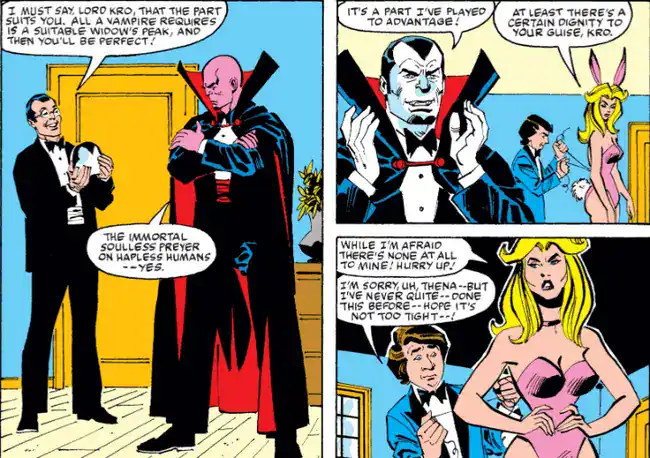
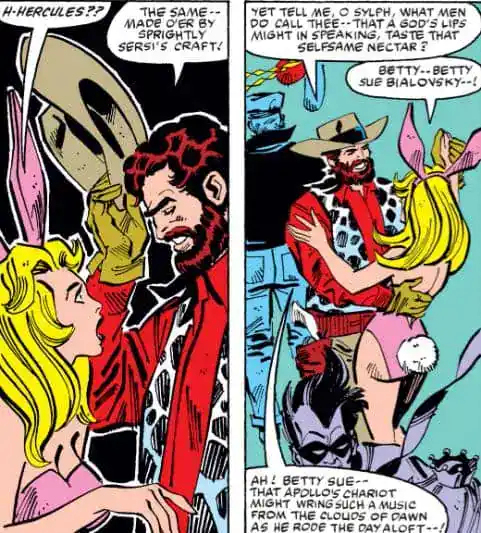
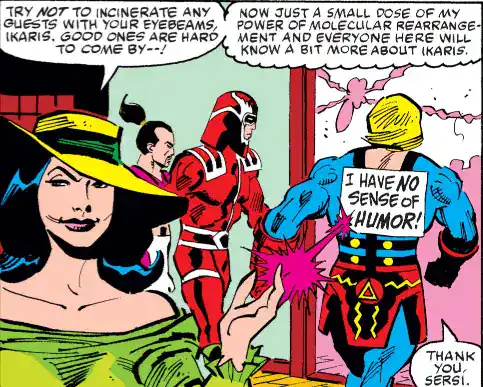
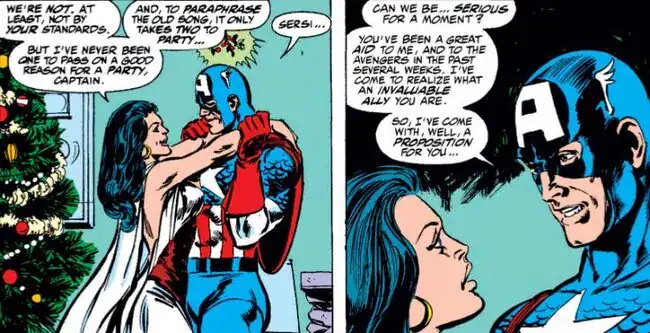
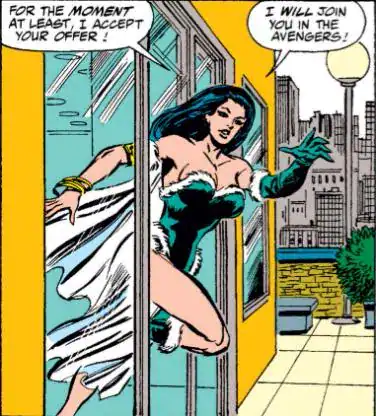
After several minor team-ups, Sersi becomes an Avengers in issue #314 in 1990; invited by Captain America, no less!!
She will stay in the team until 1994.
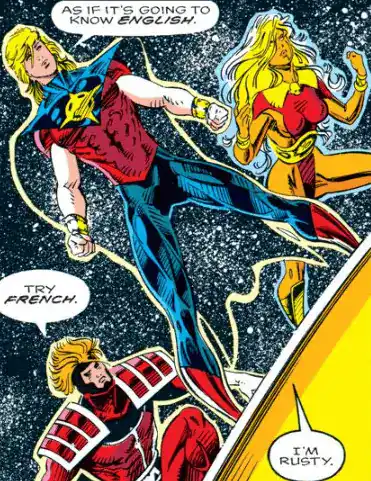
Makkari becomes a close friend of Quasar, essentially becoming part of his supporting cast from 1990 to again 1994.
Aside from occasional minor appearances by Sersi, Ikaris or Makkari, nobody seemed to know what to do with the Eternals.
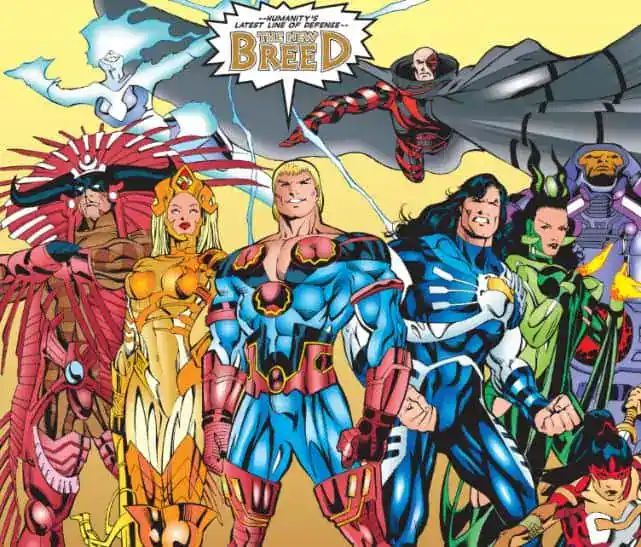
There was a botched attempt to turn them into regular superheroes with “The New Eternals: Apocalypse Now”.
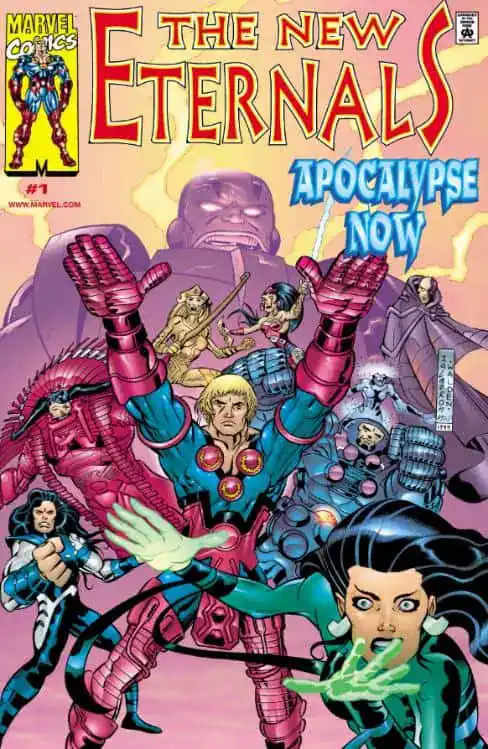
We don’t talk about this.
Don’t be fooled by the 2003 series by Chuck Austen.
It’s called “The Eternal”, it’s published by Marvel and it does include characters with the same names of the Eternals, but it’s most assuredly not the actual Eternals.
Marvel has done everything to distance itself from this unreadably atrocity, and so should you.
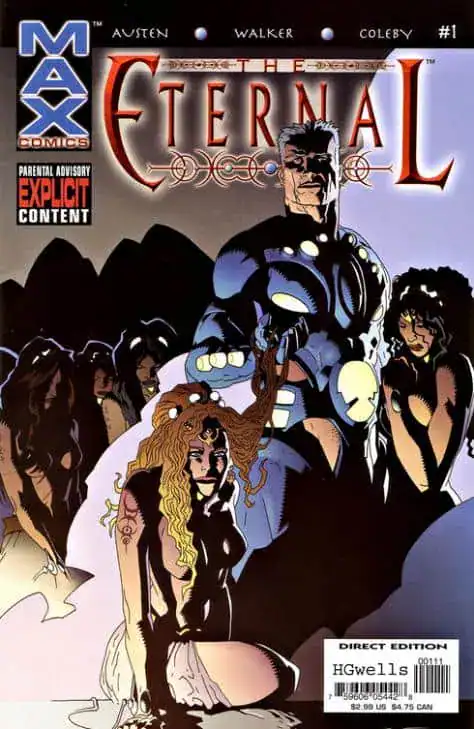
To give you an idea, this is the worst Chuck Austen book I have ever had the displeasure to read.
Which, if you know anything about his work, IS SAYING SOMETHING.
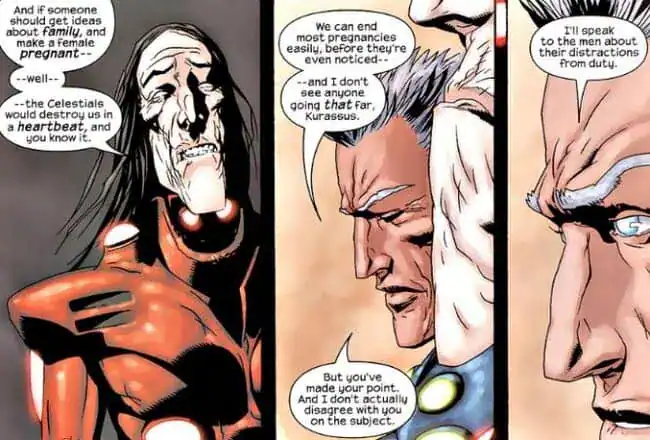
Thankfully, Volume 3 by Neil Gaiman actually DOES something with the Eternals.
It comes with a large number of retcons, but at least they’re in-universe thanks to Sprite using the power of the Dreaming Celestial.
It does several things I don’t like… establishing that ALL Eternals are exactly 1 million years old, created as they appear today, therefore getting rid of the various generations explored elsewhere, the fact that there are only about 100 Eternals overall…
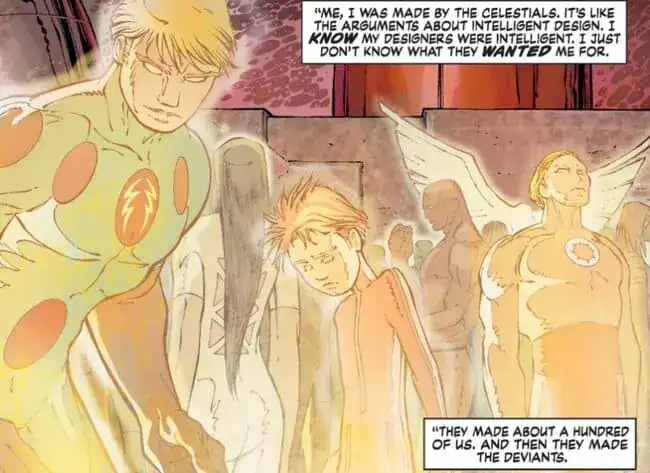
…but it’s no denying that this is a great series. It perfectly incapsulates the grandeur, the ridiculousness and the high concepts of the entire Eternals mythos.
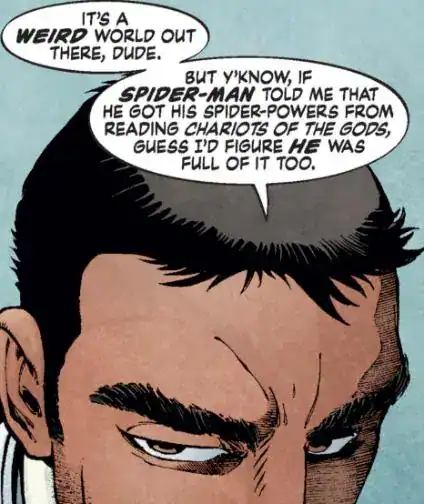
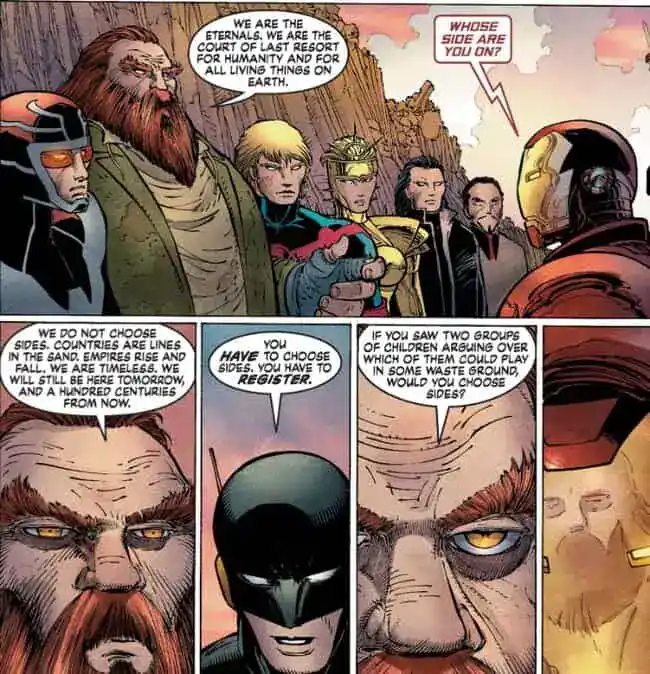
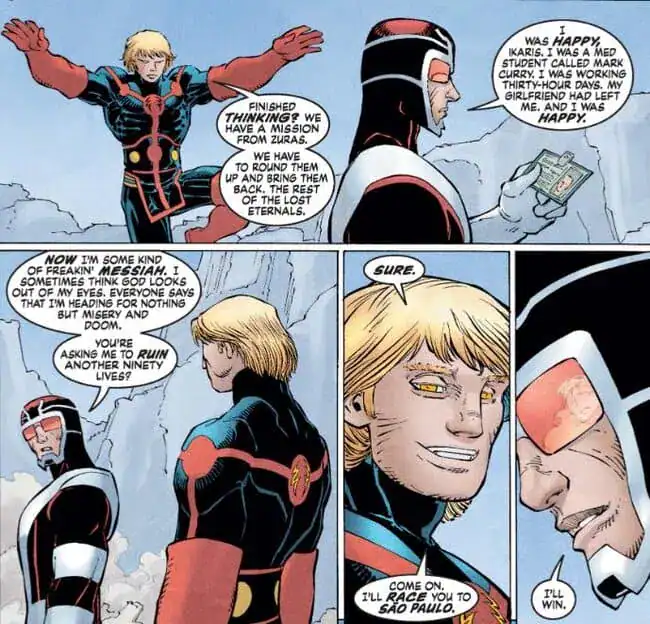
Makkari takes Ajak’s place as the one capable of talking to the Celestials, and this series has my absolute favorite frame of reference of just how inscrutable the Celestials are.

Volume 4 (by Charles & Daniel Knauf, 2008 to 2009) and Volume 5 (by Kieron Gillen, 2021 to 2022) continue the same themes, integrating the series a little better with the rest of the Marvel Universe.
It doubles down on the limited number of Eternals and their nature as artificial beings (which was hinted but not explicit in Volume 3).
Of the two, I only recommend Volume 5; it doesn’t recapture the same grandeur of Volume 3, but it does give depth to several Eternals. Even Ikaris is great in that volume.
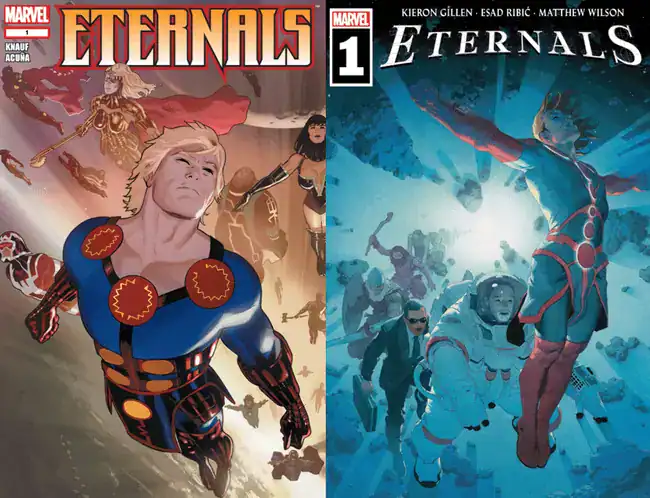
The 2021 movie borrowed A LOT from volumes 3 and 4, and volume 5 changes a lot of the Eternals to more closely resembling their counterparts.
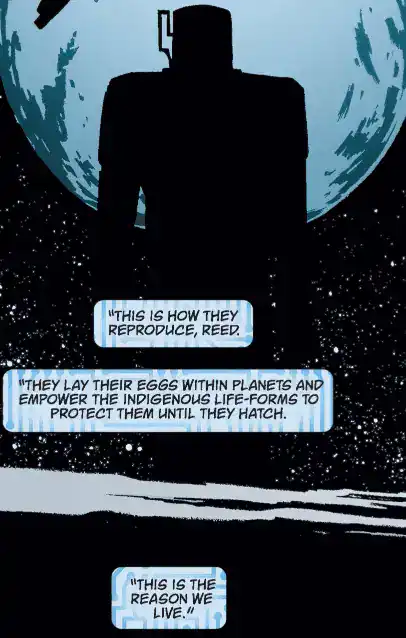
There’s one part of the movie that doesn’t originate from any of their series: the idea of Earth being the egg of a Celestial.
That actually comes from the Earth-X series from 1999, a completely alternate universe for the most part utterly incompatible with the rest of the Marvel Universe.
Its sequels (Universe X and Paradise X) will become increasingly stupid mishmashes of fanfiction, but Earth X does have its charm.
And the idea of the Celestial having created Eternals and superhumans as defense for the maturing Celestial is honestly a stroke of genius.

Speaking of the Celestials: Marvel has always been very, VERY resistant to actually explaining what they are.
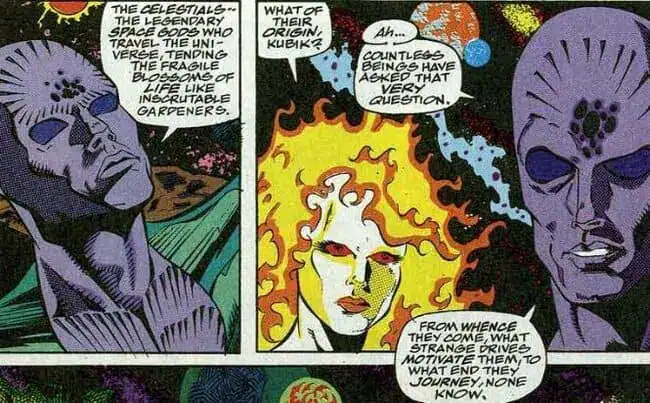
That was the case until 2017, when Al Ewig gave them an origin in Ultimates 2 vol2 #6 (what a confusing name for a series), further elaborating on this on the Defenders Beyond series from 2022.
Their origin goes back all the way to the First Firmament, which was the (sentient) first incarnation of the Marvel Multiverse.
The one we’re familiar with was the Seventh Multiverse, which ended with the 2015 Secret Wars, and currently it’s the Eighth Multiverse.
So the First Firmament is not just the god of the Marvel Universe… it’s technically God7th.
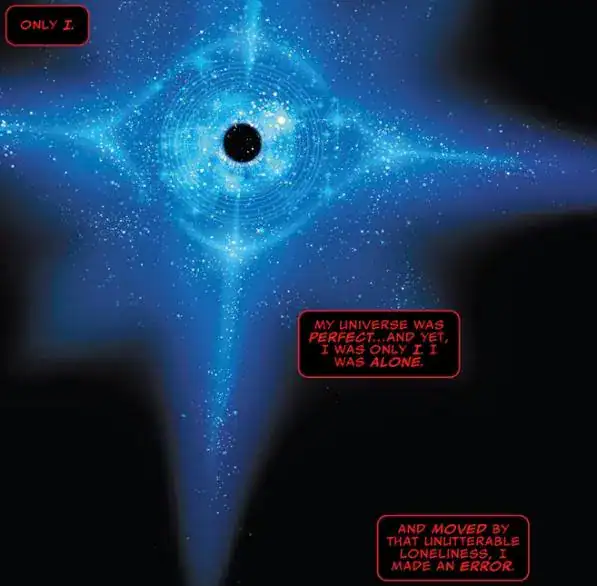
The First Firmament created two forms of life: the servile Aspirants, and the rebellious Celestials.
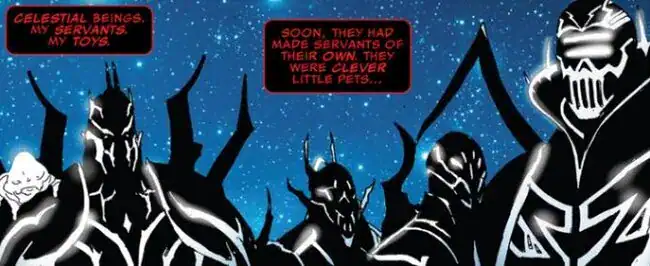
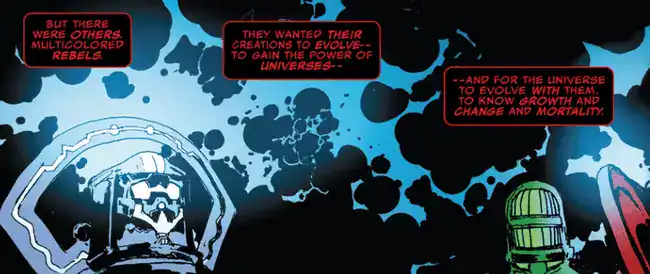
The war between the two sets of super-gods shattered the First Firmament.
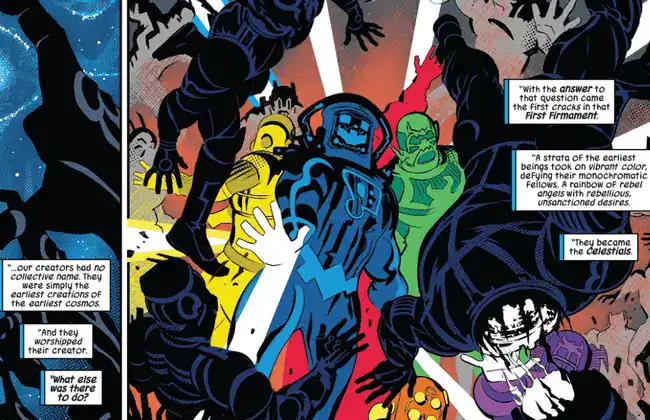
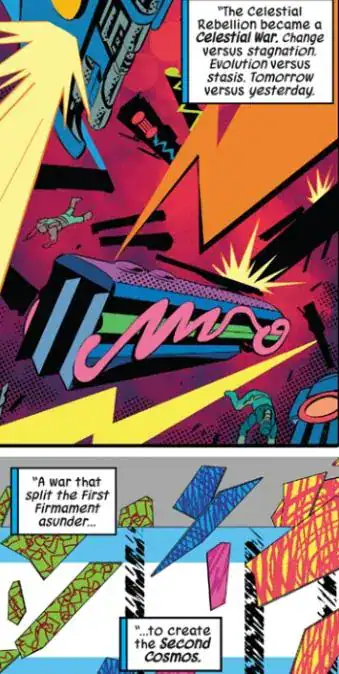
They’re also the ones who created the Beyonders, purposefully giving them the power to destroy the Celestials if needed.

As of 2025, this origin seems to have stuck. Although to be honest there aren’t a lot of current writers besides Al Ewig who I’d trust with such a high-concept interpretation.
I know some people will never accept giving the Celestial ANY kind of definitive origin, but I rather like this solution: it’s just crazy and over-the-top enough to fit with Kirby’s wild imagination.
And it’s certainly far easier to follow than DC’s convoluted super-cosmology (although to be fair, it might be the fact that I’m far more familiar with Marvel’s cosmic side than DC’s).
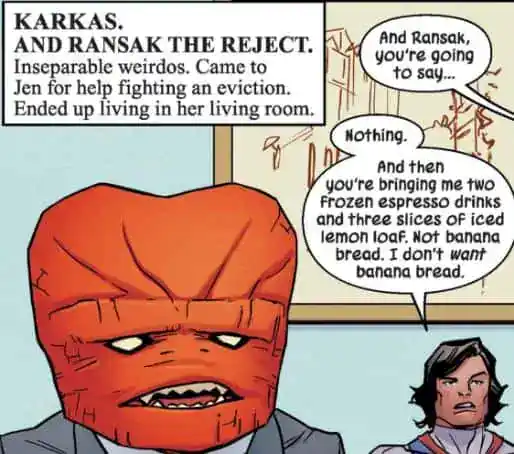
And finally: with the exception of Volume 2, none of these series really do anything with Karkas and Reject.
The latter is given the name Ransak and even an explanation for why he’s the only human-looking Deviant: his father is the half-Deviant half-Inhuman supervillain Maelstrom.
I will eventually talk about Maelstrom once I get to do the Quasar retrospective (not currently scheduled, but it’s guaranteed to happen), because he’s a big deal in the Quasar series.
Maelstrom is in my top five favorite supervillains… I’m not joking… but I think it was a mistake to say he was Reject’s father. Having the randomness of the Deviant genome create one that looks human is far more interesting.
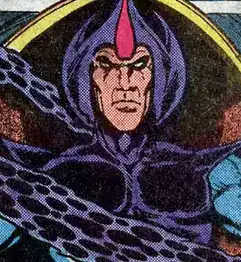
Marvel is seriously sleeping on the potential of the Karkas and Ransak duo, but they did show up in 2024 on Sensational She-Hulk volume 2.
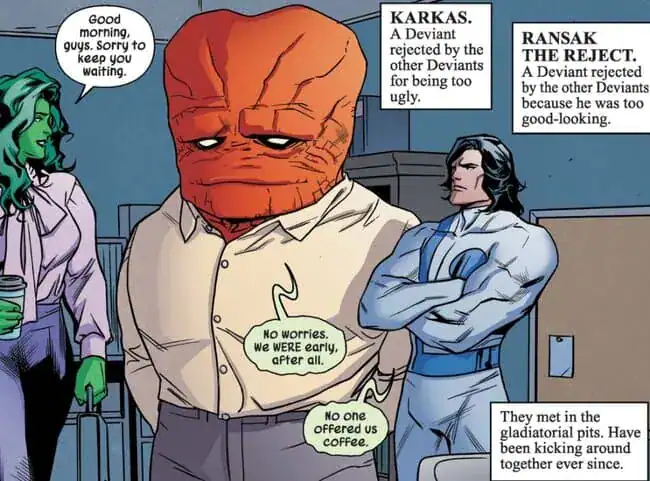
You guys are too good for the Eternals, and they know it!
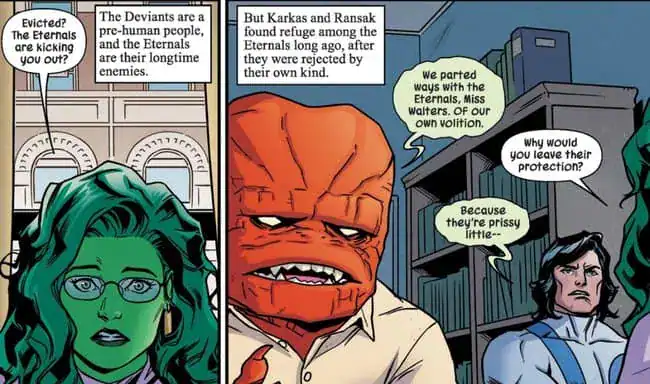
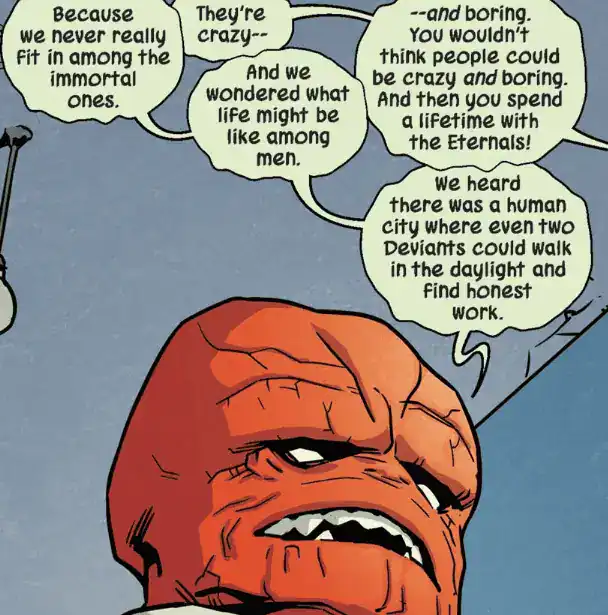
These guys deserve a solo series.
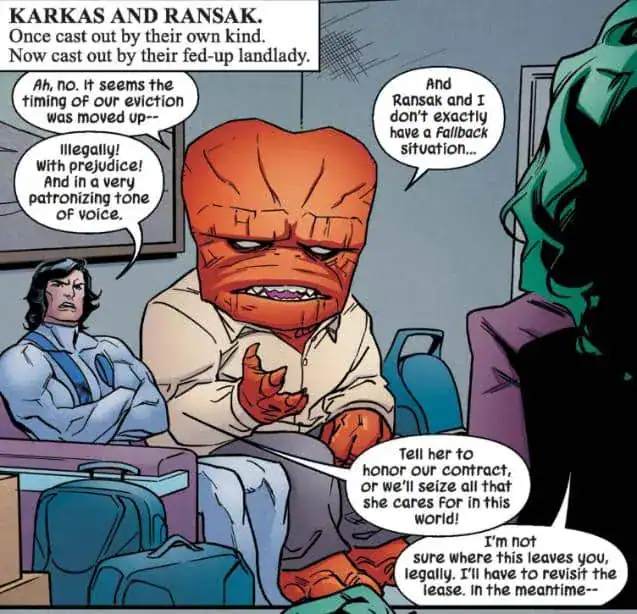
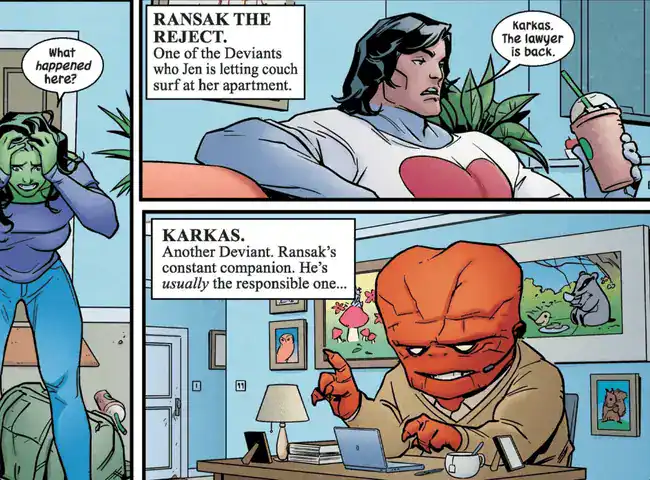
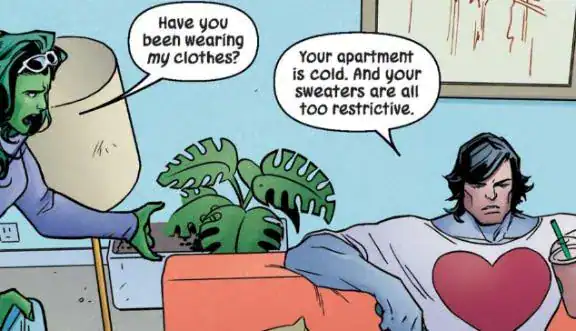
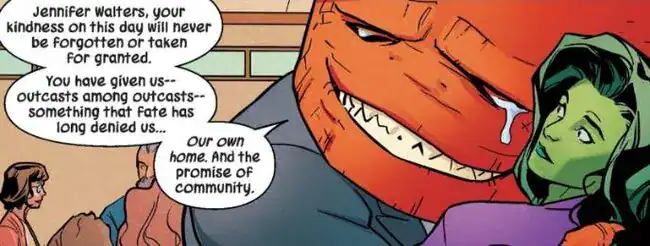
They’re practically a sitcom waiting to happen.
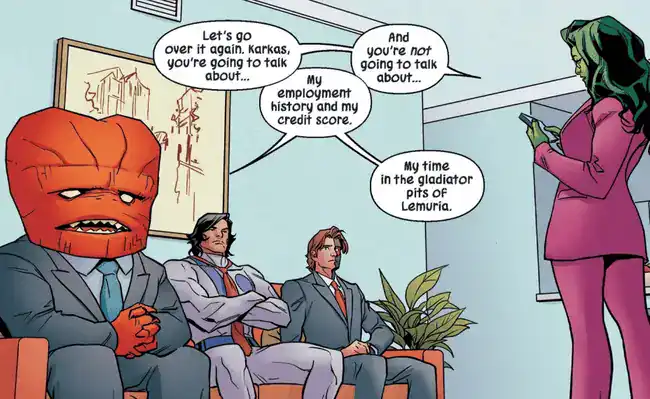
The 80s Steve Englehart Silver Surfer series had a couple of appearances from the Eternals and Celestials where Englehart seemed to be planning a major retcon, with the Surfer informing the Eternals that he’d flown over the mountain where Olympia was located many times and there was nothing there, calling the entire existence of the Eternals into doubt. I believe that series was also the first place where the idea that the Celestials are physical manifestations of Eternity first popped up, which I think a few other writers may have paid lip service to. But I don’t think anyone else ever followed up on the Surfer’s assertion that Olympia didn’t actually exist.
And of course, the Beyonder kicks the Celestials butts in Secret Wars 2, but I don’t blame you for not wanting to revisit that crud.
Samuel Holden also bit the dust on volume 2, and doesn’t even rate a mention here. Poor Sam.
Austen’s The Eternal was just straight-up standard Austen woman-hating p0rn. I honestly can’t believe Marvel published it. Whatever Austen was blackmailing Quesada or whoever was throwing work at him back then must’ve been pretty powerful.
I read a lot more DC than Marvel, but I did read Earth X (and it’s lesser sequels), and was pleasantly surprised to see the “Earth is a Celestial egg” concept crop up in the Eternals movie.
Once upon a time, Wizard (the magazine about comics) asked Alex Ross to pitch a Marvel equivalent of DC’s Kingdom Come. Ross sketched out character concepts for Earth X. Marvel looked at Wizard’s article and decided to make it a real thing.
Just like Kingdom Come, the sequels don’t live up to the original. Funny how that always seems to happen.
Disney+ should produce a sitcom featuring Karkas & Ransack! I’d go back to subscribe NOW!
You’re planning to eventually do a Quasar retrospective? But…that series was good! Where would the snark come from?
MOST of the series was good. But sometimes I need a palate clenser 🙂