
Legion of Super-Heroes v4 #64 (1995)
written by Mark Waid & Tom McCraw
pencils by Lee Moder & Yancey Labat
cover by Lee Moder
One guess on which Legionnaire is re-introduced in this issue.
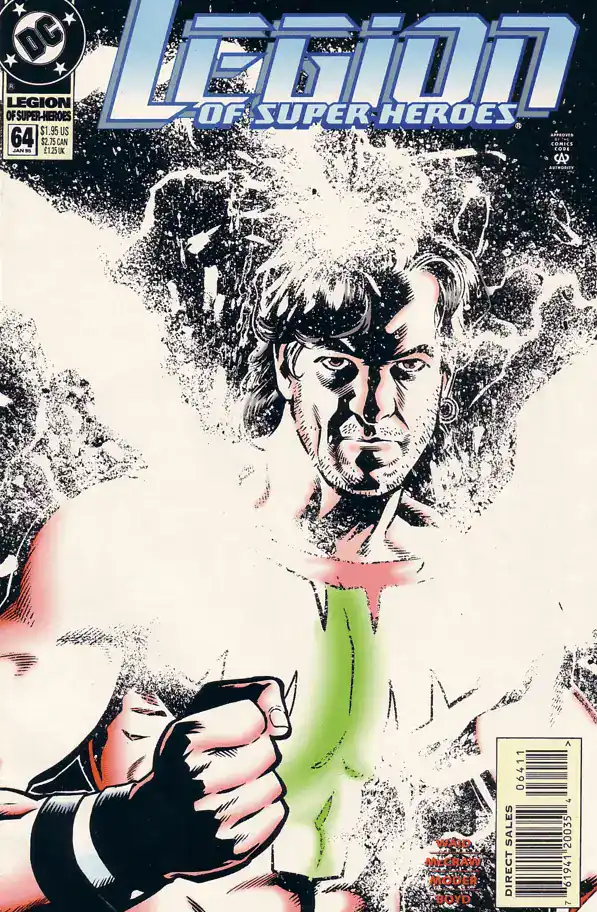
Tell me if you’ve heard this one. A Legionnaire walks into a bar…
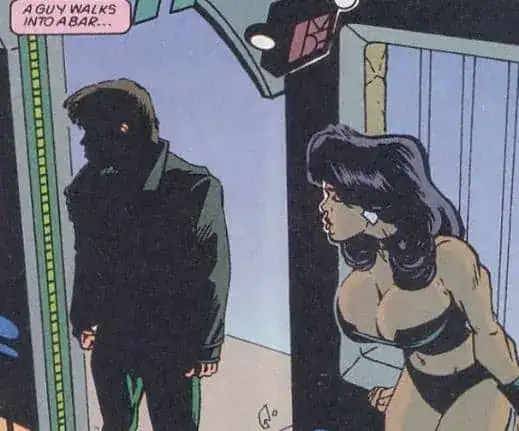
…and gets into a fight.
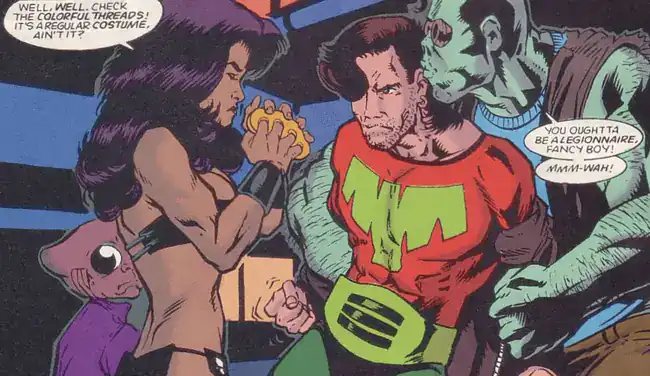
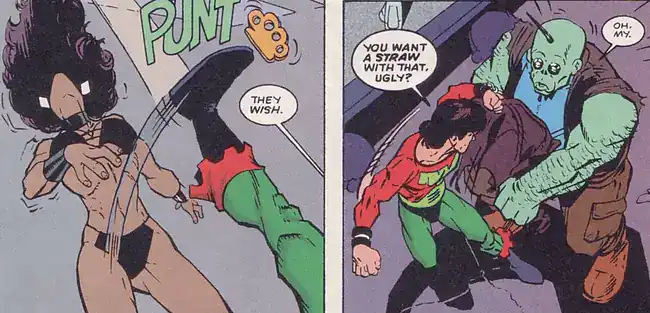
Before we get back to him, we have the formal introduction of Spark into the team.
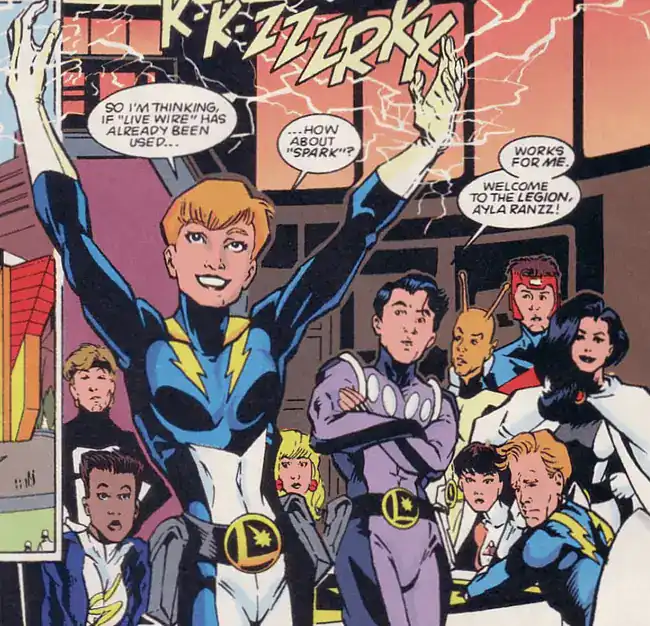
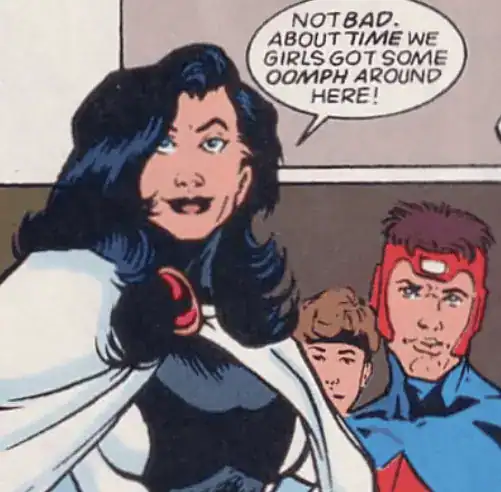
The Legion continues to have a higher female membership than most superhero teams: as of this moment, they have 6 guys and 5 girls.
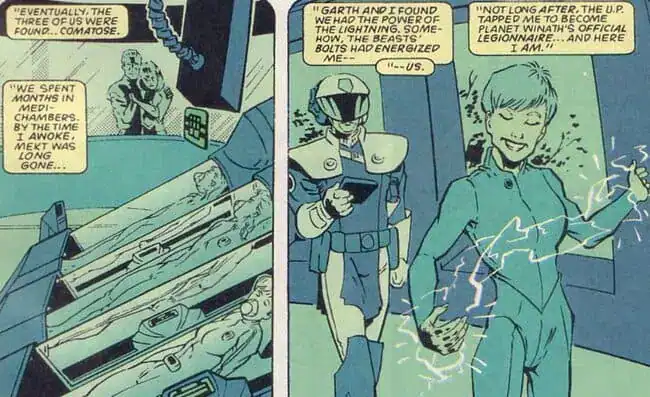
She tells the origin of the lightning siblings, which is the same of the original.
Except this time she woke up from the blast much later than her twin brother.
Her arrival is a problem because, at this moment, the Legion charter only allows one member per planet. Even R.J.Brande isn’t able to convince the United Planets to allow more.
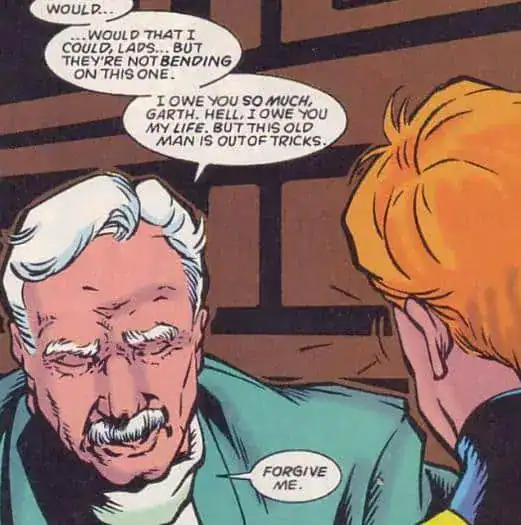
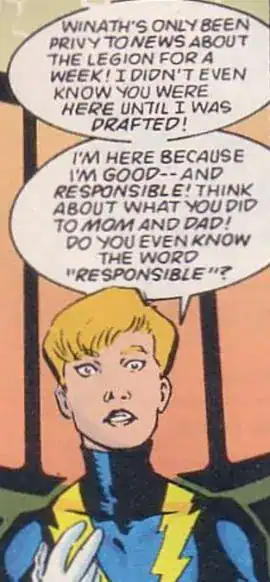
It’s also causing tension between the twins.
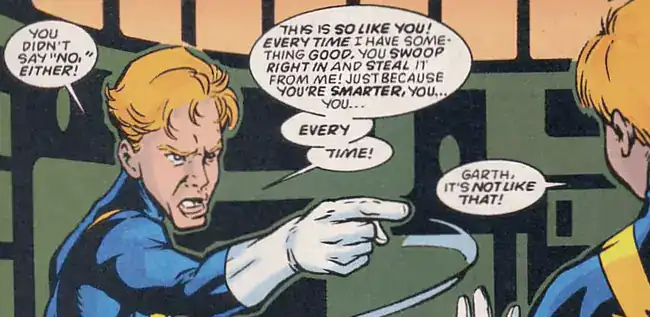
Spark will mostly be considered more childish than her brother, but here she comes off as the more mature sibling.
The fight is not over, however, as long as Saturn Girl has something to say.
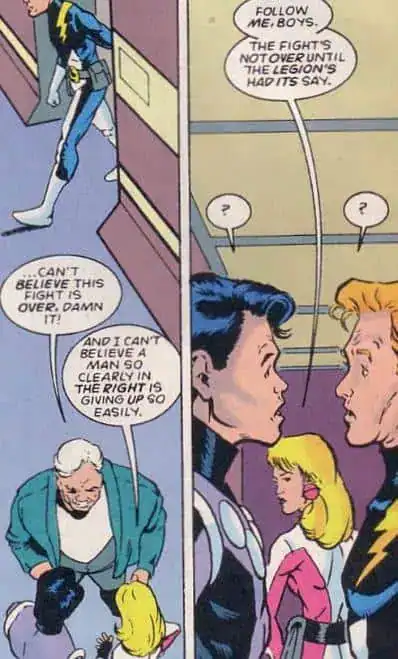
Well… things might not have been over if Live Wire had TOLD the rest of the team that he ran away from home.
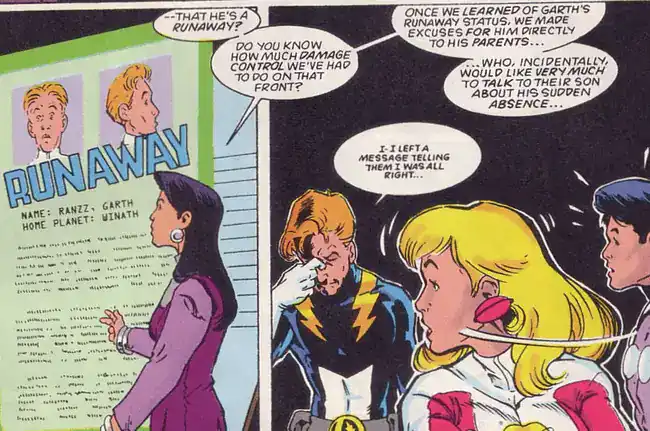
Very interesting to note that in the 30th century the age of majority will be 14; this technically makes all Legionnaires no longer minors, at least as far as United Planets law is concerned.
This helps slightly with the idea of them being given such an important job.

Not helping Live Wire’s case is the fact that his brother is a wanted criminal (he was Lightning Lord in the previous continuity, and will be a supervillain in this one later).
If he had been honest about his status, I would imagine that the authorities wouldn’t have cared too much… but in the light of this, his decision to hide stuff is not helping.
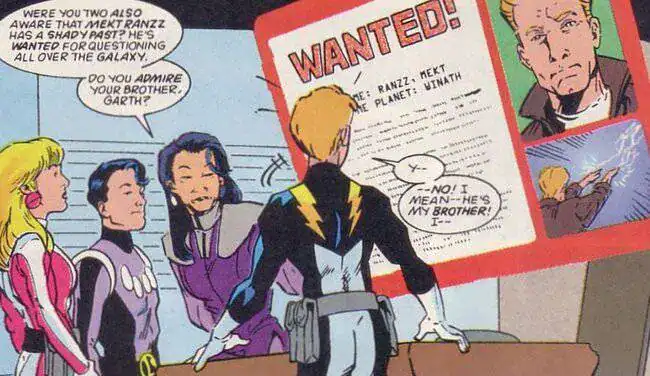
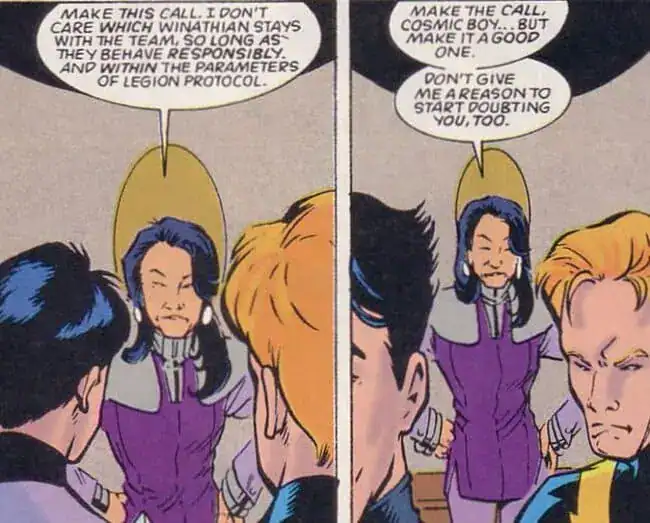
The choice of which sibling will stay in the team is put on Cosmic Boy’s shoulders.
While he ponders on the decision, Brainiac 5 is busy working in his lab and complaining.
Two of his favorite activities.
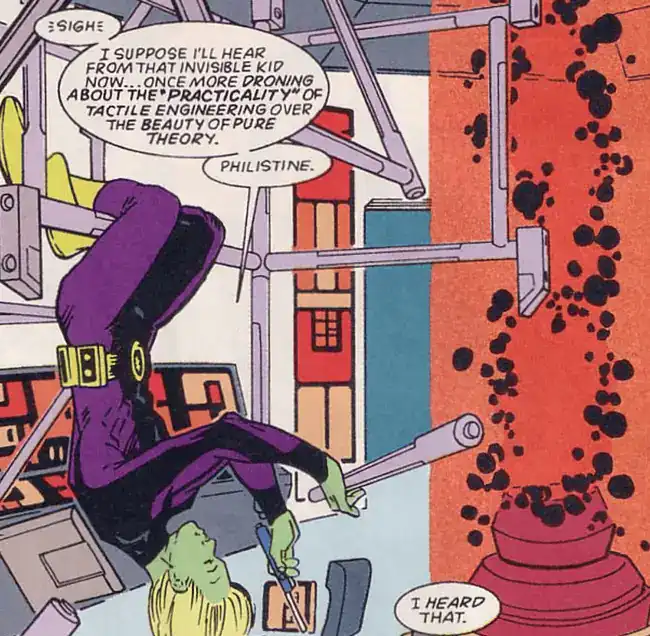
We are establishing a core difference between our two resident super-geniuses.
Brainiac 5 is mostly focusing on theoretical experimentation, while Invisible Kid is more practical; this will develop into something more complex, along with their friendship.
Also, keep in mind the seemingly throwaway detail of Brainy accidentally creating an anti-gravity metal, it will be important soon.
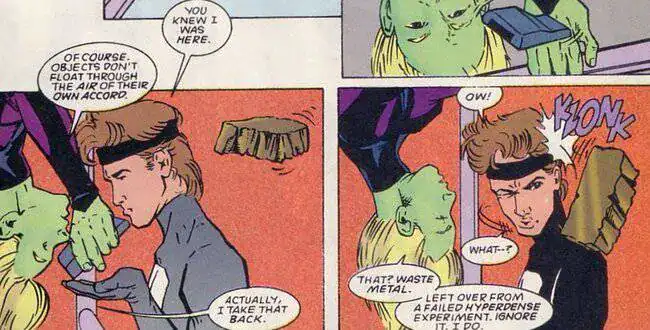
The reason why we saw that interaction is that someone is spying on the Legion.
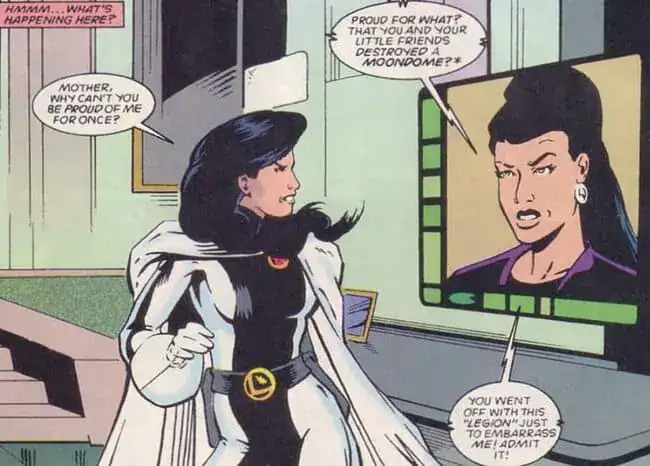
It’s also why we get preview of Apparition’s relationship with her mother.
Come to think of it, the fact that she’s no longer a minor goes a long way to explain how she can serve in the Legion without parental consent.
The spy is no other than Ultra Boy.
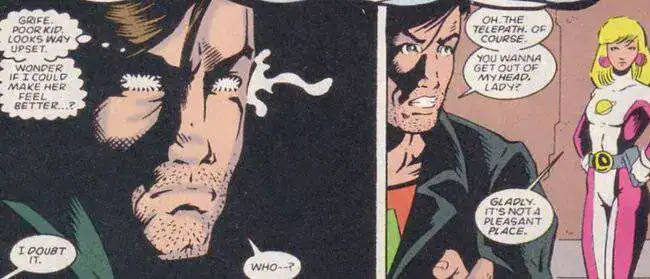
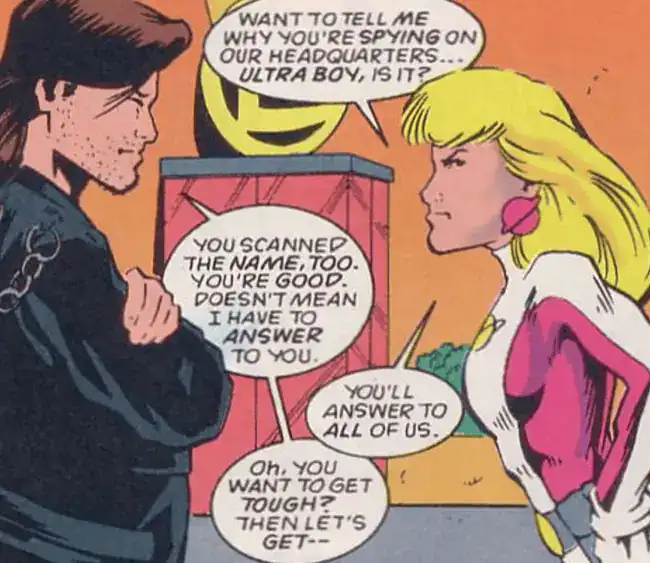
Sparks then jumps in to defend Saturn Girl, despit Ultra Boy not having done any direct threat.
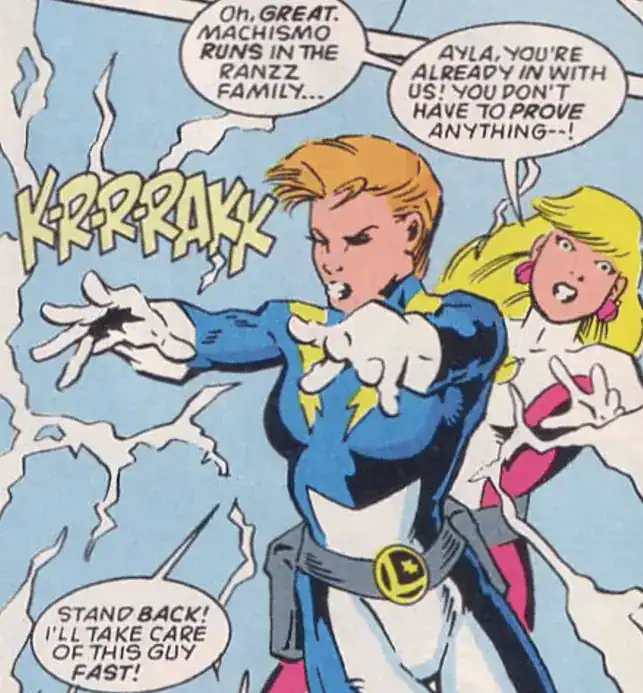
Even if it wasn’t for the rules, maybe having two of the siblings in the same team would be too dangerous regardless.
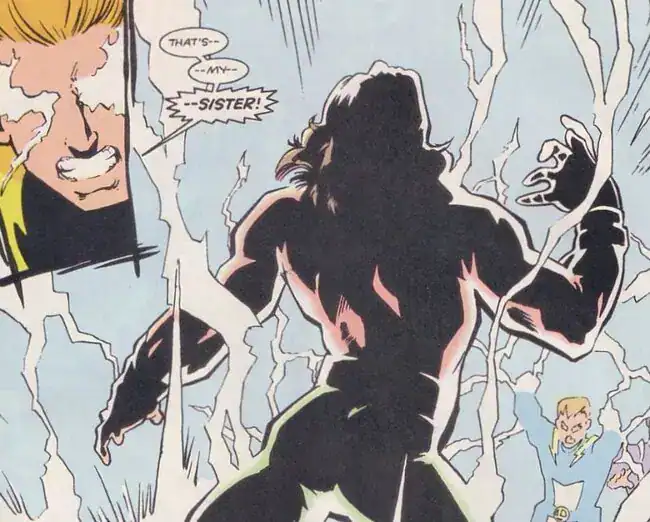
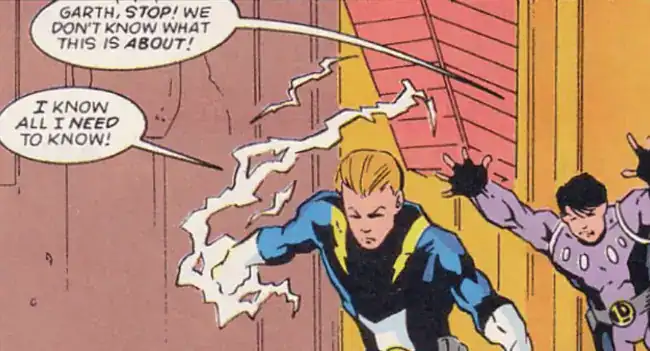
It’s not an easy fight.
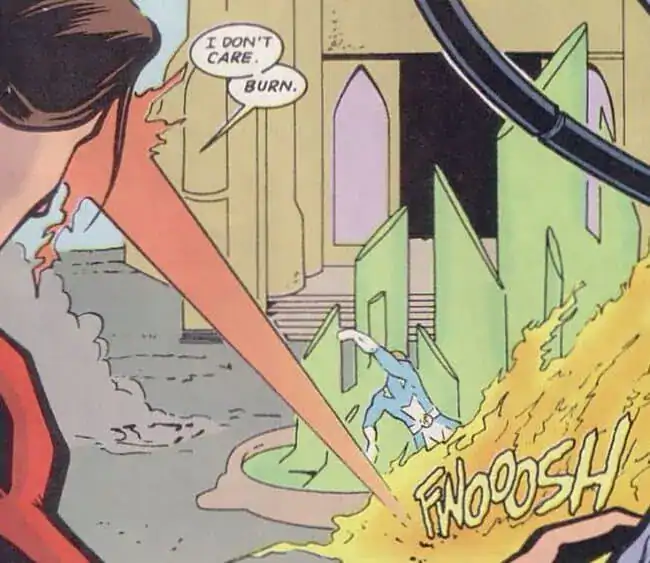
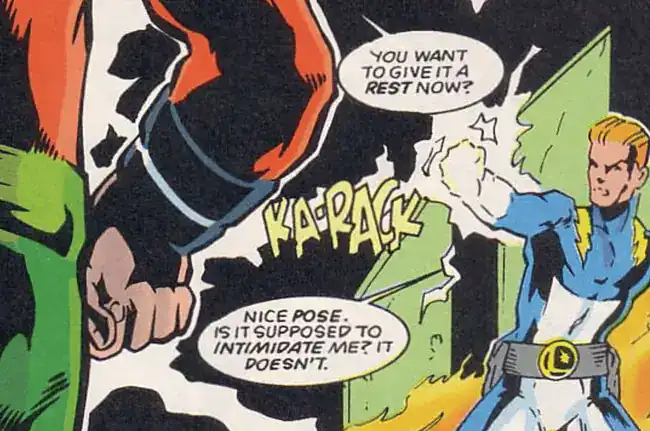
Or rather is SHOULDN’T be; instead Live Wire deduces that Ultra Boy can only use one power at a time based on next to no information.
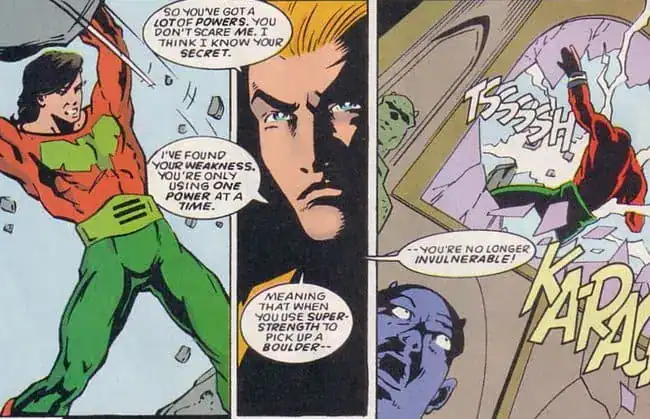
Thankfully the Legion stops the fight before they destroy the other half of the neighborhood.
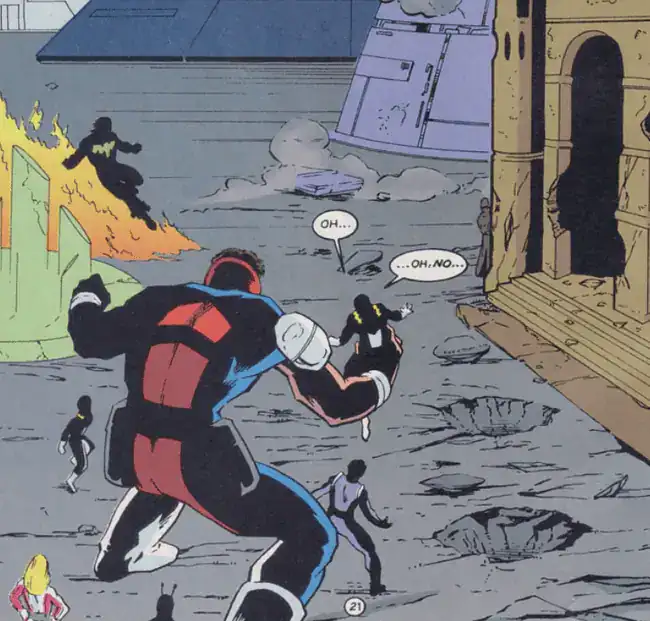
Yeah that’s not going to help your case, Live Wire.
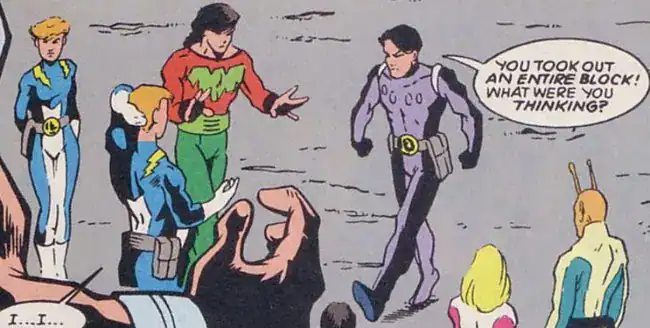
Ultra Boy gets off relatively easy, considering he was violating the Legion’s privacy.
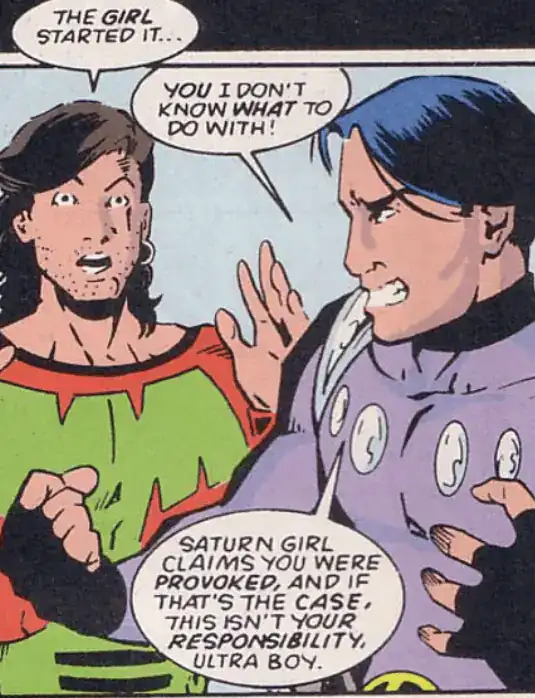
Understandably, Cosmic Boy’s anger is all reserved for Live Wire.
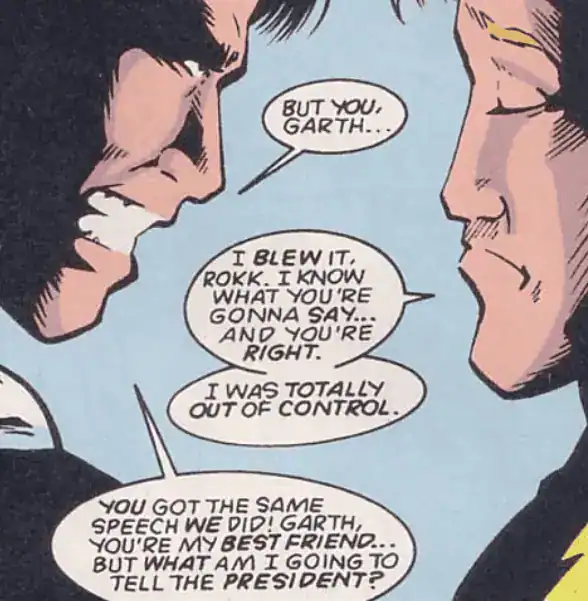
This leads to the first resignation of the Reboot.
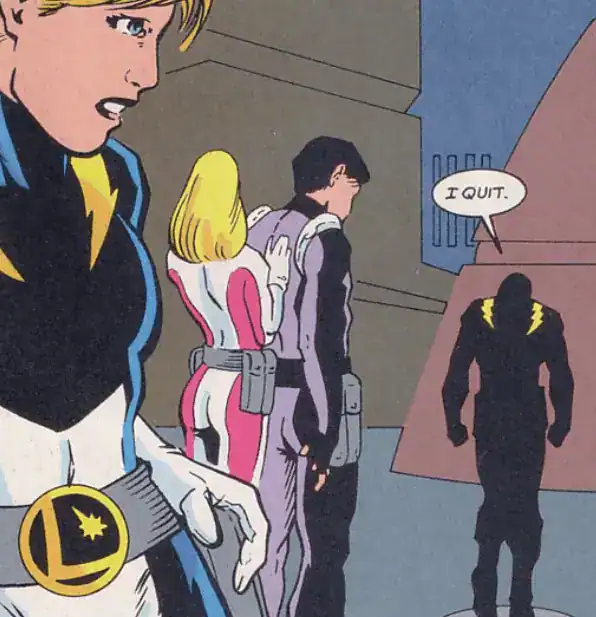
You would expect Ultra Boy to take his place in the team, but that’s going to wait a while…
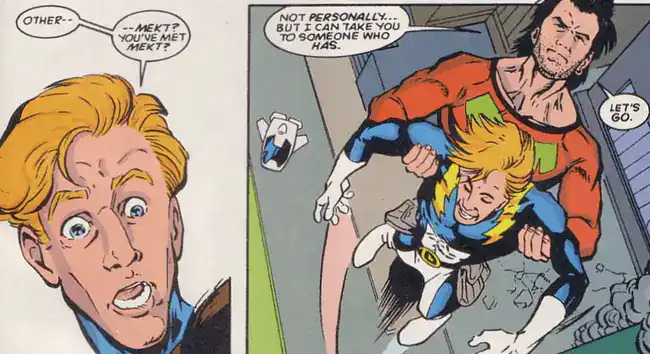
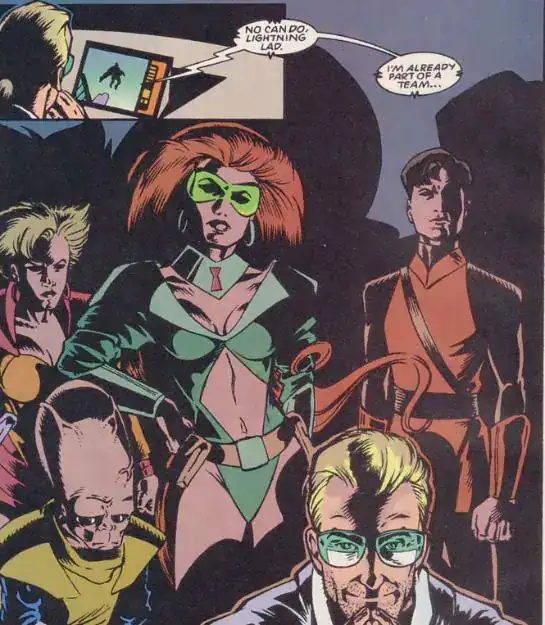
…because he’s already in a team: Workforce.
Even worse, that’s the team sponsored by Leland McCauley.
Legion significance: 6/10
Ultra Boy will become an important part of the Reboot. Live Wire’s activities outside the team and Workforce will be part of the plot for quite a while, and keep in mind that antigravity metal.
Silver Age-ness: 2/10
Brainiac 5 having that metal just floating around his lab is a bit Silver Age.
90-ness: RADICAL!!!/10
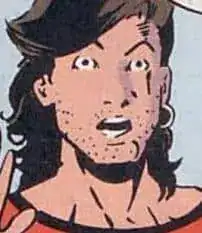
Between the leather jacket, the mullet, the earring and the stubble, this version of Ultra Boy could only originate in the 90s.
Does it stand the test of time? 7/10
Compared to the previous issues, this one felt way too short. While the plot isn’t bad and it introduces some nice tension, I felt that the fight was way too rushed; as mentioned, in particular the fact that Live Wire deduces THAT quickly Ultra Boy’s weakness didn’t feel very believable.
This version of Ultra Boy is a bit divisive among the fandom, but I’ll discuss him in detail when he becomes central to the plot.
Who did it better?
The tension caused by having the twins in the same team is addressed better here, in my opinion, than in the original version.
I can’t say the same for the introduction of Ultra Boy: despite its flaws, the original story is still a superior first impression. He’ll become an interesting character, but he’s wasted here.
We are legion
- 10 active Legionnaires (4 volunteers, 6 drafted)
- 1 resigned member
- 1 deceased member
- 12 people have been members
- 2 Legion leaders (Leviathan, Cosmic Boy)
I think poor President Chu is underrated. She’s a stuffy bureaucratic antagonist to be sure, but they do well to make her seem reasonable for the most part. That’s a hard act to pull off.
Good point. Chu is not only reasonable; she is formidable. She gives Cosmic Boy the choice of which Ranzz twin to keep, providing him with the illusion of control. “Don’t give me a reason to start doubting you, too” is statement of manipulation, a direct attack on Rokk’s sense of responsibility.
As with Triad not doing anything in the last issue, I thought this issue’s short battle added to the believability. Ultra Boy is not evil, Ayla is trying to prove herself, and Garth is dealing with a lot of emotions that lead him to lose control. The fight ends when the adult in the room, er, courtyard, Cosmic Boy, shows up. There’s no reason for a prolonged fight. The point is clear: Garth causes a lot of damage by letting his emotions control him. In a moment of growth, he comes to his own conclusion that he is not ready for the Legion.
I also prefer this introduction of Ultra Boy to the original. It plays with a lot of tropes and spins them on their heads. As you said, one would expect Ultra Boy to replace Live Wire on the team, but that’s not what happens. Instead, he recruits Live Wire for his own team, Work Force. It also makes perfect sense that if one billionaire starts a superhero team, another would copy this but with less altruistic motives. The subtle introduction of Karate Kid, Evolvo, and other Legion characters is a bonus.
Excellent post as always! I’m not sure I’d characterize Mekt as a true supervillain in this run, as he’s just basically a run of the mill thief with elecrical powers; it’s not like he’s in league with others or is any other kind of real criminal mastermind, and he only shows up as a true bad guy when Garth finally tracks him down.
Abnett and Lanning really seemed to want to rehabilitate him ala 5YL.
I wouldn’t say this issue felt short. After the dreary slog that was 5YL, these issues are a delight to read. The creative team was clearly enjoying themselves, and it’s difficult to avoid smiling while reading.
If anyone found this version of Ultra Boy divisive, I don’t want to know what they thought of threeboot Ultra Boy.
I have a vague memory of the political plots of this series being criticized back in the day.
I find them refreshing right now. They add to the depth and are better than the very vague attempts that we had back in the 1970s and 1980s.
Out of curiosity, do you remember why they were criticized?
Sorry it took this long for me to answer. Somehow your question went unnoticed until now.
“Political” can be the wrong word, but I remember that it was noted that we see lots of alien diversity in crowd scenes and yet the Legion itself is so decidedly slanted towards full humanoids.
At the time I pointed out that it was all too believable that it could be politically difficult to reach a modicum of agreement on Legion composition even within full humanoids, and used Triad’s community of origin as an example of the expected challenges.
Alas, I don’t think it is half as difficult to convince people that xenophoby can be a thing 31 years later.