
If you recall, the previous Countdown included all the comics I owned since before I knew how to read. For the rest of THIS Countdown, I’m covering the few comics I owned in-between those early ones and the one that made me a regular reader.
This one, and the one after it, are the only two Fantastic Four issues I had from the Star Comics days. I very distinctly remember having those with me when I got my hands on the comic that made me a Doctor Doom fan.
Fantastici Quattro #9 (1989)
Published by: Star Comics
Unusually for the time, the cover has nothing do with any of the issues published inside.
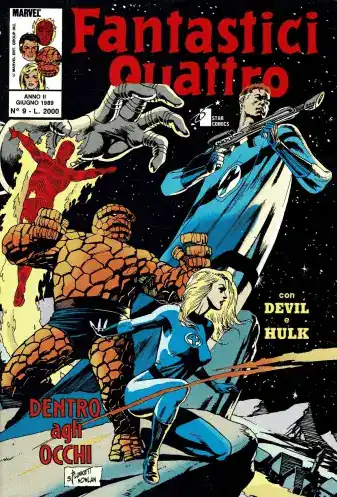
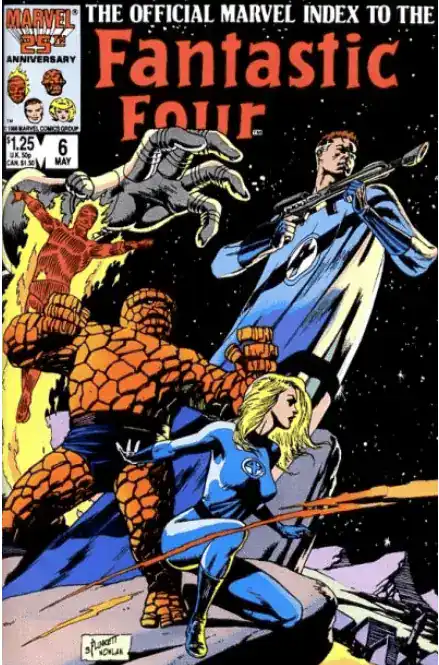
Took me a while to find where they took this cover.
It’s from 1986’s “Official Marvel Index to Fantastic Four #6”, and it’s by Sandy Plunkett.
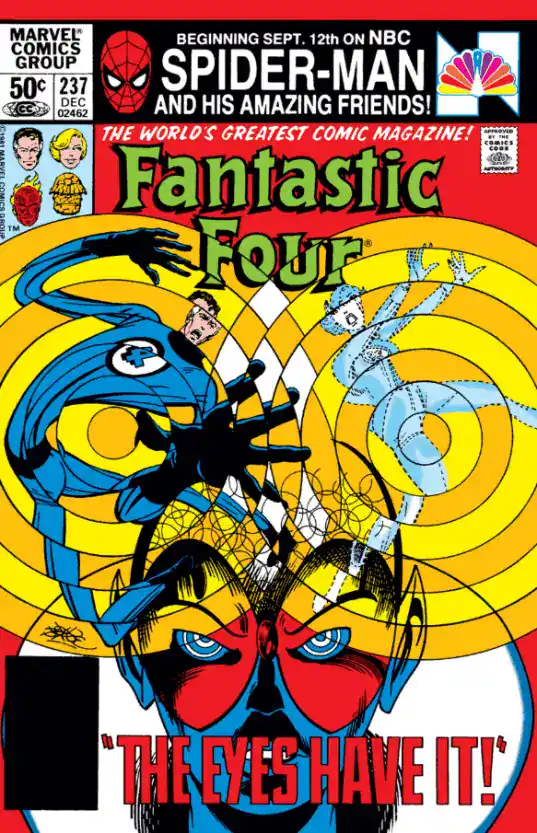
Fantastic Four #237 (1981)
by John Byrne
I’m guessing they didn’t go with the otherwise great cover because of the awful plugin for Spider-Man’s latest cartoon series?
The Fantastic Four have gone back home after the historic Fantastic Four #236, which I wouldn’t get to read for at least another couple of years.
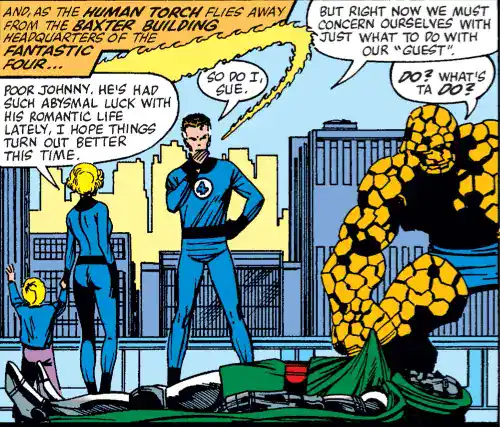
At the end of that story Doom’s mind was locked out of his body, so we have to deal with a comatose Doom for a while.
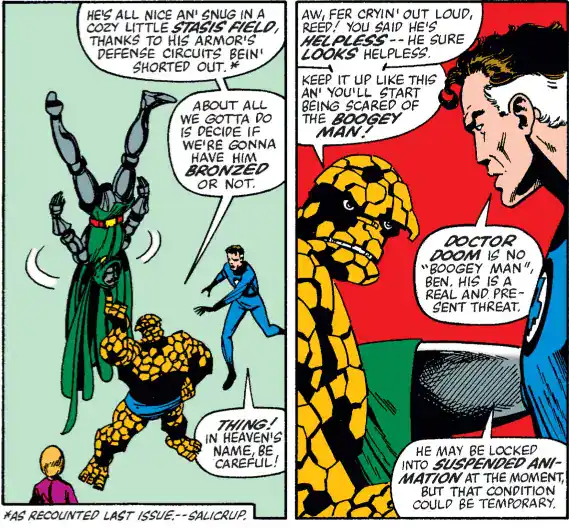
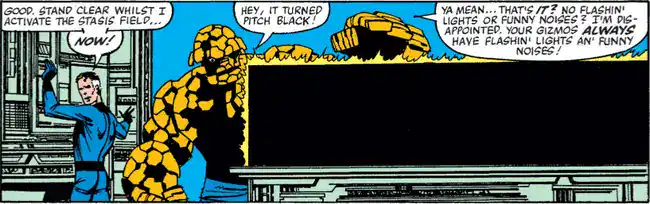
Fearing Doom’s armor might have defense systems, Reed just locks him inside a stasis field.
I’m assuming he knows the armor is capable of keeping him alive indefinitely?
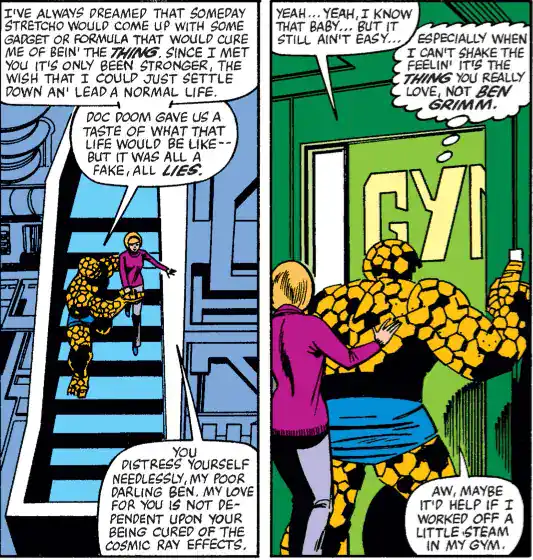
The Thing is still feeling the emotional effect of having been given a glimpse of what it would have been like to have a normal life. This will be very important for a story we’ll see next time.
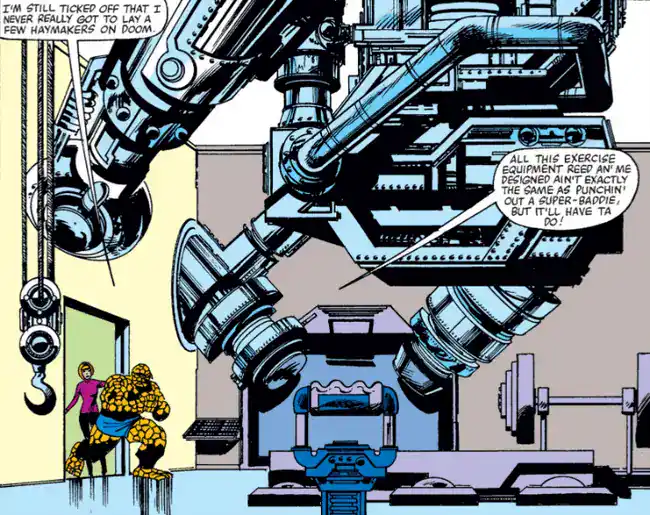
But we also John Byrne flexing just how amazing he is at drawing complex machinery.
In my opinion nobody has ever beaten him at this. Kirby is the standard if you want your technology to look otherworldly, but if you want something that feels like it MIGHT be built, 80s John Byrne is your guy.
Susan has to literally push Reed out of the laboratory.
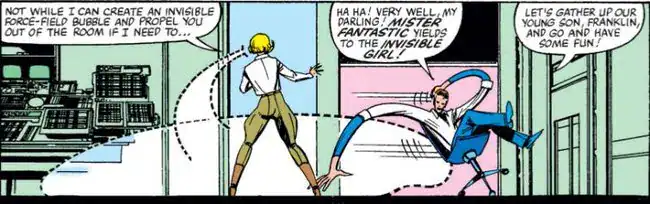
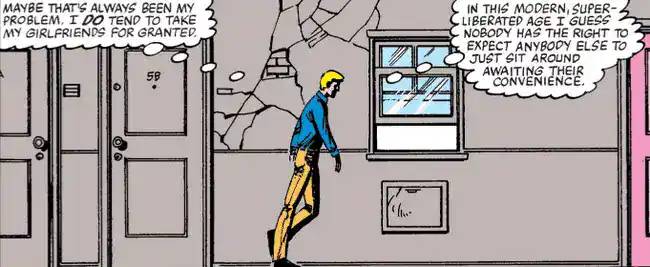
Johnny goes to see his girlfriend Frankie Raye, in a moment of self-reflection in his relationship with women. Byrne will be the first writer to REALLY make Johnny grow as a person.
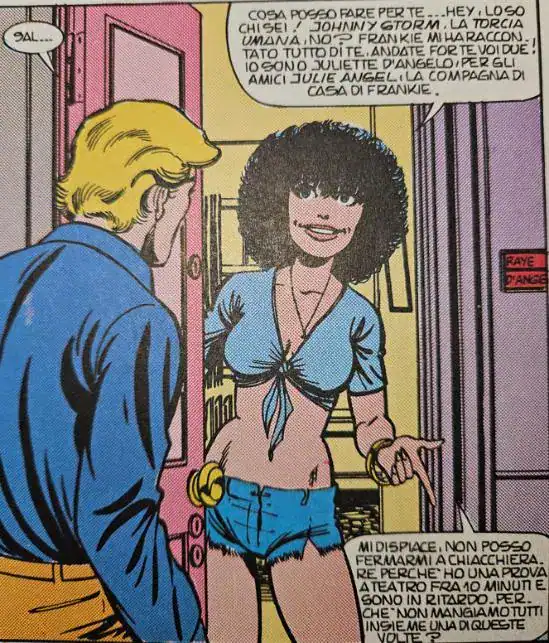
Johnny first runs into Frankie’s fast-talking roommate.
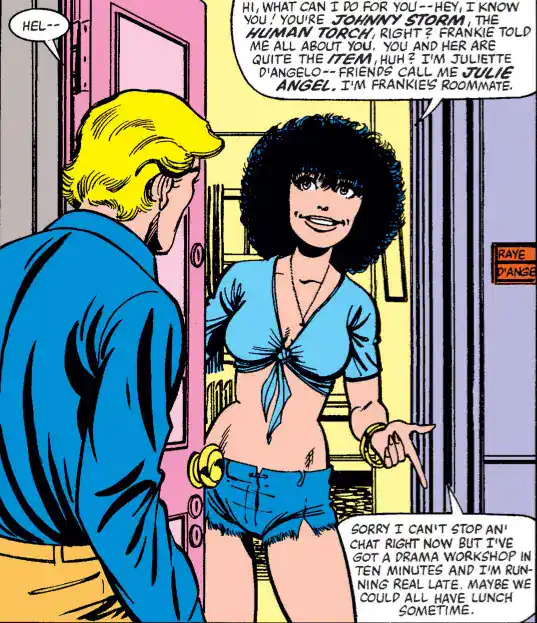
According to Marvel Fandom, the original publication showed her being much colder than in the trade paperback reprint and in the digital version.
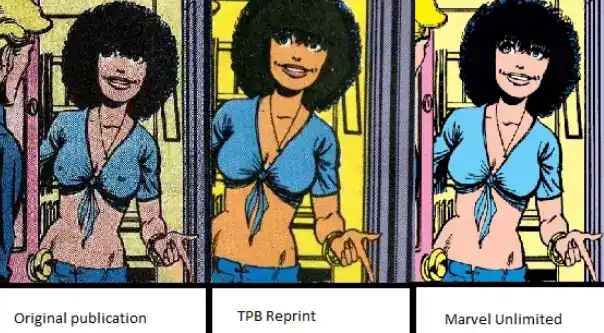
The Italian version either used the paperback reprint or did a bit of censoring of its own; I’m guessing they used the paperback, because Star Comics wasn’t known for any censorship (and honestly this is very tame when compared to some Italian comics).
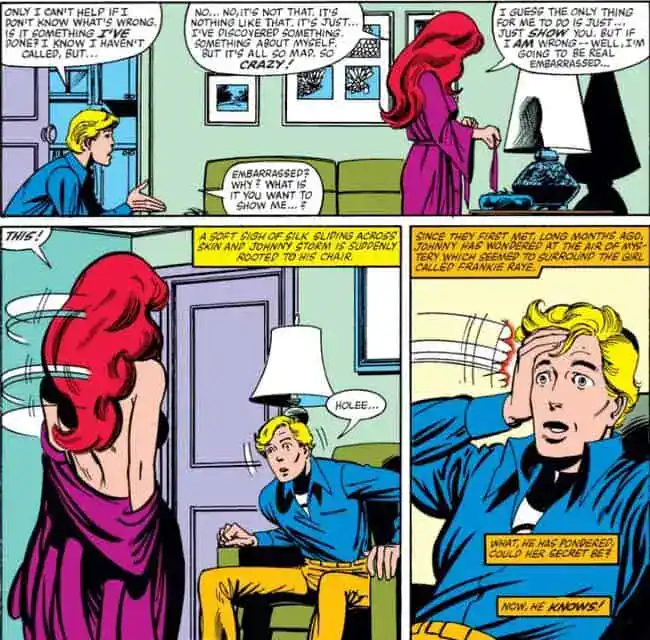
Frankie gives a major revelation to Johnny by taking off her clothes, but we won’t get to see that until next issue.
I’m guessing the Comics Code wanted a word with Byrne first.
This issue, however, will concentrate on Reed and Susan.
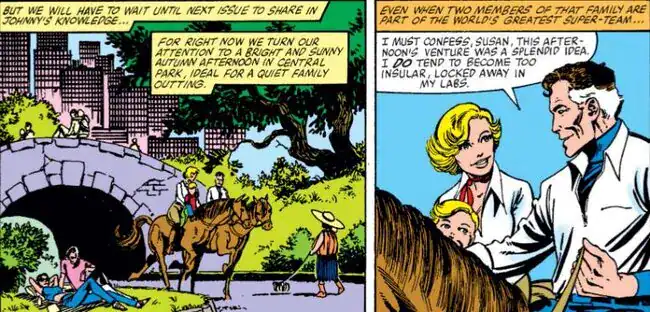
They’re distracted from their time together in order to stop a jewelry store robbery…
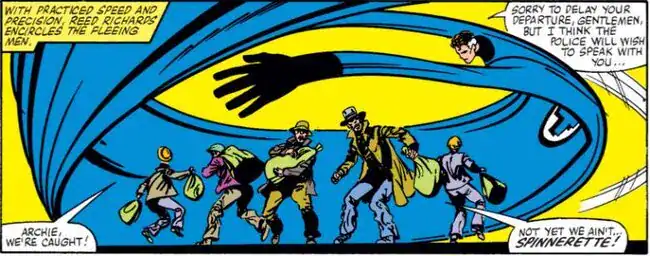
…helped by an unusually tall woman.
Strange to see Reed yell “Great Scott”, I typically associate that exclamation with DC Comics (and Doc Brown).
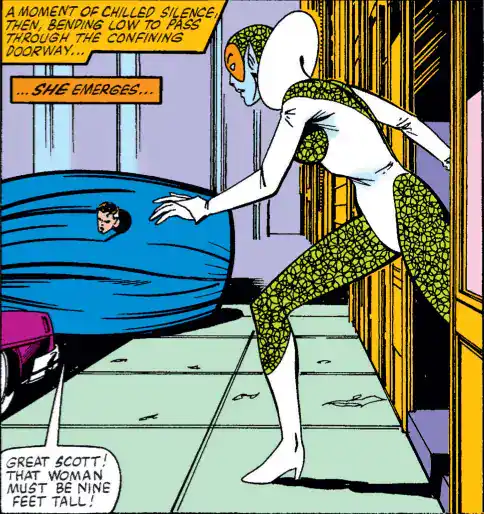
She knocks out both with the same effect from the cover.
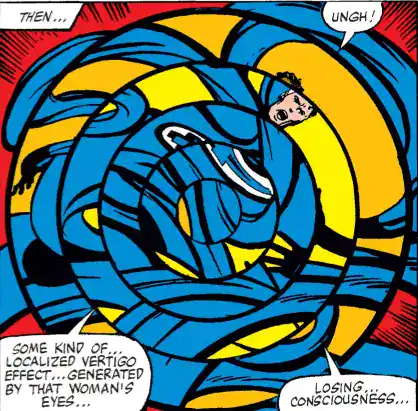
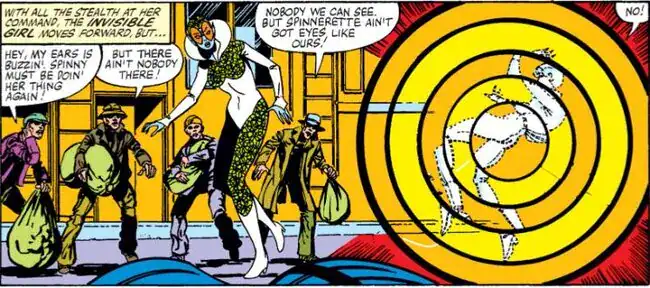
The tall woman is knocked out by a psychic blast from Franklin, and the criminals need to take her away in a panel that REALLY shows how tall she is.
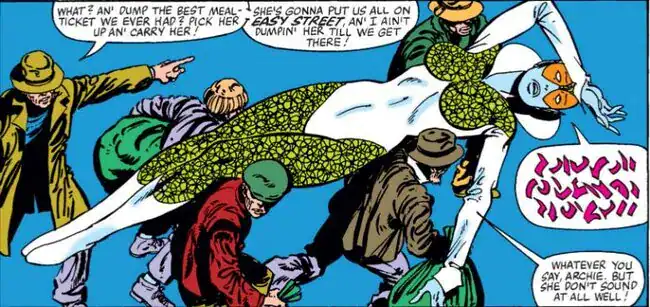
Investigating the jewelry store, Reed discovers that the woman didn’t care for the precious gems and left behind a weird compound.
Which OF COURSE Reed is able to identify at a glance.
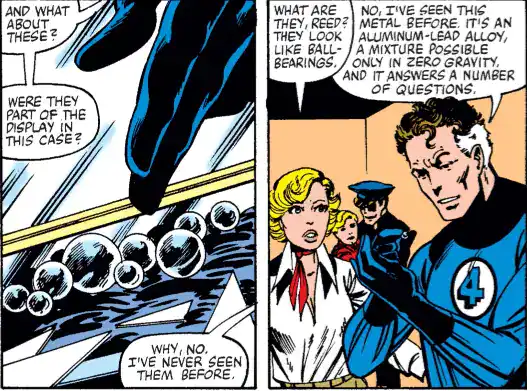
In fact, Reed has already figured out EVERYTHING.
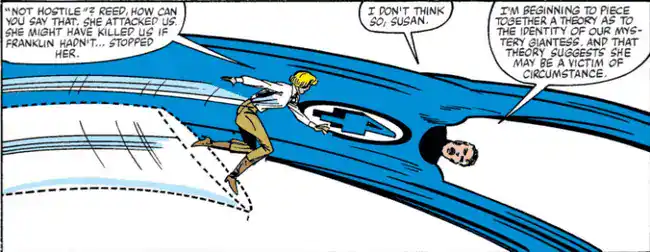
They discover the woman has stolen a calculator from another store, and they manage to capture one of the criminals while the rest escape.
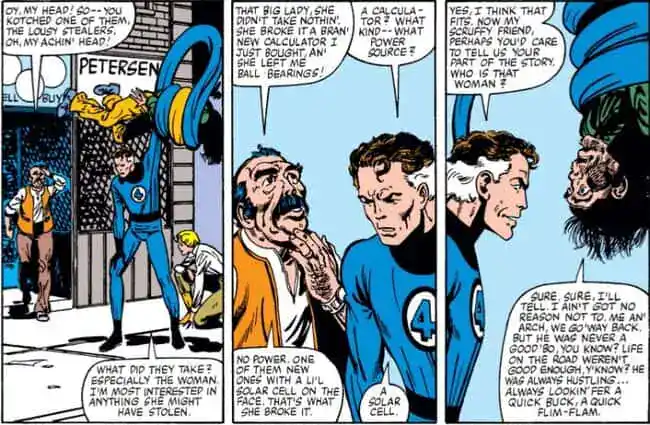
The criminal narrates how his gang met her in a junkyard and that all they managed to figure out was that she was after stealing silver and she had a useful power.
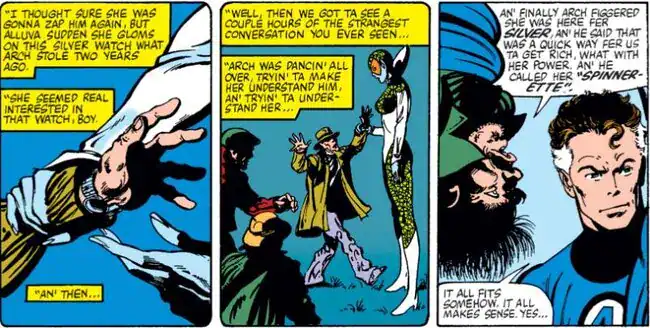
The woman is clearly an alien, so Reed recovers his trusted Universal Translator™.
I think this might be the first time the existence of the translator is acknowledged in-story.
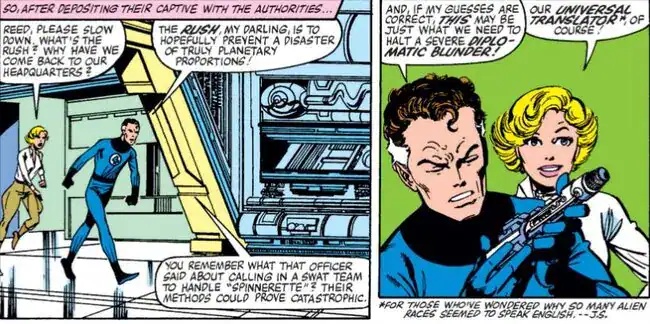
It still needs some adjustments.
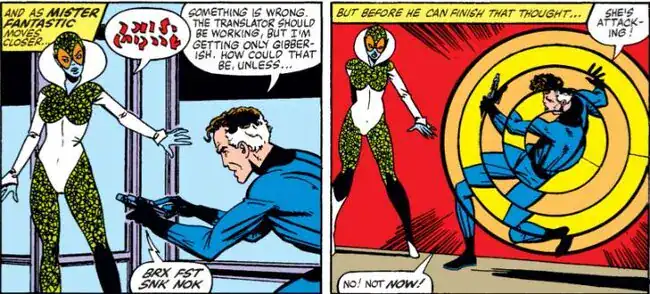
At least until Invisible Girl (she’s not “Invisible Woman” yet) traps her inside a force field.
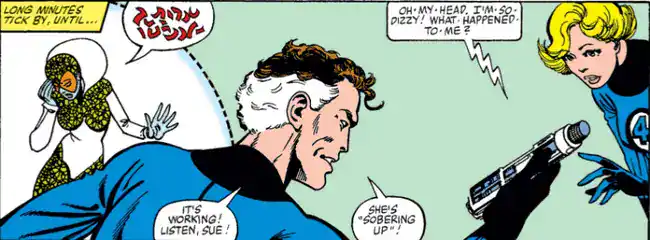
Thanks to the misunderstanding, they manage to talk things out with the alien.
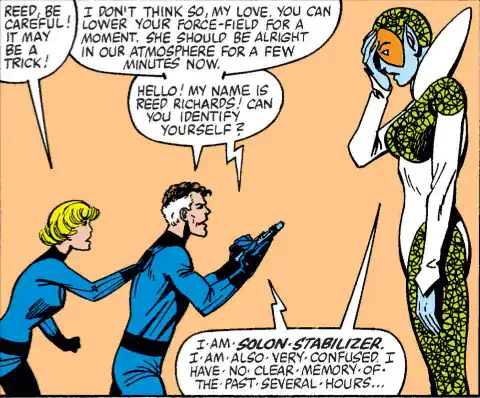

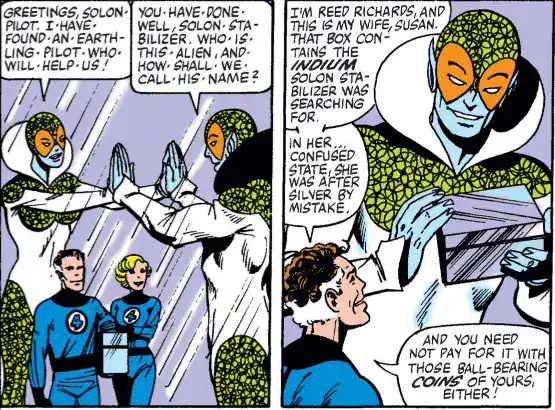
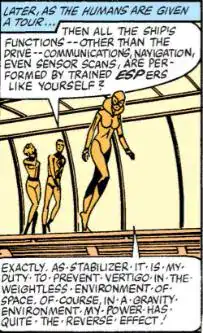
Her “vertigo power” is explained as having the exact opposite effect in space…
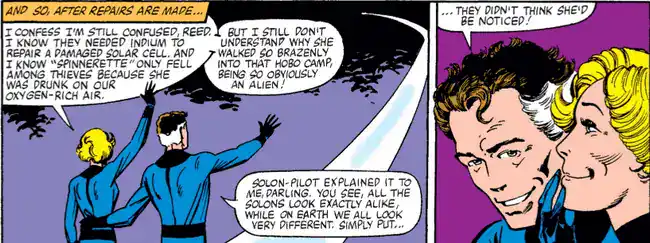
…and her behavior is explained as her being drunk on oxygen, until the force field brought it down to acceptable levels.
Historical significance: 0/10
That alien race is potentially interesting, but I don’t think we ever see it again besides maybe cameos.
Personal significance: 6/10
This didn’t tell me anything new about the FF, but it did quickly make me appreciate John Byrne.
Silver Age-ness: 2/10
While the scientific explanation makes too much sense for the Silver Age, it is still a bit goofy.
Does it stand the test of time? 10/10
The best Fantastic Four runs must balance superhero stories, personal relationship stories, and straight up sci-fi stories. Byrne excels at all three, but to this day he might still be the best at the sci-fi aspect (although the Ryan North run is a very strong contender).
Daredevil #175 (1981)
by Frank Miller
Daredevil was the second feature to Fantastic Four during the entire Star Comics era, which means that in the same book we got the John Byrne run AND the Miller run on Daredevil.
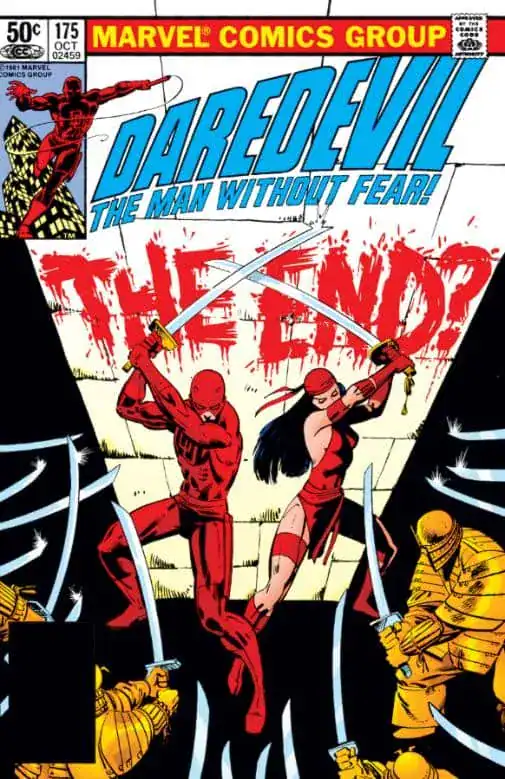
It’s incredible that, out of these two, the Fantastic Four issue is the one that needed some censorship.
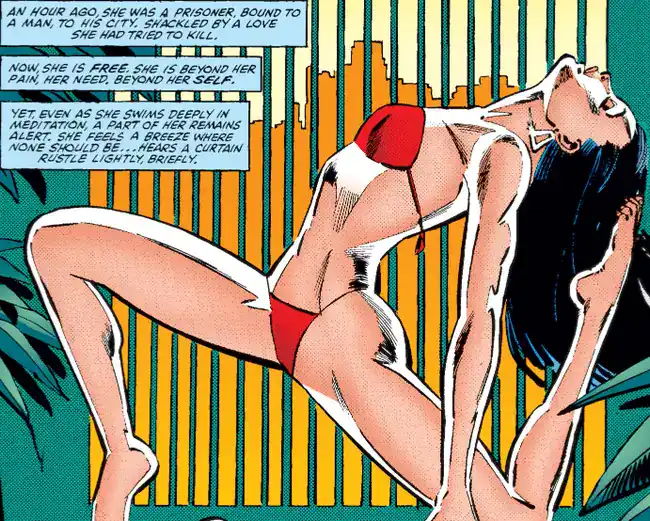
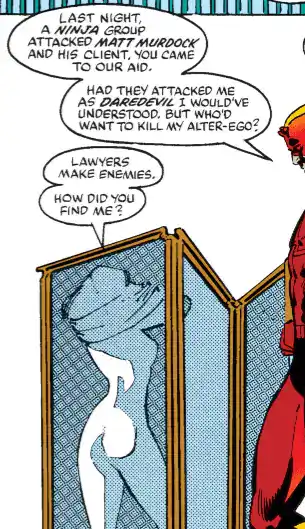
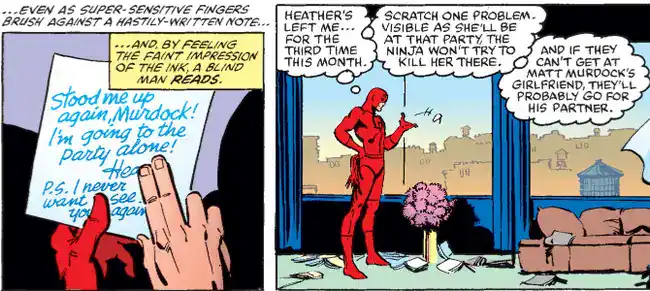
Because of what happened in the previous issue, Daredevil is more blind than usual.
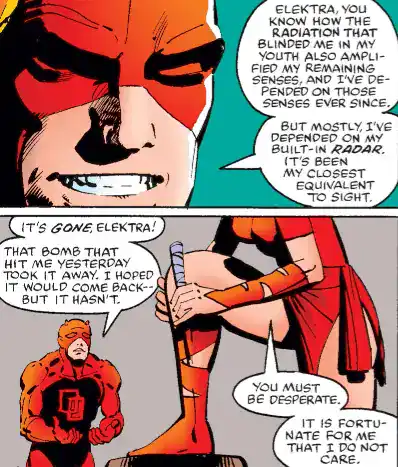
Perfectly healthy relationship, no notes.
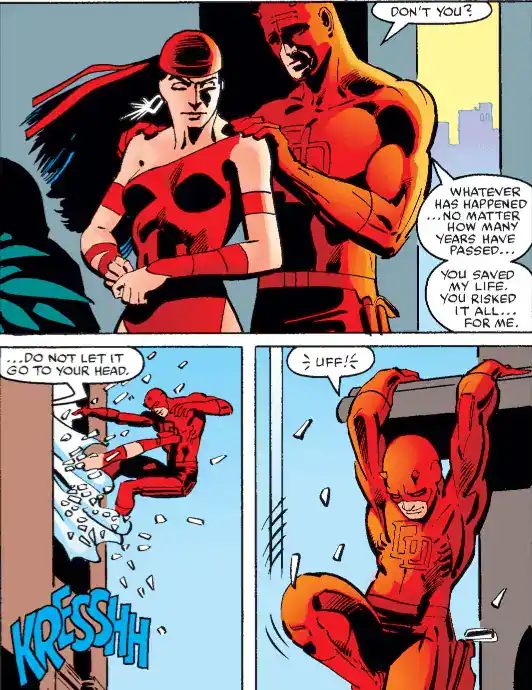
Someone is going after Matt Murdock’s friends, and it’s a good thing that he’s an awful boyfriend because it means that his girlfriend is safe.
Well, for now… she will eventually kill herself in the O’Neil run.
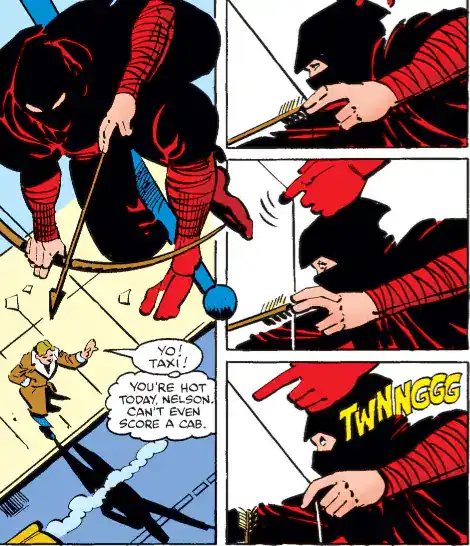
The Hand is also trying to kill Foggy Nelson, who being Foggy Nelson doesn’t even notice.
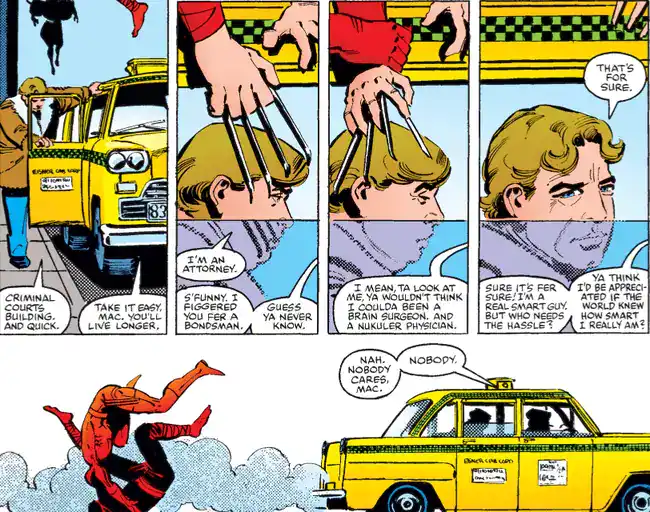
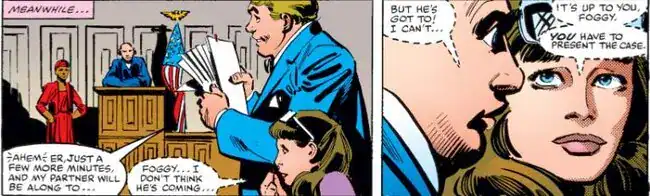
Foggy tries to delay the trial for Matt Murdock’s return, but he’s busy as Daredevil.
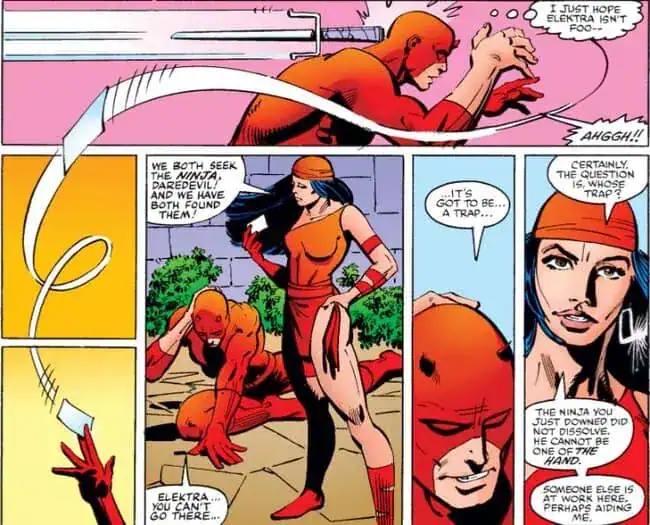
Daredevil gets the contact information from the Hand assassin, but without his radar sense he can’t stop Elektra from stealing it back.
After restocking her armory…
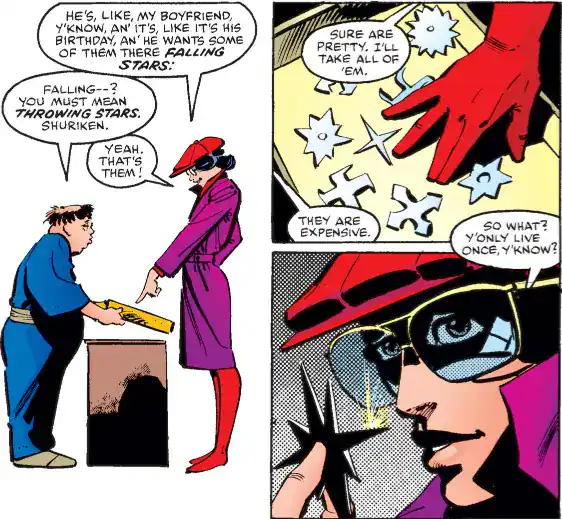
…Elektra goes down to business.
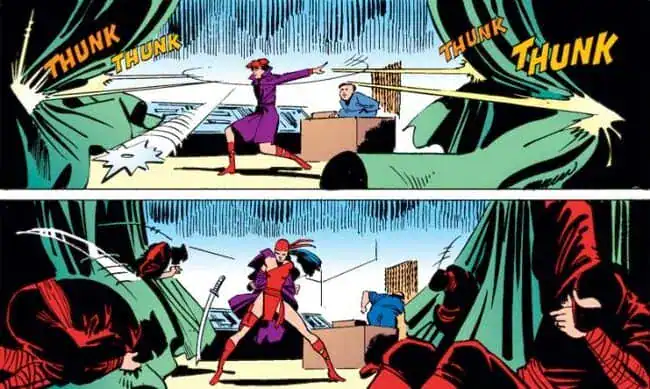
We have several pages of Daredevil & Elektra versus Hand ninjas.
Considering how many Daredevil runs have tried to recapture the energy of this era, it’s easy to dismiss the idea of having him fight ninjas for the millionth time… in fact, if I were a Daredevil editor I would mandate showing no ninjas for five years… but this is just awesome beyond words when it hasn’t been copied to death yet.
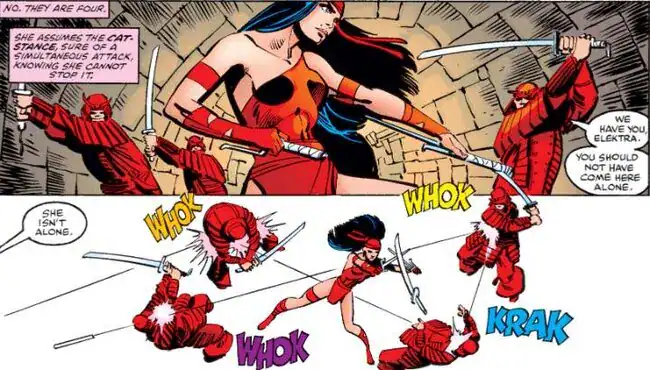
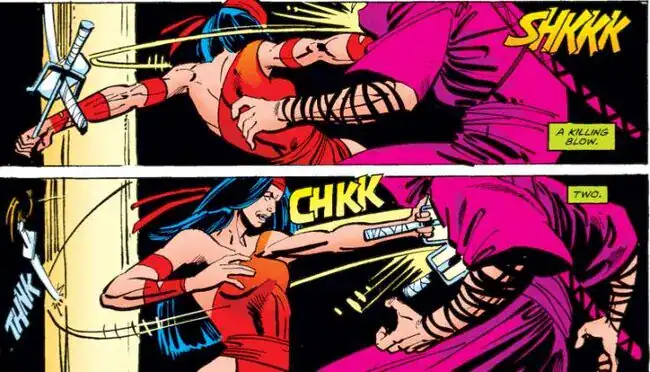
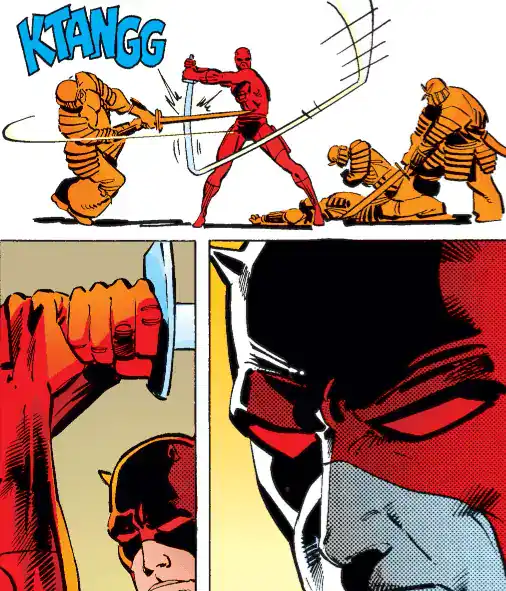
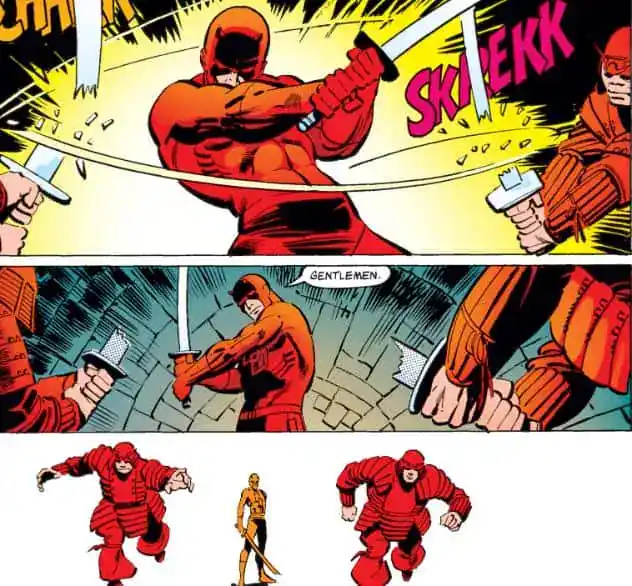
Especially when an unkillable super-ninja is involved.
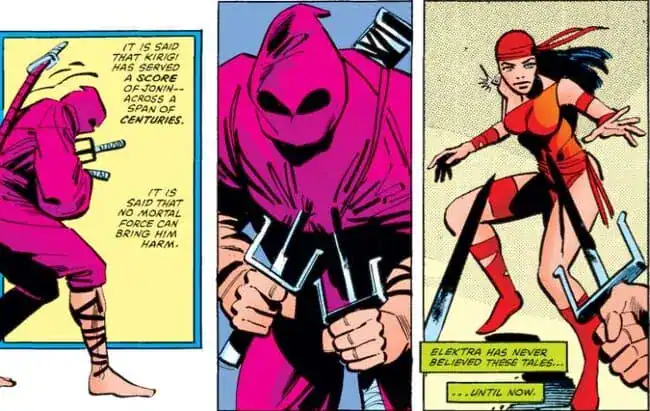
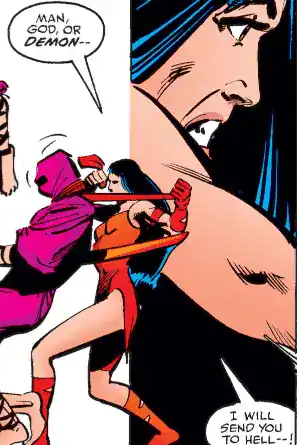
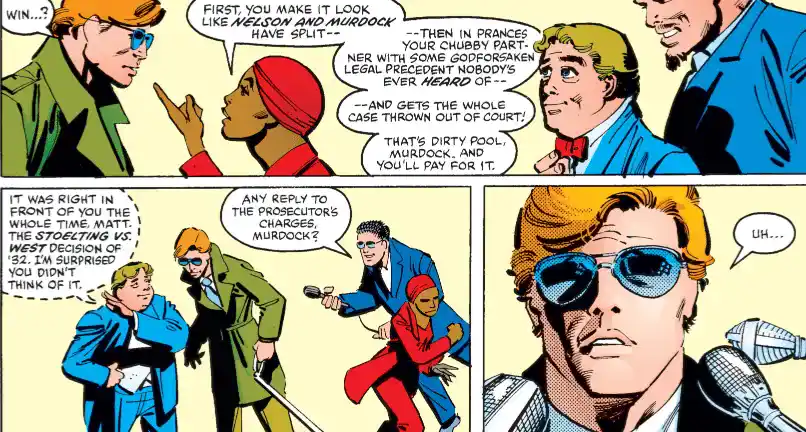
In the end, Foggy wins the case alone. That’s pretty consistent with him: he’s a mess when Matt is around, but if he’s the deciding factor Foggy rises to the occasion to prove he’s actually an amazingly competent lawyer.
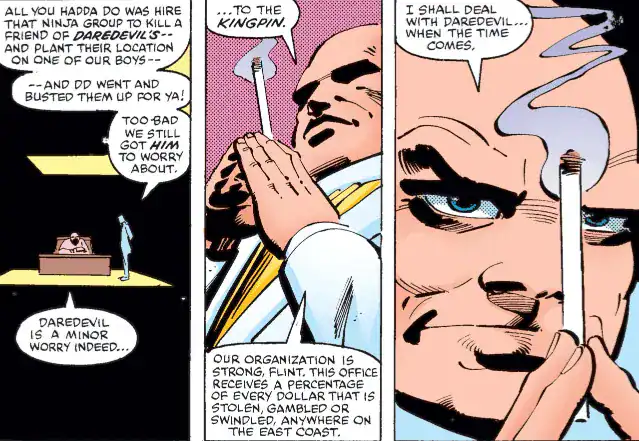
The Hand had been sent by Kingpin, because of course.
Historical significance: 2/10
The Kingpin already made Daredevil his targets in previous issues. This does introduce the unkillable ninja Kirigi, who *spoiler alert* doesn’t actually die in this issue.
Personal significance: 6/10
I’m not the biggest Daredevil fan; nothing against the character, I just connected with Spider-Man more. But being exposed to Miller’s version so early clearly made it THE lens through which I see him.
Silver Age-ness: 2/10
oggy not even noticing there are ninja constantly trying to kill him is a bit Silver Age.
Does it stand the test of time? 10/10
Daredevil has never really grown out of the shadow of the Frank Miller run for a reason… as mentioned things will get VERY repetitive with the Hand in future runs, but here it’s nearly flawless.
Incredible Hulk #257 (1981)
by Bill Mantlo & Sal Buscema
Byrne and Miller at the height of their capabilities in the same book was a dream, so it needed to be balanced with a frankly unfair comparison.
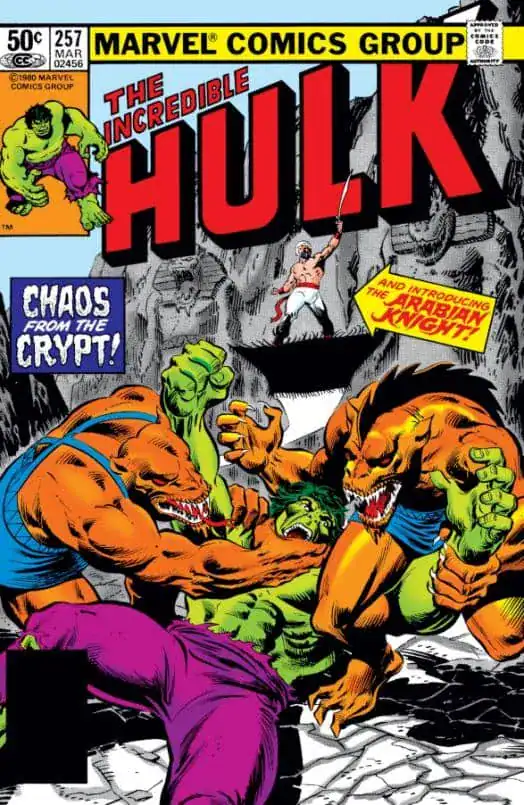
We begin with a severely dehydrated Bruce Banner being rescued in the desert.
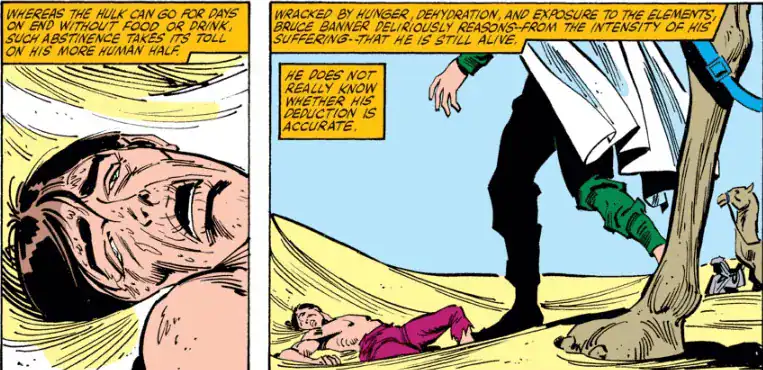
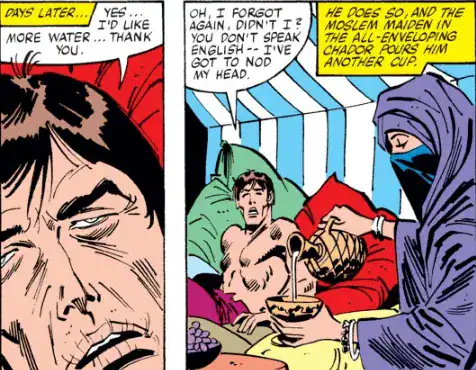
It would be easier to think that Banner has traveled back in time, but this is actually what Bill Mantlo believed Egypt was like in 1981.
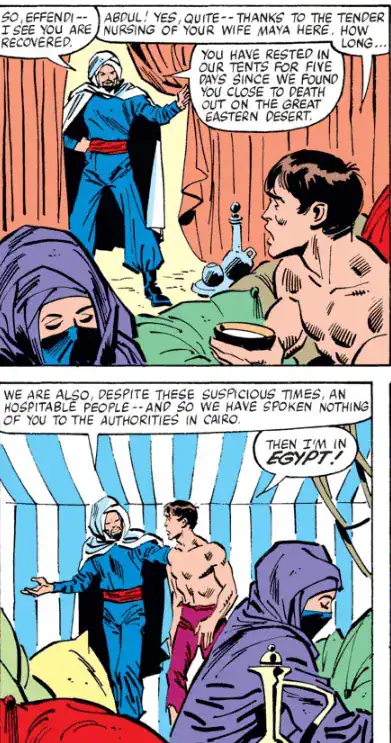
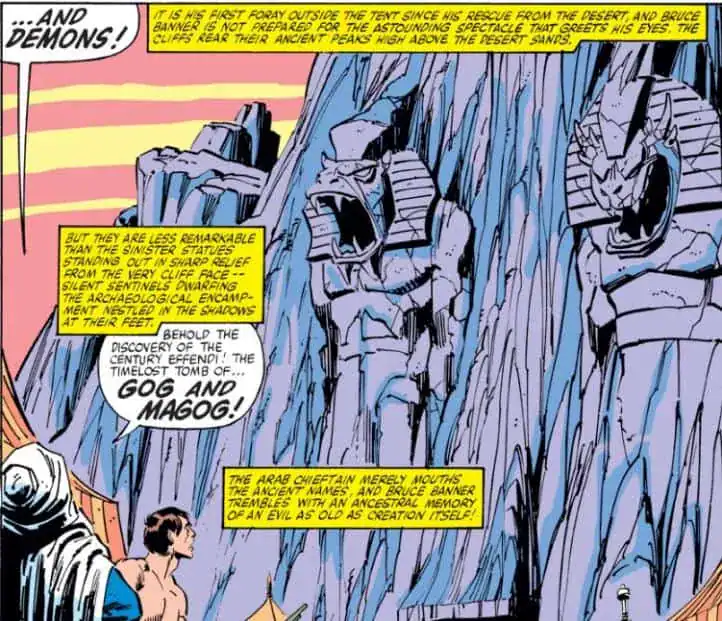
Banner has stumbled into “the tomb of Gog and Magog”, who are depicted as being demons from Egyptian mythology.
They’re actually from the Bible, and an explicitly Muslim character linking them to Ancient Egypt is particularly weird since they’re also mentioned in the Quran.
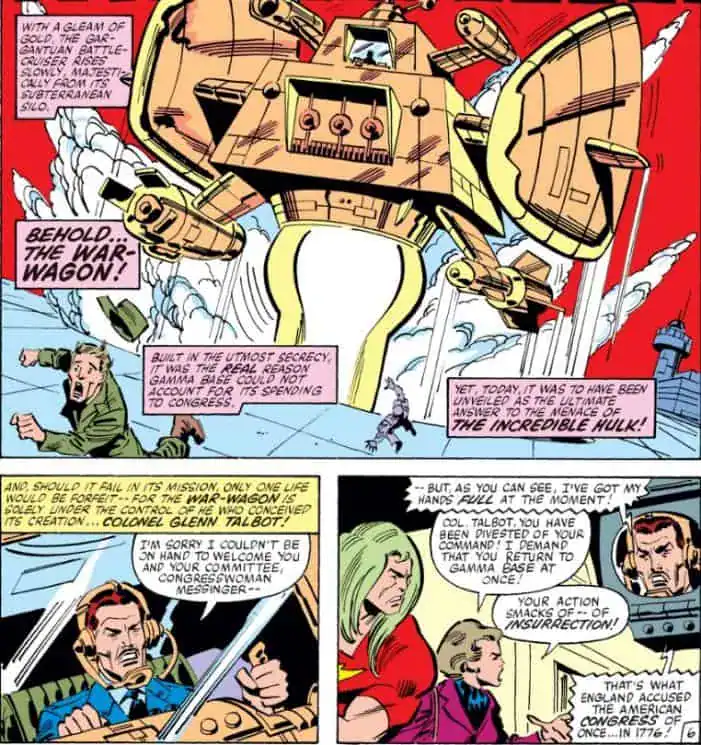
Meanwhile at Gamma Base in America, Colonel Talbot has gone COMPLETELY off the deep end and launched a warship to kill the Hulk.
Talbot had been a weird character for years, but he used to have a complex relationship with the Hulk… I’m sorry to say that Mantlo turns him into a complete lunatic supervillain.
Back to Believably Modern Egypt, Banner meets an archeologist (no relationship)…
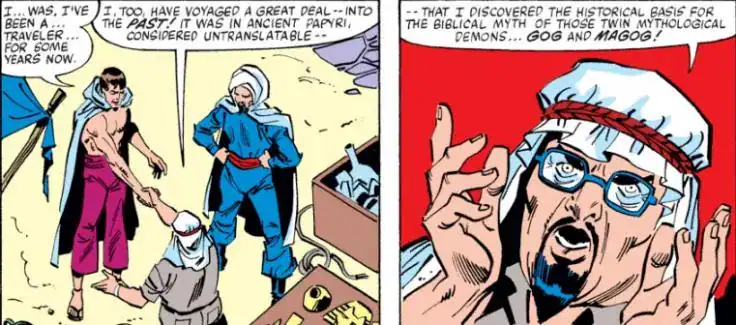
…that actually DOES link this version of Gog and Magog with the Bible.
Notice he’s treating the biblical Exodus story as proven history; Marvel has been VERY resistant to going into such a direct stance since then, unlike DC Comics.
I vastly prefer Marvel’s approach, as the overly religious DC stories rub me the wrong way.
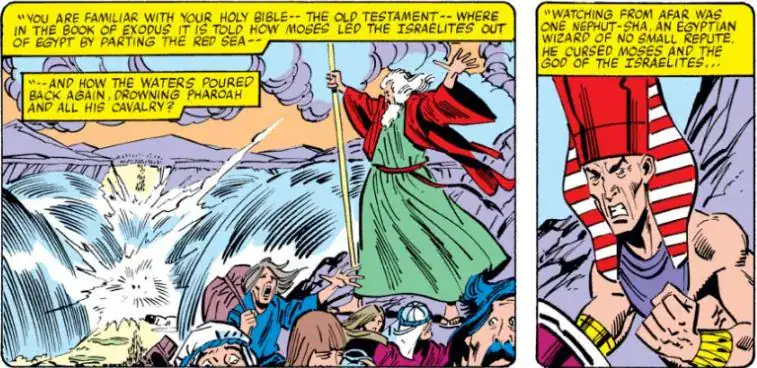
This will age well.
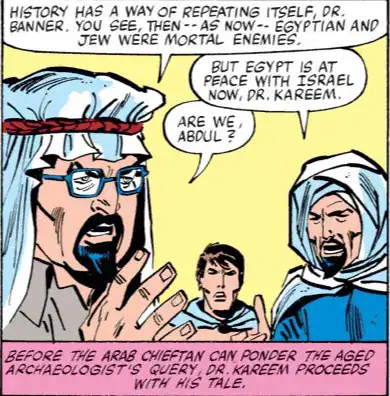
According to this story, the ancient wizard asked the Egyptian god Set (here with the spelling “Seth”) to give him the power to destroy jews and was transformed into the monstrous Gog and Magog.
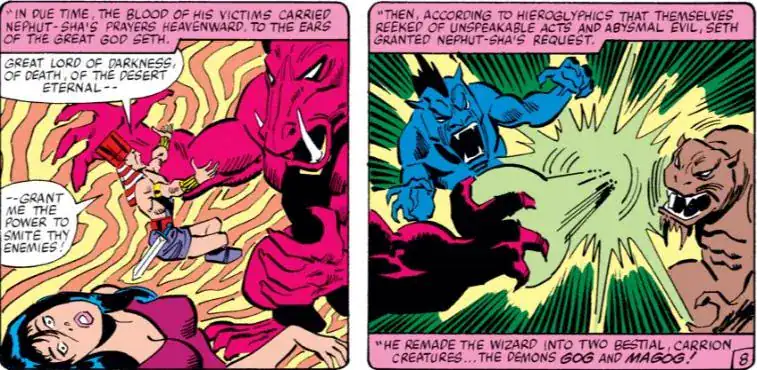
They’re not as impressive as it sounds, because the Egyptian army is able to capture them and seal them away.
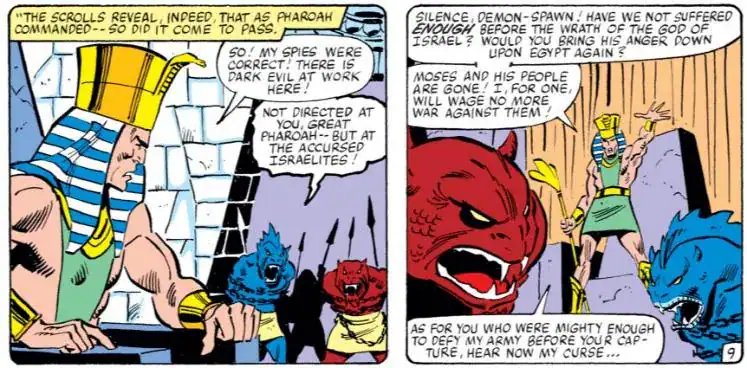
And now they’re… uhm… they’re awakened by the Egyptian archeologist to attack Israel.
Yep, told you it didn’t age well.
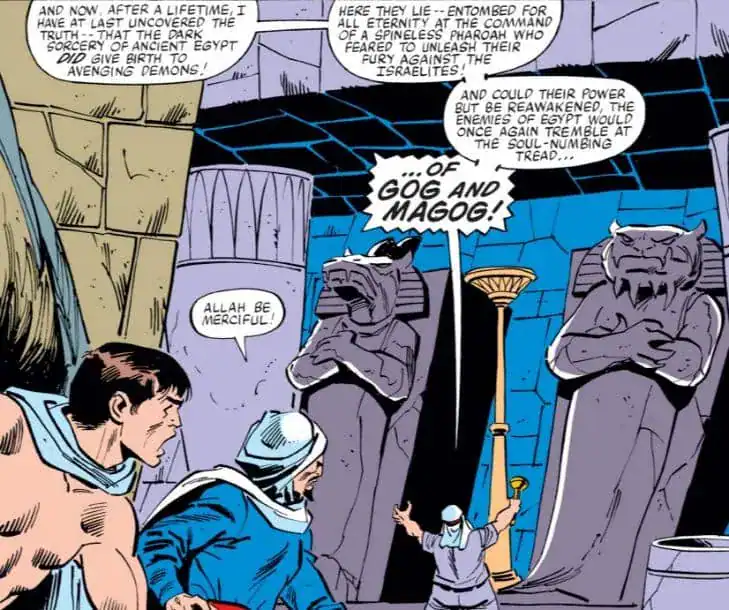
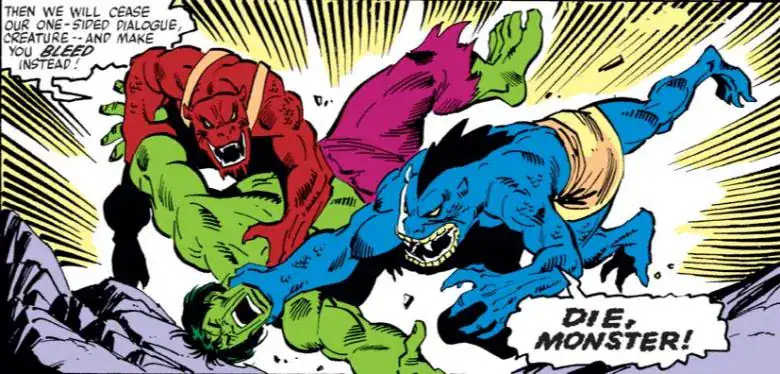
Gog and Magog, who I remind you lost to the Ancient Egyptian army, give trouble to the Hulk.
Sounds legit.
Fortunately, Banner’s benefactor randomly discovers some artifacts…
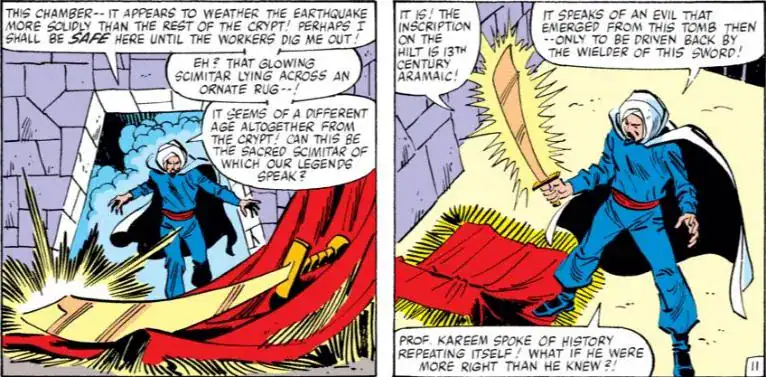
…into becoming Marvel’s first Muslim superhero: the Arabian Knight.
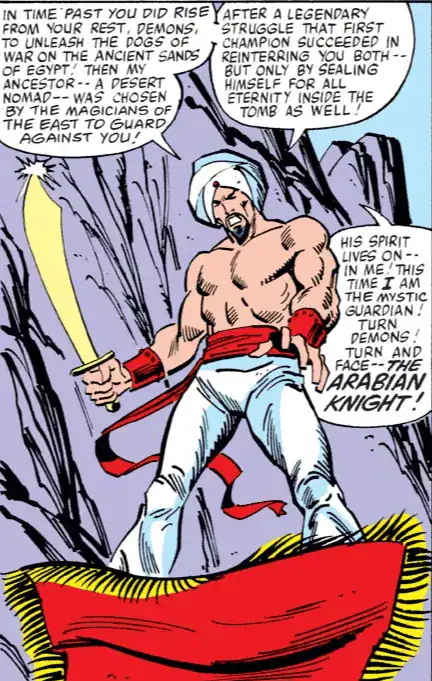
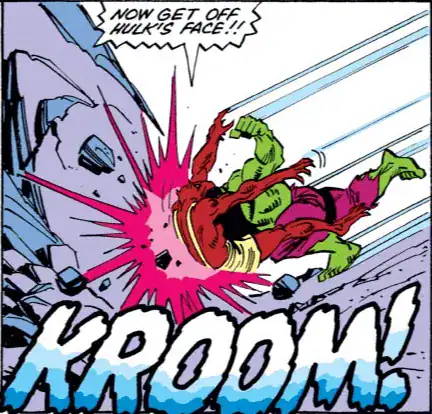
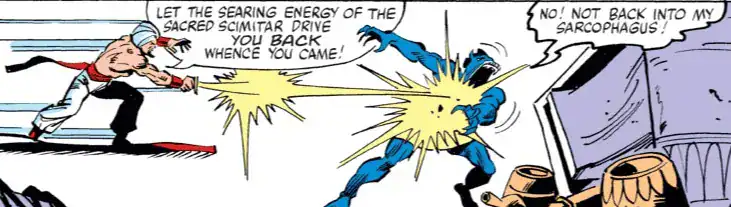
The Hulk and Arabian Knight team up to defeat the demons…
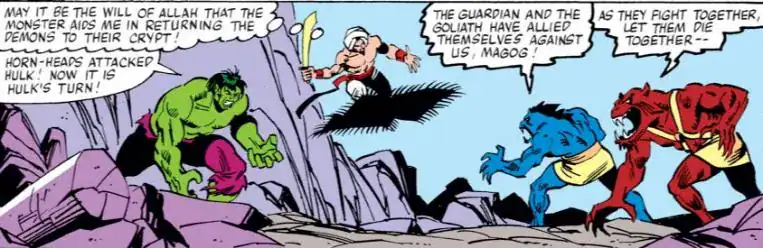
…which isn’t that hard.
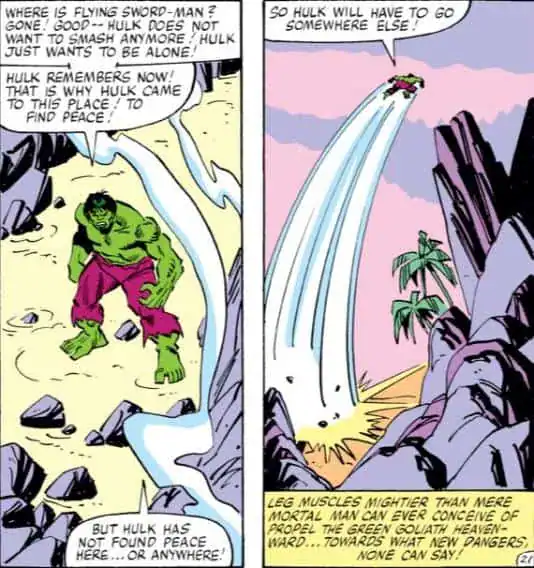
Then the Hulk just leaves…
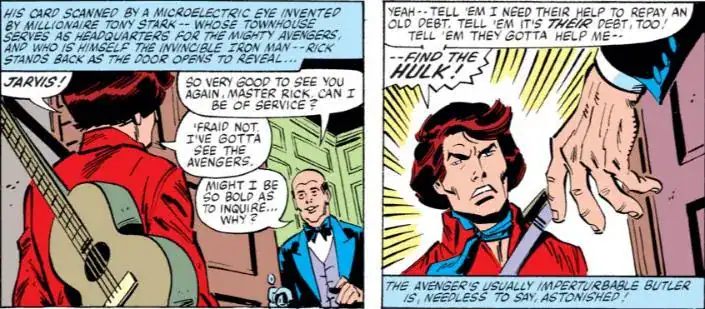
…and we close with Rick Jones going back to the Avengers in search of someone who can help him track the Hulk.
Historical significance: 0/10
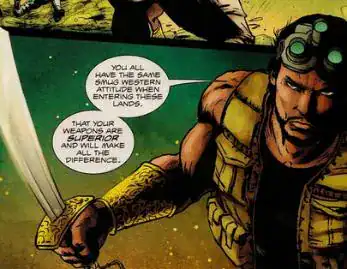
The Arabian Knight gets a little more than a dozen appearances before he’s killed off in 2001.
There’s a second Arabian Knight around, slightly less embarrassing, but he’s had even fewer appearances.
Personal significance: 4/10
I didn’t think much of this one. How could I have, next to the Byrne and Miller runs???
I also didn’t like Sal Buscema’s art, and in fact I wouldn’t come to appreciate his work until his later Spider-Man run.
RIP to an important artist in the history of comics who sadly passed away earlier this year.
Silver Age-ness: 8/10
I could have excused the 60s treating 20th century Egypt like it was still the Middle Ages, but in the 80s that’s unforgivable.
Does it stand the test of time? 3/10
I’d rather not discuss the many, MANY ways this has aged horribly. It’s also the worst kind of Hulk story… the one when he stumbles into someone else’s story, contributes nothing beyond throwing some punches, and then leaves without leaving the tiniest mark.
The Mantlo run will eventually go into interesting places, but definitely not right now.
The missing “circles” from Julie D’Angelo are very strange… but this also happens in the early Spanish editions of the story. The first edition was published in October 1984, and I don’t think it was censored. In fact, this is strange because one of the first Marvel titles Planeta DeAgostini published was Savage Sword of Conan… There are no cases of censored panels in any Marvel series (in France, it’s a different story).
If the Italian edition is from 1989, I suspect that the materials from that page were, in fact, without them… because they were printed in a separate layer? I don’t know. On the other hand, the first American reprint was in Marvel Super-Heroes Megazine (1995) #6, and I don’t know if they are present or not.
The first TPB reprint was in 2001, and, effectively, the “circles” are not present in either the Masterworks edition or Omnibus.
Julie D’Angelo is a character who Byrne clearly wanted to do more with and never got around to.
She even has an Alpha Flight connection, but it is of a “blink and you will miss it” nature.
While of course Egypt is a modern country with big cities and the like, there are Bedouins who actually live as depicted. It was only a few years earlier that the James Bond movie “The Spy Who Loved Me” depicted Bond visiting an Arab friend of his in such a tent. (Granted, Bond isn’t the most progressive of characters.)
I think the more egregious mistake is having all that “Arabian Nights” regalia in Egypt rather than in a more appropriate setting, such as one of the Arabian peninsula or Iraq. Egypt is certainly Arab nowadays, but it’s not where those legends come from.
Also, “Gog and Magog” are not even close to what those names referred to in the Bible, but I don’t expect that degree of accuracy from comic books not written by Neil Gaiman.