
The retrospective has reached the first appearance of Spider-Man, which I have already reviewed.
So like I did for 1958 with the Legion and 1961 with the Fantastic Four, let’s take a look of the comics that share the same cover date of the webcrawler’s debut.
MARVEL
An additional reason for doing this is that it’s the same month of the first Thor story.
Whether because of Thor’s divine status, or because Spider-Man wouldn’t get his regular series until a cover date of 1963, I always forget that they debut at the same time.
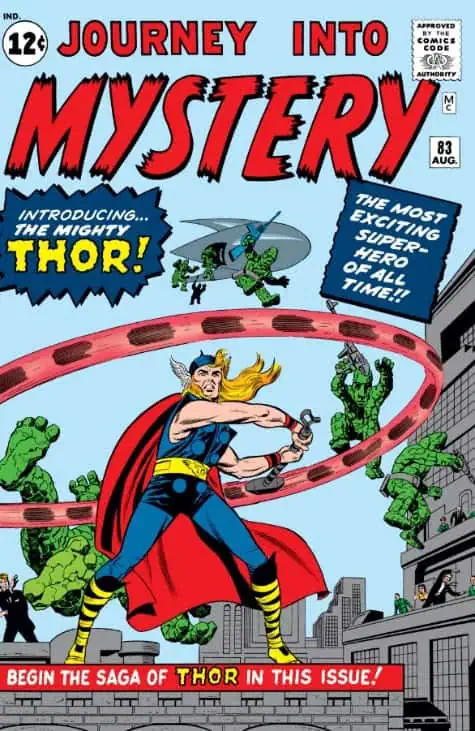
Spider-Man and Thor are the only Marvel superheroes with a cover date of August 1962.
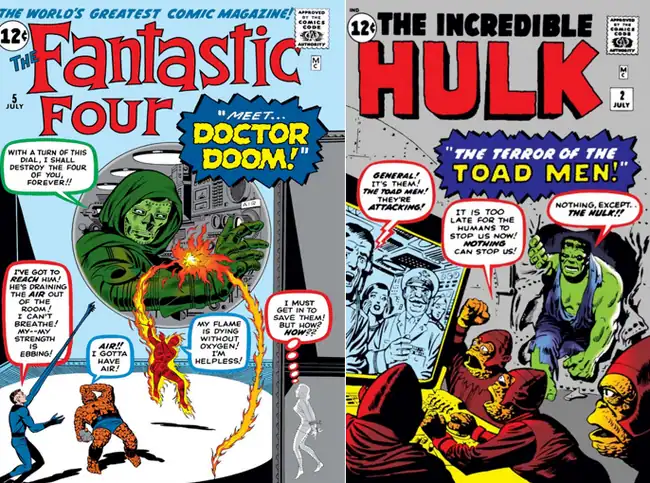
Both Fantastic Four #5 and Incredible Hulk #2 were published the month before.
But back to August 1962: Tales of Suspense was at #32, seven issues before it becomes Iron Man’s book.
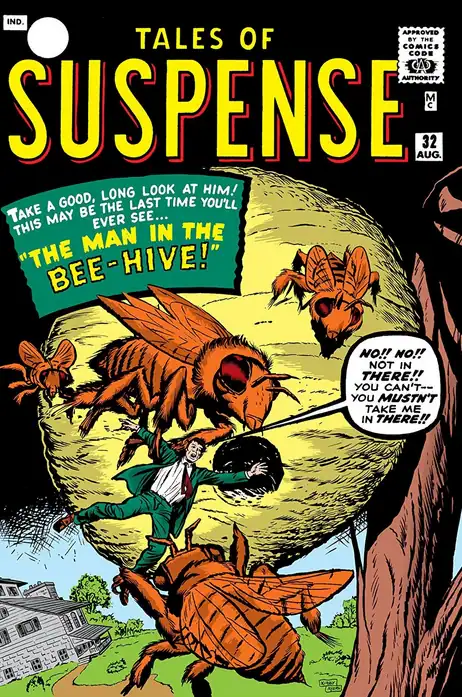
Not to be confused with Tales To Astonish #27, which was the story of a scientist shrinking down to the size of an ant.
No this is about a mutant (!!!) shrinking himself and a thief down to the size of a bee.
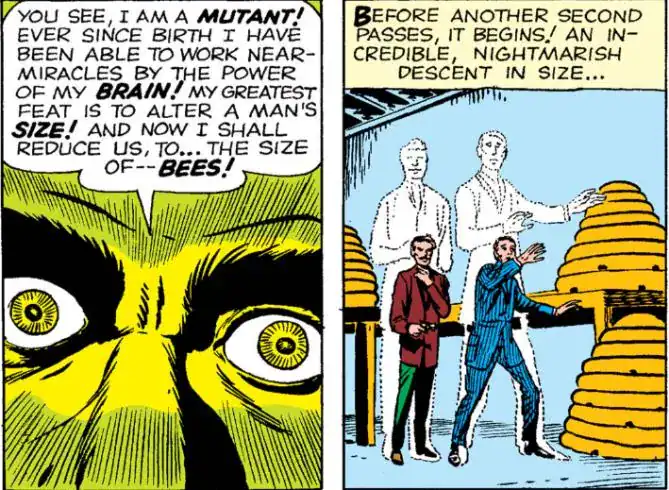
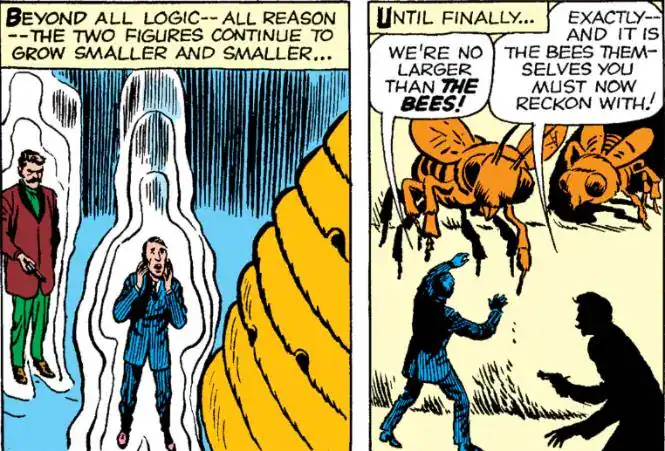
Except it was all just an illusion…
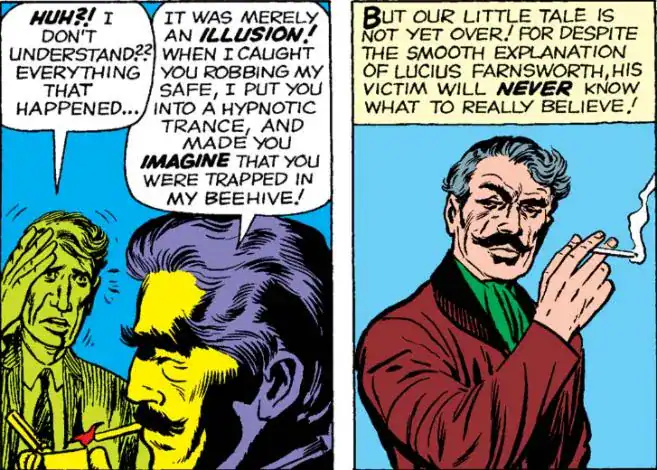
…or was it?
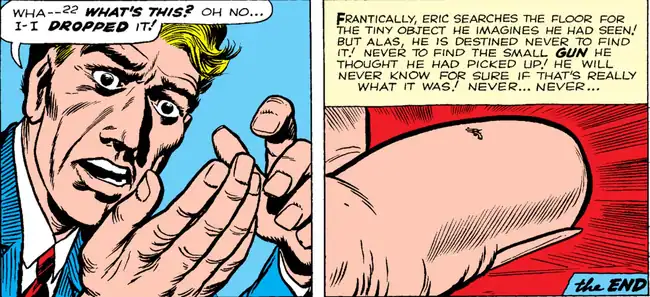
There is a universe where Hank Pym never gets a second story and this is retroactively considered the first appearance of the superhero Bee-Man.
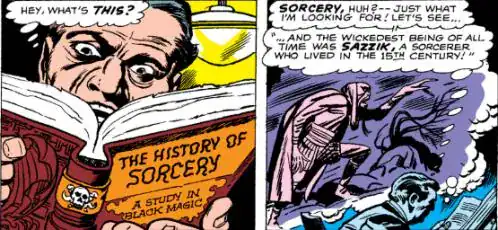
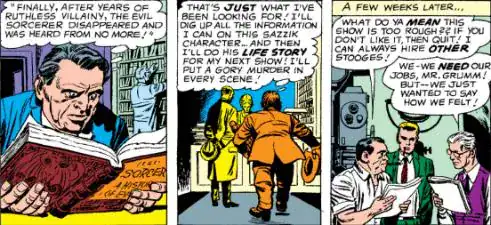
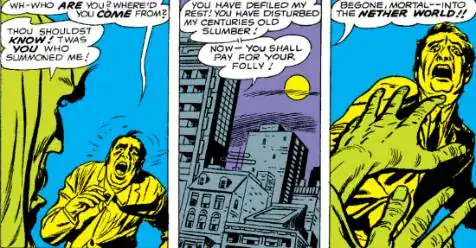
There’s also a story about a TV producer who steals a magic book from the library to be used in one of his shows. Yeah just go with it.
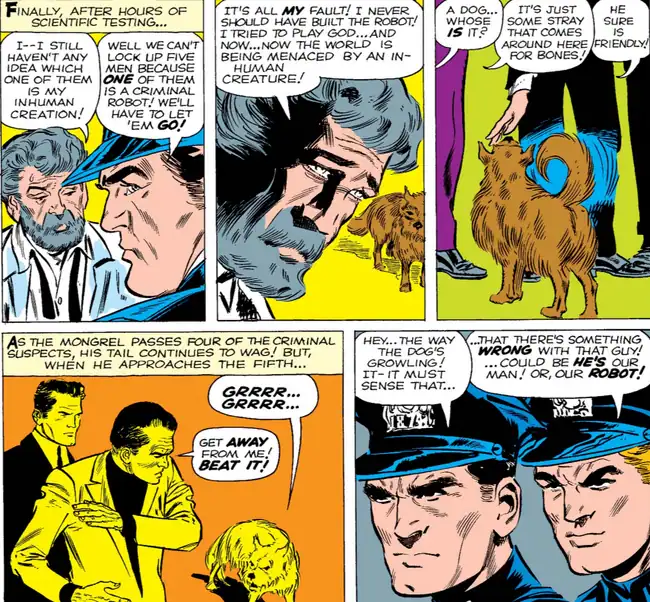
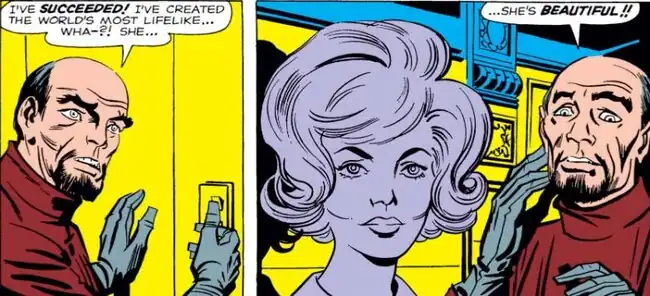
And finally there’s a story about a scientist who invents an android that becomes a murderer, but is arrested thanks to a dog…
…and a story about humans pissing off some benevolent aliens.

Another anthology with the same cover date is Tales To Astonish #34, just one issue before it becomes the Ant-Man book.
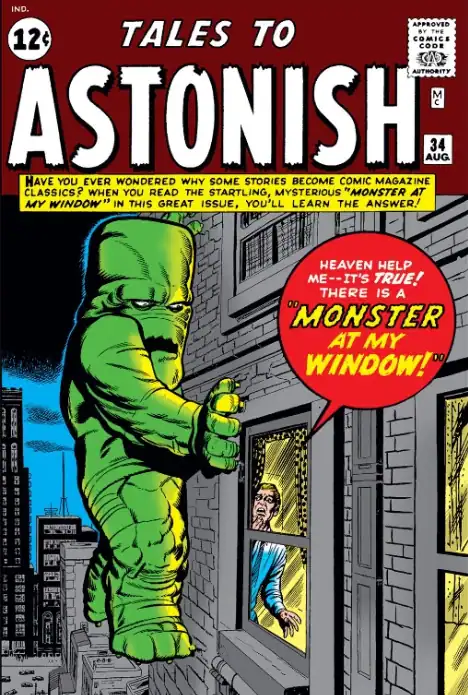
No wonder superheroes will show up in numbers, Earth is CONSTANTLY under threat of invasion at this point!!!
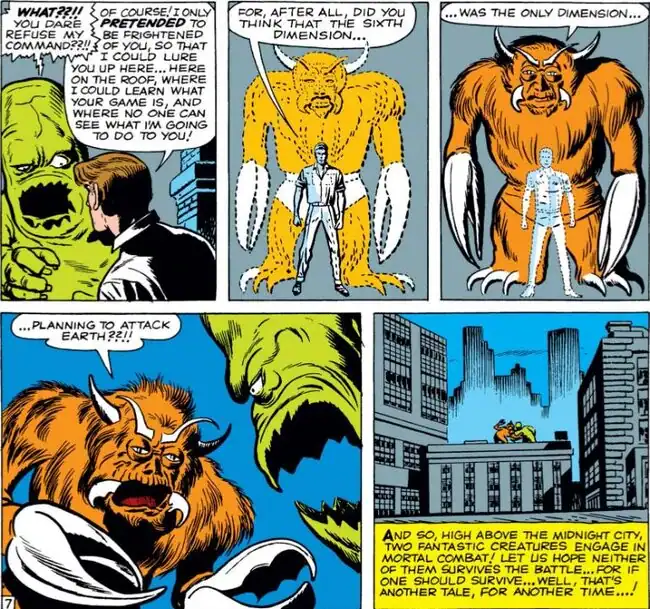
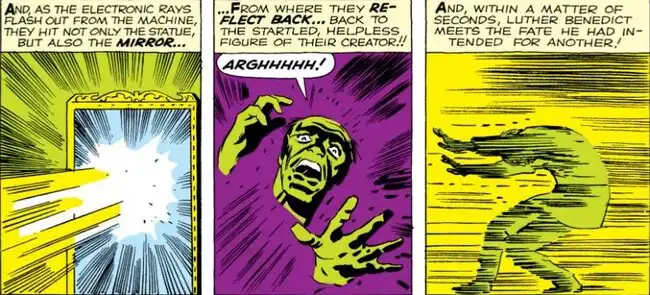
It also has a scientist who creates a ray that turns people to stone, but ends up being turned into a statue himself.
Back to the theme of alien invaders, these ones have one of the best Ditko designs ever.
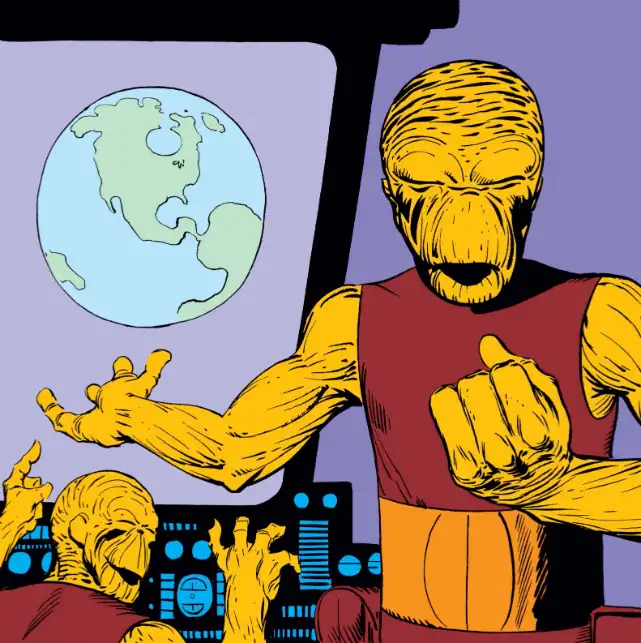
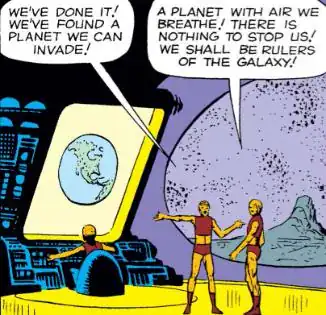
The twist is that they have no concept of an ocean, so they end up drowning once they land.

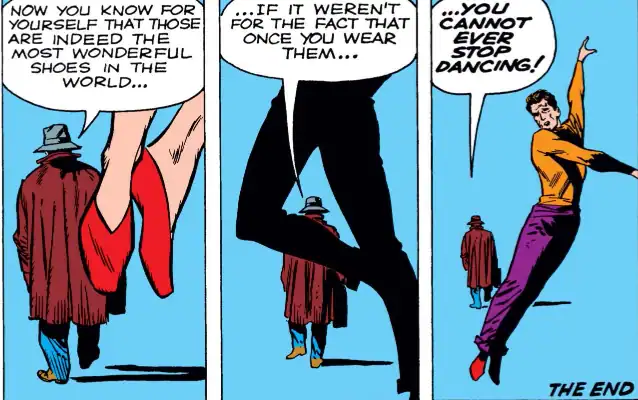
Most bizarre of all for the times, the final story (with Don Heck pencils) is about a dancer who is sold cursed shoes that will never let him stop dancing.
Closing off the Marvel anthologies, we have Strange Tales #99, two issues before it becomes the Human Torch series.

For some reason, Marvel Unlimited skipped this one for its digital version.
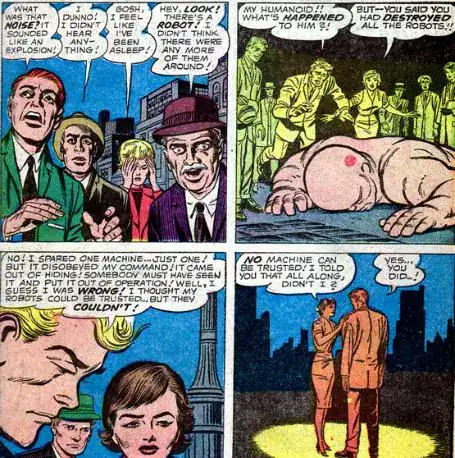
It doesn’t have anything objectionable: the first story is about robots that are discarded for being ugly but end up saving the world…
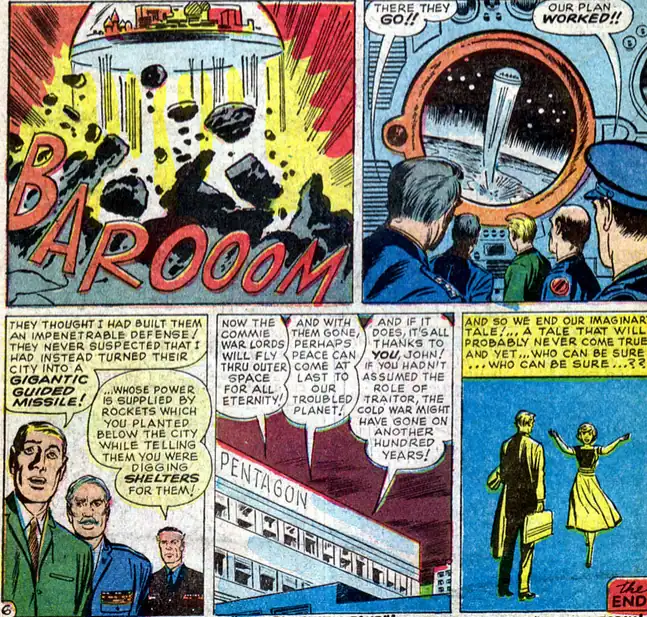
…the second is about a scientist who looks like defected the USA but ends up sabotaging the Soviet Union into launching an entire city into space…
…the third is about a guy who tries to kill with a sonic weapon the woman who rejected him, only to be defeated by her being deaf…
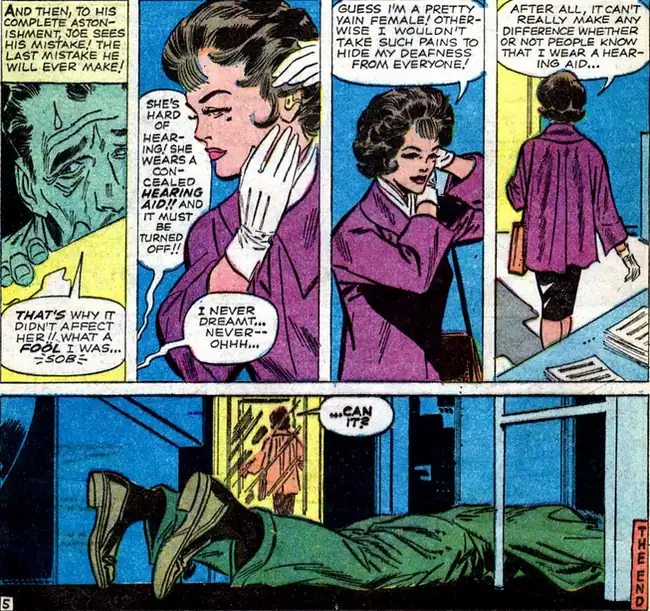
…and the last one is about a criminal who invents a time machine to escape prison, only to discover that the universe still follows the DC Comics time travel rules.
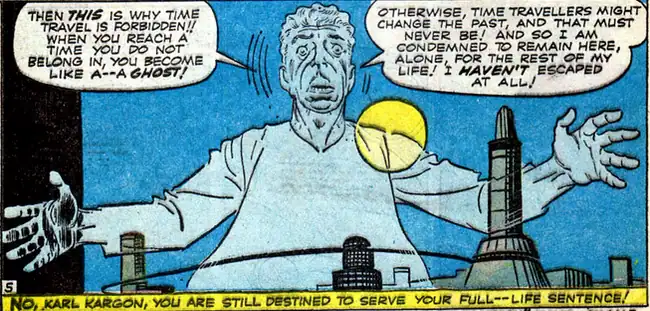
A pity that out of all the anthologies this one is the only one not currently in high quality version: out of the ones from August 1962, I found it to be the strongest.
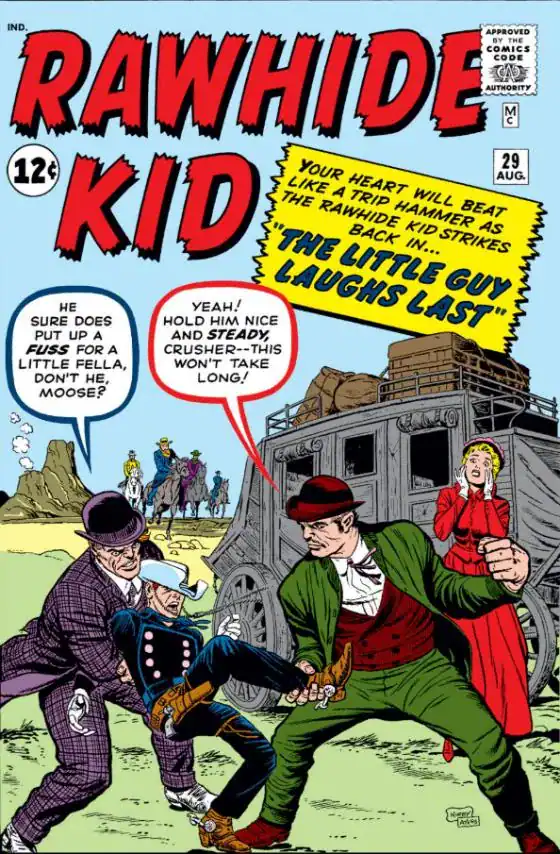
Unlike the other years I’ve covered, August 1962 is not good for westerns: the only book is Rawhide Kid #29.
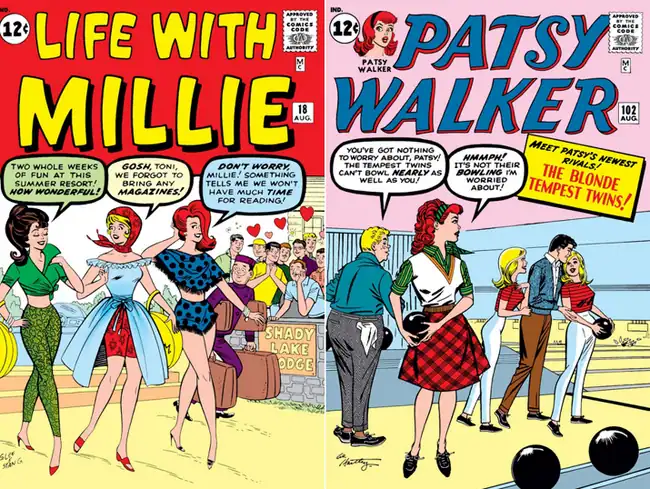
What was selling this month was “girly books”: Life With Millie #18, Patsy Walker #102, Patsy And Hedy #83 and Kathy #18.
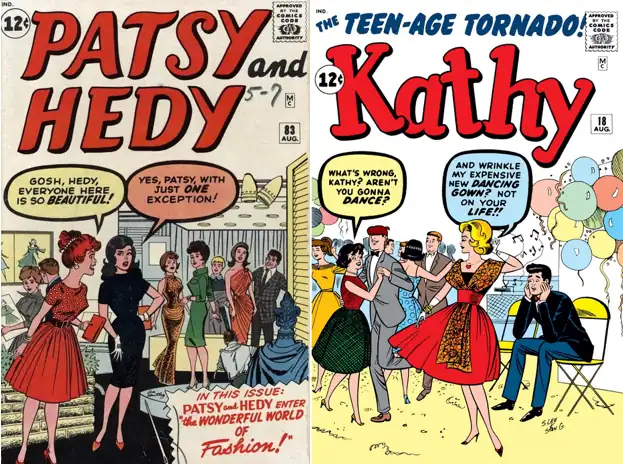
In total, with a cover date of August 1962 Marvel published books which:
- contain a total of 33 stories
- 26 stories were written or co-written by Stan Lee
- 7 stories have an uncredited writer
- 10 stories were penciled by Jack Kirby
- 8 stories were penciled by Steve Ditko
- 4 stories were penciled by Don Heck and 4 by Al Hartley
Spider-Man is quite an outsider when compared with the other books published by Marvel the same month: nothing I’ve covered above even feels like it’s set in the same universe as him.
What about the competition?
DC Comics
Huge month for Superman, with a total of SEVEN books in the franchise: that’ ALMOST as much as Marvel’s entire output!
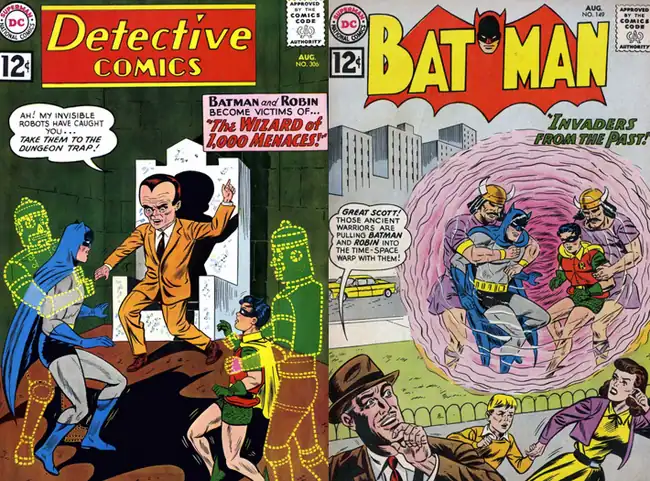
For the main books we have Action Comics #291 and Superman #155, showcasing two of his biggest weaknesses: Kryptonite and professional boxers.
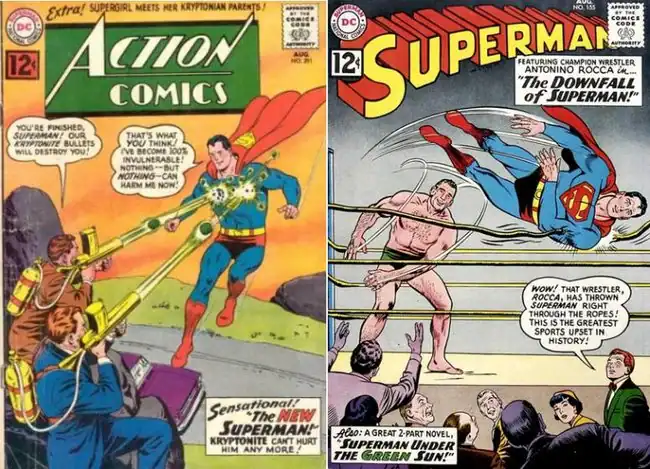
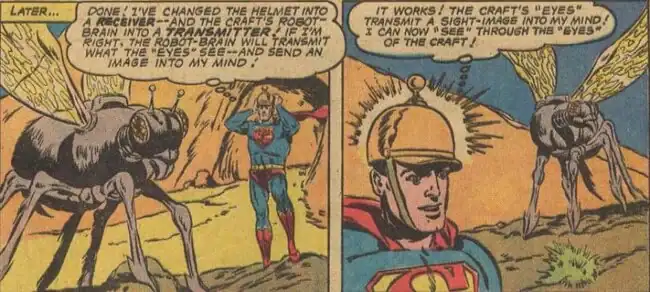
In addition to a Legion cameo, the latter includes a giant robot bee.
What is it with 1962 and giant insects?
Speaking of the Legion, the same month we have Adventure Comics #299: the issue before the Legion gets its first regular series.
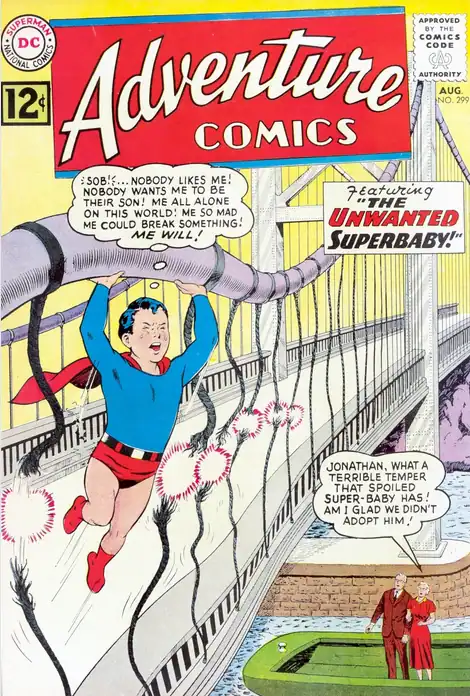
The cover story is an imaginary tale about Superboy being adopted by the kings of a fictional country, only to lose his powers at the end.
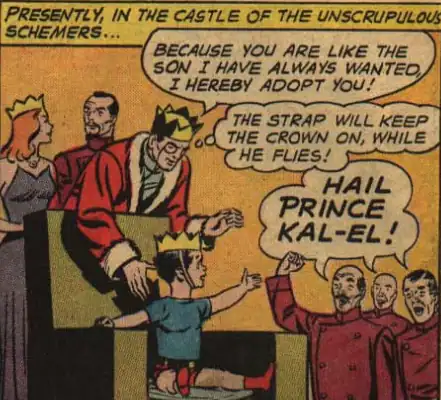
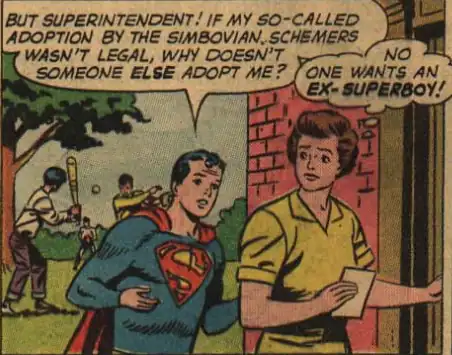
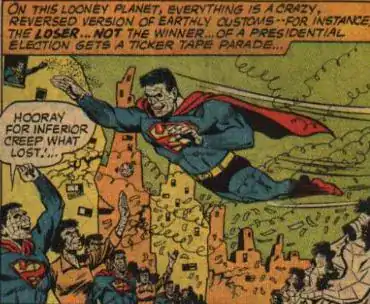
It also has a Bizarro-World story. Can’t imagine why the Legion took over the book.
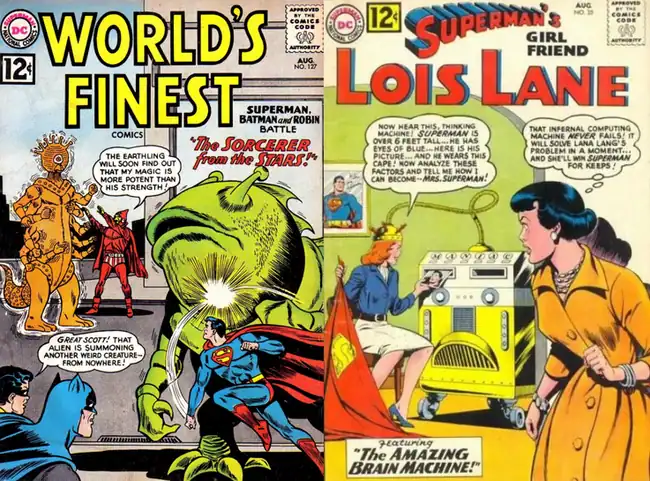
We also have World’s Finest #127 and Lois Lane #35.
Seeing how neither got into its own retrospective, you can imagine how much I found them entertaining.
Both Superman and Lois Lane were selling well enough to justify entire annuals dedicated to reprints.
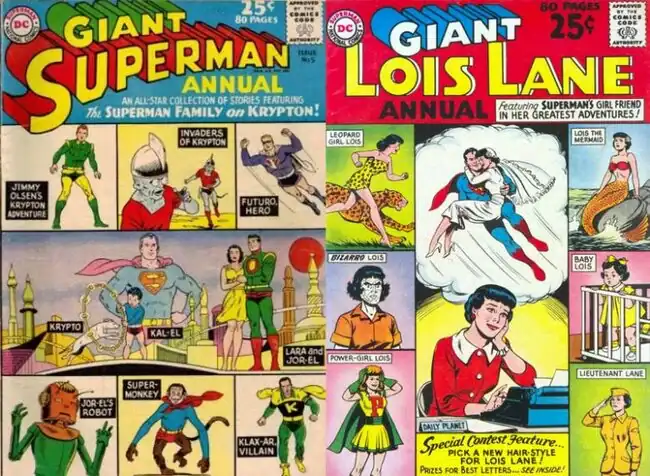
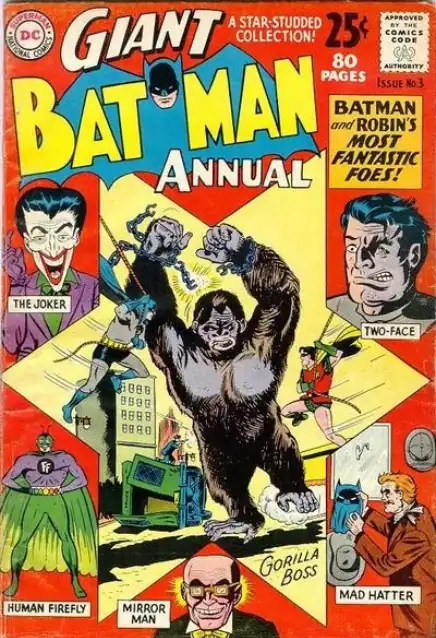
Batman was still stuck in his sci-fi era, with 2 regular series (well 2.5 if you include World’s Finest), but he was still selling well enough to have his own annual of reprints.
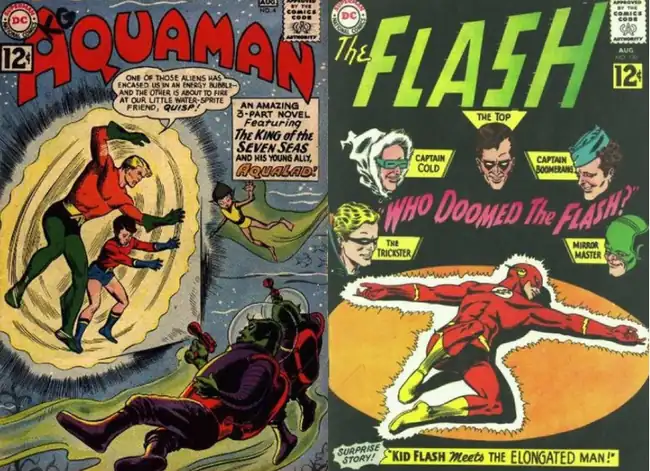
The Silver Age was in full swing at DC, with an additional 4 books dedicated to other superheroes: Aquaman, Flash, Wonder Woman and the Justice League of America.
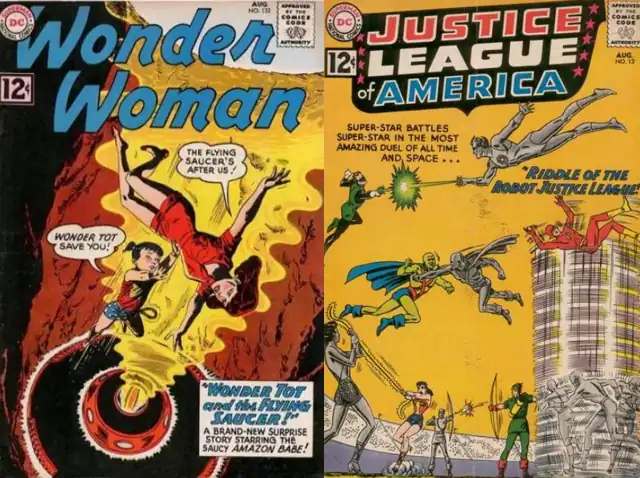
DC wasn’t lacking in superhero-adjacent books. The same month also published Blackhawk, Challengers of the Unknown, Adam Strange, Rip Hunter and even Sea Devils.
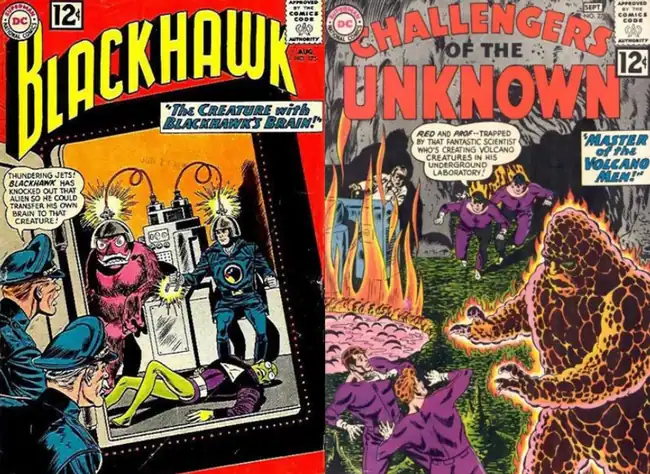
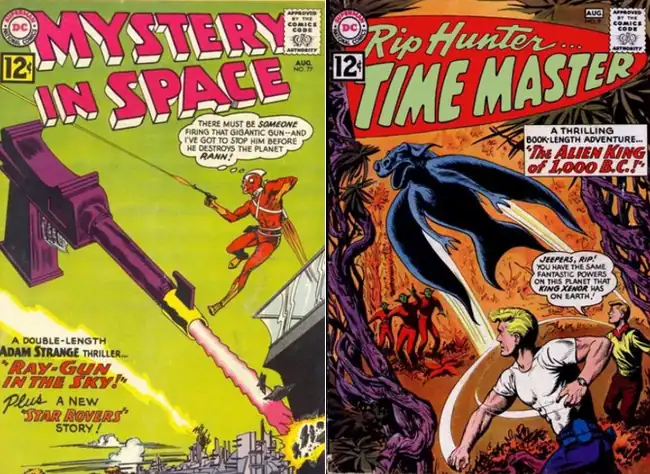

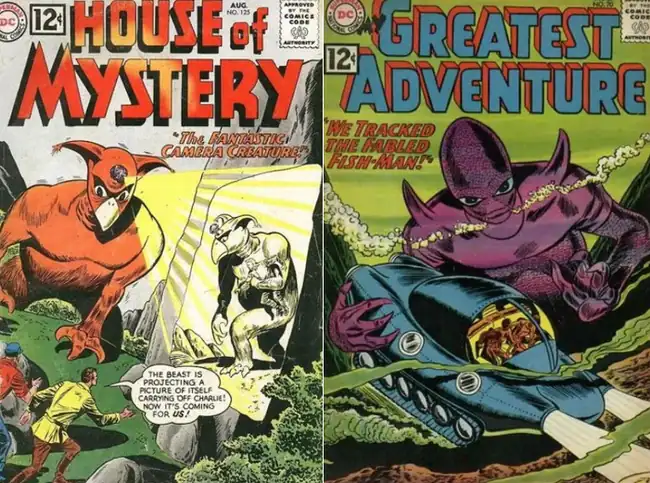
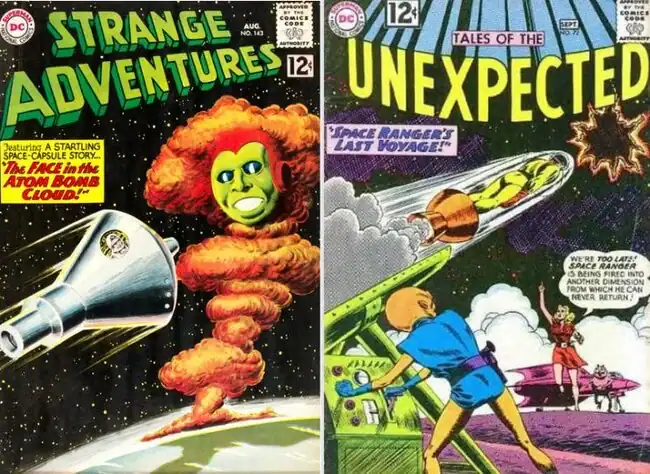
You would think that these series would be the equivalent of Marvel’s anthologies… but nope: DC also had four of these this month.
House of Mystery, My Greatest Adventure, Strange Adventures and Tales of the Unexpected.
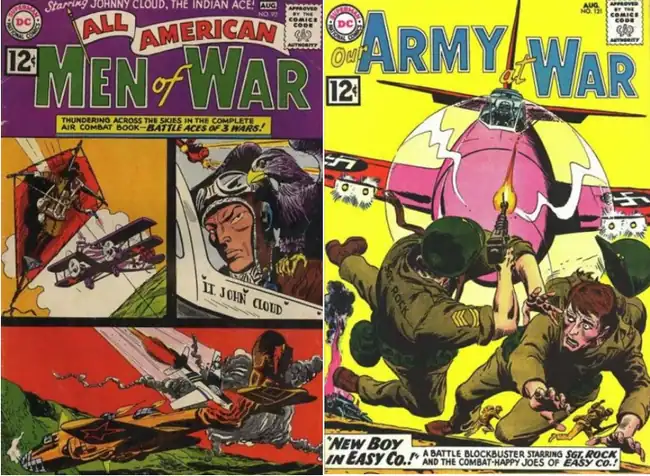
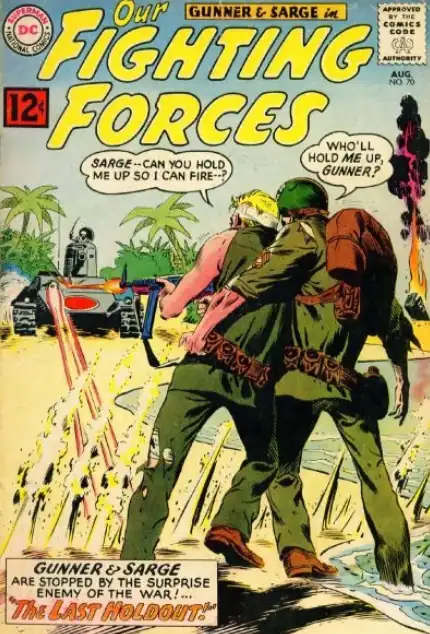
War comics are still big: “All American Men of War”, “Our Army at War” and “Our Fighting Forces”, all of which have at least one story written by Robert Kanigher.
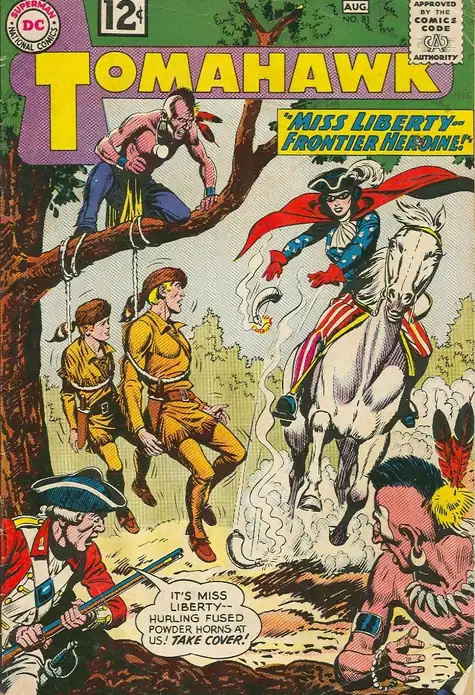
No westerns for DC this month, but Tomahawk is the closest thing.
The other well-represented market is romance, with four anthologies: “Falling In Love”, “Girls’ Love”, “Secret Hearts” and “The Many Loves of Dobie Gillis”.
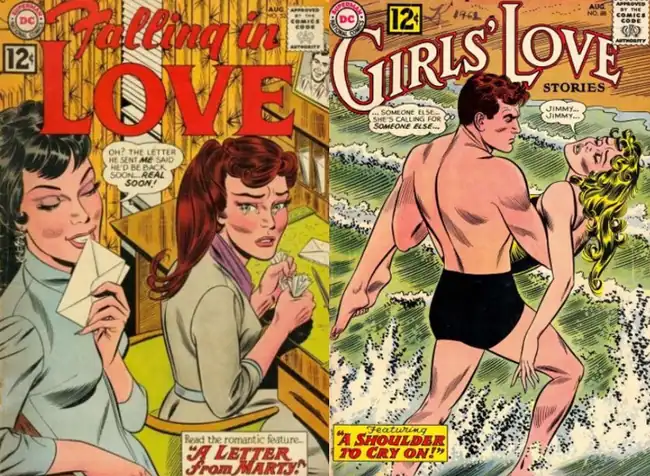
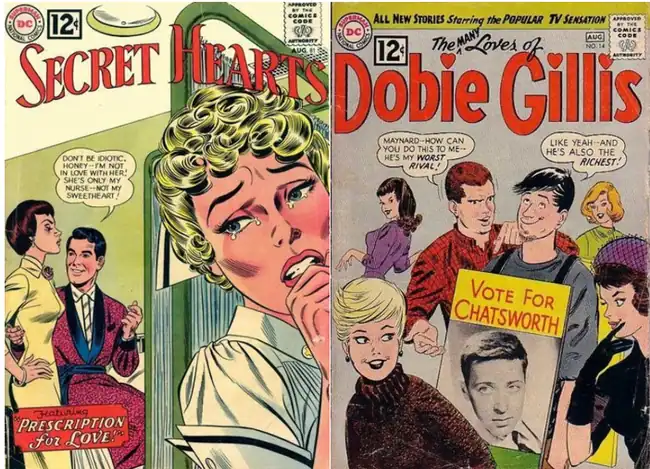
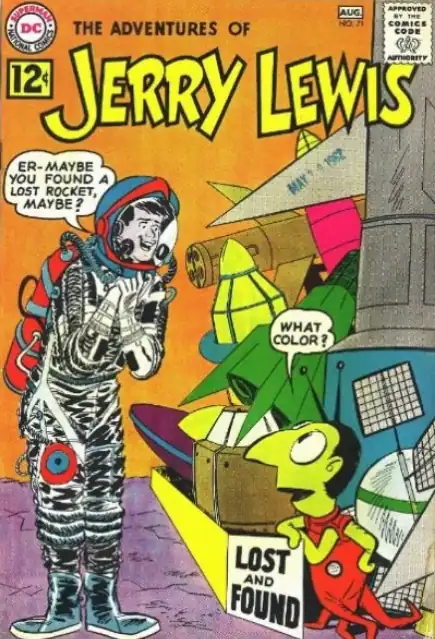
The latter is an adaptation from the TV show of the same name. DC is no stranger of licensing this month, which also publishes “The adventures of Jerry Lewis”.
So to recap, against Marvel’s ten books, DC published the same month:
- 32 books
- 14 are superhero books; out of this, half are Superman books
- 5 are adventure books
- 4 are anthologies
- 4 are romance books
- 3 are war comics
- 2 are miscellaneous
No wonder DC Comics didn’t see Marvel’s success coming and did not initially consider them a threat to their near monopoly on superheroes.
Current generations have little opportunity to live through the experience of walking on the streets and visiting newstands in order to check on the currently displayed comic books.
It was quite a thrill, a sort of ritual for learning what was recently valued, featured and offered by publishers and then voting with our wallets.
There was an element of surprise and gradual direct learning there, which is currently replaced by anticipation and online discussion weeks or months in advance.
For instance, a hypothetical newly-minted comic books afficionado at this point in time would perhaps visit the nearest newstand (or perhaps, in some places, a drugstore, supermarket or other sort of selling store that is not especially dedicated to comic books), find a rack or shelf with some subset of those comic books above, some others from rival publishers, and a considerable number of more ancient ones (mostly from within a couple of months previous – but there were odd exceptions) and right there and then decide what caught his interest to the level of justifying a quick browsing or even immediate acquisition. There are of course changes according to country and city size, but I believe that at this time those are not nearly as significant as they would later become.
It was more adventurous than it sounds, not least because comics were inexpensive enough for some impulse, spur-of-the-moment buying to be less than scandalous.
And there is no substitute for finding out that other readers and publishers’ staff agreed that this or that character, book or publishing line was interesting and deserved a cover feature, a one-shot special, or something similar.
For instance, one of the covers shown above is actually the first appearance of a legacy character of a sort (who Archeologist has not named nor mentioned in the text above). Had I lived in 1962 USA I might have been rooting for that character to turn up again. Another one (from the same cover, no less) had a post-Crisis counterpart that was revealed/retconned decades later into being a supporting character from another genre and book. As a casual reader back in the day I could only hope and dream for any of that. And perhaps in a few weeks time I would find out little bits of trivia such as that Jerry Lewis’ DC book was then a bimonthly which alternated with Bob Hope’s. Right around the same time when I would learn that Adventure Comics now had the Legion as its cover feature – something that might thrill or surprise me. A few months later I would be witness to “My Greatest Adventure” slowly changing into something significantly different from its current form as a sci-fi adventure anthology (starting with #80).
I love that we live in a time of widespread access to so much information. But it is undeniable that there were joys and thrills in navigating through a society where it was so much harder to known and learn of what was happening at a wider scale.
I hope you do a Superhero Origins for Patsy Walker…
I did.
https://comicsarcheology.com/index.php/2025/01/26/miss-america-magazine-2/
That was fast… Sorry I must have forgotten, in my defense when you posted that I hadn’t read the Avengers issue where she becomes Hellcat. which I read not long ago finally. Okay so I’ll re-read the article… thank you!