
After going through the Spider-Man villains to figure out who showed up the most, let’s attempt the same with a character who famously had a terrible rogues gallery for the longest time.
Daredevil is easier to track than Spider-Man because he only has one regular series, but I still have to figure out a range of stories.
Considering how different the approach to the character was before the Frank Miller run, let’s use that as the point of reference.
But to see how things change, I’ll proceed this way:
1) I’ll analyze the series before Frank Miller starts writing (co-writing at first, but I think it still counts). This includes Daredevil #1-164 and Daredevil Annual #1 and 4 (issues 2 and 3 were reprints).
2) The I will adjust the count to include all issues up to Daredevil #165-233. That includes the first Miller run (#165-191), the O’Neil run (#192-225), and the second Miller run (#226-233), along with some issues in-between by other writers. There are no Annuals published in this era.
Finally, please take into consideration that I’m not as knowledgeable about Daredevil as I am with Spider-Man, so basing this mostly on the cover and who I know is either the main villain or the one pulling the string (as long as he shows up in the story).
Without further ado, let’s see… uhm… let’s check who showed up against Daredevil the most.
BEFORE MILLER
#13: the one-issue wonders
A whopping 23 characters are in the list only ONCE in this period.
You might be surprised to find the original Mister Fear here, but there are also other villains that are more prominent elsewhere: Chameleon, the Circus of Crime, the Eel, Man-Killer, Spymaster and the Maggia.
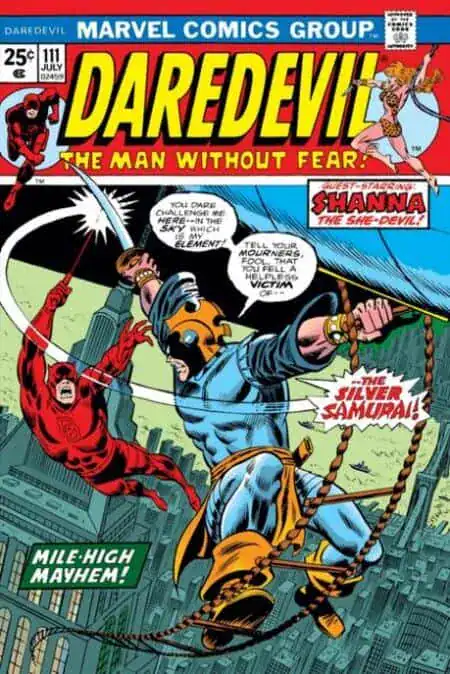
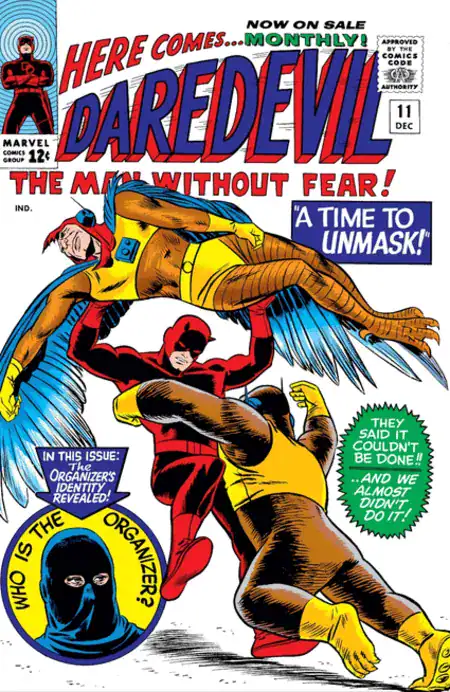
Nighthawk, Hawkeye and Hulk are here, as well as a character everyone (including me) always forgets actually debuted on Daredevil: Silver Samurai. Yes, the X-Men one.
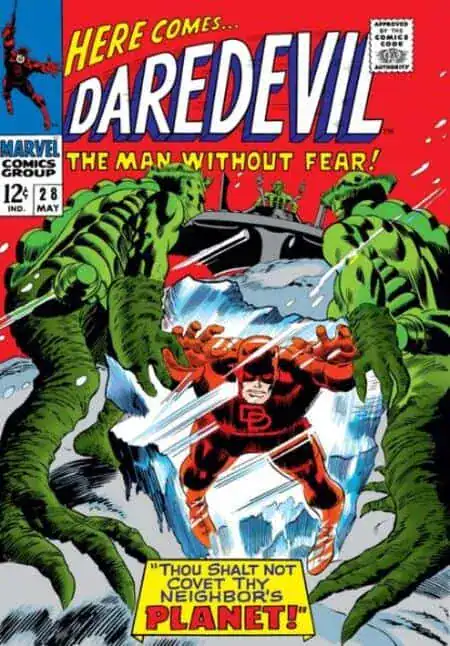
The list also includes the Zodiac, a bunch of Z-tier villains (Crusher, Klaus Kruger, Mind-Wave, Mr. Kline, Smasher and Tagak) plus that one time Daredevil fought aliens.
#12: the two-issue repeat offenders
The list of adversaries who only show twice is nearly as long! NINETEEN characters are in this spot.
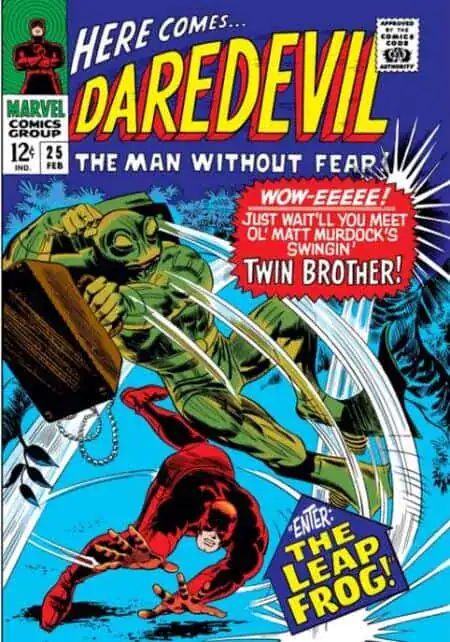
Those include three classic Daredevil villains: Leap-Frog, the Matador and the third Mister Fear.
But also Blackwing, Doctor Doom, Kraven, Scorpion, Torpedo, Paladin and Trapster, as well as Namor, Spider-Man and a bunch of nobodies (Brother Brimstone, Cat-Man, Copperhead, Crime-Wave, Mordecai Jones, Stunt-Master).

But surprisingly Death’s Head, who you’d expect would be mentioned more often since he’s the father of Karen Page!!!

#11: the trilogy gang (3 issues)
These are mostly confined to a single storyline: the Mandrill, Nekra, the Ox, Damon Dran and the alien Terrex.

Yeah Daredevil had truly wild adventures in the 70s.
#10: Daredevil’s least wanted (4 issues)
Hydra is technically here, but the highest profile villains in this spot are Angar The Screamer and Plunderer.
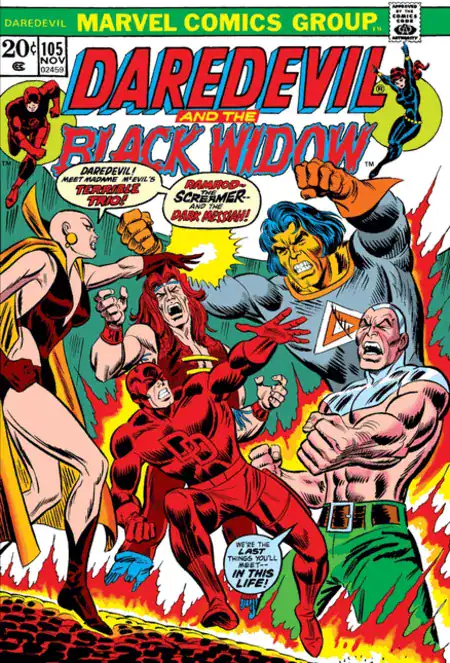
Which says something when they’re way more popular than El Jaguar, Ramrod and a trio of villains who might as well have been named by the Hulk: Ape-Man, Bird-Man and Frog-Man.
#9: the Spider-Man rejects (5 issues)
Electro isn’t the only one who thought Daredevil would be an easy target: the Beetle was also one of his villains for a while.

#8: I can’t believe he’s not the sidekick of the Matador (6 issues)
Seriously, the fact that Man-Bull doesn’t always appear with the Matador is just bulls##t.

#7: the illegal seven (7 issues)
Ironically the last remembered villain in this category is one of Daredevil’s first recurrent ones, the Masked Marauder.

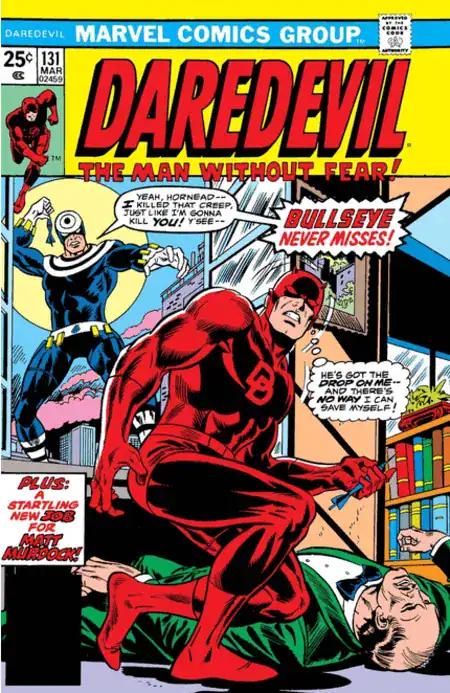
I often forget that Bullseye pre-dates Miller’s run, but I also forget just how many times he shows up.
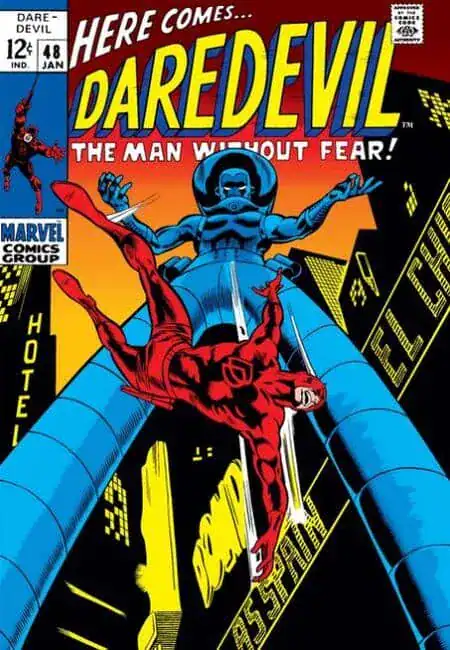
Stilt-Man is mostly treated as a joke nowadays, but he was a legitimate threat.
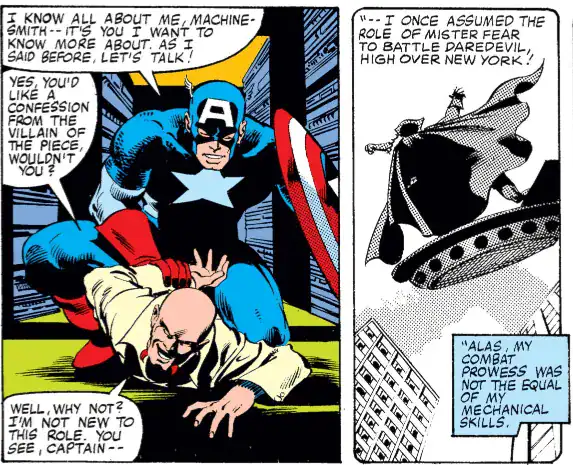
The second person to become Mister Fear is, up to this point, the one who used the codename the most.
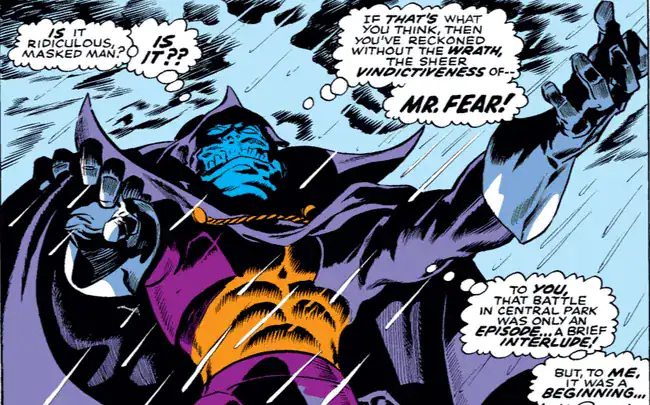
Which is ironic because he’s WAY more recognizable with his later codename, once he became a Captain America villain: that’s actually Machinesmith!!!
#6: an actual good villain, and the Cobra (8 issues)
I still can’t believe it took until the 2000s before Purple Man became a big deal.
I still can’t believe anyone ever thought Cobra could become a big deal.

#5: the bird and the monster (9 issues)
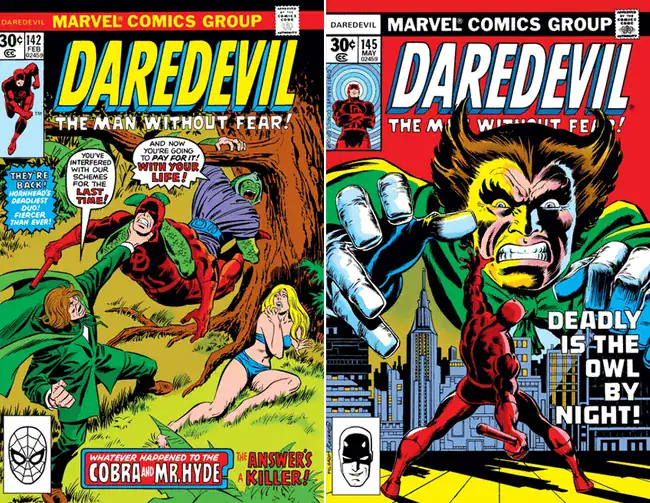
He might have starred in terrible comics, but this goes to show how much Mister Hyde works better as a Daredevil villain than a Thor villain if he ties with the Owl.
#4: he’s a stalker until he dies (10 issues)
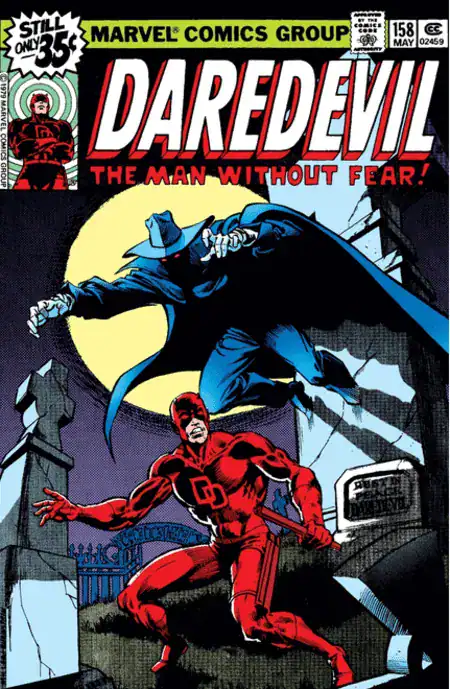
Death-Stalker is a very strange character. He looks incredibly cool AND he’s a big deal for a while, but he’s mostly forgotten. I think that’s because his backstory is needlessly complicated.
#3: are you not entertained? (11 issues)
The Gladiator is rarely thought as a true supervillain nowadays, since he has (mostly) reformed decades ago, but he showed up quite frequently.

#2: that’s not funny (13 issues)
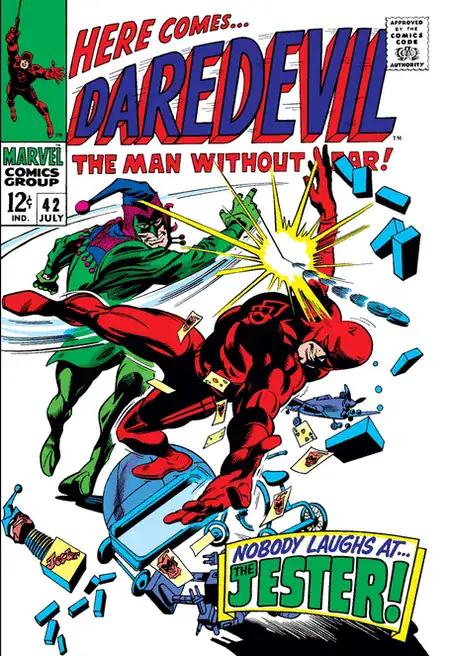
I’ve mentioned it before, but there’s something about Jester that just annoys me.
I don’t think he’s a good character, I don’t think he fits as a Daredevil villain AT ALL, and there’s a part of the 70s where he just. Won’t. Go. Away.
#1: that’s just a regular dude (14 issues)
I’m bundling into a single entry all the issues where the villains are just regular criminals with no particular gimmick. Since there are 166 issues in this batch, that’s about 8% of issues.
I swear I didn’t do this just to kick Jester off the top one, but that’s a pleasant result.
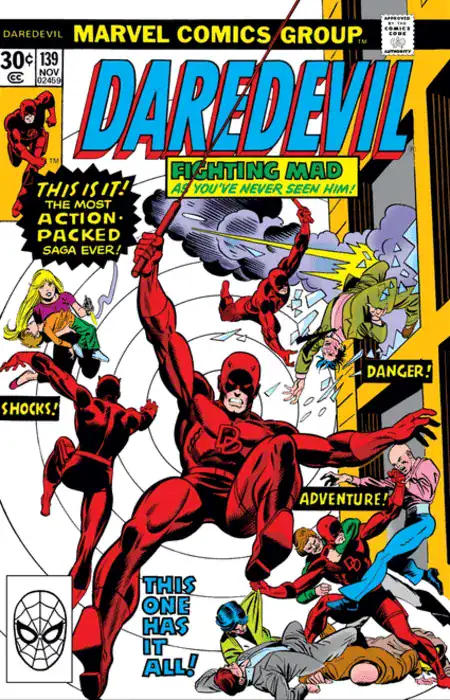
But what about the Frank Miller and Denny O’Neil runs?
MILLER & O’NEIL
#8: the one-issue new entries & repeats
Jester, Stilt-Man and Hydra are the only returning ones.
We also have Doctor Octopus and the Vulture and three new entries: Mauler, Sunturion…

…and Trump.
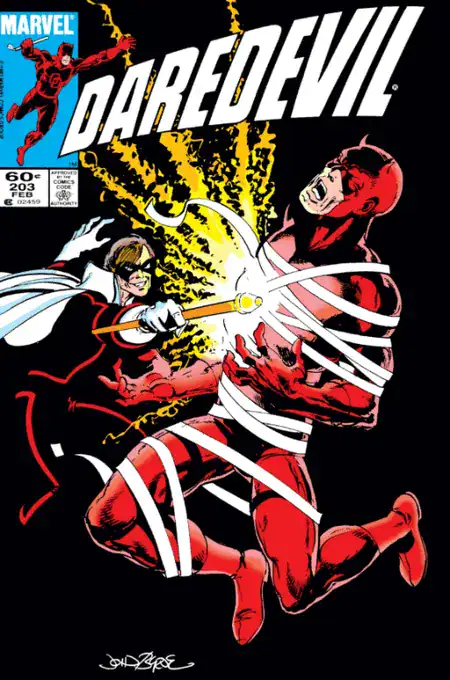
There must be a reason why Marvel hasn’t been in a hurry to dust off this character, but I can’t quite put my finger on what.

#7: the ones you remember, and Crossbow (2 issues)
Gladiator shows up twice, as do new entries Nuke, Punisher and the second Death-Stalker.
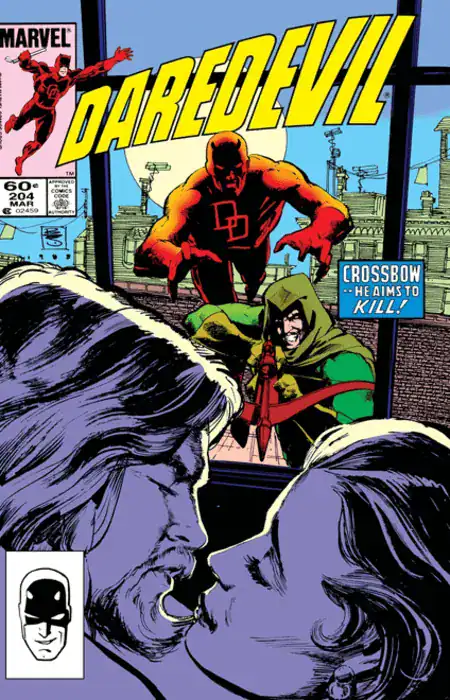
As well as the incredibly forgettable Crossbow. Spent a lot of time coming up with that codename, O’Neil?
#6: do you ever stop sleeping with women who want to kill you? (3 issues)
Elektra obviously shows up WAY more often, but there are only three issues where she’s the antagonist. Which makes it one of the healthiest relationships Daredevil has ever had.

#5: I can’t believe that’s not Kraven (7 issues)
Remember Micah Synn? Me neither.
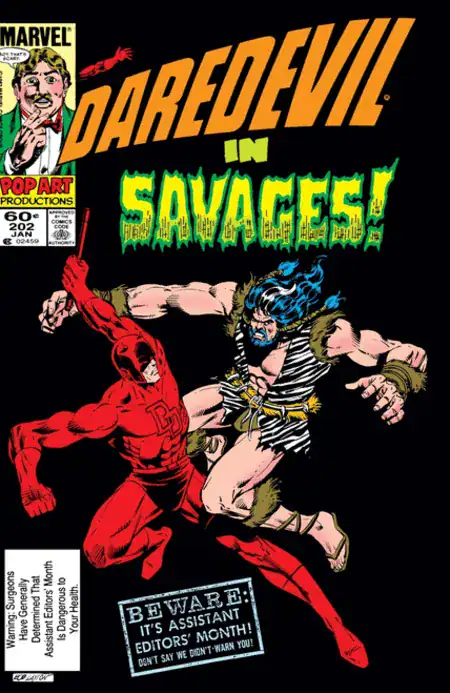
#4: ninjas? In my Daredevil comic? (8 issues)
Just for comparison: there are 69 issues in this batch (nice) and 166 in the previous one.
The Hand still manages to show up more often than Stilt-Man.

#3: when you hit the target (9 issues)
Bullseye jumps all the way from #7 to this.
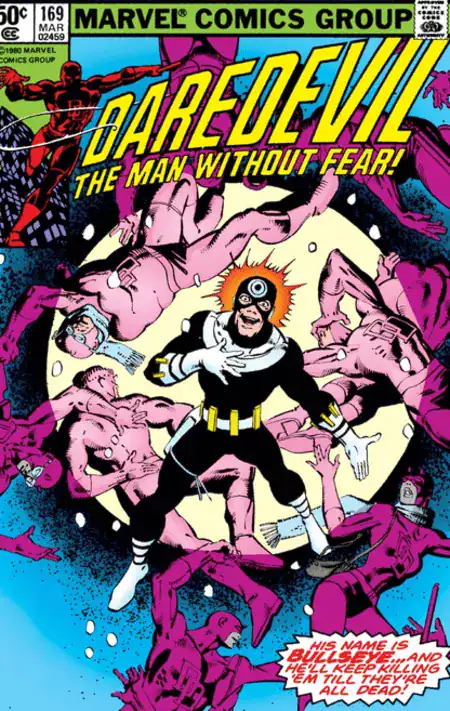
#2: that’s still just a regular dude (14 issues)
Exactly just in the previous batch, there are 14 issues where Daredevil fights regular people. Which, considering there are fewer issues in this batch, makes it even more prevalent.
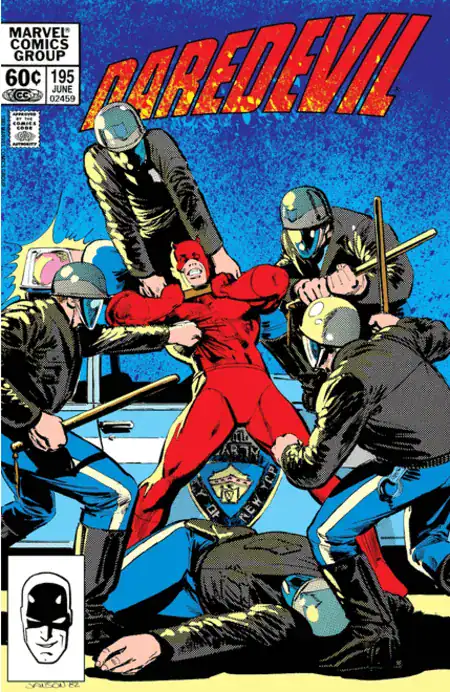
#1: a legitimate businessman (24 issues)
And I’m counting JUST the issues where he’s actively involved in some way!
This represents a shocking THIRTY-FIVE PERCENT of issues in this batch.
But how does combining the two eras changes the Top Ten?
COMBINED TOP TEN
#10: bull in a top ten list (6 issues)
Most of the characters move two or three spots, but the only one to reach the Top Ten (from his previous #8) is Man-Bull.

#9: one of these three is not like the others (7 issues)
Both Masked Marauder and the second Mister Fear (best known as Machinesmith) rise here from #7, as does Micah Synn (best known as “who?”).

#8: that would make for a crazy team-up (8 issues)
I don’t know what a comic starring Stilt-Man, Purple Man, the Cobra and the Hand would even look like, but I’d read it.
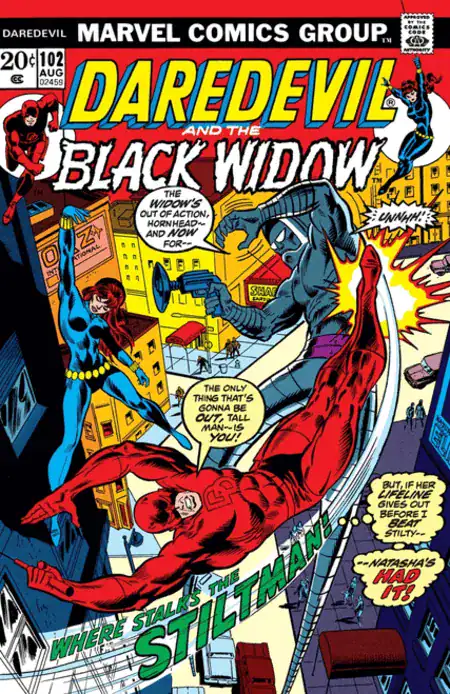
#7: how are they still together? (9 issues)
Still amazed by how Mister Hyde managed to share a spot with the Owl.
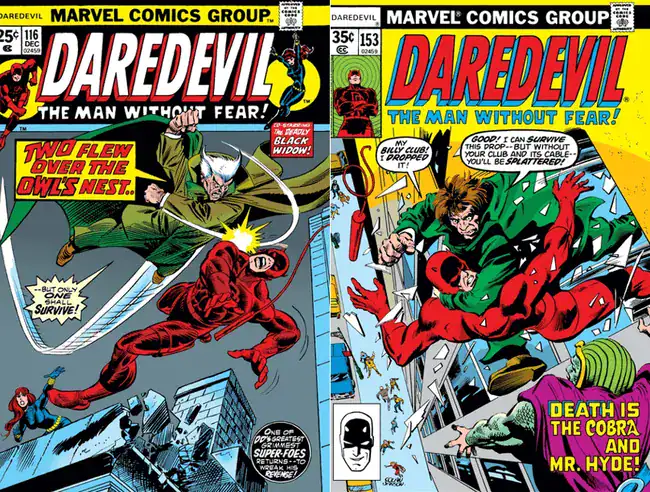
#6: he still stalks the list (10 issues)
Death-Stalker deserved better. Seriously, how cool is that look?
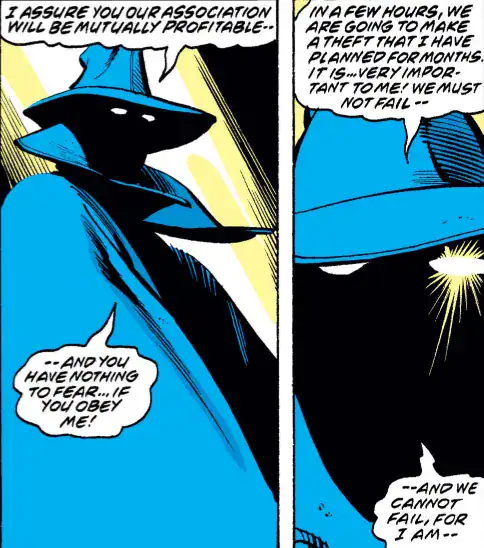
#5: are you not entertained again? (13 issues)
Gladiator drops from #3. Considering this generally marks the end of his career as a supervillain, he’s remembered less as an adversary and more as a supporting character.
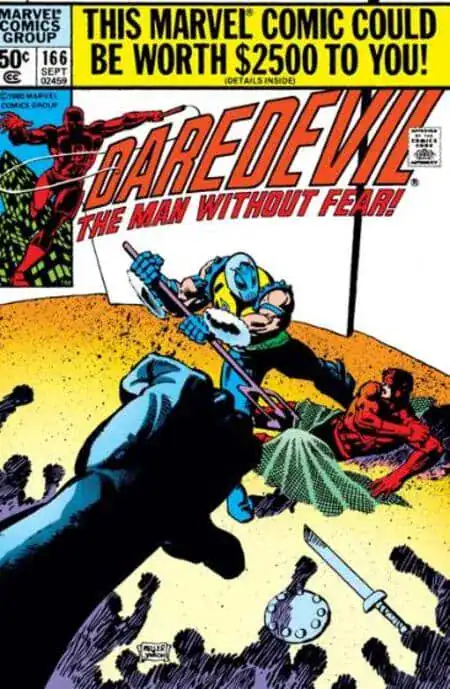
#4: you’re still not funny (14 issues)
Jester didn’t deserve being #2, and even #4 is too high for him.
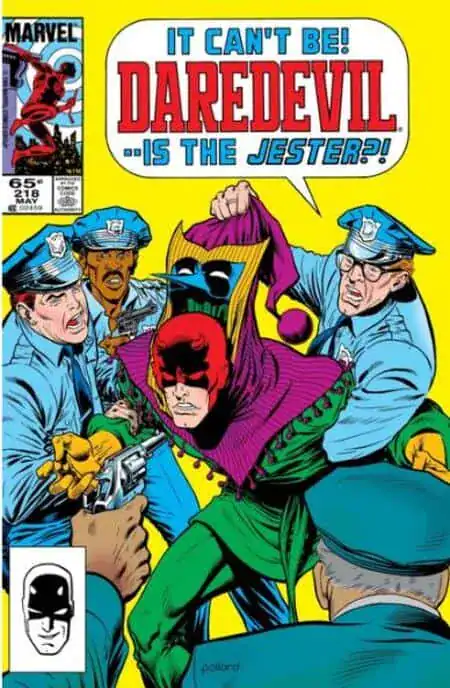
#3: hits the spot, doesn’t get to #1 (16 issues)
Bullseye is the most consistent supervillain in this entire list, having a similar number of appearances both before and during the Miller/O’Neil runs.
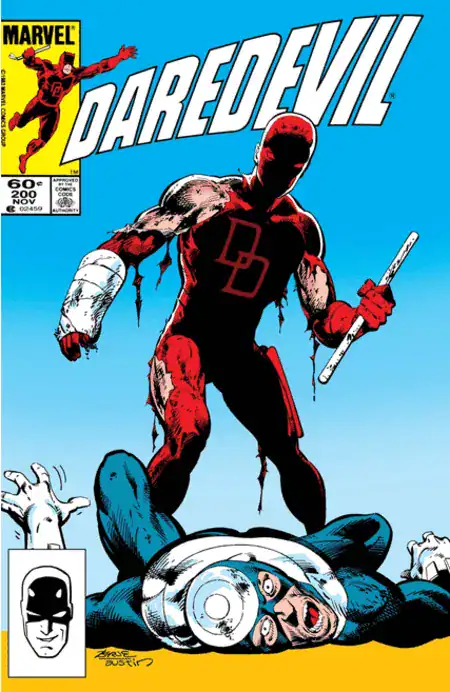
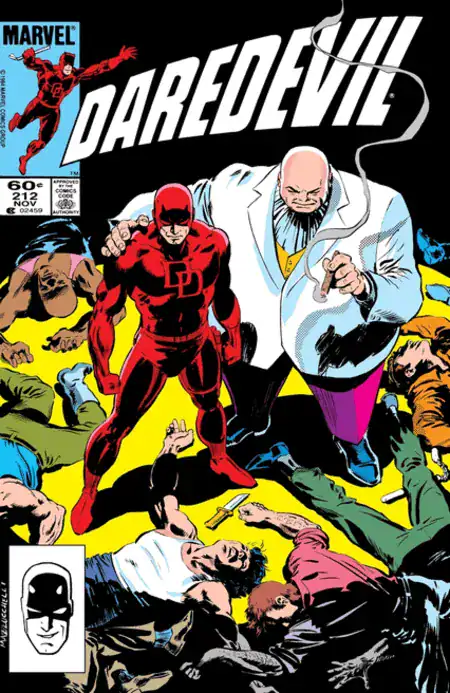
#2: you can’t prove I’m in this list (24 issues)
Considering that Kingpin doesn’t show up until the Miller run, it’s impressive that he actually manages to be the villain for ALMOST TEN PERCENT of the 235 issues I covered.

#1: a true street hero (28 issues)
Regular criminals STILL top the list!
I guess it’s very fitting for a character like Daredevil to fight regular people more often than not.

Daredevil is certainly in a peculiar niche of the Marvel Universe.
About as likely to appear in his civilian identity as in costume, to face a recurring foe as to borrow one from Spider-Man or Iron Man, to be challenged by someone in plain costume as by someone in generic combat armor.
And then he becomes involved in the prelude to the original Thanos storyline. In early fights against the Zodiac and Hydra. In Moondragon explaining her origin.
And then Sudden Frank Miller.
Everyone probably forgot about this Death’s Head because of the other, more popular one, and he isn’t even that popular overall. You could say he’s a cult classic, yes?
Oh, I almost forgot… out of curiosity, how are you counting the two Torpedos?
Brock Jones is by far the best known of the two (mostly because he was featured in Rom for a fair while and was a significant supporting character there), but Daredevil actually met another one – the original – shortly before he met Jones. Michael Stivak is actually related to Senator Eugene Stivak a.k.a. Kligger of the Corporation, villains of an assortment of late 1970s Marvel comics.
It was a very contrived but strangely touching origin for Jones as the Torpedo. A nice if disturbing touch is that Jones and Daredevil only end up fighting because, being blind, Daredevil can neither notice that Jones is not the same Torpedo that he fought before nor admit as much.
Far as I know, that suit or a slightly modified version of same has been worn by four different people so far (excluding Dire Wraiths and their agents). Three of those four, including the two that debuted in Daredevil comics, were killed as a direct result of their careers as Torpedo (or later, Turbo).
Mickey Musashi, the surviving wearer, is alive and well and could hypothetically resume her career as Turbo at any time. Outside of very brief cameos, she was last seen in Avengers Academy #21 back in 2011, I think.
I’m counting Brock twice since he’s technically in both issues. I suppose I could have split the two Torpedo, but it wouldn’t have changed the results much.
I’m fascinated that Daredevil actually ran for 164 issues despite being such “meh” book until he caught fire. Somebody at Marvel must have had a soft spot for him, or was the book actually generating enough sales to warrant keeping it around for so long?
Stan Lee definitely had a soft spot for him. But I have no clue how he survived the 70s.
The 1970s were a time of casual comics buying. Plenty of series at Marvel and DC ran for hundreds of issues with mediocre sales simply because they filled a niche that a random reader might occasionally want to try reading.
At DC there were about three or four war books, often a wizardry book of some sort, a couple of terror books, and inherently unstable oddities such as World’s Finest (featuring Batman and Superman team-ups) and Brave and Bold (assorted Batman team-ups).
By my reading the original Justice League of America book filled a similar role – it was an often boring book, but its existence was important for several reasons, including the annual team-ups with the JSA, but also simply being there as a stalwart to remind us of the existence of characters such as the Atom, Adam Strange and Phantom Stranger and sometimes being the host of their important event stories. Stability was more of a value back in those days. Not judging here whether that is somehow a good or a bad thing; it is just how I remember it. Justice League of America often _wasn’t_ an exciting read, but there was a strong perception that it should be treated as one nonetheless; it had all the best known characters, after all, together in the same story.
Beyond that, Daredevil actually had a lot – almost _too much_ – going for him even before Frank Miller Appeared.
* A plenty good enough core concept, readily suitable for a variety of solid types of stories
* Fascinating contrasts with Spider-Man. Similar tactics and goals, but somewhat more mature, more stable in his personal life, and demonstrably less powerful overall. The two of them often felt like variations of the same basic recipe, yet there was no reason why you had to view them that specific way.
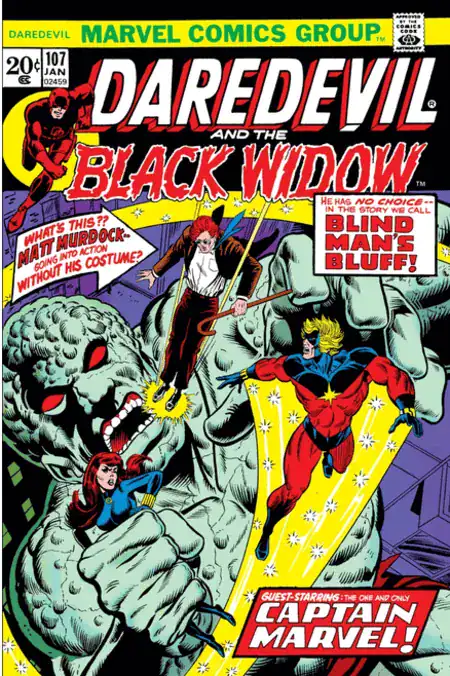
* _Wild_ connections. He was already on a first name basis with Ka-Zar and Shanna, Namor, Black Panther, half of the Avengers and of the Defenders, Moondragon, Captain Mar-Vell, Nick Fury, Spider-Man, and of course Black Widow.
* Genuinely unique storytelling opportunities. There were not too many unmarried cohabiting couples in mainstream 1970s comics. Up until 1980 he was the only lawyer superhero IIRC. And it was fairly easy to temporarily incapacitate or indispose him in ways that would seem difficult to swallow with Spider-Man, Captain America or Iron Man.
* Also, there is a silver lining to the inability to take off as a lead character; for a very long time he was both a household name and something of a clean slate, a character with a very specific and attractive level of mainstream appeal, available for daring new writers to be bold without too much worry about comparisons with runs from Stan Lee, Jack Kirby, Roy Thomas, Jim Starlin, Chris Claremont, Grant Morrison or whatnot.
It was easy to convince oneself that Daredevil _ought to_ make a measure of success, and he was a convenient plataform for a bit of experimenting as well, within the spirit of “put the toys back into the box after your run ends” of the time. He allowed writers to write stories about the Black Widow after her solo feature ended; to play fast and loose with secret identities for a while; to spotlight ethical dilemmas that lawyers face; as well as the occasional public interest gesture spotlighting physical deficiencies or legal difficulties.
Being a reader of the book during the seventies, one of the things that I always saw was the potential of the character. Obviously Frank Miller moved the needle in a positive direction toward that end. Also don’t forget the Nocenti/Romita Jr run on the book, which I don’t see referred to here in the post.
Don’t forget that the books came out once a month and evaluating them then is different from evaluating them now. When we evaluated a book then, it was in the context of what we had bought that week. Compared to some of the other books, Daredevil was a good read usually. Now, everything is flattened out and we are looking at the whole body of work and comparing it to the best of the best. When you’ve read “The Watchmen”(for example), its hard to pick up a new book and say, “Wow, classic!” The other thing to remember is that comics are a trend driven economy, whatever is selling is emulated (Superman dies, sales go through the roof, so let’s kill our character because, of course, sales will go up). That’s why you get monster type villains like Man Bull and Mandrill. The book was also off concept when Steve Gerber was writing it, largely because Gerber was playing to his strengths.
A couple of random thoughts, two talents stand out in the development of this character, the already mentioned Frank Miller but for a really short and influential run, Wally Wood. Wood changed the costume, developed that “wide open stunt in the city” feel of the book (issue 8) and helped establish Daredevil in the wider Marvel Universe (issue 7 and he inked the figure in FF #39-40).
Last random thought, no one points out that Daredevil is a conceptual equivalent to Batman. Daredevil is “blind as a Bat”, depends on his own physical prowess and intelligence and has a nifty billy club which from time to time produces a useful gadget or two. A fan even acused Gerry Conway of taking a Batman story and adapting it to the Daredevil book in a letter to the Editor (it was issue 72, I don’t remember what issue the letter was published, issue 75 I guess). My all time favorite Daredevil story is the fight that he has with the Trapster in issues 35-36, and the Marvel “shock ending”. There’s also a great sequence where DD syncs up to our reality by hooking onto a VW in issue 41. Gene Colan was a gifted storyteller.
I love the Nocenti run! I’m not sure whether it’s my favorite, but depending on the day you ask me it’s either in the top three or at worst the top five.
The only reason it’s not included in the analysis is that the review was getting too long, and the end of the Miller run felt like it made sense as a breakup point.
Apropos of nothing: That outfit for the Samurai on his issue looks SO much better than what we ended up with. Aside from whatever’s going on with that helmet. I’m sure that pale blue was meant to be silver, but as it is here, it looks really good.
I had totally forgotten about Shanna the She-Devil being in the book (much less with that co-star image). So weird.