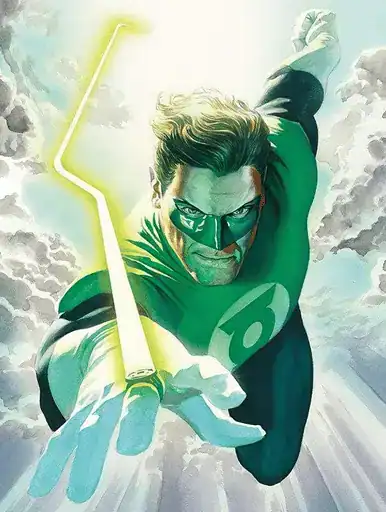
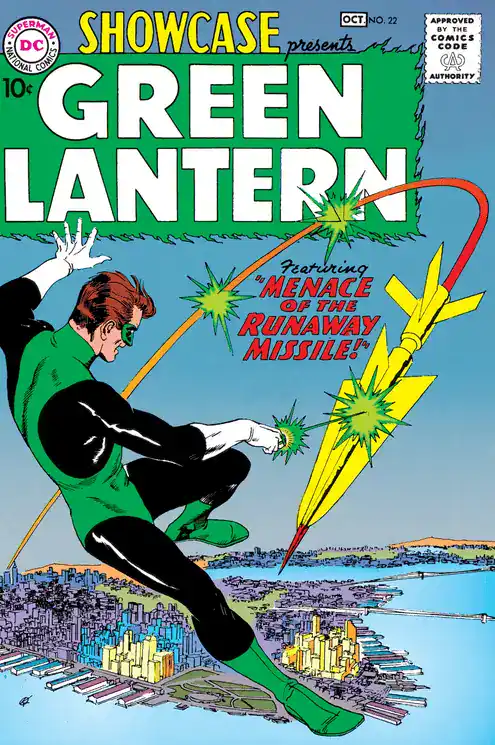
Showcase #22 (1959)
by John Broome & Gil Kane
After introducing a new version of the Flash three years earlier, DC Comics tries again with another new version of one of their Golden Age characters.
This starts a trend, because they will do this in rapid succession with a lot more.
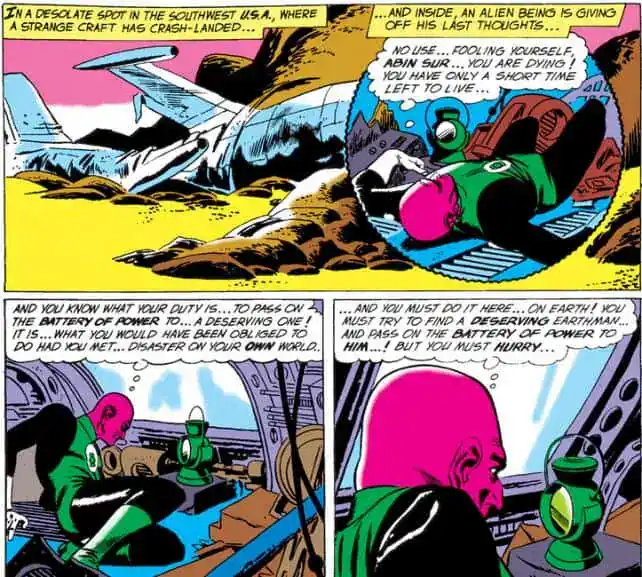
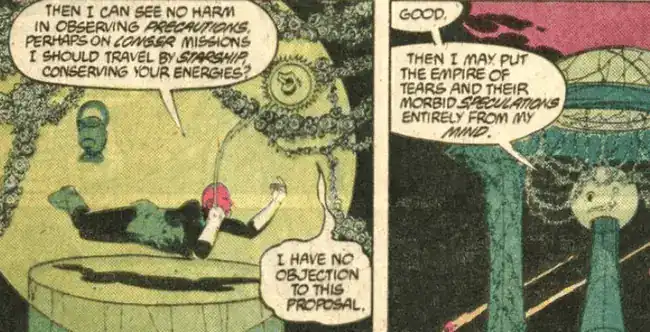
We begin an alien Green Lantern barely surviving a crash of his ship.
Why would a Green Lantern even need a spaceship will eventually be explained in 1962 on Green Lantern v2 #16: he deliberately delayed recharging the ring to avoid an energy being from stealing its power.
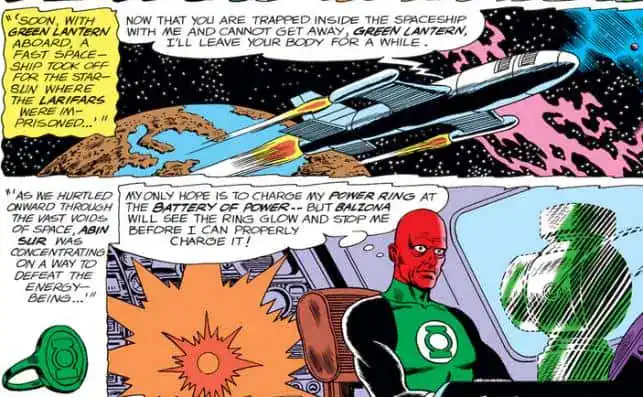
This would eventually be retconned in 1986 by Alan Moore on “Tales of the Green Lantern Corps Annual #2”, where he was using a spaceship because he was paranoid about a prophecy about him being destined to die when his ring runs out of power.
Either Moore didn’t know about the 1962 story or, more likely, thought this would make for a better story (and it did).
But back to 1959, the ring does find a worthy successor in test pilot Hal Jordan.
The only parameter we are told matters is being fearless.
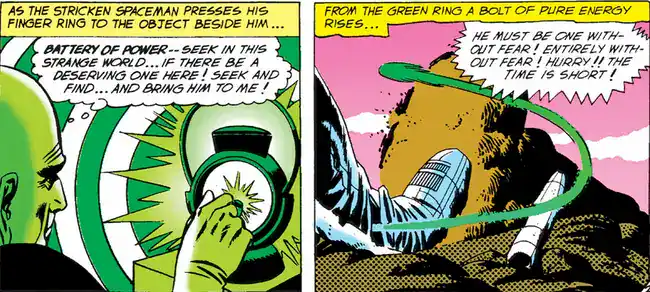
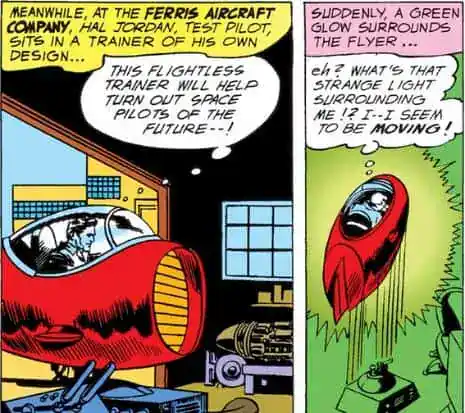
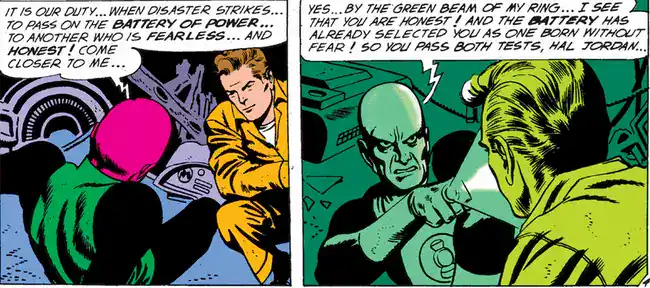
After summoning Hal, the alien Green Lantern tests if he has what it takes to be his successor.
Most retelling skip this second test, which is admittedly redunant since he already sent the ring.
Turns out that the only reason Earth will get its own Green Lantern is aurora borealis.
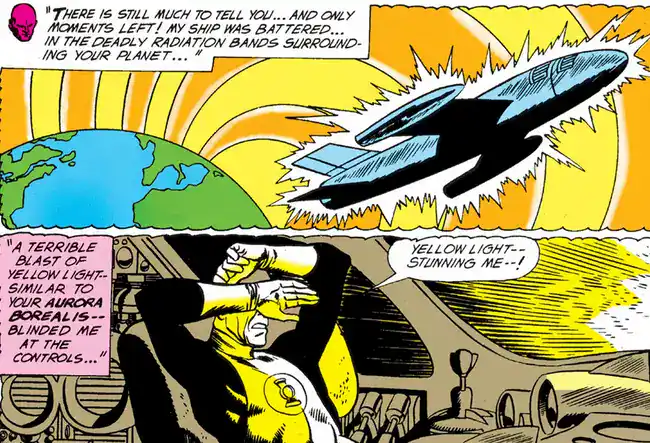
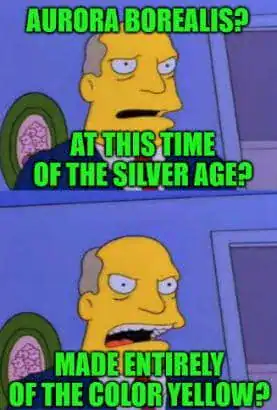
The fact that the Green Lantern ring is powerless against yellow is THE quintessential Silver Age weakness; writers will have to bend over backwards for DECADES to even attempt to give this any sort of pseudo-realistic explanation!
It’s not just hard to accept because it won’t ever be consistent, but because the Green Lantern is supposed to be based on super-science and not just pure magic. If it was straight-up magic, I thing it would be easier to buy any sort of weakness, no matter how absurd.
Even today, when the entire Green Lantern mythos has been re-worked with the idea of the Emotional Spectrum (which I still think is a terrible idea that has ruined my enjoyment of the franchise), they STILL overcomplicate things by assigning emotions to colors.
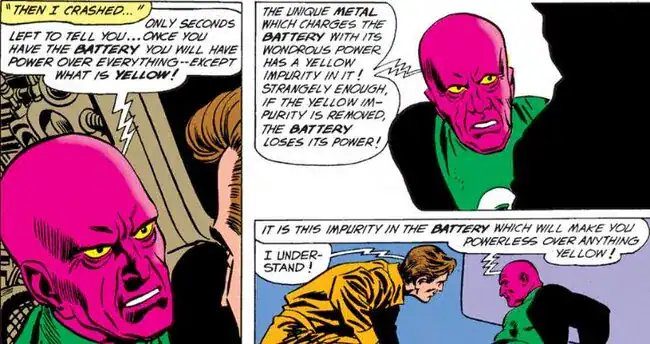
Once the alien dies, Hal takes his uniform. That’s another thing that doesn’t carry through the retellings: typically the ring itself makes the costume.
That little change reduces the number of naked alien corpses, which is always something you should look forward to in superhero origins.
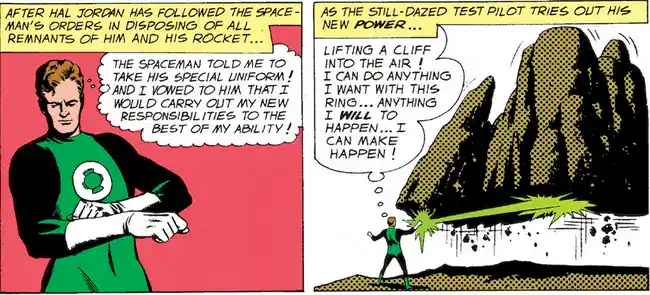
Hal decides to keep his identity a secret, and we end the first chapter. It’s treated as its own mini-story; it’s quite straightforward and doesn’t even include the famous oath.
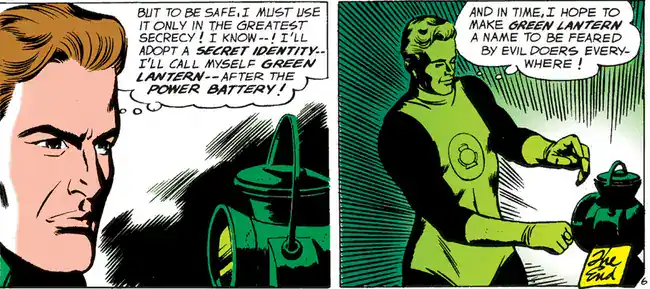
Just covering the 6-page intro would be a disservice to the character, so let’s get through the second story that will flesh out Green Lantern and his supporting cast.
It begins with Hal’s love interest Carol Ferris, daughter of his boss and acting as… actually I’m not entirely sure what her role in the company is right now.
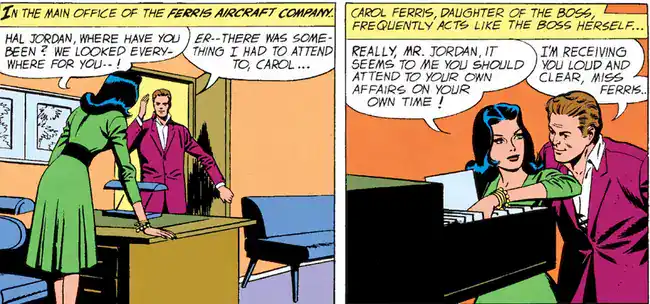
When an experimental aircraft malfunctions, Hal suits up by reciting the famous oath.
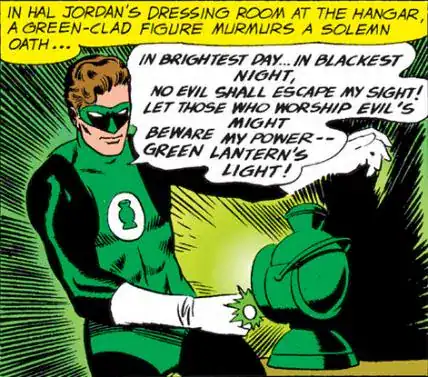
This is a deliberate throwaback to the Golden Age, with the oath originating in 1943’s Green Lantern vol.1 #9 by Alfred Bester.
This wasn’t the first or only version of the oath used during the Golden Age.
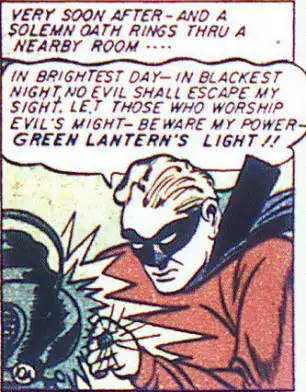
The oath panel is also the only one you should read from 1943’s Green Lantern vol.1 #9.
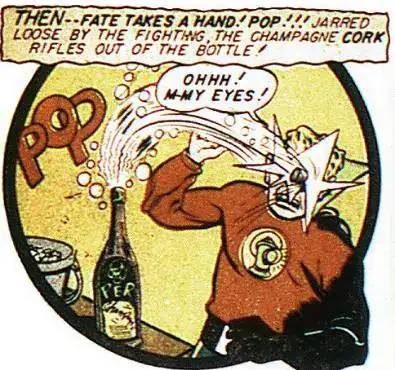
This is the first public appearance of the new Green Lantern. As you can tell be the aircraft’s color, this isn’t the cover story.
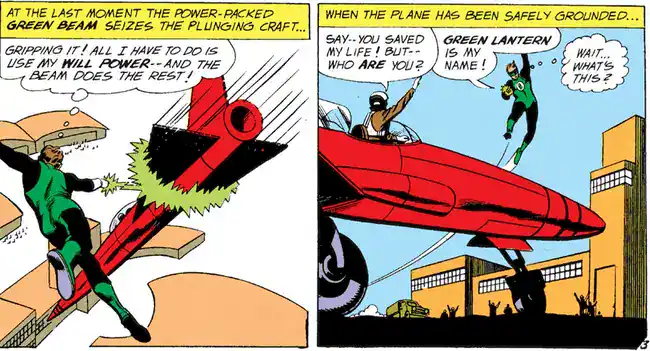
Green Lantern traces a beam sabotaging the controls remotely, demonstrating that like his Golden Age counterpart his ring can basically do anything.
Also, that has to be one of the most forced Superman references ever.
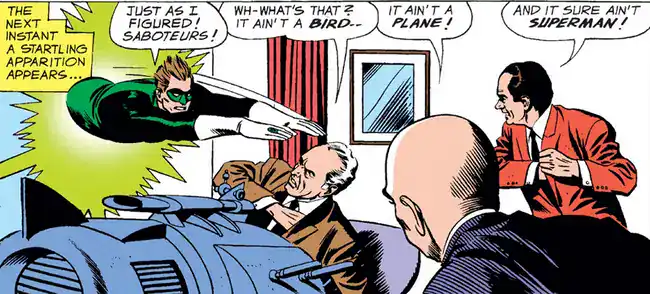
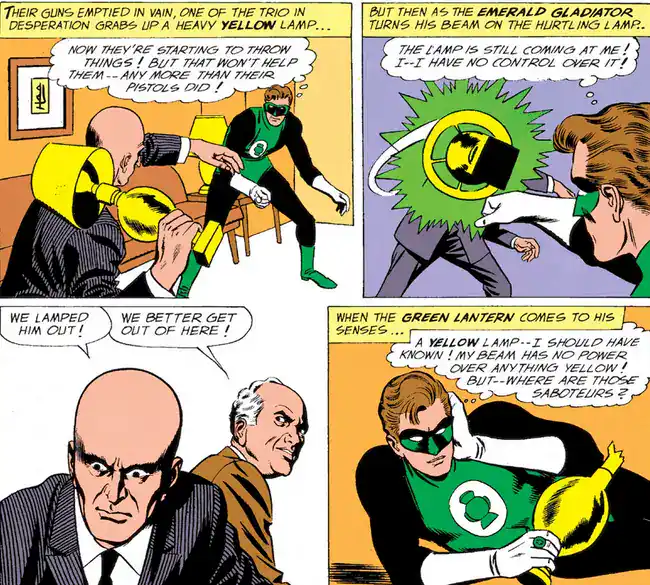
The saboteurs luck out by throwing a yellow lamp, initiating a long and glorius tradition of Hal Jordan being bonked in the head.
Seriously, how does this man not have brain damage?
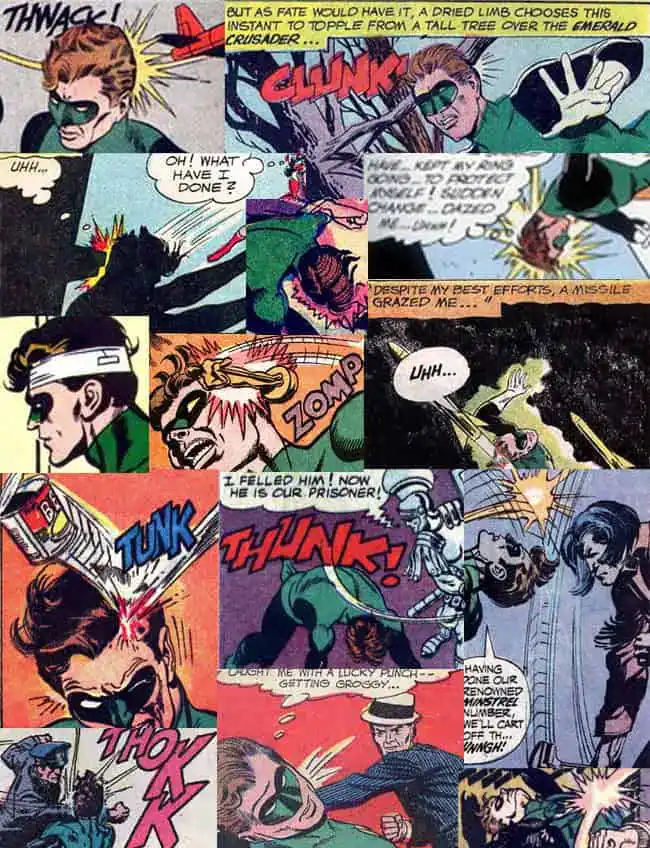
Shout out to the Hal Jordan Head Injury Project for the above images.
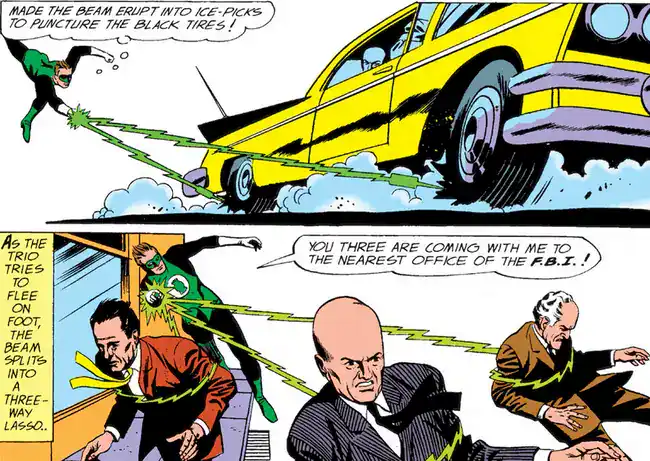
The criminals try to escape on a taxi, but Green Lantern has a way to deal with them despite the yellow vehicle.
With that taken care of, Hal learns that Carol will now be in charge of the entire company and therefore her boss.
This is surprisingly progressive for 1959; the idea of a woman being in charge of a company, especially a huge aviation company, must have felt nearly as fantastical as the magic ring.
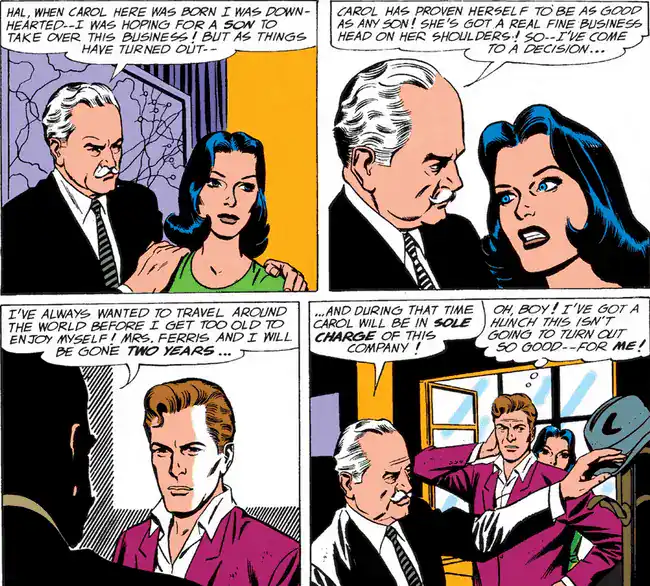
More surprisingly, considering the trend of other DC books at the time (looking at you Superman!), there is no mention of Carol being obsessed with romance or marriage; the book also doesn’t suggest in any way that she’s unsuited for the position because she’s a woman.
While it’s not acknowledging the potential inappropriateness of Carol dating one of her employees, she’s not presented as being unreasonable for focusing on her career.
Also it’s not like these two were in an actual relationship, it looks like they just went out together a couple of times.
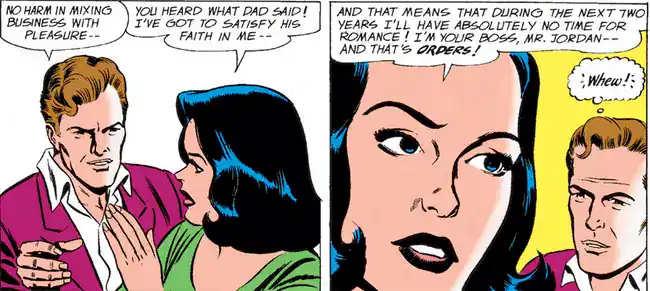
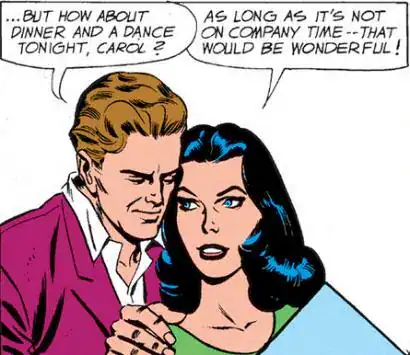
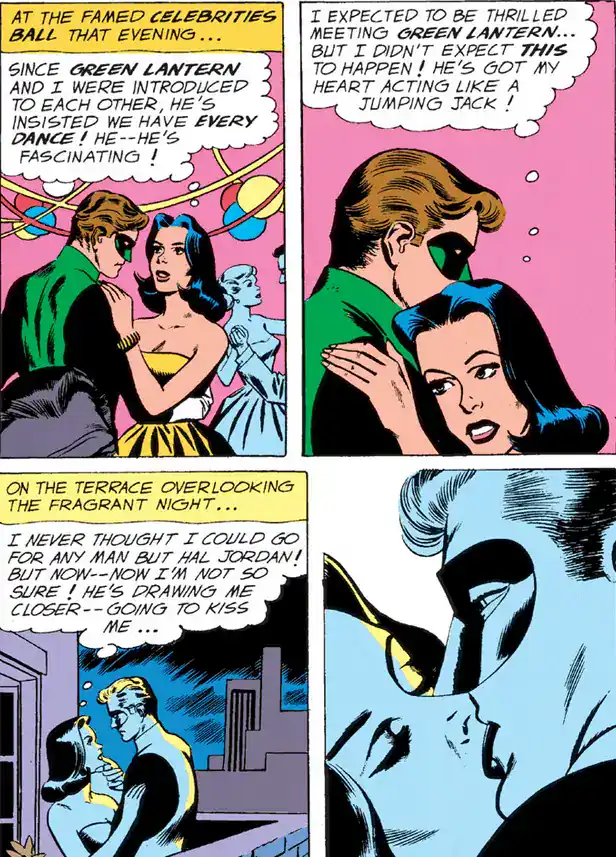
The third and final story begins with Hal showcasing that, in addition to being fearless, he’s completely missing any hints.
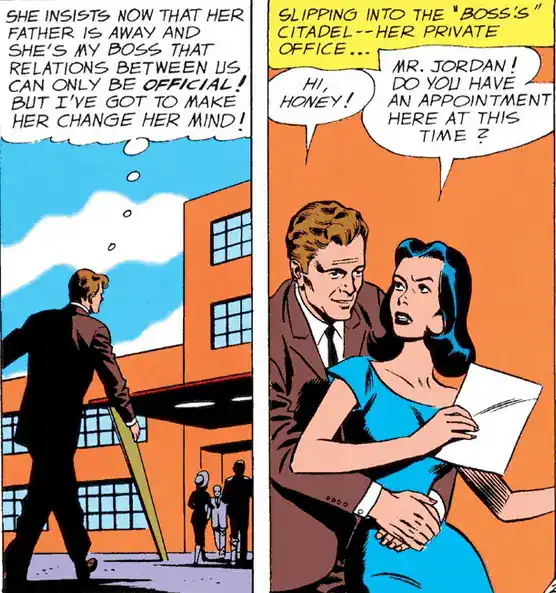
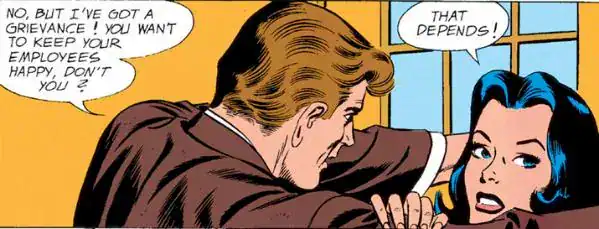
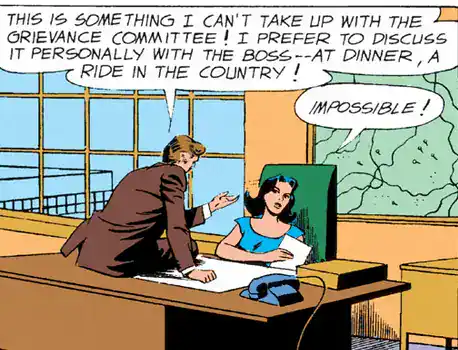
Yeah too bad that Lois Lane Carol Ferris is only interested in Superman Green Lantern and doesn’t give the time of the day to Clark Kent Hal Jordan.
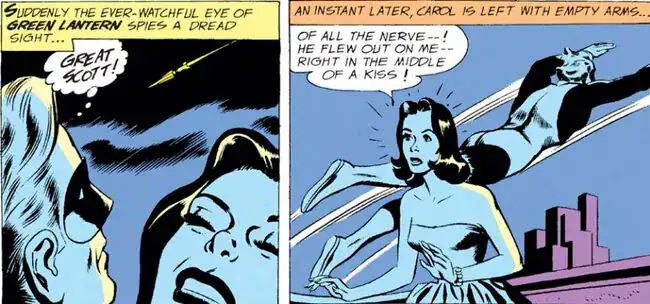
Unfortunately for him, Green Lantern’s rocket is interrupted by a rogue yellow rocket.
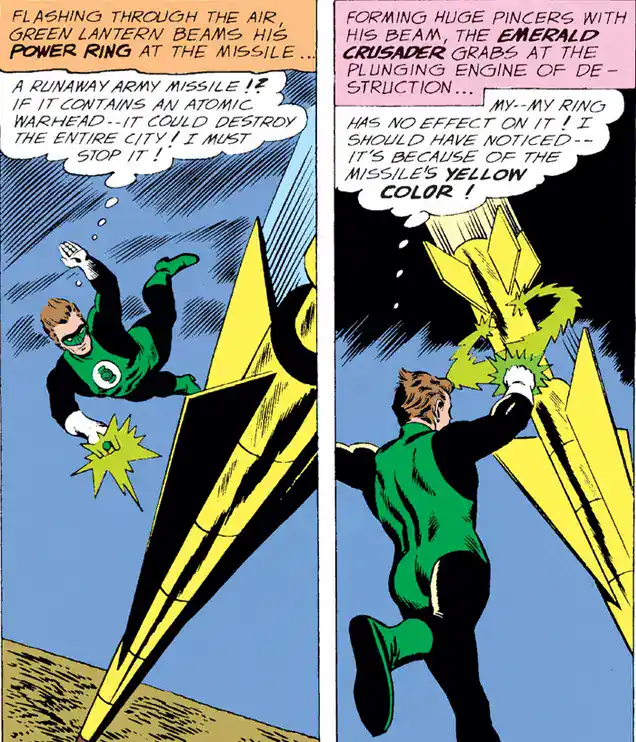
See why I mentioned that the rules about the yellow weakness are not consistent?
It’s not like he’s holding the rocket by its point!
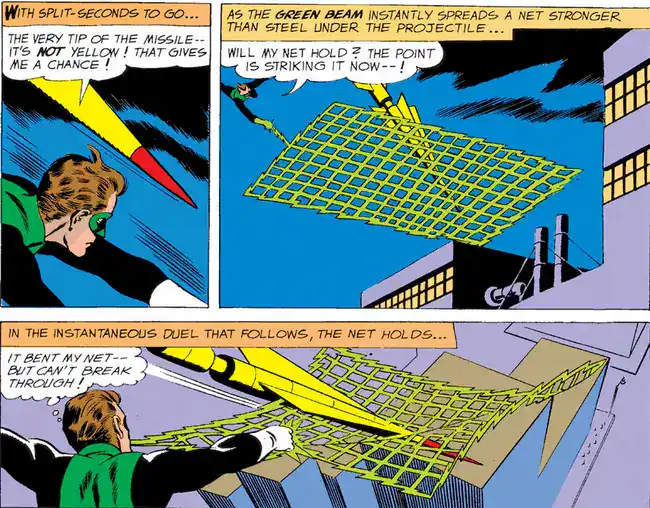
Green Lantern eventually traces the guy who sent the rocket to blow up a nuclear research facility.
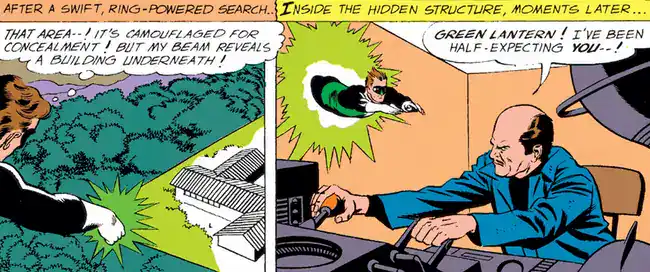
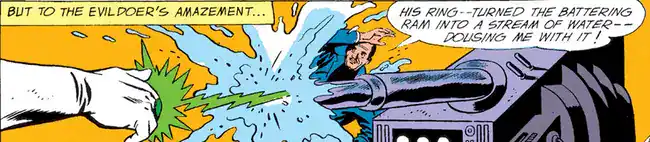
And we end with Carol dumping Green Lantern. Not because he left in the middle of their date…
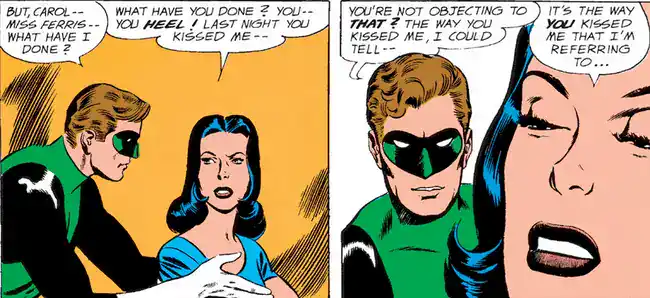
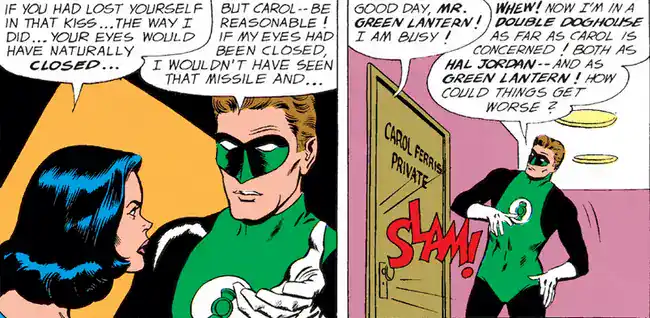
…but because he didn’t close his eyes.
Is it any wonder that she’ll go crazy and become Star Sapphire?
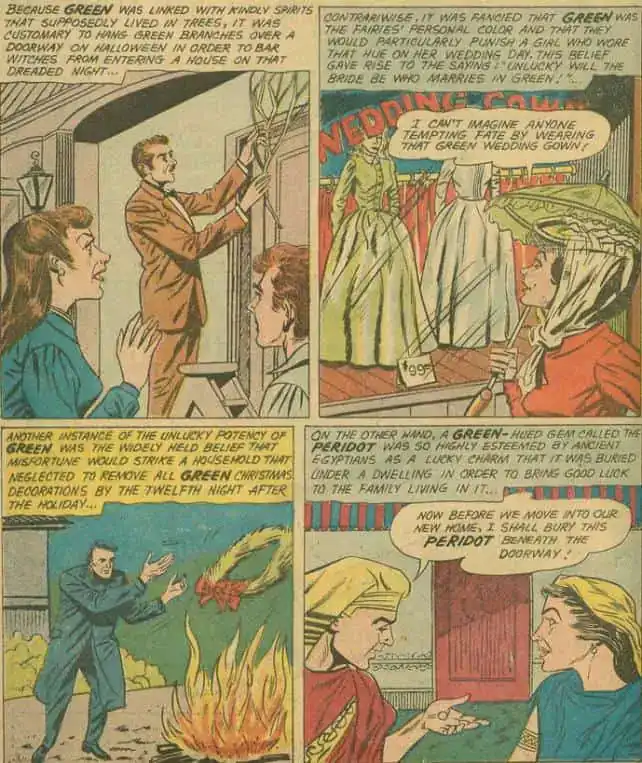
The comic also includes a page that talks about legends of the color green.
I have any idea if these are true or not.
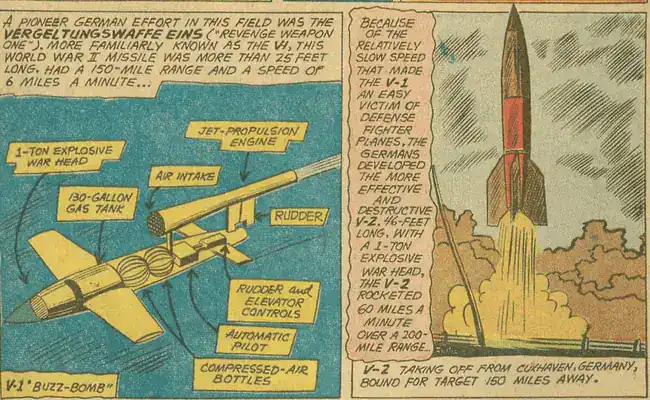
Another page has a few rocket facts.
Historical significance: 10/10
The new Green Lantern has completely replaced his Golden Age counterpart in regards to impact on the DC Universe.
Silver Age-ness: 8/10
The yellow weakness is handled slightly more believably than later, but it’s still a big sign of the times.
Does it stand the test of time? 9/10
Quite straightforward and, all things considered, most of the story can be easily done today with minor adjustments.
Carol in particular feels rather modern, until the very last page when she gets more stereotypical. She’s a bit of a hypocrite by saying she’s going to ignore romance only to then kiss Green Lantern the same night she meets him for the first time, but that can be expanded to make her more complex (it won’t, but it’s not the fault of THIS comic).
Really the only part that feels very dated is Hal Jordan himself. As Green Lantern he does a fine job, it a bit insipid, while as Hal I find him way too unlikeable to root for him.
Which is kind of my problem with Hal throughout his entire career, so it’s quite an accomplishment to see he’s already there!
How close is this to the modern character? 8/10
As a major DC character I can’t POSSIBLY give a thorough examination of his career, so I’ll just focus on his publishing history and my relationship with the character.
First of all, Broome might have been thinking about this character since 1952, considering that in Strange Adventures #22 he introduces similar concepts in a Captain Comet story.
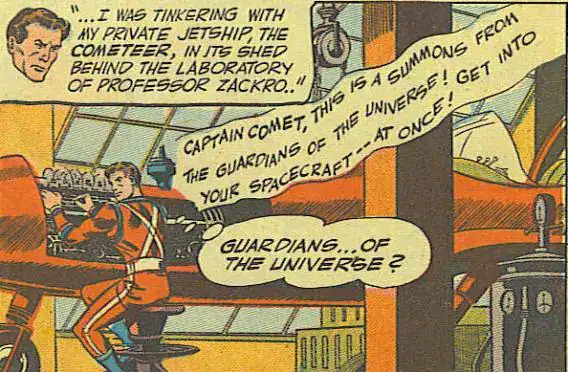
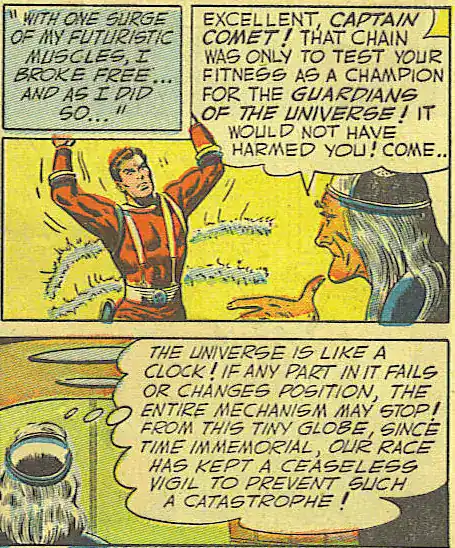
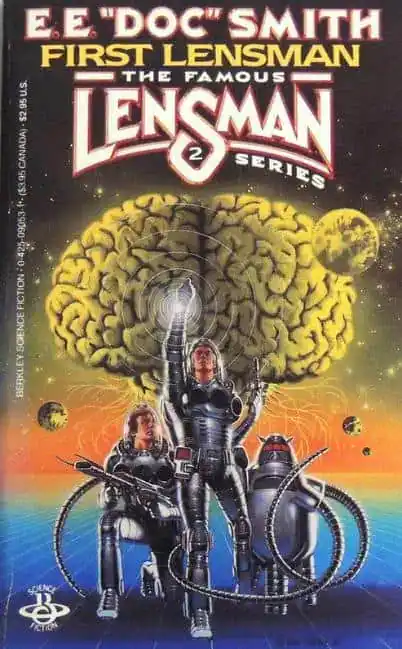
It’s also been speculated that the Green Lantern Corps were heavily inspired by the sci-fi classic Lensman series, but I’ve never seen a John Broome quote about it.
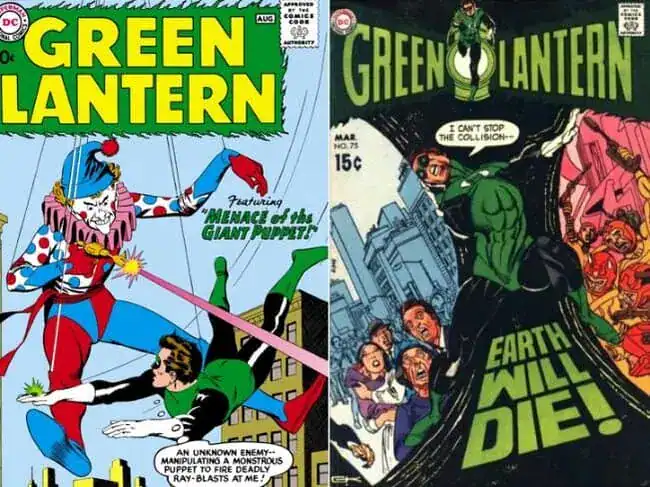
After three more issues of Showcase, the character proved popular enough to get his own series.
Which would run under that title for 75 issues, from 1960 to 1970.
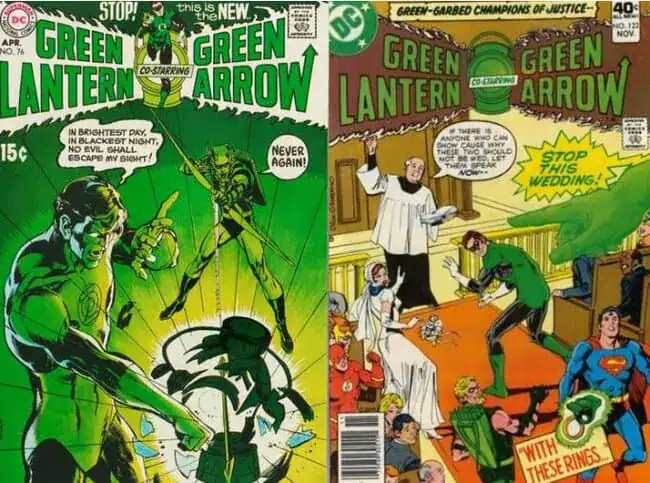
It would be re-titled “Green Lantern & Green Arrow” from #76 to #122 in 1979.
The series gets back to the name “Green Lantern”, keeping it until #200 in 1986.
What is it about this series renaming itself every decade???
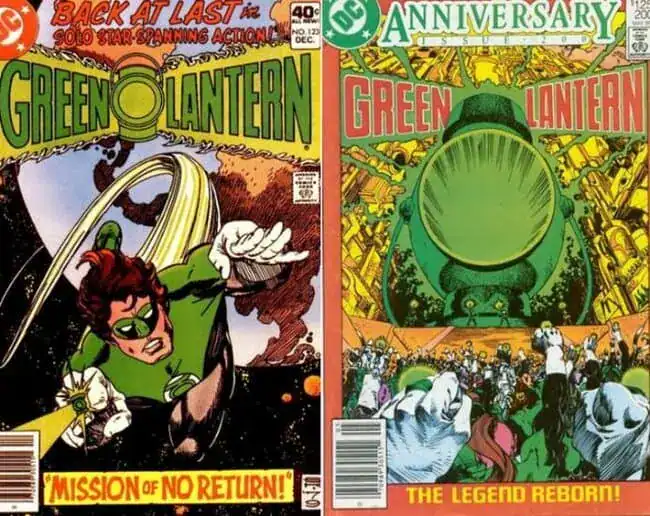
Well at least the next title change doesn’t last that long: the series is renamed “Green Lantern Corps” from #201 to #224, when the series is cancelled in 1988.
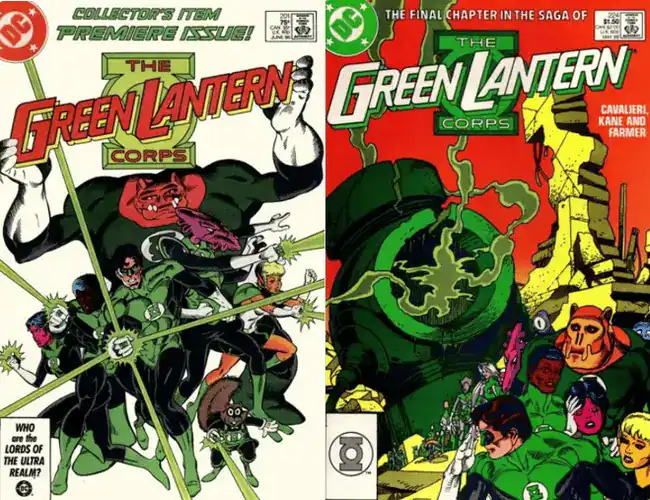
Green Lantern bounces from series to series until Volume 3 is launched in 1990.
Hal Jordan will star there until #50 in 1994, before being replaced as the main (and for a long time only) Green Lantern.
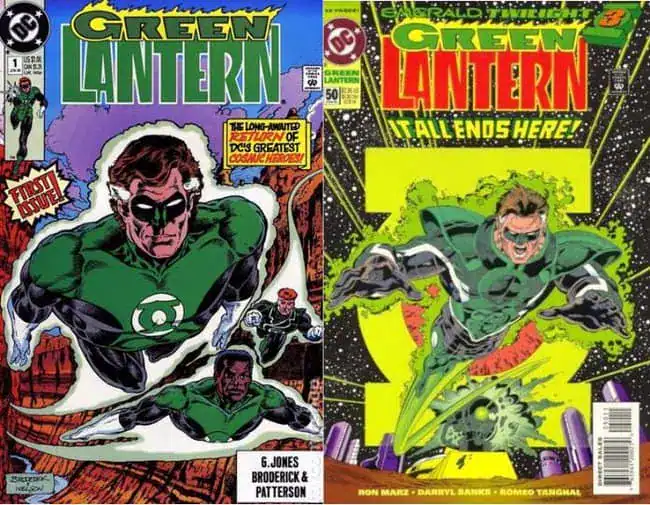
Since I’m in the middle of reviewing Zero Hour, I guess should address the green elephant in the room: Hal Jordan turning into the villainous Parallax.
I’m probably in the minority of readers that has no problem with it.
Mostly because to be perfectly honest, I’ve always found Hal to be the least interesting part of the entire Green Lantern mythos.
Don’t get me wrong, he’s not a terrible protagonist… most of the time… but I don’t think he brings anything interesting to the table. Not as much as any other Green Lantern from Earth and ESPECIALLY among aliens (give me Salakk and Kilowog any day over ANY human Lantern).
I will admit it was a rushed development and that it was heavy handed, but having a hero completely SNAP after a gigantic tragedy wasn’t an everyday occurrence, ESPECIALLY for a big name. But then again I didn’t grow with Hal Jordan as my Green Lantern so I sympathize.
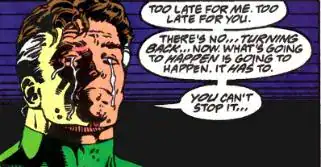
Focusing on Hal Jordan… because the other human Lanterns will get their own reviews… he will die during the Final Night crossover in 1996.
We will get through that in detail in the Legion retrospective, but it’s important to note that he DID end up redeeming himself.
According to Superman at least.
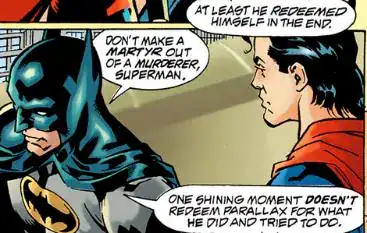
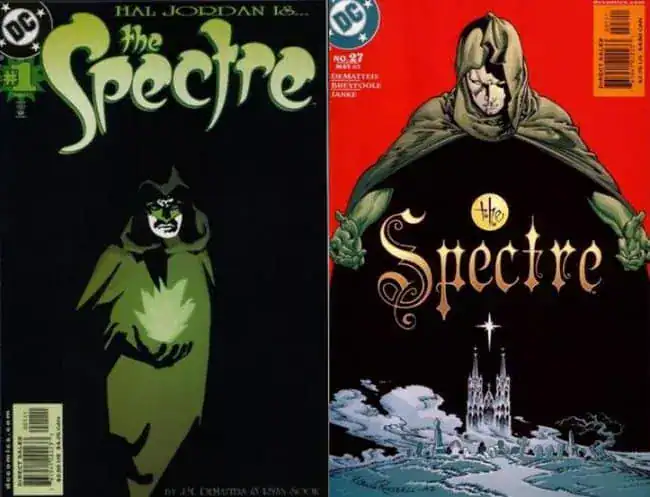
Following the 1999 event Final Judgement, Hal Jordan became the new Spectre.
In this new role he starred in a 27 issue series from 2001 to 2003, written by J.M. DeMatteis.
I greatly enjoyed that series and I highly recommend it, as both a Green Lantern and Spectre fan I think it did a good job and did a good analysis of Hal Jordan.
Coming from someone who doesn’t care for Hal, that’s high praise.
The Green Lantern series continued with Kyle Rayner starring until #181 in 2004, when the “Green Lantern: Rebirth” event restored Hal as Green Lantern.
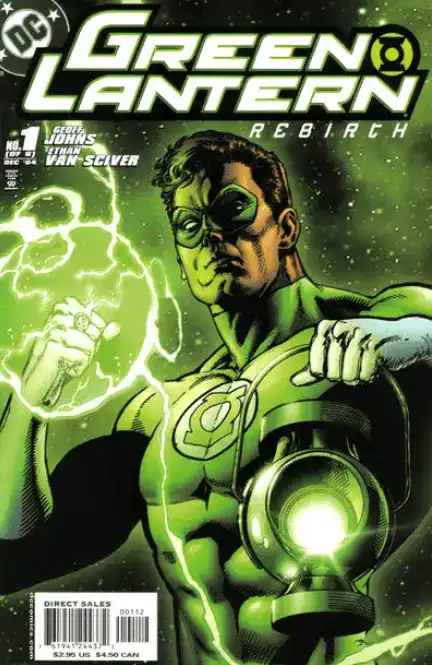
I actually rather enjoyed that 6-issue miniseries, but that was the end of my interest for the Green Lantern franchise. Both because I still can’t find Hal interesting and especially because of the sheer amount of changes and additions to the lore that I find either superfluous or dumb.
We’ve had Hal’s white hair caused by being possessed by the living embodiment of the concept of fear that is also yellow, and in my eyes we went downhill from there.
We already had an entire universe to explore with a corps with a unique power representing countless species, but ever since Rebirth we’ve had:
- the Sinestro Corps
- the Star Sapphire Corps
- the Red Lanterns Corps
- the Orange Lantern Corps
- the Blue Lantern Corps
- the Indigo Lantern Corps
- the Black Lantern Corps
- the White Lantern Corps
- the Ultraviolet Lantern Corps
- the Alpha Lantern Corps
- the Gamma Lantern Corps
- the Omega Lantern Corps
- the United Planets Lantern Corps
- the Sorrow Lantern Ring
- the Phantom Lantern Ring
- the Gold Lantern Ring
I made up only ONE of the above examples and unless you’re already familiar with modern Green Lantern books I challenge you to find it.
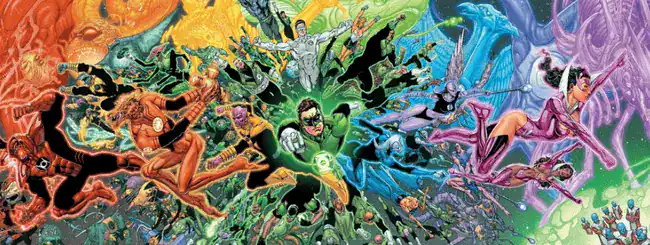
I can’t be mad at Hal for, in my eyes, botching one of the most fascinating DC franchises.
I’m just disappointed.